Do Sheds Need Airflow Underneath? Facts and Guidance

Many garden shed owners across the United Kingdom overlook a critical aspect of their structure’s health. What happens beneath the floor is just as important as the roof overhead. Proper air circulation under a garden building makes the difference between a durable floor and one that deteriorates prematurely.
Without adequate ventilation, rising ground moisture can penetrate the floorboards. This dampness creates an environment where mould and rot thrive. Construction experts emphasise that this foundational element directly impacts the longevity of any outdoor storage solution.
This comprehensive guide explores why proper air movement is essential for all types of garden buildings. Whether used for tools, workshops, or general storage, effective moisture management through strategic ventilation proves crucial. The following sections will cover material considerations, improvement methods, and practical solutions for both new and existing structures.
Inhaltsverzeichnis
Key Takeaways
- Proper air circulation beneath a garden shed is essential for preventing moisture damage
- Inadequate ventilation can lead to floor rot and mould growth inside the structure
- This consideration applies to all shed types regardless of their primary use
- Moisture management through strategic airflow extends the shed’s lifespan significantly
- Both new constructions and existing sheds benefit from proper underfloor ventilation
- Different building materials require specific ventilation approaches for optimal protection
- Expert guidance ensures practical solutions tailored to individual garden shed requirements
Understanding Shed Ventilation and Its Importance
Effective ventilation within a garden structure is a cornerstone of its long-term preservation. It works by managing the natural temperature differences between the interior and exterior. When warm, moist air inside meets cooler surfaces, condensation forms without adequate air exchange.
This accumulated moisture creates a perfect breeding ground for mold and mildew. These fungi not only cause unpleasant odours but can also lead to significant damage over time.
How Proper Airflow Prevents Moisture and Damp Issues
Good ventilation ensures a continuous movement of air, which carries excess humidity away. This process is vital for preventing the damp issues that compromise a building’s health.
Stagnant, humid conditions are the primary cause of many common problems. By maintaining a drier environment, the risk of persistent dampness is greatly reduced.
Impact on Stored Items and Structural Integrity
The contents of a shed are equally vulnerable. Metal tools may rust, and wooden items can warp when exposed to high humidity. Protecting these stored items is a key benefit of proper ventilation.
Furthermore, the shed itself suffers from prolonged moisture exposure. Wood rot and metal corrosion weaken the framework, leading to costly damage and threatening the building’s structural integrity.
How Airflow Affects Different Shed Materials
The construction material of a garden building fundamentally dictates its relationship with moisture and air movement. Each type presents distinct challenges that require tailored ventilation strategies for optimal protection.
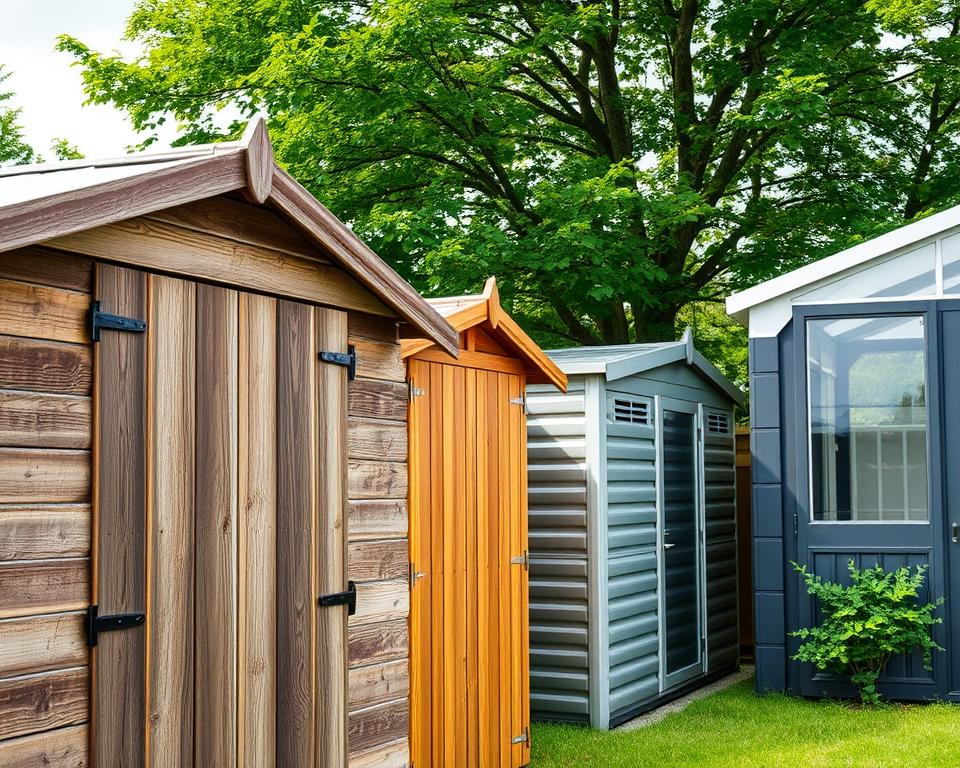
Wooden Sheds: Rot, Damp and Health Concerns
Wooden sheds are particularly vulnerable to damp. Timber naturally absorbs water, and without sufficient air circulation, this leads to rot in floorboards and walls.
Pressure-treated wood offers some resistance. However, it cannot withstand prolonged wetness that fails to dry properly. This persistent dampness not only causes structural damage but can also promote mould growth, raising health concerns.
Metal and Plastic Sheds: Preventing Mould and Fibre Buildup
While metal sheds and plastic structures do not rot, they face other issues. These materials are prone to condensation due to temperature changes.
This trapped humidity creates a perfect environment for mold and mildew on interior surfaces. Furthermore, metal buildings can experience extreme heat build-up, potentially damaging stored things.
Understanding these material-specific vulnerabilities is the first step toward implementing an effective ventilation solution for any garden shed.
Do Sheds Need Airflow Underneath?
Proper air movement under a shed’s foundation serves as the first line of defence against moisture-related damage. The answer is unequivocally yes – garden buildings absolutely require ventilation beneath their floors to function properly over time.
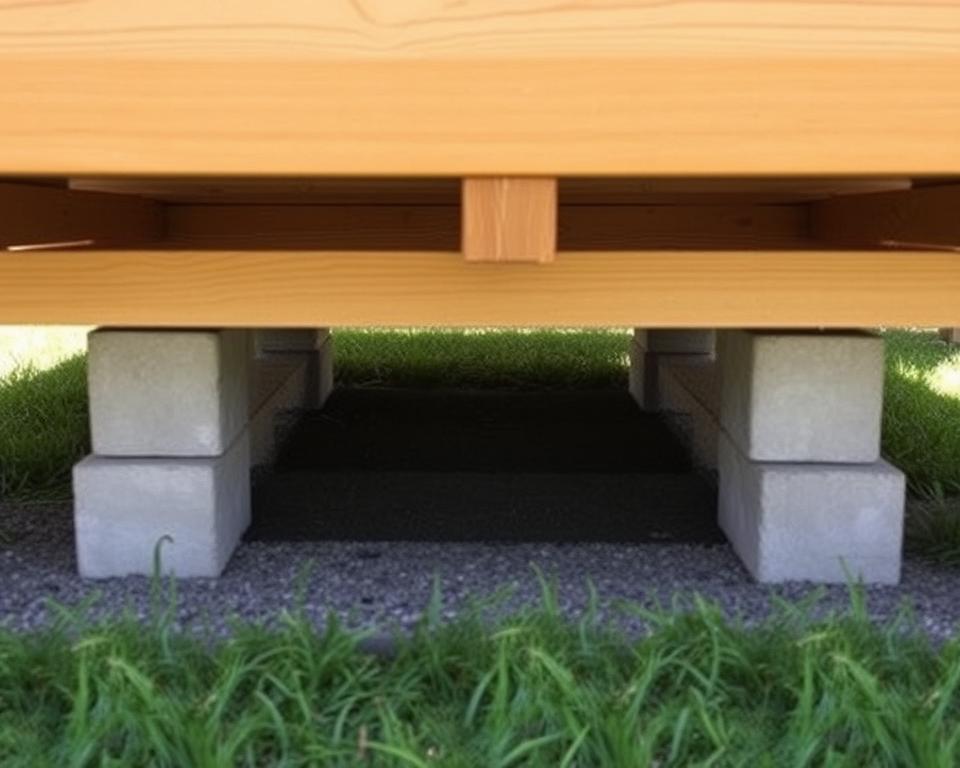
Without this crucial airflow, rising ground moisture penetrates the floor structure. This dampness eventually reaches the inside shed environment, creating ideal conditions for problems to develop.
Importance of a Well-Ventilated Base and Bearers
The choice of base material significantly impacts underneath ventilation. Timber frame foundations naturally allow better air circulation compared to solid concrete slabs.
Standard bearers typically elevate structures by at least 28mm. This clearance creates sufficient space for proper ventilation while preventing direct contact with the ground.
| Base Type | Ventilation Quality | Minimum Clearance | UK Garden Suitability |
|---|---|---|---|
| Timber Frame | Excellent | 28mm+ | High – adapts to uneven ground |
| Concrete Slab | Poor | 0mm | Medium – requires perfect levelling |
| Paving Slabs | Moderate | 25mm+ | High – allows some air movement |
UK gardens vary greatly in their ground conditions. Areas prone to water pooling may require additional elevation beyond standard measurements.
Risks of Moisture Accumulation and Condensation
When warm air inside meets cold floor surfaces, condensation forms rapidly. Without underneath ventilation, this moisture accumulates unchecked.
Persistent dampness leads to mold growth and damages stored items. The structure itself suffers from rot and deterioration when proper airflow is absent.
Finding the right balance in elevation is crucial. Sufficient clearance prevents moisture issues while avoiding gaps large enough to invite pests underneath the shed.
Effective Methods to Improve Shed Airflow
Enhancing ventilation requires a systematic approach combining elevation, barriers, and openings. This multi-layered strategy addresses moisture control from different angles.
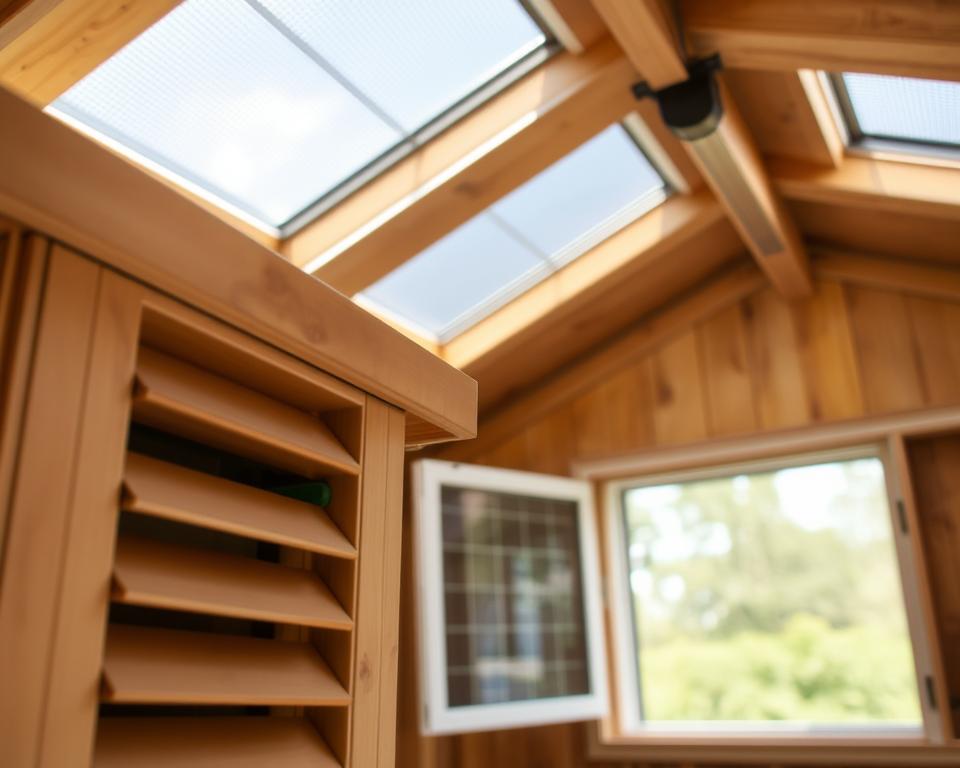
Elevating the Shed and Using the Right Base Materials
Raising a garden building creates essential clearance from the ground. This space allows air to circulate freely beneath the structure.
Different base types offer varying ventilation qualities. Timber frames provide excellent air movement, while concrete slabs may require additional measures.
Integrating Damp-Proof Membranes and Additional Vents
Damp-proof membranes placed between the ground and base block rising moisture. These sheets work with vents to create dual-layer protection.
Additional vents can be retrofitted to existing structures. Plastic or metal grilles near the roof line allow stale air to escape.
Considerations for Using Bricks, Stilts or Mesh Barriers
Bricks and stilts effectively raise a shed, but proper spacing is crucial. The structure must sit level and steady to prevent frame twisting.
Mesh barriers around the sides permit air movement while excluding pests. Maintaining modest gaps ensures balanced weight distribution over time.
| Foundation Type | Ventilation Quality | Installation Difficulty |
|---|---|---|
| Timber Frame | Excellent | Moderate |
| Concrete Slab | Poor | High |
| Raised Platform | Good | Moderate |
| Paving Slabs | Moderate | Low |
Proper clearance around the shed perimeter is essential. At least 2 feet of space on all sides prevents blocked air gaps.
Ventilation Options for a Dry and Healthy Shed Environment
Different shed types and usage patterns call for specific ventilation solutions to maintain optimal conditions. Homeowners can choose between passive systems that use natural forces and mechanical options requiring power.
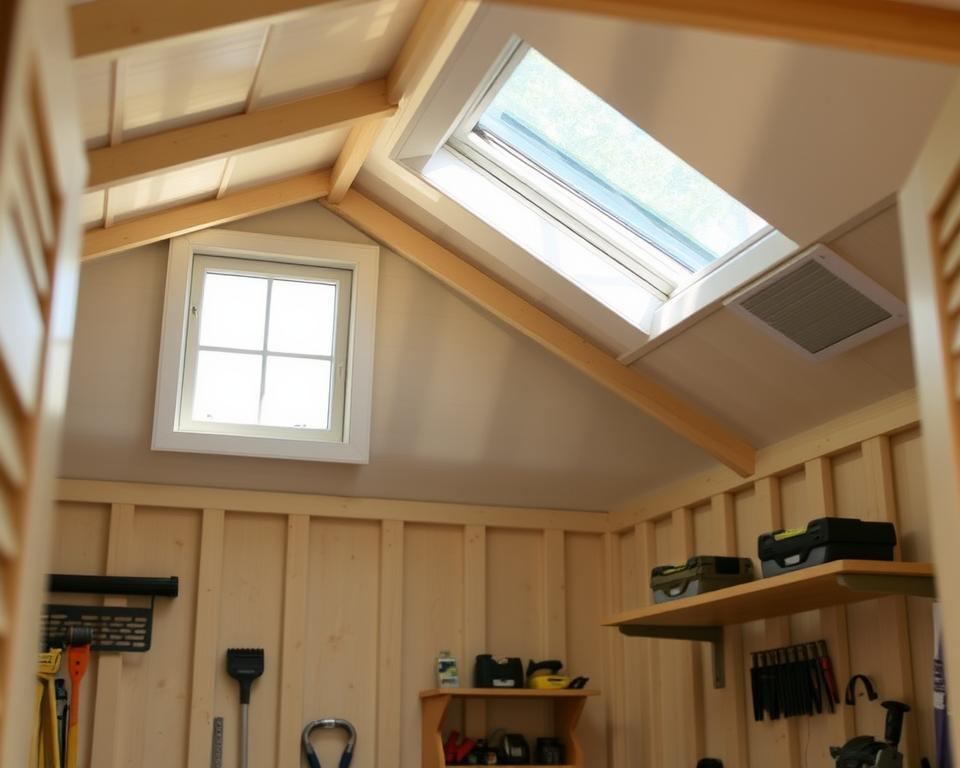
Passive Ventilation: Natural Airflow and Ventilation Grilles
Wall vents provide excellent natural ventilation without electricity. These grilles come in metal or plastic and feature louvres with insect screens.
Installation involves cutting an appropriate shape into the siding. The outside flange attaches with adhesive or screws, followed by caulking the edges for weatherproofing.
Complementary systems like ridge vents and soffit vents create continuous air flow. Warm air escapes through the roof while fresh air enters below.
Mechanical Options: Installing Fans and Solar-Powered Ventilation
For larger sheds or areas with poor ventilation, mechanical systems offer stronger air movement. Power gable vents with thermostats automatically adjust to temperature changes.
Solar-powered fans provide energy-free operation while maintaining consistent fresh air exchange. This option proves ideal for remote storage locations.
| Ventilation Type | Best For Shed Type | Installation Complexity | Cost Range |
|---|---|---|---|
| Wall Vents | All materials | Low | Under £25 |
| Ridge/Soffit System | Wooden structures | Medium | £50-£150 |
| Solar Powered Fan | Metal/plastic sheds | Medium | £80-£200 |
| Electric Gable Vent | Large storage spaces | High | £100-£400 |
Wooden buildings often require minimal additional ventilation due to natural gaps. Metal and plastic structures typically need more assistance to prevent mold mildew growth.
Choosing the right system protects stored items and maintains the building’s health over time. Proper space management inside the shed enhances air flow quality.
Conclusion
Implementing effective ventilation strategies ensures garden buildings remain functional for years to come. Proper air movement beneath any shed prevents moisture accumulation that leads to structural damage and mould growth.
The ideal solution varies by type of structure and local ground conditions. From simple elevation techniques to sophisticated roof vent systems, each approach offers protection for storage contents.
Investing in appropriate ventilation during initial installation prevents costly repairs later. This proactive approach maintains the building’s integrity while safeguarding valuable storage items from damp-related harm.
All garden sheds benefit from thoughtful air management systems. Combining underneath clearance with supplementary openings creates a comprehensive defence against ground moisture issues.
FAQ
Why is ventilation important for a garden shed?
Ventilation is crucial because it allows fresh air to circulate, which helps to control moisture levels inside the structure. Without it, condensation can build up, leading to damp conditions that encourage mould and mildew growth. This can damage stored possessions and compromise the shed’s structural integrity over time.
What problems can occur if a shed lacks proper airflow?
Inadequate airflow often results in excess moisture, which promotes the development of mould and mildew. These issues can cause rot in wooden sheds, corrosion in metal sheds, and health concerns. Stored items like tools, furniture, and fabrics can also be damaged, leading to costly replacements.
How can you improve ventilation in a garden shed?
A> Several methods can enhance ventilation. These include installing vents or grilles to encourage natural airflow, raising the shed on a platform or bearers to allow air movement underneath, and using a damp-proof membrane. For larger sheds, mechanical options like fans or solar-powered ventilation units are also effective.
Should all types of sheds be raised off the ground?
A> Yes, raising any shed off the ground is highly recommended. Elevating the structure prevents ground moisture from seeping into the floor and improves air circulation. Using a suitable base, such as one made from concrete or pressure-treated timber bearers, provides a stable, dry foundation that extends the shed’s lifespan.
Are there specific ventilation solutions for metal or plastic sheds?
A> Absolutely. While metal and plastic sheds resist rot, they are prone to condensation, which can lead to mould growth and rust. Installing simple ventilation grilles or adding louvred vents can significantly reduce moisture buildup. Ensuring there is a small gap for air flow around the shed’s base is also beneficial.
Can adding vents compromise the security of a shed?
A> Not if suitable vents are chosen. Many ventilation products, such as lockable grilles or mesh-covered vents, are designed specifically to maintain security while allowing air to circulate. It is possible to achieve effective ventilation without making the storage space vulnerable to intruders.