Inspiring Urban Garden Ideas for UK Outdoor Spaces

In densely built-up areas across the United Kingdom, having a private outdoor space feels like a true luxury. Even the smallest balcony, courtyard, or shaded patio holds potential for transformation. With clever design, these compact areas can become vibrant, stylish extensions of the home.
Designers face specific challenges in metropolitan settings. Limited square footage, shade from neighbouring buildings, and environmental factors like poor drainage require inventive solutions. These constraints push creativity, leading to planting schemes that rely on texture and shape as much as colour.
The approach to these spaces has evolved significantly. They are no longer just places for a few pots. Today, they function as multi-functional outdoor rooms. They provide serene retreats from bustling city life, designed with sustainability and well-being in mind.
Inhaltsverzeichnis
Key Takeaways
- Even the smallest outdoor area in a city can be transformed into a beautiful and functional space.
- Modern design focuses on creating multi-functional areas that serve as extensions of indoor living.
- Sustainability and creating peaceful retreats are central to contemporary planning.
- Challenges like limited space and shade can inspire creative design solutions.
- Professional designers use inventive planting strategies that emphasise texture and form.
- These spaces are designed to maximise every available square metre effectively.
- The best designs blur the boundaries between indoor and outdoor living environments.
Urban Garden Ideas for Small City Spaces
Maximising compact outdoor areas in metropolitan settings demands creative approaches. These limited spaces require thoughtful planning to achieve both beauty and functionality.
Creative Container and Planter Solutions
Container planting becomes essential for terraces and balconies. Expert Alex Hollingsworth from Dig recommends fewer, larger containers rather than many small ones. This creates a cohesive look and reduces maintenance.
Large pots hold more soil, which helps plants stay hydrated longer. Tony Woods of Garden Club London suggests oversized feature planters for maximum impact. These can accommodate specimen plants like olive trees or architectural ferns.
For balconies with limited water access, landscape designer Kat Aul Cervoni recommends water-savvy plants. Containers with built-in reservoirs provide practical solutions for busy residents.
Innovative Layouts for Compact Areas
Arranging planters at varying heights creates depth in small spaces. Vertical arrangements maximise every available centimetre. This technique adds visual interest without cluttering floor areas.
Mixed materials like terracotta, wooden crates, and metal vessels add character. Successful London examples show how varied textures enhance compact outdoor areas. Proper container sizing ensures plants thrive while maintaining aesthetic balance.
Strategic placement can define zones and create privacy screens. This approach transforms limited square metreage into multifunctional retreats.
Maximising Limited Space with Smart Design
The vertical dimension offers untapped potential for those working with confined outdoor areas. Smart design transforms limitations into opportunities for lush greenery.
Utilising Vertical Gardening Techniques
When horizontal space is scarce, vertical gardening becomes essential. Living walls and hanging baskets bring life to bare surfaces without consuming floor area. Wall-mounted planters work well on large blank walls.
Training climbing plants like hydrangea or Boston ivy onto fences creates full coverage over time. Hard pruning stimulates denser growth more quickly. In sunny spots, small ceramic containers with trailing sedums create artistic displays.
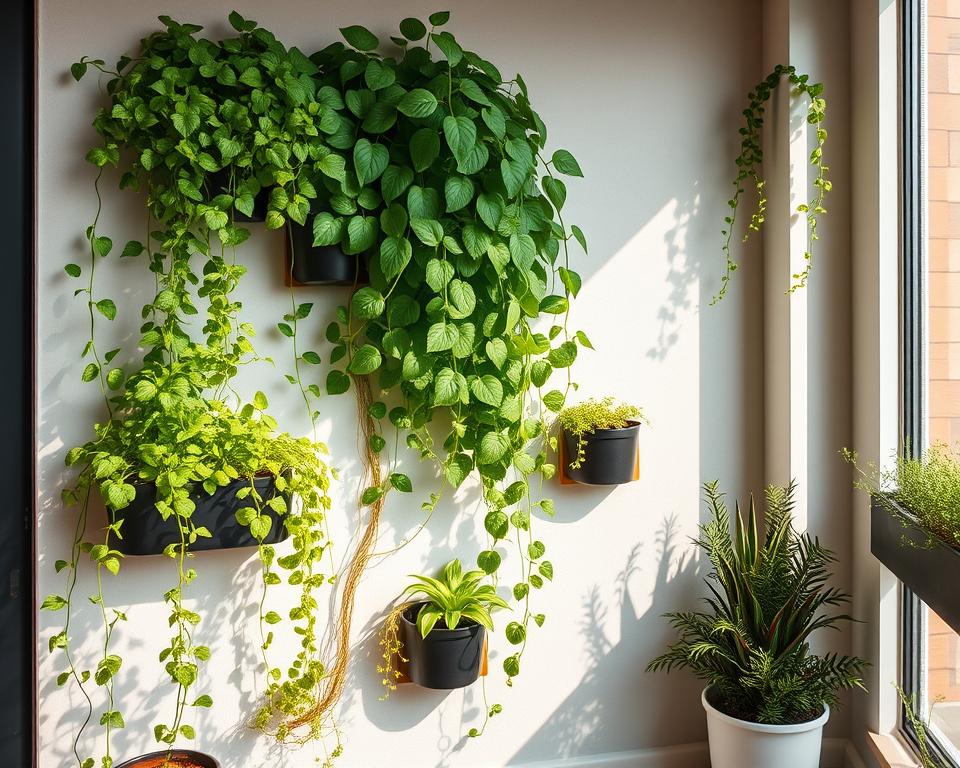
Long, shallow planters mounted with brackets can feature cascading plants. These create beautiful waterfall effects with minimal footprint.
Dual-purpose Elements for Efficiency
Built-in seating with hidden storage is a brilliant space-saving solution. Benches with lift-up lids conceal cushions or tools in spaces as narrow as 24 inches wide.
Raised planters make paved areas plantable. They add height and protect plants from foot traffic. These features bring planting bases up to eye level for better viewing.
Integrating planters with seating adds dimension while conserving precious square footage. This approach creates layered, functional outdoor rooms.
Expert Advice from Leading UK Garden Designers
The expertise of Britain’s top landscape designers transforms challenging city plots. These professionals bring innovative solutions to metropolitan outdoor spaces.
Insights from Industry Professionals
Sheila Jack emphasises careful curation for compact areas. “The smaller the garden, the more important it is to curate its contents,” she states. Her approach focuses on chic simplicity with thoughtful planting selections.
Butter Wakefield creates magical courtyard spaces using shade-tolerant schemes. She combines evergreen topiary with seasonal container displays. Climbing plants on wall trellises soften boundaries and add vertical interest.

Lessons from Chelsea and Notting Hill Inspirations
Marcus Barnett designs spaces that flow seamlessly from interior to exterior. His slate-clad terraces connect kitchens with outdoor living areas. Soft-textured herbaceous plants and structural box spheres create harmonious transitions.
Miria Harris addresses high boundary walls with raised beds. This technique reduces visual impact while improving growing conditions. Her use of Belgian brick paths and antique ornaments adds character.
Todd Longstaffe-Gowan avoids overly formal “polite town gardens.” He prefers designing spaces with personality and fun. This philosophy brings unique character to metropolitan projects.
Integration of Nature and Modern Design
The harmony between natural elements and contemporary design begins with appropriate flora selection. Landscape designer Kat Aul Cervoni identifies limited sunlight, poor drainage, and restricted airflow as primary challenges. These conditions narrow the palette to species that will truly flourish.

Choosing the Right Plants for Urban Conditions
For shaded areas, focus on texture-rich combinations. Mix fine grasses like carex with broad-leaf shrubs such as aucuba. Ferns and hostas add architectural interest without requiring direct sun.
Sun-drenched spaces demand water-efficient selections. Mediterranean herbs, sedums, and silvery-foliaged specimens manage well between waterings. These choices suit balconies and roof terraces perfectly.
Different design styles call for specific botanical approaches. Cottage schemes might include traditional perennials and climbing roses. Contemporary layouts often feature structural evergreens and pleached trees.
| Light Condition | Recommended Plants | Key Characteristics |
|---|---|---|
| Full Shade | Hosta, Ferns, Carex | Texture-focused, moisture-loving |
| Partial Sun | Rhododendron, Hakonechloa | Adaptable, varied foliage |
| Full Sun | Lavender, Sedum, Rosemary | Drought-tolerant, aromatic |
Soil quality significantly impacts plant health. Raised beds and containers allow customisation of growing conditions. This expands possibilities beyond what native earth might support.
Year-round interest comes from evergreen specimens and seasonal performers. Wildlife-friendly planting supports biodiversity while maintaining aesthetic appeal. Thoughtful selection creates sustainable, beautiful spaces.
Enhancing Ambience with Accessories and Hardscaping
Thoughtfully chosen accessories and hard landscaping materials are the final layer that transforms a functional outdoor area into a personal sanctuary. These elements define the character of a space and extend its usability throughout the day and into the evening.
Strategic Use of Mirrors and Furnishings
Mirrors can dramatically alter the perception of a compact area. Expert Alex Hollingsworth advises a subtle approach to avoid a jarring effect.
“Position mirrors behind a painted trellis,”
he suggests. This technique reflects light and creates depth while the trellis breaks up the reflection.
Tony Woods emphasises angling mirrors towards greenery, carefully avoiding reflections of drainpipes. This strategy makes the planting feel more abundant. For furnishings, restraint is more effective than clutter. A few key pieces of foldaway furniture create a relaxing environment and maximise usable space.
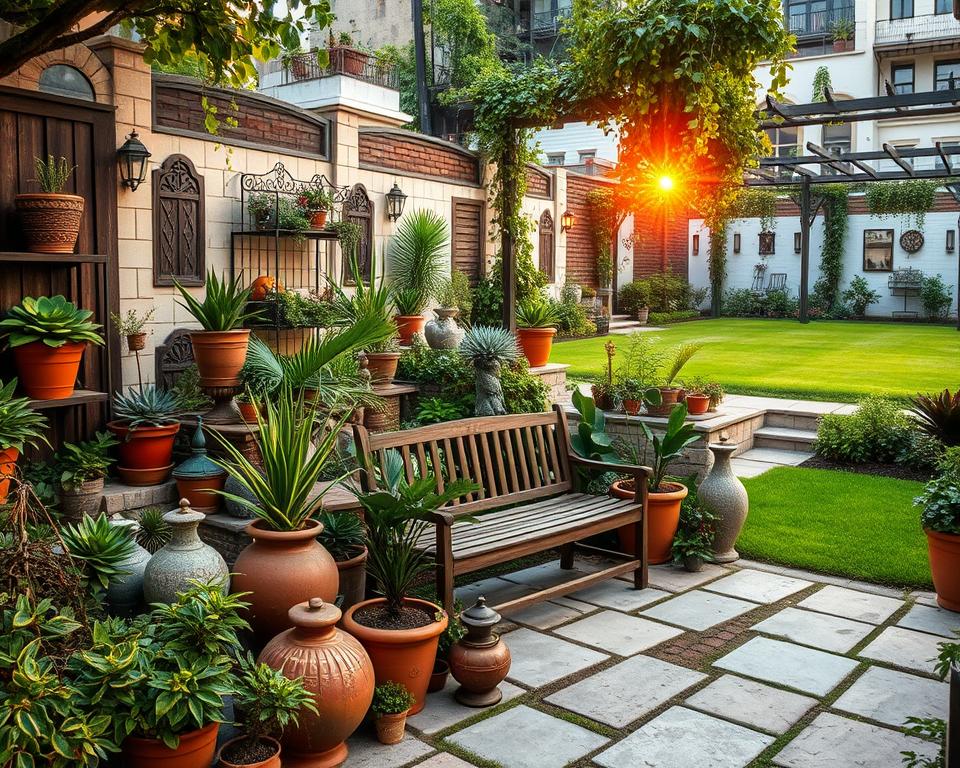
Solar lighting offers a simple solution for adding evening ambiance without complex wiring. It highlights focal points like a small water feature or a fire bowl, drawing the eye and creating interest.
Hardscaping forms the foundation of the design. The choice of materials sets the tone for the entire space. Different options provide distinct characters and practical benefits.
| Material | Style | Key Characteristic |
|---|---|---|
| York Stone | Traditional, timeless | Durable, natural appearance |
| Herringbone Brick | Country feel | Adds texture and pattern |
| Reclaimed Cobblestones | Rustic, characterful | Sustainable, aged patina |
| Slate / Composite Decking | Contemporary, sleek | Low maintenance, modern look |
A clear focal point, whether a specimen plant or sculpture, prevents a space from feeling busy. It provides a single point of contemplation, enhancing the overall sense of calm in your home’s extension.
Conclusion
Contemporary outdoor spaces in metropolitan settings have evolved beyond traditional boundaries, becoming personalised extensions of the home. These areas demonstrate how intelligent design can transform even the smallest plots into functional, beautiful retreats.
The approaches covered show how limitations become creative opportunities. Vertical planting, multi-functional furniture, and strategic container use maximise every centimetre. Choosing the right plants for specific conditions ensures thriving greenery.
From lush cottage styles to minimalist modern layouts, there are solutions for every taste. Whether working with a roof terrace, balcony, or compact courtyard, these garden ideas prove that thoughtful planning creates inspiring outdoor living areas.
Ultimately, any city plot can become a personal sanctuary that enhances daily life and connects people with nature.
FAQ
What are the best plants for a city balcony with limited sun?
For shaded city balconies, plants like ferns, hostas, and certain herbs such as mint and parsley thrive. These species tolerate less direct light and can bring lush greenery to compact areas without needing full sun exposure.
How can I create privacy in a small outdoor space?
Utilising vertical gardening techniques is highly effective. Installing trellises with climbing plants or using tall, slender planters with bamboo or ornamental grasses can create natural screens, enhancing seclusion in a city garden.
What are some clever ways to grow vegetables in a small space?
Raised beds and containers are excellent solutions. Compact varieties of vegetables, such as cherry tomatoes and salad leaves, can be successfully grown in pots or modular planting systems, maximising yield from a limited footprint.
How can I make a roof terrace feel larger?
Strategic use of accessories like mirrors can create an illusion of depth. Combining this with multi-level planting in containers and choosing a cohesive colour palette for furnishings helps to open up the area and reduce the impact of a confined space.
What is the key to successful container gardening?
The most critical factor is ensuring adequate drainage and quality soil. Containers must have drainage holes to prevent waterlogging. Using a good potting compost and selecting plants with similar water and sun needs will promote healthy growth.