Snow on a Garden Greenhouse: What to Do About It
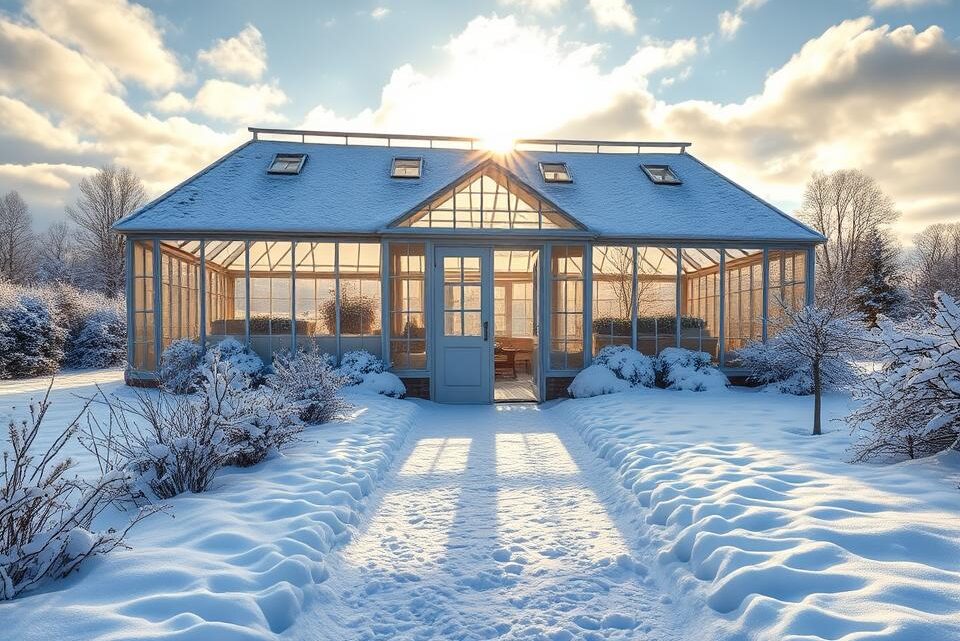
Winter weather presents a significant challenge for plant enthusiasts across the United Kingdom. The cold months bring a particular hazard to protected growing spaces: the heavy weight of accumulated precipitation.
This frozen load poses a serious risk to the integrity of a garden building. The excessive pressure can crack glazing panels and bend even robust metal frames. Furthermore, a thick white blanket blocks out the essential sunlight that plants inside rely upon for survival.
When temperatures fluctuate, the cycle of melting and refreezing can lead to water damage and ice formation. This guide offers practical tips for managing these winter conditions. It focuses on preventing damage to the main structure and protecting the plants within.
A proactive approach is strongly recommended. By understanding the risks and preparing in advance, gardeners can ensure their greenhouse remains a safe haven throughout the season.
Inhaltsverzeichnis
Key Takeaways
- Accumulated frozen precipitation poses a serious threat of structural damage.
- The weight can crack panels and distort the frame of the building.
- Sunlight blockage negatively affects plant health and growth.
- Proactive measures are more effective than reactive solutions.
- Different greenhouse materials require tailored management strategies.
Understanding the Impact of Snow on Greenhouse Structures
Winter’s frozen deposits can severely test the resilience of plant protection frameworks. The accumulated weight creates immense pressure on the entire framework.
Recognising Potential Structural Damage
Excessive weight from heavy snow accumulation applies dangerous pressure to frames and joints. This stress can lead to bending or cracking of panels and supports. Gardeners should watch for visible bending or gaps in the framework.
Different roof designs handle this load differently. Peaked roofs generally perform better than curved ones under these conditions. The spacing of structural supports also influences how well the framework copes.
Warning signs include unusual sounds from the structure and stress cracks in glazing materials. Early detection of these issues helps prevent more serious snow damage.
How Snow Affects Light and Plant Growth
White accumulation blocks essential sunlight from reaching the plants inside. This reduction in light transmission directly impacts photosynthesis rates. Plant metabolism and growth patterns are significantly affected.
The insulating properties of frozen deposits create temperature variations. Areas above the accumulation level often suffer greater stress than protected sections. This affects the internal air circulation and temperature regulation.
Successive weather events create cumulative effects that can overwhelm even robust structures. The freeze-thaw cycle introduces additional complications for both the framework and the plants within.
Effective Snow Removal Techniques for Garden Greenhouses
Managing winter precipitation accumulation requires practical approaches that safeguard both structure and plants. The right removal method depends on the amount of buildup and greenhouse design.

Using a Roof Rake and Broom Safely
For light accumulations, a simple broom provides an effective removal method. This approach works well for fresh, powdery deposits.
Heavier buildups require specialised tools. A roof rake with telescopic handle allows safe removal from ground level. This prevents pressure on the structure.
| Tool | Best For | Safety Tips |
|---|---|---|
| Broom | Light, fresh snow | Work from edges inward |
| Roof Rake | Medium accumulations | Wrap blade in cloth |
| Telescopic Pole | Hard-to-reach areas | Maintain firm footing |
Always clear edges first to prevent re-accumulation. This technique creates space for additional removal work.
Preventative Methods with Heating Blankets and Pipes
Proactive measures can reduce manual labour. Energy blankets placed over the structure provide excellent prevention.
Heating pipes offer another efficient way to melt snow. Position pipes at least 18 inches long under gutters. This targeted approach uses heat effectively.
Gutter heating systems prove more efficient than warming the entire space. They create meltwater channels for continuous removal.
Snow on a Garden Greenhouse – What to Do About It
The moment frozen accumulation starts building up on horticultural shelters, a systematic response should commence. This approach prevents structural stress and maintains optimal growing conditions inside.
Step-by-Step Guidance for Immediate Action
Begin by assessing the current depth and ongoing intensity of precipitation. Check weather forecasts to determine the urgency of response required. Look for visible stress indicators like frame bending or unusual sounds.
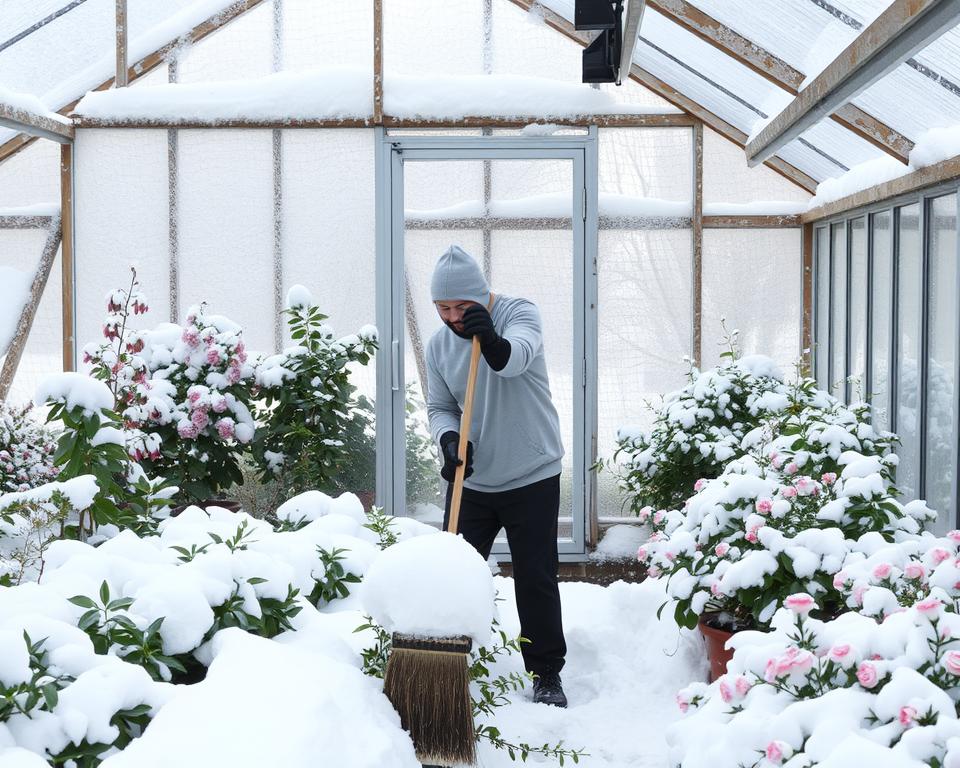
The most effective way to remove frozen buildup involves working from the highest points downward. This method reduces overall structural load efficiently. Clear edges and gutters first to prevent re-accumulation.
Timing proves critical during winter weather events. Continuous light removal during snowfall prevents compaction and ice formation. Waiting until accumulation becomes severe makes the task more difficult.
Different conditions require specific approaches. Powder snow responds well to gentle brushing, while wet heavy deposits need careful scraping. Avoid using water hoses as this creates additional ice problems.
Complementary actions include sealing vents to retain warmth and monitoring weather patterns. Clear the surrounding area to prevent sliding or blowing precipitation from re-accumulating on the structure.
Preparing Your Greenhouse for Winter Challenges
Strategic planning before the coldest months can significantly reduce winter-related greenhouse risks. Proper winterisation begins well before the season arrives, focusing on strengthening the framework and protecting vulnerable plants.

Insulation and Winterisation Strategies
A thorough structural assessment forms the foundation of effective winter protection. Gardeners should inspect frames for integrity, tighten connections, and replace damaged glazing. Reinforcing vulnerable areas that might fail under winter loads is essential.
Proper insulation techniques serve dual purposes. They maintain adequate internal temperatures for plant survival while creating thermal conditions that help melt accumulation on contact with surfaces. This approach reduces dangerous buildup.
Strategic plant positioning maximises natural heat retention and light exposure. Apply thick mulch around the base of cold-sensitive specimens. Move potted plants indoors or position them under shelter near walls or trees.
Water management preparations are vital for winter survival. Containers should be lifted onto pot feet so excess water drains freely when frozen precipitation melts. Water containers thoroughly before winter, as dehydrated plants prove more vulnerable to cold damage.
Energy-efficient heating strategies include optimal thermostat settings and supplementary equipment options. For unheated structures in snowy areas, consider removing plastic covering over winter to avoid buildup.
These comprehensive measures create compound benefits. Insulation improves growing conditions while reducing accumulation. Heat retention lowers energy costs while protecting structures. Strategic planning prevents emergency situations that damage both plants and buildings.
Protecting and Reviving Your Plants in Snowy Conditions
The biological impact of winter conditions on greenhouse flora requires specific protective strategies. Careful planning ensures vulnerable specimens survive challenging weather events.
Pre-Snow Measures for Vulnerable Flora
Tender perennials like cannas and dahlias benefit from relocation before severe weather. Store them in dry, frost-free locations to protect plants from harm.
Physical barriers offer excellent protection for delicate specimens. Fleece coverings prevent flattening when supported by proper structures. Cloches and upturned pots shield early bloomers effectively.
| Protection Method | Best For | Application Tips |
|---|---|---|
| Fleece Covering | Small delicate plants | Use supporting framework |
| Cloches | Early blooming specimens | Ensure adequate ventilation |
| Relocation | Tender perennials | Store in frost-free areas |

Post-Snow Recovery and Maintenance Tips
After frozen precipitation melts, avoid immediate pruning. Damaged extremities often protect lower portions from further damage. Premature intervention strains plants unnecessarily.
Assess specimens carefully for genuine harm. Temporary colour changes usually resolve naturally over time. Focus on stabilising affected plants in their soil.
When frost heave pushes plants from the ground, replant gently without damaging roots. Add slow-release fertiliser and mulch around the base to aid recovery. Monitor conditions patiently throughout the growing season.
Implementing Long-Term Solutions for Snow Damage Prevention
The selection of appropriate building components significantly influences a structure’s ability to withstand harsh weather conditions. Strategic planning focuses on durable materials and systematic maintenance protocols.
These approaches provide lasting protection across multiple seasons. They reduce the need for frequent interventions during challenging weather events.
Selecting Snow-Resistant Materials
Polycarbonate panels offer excellent resistance to heavy loads. Double or triple-wall construction provides additional strength and insulation benefits.
Steel and aluminium frames demonstrate superior load-bearing capacity. They maintain structural integrity under significant pressure.
| Material Type | Snow Resistance | Key Features |
|---|---|---|
| Polycarbonate Panels | Excellent | Double-wall construction, insulation |
| Steel Framing | Superior | Rust resistance, thick gauge |
| Aluminium Framing | Very Good | Lightweight, corrosion resistant |
| Plastic Film | Limited | May need seasonal removal |

Gothic designs with peaked roofs naturally shed accumulation better than curved alternatives. Proper spacing of structural supports, typically four feet apart, enhances overall stability.
Regular Inspections and Gutter Maintenance
Annual inspections identify potential weaknesses before severe storms occur. Check frame connections and panel integrity each year.
Gutter systems require particular attention in snowy regions. Clogged gutters can lead to dangerous ice formation and structural stress.
For unheated structures, removing plastic covering before winter represents a sensible option. This prevents problematic buildup in gutter systems.
Conclusion
Effective management of winter conditions requires a comprehensive strategy that combines preparation, vigilance, and practical action. This integrated approach ensures both structural integrity and plant health are maintained throughout challenging seasonal periods.
Regular maintenance proves essential for longevity. When replacing older structures, careful consideration of materials is vital. Polycarbonate and steel-framed options handle accumulation well while standing up to other harsh weather conditions.
Each season provides valuable experience that informs improved strategies. Gardeners who apply these tips can confidently protect their investments. The right combination of knowledge and tools leads to successful outcomes for both plants and their protective environments.
FAQ
How does accumulated snow affect a greenhouse?
Heavy snow accumulation poses a significant risk to greenhouse structures. The weight can strain the frame, potentially causing damage or collapse. It also blocks essential sunlight, which can harm plant growth by reducing light levels and lowering internal temperatures.
What is the safest way to remove snow from a greenhouse roof?
The safest method involves using a soft-headed roof rake or a push broom from ground level. Gentle, sweeping motions should be used to avoid damaging the glazing. It is crucial to avoid chipping or cracking the material, and to clear snow before it has a chance to melt and refreeze into ice.
Can heating elements help prevent snow build-up?
Yes, certain heating systems can be effective. Heating pipes or cables installed along the gutter and base can encourage snow to melt and slide off the structure. However, this method requires a reliable energy source and should be used with caution to manage costs and ensure safety.
What immediate steps should be taken after a heavy snowstorm?
Prioritise safety by carefully removing excess weight from the roof using a suitable tool. Inspect the structure for any signs of stress or damage. Check that gutters are clear to allow meltwater to drain away properly and prevent blockages that could lead to water damage.
How can I protect my plants inside during winter?
Employing insulation, such as bubble wrap on the interior walls, helps retain heat. For particularly sensitive plants, horticultural fleece provides an extra layer of protection. Ensuring good air circulation and avoiding overwatering are also key practices during colder months.
Are some greenhouse materials better for snowy areas?
Absolutely. Structures with strong, sturdy frames and robust polycarbonate or toughened glass panels are better equipped to handle heavy snow loads. A steeply angled roof design is also advantageous as it encourages snow to slide off more easily.
Why is gutter maintenance important in winter?
Keeping gutters clear is vital to prevent water from backing up and freezing. Ice dams can add considerable weight and cause water to seep into the structure, potentially damaging the frame and harming plants. Regular checks ensure proper drainage throughout the season.