DIY Outdoor Living: How to Build Your Own Pergola
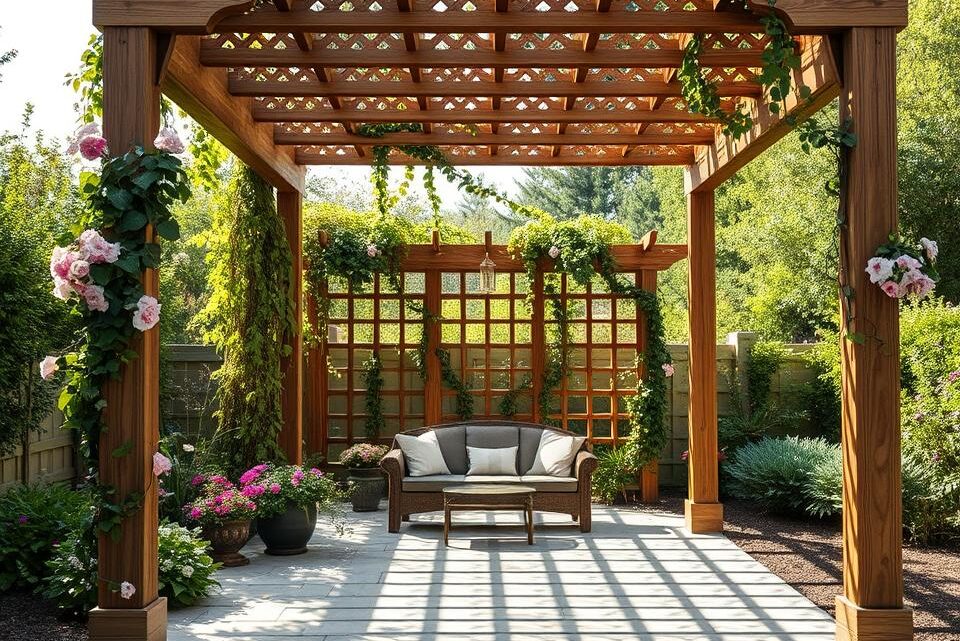
A pergola offers a fantastic way to enhance any garden, creating a defined outdoor living area. This versatile structure provides shade and style while blending seamlessly with the natural environment. Many homeowners find it transforms their outdoor space into a more functional and inviting area.
These garden features serve multiple purposes, from creating shaded dining spots to establishing romantic focal points. They come in various styles to suit different aesthetics and can be tailored to any garden size. The customisation options range from rustic timber designs to modern metal frameworks.
Constructing a pergola is an achievable DIY project that adds significant value to a property. With careful planning and effort, anyone can create a stunning garden feature. The end result becomes a centrepiece for outdoor entertaining throughout the seasons.
A well-built pergola provides structure for climbing plants and creates a framework for outdoor living. It enhances both property value and lifestyle quality. The project requires consideration of legal requirements and design choices before beginning construction.
Inhaltsverzeichnis
Key Takeaways
- A pergola adds significant value and visual appeal to any garden space
- These structures are highly customisable to suit individual preferences and garden sizes
- Building a pergola is an achievable DIY project with proper planning
- Pergolas serve multiple purposes from dining areas to relaxation spots
- The structure provides a framework for climbing plants and seasonal interest
- Careful consideration of design and legal requirements is essential
- The finished feature becomes a centrepiece for outdoor entertaining
Introduction to Pergolas in the UK
With origins dating back to ancient Mediterranean civilisations, pergolas have evolved from practical shade structures to beloved garden features across the UK. The term itself derives from Italian, traditionally describing timber frameworks designed specifically for fragrant climbing plants.
Historical Context and Evolving Trends
These structures first appeared around 800 BC in hotter regions, providing essential relief from intense heat. Originally simple functional elements, they’ve transformed into sophisticated garden additions.
Modern pergolas maintain their open-roof design while offering enhanced aesthetic appeal. They create defined outdoor spaces without enclosing the area completely.
Benefits for Outdoor Living
Today’s pergolas serve multiple purposes beyond basic shade provision. They create comfortable retreats perfect for summer entertaining and al fresco dining.
These structures add architectural interest to any garden or patio space. The framework supports various plants while allowing excellent air circulation.
Homeowners appreciate how pergolas extend outdoor living seasons. They provide romantic, practical solutions for maximising garden enjoyment throughout warmer months.
Planning and Designing Your Pergola
Proper preparation ensures a pergola complements its garden setting perfectly. This crucial phase combines practical measurements with creative vision.
Measuring Your Garden Area and Setting Goals
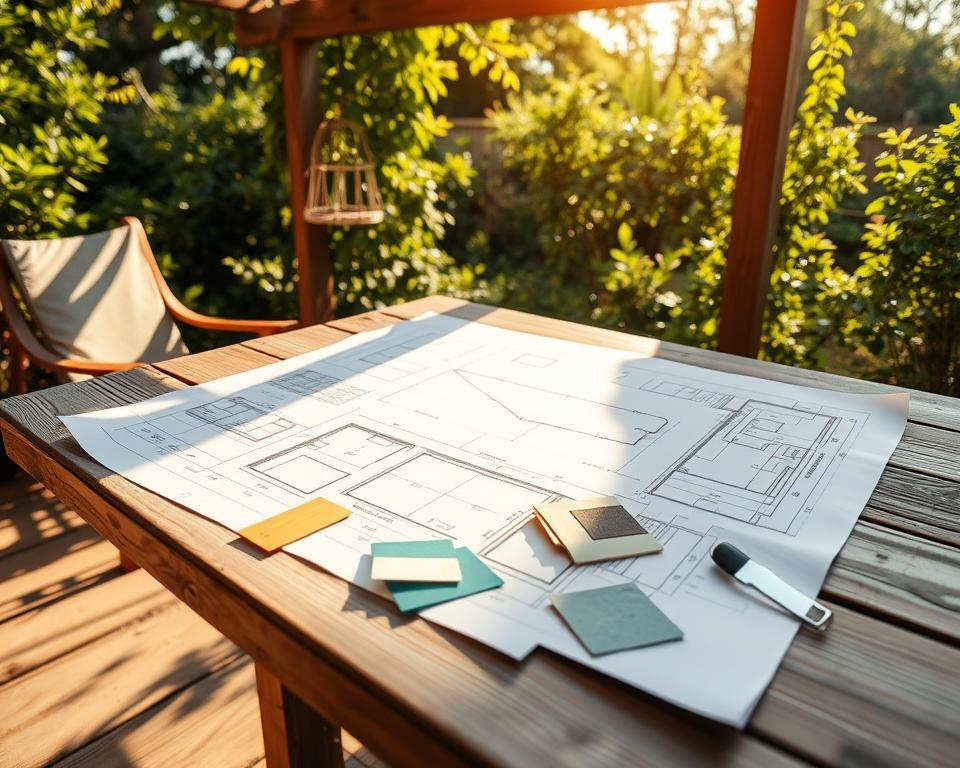
Every garden possesses unique dimensions. Accurate measurement of the intended area prevents future issues. Homeowners should consider the available space and desired functionality.
Clear objectives guide the design process. Will the structure serve as a dining area or relaxation space? This decision influences the pergola’s size and layout.
Choosing a Style and Layout
Material selection significantly impacts the final appearance. Different woods offer distinct characteristics for the desired style.
| Material | Best Use | Maintenance | Appearance |
|---|---|---|---|
| Spruce | Classic designs | Moderate | Traditional |
| Douglas Fir | Durable structures | Low | Rustic |
| Larch | Long-lasting features | Minimal | Natural |
As one garden designer noted,
The right balance between aesthetic appeal and practical function creates a timeless garden feature.
Freestanding designs offer flexibility in placement. Attached structures provide convenient access from buildings. The chosen layout should enhance the garden’s flow.
Finalising the design requires balancing budget with longevity. Proper planning at this stage prevents costly adjustments during construction.
Step-by-Step Guide: How to Build Your Own Pergola
Successful pergola construction begins with thorough preparation of tools and materials before the first post is set. This initial phase determines the project’s success and longevity.
Tools, Materials, and Safety Considerations
Gathering the right equipment is the first crucial step. Essential tools include post hole diggers, spirit levels, drills with auger bits, and concrete mixing equipment. Having a helper available for certain steps is vital for safety and efficiency.

Material selection significantly impacts durability. Pressure-treated timber is strongly recommended for posts in ground contact. Some lumber dimensions may need special ordering from suppliers.
| Material Type | Best Application | Lifespan |
|---|---|---|
| Pressure-Treated Wood | Posts in ground contact | 15-20 years |
| Standard Pine | Decorative elements | 5-7 years |
| Douglas Fir | Above-ground beams | 10-15 years |
Designing for Function and Aesthetics
Balancing practical needs with visual appeal creates a timeless feature. Consider the pergola’s purpose and how it will complement the garden’s style.
Allow adequate time for material procurement and construction. This multi-day project requires patience to ensure structural integrity. Pre-treating wood, especially sealing the bottom 24 inches of posts, prevents moisture damage.
Proper preparation at this stage ensures a smooth building process and a pergola that will provide years of enjoyment.
Site Preparation and Foundation Setting
Marking and excavating form the essential groundwork for any outdoor structure. This step establishes the precise positioning that determines the entire project’s success.

Marking Post Locations and Digging Holes
Accurate measurement transfer from design plans to the actual ground is crucial. Builders use stakes and masonry lines to mark exact post positions before any excavation begins.
The digging process requires specific dimensions for stability. Typically, holes measure approximately 24 inches wide and 30 inches deep. Local climate conditions may necessitate adjustments to these measurements.
Various tools facilitate efficient excavation. A combination of ground break bars, spade shovels, and dedicated post hole diggers proves most effective. Each tool serves a distinct purpose in the process.
Proper drainage prevents future structural issues. Adding a 6-inch gravel layer at the bottom of each hole facilitates water drainage. This step also aids in achieving level post placement.
Double-checking measurements between holes is essential before proceeding. Once concrete is poured, correcting positioning errors becomes extremely difficult. This careful preparation ensures the structure’s longevity.
Weather conditions significantly influence required depth. Areas with harsh winters or heavy rainfall need deeper holes to prevent frost heave. The gravel base provides additional stability against soil movement.
This foundation step directly impacts the finished structure’s integrity. Proper execution at this stage guarantees years of enjoyment from the completed feature.
Erecting Posts and Setting the Concrete
Erecting vertical supports represents a critical phase in garden structure construction. This step typically requires two people working together for optimal results.
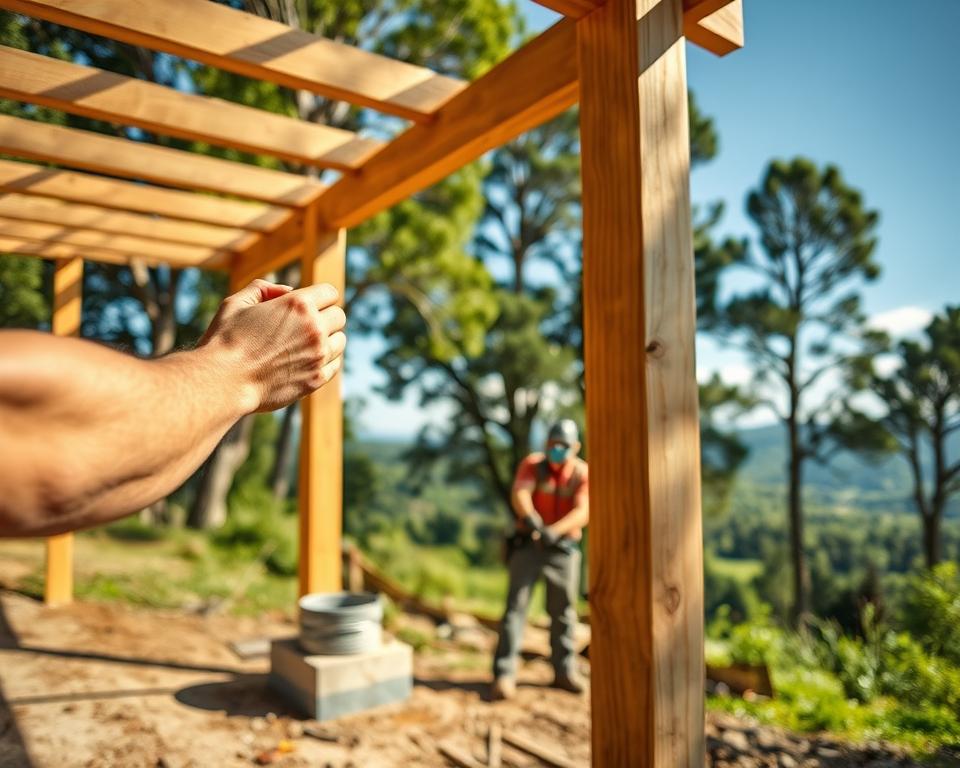
Before beginning, prepare temporary bracing materials. Cut twenty-four pieces of 1×2 timber to four-foot lengths. These supports will hold posts plumb during concrete curing.
Ensuring Level and Plumb Posts
Position the first post in its prepared hole. Settle it firmly into the gravel base. Use a long spirit level to verify perfect vertical alignment on all sides.
Secure the post with temporary bracing. Screw one end of support pieces to the post. Stake the opposite ends into the ground at strategic angles.
| Bracing Material | Length Required | Quantity Needed | Attachment Method |
|---|---|---|---|
| 1×2 Timber | 4 feet | 24 pieces | Screwed to post |
| Ground Stakes | 12 inches | 12 units | Hammered into soil |
| Concrete Mix | Varies by hole | Follow bag instructions | Poured around base |
Continuous checking maintains accuracy throughout this process. Even minor deviations become noticeable in the finished structure.
Perfect vertical alignment at this stage ensures years of trouble-free enjoyment from the completed feature.
After setting the first reference post, mark remaining positions with stakes. Use masonry line to maintain straight alignment across all posts.
Mix concrete according to manufacturer specifications. Pour it carefully around each post base. Allow proper curing time before proceeding to subsequent construction steps.
Attaching Cross Beams and Installing Shade Joists
This phase focuses on constructing the overhead framework. It involves attaching horizontal cross beams to the vertical posts to form the primary roof structure.

The process requires careful measurement and secure fastening. It establishes the pergola’s strength and visual appeal.
Bolting Techniques and Post Supports
Workers begin by marking the desired height for the cross beams on each post. Temporary support braces made from 2″x3″ studs are then screwed perpendicularly onto the posts.
These braces act as a shelf to hold the beams in place during installation. A temporary 3 1/2″ decking screw secures the beam to the post for initial positioning.
The permanent connection uses a two-stage method. A long 5/8″ auger bit bores through both the beam and the post. A 10-inch galvanised bolt, with washers and nuts, is then inserted.
Using two wrenches ensures the connection is tightened thoroughly without damaging the wood. This creates a robust, long-lasting joint.
Spacing for Optimal Shade and Stability
Once the cross beams are secured, the shade joists are installed on top. These boards create the characteristic lattice pattern of the roof.
Spacing is a critical factor for both function and aesthetics. Joists are typically spaced between 10 and 16 inches apart.
| Joist Spacing | Shade Density | Material Usage |
|---|---|---|
| 10 inches | Denser shade | Higher |
| 16 inches | Lighter shade | Lower |
For attachment, 3 1/2″ screws are driven at a 45-degree angle on each side into the cross beams below. This method offers excellent strength and a clean look.
The distance between the main cross beams themselves is also important. It generally ranges from 1.5 to 3 metres, depending on the structure’s size and height.
Proper spacing ensures the framework can support the weight of climbing plants and withstand weather. It directly influences the stability and longevity of the entire garden feature.
Pergola Design Variations: From Rustic Charm to Modern Elegance
The final character of a pergola is shaped by its material selection and decorative flourishes. Beyond traditional wood, structures can be crafted from stone, concrete, or metal, offering distinct aesthetics from classical to industrial. Creative combinations of these materials allow for truly unique design statements that reflect personal style.
Integrating Climbing and Fragrant Plants
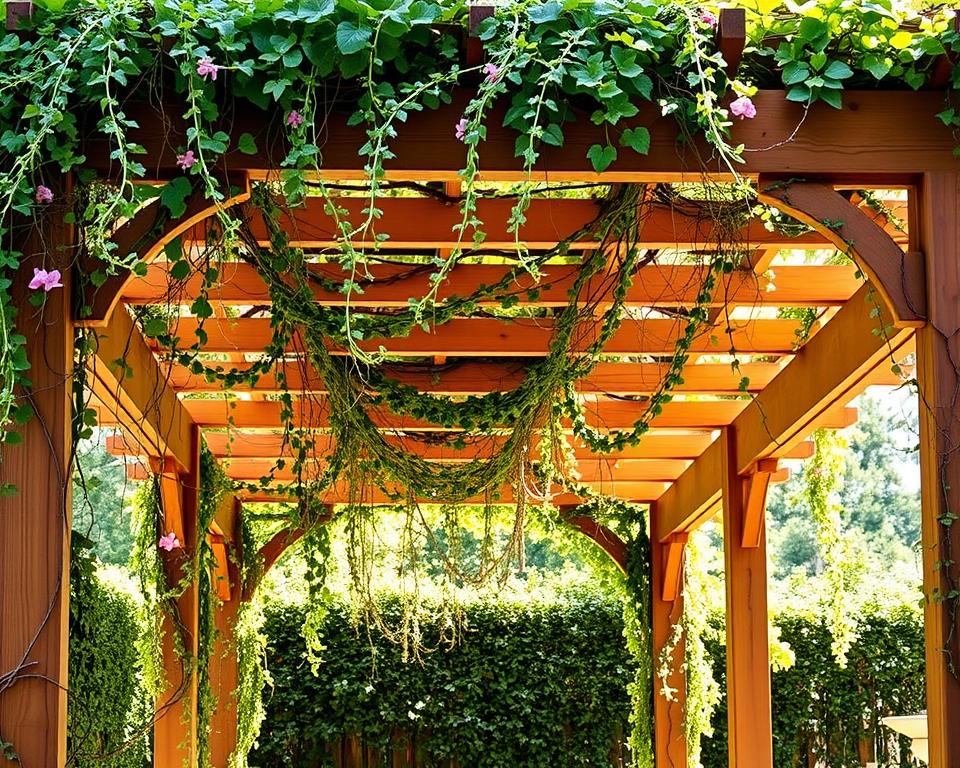
The most captivating pergola displays feature climbing plants chosen for their sensory appeal. Ideal selections offer fragrant flowers, colourful autumn leaves, or scented foliage. These plants transform the structure into a living, seasonal feature.
Different species create varied effects on the sides and roof. Some provide dense coverage, while others allow dappled light. The right choice enhances the space throughout the summer and beyond.
| Plant | Key Feature | Best For |
|---|---|---|
| Honeysuckle | Fragrant summer flowers | Sweet scent |
| Clematis (Groups 1 & 2) | Vibrant blooms, manageable growth | Easy maintenance |
| Wisteria | Dramatic, cascading flowers | Visual impact |
Enhancing with Decorative Elements and Lighting
Personalisation extends to decorative additions. For evening ambience, fairy lights strung along the beams create a magical atmosphere for patio gatherings. Furniture choices, like a dining set or comfortable seating, define the area’s function.
A bold paint colour on the wood can make the structure a focal point. Incorporating bamboo adds a tropical feel. The goal is a harmonious design that complements the garden while serving its purpose beautifully.
Legal Considerations and Planning Permission in the UK
Legal requirements form a crucial aspect of pergola construction that homeowners must address. Understanding planning regulations prevents potential issues and ensures compliance with local authorities.
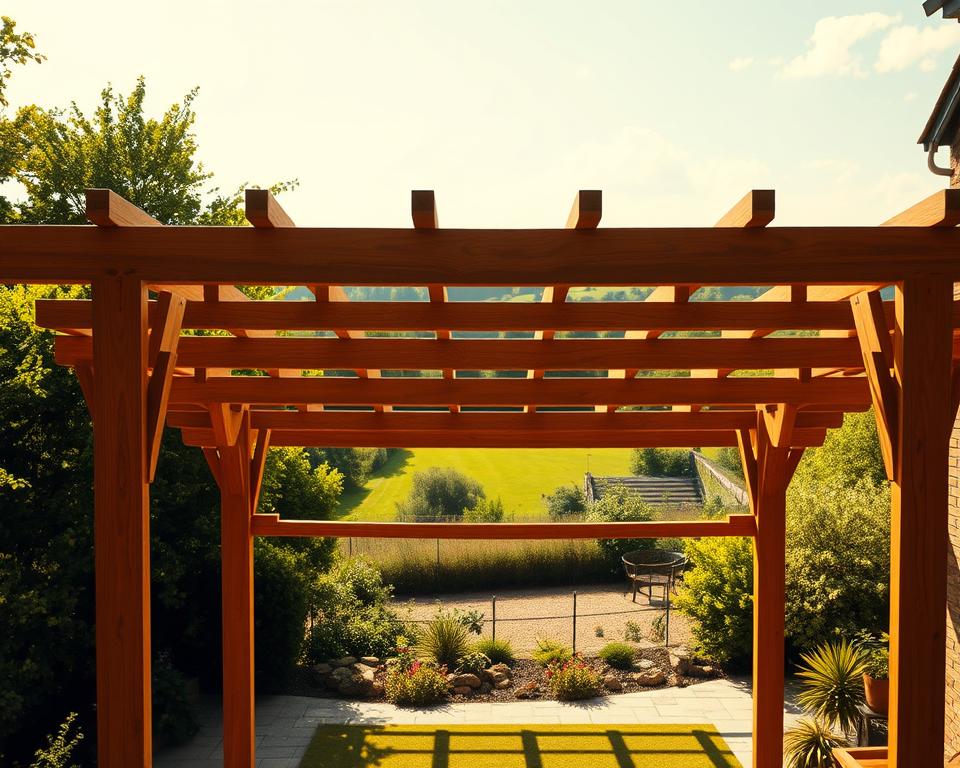
Most garden structures fall under permitted development rights. This means formal planning permission isn’t usually required if specific criteria are met.
Regulations and Permitted Dimensions
When you build a pergola, height restrictions depend on boundary proximity. Structures within two metres of any boundary cannot exceed 2.5 metres in height.
Positioning the pergola more than three metres from boundaries allows for three-metre heights. A pitched roof design can reach up to four metres under permitted development.
The structure must not cover more than half the garden area. This ensures adequate open space remains around the house.
Planning permission becomes mandatory for certain situations. Building at the front of the house always requires formal approval.
Listed buildings and conservation areas have additional restrictions. Homeowners should check with their local planning authority before starting any building pergola project.
Taking time to verify requirements prevents costly mistakes. It’s essential to make sure all regulations are followed before construction begins.
Conclusion
Constructing a durable garden structure requires careful attention to both design and execution from start to finish. The process of building a pergola demands time and planning, but the rewards transform any outdoor area into a versatile living space.
This one project can become the first of many satisfying garden improvements. A well-built pergola provides essential shade while creating an attractive focal point for any patio or garden. It enhances the house and withstands changing weather conditions.
The framework offers excellent support for climbing plants, blending natural beauty with functional design. Many families find their completed structure becomes a cherished space for gatherings throughout the seasons.
With proper planning and execution, anyone can create a beautiful, lasting feature that adds value and enjoyment to their outdoor living experience.
FAQ
Do I need planning permission to build a pergola in my garden?
In most cases, a pergola falls under ‘permitted development’ in the UK, meaning planning permission is not required. However, there are restrictions. The structure must not be forward of the principal elevation of the house, and its height is typically limited. It is always advisable to consult your local planning authority before commencing any build.
What is the best wood to use for a pergola to withstand British weather?
For durability against rain and damp, pressure-treated softwoods, like pine, are a popular and cost-effective choice. Hardwoods, such as oak or cedar, offer superior natural resistance to rot and insects but come at a higher price. All wood should be treated with a suitable preservative or stain for long-term protection.
How deep should the post holes be for a stable pergola?
The depth of the post holes is critical for stability. A general rule is to dig holes to a depth of at least 60cm, or one-third of the above-ground post height. This ensures the foundation is secure enough to support the structure, especially during high winds. The holes should then be filled with concrete to set the posts firmly.
What is the ideal spacing for the roof beams or joists?
The spacing of the roof beams affects both the amount of shade and the structural integrity. A common spacing is between 40cm and 60cm apart. Closer spacing provides more shade and support for climbing plants, while wider spacing creates a more open feel. The size and span of the beams will also influence this decision.
Can I attach a pergola directly to my house?
Yes, a pergola can be attached to a house wall, often creating a seamless transition from indoor to outdoor space. This is known as a ‘lean-to’ design. It is essential to use the correct wall bolts and ensure the attachment is secure. A ledger board is typically fixed to the wall to support one side of the structure.
How can I add more shade to my pergola?
There are several ways to enhance shade. Planting climbing varieties like wisteria, clematis, or honeysuckle will create a natural canopy over time. For immediate cover, you can add a retractable fabric canopy, bamboo or reed roofing, or slatted panels to the top of the structure.
What maintenance does a wooden pergola require?
Regular maintenance will prolong the life of a pergola. An annual inspection for damage or rot is recommended. The wood should be cleaned and re-treated with a protective stain or preservative every few years, depending on the product used and exposure to the elements.