How to Secure a Gazebo: Tips and Best Practices
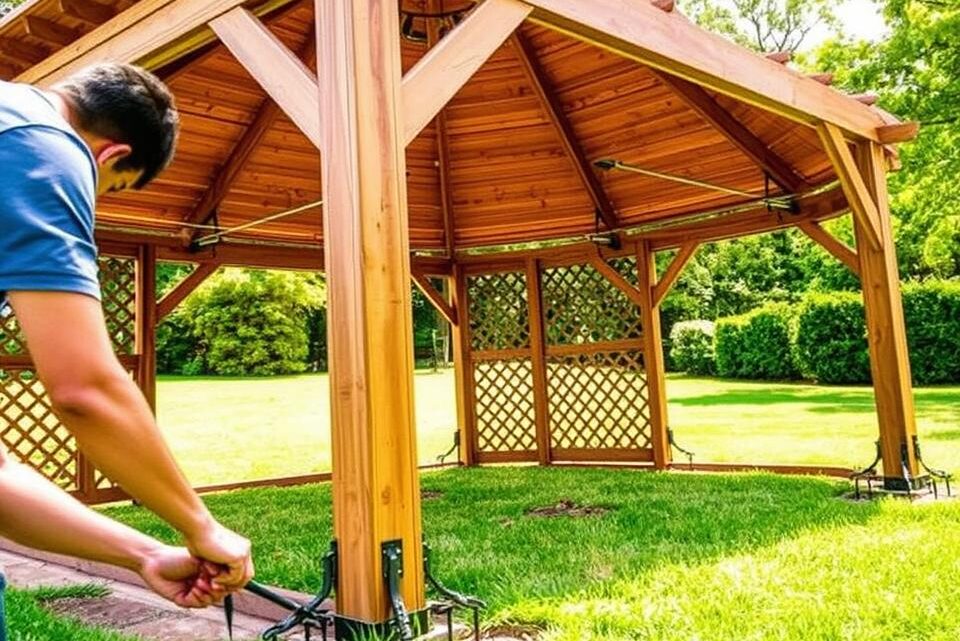
An outdoor structure provides excellent shelter and enhances any garden space. However, without proper anchoring, it becomes vulnerable to environmental forces. Strong winds and unpredictable weather conditions can compromise its integrity.
Proper stability ensures the longevity of this garden investment. Homeowners must consider various factors including surface type and local wind patterns. Each situation demands a tailored approach.
This guide offers comprehensive tips for different scenarios. It covers both temporary and permanent solutions for various surfaces. Readers will learn damage-free methods and expert recommendations.
Effective protection involves understanding design factors and selecting appropriate techniques. Considering safety prevents accidents and property damage. The right approach brings peace of mind during seasonal changes.
Inhaltsverzeichnis
Key Takeaways
- Proper anchoring prevents structural damage and extends the life of your garden structure
- Consideration of local wind patterns and surface materials is essential
- Both temporary and permanent solutions are available for different needs
- Damage-free methods exist for various installation surfaces
- Expert recommendations consider specific environmental factors
- Understanding design elements helps in selecting appropriate techniques
- Regular maintenance checks ensure ongoing stability and safety
Planning Your Gazebo Security Strategy
Before selecting any anchoring method, a comprehensive evaluation of your outdoor structure and local climate is essential. This preliminary assessment ensures the chosen approach matches both the gazebo’s characteristics and environmental demands.
Assessing Gazebo Design and Materials
The structural integrity of garden structures depends heavily on their construction. Heavier gazebos with robust frames offer superior wind resistance compared to lightweight aluminium or plastic alternatives.
Permanent installations with concrete footings provide maximum stability. Pop-up gazebos, while convenient, require more careful anchoring due to their inherent vulnerability.
Roof and side panel materials significantly impact performance. Metal or polycarbonate panels withstand harsh conditions better than fabric canopies. Some high-performance models feature specialised aluminium extrusions designed specifically for challenging weather.
Analysing Local Weather Conditions
Understanding regional wind patterns is crucial for effective planning. Homeowners should research historical data for their area to anticipate seasonal variations.
Prevailing wind directions and typical speeds determine the necessary level of protection. This analysis helps match the gazebo’s capabilities with local environmental challenges.
Proper planning creates a foundation for reliable outdoor shelter throughout the year. The right combination of structural assessment and weather analysis ensures long-term stability.
Understanding the Importance of Securing Your Gazebo
A garden structure offers a wonderful retreat, but its enjoyment hinges on stability. Ignoring proper anchoring invites significant risk, particularly from environmental forces. The consequences of a failure extend beyond simple inconvenience.
Risks from Strong Winds and Unstable Surfaces
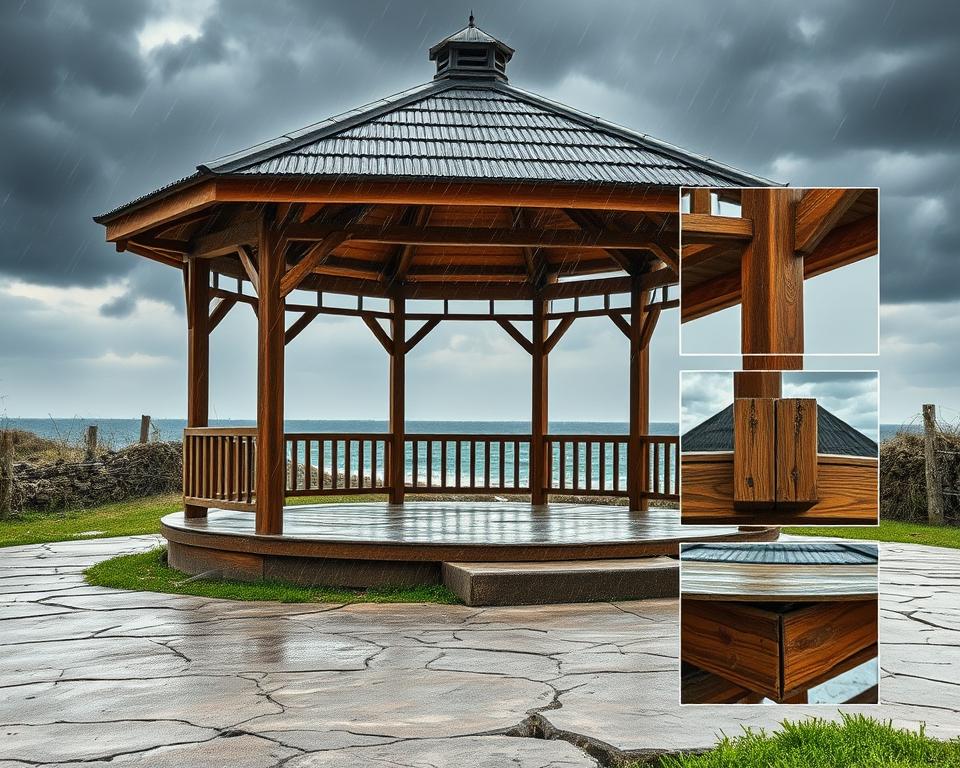
Unsecured structures are highly vulnerable during adverse weather. Strong winds can cause a gazebo to lift, tip, or collapse entirely. This poses a serious threat of property damage or personal injury.
Specific wind speed thresholds are critical. Standard gazebos become unsafe when wind speeds exceed 35 miles per hour. Pop-up versions should be taken down at 25-30mph. For permanent structures, roof covers must be removed if gusts are forecast above 50mph.
Equally important is the foundation. Positioning a gazebo on unstable surfaces without adequate support dramatically increases the risk of it becoming airborne. Proper anchorage counteracts these forces, ensuring the structure remains safely in place.
Protecting Your Investment
Beyond immediate safety, securing a gazebo protects your financial outlay. These are often considerable investments for a garden. Implementing robust security measures from the start prevents structural stress and material fatigue.
This proactive approach significantly extends the lifespan of the gazebo. It avoids costly repairs or replacement caused by weather-related damage. The relatively small cost of quality anchoring solutions offers substantial returns through enhanced durability and peace of mind.
How to Secure a Gazebo
Homeowners have multiple pathways to ensure their garden structure remains firmly in position. The choice of stabilisation approach depends on factors like surface type, intended duration of use, and local weather patterns.
Popular Anchoring Methods for Stability
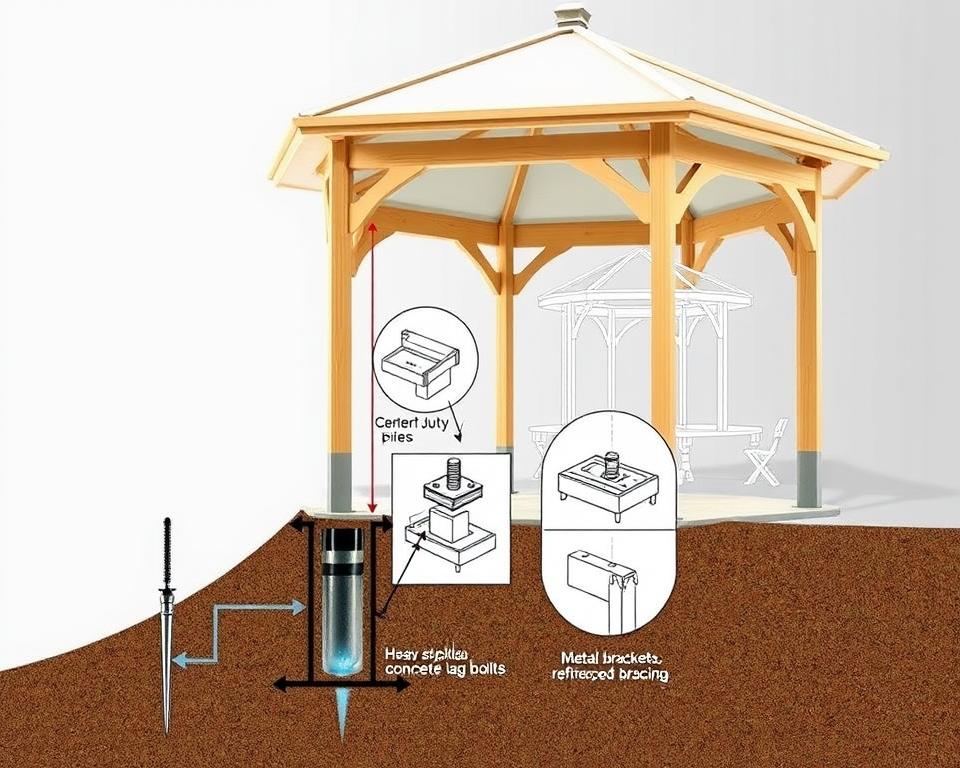
Various anchoring methods provide reliable solutions for different scenarios. These techniques range from permanent installations to temporary setups.
Permanent anchoring often involves drilling into surfaces for maximum security. Temporary methods offer flexibility while maintaining good protection.
No-Drill and Damage-Free Options
Many homeowners prefer solutions that preserve surface integrity. These damage-free methods have advanced significantly in recent years.
Weighted systems use sandbags or water weights to resist lifting forces. Tension-based approaches employ ratchet straps and guy ropes for distributed stability.
| Method Type | Best For | Installation | Stability Level |
|---|---|---|---|
| Weighted Systems | Temporary setups, paved surfaces | Quick, no tools | Medium |
| Ratchet Straps | Deck installations, rental properties | Moderate effort | High |
| Adhesive Anchors | Concrete surfaces, semi-permanent | Simple application | High |
| Guy Ropes with Stakes | Grass areas, windy locations | Easy adjustment | Medium-High |
These anchoring methods provide excellent stability without surface damage. They represent smart techniques for protecting your investment.
Anchoring Solutions for Different Surfaces
Different installation surfaces demand tailored approaches to ensure structural integrity and safety. The choice of anchoring system directly impacts the stability of any outdoor shelter.

Proper surface assessment prevents common installation errors. Each material requires specific techniques for optimal performance.
Securing on Grass Using Tie-Down Kits
Soft ground installations present unique challenges for stabilisation. Grass surfaces benefit from specialised tie-down kits that provide reliable anchoring.
These kits typically include metal pegs driven into the ground at strategic angles. They connect to the gazebo posts using adjustable straps for tension control.
Standard kits work well for moderate conditions. Heavy-duty versions feature thicker pegs and commercial-grade straps for enhanced wind resistance.
Installation involves driving pegs at 45-degree angles away from the structure. This maximises holding power in soft ground conditions.
Weighting Down on Concrete, Pavers and Tarmac
Hard surfaces require different stabilisation strategies. Weight-based systems become essential when traditional ground penetration isn’t possible.
Steel stacking leg weights offer maximum stability for permanent installations. Water leg weights provide adjustable solutions for varying conditions.
Sandbag options serve as cost-effective alternatives. All methods increase the effective weight of the structure’s base.
Proper weighting prevents lifting forces on concrete, pavers and similar surfaces. The right choice depends on installation duration and local weather patterns.
Innovative Methods Without Drilling
Modern gazebo security has evolved beyond traditional drilling methods. Homeowners now have access to sophisticated systems that provide excellent stability while preserving surface integrity.
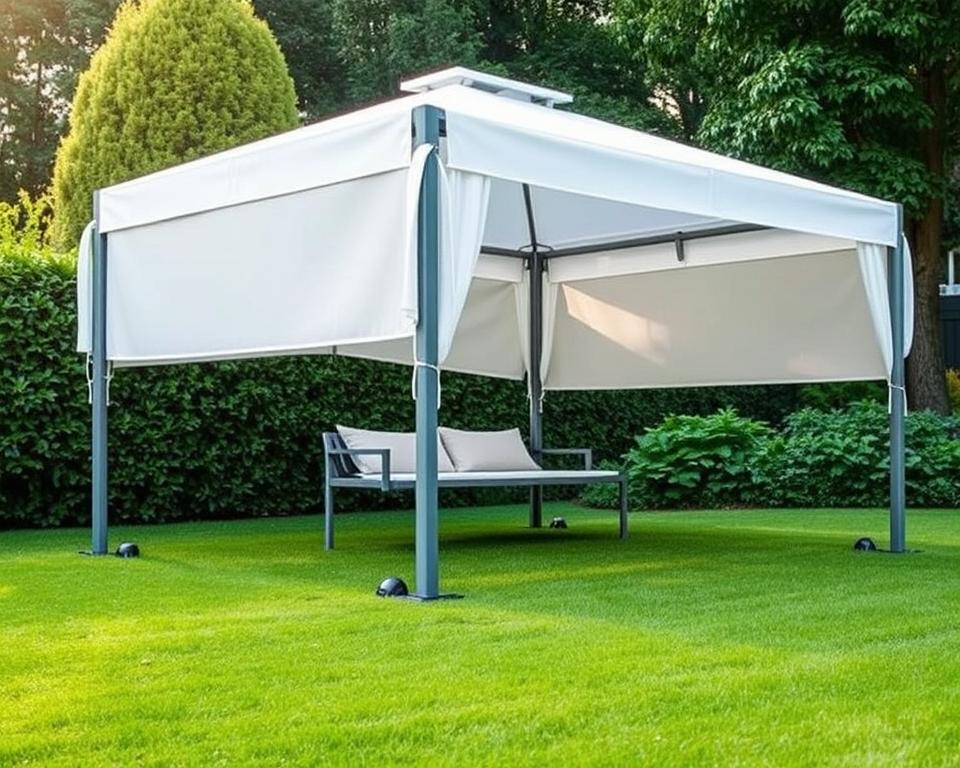
These damage-free solutions are particularly valuable for rental properties and delicate surfaces. They offer flexible installation options without permanent alterations.
Using Weighted Sandbags and Water Weights
Weight-based systems utilise gravity for effective anchoring. Sandbag leg weights are filled with sand or fine pea shingle and strapped to the base of each leg.
Universal water leg weights provide versatile alternatives. They can be filled with water, sand, or gravel depending on required weight and portability needs.
Steel stacking leg weights represent premium solutions. These circular interlocking weights are sold in pairs weighing 25kg each, providing substantial anchoring force.
Adhesive Anchors and Guy Ropes
Industrial-strength adhesive pads create strong bonds to smooth surfaces like concrete. This anchoring method offers permanent installation benefits with clean removal options.
Guy rope systems distribute wind loads across larger areas. Ropes attached to the framework and secured with ground pegs significantly enhance wind resistance.
These innovative approaches demonstrate how effective anchoring no longer requires invasive techniques. They provide reliable security while maintaining surface aesthetics.
Step-by-Step Guide to Secure Your Gazebo
The installation phase represents the critical junction where planning meets practical application. Following systematic procedures ensures the chosen stabilisation method performs as intended.
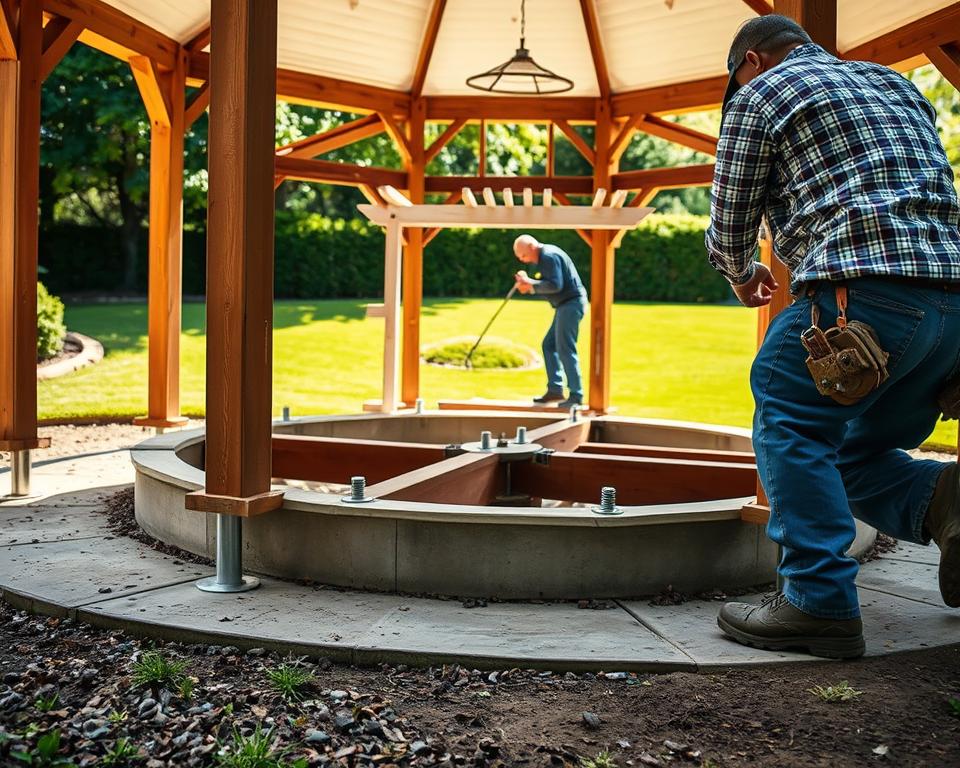
Installation and Adjustments
Anchor kits provide comprehensive solutions for stabilising outdoor structures. These systems typically involve attaching heavy-duty plastic or metal stakes to the structure’s legs using straps or cables.
Plastic anchors offer economical installation with simple mallet driving. Metal or galvanised steel stakes require sledgehammers for superior wind resistance. Auger-style screw anchors twist into soil like giant screws for enhanced grip.
Tie-down straps present versatile options for additional security. Ratchet straps feature locking mechanisms for maximum tension control. Cam buckle straps allow reliable tightening with simple buckle operation.
Proper strap installation involves looping around the main frame and connecting to stable anchors. Nearby posts, railings, or fences serve as excellent attachment points. This distributes wind loads effectively across the entire structure.
Weight-based systems require careful distribution around all legs. Uneven loading creates structural stress and compromises stability. Regular checks ensure the structure remains level and properly tensioned.
Seasonal adjustments accommodate changing weather patterns. Periodic tightening maintains optimal performance throughout the year. These simple maintenance steps preserve the integrity of the installation.
Enhancing Gazebo Stability in Windy Conditions
Optimal placement decisions can dramatically improve the wind resistance of garden structures. Intelligent positioning works alongside anchoring systems to provide comprehensive protection.
Strategic Placement and Orientation
Location selection significantly impacts wind load management. Positioning near existing structures or trees offers shelter while maintaining airflow.
Orientation matters greatly. Place open sides perpendicular to prevailing wind directions. This minimises wind entry and reduces internal pressure.
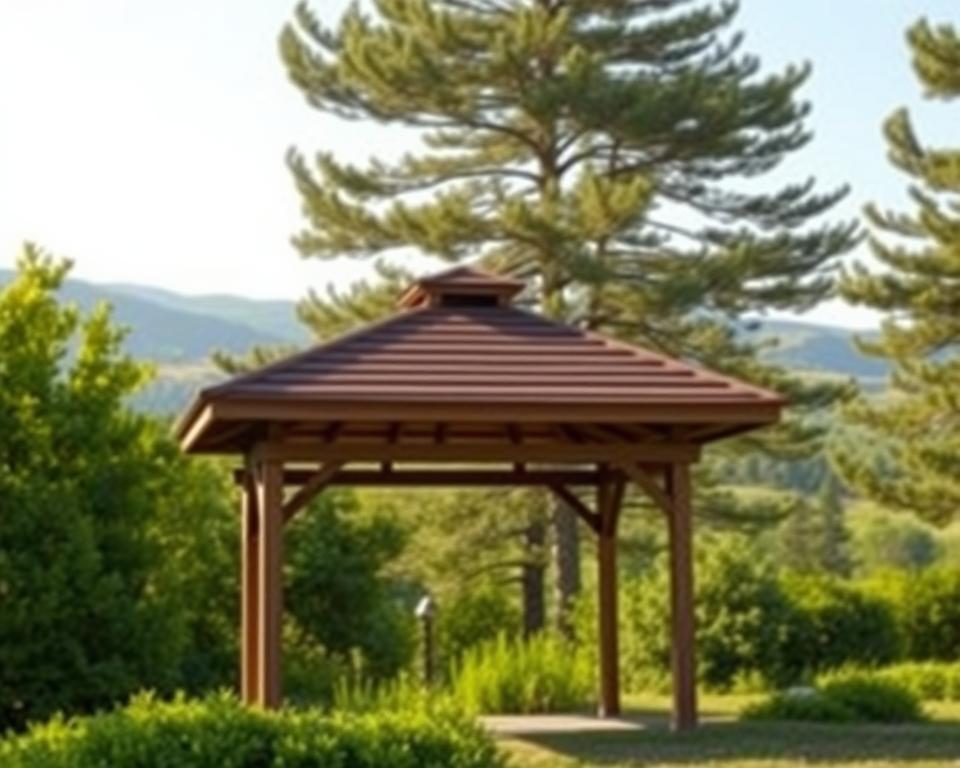
Consider sunlight exposure and avoid open southern exposures. These areas typically receive maximum wind. Exercise caution near slopes or hills that can accelerate wind velocity.
Additional Reinforcement Techniques
Structural reinforcements provide extra stability. Corner gussets are thick metal brackets that transfer forces between leg posts.
Cross bracing adds diagonal members between legs. This creates triangulated structures with increased rigidity.
| Reinforcement Type | Function | Best Application |
|---|---|---|
| Corner Gussets | Strengthens joint connections | All gazebo types |
| Cross Bracing | Increases lateral stability | Large or permanent structures |
| Cable Tie-Downs | Provides roof anchoring | High wind areas |
| Roof Purlins | Minimises uplift forces | Heavy wind conditions |
Advanced methods include cable tie-down systems attached to roof structures. Roof purlins add horizontal support perpendicular to rafters. These techniques work with proper placement for maximum effectiveness.
Expert Recommendations and Best Practices for Safety
Professional insights elevate standard practices to ensure long-term reliability. These expert tips help homeowners maintain their outdoor shelters through changing weather conditions.
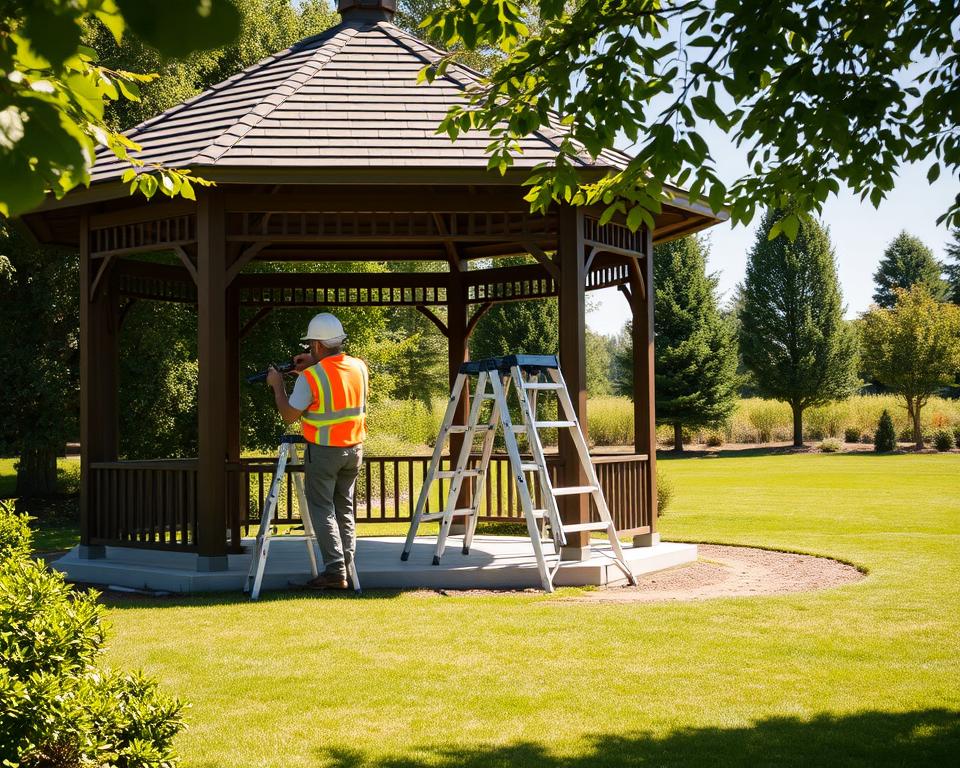
Critical wind speed thresholds determine appropriate action. Pop-up gazebos require takedown when winds reach 25-30mph. Permanent structures need roof cover removal before gusts exceed 50mph.
Seasonal Maintenance and Regular Inspections
Proactive monitoring prevents unexpected failures during severe weather. Regular checks should examine strap tension and weight security. Prompt replacement of worn components maintains system integrity.
For permanent installations, removing side panels and roof covers reduces wind-catching surfaces. This partial dismantling allows the frame to remain while minimising risk. Early action based on forecasts provides adequate safety margins.
| Inspection Frequency | Key Checkpoints | Recommended Actions |
|---|---|---|
| Monthly | Strap tension, weight displacement | Adjust tension, reposition weights |
| Seasonally | Component wear, connection points | Replace worn parts, reinforce connections |
| Pre-Storm | Forecast assessment, structural integrity | Implement protective measures or takedown |
Establishing clear protocols helps keep gazebo structures secure. Documentation of effective configurations for different conditions streamlines decision-making. These practices ensure optimal support for your patio investment.
Routine maintenance offers the best options for preserving your garden shelter. Consistent attention to these details prevents minor issues from escalating. The result is enhanced durability and peace of mind.
Conclusion
Implementing the right anchoring strategy transforms a vulnerable garden structure into a resilient outdoor retreat. Homeowners can achieve lasting stability by carefully selecting methods suited to their specific conditions.
Whether dealing with concrete, pavers, or a grassy patio, effective solutions exist. Anchoring kits with stakes work well on grass, while weight-based systems using sandbags or water weights are ideal for hard surfaces. These techniques offer robust security without drilling.
Adherence to wind speed guidelines is crucial for safety. Remembering to take down pop-up gazebos in strong winds prevents damage. This proactive approach ensures your frame and posts remain intact.
Ultimately, investing time in proper setup pays dividends. It extends the life of your gazebo and provides peace of mind. By applying these tips, you can confidently enjoy your garden shelter for many seasons.
FAQ
What is the best way to anchor a gazebo on a patio?
For hard surfaces like concrete or pavers, weighted bases are often the best option. Using steel leg weights, sandbags, or specially designed water weights provides excellent stability without causing damage. These methods offer a secure hold and are generally easy to install and remove.
Can a gazebo withstand strong winds?
A> A gazebo can resist windy conditions if it is properly secured. The structure’s ability to withstand gusts depends on its design, the anchoring methods used, and the total weight applied. Using a combination of techniques, such as guy ropes and leg weights, significantly enhances stability and safety during adverse weather.
Are there anchoring options that do not require drilling?
Yes, several no-drill options exist. These include using heavy-duty sandbags, filling water weights, or employing adhesive anchors designed for temporary structures. These solutions are ideal for renters or those who wish to avoid permanent alterations to their patio or lawn.
How much weight is needed to keep a gazebo from blowing away?
The required weight varies based on the gazebo’s size and local weather conditions. As a general rule, a minimum of 20-25 kg per leg is recommended for smaller structures in moderate winds. For larger gazebos or areas prone to strong gusts, increasing the weight or using additional support like tie-down kits is advisable.
What are the risks of not properly securing a gazebo?
Failing to secure a gazebo poses significant risks. In strong winds, an unanchored structure can lift, causing damage to the gazebo itself, neighbouring property, or posing a serious safety hazard to people. Proper anchoring protects your investment and ensures everyone’s safety.
How can I improve my gazebo’s stability on grass?
Securing a gazebo on grass is effectively achieved with spiral ground anchors or stake kits. These are driven into the lawn and attached to the gazebo’s frame with ropes or straps. For added stability on softer ground, placing a solid base, like paving slabs, under the legs before anchoring can prevent sinking.