Can You Install Under Floor Heating in a Log Cabin?
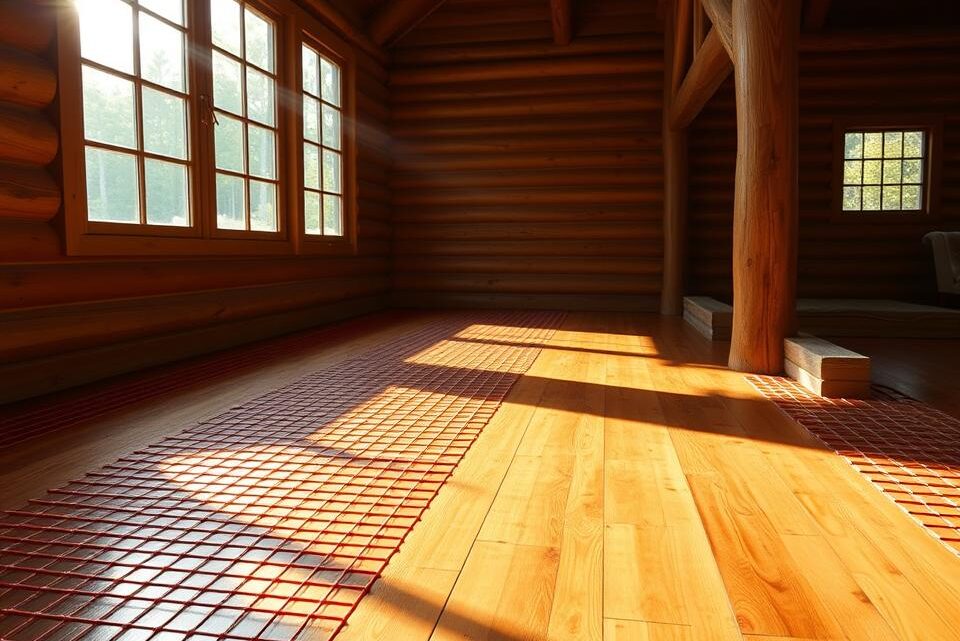
For many homeowners across the United Kingdom, a log cabin represents a versatile space. It can serve as a garden office, a cosy retreat, or even a full-time residence. A primary consideration for year-round use is effective heating.
Underfloor heating presents a compelling solution. This system generates warmth that rises evenly from the floor surface. It creates a comfortable environment, eliminating cold spots often associated with traditional radiators.
The suitability of this heating method for a timber structure is a common query. This article explores the feasibility in detail. It addresses vital factors such as insulation requirements and the specific installation process for a log building.
Energy efficiency is a significant advantage of underfloor heating. It can be more cost-effective than conventional systems, making it an attractive option for a garden cabin. This guide provides evidence-based information to help readers make an informed decision.
Inhaltsverzeichnis
Key Takeaways
- Underfloor heating offers efficient and comfortable warmth for a log cabin.
- This system is particularly beneficial for spaces used throughout the year.
- Proper insulation is a critical factor for successful installation.
- The method is often more energy-efficient than radiator-based heating.
- Several system types are available, each with specific installation considerations.
- Assessing the structural suitability of the cabin is an essential first step.
Understanding Underfloor Heating Systems
Modern heating solutions offer efficient warmth distribution for various building types. Underfloor heating represents an advanced approach to temperature control.
How Underfloor Heating Works
This heating system operates through radiation and convection principles. Heat emanates from beneath the floor surface, warming objects directly.
Warm air rises naturally from the floor level. It creates consistent ambient warmth throughout the entire room. Control mechanisms regulate temperature for different zones.
Benefits Over Traditional Radiators
Compared to wall-mounted radiators, this system provides superior heat distribution. It eliminates cold spots and draughts common with conventional heating.
The space-saving design allows flexible furniture placement. Operating at lower temperatures improves energy efficiency. This makes it compatible with renewable energy sources.
Comfort is enhanced with warmth underfoot. The even temperature profile creates a pleasant environment. This heating method proves particularly effective for well-insulated spaces.
Key Considerations for Log Cabin Insulation and Ventilation
The unique characteristics of wooden buildings demand careful attention to both thermal barriers and airflow systems. Proper preparation ensures optimal performance of embedded warmth solutions.
Insulation Requirements for Timber Structures
Timber’s natural properties require specific insulation approaches. Even with substantial wall thickness, additional thermal barriers prove essential.
Foundation insulation prevents significant heat loss into the ground. Proper installation beneath the warmth grid can reduce annual costs substantially.
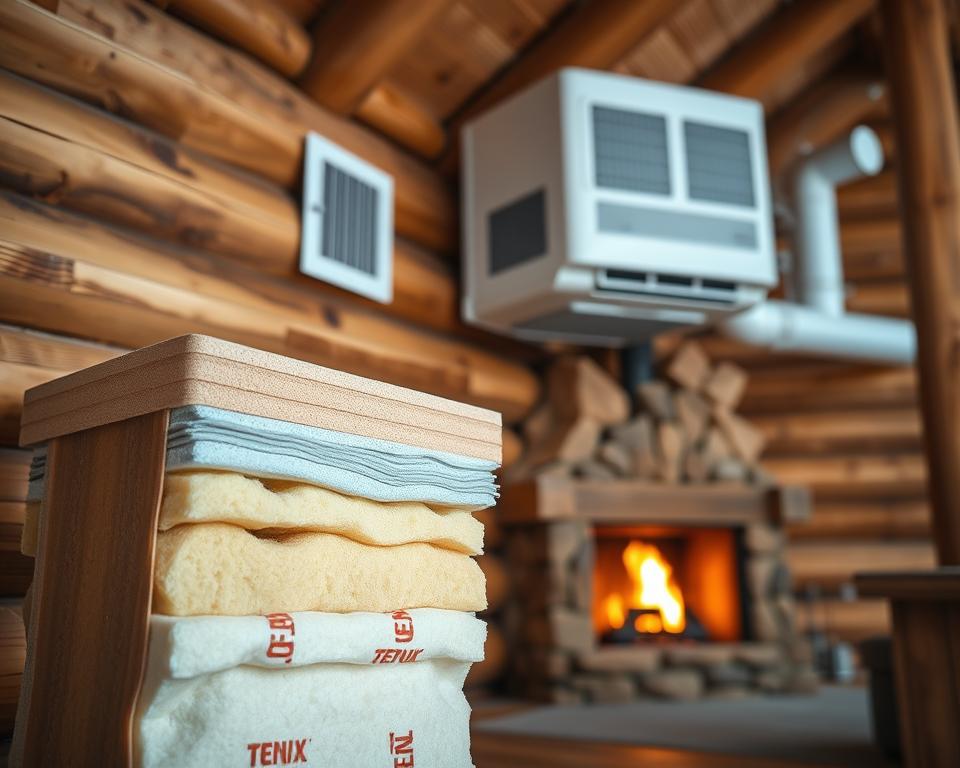
Floor insulation represents a critical investment. It maximises system efficiency while protecting the structure.
Ventilation and Moisture Control
Effective ventilation prevents moisture accumulation in timber buildings. Proper air circulation maintains structural integrity.
Moisture control protects both the building and embedded systems. Regular maintenance prevents deterioration issues.
“A well-ventilated timber structure maintains its value and performance for decades.”
Assessing existing log cabins determines necessary upgrades. Integrated systems offer advantages over retrofitting.
| Insulation Type | R-Value | Moisture Resistance | Installation Complexity |
|---|---|---|---|
| Spray Foam | High | Excellent | Professional Required |
| Rigid Board | Medium-High | Good | Moderate |
| Fibreglass Batt | Medium | Fair | DIY Possible |
Proper air management combines with thermal control for optimal results. These elements work together in any cabin environment.
Can You Install Under Floor Heating in a Log Cabin?
The feasibility of integrating radiant floor warmth into a timber structure hinges on specific structural prerequisites. A positive outcome is highly likely for well-built log cabins that meet essential criteria.
Professional assessment is the crucial first step for any project. It confirms the building’s capability to support the additional load.
Structural Suitability and Load-Bearing Factors
The foundation and floor joists must be robust. They support the combined weight of insulation, heating mats or pipes, and screed.
A stable structure prevents sagging and ensures even heat distribution. This protects the integrity of the entire heating system over the long term.

Consulting the system manufacturer’s specifications is vital. It provides clear guidance on load requirements.
Criteria for Year-Round Use
For consistent performance in all seasons, a checklist of factors must be satisfied. This applies whether the space is a garden office or a permanent home.
Adequate insulation and ventilation are non-negotiable. They work with the underfloor heating system to maximise efficiency.
“A professional structural survey provides peace of mind and ensures the installation is safe and effective.”
The following table outlines the primary verification points for heating installation.
| Criteria | Importance | Verification Method |
|---|---|---|
| Load-Bearing Capacity | Critical | Professional Structural Survey |
| Insulation Level | High | Thermal Assessment |
| Ventilation adequacy | High | Airflow Analysis |
| Floor Stability | Critical | Visual and Physical Inspection |
Engaging qualified installers guarantees these criteria are met. It makes the underfloor heating system a superb choice for a comfortable cabin.
Comparing Electric and Water Underfloor Heating Options
Selecting the appropriate underfloor heating system for a timber building involves a clear comparison of the two main technologies. Each type offers distinct advantages regarding installation, running costs, and performance.
Homeowners must weigh these options carefully. The right choice depends on the cabin’s size, usage, and existing infrastructure.
Electric Underfloor Heating: Installation and Cost
Electric systems utilise thin heating wires or mats. They are laid directly beneath the final floor covering.
This type is known for its relatively straightforward installation. It is compatible with various floor finishes like tiles and laminate.
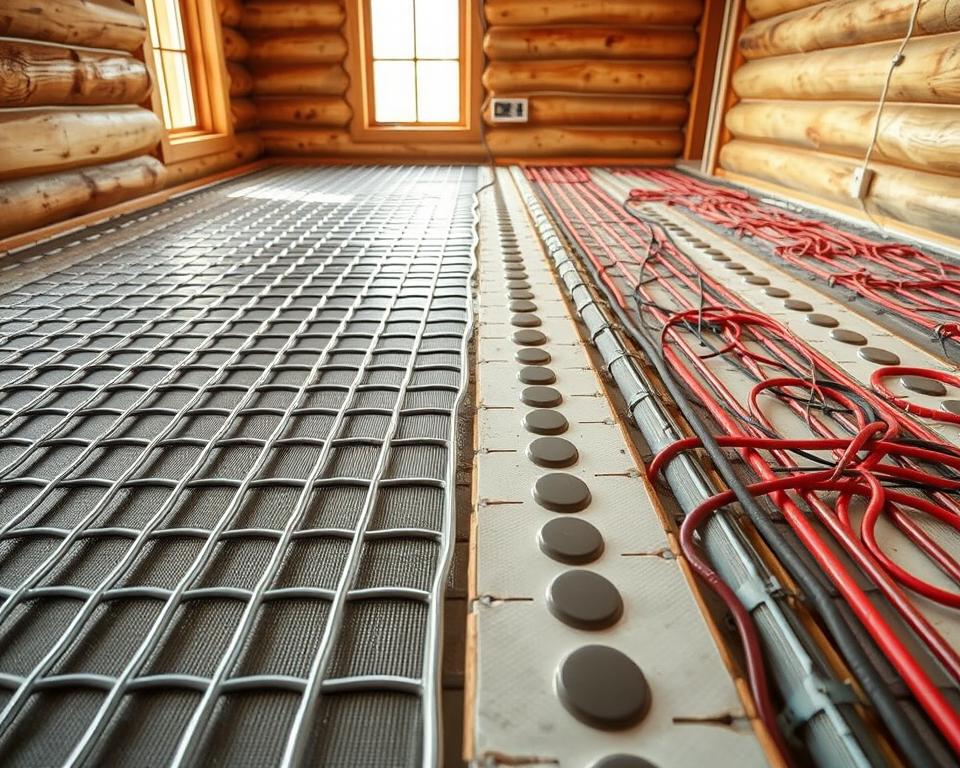
However, the initial cost can be significant. A kit for a 20m² area, providing 3,000W of heating, often exceeds £1,000.
Due to energy consumption, electric systems are often better suited for smaller spaces. Larger rooms require more powerful and costly options.
Water Underfloor Heating: Efficiency and Long-Term Performance
Water-based systems circulate warm water through pipes embedded in the floor. They connect to a boiler or heat pump.
These heating systems take longer to reach the desired temperature. Once warm, they provide consistent, efficient heat for extended periods.
The lower operating temperature of a water system enhances its long-term cost-effectiveness. It also pairs well with renewable energy sources.
Choosing the Right System for Your Cabin
The best option hinges on specific circumstances. For a small, occasionally used cabin, an electric system may be ideal.
For larger, year-round spaces, a water-based system offers superior efficiency. Proximity to a main house’s heating can make this type more viable.
Budget, both for installation and ongoing operation, is a final critical factor. Evaluating all these options ensures an optimal comfort solution.
Installation and Flooring Considerations
The selection of final floor coverings plays a pivotal role in the overall performance of a radiant warmth system. Different materials conduct and distribute heat with varying efficiency, directly impacting comfort and running costs.
Tiles and stone offer excellent thermal conductivity, making them ideal for this application. Engineered wood boards are often preferred over solid timber for their stability under temperature changes.
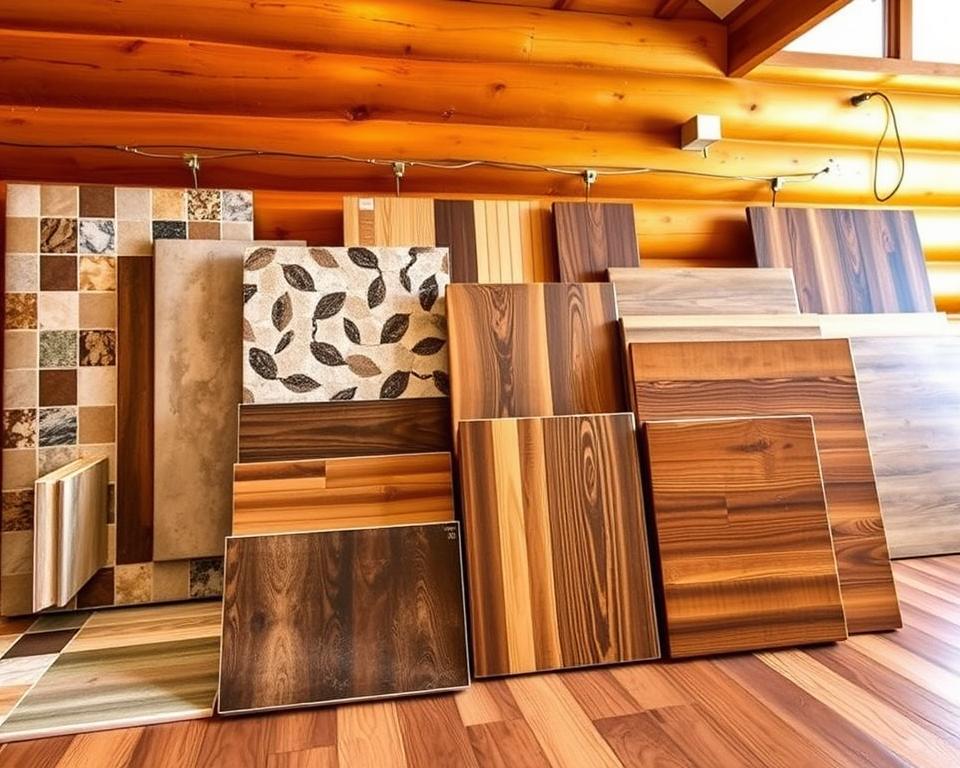
Flooring Material Options and Their Impact on Heat Distribution
Laminate and vinyl provide good performance if they have appropriate thermal resistance ratings. Thick carpets, however, can act as an insulator, reducing the system’s effectiveness.
The existing plank floor of a log cabin typically offers a stable base with good ventilation. This structure supports the necessary layers for the underfloor system.
Step-by-Step Installation Guidelines
Proper installation begins with preparing a level and stable subfloor. A layer of high-performance insulation is then laid to direct warmth upwards.
Heating pipes or cables are positioned on top of the insulation in a specific pattern. This ensures even heat distribution across the entire floor surface.
The final flooring material is installed directly over the heating elements. A dense grid of supporting beams helps keep the overall build-up thin for optimal warmth transfer into the room.
Adherence to manufacturer guidelines for spacing around pipes is critical. Professional installation guarantees the system functions reliably for years.
Conclusion
In summary, the integration of an underfloor heating system into a log cabin is a well-founded strategy for year-round comfort. Success hinges on meeting essential prerequisites, including robust insulation and a structurally sound floor.
The choice between electric and water-based systems depends on the cabin’s size and intended use. Seeking professional advice ensures the selected option is ideal for the specific space.
This heating method offers significant advantages. These include superior energy efficiency, even heat distribution, and valuable space saving within the room.
With correct installation and ongoing maintenance, a radiant floor system provides decades of reliable warmth. It is a superb way to enhance any timber home or garden retreat.
FAQ
Is underfloor heating suitable for a timber structure like a log cabin?
Yes, underfloor heating is an excellent choice for a log cabin, provided the structure is properly insulated and the system is correctly specified. The natural movement of the wood must be considered during the installation process to ensure long-term performance.
What are the main advantages of underfloor heating over radiators in a cabin?
Underfloor systems provide a more even heat distribution, eliminating cold spots and creating a comfortable environment from the floor up. They free up wall space where radiators would normally sit and operate more efficiently at lower water temperatures, which can reduce energy bills.
How does insulation affect the performance of a cabin’s heating system?
High-quality insulation is critical. It minimises heat loss, allowing the underfloor heating to work more effectively and efficiently. Proper insulation in the floor, walls, and roof ensures the generated warmth heats the space, not the outdoors.
What type of underfloor heating is best for a log cabin: electric or water?
The best system depends on the project. Electric systems, like heating mats, are often easier and cheaper to install in smaller cabins or retrofits. Water-based systems, which use pipes, typically offer lower running costs and are better suited for larger, permanently heated cabins.
Which flooring materials work best with underfloor heating in a cabin?
Tiles and stone are ideal as they conduct and retain heat superbly. Engineered wood and certain laminates are also good options. Solid hardwood is less suitable due to the risk of expansion and contraction with temperature changes. Always check the flooring manufacturer’s guidelines.
Can underfloor heating be installed in an existing log cabin?
It is possible, but it often requires raising the floor level to accommodate the system and insulation, which can affect door heights and room proportions. This makes it more complex than installing during the initial construction of the cabin.
Is special ventilation required when using underfloor heating in a timber building?
Adequate ventilation remains essential to manage moisture levels and protect the cabin’s structure, regardless of the heating system. Underfloor heating itself does not require additional ventilation, but the cabin’s natural ventilation strategy must be maintained.