How to Design a Log Cabin – Unique Ideas to Inspire
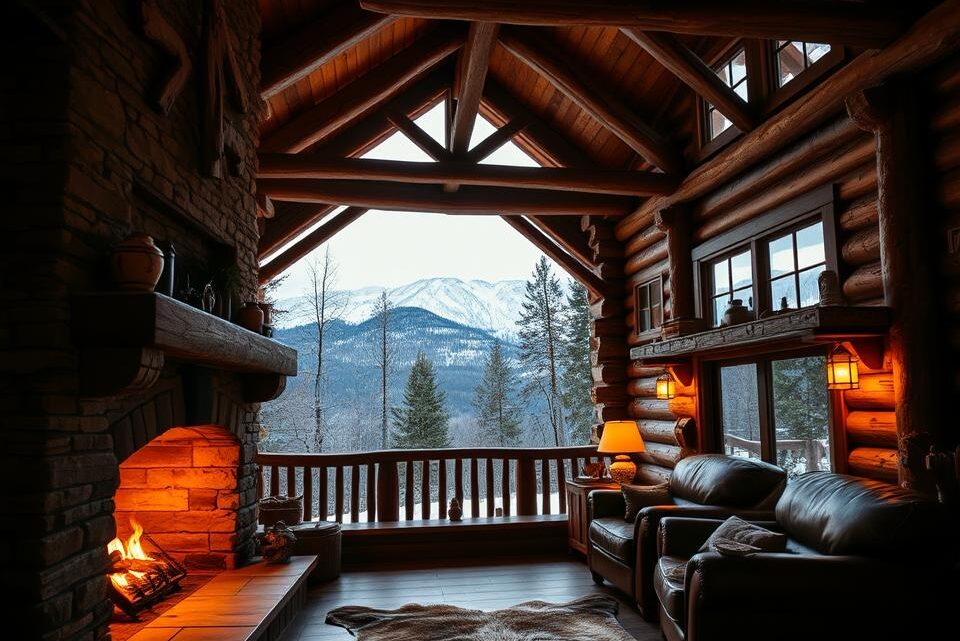
Creating a log cabin involves blending rustic appeal with modern needs. This guide offers a wealth of creative approaches. It helps transform a personal vision into a tangible reality.
Whether planning a compact garden retreat or a full-time residence, understanding core principles is crucial. These principles ensure the final structure meets aesthetic desires and practical requirements.
The journey explores diverse architectural styles. From traditional Alpine designs to contemporary interpretations, the possibilities are vast. These structures can be adapted for various purposes, including home offices and leisure spaces.
Readers will discover how to maximise space efficiency and select appropriate materials. Incorporating unique elements enhances both interior ambience and exterior appeal. This process is about creating a space that reflects personal style.
From initial planning to final styling, this article provides actionable insights. It offers professional guidance for confident decision-making. The goal is a cabin that offers lasting comfort and functionality.
Inhaltsverzeichnis
Key Takeaways
- Blend rustic charm with modern functionality for a successful outcome.
- Understand core principles to meet both aesthetic and practical needs.
- Explore a variety of architectural styles, from traditional to contemporary.
- Consider the cabin’s purpose, such as a residence, office, or retreat.
- Focus on efficient space planning and appropriate material selection.
- Incorporate unique design elements to personalise the interior and exterior.
- Utilise professional guidance for confident decision-making throughout the process.
Introduction to Log Cabin Design
Garden cabins provide adaptable spaces that can be tailored to various lifestyle requirements and preferences. These versatile buildings blend natural aesthetics with practical functionality.
Understanding the Log Cabin Concept
Originally simple wilderness shelters, modern timber constructions have evolved significantly. Today’s log cabin represents a sophisticated garden building with year-round usability.
The fundamental appeal lies in natural timber construction. This material choice provides inherent warmth and character. It creates a rustic aesthetic that complements outdoor settings beautifully.
Benefits of a Log Cabin Retreat
These structures offer numerous advantages for property owners. They create valuable additional space without costly home extensions.
A garden retreat provides separation between work and leisure activities. It serves as a peaceful sanctuary away from household distractions. The compact footprint makes efficient use of available garden area.
| Feature | Traditional Cabin | Modern Adaptation |
|---|---|---|
| Materials | Natural timber only | Insulated timber with double glazing |
| Usage | Seasonal | Year-round comfort |
| Space Efficiency | Basic layout | Multi-functional design |
“The true value of a garden building lies in its ability to transform underutilised space into something truly special.”
Investing in quality materials ensures long-term durability. Proper construction techniques provide decades of reliable service with minimal maintenance. This makes a timber structure an excellent investment for any property.
Planning Your Log Cabin Retreat
Thorough forethought transforms a simple garden addition into a valuable retreat space. Proper planning ensures the final structure meets functional requirements while complementing the outdoor environment.
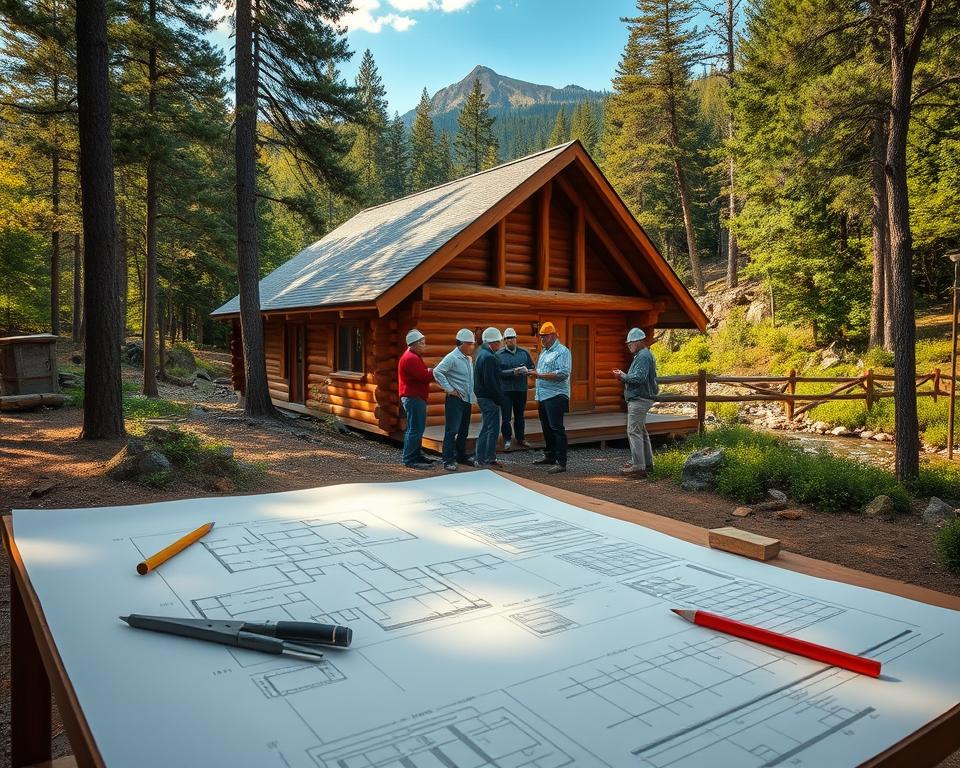
Every successful project begins with careful consideration of available resources and intended purposes. This approach prevents costly modifications during construction.
Assessing Your Garden Space and Needs
Accurate measurement of the garden area forms the foundation of effective planning. Property owners must consider not just the cabin’s footprint but also necessary clearances for construction and maintenance.
Understanding specific usage requirements is crucial before finalising the design. Different purposes demand distinct spatial configurations and utility provisions.
For example, a garden office requires dedicated desk space and electrical installations. A leisure retreat might prioritise open layouts for relaxation activities.
Selecting Appropriate Materials and Elements
Material quality directly influences the longevity of timber structures. Higher-grade logs with proper treatment resist weathering and structural degradation over time.
Wall thickness varies significantly, typically ranging from 19mm for seasonal use to 44mm for year-round cabins. This choice impacts insulation performance and stability.
Foundation options include concrete pads for permanent installations or adjustable piers for uneven terrain. Roofing materials should balance aesthetic appeal with practical performance requirements.
“The foundation of any successful garden building project lies in meticulous planning and material selection.”
Window and door specifications must balance natural light with security considerations. Double-glazed units enhance thermal efficiency for structures used throughout colder months.
How to Design a Log Cabin – Unique Ideas to Inspire
Blending contemporary elements with traditional timber construction creates distinctive structures that feel both current and timeless. This approach allows property owners to enjoy rustic charm while incorporating modern comforts and aesthetics.
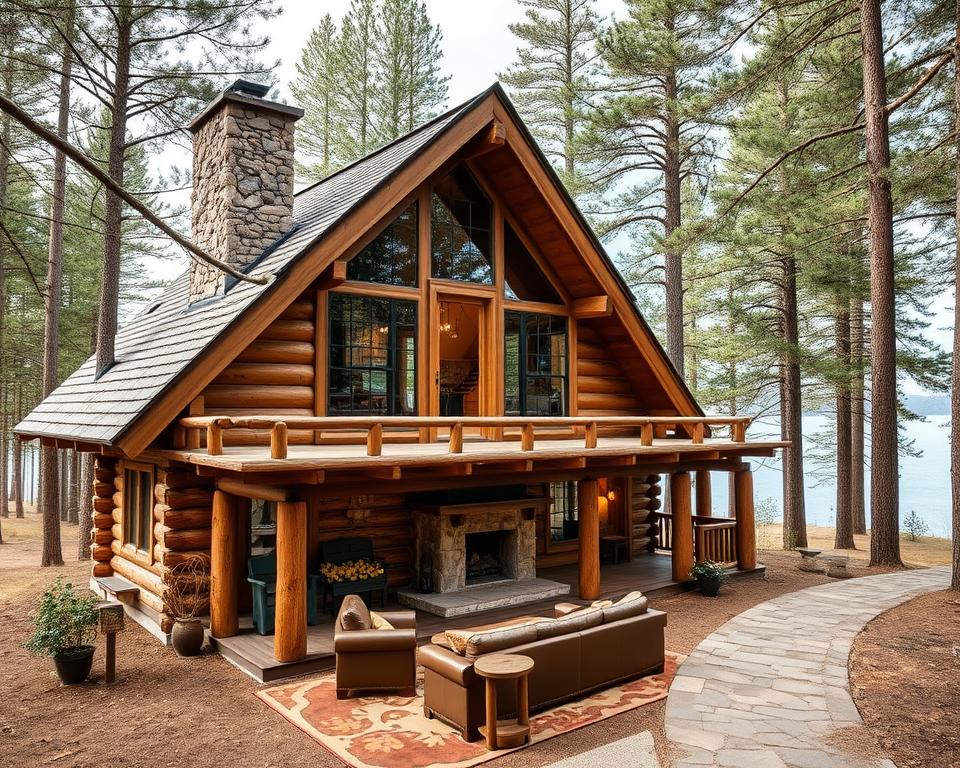
Integrating Modern and Rustic Features
One striking method involves selecting metal roofing in dark or colourful finishes. These materials provide dramatic contrast against natural wood tones while offering superior durability.
Mixing different log types and applications adds textural depth. Combining rounded logs with vertical siding creates architectural interest that elevates simple designs.
Modern rustic interiors successfully blend clean lines with natural textures. Neutral colours and metal accents complement exposed timber without competing for attention.
| Feature | Traditional Approach | Modern Interpretation |
|---|---|---|
| Roof Material | Wooden shingles | Colourful metal sheeting |
| Exterior Finish | Natural timber only | Dark stains with light trim |
| Window Style | Standard rectangular | Arched or oversized glass |
Incorporating Natural Light and Open Spaces
Strategic window placement transforms potentially dark interiors into bright, welcoming environments. Oversized glazing and skylights maximise daylight penetration throughout these compact spaces.
Open-plan layouts enhance the sense of spaciousness within smaller footprints. Removing unnecessary walls creates flexible areas that adapt to changing daily needs.
“The most successful cabin designs masterfully balance natural materials with contemporary living requirements, creating spaces that are both functional and beautiful.”
Arched windows serve as distinctive features that soften straight lines. They add custom character while directing eye movement upward towards natural light sources.
Integrating outdoor living areas through decks or porches effectively expands usable square footage. This approach blurs boundaries between interior and exterior environments.
Inspiring Log Cabin Interior Ideas
The interior atmosphere of a timber structure profoundly shapes its overall character and usability. A carefully considered design enhances both comfort and functionality, turning a simple cabin into a personalised sanctuary.
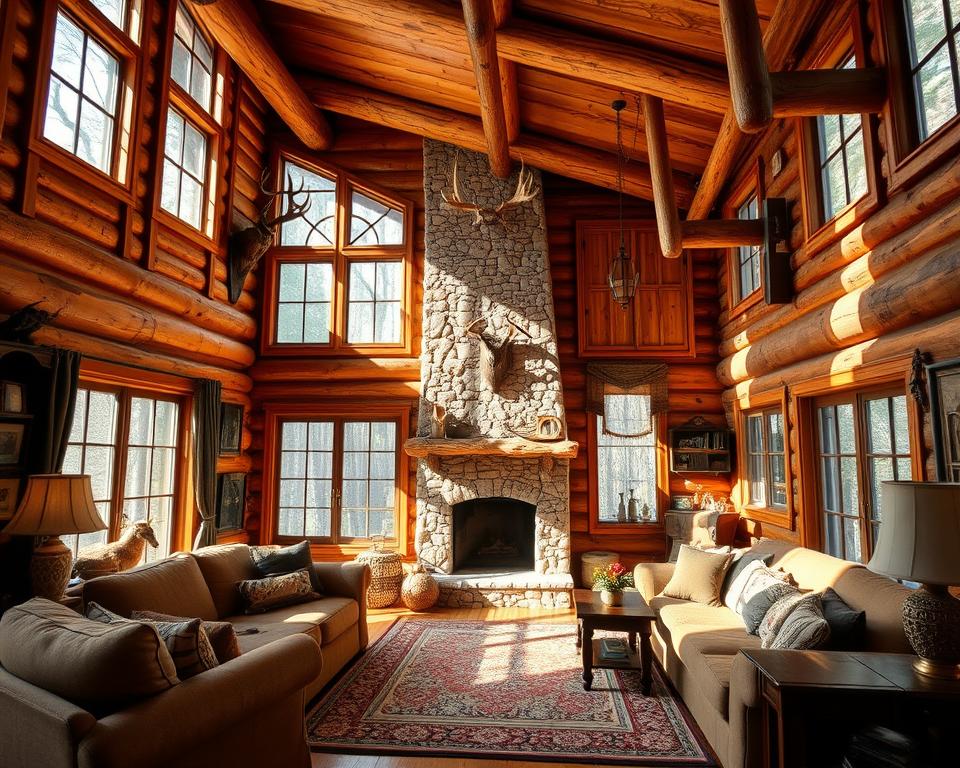
Thoughtful selection of colours, furniture, and lighting creates a harmonious space. These elements work together to define the room‘s feel.
Modern Rustic and Scandinavian Minimalist Themes
Modern rustic style balances clean lines with natural textures. Neutral tones on walls allow the beauty of the log construction to stand out.
Scandinavian minimalist approaches prioritise light and simplicity. Pale walls and light wood finishes make the interior feel open and airy. This style avoids clutter, focusing on essential furniture.
| Design Element | Modern Rustic | Scandinavian Minimalist |
|---|---|---|
| Colour Palette | Neutral tones, greys, creams | White, pale tones, light wood |
| Key Materials | Natural wood, black metal accents | Light wood, simple textiles |
| Overall Ambience | Lived-in, warm, sophisticated | Serene, bright, uncluttered |
Creating Cosy and Functional Living Areas
Effective seating arrangements are crucial for a functional living area. Arranging furniture to encourage conversation improves the room‘s social feel.
Layered lighting is essential. Combine overhead lights with table lamps for versatility. Warm LED bulbs enhance comfort and create an inviting interior space after dark.
Creative Outdoor Enhancements for Log Cabins
Expanding the potential of a timber structure involves looking beyond its walls. Clever enhancements can blend the interior with the garden, creating a versatile living area.
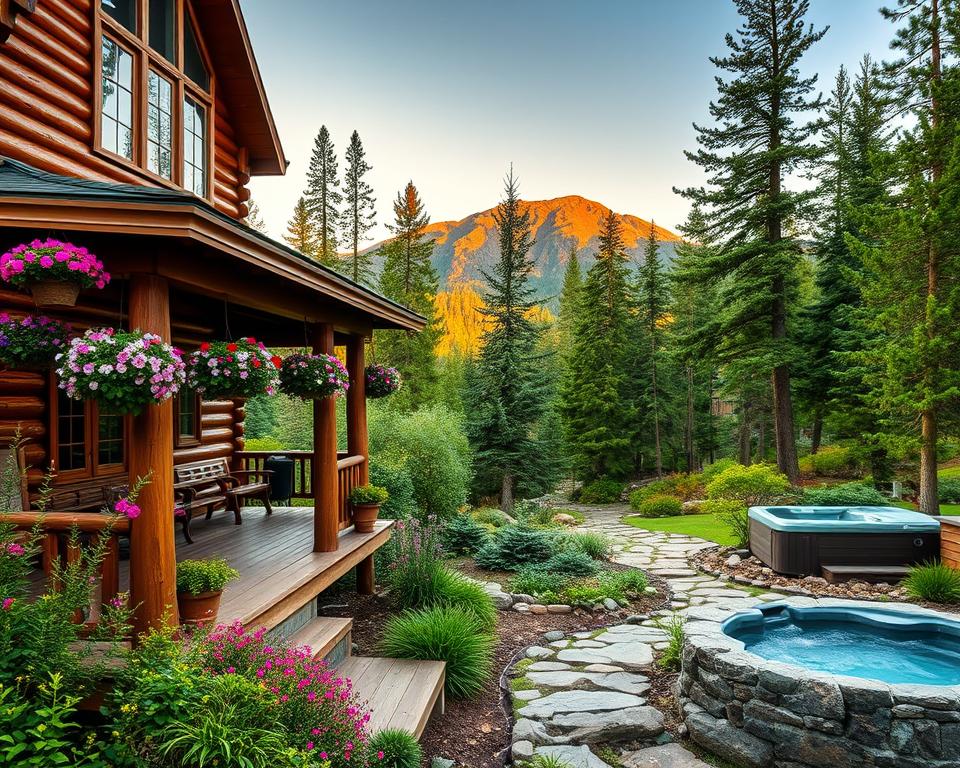
These additions make the space more functional and enjoyable. They allow for a seamless flow between indoor comfort and the natural world.
Designing a Garden Office, Pub or Gym
A garden office requires a dedicated setup. It needs a simple desk, ample plug sockets, and good lighting. Electricity installation is essential for year-round use.
For social gatherings, a garden pub offers a fantastic solution. Bar-height tables and open shelving create a casual atmosphere. It’s perfect for summer evenings with friends.
Fitness enthusiasts can install a garden gym. Even compact cabins accommodate free weights and mats. Rubber flooring provides necessary grip and cushioning.
Using Innovative Lighting and Flooring Solutions
Lighting shapes the ambience of any room. Layered approaches work best. Combine overhead lights with adjustable task lighting for versatility.
Flooring must be both practical and attractive. Vinyl planking is durable and easy to maintain. Area rugs add warmth and comfort underfoot.
These choices ensure the space adapts to different needs throughout the day.
Emphasising Garden Integration and Landscape Views
Multi-level decks and patios create distinct zones. They effectively double the usable living area. A wraparound porch offers various spots for relaxation.
Strategic window placement frames beautiful garden views. This connection to nature enhances the sense of space. Stone pathways and planted borders help the structure blend seamlessly.
A fire pit becomes a focal point for cooler evenings. It extends the living space outdoors, perfect for gatherings.
| Enhancement | Key Feature | Benefit |
|---|---|---|
| Garden Office | Ergonomic Desk & Lighting | Defined, productive work zone |
| Garden Pub | Bar-height Table & Stools | Casual social space |
| Garden Gym | Rubber Flooring | Safe, cushioned surface |
| Multi-level Deck | Distinct Zones | Expands usable area |
Expert Tips on Technical and Material Choices
The longevity of a garden structure depends heavily on technical specifications and material quality. Making informed decisions at this stage ensures decades of reliable service.
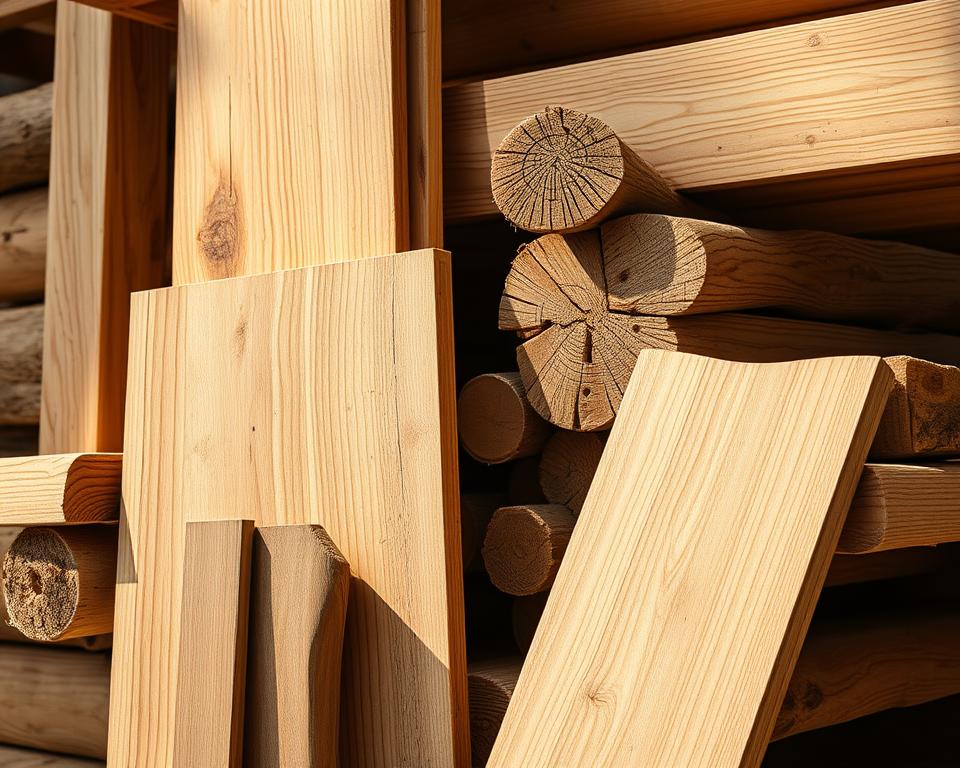
Durability of Timber and Sustainable Materials
Premium-grade timber represents the cornerstone of lasting construction. Sourcing from reputable suppliers ensures resistance to weathering and structural degradation.
Sustainable choices reflect environmental consciousness. FSC or PEFC certification guarantees wood comes from responsibly managed forests. This approach maintains ecological balance.
| Material Type | Wall Thickness | Best Use | Lifespan |
|---|---|---|---|
| Basic Timber | 19mm | Seasonal | 10-15 years |
| Premium Wood | 44mm | Year-round | 25+ years |
| Pressure-treated | 28-44mm | All climates | 20+ years |
Foundation options significantly impact stability. Concrete pads provide permanent bases, while adjustable piers suit uneven terrain. Proper installation prevents moisture issues.
Roofing selection balances aesthetics and performance. EPDM rubber offers superior waterproofing, while metal systems deliver exceptional longevity. Each option serves different needs.
Double-glazed windows enhance thermal efficiency dramatically. They also improve noise reduction compared to single-pane alternatives. These features contribute to comfortable year-round use.
Adapting the Design to Various Log Cabin Purposes
Adapting a garden building to specific needs transforms it from a simple shelter into a personalised haven. The versatility of timber structures allows them to serve multiple functions throughout the day.

Customising the Layout for Work, Leisure or Hobby Spaces
A garden office requires careful planning for productivity. The layout must accommodate desk surfaces, adequate lighting, and technology connections. This creates a dedicated work environment separate from the main home.
Leisure-focused cabins prioritise comfort and relaxation. Soft lighting and comfortable seating create an ideal retreat space. These areas provide a peaceful experience away from daily responsibilities.
Hobby rooms demand specific layouts tailored to activities. Craft spaces need abundant natural light and washable surfaces. Music studios require acoustic treatment and equipment storage solutions.
Multi-functional designs offer maximum value from limited space. Convertible furniture allows a room to transition from office use by day to living area in the evening. Clever storage keeps the place organised.
The most successful cabin designs anticipate changing needs over time. Flexible layouts accommodate evolving work patterns and leisure interests. This approach ensures long-term satisfaction with the living space.
“A well-planned cabin serves not just one purpose, but grows with your lifestyle, offering new experiences with each season.”
Conclusion
Ultimately, a well-executed timber structure offers more than just additional square footage—it provides a sanctuary that enhances daily life. This comprehensive exploration of log cabin possibilities demonstrates their remarkable versatility for various purposes.
The enduring charm of these buildings lies in their ability to balance rustic authenticity with contemporary living needs. Whether serving as a peaceful retreat, productive workspace, or social hub, each cabin becomes a personalised place that reflects individual requirements.
Successful projects begin with careful planning and culminate in spaces that deliver lasting satisfaction. The design ideas presented serve as inspiration for creating unique environments where cherished memories are made.
As final touches transform structural shells into welcoming home extensions, the true value becomes apparent in enhanced living experiences. This journey represents an exciting opportunity to extend one’s home in harmony with nature.
FAQ
What are the primary benefits of choosing a log cabin for a garden retreat?
A log cabin offers a unique blend of natural charm and practical comfort. Its timber structure creates a warm, inviting atmosphere, making it an ideal space for relaxation. The materials provide excellent insulation, ensuring the interior remains comfortable throughout the seasons. Furthermore, its design allows for seamless integration with the garden, enhancing the overall outdoor experience.
How can I maximise natural light within a small log cabin?
Strategic placement of windows is crucial for flooding the interior with natural light. Consider installing larger windows or even French doors. Using a lighter stain on the interior walls and choosing a light-coloured floor can help reflect light, making the room feel more spacious. Skylights in the roof are another excellent solution for bringing in additional daylight.
What interior design styles work well with a log cabin’s rustic charm?
Modern rustic and Scandinavian minimalist themes complement a log cabin beautifully. These styles balance the raw texture of the wood with clean lines and neutral tones. Incorporating soft textiles, functional furniture, and thoughtful lighting can create a cosy yet contemporary living area that emphasises comfort and style.
Can a log cabin be used as a functional space like a garden office or gym?
Absolutely. The versatility of a log cabin structure makes it perfect for various uses. For a garden office, ensure ample natural light and a dedicated work area. For a gym or summer pub, focus on durable flooring solutions and adequate ventilation. The layout can be fully customised to suit specific leisure or work needs.
What should I consider regarding materials for long-term durability?
Selecting high-quality, sustainably sourced timber is essential for durability. Treated woods that resist moisture and pests will ensure the cabin’s longevity. The roof and floor materials should also be chosen for their ability to withstand the British climate, protecting the interior and maintaining the cabin’s structural integrity for years to come.