
Garden Accessory Ideas to Spruce Up Your Outdoor Space

A well-considered selection of decorative items can utterly transform an external area. It turns a simple plot into a personal sanctuary that invites relaxation and enjoyment. This process is not just about aesthetics; it’s about creating a functional and harmonious environment.
Thoughtful garden decoration begins with a clear plan. It involves assessing the dimensions of the area, how the sun moves across it, and how one intends to use the space. Whether for dining, quiet contemplation, or entertaining guests, defining these zones is the first step towards a cohesive design.
The most successful schemes build layers of texture, colour, and height. This approach adds depth and visual interest, preventing a flat or predictable look. Choosing pieces that work together creates a flow that softens hard landscaping and makes the area feel intentionally designed.
This guide offers practical advice for achieving this transformation. It covers a range of elements, from furniture and lighting to planters and artistic touches. The aim is to provide actionable inspiration for creating a beautiful and usable retreat, regardless of the size of one’s plot.
Inhaltsverzeichnis
Key Takeaways
- Well-chosen decorative items can significantly enhance both the look and function of an external area.
- Effective planning is essential, considering factors like space, sunlight, and intended use.
- Creating distinct zones helps to organise the area and make it feel purposeful.
- Layering different elements adds depth and prevents a monotonous appearance.
- A cohesive design is achieved by selecting pieces that complement each other and the natural surroundings.
- Transforming a space is achievable for any size of garden, from a compact courtyard to a larger plot.
Introduction: Transforming Your Outdoor Space
Strategic placement of ornamental features can dramatically enhance any outside area. This transformation turns neglected plots into cherished extensions of the home. It creates seamless indoor-outdoor living experiences.
Embracing Unique Garden Accessories
Selecting pieces that reflect individual personality moves beyond generic choices. Distinctive environments often feature repurposed vintage items or artisan-crafted pieces. Unexpected colour combinations can break conventional gardening rules effectively.
Statement planters with unusual shapes add character to any setting. These unique elements create truly personal external environments. They transform ordinary spaces into remarkable retreats.
The Role of Style and Function in Garden Decor
The most successful pieces serve practical purposes while enhancing visual appeal. Functional items like storage solutions must contribute to the overall design scheme. Balance between aesthetics and utility is essential for effective space transformation.
Lighting fixtures and seating arrangements should be selected with both style and function in mind. This approach ensures cohesive design throughout the external area.
| Style-Focused Elements | Function-Focused Elements | Balanced Solutions |
|---|---|---|
| Ornamental sculptures | Practical storage benches | Stylish planters with drainage |
| Decorative wind chimes | Weather-resistant furniture | Elegant outdoor lighting |
| Artistic mosaic patterns | Functional pathway materials | Aesthetic yet durable seating |
“Good design begins with understanding how elements work together as a cohesive collection rather than isolated purchases.”
Practical advice includes assessing existing space before purchasing accessories. Identifying priority areas for improvement guides subsequent design decisions effectively.
Garden Accessory Ideas to Spruce Up Your Outdoor Space
The strategic application of colour and personalisation can dramatically elevate an external area. It moves beyond simple decoration to create a truly unique environment.
Thoughtful choices in this area ensure the space reflects individual taste and character.

Using Colour, Style and Statement Pieces
Vibrant hues inject energy into a design scheme. A bold container or a brightly coloured seat can serve as an immediate focal point.
Neutral tones, conversely, cultivate a sense of calm and sophistication. This approach allows surrounding plants to become the main attraction.
Mixing patterns and textures through cushions or rugs adds visual interest. The key is to select a cohesive style that ties the various elements together.
Statement pieces, like a sculptural planter or a unique water feature, anchor the entire design. They become natural conversation starters.
Creating a Focal Point with Personalised Touches
Personalisation is the key to a memorable space. It transforms a generic area into a meaningful retreat.
Simple DIY projects offer significant impact. Painting terracotta pots in a signature colour or upcycling old furniture into plant stands adds character.
Displaying collections or repurposing family heirlooms introduces a personal narrative. These touches ensure the area feels curated and intentional.
Even on a limited budget, personalised decor creates a distinctive look. The result is a space that feels uniquely one’s own.
Innovative Furniture and Decor for a Personalised Garden Retreat
Investing in quality outdoor furnishings creates inviting spaces that encourage relaxation and social interaction. The right pieces transform any plot into a true extension of the home. They establish comfortable areas for both solitude and entertainment.
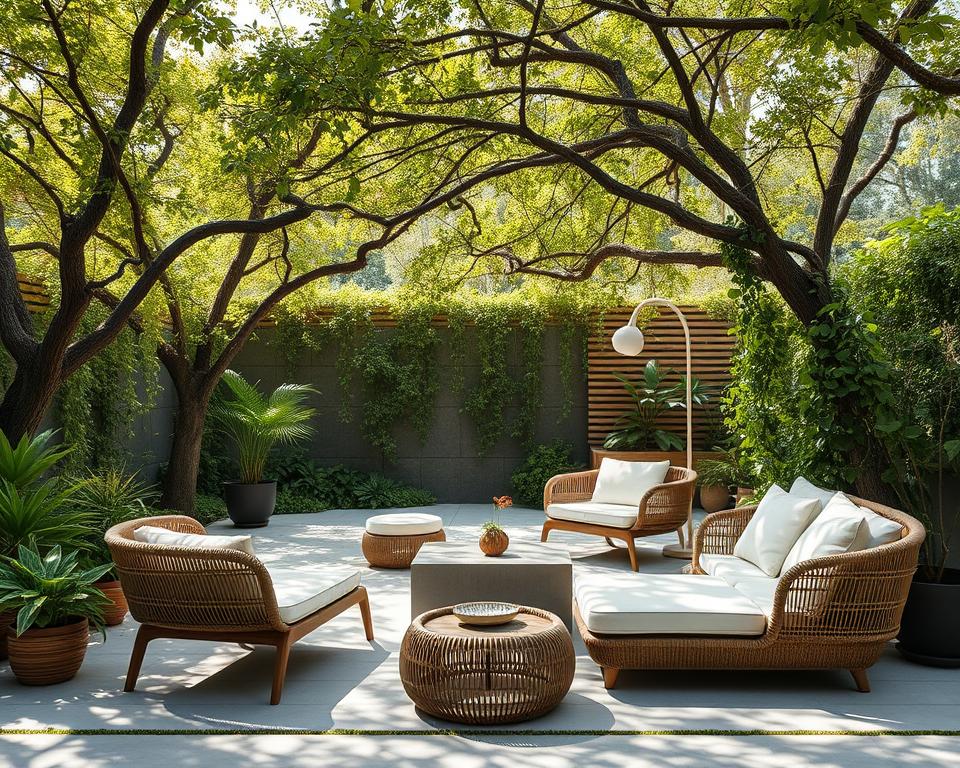
Choosing Outdoor Furniture for Comfort and Elegance
Selecting the right furniture requires balancing aesthetics with practicality. Durable materials like teak or powder-coated aluminium withstand British weather beautifully. Ergonomic designs ensure comfort during extended use.
Consider the available space when choosing pieces. Modular sofas offer flexibility for different layouts. Foldable chairs and stackable stools maximise smaller areas effectively.
A corner sofa set provides luxurious seating while fitting snugly into compact spaces. Multi-functional pieces like storage benches serve dual purposes. This approach creates elegant, comfortable environments.
Blending Interior Trends with Outdoor Living
Today’s exterior spaces increasingly reflect interior design principles. Weather-resistant cushions and outdoor rugs create cosy external rooms. These elements bridge the gap between inside and outside.
Choose upholstery colours that complement both natural surroundings and interior schemes. This creates visual continuity across different areas. The result is a seamless transition between indoor and outdoor living.
Quality pieces maintain their appearance season after season. They transform the external area into a personalised retreat. This approach ensures the space feels intentionally designed and welcoming.
Illuminating Your Garden with Lights, Lanterns and Fairy Lights
Thoughtful lighting design extends the enjoyment of any plot well after sunset. It transforms spaces used only during daylight into enchanting evening retreats. This approach combines practical illumination with atmospheric enhancement.

Creating Ambience with String and Solar Lights
String lights and solar options instantly add warmth to any setting. Festoon bulbs create a café-like atmosphere when draped along fences. Delicate fairy lights offer romantic settings for intimate gatherings.
Solar-powered choices eliminate electrical complications. They activate automatically at dusk without ongoing costs. Rattan-wrapped versions provide bohemian aesthetics for contemporary spaces.
Enhancing Safety and Style with Decorative Lanterns
Lanterns serve dual purposes by combining safety with decorative appeal. Positioned along pathways, they guide movement after dark. Clustered on tables, they create intimate dining environments.
Hanging varieties from tree branches adds elevated interest. The warm, flickering glow contributes to magical atmospheres. These pieces maintain visual appeal during daylight hours too.
Highlighting Key Garden Areas Through Lighting
Strategic spotlight placement showcases specimen plants effectively. Uplighting dramatises trees and architectural features. Downlighting mimics natural moonlight for subtle effects.
Layered schemes combine different fixture types and heights. This ensures adequate illumination for practical needs. The result maintains soft, atmospheric qualities throughout.
| Lighting Type | Primary Function | Best Placement |
|---|---|---|
| String Lights | Atmospheric enhancement | Above seating areas |
| Solar Lanterns | Pathway illumination | Along walkways |
| Spotlights | Feature highlighting | Near specimen plants |
“Good lighting design balances practical needs with atmospheric creation, ensuring spaces remain inviting long after sunset.”
This layered approach to illumination creates magical environments. It extends usability while enhancing visual appeal significantly.
Incorporating Planters, Climbing Plants and Greenery for a Layered Look
Vertical gardening techniques offer innovative solutions for maximising limited ground space. These approaches create dimensional environments that feel abundant and professionally designed. The strategic use of containers and climbing specimens transforms flat areas into visually rich retreats.
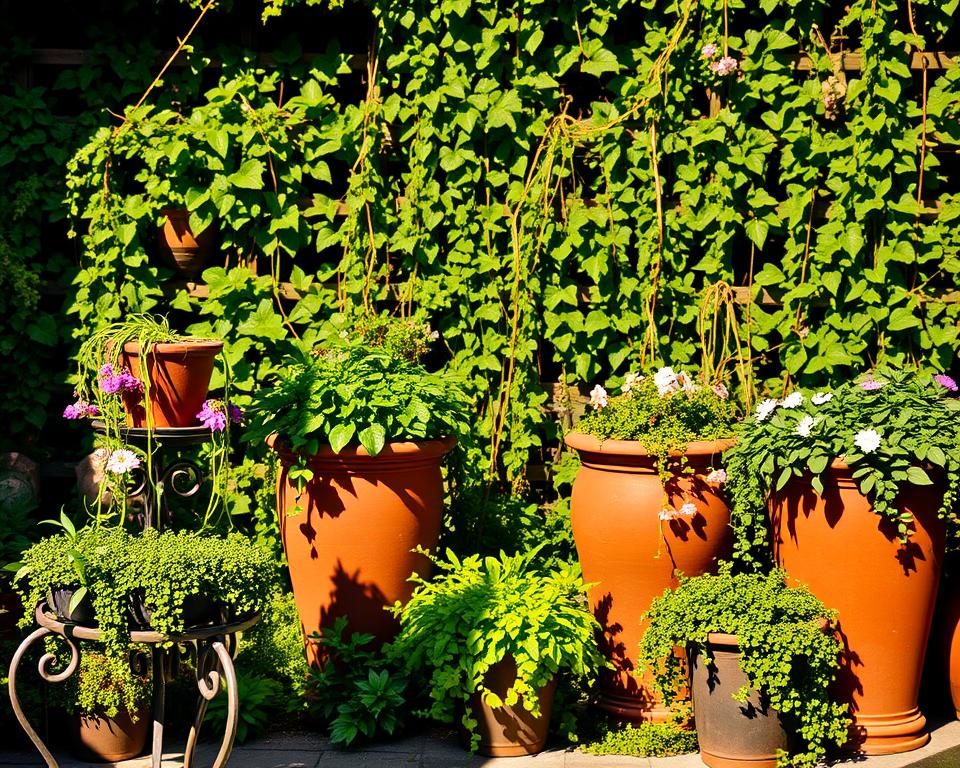
Strategic Placement to Maximise Space and Depth
Thoughtful arrangement of containers creates natural depth throughout the area. Grouping pots in clusters of varying heights establishes visual interest. Odd-numbered arrangements often appear more organic and balanced.
Positioning planters to define different zones enhances the overall layout. This technique guides movement while creating cohesive design flow. Container gardening offers flexibility for seasonal changes and plant maturity.
Selecting appropriate vessels considers both plant needs and aesthetic harmony. Materials should complement the surrounding environment while providing proper drainage. Scale relative to both plants and available space ensures proportional arrangements.
Vertical Gardening Solutions for Added Charm
Wall-mounted planters and hanging baskets introduce greenery without consuming floor space. These solutions work particularly well in compact urban settings. They draw the eye upward, breaking monotony in flat landscapes.
Trellis panels support climbing plants like clematis and jasmine beautifully. These structures add vertical interest while softening hard landscaping features. The result creates privacy screens with seasonal colour and fragrance.
Creative repurposing of everyday objects as unique planters adds character. Vintage containers and upcycled materials reduce waste while providing distinctive charm. This approach makes every planting arrangement feel intentionally curated.
Conclusion
Creating an inviting exterior retreat requires blending practical considerations with aesthetic sensibilities. This approach ensures the area serves daily needs while providing visual pleasure. The most successful designs emerge from this careful balance.
By combining multiple elements like furniture, lighting, and greenery, homeowners can develop cohesive external rooms. These spaces rival interior comfort while offering unique natural benefits. Distinct zones for dining and relaxation make the most of available areas.
The process remains an ongoing journey of refinement. Small touches accumulate over time, allowing personal style to evolve naturally. Every detail contributes to a space that truly reflects individual character and enhances overall property appeal.
FAQ
How can I choose the right colour scheme for my garden?
Consider the existing tones of your home’s exterior and any permanent features. Neutral furniture offers flexibility, while colourful cushions and rugs from a shop’s outdoor range can introduce personality without a long-term commitment.
What are some simple ways to create a focal point in an outdoor area?
A striking piece of furniture, a decorative planter with a tall plant, or a small water feature can serve as an excellent focal point. This draws the eye and gives the space structure and interest.
Are fairy lights suitable for daytime garden decor?
Absolutely. During the day, string lights and fairy lights add a delicate, decorative element. As evening falls, they provide a warm, inviting glow that enhances the ambience of your seating area.
How can I make a small garden feel larger?
Utilise vertical space with hanging baskets, climbing plants, and wall-mounted planters. Choosing a cohesive colour palette and using mirrors can also create an illusion of depth, making the area feel more spacious.
What should I look for when selecting outdoor furniture?
Prioritise durability and comfort. Look for weather-resistant materials that suit your local climate. Investing in quality pieces ensures they will withstand the elements and remain a central part of your outdoor room for years.
Can I use indoor decor items outside?
A> Many interior trends, such as outdoor rugs, lanterns, and decorative cushions, are now available in weatherproof versions. Shop garden and outdoor collections for items specifically designed to endure outdoor conditions while maintaining style.
What are the benefits of incorporating water features?
Water features introduce a soothing, sensory element with the sound of moving water. They act as a stunning visual centrepiece and can attract wildlife, adding another layer of charm to your personal retreat.

