Discover the Best Rock Garden Ideas for Your Garden
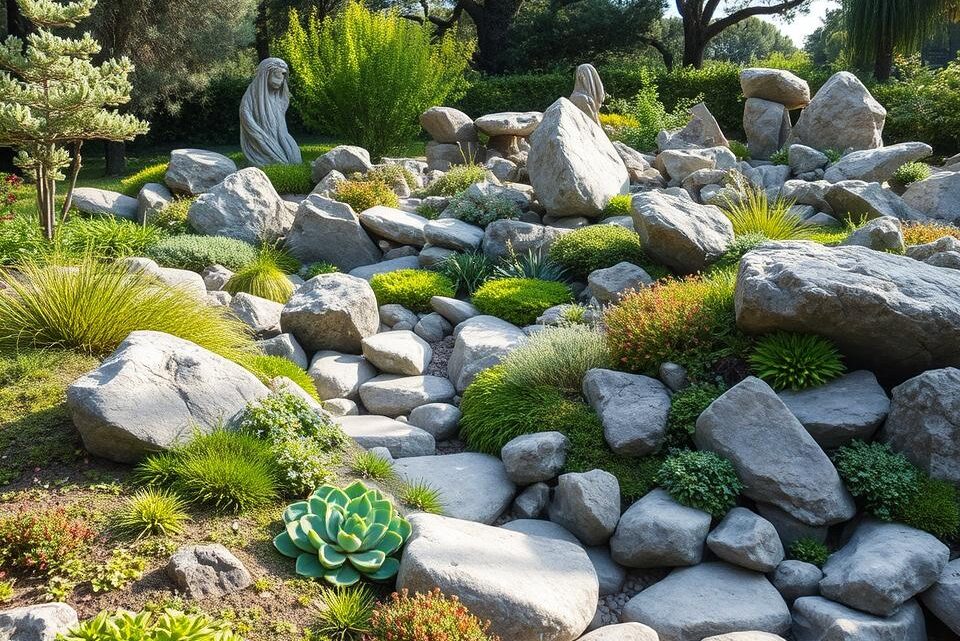
Transforming your outdoor space with a rock garden can be a creative solution to add depth and visual interest to a flat or mundane area. By incorporating rocks, pebbles, or gravel, you can create a unique landscape that connects your manmade garden to the natural world.
A rock garden can range from a simple, small-scale arrangement to a complex, large-scale design. You can use rocks to define slopes, outline walkways, or separate garden beds, creating a beautiful and low-maintenance alternative to traditional lawns.
With a rock garden, you can introduce an element of surprise and add texture, dimension, and natural beauty to your outdoor space.
Inhaltsverzeichnis
Key Takeaways
- Rock gardens can transform plain or challenging areas into visually appealing spaces.
- They offer a low-maintenance alternative to traditional lawns.
- Rocks can be used to define slopes, outline walkways, and separate garden beds.
- Rock gardens can be adapted to gardens of all sizes and styles.
- They provide year-round structure and interest to your landscape.
Understanding the Appeal of Rock Gardens
Rock gardens have become increasingly popular among garden enthusiasts due to their unique blend of natural beauty and low maintenance requirements. A well-designed rock garden can transform your outdoor landscape into a visually appealing feature that stands out throughout the year.
What Makes Rock Gardens Special
Rock gardens stand out as special landscape elements because they combine the timeless beauty of stone with the delicate nature of carefully selected plants, creating a compelling visual contrast. They bring a sense of permanence and structure to your garden that persists throughout all seasons, unlike traditional flower beds that may lose their appeal in winter months.
Benefits of Adding a Rock Garden to Your Space
One of the primary benefits you’ll enjoy is the significantly reduced maintenance requirements compared to lawns or conventional gardens—less mowing, less watering, and fewer pest problems. Rock gardens excel at solving common landscape challenges, transforming problematic slopes, dry areas, or poor soil conditions into attractive garden features rather than eyesores. By adding a rock garden to your space, you bring an element of natural wilderness to your home landscape, creating a connection to mountain landscapes and natural stone formations.
The textural contrast between smooth and rough rocks, combined with various plant forms, creates visual interest that changes subtly with different lighting conditions throughout the day. This makes rock gardens an ideal choice for those looking to add a unique and captivating element to their outdoor area.
Planning Your Perfect Rock Garden
To create a stunning rock garden, it’s essential to consider several key elements from the outset. A well-planned rock garden can enhance your outdoor space, providing a beautiful and serene area that complements your home and yard.
Choosing the Right Location
When selecting a location for your rock garden, consider the sunlight exposure and drainage conditions. You should also think about how the rock garden will integrate with your existing landscape design. Evaluate potential locations based on these factors to ensure your rock garden thrives.
Selecting Appropriate Materials
The choice of materials for your rock garden is crucial. Selecting rocks that are native to your region will create a more authentic look. Consider the style you want to achieve: rough irregular rocks for a natural look or smooth pebbles for a more formal appearance, such as in Japanese rock gardens.
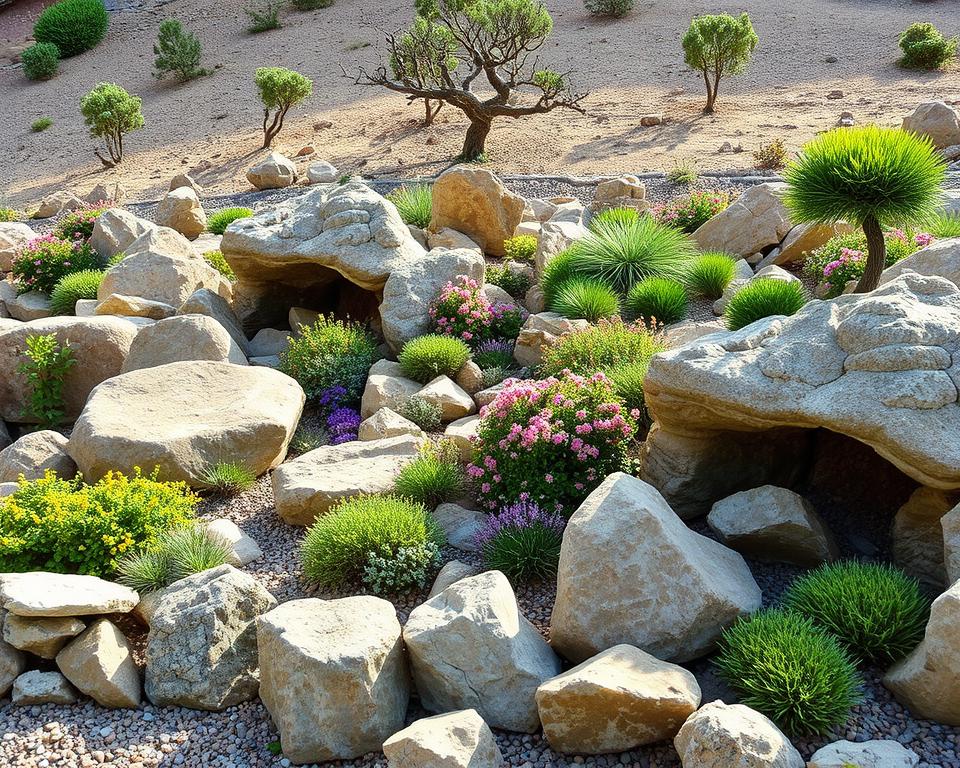
| Material | Description | Style |
|---|---|---|
| Rough Irregular Rocks | Natural, rugged appearance | Informal, natural |
| Smooth Pebbles | Uniform, sleek look | Formal, modern |
| Local Stone Types | Authentic, region-specific | Traditional, authentic |
Designing with Scale in Mind
It’s vital to consider the scale of your rock garden. Large boulders can overwhelm a small space, while small stones may get lost in a larger landscape. Ensure that the size of your rocks and boulders is proportionate to your garden space. This will create a balanced and visually appealing design.
By carefully planning your rock garden, considering location, materials, and scale, you can create a beautiful and harmonious outdoor space that enhances your garden and yard.
Small Space Rock Garden Ideas
Even with limited garden space, you can create a captivating rock garden that adds texture and interest to your outdoor area. A well-designed rock garden can be a beautiful addition to any garden, providing a unique landscape feature that is both visually appealing and low maintenance.
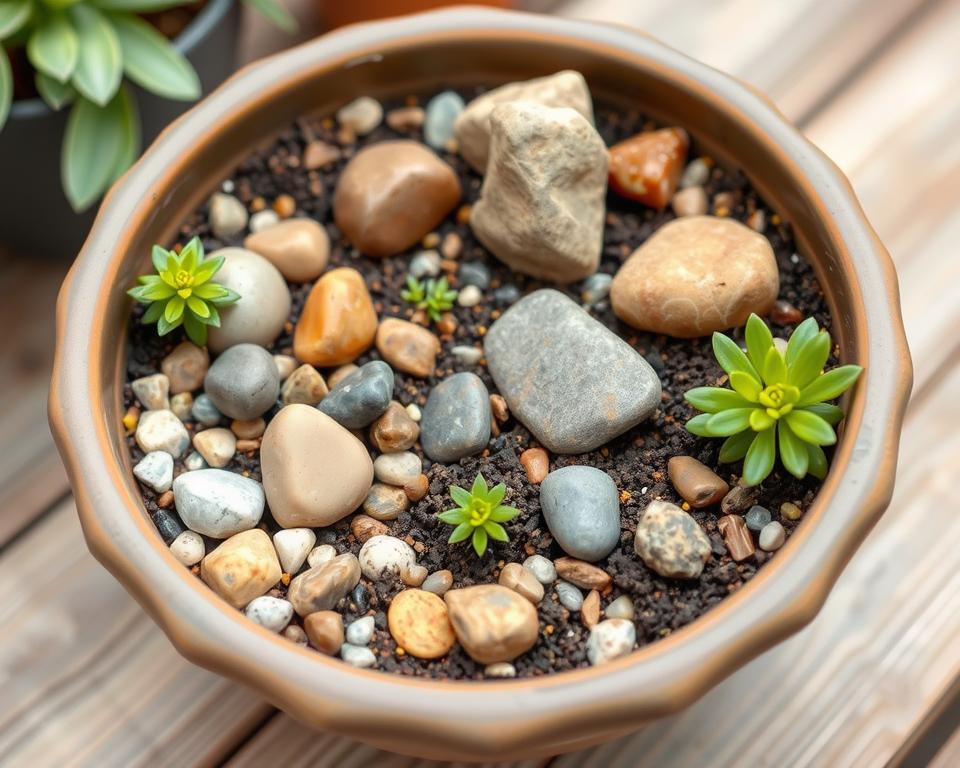
Container and Pot Rockeries
Container rockeries offer a versatile way to create a rock garden in small spaces. You can use a variety of containers, from traditional pots to old sinks or bathtubs, to create a unique and captivating rock garden. Succulents and alpine plants are ideal for container rockeries, as they require minimal soil depth and can thrive in small spaces.
Vertical Rock Garden Structures
For truly space-constrained gardens, vertical rock garden structures provide an innovative solution. By utilizing wall space, you can create a dramatic visual impact without taking up valuable ground area. Proper drainage is essential for the health of your plants and to prevent damage to supporting walls or fences.
Transforming Unused Corners
You can transform unused corners of your garden into charming rock features that add character and purpose to previously neglected areas. By incorporating rocks, plants, and other natural elements, you can create a beautiful and inviting space that enhances the overall aesthetic of your garden.
Discover the Best Rock Garden Ideas for Your Garden Style
Rock gardens can be designed to fit various styles, from serene and natural to modern and sleek. Your garden style is a reflection of your personal taste, and a rock garden can be a beautiful addition to your landscape.
Japanese Zen Rock Gardens
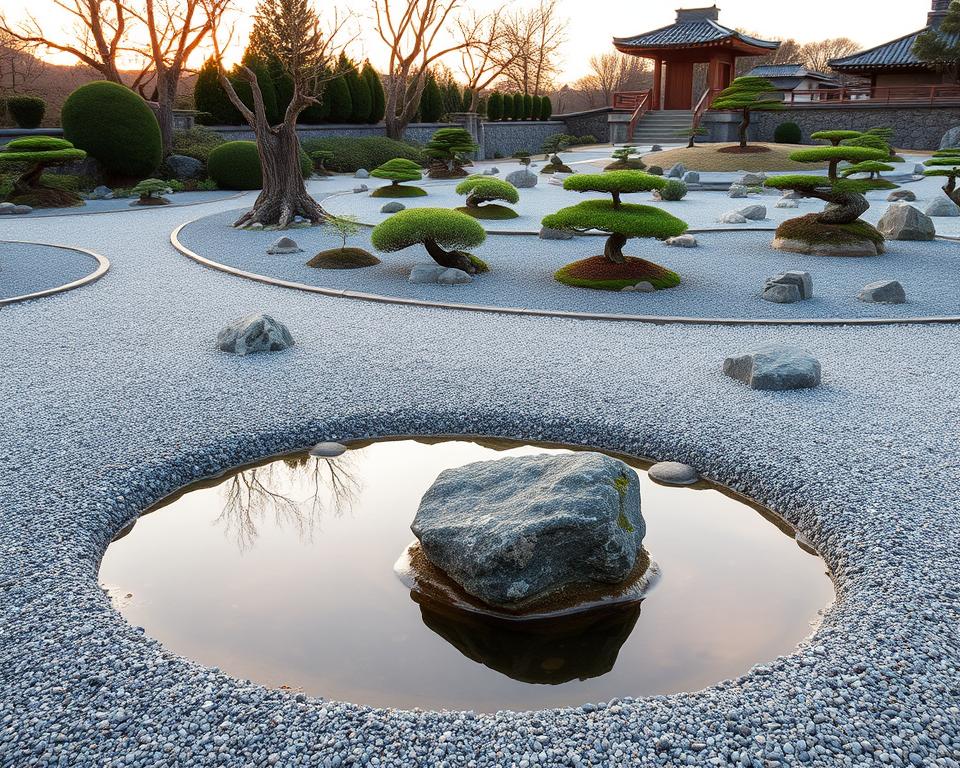
Japanese Zen rock gardens offer a meditative approach to garden design, using carefully positioned rocks amidst raked gravel or sand to represent mountains, islands, and flowing water. This style creates a space for contemplation and mindfulness. When creating a Zen garden, focus on asymmetrical arrangements that appear natural yet intentional, with rocks typically placed in groups of three, five, or seven to achieve visual harmony.
Alpine and Mountain-Inspired Designs
Alpine and mountain-inspired rock gardens recreate the rugged beauty of high-altitude landscapes, featuring crevice plantings, scree beds, and carefully selected plants that naturally grow in mountainous regions. To achieve an authentic alpine design, incorporate a variety of rock sizes and types to mimic natural mountain formations, with larger boulders partially buried to appear as if they’ve been in place for centuries.
Modern Minimalist Rock Gardens
Modern minimalist rock gardens emphasise clean lines, carefully curated plant selections, and a restrained colour palette, often focusing on the sculptural qualities of both rocks and plants. When designing a modern rock garden, consider using a single type of stone for cohesion and incorporating architectural plants with strong forms like agaves, yuccas, or ornamental grasses that complement the geometric qualities of the rocks.
| Rock Garden Style | Key Features | Plant Selection |
|---|---|---|
| Japanese Zen | Raked gravel, carefully positioned rocks | Minimal aquatic vegetation |
| Alpine and Mountain-Inspired | Crevice plantings, scree beds, varied rock sizes | Plants native to mountainous regions |
| Modern Minimalist | Clean lines, single type of stone, restrained colour palette | Architectural plants like agaves, yuccas, or ornamental grasses |
Regardless of the style you choose, maintaining a sense of proportion and scale in your design is crucial. Ensure that the size of rocks and plants creates a harmonious composition that feels appropriate for your space.
Rock Garden Ideas for Challenging Spaces
Whether you’re dealing with a slope, dry area, or water feature, rock gardens can provide an elegant and low-maintenance solution.
Solutions for Sloped Gardens
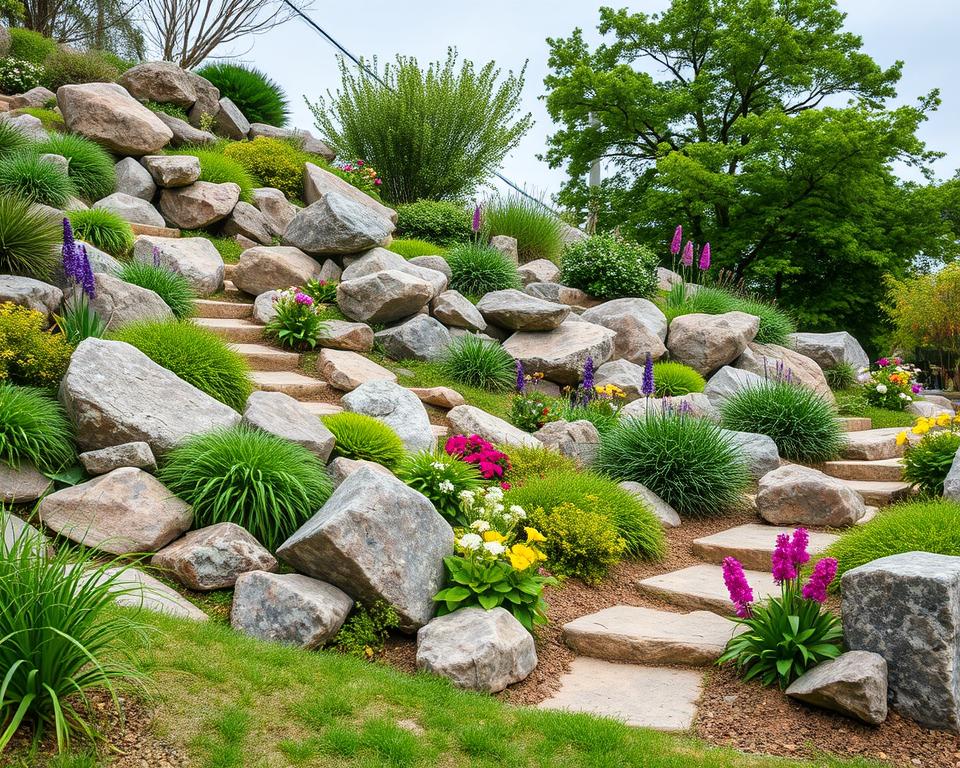
Sloped gardens present unique challenges for maintenance and planting, but rock gardens offer an elegant solution by transforming problematic inclines into dramatic, terraced landscapes that prevent erosion while creating visual interest. When designing for slopes, you’ll need to consider how water moves through your garden—strategically placed rocks can direct runoff to where it’s needed while preventing soil erosion during heavy rainfall.
Transforming Dry and Arid Areas
Dry and arid areas of your yard that struggle to support traditional plantings can be transformed into stunning xeriscaped rock gardens featuring drought-tolerant plants like sedums, sempervivums, and ornamental grasses. Incorporating gravel mulch between rocks can further reduce water requirements while adding textural contrast and suppressing weed growth.
Rock Gardens Around Water Features
Water features surrounded by carefully placed rocks create naturalistic streams, waterfalls, or pond edges that appear as though carved by nature rather than constructed by human hands. When designing rock gardens around water features, create varying heights and overhangs that allow water to cascade in different ways, creating visual interest and pleasant acoustic effects.
By embracing the challenges of your garden space and applying creative rock garden ideas, you can turn potentially difficult areas into beautiful, functional, and low-maintenance features that enhance your overall landscape.
Selecting the Perfect Plants for Your Rock Garden
The key to a beautiful rock garden lies in choosing plants that thrive in your specific climate and soil conditions. Creating an environment that is hospitable to your chosen plants is crucial. For instance, Alpine plants and other drought-tolerant plants will need sandy soil with sharp drainage, while others, such as ferns and hostas, will require richer soil and more moisture.
Sun-Loving Rock Garden Plants
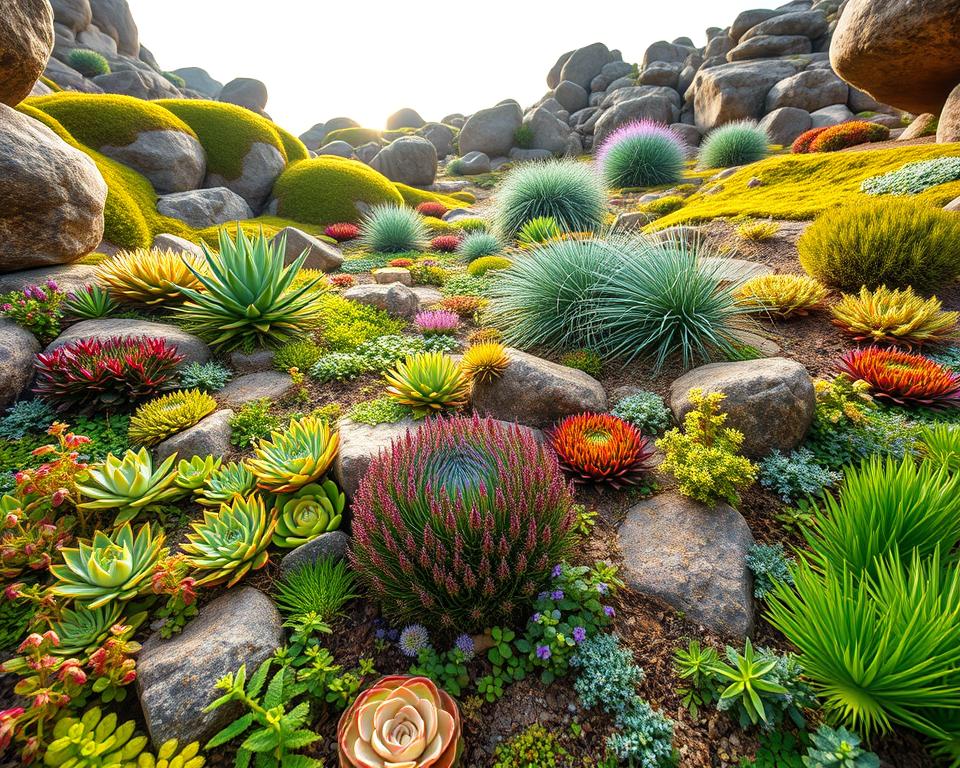
For sun-drenched rock gardens, you’ll want to focus on drought-tolerant plants like sedums, sempervivums, and low-growing Mediterranean herbs. These plants thrive in the well-drained conditions between rocks. Some other options include small dianthus varieties and succulents, which add vibrant colours and textures to your rock garden.
Shade-Tolerant Options
In contrast, shade-tolerant rock garden options include woodland natives like ferns, heucheras, and small hostas. These plants appreciate the cool, moist microclimate created by rocks in shadier locations. Incorporating these plants will add variety and depth to your rock garden, making it more visually appealing.
Ornamental Grasses and Dwarf Conifers
Ornamental grasses and dwarf conifers are excellent additions to any rock garden. They add movement, sound, and winter interest, while providing crucial structure and year-round interest. Consider compact varieties like blue fescue and dwarf fountain grasses for added texture and visual appeal.
When selecting plants for your rock garden, consider how they will grow together over time. Combining plants with different seasonal interest ensures your rock garden remains attractive throughout the year. Pay attention to the growth habits of your chosen plants to prevent them from overwhelming more delicate neighbours.
Maintaining Your Rock Garden Through the Seasons
To keep your rock garden looking its best, it’s essential to adopt a seasonal maintenance routine that addresses the unique challenges of each time of year. This involves understanding the needs of your plants and the materials used in your garden.
In the spring, focus on removing winter debris, trimming back damaged foliage, and dividing overcrowded plants. This is also a good time to add fresh plants to fill any gaps that may have developed. As the weather warms up, make sure to water your plants adequately, especially during hot spells.
During the summer months, monitor water needs closely, as rocks absorb heat and can create dry microclimates. Be vigilant about weeding to prevent unwanted plants from establishing themselves between rocks. In the autumn, remove fallen leaves that might smother small plants or cause rot in the crevices between rocks. Cut back spent perennial foliage and consider adding a light layer of gravel mulch to protect plant crowns.
In the winter, appreciate the structural elements of your rock garden, such as the carefully placed boulders and interesting stone formations. Throughout the year, regularly check that rocks remain stable and properly positioned. Fertilisation should be approached cautiously, as many rock garden plants thrive in nutrient-poor conditions.
By following this seasonal maintenance routine, you can enjoy a vibrant and healthy rock garden throughout the year. Remember to prune and divide plants as needed to maintain the desired scale and prevent vigorous plants from overwhelming more delicate specimens.
FAQ
What are the benefits of having a rock garden?
A rock garden can add visual interest, improve drainage, and provide a low-maintenance landscaping solution. It can also create a serene atmosphere, perfect for relaxation.
How do I choose the right plants for my rock garden?
Select plants that are suitable for your climate and the amount of sunlight your rock garden receives. Consider using drought-tolerant plants, such as succulents, and ornamental grasses, which thrive in well-draining soil.
Can I create a rock garden in a small or sloped space?
Yes, you can create a rock garden in a small or sloped space. Consider using container or pot rockeries, or designing a vertical rock garden structure to maximise space. For sloped gardens, use steps or terracing to create a visually appealing design.
How do I maintain my rock garden throughout the seasons?
Regularly inspect your rock garden for weeds, and remove any debris or dead plant material. Prune or trim plants as needed, and replenish gravel or stone as necessary to maintain the garden’s appearance.
What type of materials should I use for my rock garden?
Choose materials that complement your garden’s style, such as boulders, stones, or gravel. Consider using a mix of different textures and colours to create visual interest.
Can I incorporate a water feature into my rock garden?
Yes, incorporating a water feature, such as a small pond or fountain, can add a soothing element to your rock garden. Ensure that the water feature is designed to work with the existing drainage and slope of your garden.