How Close Can Your Shed Be to a Fence?
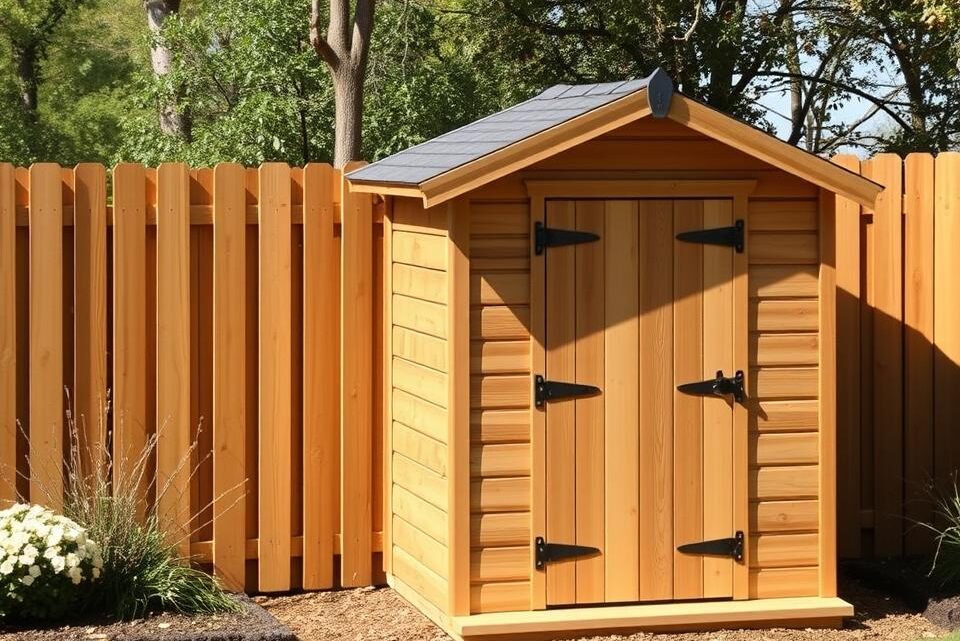
Installing a garden building is an exciting project for many homeowners. It creates valuable storage or hobby space. However, the question of where to place it is crucial. Determining the correct distance from a boundary fence involves more than just measuring.
There are significant legal and practical factors to consider. UK planning regulations and local council rules dictate what is permissible. Homeowners must also think about neighbourly relations and long-term maintenance.
This guide offers comprehensive information on the subject. It explores permitted development rights and specific criteria for planning permission. The aim is to help property owners make informed decisions, avoiding potential disputes and ensuring their building’s longevity.
Inhaltsverzeichnis
Key Takeaways
- Proper shed placement is governed by a mix of legal requirements and practical considerations.
- UK planning permission rules and local council regulations set legal boundaries for construction.
- Maintaining positive relationships with neighbours is a critical aspect of the planning process.
- Adequate space for maintenance and ventilation prevents issues like damp and mould.
- Understanding permitted development rights can simplify the project for many homeowners.
- Correct positioning protects the structural integrity of the garden building over time.
- This guide provides specific details on distance requirements and height restrictions.
Understanding UK Shed Regulations
Navigating property development rules is a fundamental step for homeowners. It ensures any new structure, like a garden building, complies with the law. This avoids potential disputes and costly alterations later.
Planning Permission and Permitted Development
Many garden sheds do not require formal planning permission. They are often covered by permitted development rights. These rights allow certain works without needing to apply for permission.
Key conditions usually include the structure being less than 2.5 metres tall. It must also be positioned at least 2 metres from any property boundary. The shed should not cover more than half the garden area.
Listed Buildings and Local Authority Requirements
Special rules apply to listed building properties. Here, planning permission is typically mandatory for any new shed. This protects the historical significance of the site.
Properties in conservation areas also face extra restrictions. Homeowners must contact their local authority to confirm specific rules. Requirements can differ across the UK.
| Scenario | Permission Typically Required? | Key Restriction |
|---|---|---|
| Shed under 2.5m tall, 2m from boundary | No (Permitted Development) | Must not exceed 50% of garden area |
| Shed within 2m of boundary | No (if under 2.5m tall) | Maximum height must be 2.5m |
| Property is a listed building | Yes | Applies regardless of size or position |
| Property in a conservation area | Check with council | Local restrictions often apply |
Practical Considerations for Shed Placement
Beyond legal requirements, practical factors significantly influence where to position a garden structure. These considerations ensure the building remains functional and durable over time.
Preventing Damp and Mould
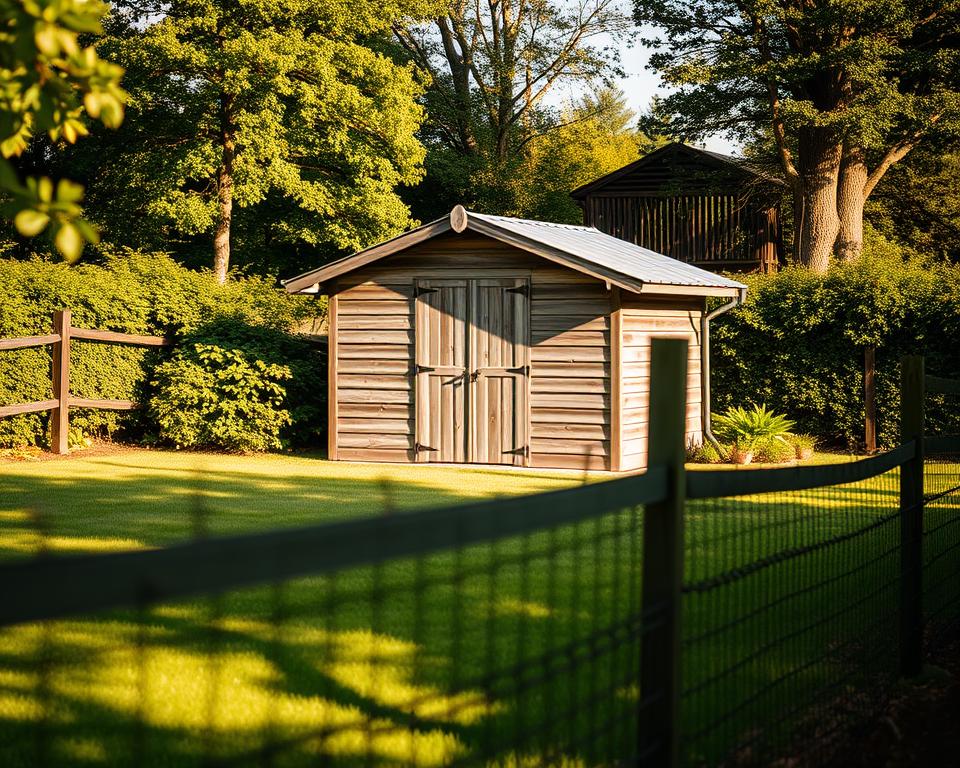
Adequate airflow around the structure is essential for preventing moisture issues. When a garden building sits too near a boundary, restricted ventilation can lead to damp accumulation.
This moisture promotes mould growth, damaging both the shed and adjacent fencing. Proper spacing allows the materials to breathe effectively.
| Purpose | Minimum Distance | Benefit |
|---|---|---|
| Wall treatment access | 18 inches (46 cm) | Allows proper exterior maintenance |
| General placement | 1 metre (3 feet) | Ensures adequate ventilation |
| Full maintenance access | 0.5-1 metre | Enables painting and repairs |
Ensuring Easy Access and Maintenance
Sufficient room around the building facilitates door operation and equipment movement. Large items like lawnmowers require clear entry paths.
Access to all sides simplifies essential upkeep tasks. Regular treatment extends the structure’s lifespan significantly.
Proper drainage prevents water pooling around the base. A slight slope away from the building protects against moisture damage over the years.
How Close Can Your Shed Be to a Fence?
The specific measurements governing shed placement are defined by both law and best practice. These rules provide clear answers for homeowners planning their project.
Minimum Distance and Height Restrictions
Under UK regulations, a garden building typically does not need planning permission if it meets two key conditions. It must be no more than 2.5 metres in height and sit at least 2 metres from any property boundary, such as a fence or wall.
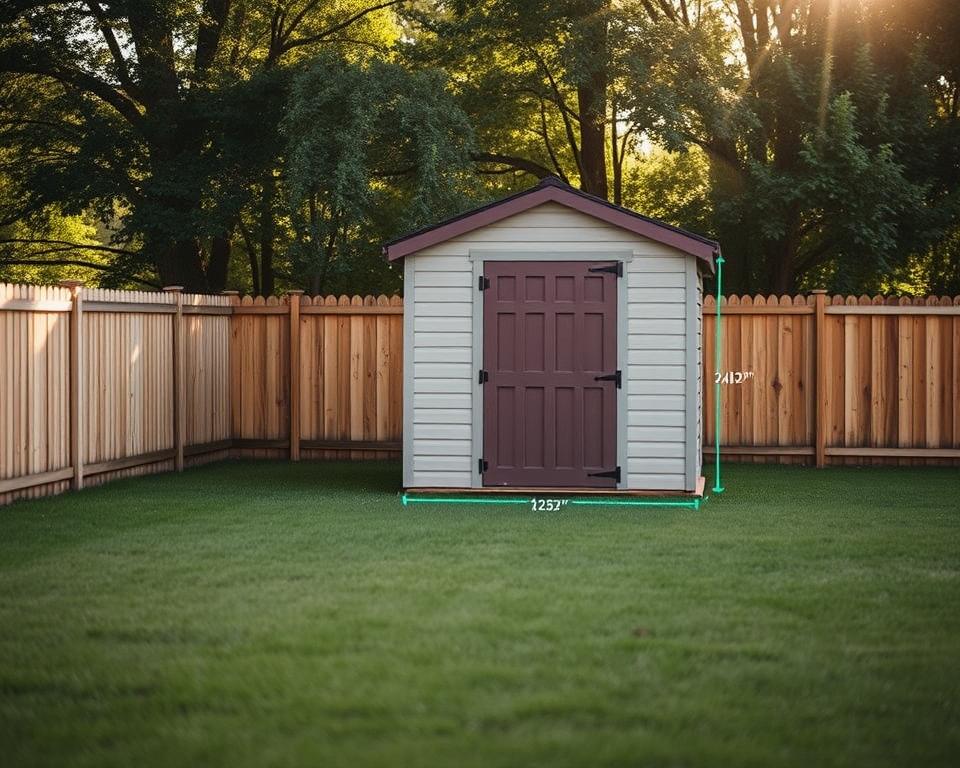
For practical reasons, a gap of 1 metre (3 feet) is often recommended. This space allows for essential maintenance and prevents moisture problems. It ensures good airflow around the structure.
These distance and height rules apply to all sheds, whether wooden, metal, or plastic. Each material has its own needs, like preventing rust or rot. Staying within the limits helps avoid disputes and keeps the building in good condition.
If a structure is closer than 2 metres to the boundary line, the 2.5m height limit is especially important. Exceeding these specifications usually requires a planning application. Local council rules can vary, so it is wise to check specific requirements for your area.
Legal and Neighbourly Implications
Building a garden structure involves more than just physical construction; it requires careful consideration of legal obligations and neighbourly relations. Ignoring either aspect can lead to significant problems.
Adhering to official rules protects a project long-term, even if neighbourhood dynamics change.
Neighbour Disputes and Communication
Positive relationships with neighbours are crucial. Even with initial agreement, new residents may object to a structure’s placement.
Open communication before work starts is the best strategy. Discussing plans prevents misunderstandings and builds cooperation.
Respecting the property boundary is essential. A professional survey can clarify the line if there is doubt. Compromise on position or height often resolves concerns amicably.

Steps to Contact Your Local Council
If a neighbour’s building causes issues, the first step is informal discussion. If it breaches planning regulations, the local authority can be involved.
Homeowners should contact their local council for definitive information. The UK Planning Portal is a key resource for understanding area-specific rules.
Failure to comply with an enforcement notice can result in fines and prosecution.
| Situation | Recommended Action | Potential Outcome |
|---|---|---|
| Uncertain about property boundary | Commission a professional land survey | Clarifies legal limits, prevents disputes |
| Neighbour raises concerns about plans | Open a dialogue and be willing to compromise | Maintains good relations, finds a mutual solution |
| A neighbouring shed may breach planning rules | Contact the Local Planning Authority | Formal investigation and potential enforcement |
Design and Maintenance Tips for Your Shed
Proper planning and consistent maintenance routines ensure garden buildings remain functional and attractive for years. A well-designed structure complements the landscape while serving practical needs.
Ventilation, Drainage and Aesthetic Considerations
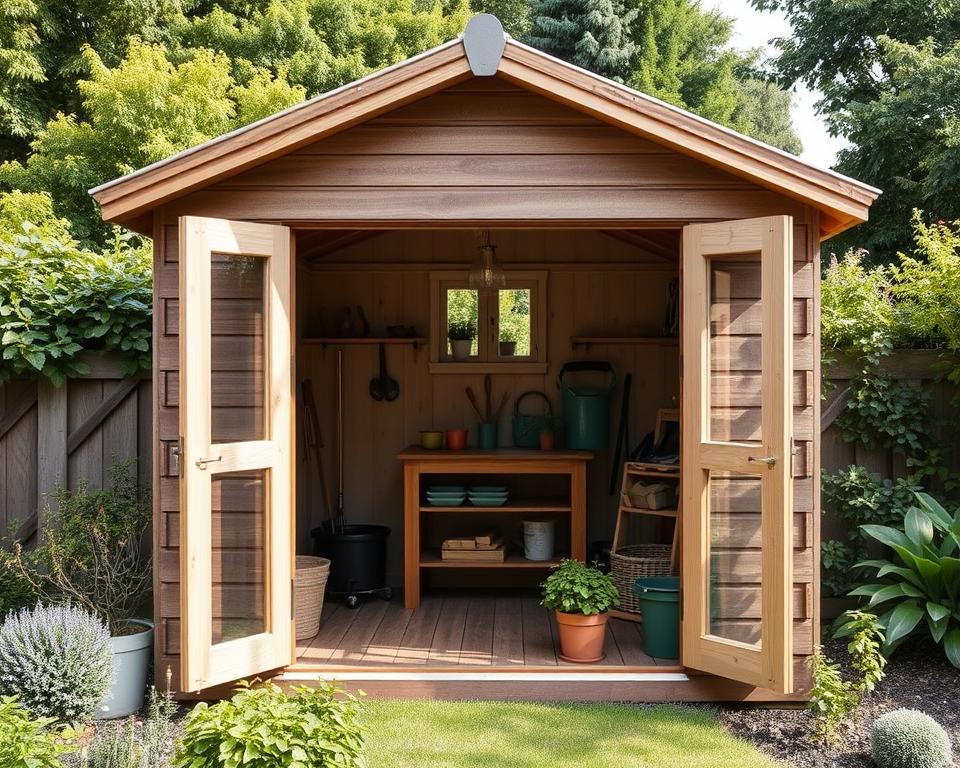
Good airflow prevents moisture buildup inside the structure. Adequate spacing from boundaries allows air to circulate freely around the building.
Proper drainage protects the foundation from water damage. The ground should slope away slightly to prevent pooling. Gutters can manage rainwater effectively.
Visual harmony matters in garden design. Consider how the building integrates with existing landscape features. Thoughtful placement creates a cohesive outdoor space.
| Maintenance Task | Frequency | Key Benefit |
|---|---|---|
| Roof and gutter cleaning | Twice yearly | Prevents water damage |
| Wood treatment application | Every 2-3 years | Protects against weathering |
| Structural inspection | Spring and autumn | Early problem detection |
| Security check | Seasonally | Deters theft |
Regular inspections identify issues like roof leaks or wood cracks early. Spring and autumn are ideal times for thorough checks.
Security measures protect valuable contents. Robust locks and motion-activated lighting offer peace of mind. These features are worth considering during the design phase.
A well-maintained garden building provides reliable service for many years. Consistent care protects the investment in this valuable outdoor asset.
Conclusion
Successful shed installation depends on balancing legal, practical and social considerations. Homeowners must navigate planning permission requirements while ensuring proper placement for longevity.
Following the guide’s recommendations prevents common issues. The 2-metre boundary rule for structures under 2.5 metres height provides a solid foundation under permitted development rights.
Practical spacing of approximately 1 metre allows adequate ventilation and maintenance access. This prevents dampness and preserves the building’s structural integrity over time.
Neighbour communication remains crucial throughout the process. Discussing plans maintains positive relationships and prevents potential disputes.
This comprehensive information helps homeowners make informed decisions about their garden project. Proper placement enhances outdoor space while complying with UK regulations.
By following these principles, property owners can confidently build shed structures that serve their needs effectively for years to come.
FAQ
What is the minimum distance a shed can be from a fence?
There is no universal minimum distance set in UK law. However, many local planning authorities recommend a gap of at least 0.5 metres. This gap helps prevent issues with damp, allows for maintenance access, and can reduce the risk of neighbour disputes.
Do I need planning permission to place a shed close to my boundary?
Often, a shed falls under permitted development rights, meaning planning permission is not required. However, permission is likely needed if the shed is within 2 metres of the boundary and the eaves height exceeds 2.5 metres, or if the total area for all outbuildings exceeds permitted limits.
How can I prevent damp and mould in a shed positioned near a fence?
Ensure adequate ventilation by installing air vents. Position the shed so that its roof overhang directs rainwater away from the fence and the shed’s own walls. A small gap between the shed and the fence is crucial for air circulation, which helps keep the structure dry.
What should I do if my neighbour objects to my shed’s placement?
Open a polite conversation with your neighbour to understand their concerns. Discussing plans beforehand can prevent disputes. If an agreement cannot be reached, contact your local planning authority for guidance on whether your shed complies with regulations.
Are there different rules for sheds on properties in conservation areas?
A>Yes, properties in conservation areas often have stricter rules. Permitted development rights may be more limited, and it is highly advisable to consult the local planning authority before starting any building work, including shed placement.
What are the key design considerations for a shed near a boundary?
Prioritise ventilation to prevent moisture build-up. Ensure the roof design allows for proper drainage away from the fence. Consider the shed’s aesthetic impact on neighbouring properties, as a well-designed structure is less likely to cause objections.