Herb Garden Ideas For Your Small Green Space
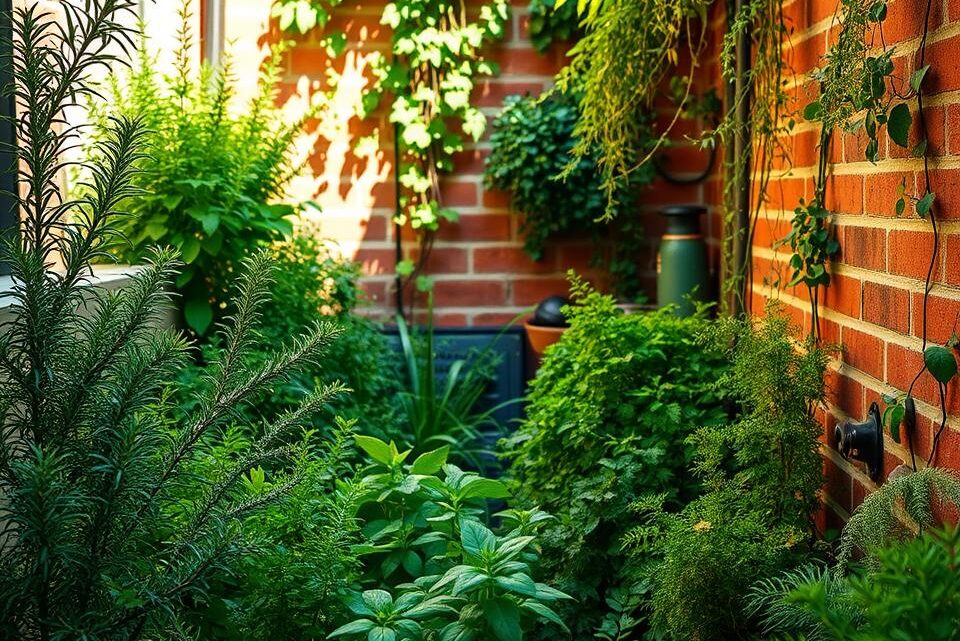
Limited outdoor areas need not limit one’s gardening ambitions. Even the most modest balcony, patio, or sunny windowsill can be transformed into a productive and beautiful source of fresh ingredients.
This guide explores clever and practical solutions for cultivating a thriving collection of culinary and aromatic plants. It demonstrates how to make the most of every available inch, turning constraints into creative opportunities.
Urban dwellers and those with restricted square footage will find tailored advice. The focus is on accessible, budget-friendly approaches that use readily available materials and require minimal upkeep.
From simple potted arrangements to sophisticated vertical systems, there is an approach to suit every skill level and aesthetic preference. The goal is to empower individuals to create a personalised, flourishing plot that enhances their cooking and living space.
Inhaltsverzeichnis
Key Takeaways
- Even the smallest of areas can be utilised for growing fresh, flavourful plants.
- Creative solutions like vertical gardening maximise limited square footage effectively.
- There are options to suit all levels of experience, from beginner to expert.
- Focus on accessible, low-maintenance methods that deliver excellent results.
- Growing your own can enhance meals and reduce grocery shopping costs.
Introduction to Herb Gardening in Small Spaces
Space limitations present unique opportunities for creative cultivation solutions. Many enthusiasts with compact outdoor areas find that dedicated growing zones for culinary plants offer practical benefits.
What is an Herb Garden?
An herb garden represents a specialised area where culinary, medicinal, and aromatic plants are cultivated. These arrangements can range from a single container on a windowsill to an elaborate raised bed system.
The fundamental principle involves selecting varieties that match the gardener’s preferences and conditions. Successful cultivation depends on understanding each plant’s specific needs for sunlight, soil, and watering.
Optimising Limited Green Space
Small-space cultivation requires strategic planning to make the most of available square footage. The focus should be on vertical growth, compact varieties, and multi-functional containers.
Urban gardeners increasingly embrace this practice as an accessible entry point into home food production. Whether establishing a raised bed on a patio or planting herbs along a narrow balcony, the key lies in maximising vertical dimensions.
This approach challenges traditional assumptions, demonstrating that productivity doesn’t necessarily correlate with plot size. With careful selection and arrangement, even the most confined area can yield impressive results.
Benefits of Growing Herbs in Small Gardens
Cultivating a personal collection of plants offers rewards that extend far beyond the boundaries of a plot. These advantages make the endeavour particularly appealing for those with limited room.
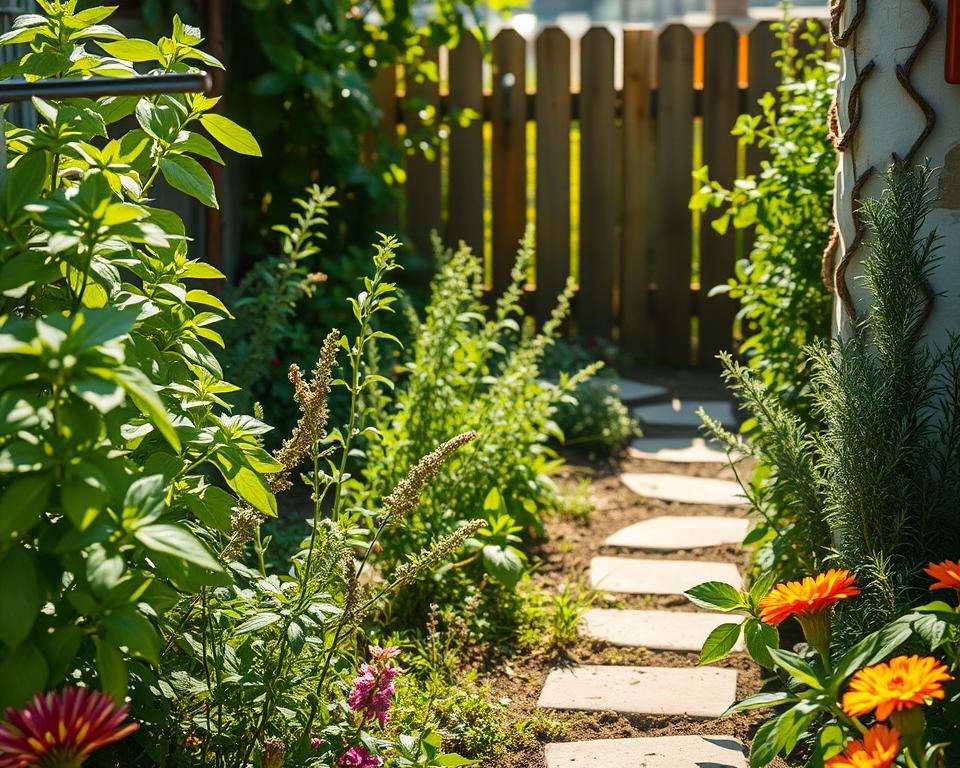
The immediate benefit is financial savings. A single plant yields continuous harvests, eliminating the need to purchase expensive, pre-packaged portions from the supermarket.
Cost-Effective and Sustainable
This approach is remarkably economical. One initial investment in seeds or seedlings replaces countless future purchases. The satisfaction of this self-sufficiency is profound.
It also champions sustainability. By reducing packaging waste and food miles, gardeners contribute to a healthier planet.
Fresh and Flavourful Ingredients
Nothing compares to the taste of freshly picked leaves. Their flavour and nutritional value are at their peak, unlike shop-bought alternatives that have travelled and been stored.
The difference in taste when using home-grown produce is undeniable. It transforms everyday cooking.
Having a supply readily available encourages healthier eating and culinary creativity.
Low Maintenance and Easy Care
Many popular varieties are naturally resilient. They often thrive with minimal attention, making them perfect for beginners or those with little time.
Their natural resistance to pests means chemical treatments are rarely needed. This creates a simpler, more natural cultivation process.
| Benefit | Key Advantage | Ideal For |
|---|---|---|
| Cost Savings | Eliminates recurring purchases | Budget-conscious individuals |
| Peak Flavour | Superior taste and aroma | Home cooks |
| Easy Upkeep | Minimal effort required | Busy people and novices |
Herb Garden Ideas For Your Small Green Space
Resourceful gardeners worldwide have devised clever arrangements that transform limited areas into productive zones. These practical concepts address common challenges faced by urban dwellers and those with compact outdoor spaces.
Inspiration from Garden Enthusiasts
Experienced cultivators share innovative approaches that maximise every available inch. Their tested methods range from rustic wooden containers to sophisticated vertical systems.

Many enthusiasts incorporate upcycling principles, turning everyday items into functional growing spaces. This approach reduces costs while supporting environmental sustainability.
The most successful arrangements often combine multiple concepts to create dynamic, layered planting systems that serve as attractive focal points.
These diverse herb garden ideas cater to various skill levels and aesthetic preferences. Gardeners can select methods that align with their resources and time commitments.
| Approach Type | Spatial Solution | Skill Level Required |
|---|---|---|
| Vertical Systems | Maximises height | Intermediate |
| Container Gardens | Flexible placement | Beginner |
| Repurposed Items | Cost-effective | All levels |
| Layered Arrangements | Multi-level design | Advanced |
The creativity demonstrated by these passionate growers proves that limitations often spark the most innovative solutions. Their herb gardens successfully adapt to various climates and living situations.
DIY Projects: Wooden Containers, Jar Gardens and More
Handcrafted containers provide unique opportunities for growing culinary favourites with individual flair. These do-it-yourself approaches allow gardeners to customise their cultivation space with personal touches. The satisfaction of creating functional growing systems from basic materials adds another layer of enjoyment to the process.
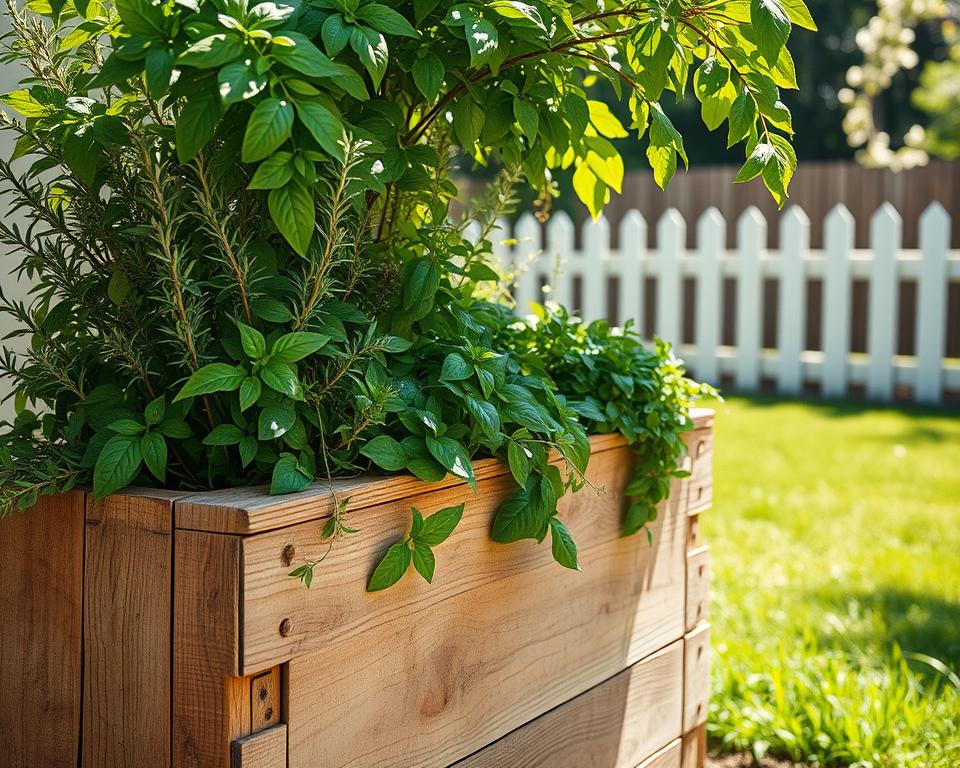
Wooden Container Herb Garden
Constructing wooden containers offers an excellent way to grow herbs with portability and style. These containers can be built from reclaimed timber, making them an economical choice. The design should include separate sections to allow individual plants to thrive without root competition.
Proper drainage is essential for healthy growth. Lining the wood with food-safe plastic prevents potential chemical leaching. This simple guide helps create professional-looking containers that rival shop-bought alternatives.
Indoor Jar or Cup Garden
Transforming jars or cups into miniature gardens brings fresh flavours to the kitchen windowsill. This approach requires minimal space while keeping plants within easy reach. The compact size makes it ideal for urban dwellings.
Place containers in a sunny window where they receive adequate light. Use quality potting soil and ensure water can drain properly to maintain plant health. This method allows year-round cultivation regardless of outdoor conditions.
Vertical Herb Garden Solutions and Ideas
Growing upwards rather than outwards represents a smart strategy for maximising cultivation potential in confined areas. This approach transforms underutilised vertical surfaces into productive growing zones.
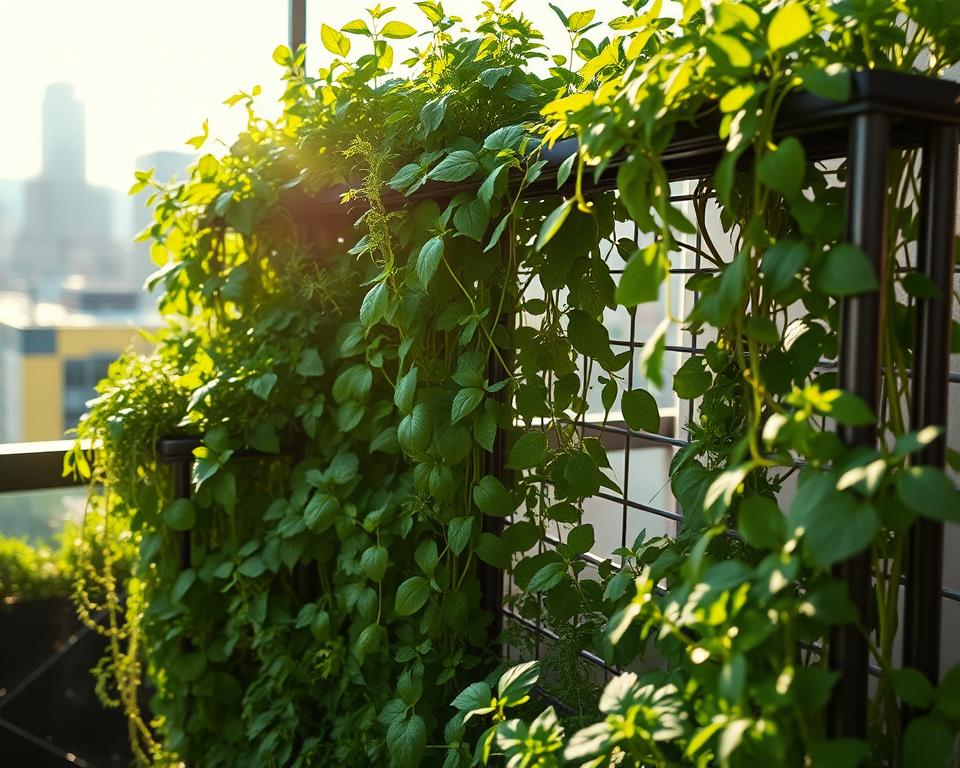
These systems prove particularly valuable where traditional ground planting isn’t feasible. They create living walls that serve both practical and aesthetic purposes.
Vertical Pallet Garden
Repurposed wooden pallets offer an excellent foundation for creating wall-mounted growing systems. This method gives discarded materials renewed purpose while maximising available space.
The pallet approach works well on exterior walls or fence panels that receive adequate sunlight. It creates substantial growing capacity within a minimal footprint.
Vertically Stacked Planters
Tiered arrangements using multiple planters create living columns that accommodate various species. This system typically requires at least five containers of graduated sizes.
Threading a metal rod through drainage holes provides stability while creating an aesthetically pleasing appearance. Careful attention to watering patterns ensures proper moisture distribution.
This vertical herb garden design allows cultivation of numerous varieties in the same area that might accommodate only one or two traditional containers. It represents an efficient use of limited space.
Creative Container Designs and Repurposed Materials
Ingenuity in container selection often yields the most charming and cost-effective growing solutions. Repurposing everyday household items into functional planters is a cornerstone of accessible, sustainable cultivation.
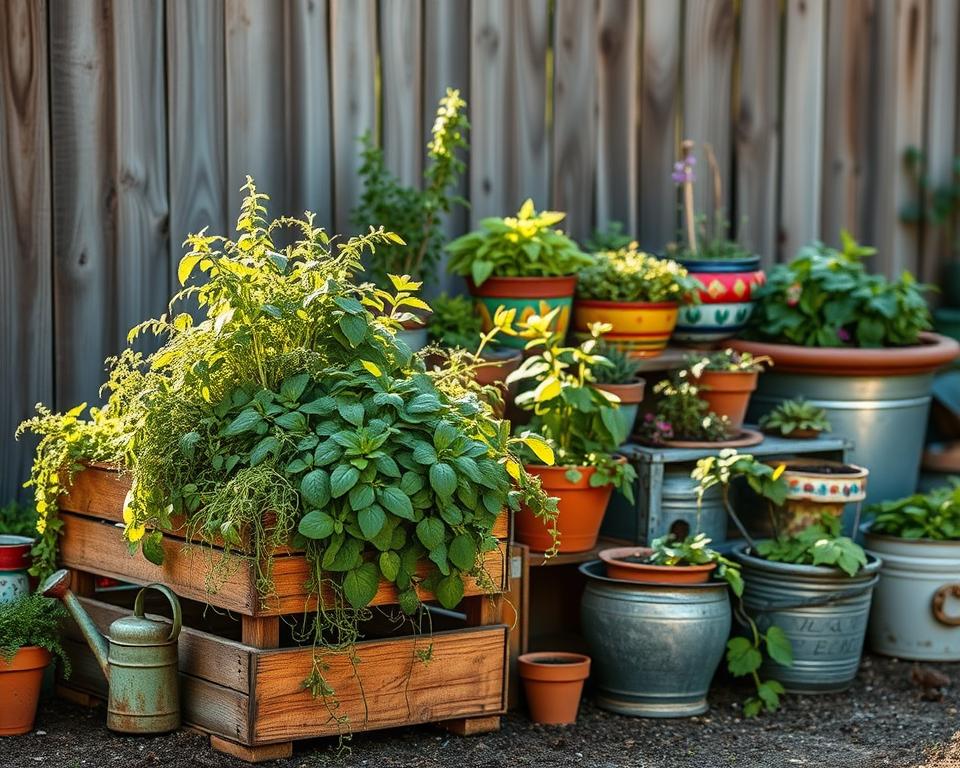
This approach demonstrates that effective cultivation need not rely on expensive, purpose-built materials. It champions creativity and reduces environmental impact simultaneously.
Reuse of Cans for Planters
Tin cans of various sizes offer ready-made containers that are both economical and readily available. After a thorough cleaning, a few simple modifications transform them into excellent planter alternatives.
The most critical step is drilling several small drainage holes in the base. This prevents waterlogging and ensures healthy root systems. They can then be filled with quality potting mix.
Their metallic surface is ideal for personalisation. A coat of paint in vibrant colours or stencilled patterns allows them to complement any outdoor décor.
Upcycling cans not only saves money but also adds a unique, personal touch that shop-bought pots simply cannot match.
Reviving Old Shoe Organisers
Cloth hanging organisers, designed for wardrobe storage, adapt brilliantly for vertical cultivation. Their pocket design naturally compartmentalises different plants.
The fabric materials often provide adequate drainage, but poking additional holes in each pouch bottom improves water flow. It is vital to ensure the supporting structure can bear the significant weight of wet soil and mature plants.
Secure mounting on a fence or balcony railing with sturdy rods or hooks creates a lush, living wall. This maximises vertical space with remarkable efficiency.
| Repurposed Item | Key Preparation | Primary Advantage |
|---|---|---|
| Tin Cans | Drill drainage holes | Extremely low cost and customisable |
| Plastic Bottles | Cut opening, add holes | Lightweight and readily available |
| Shoe Organiser | Reinforce pockets, secure mount | Excellent for vertical space utilisation |
These methods prove that with a little creativity, almost any size or shape of container can become a productive home for plants.
Maximising Indoor and Outdoor Herb Garden Spaces
Strategic placement of growing areas within living spaces transforms everyday environments into functional, aromatic zones that serve multiple purposes. This approach bridges the gap between interior comfort and exterior cultivation.
Herb Tabletop Garden Concepts
Tabletop arrangements merge decorative appeal with practical utility. They create living centrepieces that provide fresh ingredients while enhancing room aesthetics.
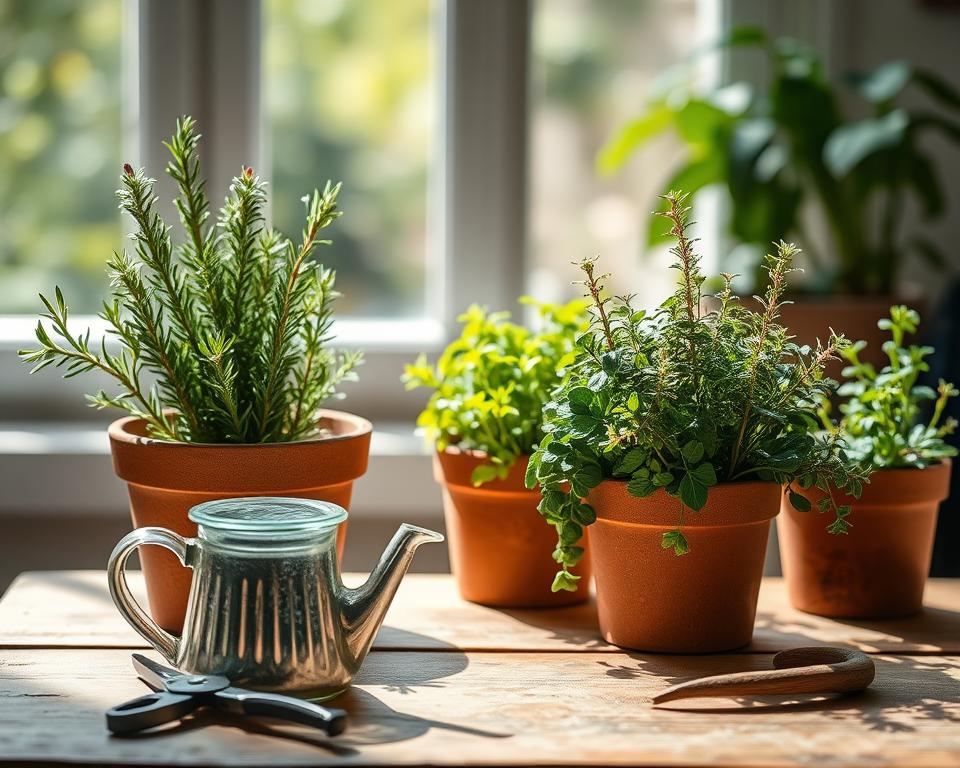
Selecting containers with proper drainage holes remains essential for healthy growth. Saucers protect surfaces while allowing excess water to escape, preventing root issues.
Peat-free potting mix amended with perlite offers ideal growing conditions. This combination ensures adequate nutrient retention while maintaining proper drainage.
The initial watering technique establishes strong root development. Thoroughly saturate the soil once, then allow complete drainage before adopting a sparing schedule.
Basil thrives as a tabletop plant with its compact growth habit. Mint’s aromatic properties naturally freshen indoor air when leaves are brushed.
Overhead hanging systems above kitchen areas maximise unused space. They position plants within easy reach during food preparation.
| Cultivation Type | Light Requirements | Watering Frequency | Seasonal Suitability |
|---|---|---|---|
| Indoor Tabletop | Bright indirect light | Moderate, consistent | Year-round |
| Outdoor Container | Direct sunlight | Frequent, weather-dependent | Spring to autumn |
| Windowsill Arrangement | Direct window light | Light, regular | All seasons |
Simple windowsill arrangements demonstrate that elaborate systems aren’t necessary. Quality pots, appropriate selection, and adequate natural light enable successful cultivation.
Balancing indoor and outdoor growing ensures continuous access. Outdoor spaces produce abundant summer harvests while indoor plants supply winter needs.
Customising Your Herb Garden for Style and Function
Individual style preferences can be seamlessly integrated into functional growing systems through thoughtful customisation. This approach transforms practical arrangements into personalised expressions that reflect the gardener’s unique aesthetic vision.
Personalised Planters and Containers
The selection of containers establishes both the visual character and practical functionality of the growing space. Different materials and designs offer distinct advantages for various settings.
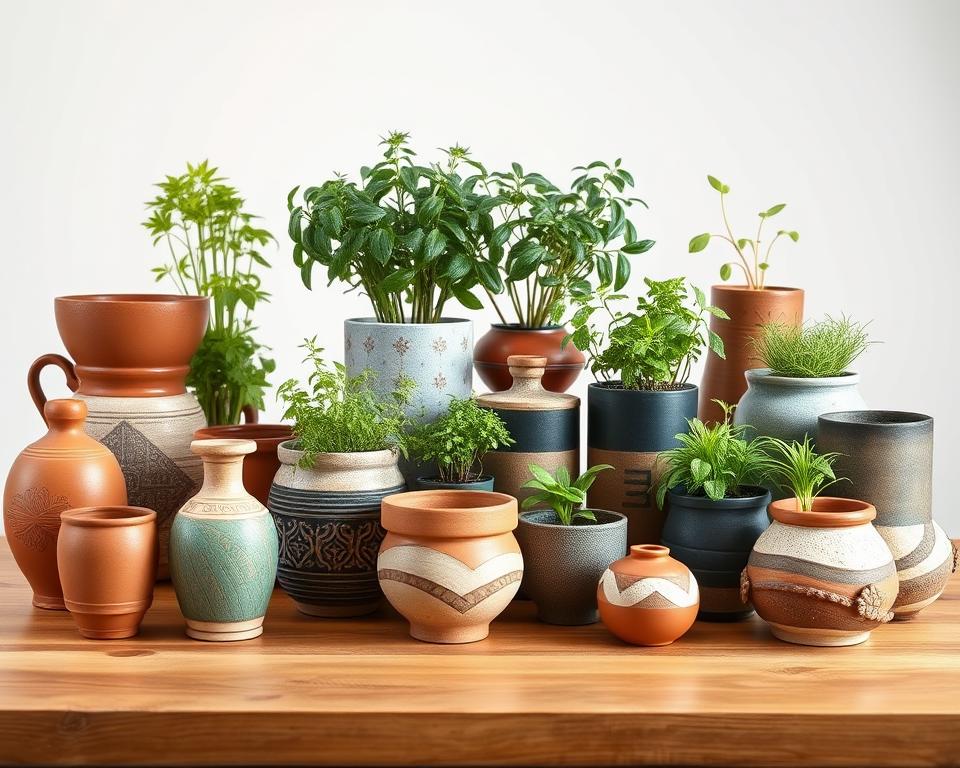
Wooden crates serve as excellent blank canvases for creative designs. Their natural texture complements both rustic and contemporary décors. This choice allows for substantial customisation potential.
| Container Type | Customisation Potential | Practical Benefits |
|---|---|---|
| Wooden Planters | High – painting, staining | Excellent drainage, durability |
| Ceramic Pots | Medium – glazing, patterns | Weight stability, insulation |
| Metal Containers | High – colours, finishes | Lightweight, modern appeal |
Adding Artistic Touches
Creative embellishments bring growing spaces to life with personality and charm. Hand-painted wooden spoons make delightful plant markers that serve practical identification purposes.
Vibrant colours on containers create energetic focal points in any space. The variety of available techniques ensures everyone can participate regardless of artistic experience. Incorporating flowering plants introduces additional colour dimensions.
Taking this creative step enhances emotional connection to the cultivation process. Careful consideration of container proportions ensures harmonious integration with existing spaces.
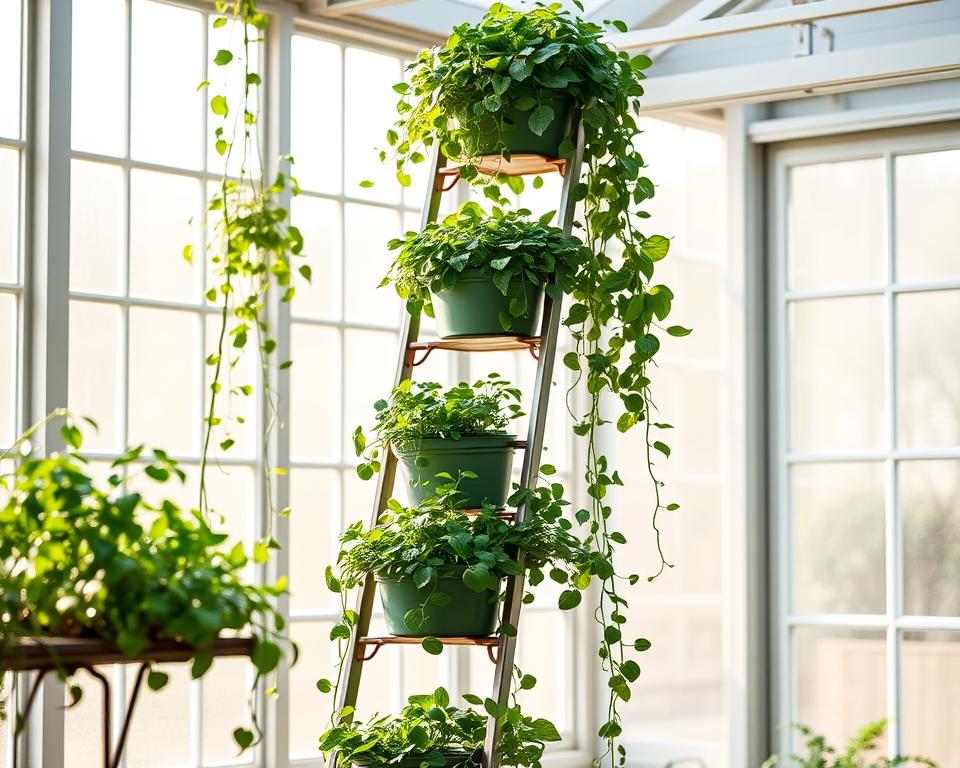
Innovative Vertical Gardening and Ladder Planters
Taking cultivation to new heights unlocks potential in even the most restricted areas. This approach maximises vertical space, turning blank walls and unused corners into thriving, productive zones.
DIY Ladder Planter Projects
A freestanding ladder planter offers an elegant and flexible solution. Its graduated tiers allow for a stunning display of various plants.
Following a detailed guide, one can construct a custom unit from reclaimed timber. This step-by-step process is a cost-effective way to create a professional-looking feature.
Designing a Living Wall
Modular living wall systems represent a sophisticated way to cultivate a vertical garden. These kits often feature integrated irrigation for easy care.
They bring a space to life with lush greenery. This method is perfect for those looking to grow herbs like thyme on a substantial scale.
Creative Shelving Solutions
Repurposed or purpose-built shelves multiply growing capacity efficiently. They organise containers in accessible tiers, improving air flow.
This system simplifies maintenance tasks. It is an excellent way to fit more plants into a compact footprint.
| Vertical System | Key Feature | Best For |
|---|---|---|
| Ladder Planter | Freestanding & flexible | Corners & against walls |
| Living Wall | Modular & irrigated | Large vertical garden displays |
| Creative Shelving | Space-efficient stacking | Maximising number of plants |
Conclusion
Transforming available space into productive growing areas requires minimal investment but yields significant rewards. This guide has shown how anyone can cultivate aromatic plants regardless of their experience level.
From windowsill arrangements to vertical systems, the possibilities ensure every dwelling can accommodate some form of plant cultivation. The transition from purchasing supermarket herbs to harvesting home-grown alternatives provides ongoing financial savings while guaranteeing fresher ingredients for kitchen use.
Successful cultivation builds confidence that often inspires gardeners to expand their repertoire over time. The minimal maintenance requirements make these plants ideal for beginners, forgiving occasional neglect while still producing worthwhile harvests.
By implementing ideas from this comprehensive guide, individuals can design personalised growing spaces that reflect their needs and support sustainable practices. The journey continues beyond initial establishment, with each season offering new opportunities for refinement.
FAQ
What are the best herbs to grow in a small space?
For limited areas, compact and high-yield plants like basil, parsley, chives, and thyme are excellent choices. These varieties thrive in containers and offer a continuous supply of fresh flavours for cooking.
How much sunlight does a small herb garden need?
Most culinary plants require at least six hours of direct sunlight daily. A south-facing windowsill is ideal for indoor setups, while balconies and patios should be positioned to receive ample light.
Can I create a vertical herb garden without drilling into walls?
A> Absolutely. Freestanding options like a leaning ladder planter, a tiered shelving unit, or a repurposed shoe organiser hung over a door are fantastic, non-permanent solutions for a vertical garden.
What type of soil is recommended for container gardening?
A well-draining, high-quality potting compost is essential. Avoid using garden soil, as it can compact in pots and hinder root growth. Look for mixes specifically formulated for containers.
How often should I water my herbs in pots?
The frequency depends on the climate and container size. A good rule is to check the top inch of soil; if it feels dry, it is time to water. Ensure pots have adequate drainage holes to prevent waterlogging.
What are some creative containers I can use for a DIY project?
Many household items can be repurposed. Tin cans, mason jars, wooden crates, and even old teacups make charming and unique planters. Just remember to add drainage materials like pebbles at the bottom.
Is it possible to grow herbs indoors year-round?
Yes, many herbs adapt well to indoor life. Providing sufficient light is the key challenge. A sunny windowsill or a dedicated grow light can sustain plants like mint, rosemary, and coriander throughout the seasons.