Bird-Friendly Garden: Eight Ways to Help Breeding Birds
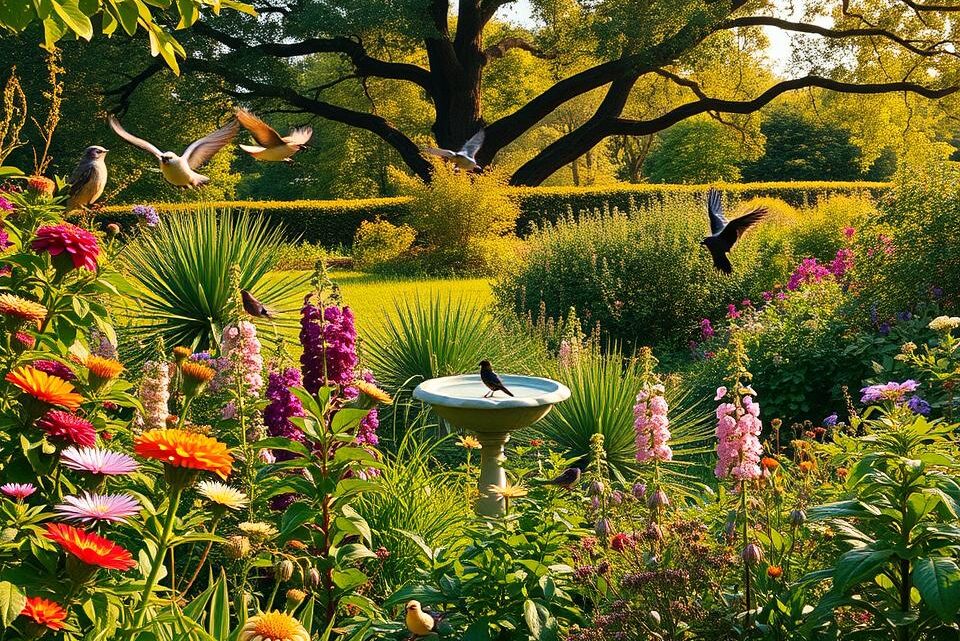
Our outdoor spaces hold immense potential to become vital sanctuaries for wildlife. As modern landscapes become more uniform and intensively managed, many creatures find fewer places to thrive. This is especially true for our feathered friends.
These animals play a crucial role in a healthy ecosystem. They naturally control pests by consuming insects and grubs that can damage plants and lawns. Their activities even contribute to soil health.
However, many typical plots, featuring large gravelled sections or manicured lawns, offer little ecological value. Wild birds are increasingly forced to seek refuge in urban areas where food and nesting sites are scarce.
This guide provides practical steps to transform your plot into a supportive environment. By making a few thoughtful changes, you can offer a safe habitat for nesting species during their critical breeding periods.
Inhaltsverzeichnis
Key Takeaways
- Modern landscapes offer fewer natural habitats for wildlife.
- Birds provide natural pest control and improve soil quality.
- Urban and suburban gardens are increasingly important refuges.
- Traditional garden designs often lack the features birds need.
- Simple adjustments can make a significant difference for nesting birds.
Introduction to a Bird-Friendly Garden
A thoughtfully designed outdoor area can function as a vital, self-sustaining ecosystem. This approach moves beyond mere aesthetics to create a dynamic environment where different forms of life support one another.
Understanding the Benefits for Biodiversity
Flowering plants attract essential pollinators. These insects not only help plants reproduce but also become a nutritious food source for various species.
In turn, these creatures contribute to natural pest management. This creates a balanced system that thrives with minimal human intervention. The presence of a diverse wildlife population is a key indicator of a healthy, vibrant space.
When plants complete their cycle, they continue to provide. Their seeds offer sustenance during colder months, and dead organic matter becomes valuable nesting material.
Why Breeding Birds Thrive in Well-Planned Gardens
Nesting birds have specific requirements for successful reproduction. They need reliable access to food, particularly protein-rich insects for their growing chicks.
A lawn managed with care, for instance, supports insect life in the soil. This becomes a foraging ground for species like blackbirds. Safe nesting locations are equally critical, offering protection from predators.
By incorporating a variety of native plants and avoiding harsh chemicals, your plot can become a secure habitat. This support is crucial for helping local bird populations flourish during their most vulnerable season.
Embracing Native Plants for Natural Habitats
Local flora selection plays a pivotal role in creating thriving ecosystems within cultivated areas. While exotic ornamental plants offer visual appeal, they often provide limited value to indigenous wildlife.
Choosing Native Shrubs and Trees
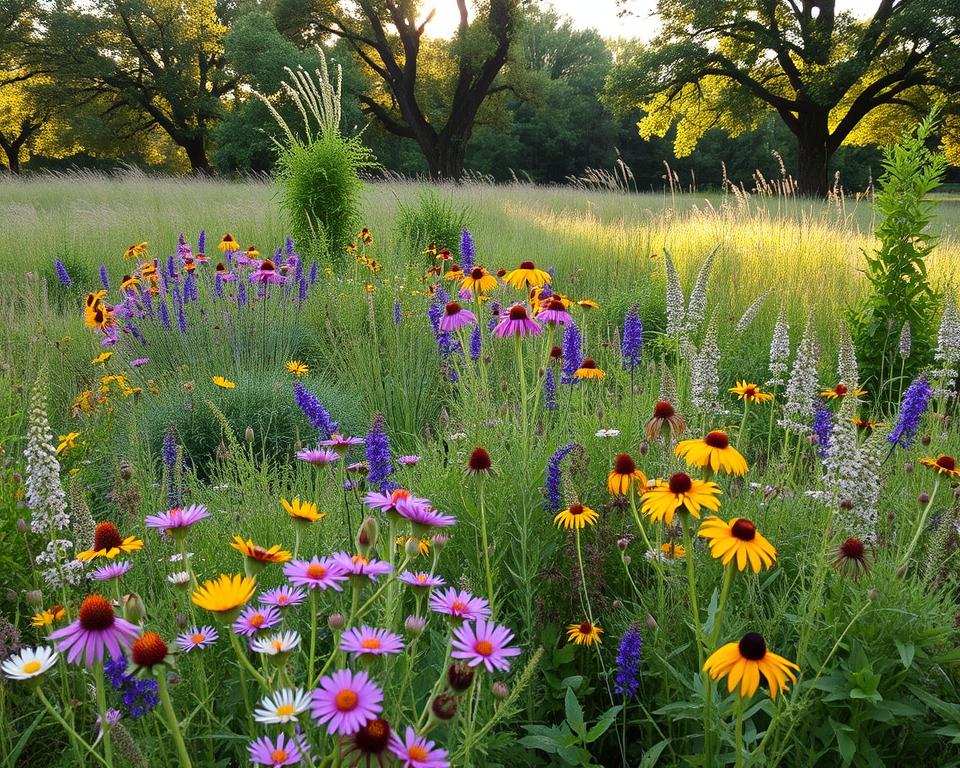
Native shrubs and trees like rowan, holly, and hawthorn offer multiple benefits. These plants have evolved alongside local bird species, providing optimal nutrition and habitat.
Dense vegetation from native species creates safe retreats from predators. Berry-bearing bushes such as elder, ivy, and honeysuckle supply essential food sources throughout the year.
Seasonal Blooms to Support Insects and Birds
Selecting plants that flower at different times ensures continuous insect activity. This provides protein-rich food for insectivorous bird species during critical breeding periods.
Native flowers attract pollinating insects, which become vital nourishment. This natural cycle supports the entire food web while reducing maintenance needs.
Creating a Nourishing Lawn and Sustainable Food Sources
Lawns can transform into productive habitats with simple, mindful management practices. A grassy area offers more than just aesthetic value to any outdoor space.
Planting Lawns to Attract Insect Life
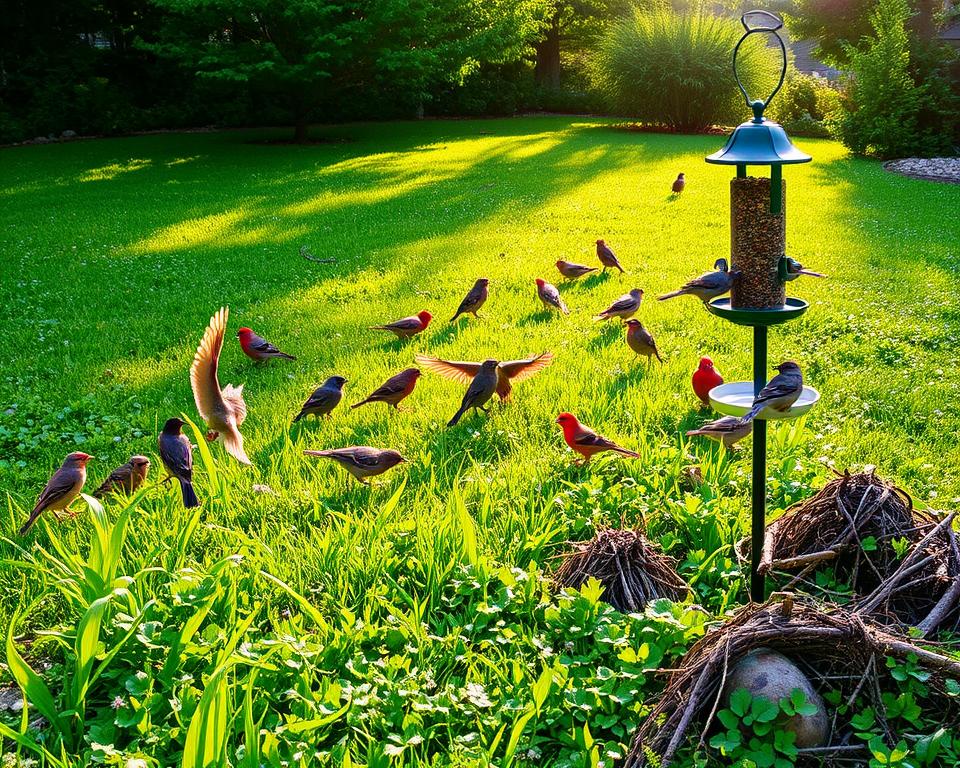
The soil beneath turf hosts a hidden world of invertebrates. Worms, grubs, and leatherjackets thrive in healthy earth. These creatures provide essential protein for many species.
Blackbirds and thrushes frequently forage across grassy patches. They use their beaks to extract worms from the soil. What some might consider lawn problems, like grub infestations, actually represent valuable food sources.
Diverse grass areas with wildflowers support richer insect communities. This variety creates a more sustainable food supply.
Minimising Harmful Chemical Use
Chemical treatments can disrupt the delicate balance of lawn ecosystems. Pesticides and herbicides eliminate the very insects that birds rely upon.
Organic approaches maintain healthy grass while preserving invertebrate life. Avoiding synthetic fertilisers protects the soil food web. This creates safer feeding environments where birds can consume insects without toxin exposure.
Seed-bearing perennials and wild herbs offer additional habitats. They provide nourishment for grain-eating species like goldfinches and chaffinches.
Planting Trees and Bushes to Provide Essential Shelter
Strategic placement of trees and shrubs transforms open areas into multi-layered habitats with protective cover. These woody plants offer elevated positions that birds instinctively seek for safety. Tall trees provide vantage points and secure nesting sites away from ground-based threats.

Dense shrubs create natural barriers against predators and harsh weather. This vertical structure is essential for species that require secluded spots for raising their young. The combination of height and density creates ideal conditions for successful nesting.
Benefits of Berry-Bearing Bushes
Fruit-producing vegetation serves a dual purpose in the landscape. Beyond offering protective cover, these plants supply natural food sources throughout the year. Birds are particularly drawn to berries from native species.
Popular choices include blackcurrants, blackberries, redcurrants, and raspberries. These provide essential nutrition, especially during colder months when insects are scarce. Gardeners can protect their own crops with mesh while leaving other bushes accessible.
Timing of Pruning to Protect Nests
Proper maintenance scheduling is crucial for wildlife protection. Most shrubs benefit from annual pruning to encourage healthy growth. However, timing this work requires careful consideration.
Pruning should occur before March or after July to avoid the peak breeding season. This schedule prevents disturbance to active nests and ensures food sources remain available. Always inspect vegetation thoroughly before cutting.
If nests are present, wait until the young have fledged and the family has moved on. This approach respects both legal protections and ethical responsibilities toward nesting birds.
Feeding the Birds Throughout the Year
Year-round feeding strategies can significantly impact the survival and success of local bird communities. While many species migrate during colder months, resident populations face severe food shortages when natural sources become scarce.
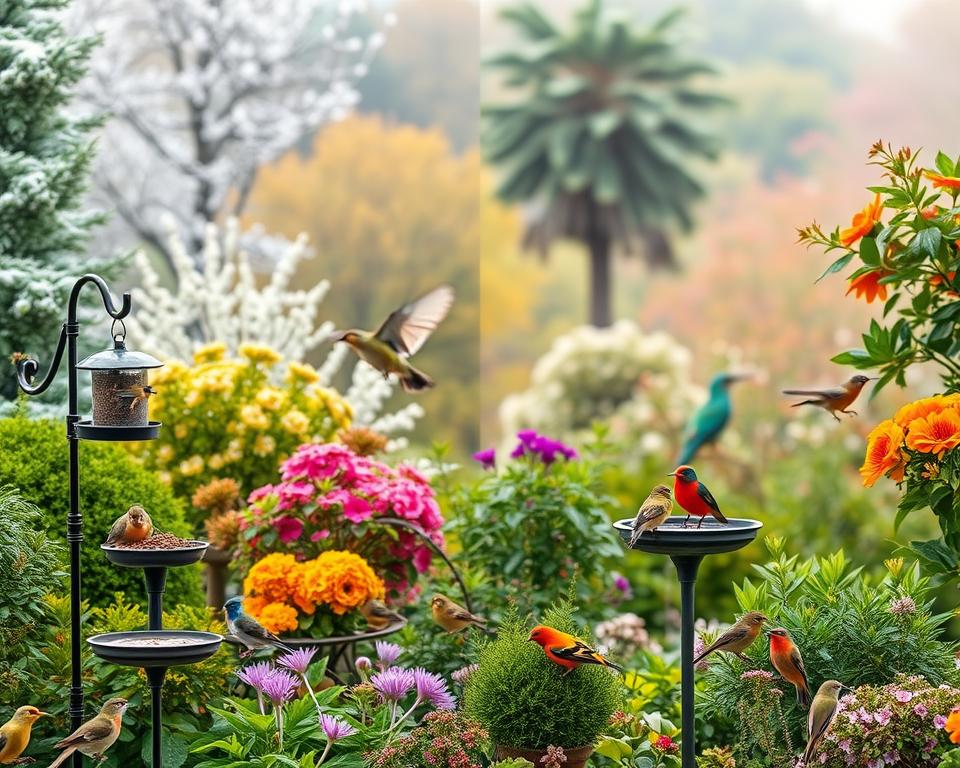
Seasonal Feeding Tips for a Healthy Diet
Nutritional needs change dramatically with the seasons. During winter, birds require high-energy foods rich in fats to maintain body heat. Fat balls, peanut rings, and specialised bird peanut butter provide essential energy when insects are unavailable.
In spring and summer, adult birds feed protein-rich insects to their growing young. Large seeds and fatty winter mixes should be avoided during breeding season as nestlings cannot digest them properly.
Using Natural, Nutritious Foods
Traditional bread offers little nutritional value and can be harmful. Instead, black oil sunflower seeds provide excellent energy with thin shells that small birds can easily open. These seeds work well throughout the year.
Consistent feeding with appropriate foods helps avian populations thrive during challenging periods. Proper nutrition supports successful breeding and winter survival.
Establishing Water Sources with Ponds and Baths
Access to clean, fresh water is essential for the health and wellbeing of all garden wildlife, particularly during breeding periods. Birds require reliable sources for both drinking and bathing throughout the year.

These features become especially valuable in hot weather when natural supplies may diminish. Proper hydration supports vital functions and helps regulate body temperature.
Comparing Ponds with Bird Baths
A small, shallow pond offers multiple benefits beyond serving avian needs. It attracts diverse wildlife including foxes, bats, and insects like damselflies.
Ponds create complex ecosystems that support various species. For smaller spaces, a simple water dish or shallow bowl provides an effective alternative.
Bird baths prove particularly helpful during summer months. They allow small birds to quench thirst and take refreshing baths in cool water.
Maintenance Tips for Clear, Fresh Water
Regular cleaning prevents water sources from becoming breeding grounds for diseases. Baths should be shallow enough for safety, with added stones for perching.
Cleaning every few days removes algae and pathogens. Fresh water ensures these features remain attractive and beneficial to visiting wildlife.
Proper maintenance involves thorough scrubbing and complete water replacement. This simple routine protects the health of all creatures using the water source.
Encouraging Natural Insect Life with Organic Practices
Organic gardening methods naturally cultivate thriving insect communities that sustain local fauna. These invertebrates form the foundation of healthy ecosystems, providing essential nutrition for many species.
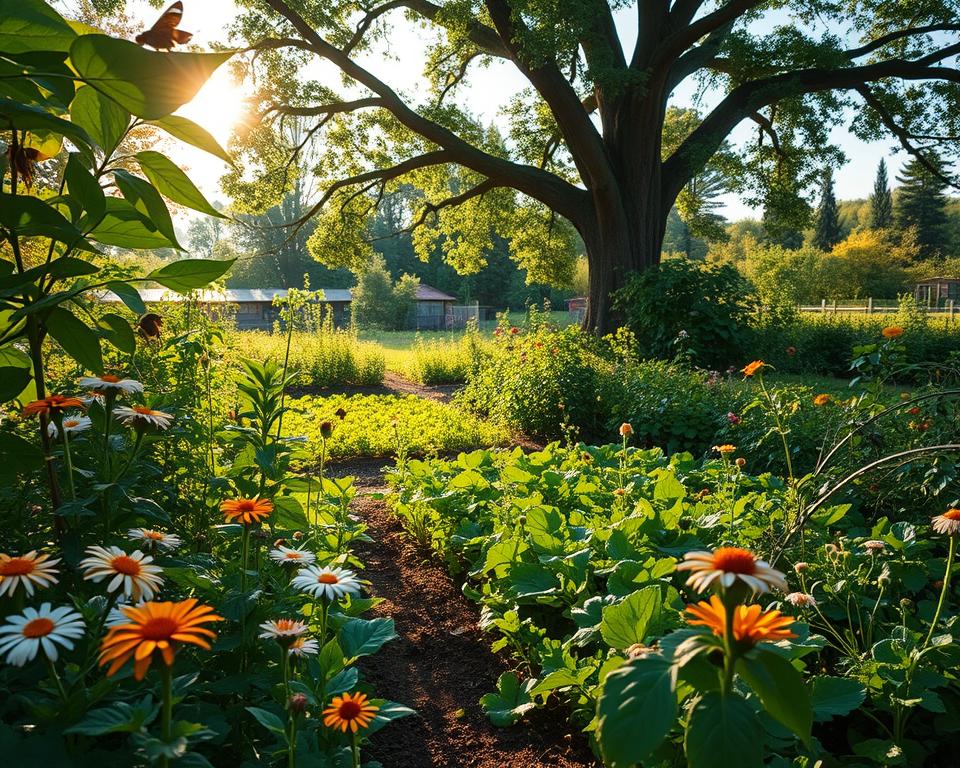
Most avian species depend heavily on insects as food sources. During breeding periods, protein-rich invertebrates become crucial for feeding growing chicks. Species like swifts and redstarts feed exclusively on flying insects.
Leaving Fallen Leaves for Mulch and Habitat
When autumn arrives, resisting the urge to immediately rake fallen leaves benefits local wildlife. Leaf litter creates valuable habitat for overwintering insects like beetles and spiders.
This organic matter also serves as natural mulch for flower beds. It protects plants from frost while enriching the soil as it decomposes. Birds actively forage through these areas during colder months.
Allowing some wild patches within cultivated spaces supports diverse insect life. Meadows with wild herbs and flowers offer more nourishment than short-cropped lawns. These vibrant areas attract various species throughout the year.
Gardens with abundant insect populations naturally draw more avian visitors. This creates dynamic ecosystems where multiple forms of life coexist and thrive together.
Avoiding Pesticides to Safeguard Wildlife
Many common gardening practices, while intended to solve one problem, inadvertently create far more serious hazards for local fauna. Chemical treatments like slug pellets and weed killers can contaminate the entire ecosystem.
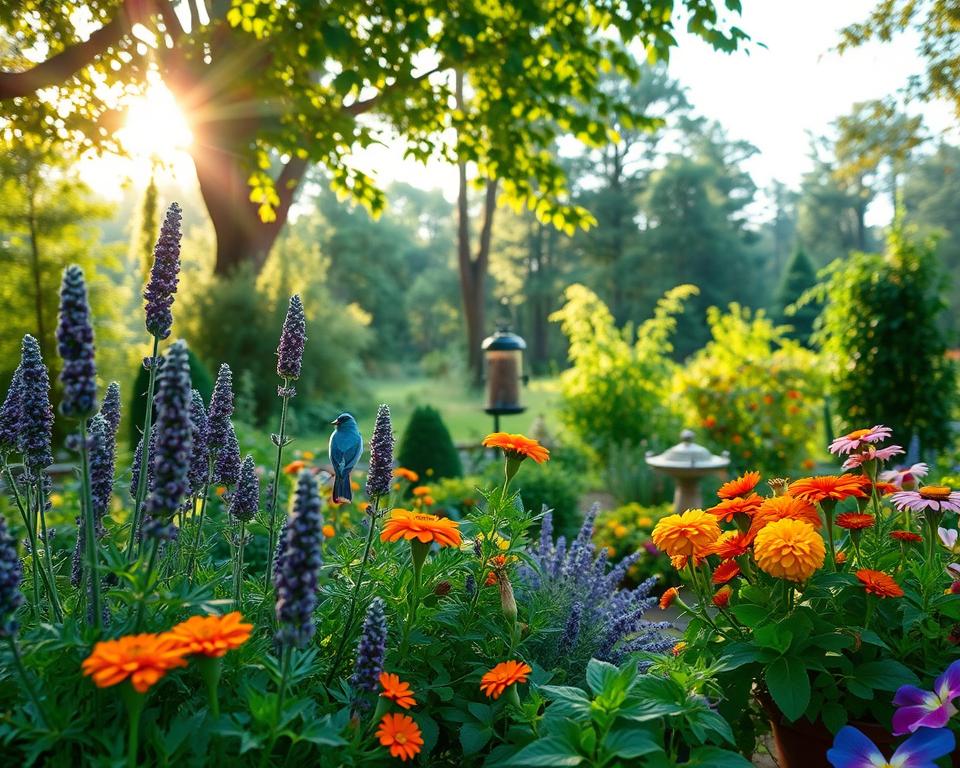
When a bird consumes a poisoned slug or an insect that has been sprayed, the toxins accumulate in its body. This can lead to illness or death. Eliminating these pests also destroys a vital food source, potentially causing birds to leave the area in search of sustenance.
Exploring Organic Alternatives for Pest Control
Thankfully, effective non-toxic methods exist. For slugs, a simple beer trap is a popular solution. Bury a jar filled with beer amongst plants; slugs are attracted, fall in, and drown.
Another strategy is to introduce beneficial insects, like ladybirds, which naturally control aphid populations. Encouraging a balanced ecosystem where predators keep pests in check is a sustainable long-term approach.
Accepting a small amount of plant damage is part of supporting a healthy garden wildlife population. Over time, a natural balance often establishes itself, reducing the need for any intervention.
Bird-Friendly Garden: Eight Ways to Help Breeding Birds
A synergistic approach to outdoor space management yields greater benefits than isolated efforts. When these methods combine, they create a self-reinforcing habitat system.
Highlighting the Essential Eight Methods
These approaches work together to support avian populations throughout their lifecycle. Each element complements the others, creating a comprehensive environment.
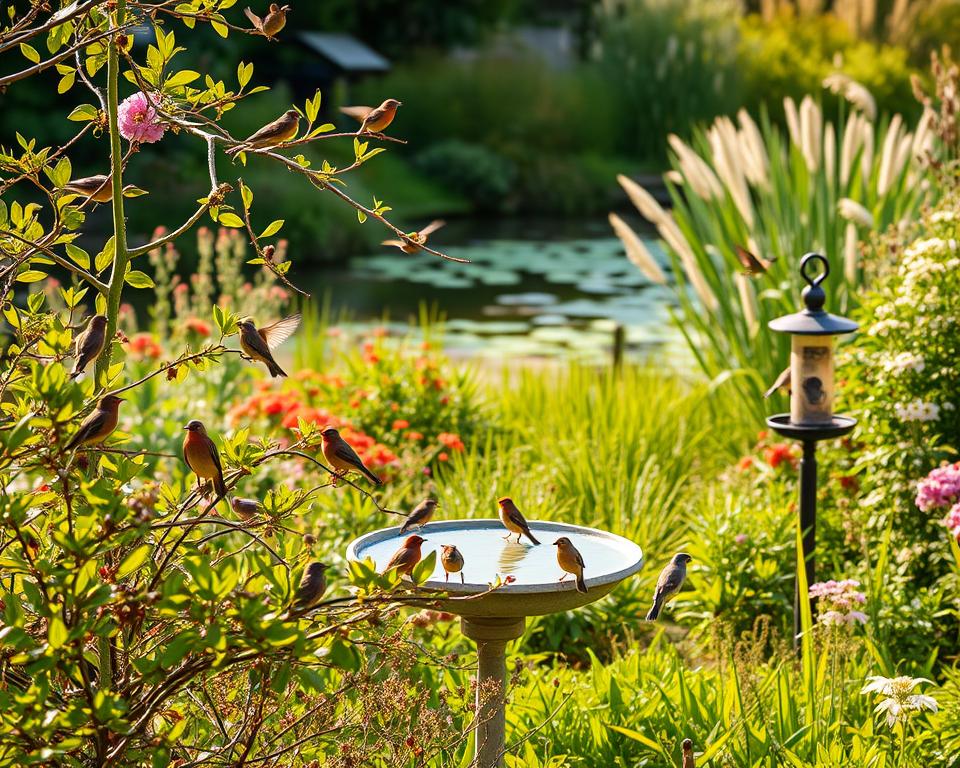
The table below outlines the core strategies for creating supportive spaces. These tips help attract birds and support their needs.
| Method | Key Benefit | Best Time | Special Considerations |
|---|---|---|---|
| Lawns for insect life | Natural food source | Spring to autumn | Avoid chemical treatments |
| Seasonal plant variety | Year-round food supply | All year | Focus on native species |
| Shelter vegetation | Nesting protection | Plant in autumn | Include berry bushes |
| Timed pruning | Nest safety | Avoid breeding season | Check for active nests |
| Year-round feeding | Nutritional support | All seasons | Adjust food types seasonally |
These ways to create bird-friendly spaces address fundamental needs. Proper implementation supports successful breeding and population health.
Enhancing Vertical Elements with Feeders and Nesting Aids
Creating different levels within your outdoor space dramatically increases its capacity to support diverse wildlife. This vertical approach mimics natural woodland environments where creatures occupy specific height zones.
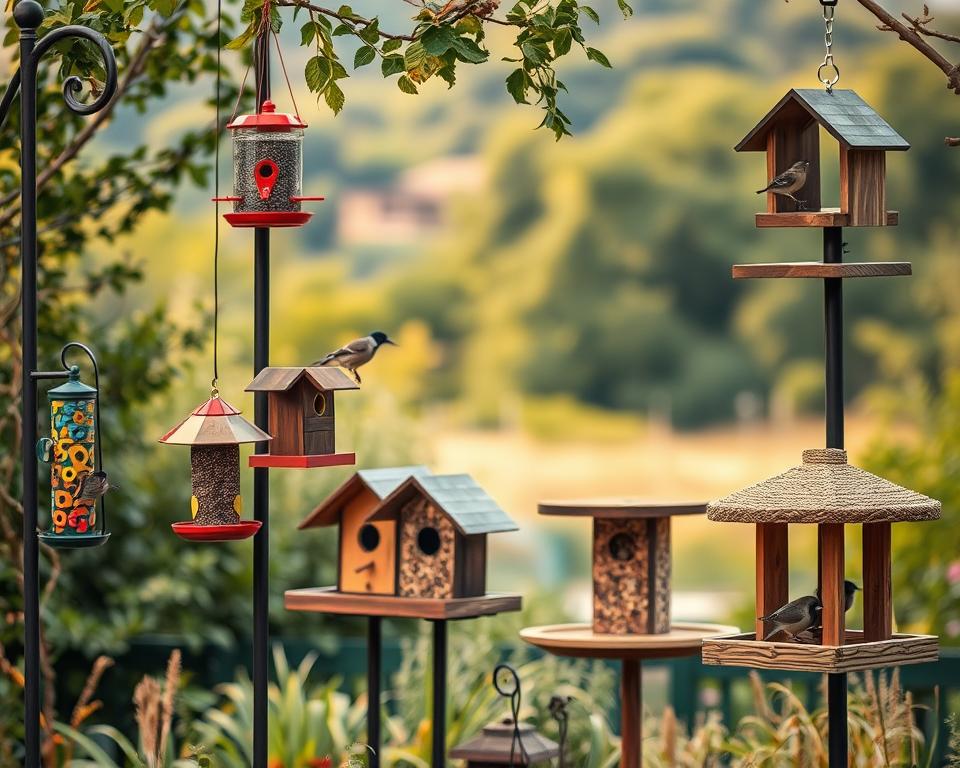
Variety in Feeder Heights to Attract Multiple Species
Different bird species naturally feed at various elevations. Ground-level platform feeders work well for sparrows and doves who prefer foraging near the soil.
At mid-height, hopper feeders attract finches and cardinals. Tube feeders hung high in trees suit species like chickadees that feel safer at elevation.
This arrangement creates feeding opportunities for a wide variety of visitors. Always position feeders away from potential hiding spots for cats and other predators.
Installing Appropriate Nesting Boxes and Materials
Modern landscapes often lack natural cavities for nesting birds. Specially designed boxes provide essential shelter for cavity-nesting species.
Different birds require specific entrance hole sizes. Proper annual cleaning maintains hygiene and prevents disease transmission.
For open-nesting species, provide natural material like twigs, leaves, and clay. A small pile of brushwood or a bowl of mud helps them construct secure homes during the breeding season.
Conclusion
Transforming a personal plot into a wildlife haven offers rewards that extend far beyond simple aesthetics. Homeowners gain the daily joy of birdsong and the fascination of observing a wide variety of creatures. This approach also promotes healthier plant growth through natural pest control, reducing the need for chemicals over time.
These methods are effective across all seasons. From the busy summer months to the challenging winter period, a year-round commitment yields continuous benefits. Every outdoor space, regardless of size, can become a crucial stepping stone for local populations.
Patience is key, as ecosystems need time to develop. Yet, even small changes create meaningful impact. By viewing their plots as dynamic habitats, individuals contribute significantly to biodiversity conservation throughout the United Kingdom.
FAQ
What is the most important element for attracting birds to a garden?
A reliable food source is paramount. This can be achieved through planting berry-bearing shrubs, seed-producing flowers, and by providing supplementary feeders. A consistent supply of nourishment, especially during winter and the breeding season, is vital for attracting a wide variety of species.
How can I provide safe nesting spots for breeding birds?
Dense shrubs and trees offer excellent natural shelter for nests. One can also install nesting boxes, ensuring they are placed out of reach of predators like cats. It is crucial to avoid pruning trees and bushes during the main breeding season to prevent disturbing active nests.
Are bird baths or ponds better for a wildlife garden?
Both provide essential water for drinking and bathing. A pond supports a greater diversity of insect life, which is a natural food source. Bird baths are easier to install and maintain, offering a reliable water point. Ideally, a garden should incorporate both to support different types of wildlife throughout the year.
What are the best plants to grow for a bird-friendly space?
Native plants are highly recommended as they have co-evolved with local wildlife. Species like hawthorn, rowan, and elder provide berries. Flowers such as sunflowers and teasels produce seeds. These plants also attract insects, creating a sustainable and natural food web within the garden.
How can I control pests without using harmful chemicals?
Embracing organic practices is key. Leaving a patch of lawn to grow longer or creating a log pile encourages predatory insects that control pests. Companion planting and accepting a small level of plant damage are also effective ways to manage the garden’s ecosystem without resorting to pesticides that can harm birds and other animals.
When is the best time to put out food for birds?
Feeding is beneficial all year round. High-energy foods like fat balls and suet are particularly helpful in winter. During spring and summer, offering protein-rich foods like mealworms supports adults feeding their young. It is important to keep feeders clean to prevent the spread of disease.