Doggy Dangers: Potential Garden Hazards for Dogs
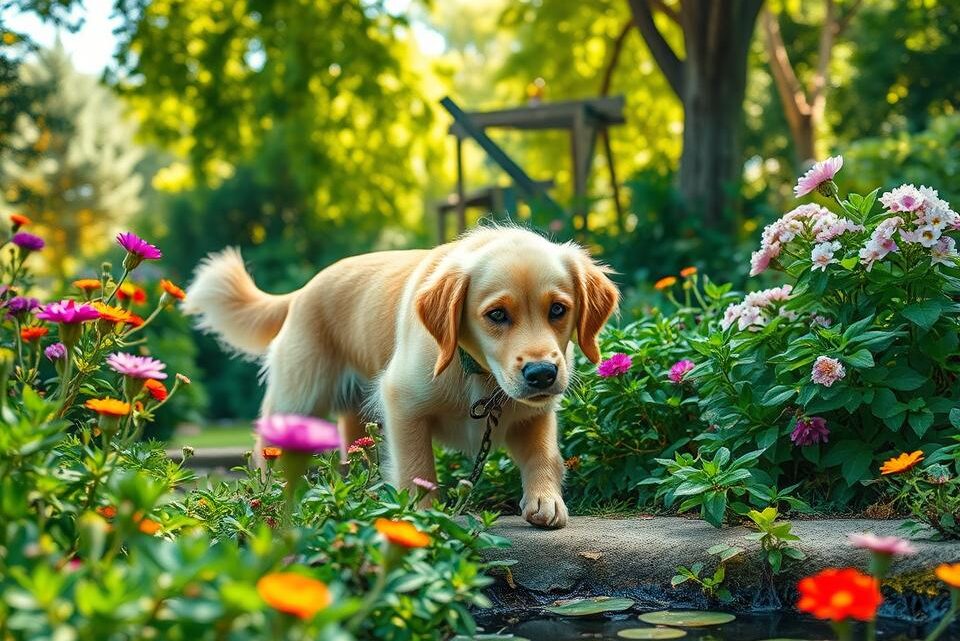
A garden is a place of joy and exploration for many pets. Yet, this familiar home environment can conceal numerous risks that threaten a dog’s wellbeing. Many owners are unaware of the specific dangers present in their own outdoor spaces.
Understanding these threats is essential for ensuring canine safety during outdoor play. Hazards exist throughout the year, with some risks peaking in spring and autumn. Others pose a constant challenge, requiring ongoing vigilance from pet owners.
This guide offers comprehensive information to help identify and mitigate these perils. It covers toxic plants, harmful chemicals, and risks from wildlife. The aim is to empower owners with knowledge for creating a safer environment.
Awareness and prevention are the most effective tools for protecting a beloved dog. This professional, evidence-based approach provides the foundation for informed decisions and a happier, healthier pet.
Inhaltsverzeichnis
Key Takeaways
- Many common garden features pose significant risks to a dog’s health.
- Hazards can be present year-round, with some being seasonal.
- Toxic plants are a major concern in many domestic gardens.
- Chemicals used for gardening can be harmful to canines.
- Wildlife encounters can present unexpected dangers.
- Prevention through awareness is the key to safety.
- This guide provides a comprehensive overview for responsible ownership.
Understanding Garden Hazards for Dogs
Many outdoor spaces that appear safe can harbour unexpected threats to canine companions. Recognising these risks is essential for protecting animals during their daily activities.
What Constitutes a Garden Hazard?
A garden hazard refers to any element that could cause harm, illness, or injury to a dog. These threats fall into distinct categories that owners should understand.
Biological hazards include toxic plants and wildlife that may carry diseases. Chemical risks involve fertilisers, pesticides, and other garden treatments. Physical dangers encompass sharp tools, debris, and water features. Environmental concerns cover escape routes and unstable structures.
Each dog responds differently to these challenges based on their size, breed, and age. A curious puppy might investigate risks an older animal would avoid. Even seemingly harmless features can become problematic without proper supervision.
Responsible ownership requires regular assessment of the outdoor area. Owners should make sure they check for new or changing dangers frequently. Gardens shared with other pets may need additional safety considerations.
Understanding these categories enables proactive protection rather than emergency responses. This knowledge forms the foundation for creating a secure environment where dogs can enjoy outdoor time safely.
Toxic Garden Plants Your Dog Should Avoid
Many popular ornamental plants grown in British gardens contain substances hazardous to canine health. These beautiful additions to outdoor spaces often conceal toxins that can cause serious medical issues when ingested by curious pets.

Common Toxic Flowers and Their Effects
Several common flowering plants pose significant risks. Daffodil bulbs contain toxic alkaloids that cause vomiting, diarrhoea, and abdominal pain. Foxgloves contain cardiac glycosides affecting heart rhythm.
Rhododendrons and azaleas have grayanotoxins throughout the entire plant. Even small amounts can cause drooling, vomiting, and potentially life-threatening symptoms.
| Plant | Toxic Part | Primary Symptoms | Severity |
|---|---|---|---|
| Daffodil | Bulbs | Vomiting, abdominal pain | High |
| Foxglove | All parts | Heart rhythm issues | Critical |
| Lily of the Valley | All parts | Decreased heart rate | Life-threatening |
| Autumn Crocus | All parts | Organ failure | Critical |
How Ingestion Impacts Your Dog’s Health
Different plants affect various body systems. Some cause immediate gastrointestinal distress like vomiting. Others target cardiovascular function or lead to organ failure.
Symptoms may appear rapidly or develop gradually. Any suspicion of plant ingestion requires immediate veterinary assessment to prevent serious health complications.
Doggy Dangers: Potential Garden Hazards for Dogs
A well-maintained outdoor area may appear tranquil yet conceal multiple risks that demand owner awareness. These challenges exist regardless of property size or layout.
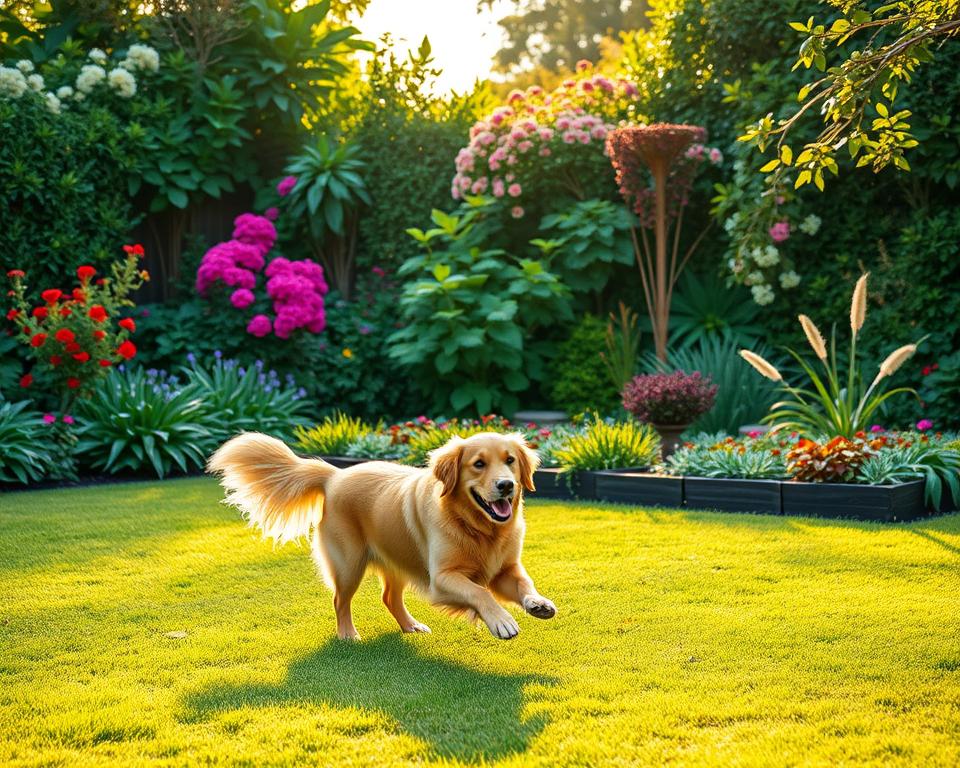
Different zones within the space present varying levels of risk. Ornamental beds often contain toxic plants, while vegetable patches may harbour harmful chemicals. Even open lawn areas can hide sharp objects or wildlife.
Understanding Multi-Hazard Environments
Multiple threats often coexist simultaneously. A single corner might contain toxic plants, sharp tools, and water features. This requires comprehensive safety planning.
Supervision during outdoor time is crucial for canine wellbeing. Unattended pets face increased exposure to various dangers. Owners should make sure they maintain visual contact.
| Garden Area | Primary Risks | Prevention Tips |
|---|---|---|
| Flower Beds | Toxic plants, sharp stems | Choose pet-safe plants |
| Lawn | Hidden objects, wildlife | Regular inspection |
| Vegetable Patch | Chemicals, sharp tools | Secure storage |
| Water Features | Drowning, parasites | Supervised access |
“The safety of our four-legged companions depends on recognising that ordinary garden features can pose extraordinary threats.”
Seasonal changes introduce new challenges while some risks remain constant. Regular assessment helps identify evolving threats. This proactive approach ensures a safer environment for all pets.
Shared spaces with other animals may require additional precautions. Different species have unique vulnerabilities that owners must consider when planning outdoor access.
Hazardous Garden Chemicals and Treatments
Many standard garden maintenance chemicals, while beneficial for vegetation, present significant dangers to curious dogs. These substances often contain powerful toxins that can cause serious health issues when ingested or absorbed.

Risks of Fertilisers, Pesticides, and Rodenticides
Common garden products pose varied threats. Fertilisers can cause vomiting and diarrhoea when consumed. Pesticides may lead to neurological problems and organ damage.
Rodenticides are particularly dangerous. They affect blood clotting mechanisms, causing internal bleeding. Even small amounts can be life-threatening.
Slug pellets containing metaldehyde cause distinctive symptoms. These include tremors, seizures, and breathing difficulties. Antifreeze attracts dogs with its sweet taste but causes severe kidney damage.
| Chemical Type | Primary Risks | Common Symptoms | Urgency Level |
|---|---|---|---|
| Fertilisers | Gastrointestinal distress | Vomiting, diarrhoea | High |
| Pesticides | Neurological damage | Tremors, seizures | Critical |
| Rodenticides | Internal bleeding | Weakness, collapse | Emergency |
| Slug Pellets | Respiratory distress | Breathing issues, tremors | Emergency |
Safe Storage and Usage Practices
Proper storage prevents accidental exposure. Keep all chemical products out of reach. Store them above ground level with secure lids.
Choose pet-friendly alternatives when available. During application, keep dogs indoors. Make sure treated areas are completely dry before allowing access.
Even safer alternatives require careful handling. All garden chemicals should be treated as potential hazards. Immediate veterinary attention is crucial for any exposure.
Risks from Wildlife and Garden Debris
Beyond plants and chemicals, wildlife and debris create additional threats in outdoor spaces. These often-overlooked dangers require particular attention from owners.
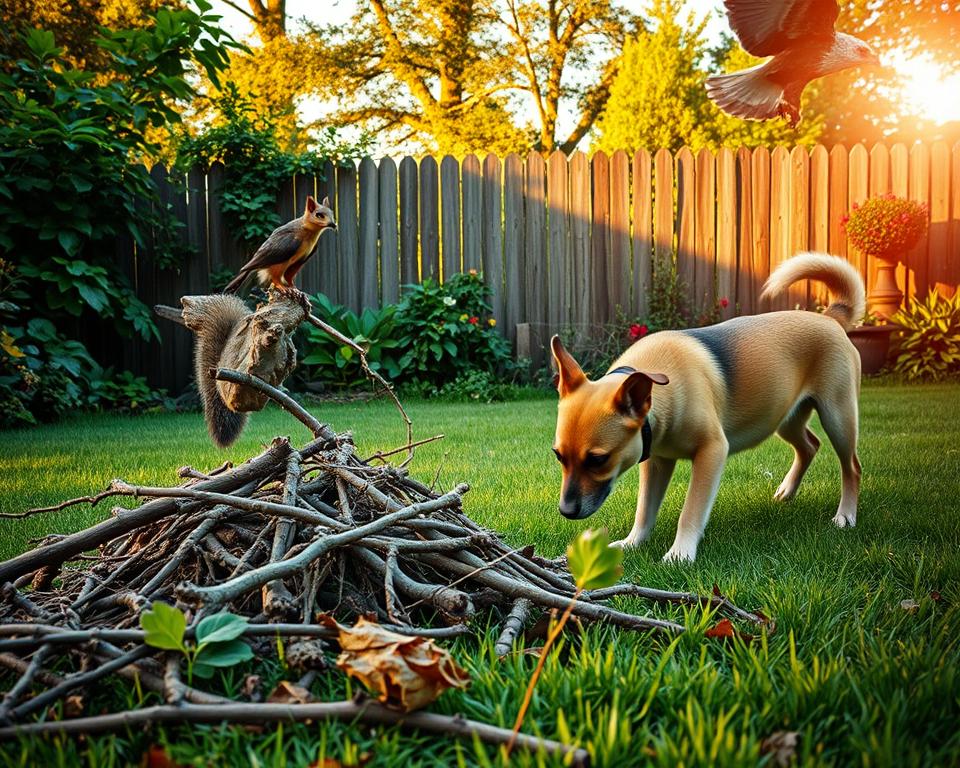
Dead rodents or birds can carry diseases harmful to canines. If a dog has eaten any deceased animal, owners should contact their vet immediately.
Potential Disease Transmission and Injuries
Animal faeces present significant health issues. Fox droppings particularly attract dogs due to their strong scent. This behaviour may stem from ancestral instincts.
Bee and wasp stings commonly affect curious pets. Most cause localised skin irritation and swelling. Stings near the eye or throat demand urgent veterinary attention.
Physical debris like thorny stems or broken materials can cause injuries. Regular maintenance helps remove these hazards from the outdoor area.
Stagnant water features pose gastrointestinal risks if consumed. Algae-covered water requires particular caution during warmer months.
Vigilant supervision remains crucial for preventing interactions with wildlife remains. Prompt action ensures canine safety when exposures occur.
Seasonal Alert: Autumn Hazards in the Garden
Autumn brings a unique set of risks to outdoor spaces, with certain natural items posing specific threats to canine health. The ground becomes littered with fallen seeds that can be particularly dangerous.
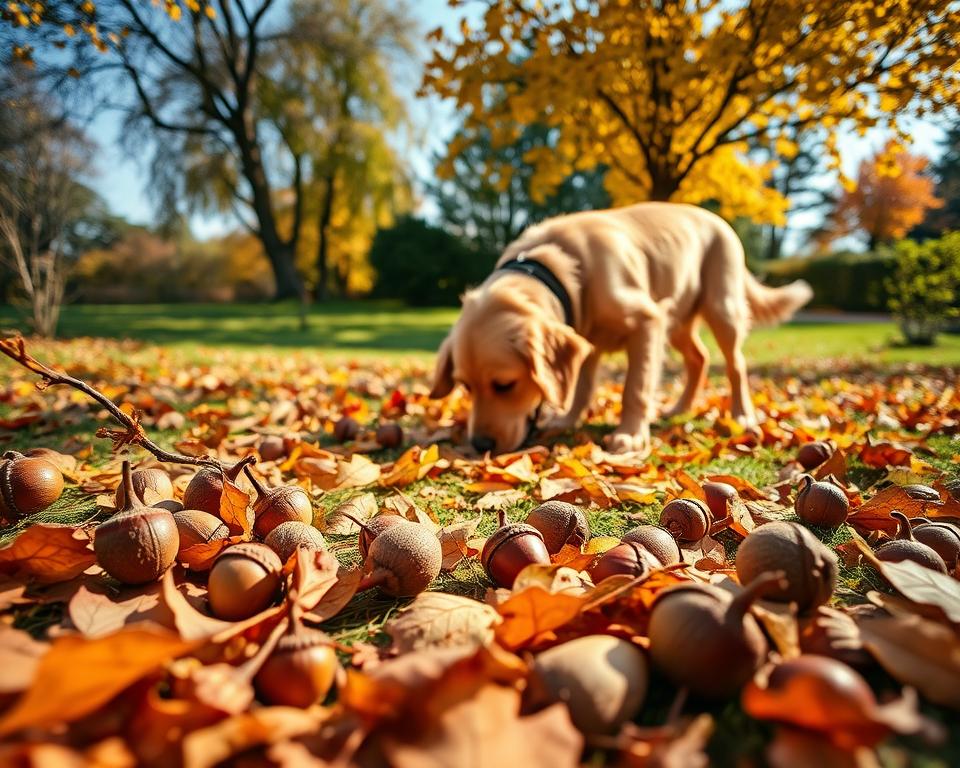
Vigilance is crucial during this time of year to protect curious pets.
Toxicity of Conkers and Acorns
Conkers, the seeds of horse chestnut trees, contain aesculin. This toxic compound causes vomiting and diarrhoea if a dog has eaten or chewed them.
Additional symptoms include drooling, abdominal pain, and restlessness. Severe cases can lead to digestive blockages.
Acorns from oak trees present a similar danger. They contain tannic acid, which also causes gastrointestinal upset. In rare instances, kidney damage can occur.
Both seeds pose a dual risk: chemical toxicity and physical obstruction.
| Autumn Hazard | Toxic Compound | Primary Symptoms | Action Required |
|---|---|---|---|
| Conkers | Aesculin | Vomiting, diarrhoea, pain | Contact vet immediately |
| Acorns | Tannic Acid | Vomiting, lethargy, discomfort | Contact vet immediately |
If you suspect your dog has eaten these items, contact your vet immediately. Prompt action is essential. Always keep a watchful eye during autumn walks.
Avoiding Harmful Bulbs and Trees
Many popular spring-flowering bulbs contain concentrated toxins that pose serious risks to canine companions. These plants are often cultivated for their vibrant flowers, yet their underground storage organs can be particularly hazardous. Understanding which species to avoid is crucial for pet owners.

Understanding Toxic Parts of Common Garden Plants
A clear list of hazardous bulbs includes daffodils, lilies, tulips, hyacinths, bluebells, and narcissus. In many of these plants, the bulbs hold the highest concentration of poison. For instance, all parts of the daffodil plant contain toxic alkaloids, but the bulbs are especially potent.
Ingestion can lead to vomiting, diarrhoea, excessive drooling, and even heart problems. Bluebell bulbs are notably dangerous. While severe poisoning is rare, vets frequently see pets with upset stomachs from nibbling these garden items.
Several common trees and shrubs are also problematic. Yew trees contain toxic taxines throughout their structure. Laburnum trees have poisonous seeds, bark, and leaves. The entire oleander plant is toxic, as are the leaves and flowers of Japanese pieris.
The safest approach is to avoid planting these species in spaces accessible to dogs. Prevention through careful plant selection is more effective than managing exposure later. If a dog has eaten any of these plants, contacting a vet immediately is essential.
Safe Gardening Practices and Dog-Proofing Your Space
A well-designed outdoor area can provide both enjoyment and protection for canine companions. Implementing strategic safety measures transforms any space into a secure environment for pets to explore.

Owners should establish designated zones where their animals can spend time without exposure to risks. This involves creating physical barriers around hazardous areas like compost heaps and vegetable patches.
Creating a Dog-Safe Zone
A dedicated safe space should include comfortable bedding, water bowls, and engaging toys. For puppies, enclosed playpens with puzzle toys offer secure exploration. These areas encourage pets to remain in safer locations.
Selecting appropriate plants is crucial for these zones. Dog-friendly options include roses, sunflowers, and herbs like basil and lavender. These choices maintain garden aesthetics while ensuring safety.
Securing Tools and Hazardous Items
All garden tools and chemicals require secure storage in locked sheds or elevated areas. This prevents accidental access by curious pets. Regular garden scans before outdoor time help identify temporary hazards.
Supervision remains essential – keeping animals in direct line of sight significantly reduces risk exposure. Consistent recall training provides an additional safety layer, enabling immediate redirection from potential dangers.
Spotting Early Signs of Pet Poisoning
Early detection of toxic exposure dramatically improves a dog’s chances of full recovery. Recognising the initial symptoms of poisoning allows owners to seek veterinary care before toxins cause irreversible damage to the body. This knowledge forms a crucial part of responsible pet ownership.

Gastrointestinal disturbances often appear first. These include repeated vomiting, diarrhoea, excessive drooling, and loss of appetite. Changes in thirst levels may also indicate something is wrong with your dog‘s health.
Physical Symptoms to Watch For
More serious physical symptoms require immediate attention. Tremors, seizures, and laboured breathing signal advanced poisoning. Owners should also check for rapid heart rate and pale gums.
Allergic reactions present distinct symptoms. These may include eye irritation, respiratory issues, and skin reactions. Some pets develop rashes or excessive itching.
Behavioural Changes That Indicate Trouble
Behavioural shifts often accompany physical symptoms. Unusual restlessness or confusion may indicate neurological effects. Conversely, unexpected lethargy or depression represents another warning sign.
Skin-related issues can manifest as hair loss and secondary infections. Certain breeds show increased susceptibility to these reactions. Any combination of these symptoms warrants professional assessment.
Immediate Steps if Your Dog is Exposed to Toxins
Recognising the early signs of toxic exposure is crucial, but knowing the correct emergency response is equally vital. Quick action significantly improves outcomes when a dog encounters harmful substances.

If you suspect your dog has eaten something dangerous, contact your vet immediately. This applies even when uncertainty exists about whether poisoning has occurred. Professional advice should never be delayed.
When and How to Contact Your Vet
Remaining calm during an emergency helps owners make better decisions. It also keeps their pets more relaxed. Contact your regular vet or an out-of-hours emergency service without hesitation.
Provide specific information to help the vet give accurate advice. Identify what substance your dog eaten, when exposure occurred, and estimate the quantity consumed. Bring packaging or plant samples if available.
Follow all instructions given by your veterinary professional. They will determine whether home treatment is appropriate or if clinic care is needed. Professional treatment typically involves administering an emetic to induce vomiting.
Activated charcoal may follow to absorb remaining toxins. Never attempt to make your dog vomit yourself. Incorrect methods can cause additional harm.
In severe poisoning cases, dogs may require overnight hospitalisation. Intravenous fluids help flush toxins from their system. Quick action combined with professional treatment offers the best recovery chance.
Even if your dog appears asymptomatic initially, seek veterinary advice. Some toxins cause delayed effects that benefit from preventive treatment. Always contact vet immediately when exposure is suspected.
Innovative Tools for Identifying Hazardous Plants
Artificial intelligence has revolutionised how we identify unknown botanical specimens in our surroundings. These technologies provide immediate access to critical safety information for pet owners.

Harnessing AI and Mobile Technology
Applications like Google Lens and Apple Visual Intelligence enable quick plant identification. Owners simply photograph suspicious plants using their smartphone cameras.
The technology analyses visual characteristics to provide instant results. This helps create a personal list of potentially harmful species in any outdoor area.
Using Visual Intelligence for Quick Identification
Visual recognition tools work with both cultivated flowers and wild vegetation. They can identify a specific plant within seconds of capturing its image.
While these tools offer valuable preliminary screening, they complement rather than replace professional advice. Owners should use them proactively before emergencies occur.
Combining technological identification with established resources provides the most reliable approach. This helps protect pets from toxic plants in the garden.
Conclusion
A secure outdoor space allows our canine companions to thrive. Creating this environment requires continuous effort and awareness. The information provided here offers a foundation for protecting your pets.
Knowledge is the first line of defence. Knowing which common plants and substances pose a risk is essential. A simple list of toxic items for your specific garden is a powerful tool.
Prevention is always better than cure. Regular checks and safe storage of products reduce risks significantly. Always supervise your dog during outdoor time.
If you suspect poisoning, contact your vet immediately. Prompt treatment greatly improves outcomes. Seek professional advice without delay.
This proactive approach ensures your home remains a safe haven. Your vigilance allows your loyal friend to enjoy their surroundings with confidence.
FAQ
Which garden plants are most toxic to dogs?
Several common plants pose significant risks. These include lilies, which can cause kidney failure; foxgloves, affecting the heart; and autumn crocus, leading to severe vomiting and breathing issues. Immediate veterinary advice is essential if a pet ingests any part of these.
What are the symptoms of plant poisoning in dogs?
Symptoms can vary but often include vomiting, diarrhoea, excessive drooling, and lethargy. More severe signs involve difficulty breathing, seizures, or collapse. Any sudden health change warrants an urgent call to a vet.
How can I make my garden safer for my dog?
A> Securing hazardous items is crucial. Store chemicals in locked cupboards, fence off compost heaps, and remove toxic plants. Providing a designated dog-safe area with non-toxic plants and fresh water also helps minimise risks.
Are fertilisers and pesticides dangerous for pets?
Yes, many garden products contain toxins that can cause serious health issues if ingested or if they contact an animal’s skin. Always follow usage instructions carefully and keep pets away from treated areas until completely dry.
What should I do if I think my dog has eaten something poisonous?
Contact your vet or an emergency animal clinic immediately. If possible, inform them what was ingested, how much, and when it happened. Do not induce vomiting unless specifically instructed by a professional.
Can bulbs be harmful to dogs?
A> Absolutely. Bulbs such as daffodils, tulips, and bluebells are toxic if dug up and chewed. They can cause intense stomach pain, drooling, and even heart problems. Always plant them out of reach.
What are the risks from conkers and acorns?
These autumnal items contain toxins that can lead to vomiting, diarrhoea, and abdominal pain. Ingesting large quantities may cause severe poisoning, so it is best to clear them from the ground regularly.