Description
Metal garden storage special offers for sheds, cabinets, boxes and bike stores in galvanised, powder-coated and locker-style finishes, with space-saving shapes, weather-ready frames and tidy layouts for gardens.
Steel lines for stray tools
Metal garden storage carries a certain weight in a garden. It looks steady, crisp and matter-of-fact, with no fuss in the shape. That is part of the appeal. These units are built for sorting the awkward bits: long-handled tools, seed trays, hose reels, watering cans, charcoal bags, fold-up chairs and the small things that usually wander off when left in the open.
Special offers in this category often cover a range of forms, from compact garden storage cabinets to taller metal tool stores, slim outdoor lockers, and broader metal storage sheds. Each one speaks a different language of space. A cabinet keeps things close to hand. A shed gives more room to stack and stand items. A locker suits narrow side paths or terraces where every inch matters. A chest-style box sits low and unobtrusive, while a vertical store uses height instead of floor space.
There is also a clear difference in the metal itself. Galvanised steel is common for its zinc coating and its blunt resistance to rust. Powder-coated steel brings a coloured outer layer and a smoother look. Aluminium tends to feel lighter, which can matter if the unit is moved across paving or decking. Some pieces use ribbed panels for stiffness, while others keep flatter sides for a cleaner outline. The shape changes the mood as much as the size does.
Cabinets, boxes and taller frames
For quick overviews, think in categories.
- Low storage box – sits below fence line, often used for cushions or smaller kit
- Vertical cabinet – tall and narrow, suited to brooms, rakes and hand tools
- Wide garden chest – more floor spread, handy for bulkier items
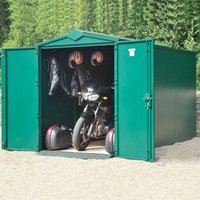
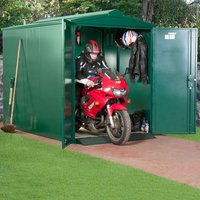
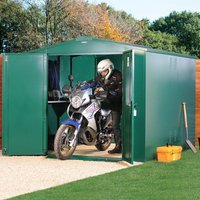
- Bike store – shaped for bicycles, with a longer run and easier roll-in access
- Compact tool locker – made for tighter corners and lighter loads
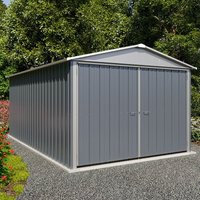
- Shed-style unit – larger footprint, usually chosen when storage needs keep growing
These types differ in more than size. A chest opens from the top, so it can be useful for items that are packed in layers. A cabinet or locker opens at the front, which helps when you need to grab one thing without lifting others out first. A shed gives you a broader internal arrangement, often better for grouping tools by length or task. The choice often comes down to how you move around the garden and what you reach for most often.
Why metal feels different in the garden
Metal storage has a practical character that wood and plastic do not quite match. It has firmer lines, a sharper edge to the design and a more industrial look. It also tends to handle knocks with less complaint. A spade leaning too hard against the side, a wheelbarrow brushing past, a chair moved in haste – metal takes that sort of daily contact more calmly.
One strong point is the way metal can suit both modern and older gardens. A matte grey cabinet beside gravel and grasses looks clean and quiet. A darker green store tucks into planting and fencing with less visual interruption. A plain steel finish feels more utilitarian, which can be useful where the garden is already busy with pots, trellis and sheds. The look is less decorative, more straightforward.
Weather-resistant storage is a frequent search phrase for a reason. Rain, damp air and seasonal change are always testing what sits outside. Metal units with coated surfaces are built with that in mind. Doors often close tightly, panels overlap to reduce gaps, and raised bases can help keep the lower edge away from standing water. The result is a calmer home for items that should not be left under tarpaulin or squeezed into a leaning pile.
Shapes that suit awkward corners
Not every garden offers a wide open patch for storage. Many spaces are cut by gates, paths, flower borders and steps. This is where shape becomes a useful feature rather than a detail. A slim cabinet can sit against a wall without blocking movement. A corner-style unit can use a dead angle that would otherwise collect leaves. A long, low chest fits beneath a window or along a fence run without dominating the view.
If space is tight, the door style matters too. Front-opening cabinets need clear room in front, while top-opening chests ask for lifting space above. Some tall stores have double doors, making it easier to handle larger tools, but they need a bit more width. Small differences like these decide whether a unit feels easy or annoying in daily use. In a compact garden, that choice matters more than size on paper.
Metal storage can also work in steps. One piece for cushions, one for tools, one for bikes. That gives a tidy system without cramming everything into one oversized box. It also lets you match the storage shape to the item shape, which saves rummaging. A narrow broom cupboard is better than a broad chest for long handles. A low box is better for coiled hose than a tall locker with wasted height.
Special offers with useful trade-offs
Special offer stock often means there is a mix of sizes, finishes and layouts available at the same time. That can be useful if you are comparing two different approaches to the same storage problem. Maybe one cabinet is cheaper but narrower. Maybe another has more shelf space but a heavier frame. The saving is one part of the story, yet the useful part is being able to weigh the shape against the job.
Look at the thickness of the panels, the quality of the doors, the presence of ventilation slots and the way the base is formed. A unit with a firmer frame may feel steadier in wind. A design with raised feet may suit a damp patio better than one that sits flat on the ground. Some stores include lockable doors, which is handy for garden machinery or fuel, while others are left simple and open to save on complexity. The differences are small on a listing, but they shape how the unit behaves once it is in place.
There can be a trade-off in appearance too. Heavy-gauge steel brings a solid look, but may feel more obvious in a small garden. Lighter cabinets can seem less intrusive, yet they might not feel as anchored. The right choice is often the one that balances visual calm with storage demand. That is the real bargain, not just the markdown.
Small details that change daily use
Doors, hinges, lids and internal layout all matter. A storage chest with a gas-assisted lid is easier to open with one hand than a stiff top panel. A locker with shelves helps separate gloves, secateurs and feed packets. A cabinet with hanging hooks can lift smaller tools out of the heap. These features are not flashy, but they shape the rhythm of the garden day.
There is also a difference between plain utility and a unit that feels easier to live with. Handles that sit well in the hand. Edges that do not catch sleeves. A door that closes without a rough slam. A lid that opens fully enough for a box of canes, not just half way. The better storage is often the one that reduces awkward moments rather than drawing attention to itself.
Some people need storage for dry, clean items only. Others want room for boots, compost bags, bird care bits or folding chairs. Metal units can serve all these uses, but the interior shape should suit the load. Tall items need vertical room. Bulky soft items need a broad opening. Smaller tools need a shelf or two so they do not disappear into the bottom like lost coins. A bit of planning goes a long way.
Colours, coatings and the look of restraint
Metal garden storage usually comes in colours that keep a low profile. Green blends with planting and fencing. Grey sits neatly against paving and brick. Black has a tidy, compact feel. Silver or steel finishes look more workmanlike and often make sense in side passages or utility corners. The colour is not just cosmetic; it decides whether the unit blends in or stands as a feature.
Coatings matter as much as shade. A powder-coated surface may feel smoother to the touch and can help the storage look more finished. Galvanised surfaces carry that signature silver tone and often signal a more practical attitude. In damp climates, the outer finish is not a small matter. It is the first line between the garden air and the frame beneath. That is why coating descriptions deserve attention rather than being skimmed over.
Buying tips for neat, long use
Measure the footprint and also the swing space. A cabinet may fit the gap, but if the door opens into a path, the fit becomes clumsy. Check the height against windowsills, fences and overhanging branches. Consider the route items will take in and out. If you are storing a mower, a box with a low lip and clear front access is usually easier than a tall store with a narrow opening.
Think about where rain lands. Under eaves, next to a fence or in an exposed corner, the same unit can behave differently. Raised legs, strong seals and sensible drainage features help, but placement still matters. If the ground is uneven, a store can twist slightly and make the doors less neat. A level base is worth the effort. It saves fiddly adjustments later on, which nobody enjoys.
Also watch the balance between capacity and clutter. A large store is not always the answer if only a few things need housing. Empty space can become a dumping ground. A tighter unit can encourage better sorting and quicker access. Sometimes less room makes the whole garden feel more orderly, not more crowded. That sounds backward, but it often holds true.
What makes this category worth a look
These special offers bring together practical shapes, different metal finishes and storage forms that solve actual garden problems. Not all gardens need the same solution. A balcony calls for a small box. A family garden may need a cabinet for tools and a larger shed-style unit for bulky gear. A terrace may only have room for a slim locker tucked beside the wall. The category is useful because it offers choice without drifting into fluff.
Outdoor metal cabinets give a firm outline. Galvanised garden sheds handle larger loads. Lockable storage boxes keep smaller items in reach. Space-saving garden lockers fit narrow runs and corners. Those phrases point to different answers, and that is the strength of the range. One size does not suit every yard, courtyard or patio.
The best thing about metal storage is its plain honesty. It does the job without trying too hard. It keeps tools off the floor, cushions away from rain and bikes out of the way. It can sit quietly by a fence, or hold a more visible place near the house. Either way, it brings order to places where clutter likes to gather.
Tidy ground, steadier rhythm
Some storage is there to hide things. Metal garden storage does more than that. It shapes how a garden is used. When tools have a fixed place, work starts faster. When cushions have a dry home, furniture gets used more often. When bikes and small machines are not leaning in the open, paths feel cleaner. That effect is small at first, then it spreads through the whole space.
So the category is not just about a box or a shed. It is about the shape of everyday garden life. It is about choosing between a chest, a cabinet, a locker or a larger store, and matching that choice to the way the garden is lived in. With the right finish, the right size and a sensible layout, metal storage becomes part of the background – steady, useful and unshowy.
Less mess. Less fuss. More room to move.
Tools stop wandering.
Rakes stand straight.
Cushions stay dry-ish.
The garden feels less busy.