A Guide to the UK’s Fastest Growing Trees

For many gardeners, the vision of a mature, leafy canopy can feel like a distant dream. Traditional varieties often demand decades of patience before they offer substantial shade or privacy. This is where the remarkable benefits of fast-growing trees become clear.
These special varieties can achieve significant growth in just a single season. They transform outdoor spaces much more rapidly than their slower-growing counterparts. A garden gains year-round interest, valuable shade, and enhanced seclusion in a fraction of the time.
Choosing the right tree, however, requires careful thought. It is not as simple as picking a flowering plant. Factors like climate suitability, available space, and desired purpose all play a crucial role. This resource is designed to help both novice and experienced gardeners navigate these choices.
The following sections will explore a range of excellent options. These include screening trees for boosting privacy, majestic shade providers, and unique specimens perfectly suited to British gardens. The goal is to empower readers to make informed decisions that will turn their garden into a lush, private oasis.
Inhaltsverzeichnis
Key Takeaways
- Fast-growing trees provide substantial growth and garden transformation in a much shorter time frame.
- These trees offer practical benefits like shade, privacy, and habitats for wildlife.
- Selecting a tree requires consideration of factors beyond just growth speed, including climate and space.
- This guide covers various types, from screening to shade trees, suitable for different garden sizes.
- The information is tailored to help gardeners in the UK make confident and informed choices.
Introduction to Fast-Growing Trees in the UK
The desire for a mature garden can be quickly realised with the strategic selection of certain tree species. These rapidly developing plants provide practical solutions for gardeners wishing to see dramatic changes in a short period. They bring structure and beauty to outdoor spaces within years, not decades.
This approach to gardening is both time-efficient and highly rewarding.
Benefits for Gardens and Wildlife
Fast-growing trees offer immediate advantages. They swiftly create privacy screens and valuable shade. Furthermore, they significantly enhance the aesthetic appeal of any garden.
These trees are powerhouses for local ecosystems. Native species, in particular, provide essential habitats. They support birds, insects, and small mammals by offering nesting sites, food, and shelter throughout the year.
The environmental benefits are substantial. These varieties absorb carbon dioxide and improve air quality. Their rapid growth means they sequester carbon faster than slower-growing types.
Understanding Growth Rates and Species Diversity
It is helpful to understand what “fast growth” means. Typically, it refers to an increase of over 40cm per year. This is distinct from medium or slow growth rates.
Choosing native British species is often the wisest choice. They are adapted to local conditions, making them more resilient and easier to maintain. This diversity ensures there is a perfect tree for every garden size and purpose.
| Growth Rate Category | Annual Growth | Example Species |
|---|---|---|
| Fast | > 40cm per year | Silver Birch, Lombardy Poplar |
| Medium | 13-24 metres over time | Field Maple, Hawthorn |
| Slow | English Oak, Yew |
Overview of Popular Fast-Growing Varieties
Gardeners seeking a swift transformation of their landscape have several excellent choices. These fast-growing trees are celebrated for their ability to provide rapid results, combining impressive growth rates with distinctive visual appeal.
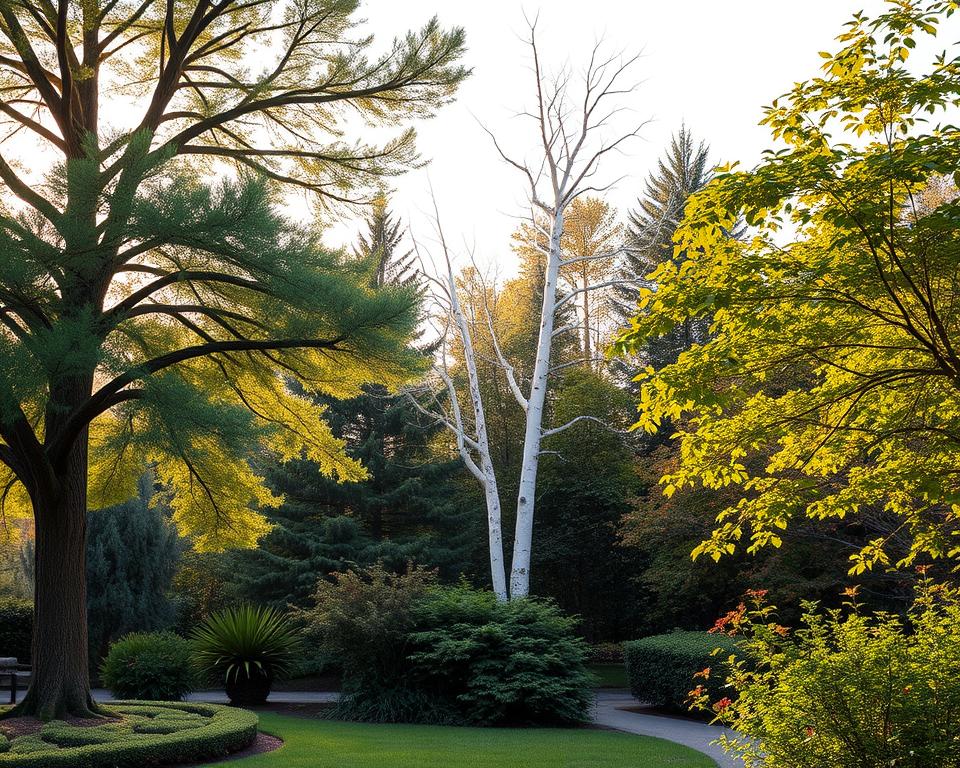
Each species offers unique characteristics, from dramatic shapes to seasonal flowers, ensuring there is an ideal match for various garden designs and purposes.
Weeping Willow, Silver Birch and More
The Weeping Willow is instantly recognisable. Its long, cascading branches create a lush, curved canopy that adds a touch of drama to any setting. This tree can grow between 1.2 and 2.4 metres annually.
In contrast, the Silver Birch is a native favourite. It is prized for its elegant, sweeping branches and iconic white peeling bark. This variety grows reliably in many conditions, supporting local wildlife.
Other notable varieties include the Lombardy Poplar, known for its extremely quick, columnar growth, and Dawn Redwood, which offers a neat pyramidal form.
Distinctive Features and Growth Performance
Understanding the specific traits of each tree helps in making an informed choice. The table below highlights key differences.
| Tree Variety | Annual Growth | Key Features |
|---|---|---|
| Weeping Willow | 1.2 – 2.4 metres | Cascading branches, curved shape |
| Silver Birch | ~40 centimetres | White bark, triangular leaves, catkins |
| Lombardy Poplar | Up to 3.6 metres | Columnar shape, diamond-shaped leaves |
| Dawn Redwood | ~60 centimetres | Pyramidal form, feathery leaves |
| Eucalyptus | Up to 2.4 metres | Aromatic blue-green foliage |
These trees provide year-round interest. Many produce beautiful catkins and flowers in spring, followed by striking autumn colours. Their distinct shapes and bark textures add lasting visual appeal to any garden.
A Guide to the UK’s Fastest Growing Trees
Individual tree characteristics, from root systems to mature dimensions, significantly impact planting decisions and long-term success. Understanding these details helps gardeners select species that align with their specific garden conditions and objectives.
Comparison of Growth Rates and Maintenance Needs
Different species offer varying growth patterns and care requirements. The Weeping Willow achieves 1.2-2.4 metres growth per year but requires substantial space due to aggressive roots. Silver Birch (Betula pendula) grows steadily at 40cm annually, reaching an impressive 30 metres full height.
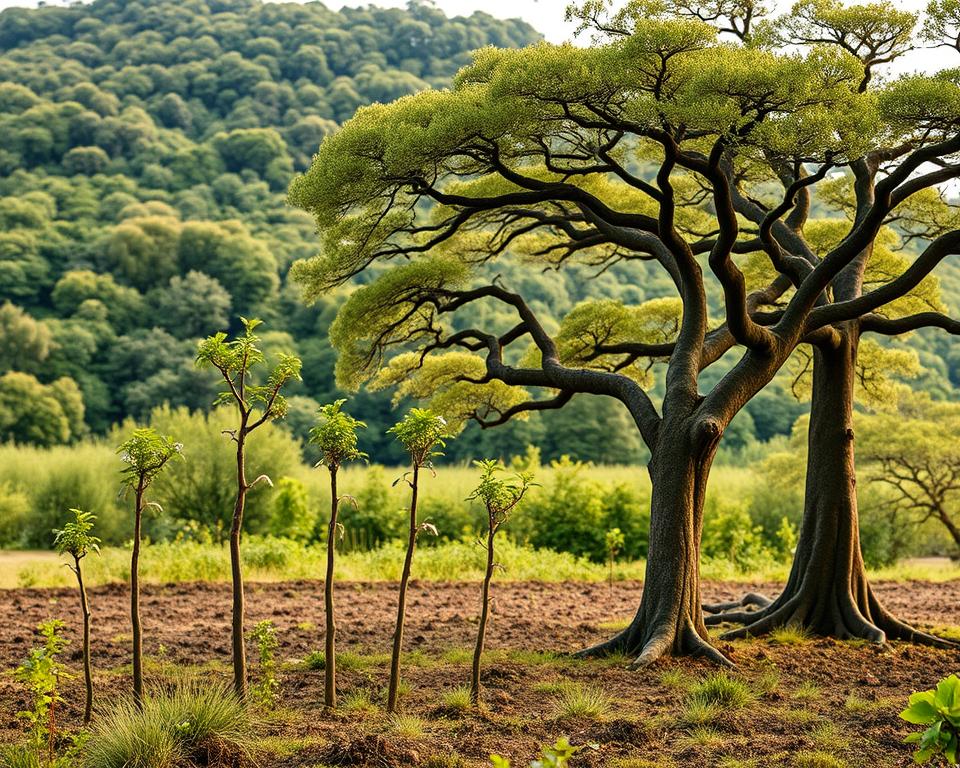
Some trees demonstrate exceptional growth rates. The Lombardy Poplar can grow 3.6 metres each year, though it has a relatively short lifespan. Dawn Redwood specimens have been documented exceeding two feet of growth annually.
| Tree Species | Annual Growth Rate | Mature Height | Special Considerations |
|---|---|---|---|
| Weeping Willow | 1.2-2.4 metres | 15 metres | Plant 15 metres from structures |
| Silver Birch | 40cm | 30 metres | Adaptable to various soils |
| Lombardy Poplar | 3.6 metres | 20 metres | 15-year lifespan |
| Dawn Redwood | 60+ cm | 30 metres | Pyramidal form |
| Eucalyptus | 2.4 metres | 20 metres | Minimal maintenance needed |
Maintenance requirements vary considerably between species. Some trees like Eucalyptus need little care once established. Others require regular monitoring for diseases such as powdery mildew.
Planting Advice and Ongoing Care
Careful site preparation and planting methods are crucial for ensuring optimal growth conditions. Following proper techniques from the beginning helps trees establish strong root systems and achieve their full potential.
Preparing the Site and Planting Techniques
Begin by digging a hole twice as wide and deep as the root ball. Position the tree so the top of the root ball sits level with the ground surface. Backfill with original soil, gently firming it down before watering thoroughly.
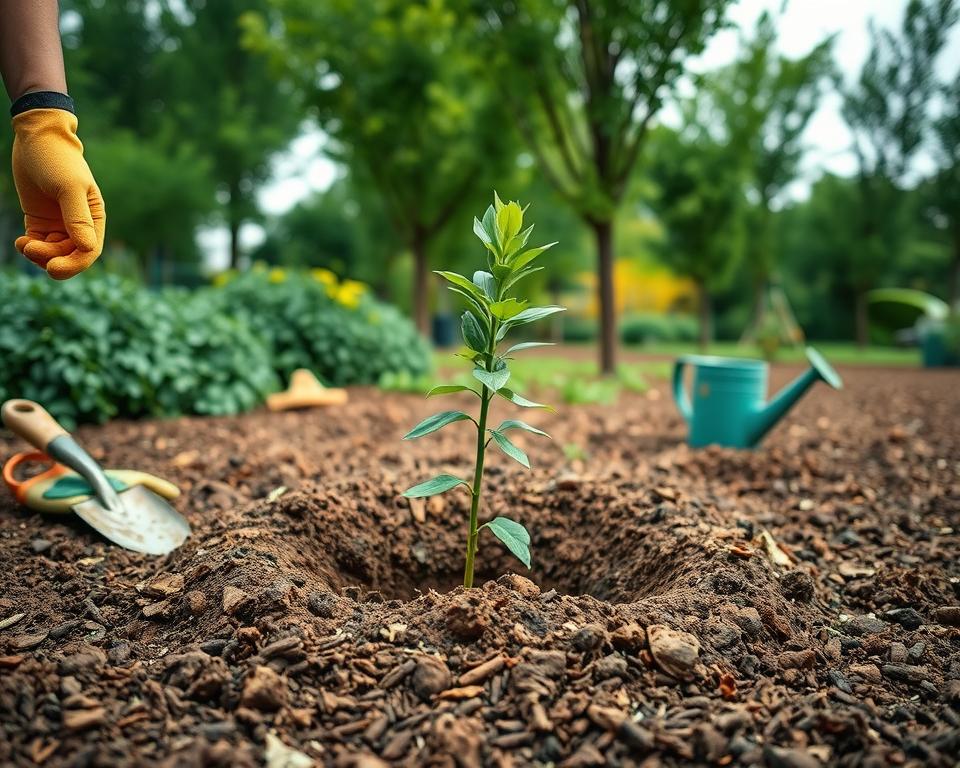
This initial care sets the foundation for healthy development. Young specimens need regular watering until they become established, which typically takes about three years.
Watering, Mulching and Pruning Best Practices
Apply a layer of organic mulch around the base to retain moisture and suppress weeds. Keep mulch slightly away from the trunk to prevent rot. Established trees generally only need watering during dry periods.
Pruning helps maintain shape and remove damaged wood. The best time for this task is late winter or early spring when trees are dormant. Always check for nesting birds between March and August before pruning.
| Maintenance Task | Frequency | Best Time | Key Considerations |
|---|---|---|---|
| Watering | Regular until established | Morning or evening | Deep watering encourages deep roots |
| Mulching | Annually in spring | Early growing season | Keep mulch away from trunk |
| Pruning | As needed | Late winter | Avoid bird nesting season |
| Fertilising | Only if needed | Spring | Use slow-release formula |
Most trees don’t require regular fertilising. Apply slow-release fertiliser in spring only if soil quality is poor or growth appears stunted. Protect young trees from wildlife using guards or fencing.
Enhancing Privacy, Shade and Aesthetic Appeal
A primary motivation for selecting these trees is the swift enhancement of privacy and the creation of shaded retreats. They offer practical solutions for modern outdoor living.
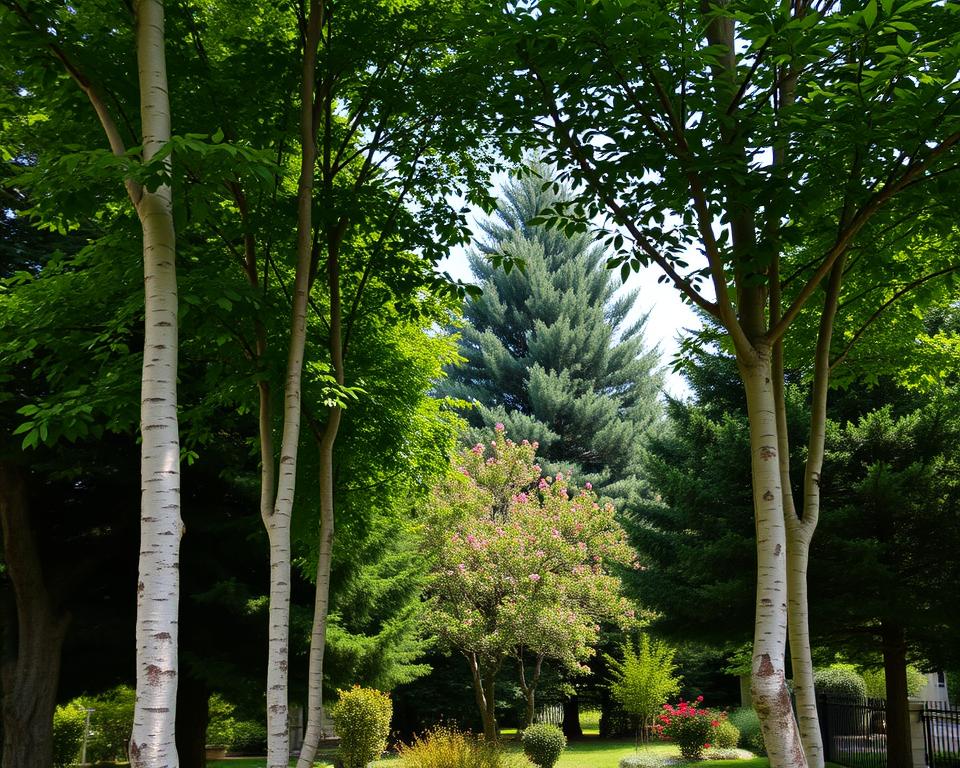
Strategically placed, they can shield a garden from neighbouring properties or busy roads. This creates a secluded, tranquil haven for relaxation.
Creating Natural Screens and Privacy Barriers
For a solid, year-round screen, evergreens like Leylandii are highly effective. They grow densely, blocking unwanted views and reducing noise pollution.
Deciduous varieties offer a different approach. A Silver Birch, for instance, provides a semi-transparent screen. It filters the view while still allowing dappled light to penetrate.
Thoughtful placement of trees can transform an exposed garden into a private sanctuary, buffering both sights and sounds.
The choice between a solid barrier and a filtered one depends on the desired balance between seclusion and openness.
Optimising Canopy, Light and Seasonal Colour
The canopy of a tree defines the quality of shade beneath it. A Weeping Willow casts a deep, cool shade with its large, leafy canopy.
In contrast, a Silver Birch offers light, dappled shade through its delicate, drooping branches. This allows for a brighter space underneath.
These trees provide spectacular seasonal interest. Their leaves change dramatically in autumn.
| Tree Variety | Shade Type | Autumn Colour |
|---|---|---|
| Weeping Willow | Dense, cool | Bright yellow |
| Silver Birch | Light, dappled | Golden yellow |
| Rowan | Moderate | Burnt red |
| Lombardy Poplar | Light | Blazing golden yellow |
This seasonal shift adds dynamic beauty to any garden, ensuring year-round visual appeal.
Unique, Low-Maintenance and Evergreen Options
Beyond the classic choices, several distinctive varieties offer unique aesthetics or minimal upkeep. These selections are perfect for gardeners desiring a focal point or those with limited time for maintenance.

Special Features of Unusual Tree Varieties
Acer Griseum, the Paperbark Maple, is celebrated for its stunning cinnamon-coloured bark that peels away in curls. This feature provides year-round visual interest, especially during winter.
Betula utilis var. jacquemontii, or Himalayan Birch, boasts brilliant white bark. It creates a striking sculptural presence in any garden throughout the seasons.
For exotic flair, Albizia julibrissin (Silk Tree) produces delicate pink, powder-puff flowers. Its fern-like leaves add a soft, graceful texture.
The Ginkgo biloba is a living fossil with unique fan-shaped leaves. In autumn, these leaves turn a spectacular golden yellow before falling.
Benefits of Fast-Growing Evergreens for UK Gardens
Evergreen varieties provide constant screening and colour, even in the depths of winter. They are invaluable for maintaining privacy and structure all year.
Thuja Green Giant is remarkably resilient, requiring little care. It tolerates various soil conditions and resists common pests.
For rapid screening, Leylandii can add up to one metre in height per year. It responds well to pruning, allowing gardeners to manage its size effectively.
Slower-growing evergreens like Holly and Juniper still offer reliable growth of 10-20cm annually. They provide long-term, low-maintenance greenery.
These special trees create enduring focal points with minimal effort.
Conclusion
With careful selection and proper care, remarkable garden transformations are achievable within a few short years. Fast-growing varieties like Silver Birch and Weeping Willow can establish substantial height and presence rapidly.
These trees offer multiple benefits beyond their impressive growth rate. They create valuable shade and enhance privacy while supporting local wildlife. Their environmental contributions include improved air quality and carbon sequestration.
Successful cultivation requires consideration of available space and maintenance needs. Proper placement ensures healthy development without structural concerns. Many species reach several metres in height within just a few years.
Starting with quality saplings represents excellent value for garden enhancement. The investment yields substantial returns through beauty, functionality, and ecological benefits.
FAQ
What is considered a fast growth rate for a tree in the UK?
In the UK, a tree is deemed fast-growing if it achieves a height increase of 60cm or more per year. Species like the silver birch and weeping willow can easily exceed this, often adding over one metre in height annually during their early years.
Which fast-growing tree offers the best privacy screening?
For a dense, year-round privacy barrier, fast-growing evergreens like Leyland cypress are highly effective. For a more ornamental screen, deciduous trees such as Betula pendula, with its light canopy, or willows with their cascading branches, create beautiful, semi-transparent screens.
How quickly can I expect a silver birch to reach its full height?
The silver birch (Betula pendula) is one of the fastest-growing native trees. It can achieve a substantial portion of its ultimate height of up to 30 metres within 20 years, growing vigorously in its youth before the rate slows.
Do fast-growing trees have problematic roots?
Some species, particularly willows and poplars, have vigorous, shallow root systems that can seek out moisture. It is crucial to plant these trees a safe distance from buildings, drains, and patios to prevent potential damage from root spread over time.
When is the best time to plant fast-growing trees?
The ideal planting time is during the dormant season, from late autumn to early spring. This allows the roots to establish in the soil before the energy-demanding growth of spring and summer begins, giving the tree the best start.
What type of soil do weeping willows require?
Weeping willows thrive in moist, even wet, conditions and are perfectly suited for planting near ponds or in areas with poor drainage. They are less suited to very dry, sandy soils where their roots cannot access sufficient water.
Can fast-growing trees provide good wildlife value?
Absolutely. Many species, including the silver birch, support a wide range of wildlife. They offer caterpillars for birds, seeds for small mammals, and their flowers provide an early source of pollen and nectar for bees in spring.
How can I manage the shape and size of a fast-growing tree?
Regular pruning is key to managing a tree’s shape and controlling its size. For most varieties, light pruning in late autumn or winter, while the tree is dormant, helps maintain a strong structure and a desirable canopy without stunting its growth.