Optimise Your Shed: Best Flooring and Storage Options

This guide helps UK homeowners choose the best flooring and storage options for transforming your shed into a usable space. It sets out clear, practical advice on shed renovation UK, covering shed flooring choices, shed storage ideas and a complete garden shed makeover tailored to British weather and building practices.
Expect product recommendations, cost considerations and step-by-step guidance. We explain key flooring types — concrete, raised timber and interlocking tiles — and storage systems such as shelving, slatwall and overhead racks. The focus is on durability, moisture resistance and efficient layouts that add comfort and value.
This piece is written for homeowners with sheds of all sizes who want a workshop, home office, hobby room or improved garden storage. It will walk through assessing current condition, selecting materials, planning installation and ongoing maintenance, and point to trusted UK suppliers and eco-friendly options.
Inhaltsverzeichnis
Key Takeaways
- Clear steps to assess your shed and choose suitable shed flooring for UK conditions.
- Practical shed storage ideas that maximise vertical space and free the floor.
- Comparison of concrete, raised timber and interlocking tiles for durability and moisture control.
- Cost and installation guidance to balance budget with longevity and performance.
- Tips on trusted suppliers, weatherproof materials and greener alternatives for a long-lasting garden shed makeover.
Why Optimising Your Shed Matters for UK Homeowners
Optimising a garden building brings practical gains for everyday life and for future sale prospects. A dry, level floor and tidy storage turn a cluttered outbuilding into a safe workspace, a hobby studio or an extra room. These changes highlight shed benefits UK homeowners notice most: protection from damp, better organisation and increased usable space.
Benefits of a well-organised and floored shed
A proper floor gives year-round usability by keeping tools and furniture off wet ground. Good storage systems reduce trip hazards and stop small items getting lost. Owners protect equipment from moisture and pests, which extends the life of possessions and cuts replacement costs. Converting a tidy shed into a workshop or home office can raise perceived garden shed value to buyers.
Common problems with neglected sheds
Poorly maintained floors lead to damp, rot and mould, especially in timber structures. Uneven or spongy boards make storage unstable and work surfaces unsafe. Cluttered interiors invite pests such as rats or woodworm and make effective cleaning difficult. Seasonal damage from freeze–thaw and standing water accelerates decay and reduces usable life.
How improved flooring and storage add value and functionality
Durable options like concrete or ventilated raised timber support heavier equipment and allow varied uses. Modular shelving, pegboards and slatwall systems reclaim floor area and make inventory accessible. When combined with insulation and ventilation, these upgrades improve energy efficiency and reduce condensation in converted spaces. For many sellers and buyers, clear evidence of shed organisation benefits bolsters appeal and can boost the overall garden shed value in a property sale.
| Issue | Simple Upgrade | Expected Result |
|---|---|---|
| Damp floor | Raised timber subframe with ventilated void | Dry storage, reduced rot and longer timber life |
| Cluttered interior | Wall-mounted slatwall and pegboard | More floor space, faster tool access |
| Unstable work surface | Level concrete screed or interlocking tiles | Solid workshop base, supports heavy machines |
| Pest ingress | Sealed thresholds and raised flooring | Fewer rodents, protected stored items |
| Low resale appeal | Full fit-out with insulation and flooring | Higher perceived garden shed value and usability |
Understanding Your Shed’s Current Condition and Use
Before any refit, take a calm, methodical look at the building and how you will use it. A clear assessment makes it easier to plan work, choose materials and avoid surprises later. Note the base type, internal layout and how often you will need access to stored items.
Assessing the floor structure and moisture levels
Start by inspecting joists and bearers for soft spots or rot. Gently poke timber to test solidity and look for mould or white salt deposits that signal rising damp. Check whether the base is concrete, paving slabs, compacted hardcore or bare earth. Note any uneven areas and the load-bearing capacity for heavy items.
Use a hygrometer or moisture meter for a reliable shed moisture assessment. Timber readings under 20% are preferable. Higher figures mean remedial work is needed before adding insulated flooring or heavy shelving. Check drainage and look for water pooling around the perimeter. If the shed sits on untreated bearers or directly on soil, plan to raise or treat the base to prevent future decay.
Identifying storage needs based on intended use
Decide the primary function: garden store, workshop, home office or potting room. Each use brings different load and access needs. Create an inventory of items you will keep and mark which ones are heavy, fragile or used daily.
Heavy equipment such as lawnmowers and compressors requires solid flooring and reinforced shelving. Small, frequent-use tools benefit from front-facing storage and clear floor space. Seasonal items fit well on overhead racks. Choose modular shelving to allow role changes without a full refit.
Planning for insulation, ventilation and lighting
If you will work in the shed year-round, consider suitable materials for shed insulation UK, such as PIR boards or natural sheep’s wool. Include a vapour control layer where necessary to avoid trapping moisture between the lining and external cladding.
Design shed ventilation to keep air moving. Fit louvre or trickle vents, or plan for mechanical extraction if condensation is likely. Good airflow prevents mould and protects electronics and paperwork.
Think about lighting and electrics early. Maximise natural light with a well-placed window or skylight. For powered installations, specify RCD protection and have work completed to UK Part P standards. If heating is required, opt for low-power options and route cables safely so flooring and storage remain practical and hazard-free.
Best Flooring and Storage Options for Transforming Your Shed into a Usable Space
Choosing the right mix of shed flooring types and shed storage systems sets the tone for any shed conversion ideas. Start by matching function to finish. A solid plan makes it easier to decide between concrete, raised timber, interlocking tiles or composite decking. Consider moisture, load, insulation and how often you will use the space.

Overview of flooring types suited to sheds
Concrete bases offer permanence and a level surface for heavy-duty work. They work well for workshops and any shed conversion ideas that need long-term stability.
Raised timber floors use treated joists and boards to lift the floor above damp ground. They give warmth, easier repairs and a more forgiving surface for office or studio use.
Interlocking PVC or rubber tiles fit quickly and provide shock absorption. They suit light workshop use, home gyms and temporary layouts where you might want to change the floor later.
Composite decking provides a neat, weatherproof finish ideal for potting sheds and hobby rooms. It resists rot and needs little maintenance.
Storage systems that complement different flooring choices
Heavy-duty metal shelving pairs best with concrete where point loads are highest. On raised timber floors, tie shelving to wall studs or use wide base plates to spread weight.
Wall-mounted slatwall, pegboard and French cleat systems suit timber-framed walls. Ensure fixings hit solid studs or battens for secure tool storage.
Overhead racks make sense where joists and headroom allow. Reinforce joists for heavy seasonal storage and prefer reinforced timber or concrete floors beneath.
Modular plastic shelving works across most floor types, especially where occasional damp is a concern. It is easy to move and replace as storage needs change.
Matching solutions to common uses: workshop, office, garden store
Workshop: Use a concrete slab or robust raised timber floor. Fit heavy shelving and a tool wall with pegboard or slatwall. Place durable interlocking mats at workstations to reduce fatigue and protect the floor.
Home office or studio: Choose an insulated raised timber floor with underfloor insulation where possible. Add comfortable interlocking vinyl or engineered boards and wall-mounted storage to free floor space.
Garden store and potting shed: Opt for composite decking or treated timber that copes with wet boots and soil. Fit open, slatted shelving for drainage and hooks for spades, rakes and hoses.
| Use | Recommended Flooring | Ideal Storage Systems | Key Benefit |
|---|---|---|---|
| Workshop | Concrete or reinforced raised timber | Heavy-duty metal shelving, pegboard, tool cabinets | Durability and load capacity for tools and machinery |
| Home office / Studio | Insulated raised timber, interlocking vinyl | Wall-mounted shelves, cable management, slim drawers | Comfort, warmth and tidy workspace |
| Garden store / Potting | Composite decking, treated timber | Slatted shelving, hanging hooks, plastic modular units | Drainage, low maintenance and easy cleaning |
| Hobby / Gym | Interlocking rubber or PVC tiles | Freestanding racks, wall hooks, equipment stands | Shock absorption and flexible layout |
Flooring Choices: Durability, Moisture Resistance and Comfort
Choosing the right floor sets the tone for any shed conversion. Consider load, comfort, moisture risk and installation time when weighing options. Below are practical choices that suit typical UK conditions and common shed uses.
Concrete and screed
Concrete offers outstanding strength and longevity for heavy tools and machinery. A correctly installed concrete shed floor UK will bear loads and need little routine maintenance.
Concrete can feel cold underfoot and may suffer condensation where insulation or a damp-proof membrane (DPM) is absent. Installation needs a compacted hardcore sub-base, a blinding layer, DPM and a finished screed or brushed surface for slip resistance.
Raised timber and decking systems
A raised timber floor works well on uneven or sloping sites. A raised timber floor creates a natural thermal break and allows underfloor ventilation, cutting the risk of trapped damp.
Use tanalised joists or pressure-treated timber on adjustable pedestals or concrete blocks. Leave ventilation gaps and fit a breathable membrane. Timber must be treated to resist rot and insects and may not suit very heavy stationary loads.
Interlocking PVC and rubber tiles
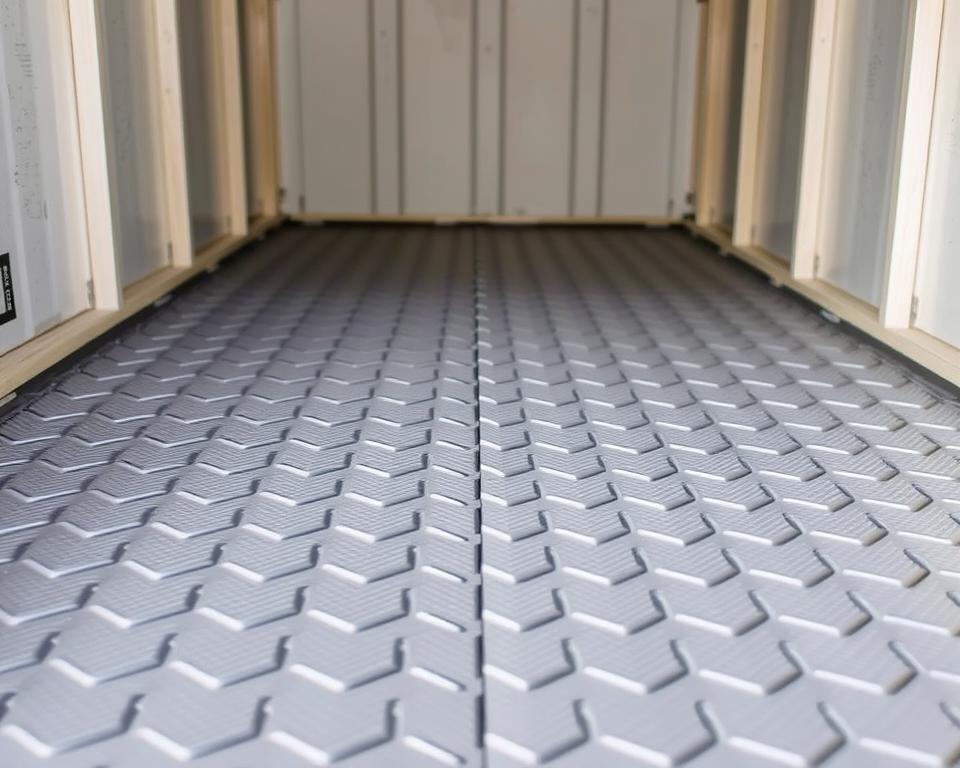
Interlocking shed tiles provide a fast, DIY-friendly option with good impact and slip resistance. Interlocking shed tiles feel warmer than concrete and clean easily, making them popular for workshops, gyms and hobby spaces.
These tiles are best laid over a stable concrete or timber base with ventilation beneath. They may flex under very heavy equipment. Look for tiles with UV stability and certified slip-resistance from reputable suppliers in the UK.
Moisture control and long-term performance
Prioritise moisture resistant shed flooring regardless of material choice. Use DPMs, breathable membranes and adequate ventilation to reduce condensation and mould risk.
Match the floor to use, budget and site conditions. For heavy use, consider concrete; for speed and warmth, choose interlocking tiles; for uneven ground, a raised timber solution often proves the most practical.
Storage Solutions: Shelving, Wall Systems and Freestanding Units

Choose storage that matches the load, layout and use of your shed. For heavy tools and bulky equipment, specify galvanised steel or powder-coated shelving with clear load ratings. Brands stocked by RS Components and Screwfix offer robust options that suit many UK gardens.
Fit heavy duty racking to solid anchors. On timber floors bolt through into joists or use base plates to spread loads. Adjustable shelves and labelled bins help keep spanners, drills and consumables organised for quick access.
Use wall-mounted systems to free floor space. A slatwall shed setup, using PVC or MDF slat panels, accepts modular hooks, shelves and baskets for flexible arrangement. Elfa-style fittings and Walls2Work-compatible accessories work well in a range of layouts.
Pegboard is a simple, effective choice for hand tools. Metal pegboard resists damp and holds heavier holders than hardboard. Always fix linings back to studs or battens so hooks carry weight into structure, not just cladding.
Look up when floor space is tight. Ceiling racks and pulley hoists suit bikes, ladders and holiday gear. Products such as workshop hoists and cycle hoists from Halfords and general retailers provide practical options for overhead shed storage.
Check roof joists before adding bulk. Reinforce joists where required and use multi-point fixings so stored loads are safe. Pulley systems make lifting heavy items easier and sealed containers reduce dust and pest risk for seasonal belongings.
Combine solutions for best results: heavy duty racking for power tools, slatwall accessories for small kit, and overhead shed storage for items used less often. A mixed approach keeps tools visible, reachable and protected while maximising usable floor area.
Space-Saving Ideas and Small-Shed Optimisation
Small sheds need clever planning to work well. This short guide shows practical solutions for gardeners, hobbyists and home workers in the UK who need to make the most of limited space.

Fold-away workbenches and multipurpose furniture
Fit a wall-mounted fold-away workbench that locks solid for safe use and folds neatly when not needed. Look for metal brackets from Hafele or durable hardwood tops from local carpenters to get a reliable finish.
Choose multipurpose pieces such as storage benches that double as seating and cabinets that convert to potting stations. A compact fold-away workbench frees floor space and keeps tools close to hand.
Smart layout plans for narrow or compact sheds
Use a linear plan: bulky items at the far end, a central aisle for movement and the main workspace along one side. This compact shed layout gives clear access and makes the shed feel larger.
Measure and map clearances with simple scaled drawings or free online tools. Aim for 600–800 mm of clear aisle where possible to allow comfortable movement.
Bright paint and good lighting improve perceived space. Mirrors or light-coloured surfaces work well when converting a shed into an office or craft room.
Using vertical and hidden storage to free floor space
Make the most of walls with tall shelving, slim cabinets and pegboard organisers to create a true vertical storage shed. Keep heavy loads near walls and off the floor to reduce exposure to damp.
Hidden options include under-bench pull-out drawers, floor hatch bins and magnetic strips for metal tools. Labelled, transparent boxes speed up retrieval and keep small items organised.
| Solution | Benefits | Suggested Fit |
|---|---|---|
| Wall-mounted fold-away workbench | Saves floor space, quick setup, secure when locked | Solid timber top, Hafele brackets, local carpenter fit |
| Multipurpose storage bench | Seating plus storage, doubles as potting or prep area | Weatherproof timber, cushioned lid, internal compartments |
| Tall shelving and slim cabinets | Maximises vertical space, keeps floor clear | Adjustable steel shelving, sealed timber cabinets |
| Under-bench drawers and floor hatch bins | Hidden storage for small tools, secure from moisture | Pull-out runners, waterproof boxes, labelled trays |
| Linear compact shed layout | Clear circulation, efficient access to frequent items | 600–800 mm aisle, bulky storage at rear, workbench at side |
Installation Tips, Maintenance and Cost Considerations
Good preparation and sensible budgeting make a lasting difference when you install shed floor systems or fit storage. Read this short guide for clear steps on installation, simple maintenance routines and realistic cost comparisons to help plan your DIY shed refit or engage a professional.

Preparation and installation guidance
Start by emptying the shed and inspecting the subfloor, joists and base for rot or movement. Repair damaged timbers, treat exposed wood with preservative and ensure site drainage is working to stop future damp.
For a concrete floor, dig to the required depth, compact hardcore, lay a damp-proof membrane (DPM), add blinding and pour concrete or screed. Allow adequate curing time before fitting finishes or heavy items.
Raised timber floors need durable supports such as concrete pads or adjustable pedestals. Fit pressure-treated joists, add a breathable membrane and fix treated floorboards, leaving small ventilation gaps to reduce condensation.
Interlocking PVC or rubber tiles require a solid, level base. Fit a subframe if the shed floor is uneven, follow manufacturer instructions to click tiles together and seal edges where recommended.
When fitting shelving or wall systems, locate studs or battens and use suitable anchors such as coach screws and rawlplugs. Spread heavy loads across multiple fixings and plan routes for cables and ventilation before finalising the layout.
Maintenance routines to extend lifespan
Inspect the floor and storage annually for damp, rot and pest signs. Reapply timber preservative at least once a year to exposed boards and repaint or reseal external joinery to prevent water ingress.
Keep gutters and ground drainage clear around the shed. Regularly sweep and hose concrete floors, clean interlocking tiles with a mild detergent and tighten loose fastenings on shelving to avoid sagging.
Lubricate hinges, runners and fold-away bench mechanisms. Check fixings for ceiling racks and hoists every year, especially if they carry seasonal loads. Routine care reduces the need for costly repairs under shed maintenance UK schedules.
Budgeting: cost, longevity and DIY versus professional work
Estimate likely spend before you begin. A basic raised timber floor with treated boards sits at the lower end of the price range. Interlocking tiles are mid-range for cost and ease of fit. A concrete base with DPM and screed is the higher-cost option but gives long-term durability for workshop conversions.
Shelving costs vary widely from economy plastic units to heavy-duty galvanised racking. Factor in tools, fastenings, sealants, DPM, waste disposal and any required site works when calculating a total for the shed installation cost.
Choose DIY for raised timber floors, interlocking tiles and basic shelving if you have the skills and tools. Hire builders or registered electricians for concrete pours, insulation with vapour control or any new wiring. Request multiple quotes, check credentials such as Gas Safe or NICEIC where relevant and include warranties in your workbook.
| Item | Typical range (£) | Durability | DIY suitability |
|---|---|---|---|
| Raised timber floor (treated boards) | 150–600 | Moderate; good with annual treatment | High |
| Interlocking PVC/rubber tiles | 200–800 | Moderate; easy to replace panels | High |
| Concrete base with DPM and screed | 800–2,500 | High; best for workshop conversions | Low to medium |
| Basic shelving (plastic/wood) | 30–200 | Low to moderate | High |
| Heavy-duty galvanised racking | 150–1,000 | High; suited to heavy tools | Medium |
| Professional installation (labour for floors) | 300–1,200 | Varies by method and finish | Not applicable |
Materials and Products Recommended for UK Sheds
Choosing the right materials makes a shed last longer and perform better in Britain’s changeable climate. Pick items that resist damp, cope with rain and stay low-maintenance. Below are practical options and trusted sources to help you build or upgrade a durable, well-equipped garden shed.
Weatherproof choices
Use pressure-treated (tanalised) timber for joists and bearers to prevent rot. Fit a damp-proof membrane under concrete floors and a breathable membrane beneath raised timber floors to control moisture migration. Choose stainless-steel fixings and galvanised brackets to avoid corrosion in a damp environment.
For cladding, apply an exterior-grade preservative such as Ronseal or Cuprinol and finish with a microporous paint to shed water while letting timber breathe. Insulate with rigid PIR boards where high thermal performance is needed, or select sheep’s wool and Thermafleece for breathable insulation in timber-framed sheds.
Where to source components
Major builders’ merchants and DIY outlets carry a wide range of shed materials UK. Look to B&Q, Wickes, Jewson, Travis Perkins and Selco for timber and structural supplies. Screwfix, Toolstation and Amazon UK offer practical storage fittings and budget flooring options.
Specialist brands supply targeted solutions. Ronseal and Cuprinol provide timber treatments. Tarkett and Forbo retail vinyl flooring suited to utility spaces. Marley and Rhino Flooring supply rubber and interlocking tiles for resilient surfaces. For storage systems, consider Elfa or Walls2Work; for bike hoists and racks, Fiamma and Halfords stock robust options. Use NICEIC or NAPIT-registered electricians for any electrical work and consult local building control about regulations.
Eco-friendly and recycled alternatives
Choose FSC-certified reclaimed timber for floors and cladding to cut environmental impact. Recycled rubber tiles and composite decking made from reclaimed plastics give low-maintenance, durable floors. Brands and trade suppliers now offer ranges of sustainable shed materials that match performance with lower carbon footprints.
Low-VOC paints and natural insulation such as sheep’s wool or hemp improve indoor air quality. Consider rainwater harvesting for garden-shed water use and solar lighting kits for energy-efficient illumination. These choices support a greener build while keeping the shed practical.
Practical shopping checklist
- Pressure-treated timber for structural elements.
- Damp-proof membranes and breathable underlays.
- Stainless-steel or galvanised fixings.
- Appropriate insulation: PIR or natural fibres.
- Durable flooring: vinyl, rubber tiles, or composite decking.
- Trusted suppliers: B&Q, Wickes, Jewson, Travis Perkins, Screwfix.
- Specialist brands for treatments and storage: Ronseal, Cuprinol, Elfa.
When planning purchases, compare quotes from local shed suppliers UK and builders’ merchants to balance cost with longevity. Prioritise weatherproof shed treatments and robust materials to keep maintenance low and performance high.
Conclusion
To optimise your shed effectively, begin with a clear assessment of its condition. Check the floor structure, moisture levels and ventilation before choosing the best shed flooring and storage for your needs. Matching flooring to intended use and the UK climate helps avoid damp issues and ensures comfort for a workshop, office or garden store.
Choose storage that makes the most of vertical space and keeps heavy items secure. Slatwall, sturdy shelving and overhead racks all help maximise shed efficiency while maintaining safety. Good insulation, a damp-proof membrane and adequate airflow will make a shed conversion UK-ready for year-round use.
Set a realistic budget, shortlist options from reputable UK suppliers and decide whether to tackle DIY tasks or hire professionals for structural or electrical work. Investing in quality materials and sensible fixings protects your investment and reduces long-term maintenance.
Finally, adopt proactive maintenance routines and simple design choices such as secure fixings and proper ventilation. These steps will help you achieve the best shed flooring and storage outcomes and ensure your shed conversion UK project delivers lasting value and function.
FAQ
What flooring is best for converting a shed into a workshop or home office?
Choose flooring according to intended use. For heavy workshop equipment and long-term conversion, a concrete base with a damp-proof membrane and insulation offers the most durable, level solution. For insulated home offices or studios on uneven ground, a raised timber floor with treated joists and underfloor insulation provides warmth and ventilation. For quick DIY fits or gym/workstation mats, interlocking PVC or rubber tiles give impact resistance and warmth but need a solid sub-base such as timber or concrete.
How do I check my shed for moisture and rot before installing new flooring?
Inspect joists and bearers visually and probe suspect timber with a screwdriver; soft or crumbly wood indicates rot. Look for mould, salt deposits or staining that may signal rising damp. Measure moisture with a hygrometer or moisture meter—timber should be below about 20% before fitting finishes. Also check the base type (earth, hardcore, concrete) and site drainage; standing water or poor perimeter falls require remediation before new floors are installed.
Are raised timber floors suitable for sloping or uneven gardens?
Yes. Raised timber systems are ideal for uneven or sloping sites because adjustable pedestals or concrete pad supports can level the joists. They also create an insulating air gap and allow ventilation beneath the floor. Use pressure-treated (tanalised) joists, breathable membranes and ensure ventilation gaps to avoid trapped moisture. For very heavy loads, reinforce supports or consider a concrete solution.
Which storage systems work best with different floor types?
Match storage to floor strength and fixings. Heavy-duty galvanised racking suits concrete floors and can carry large loads. On raised timber, use through-bolts into joists or floor plates to spread loads. Wall-mounted slatwall, French cleat or pegboard systems work well on timber-framed walls when fixed to studs or battens. Lightweight modular plastic shelving is versatile across floor types and tolerates occasional damp better than untreated timber units.
How can I keep a small or narrow shed functional without losing floor space?
Use vertical and hidden storage. Fit tall shelving and slatwall or pegboard for tools. Install fold-away workbenches and multipurpose furniture such as storage benches or desks with integrated shelves. Use overhead racks for seasonal gear and under-bench drawers or floor-hatch bins for small items. Plan a linear layout with frequently used items near the door and leave a 600–800 mm central aisle for comfortable movement.
Do interlocking tiles trap moisture, and where should they be used?
Interlocking PVC or rubber tiles are water-resistant, warm underfoot and quick to fit. They can trap moisture underneath if laid directly over earth or poorly ventilated timber bases. Best practice is to fit them to a solid, well-ventilated base such as concrete or raised timber with breathable membrane and ventilation gaps. For outdoor-exposed sheds, choose tiles with UV stability and a certified slip-resistance rating.
What ventilation and insulation should I add for year-round use?
For year-round use, combine insulation with controlled ventilation. Use rigid PIR boards or breathable natural insulation such as sheep’s wool for walls and ceiling, and include a vapour-control layer where required to avoid condensation. Fit passive vents (louvre or trickle vents) or mechanical extraction if moisture risk is high. Ensure air can circulate beneath raised floors and around stored items to prevent mould and protect electronics.
When should I hire professionals rather than DIY for shed conversions?
DIY is suitable for raised timber floors, interlocking tiles and shelving installs for many competent homeowners. Hire professionals for concrete base pours, complex damp-proofing, electrics requiring new circuits or Part P compliance, and gas or fixed heating installations. Also consult builders or structural engineers if you plan major structural changes, roof alterations or heavy overhead storage that may require joist reinforcement.
Which brands and suppliers in the UK are recommended for shed flooring and storage?
For materials and components consider B&Q, Wickes, Travis Perkins, Selco and Jewson. Storage and racking options are available from Screwfix, Toolstation and RS Components. Specialist flooring and storage brands include Rhino Flooring, Marshalls, Forbo, Tarkett, Elfa and Walls2Work. For treatments look to Ronseal and Cuprinol. Always check availability locally and seek NICEIC or NAPIT-registered electricians for electrical work.
How much should I budget for improving shed flooring and storage?
Costs vary by choice. A basic raised timber floor with treated boards and simple shelving is the lower-cost option. Interlocking tiles and higher-spec modular storage are moderate. A new concrete base with DPM, insulation and screed is the most expensive and labour-intensive. Factor in materials, fixings, tools, waste disposal and any professional labour. For accurate budgeting get multiple quotes and allow contingency for remedial work like rot treatment or drainage improvements.
What eco-friendly materials can I use for a sustainable shed upgrade?
Choose FSC-certified or reclaimed timber, recycled rubber or composite tiles, and low-VOC paints. Natural insulation such as sheep’s wool or hemp improves indoor air quality, while PIR boards offer high thermal performance if used responsibly. Use stainless-steel or galvanised fixings to extend lifespan, and consider rainwater harvesting for watering plants plus solar lighting kits to reduce energy use.
How should I maintain shed floors and storage to extend their lifespan?
Inspect annually for damp, rot and pest activity. Treat timber with preservative and repaint or reseal exposed surfaces. Keep external drainage clear and maintain perimeter falls to avoid standing water. Sweep and clean floors regularly—hose concrete and use mild detergent on tiles. Tighten shelving fixings, lubricate moving parts on fold-away benches and ceiling hoists, and replace damaged seals or membrane sections promptly.