How to Cultivate a Lush Mediterranean Garden
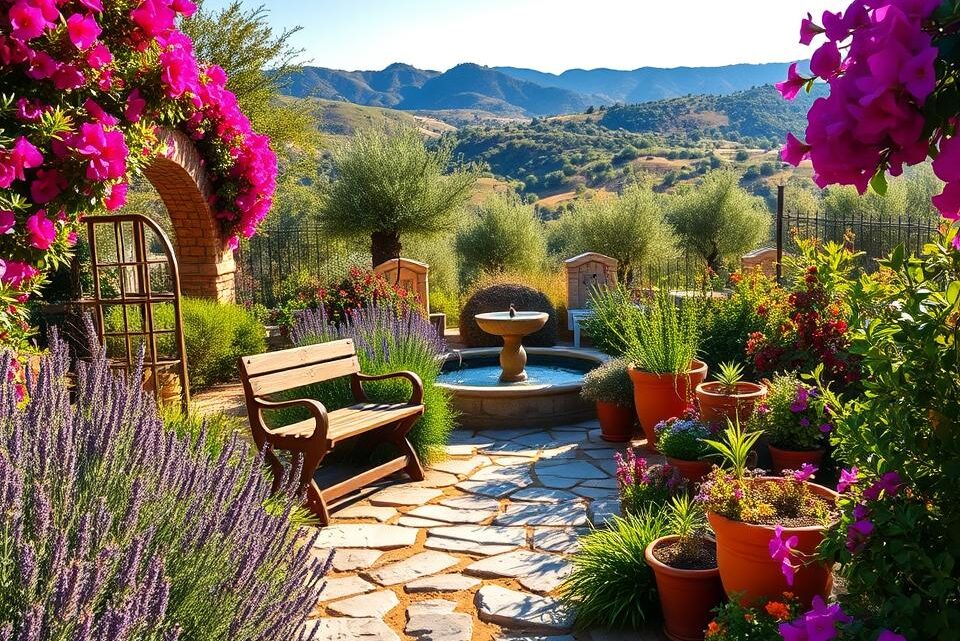
You can transform your outdoor space into a vibrant and inviting Mediterranean garden, perfect for relaxation and entertainment. This style is characterised by its use of drought-tolerant plants, terracotta pots, and natural stone features.
A well-designed garden not only enhances the aesthetic appeal of your property but also provides a tranquil retreat. Effective landscaping can help to maximise the potential of your outdoor area.
Inhaltsverzeichnis
Key Takeaways
- Choose drought-tolerant plants for a low-maintenance garden.
- Incorporate natural stone features and terracotta pots into your design.
- Maximise the potential of your outdoor space with effective landscaping.
- Create a tranquil retreat perfect for relaxation and entertainment.
- Enhance the aesthetic appeal of your property with a well-designed garden.
Understanding the Mediterranean Garden Style
The Mediterranean garden style is renowned for its warm, inviting aesthetic, which is deeply rooted in the region’s climate. This style is not just about the plants; it’s a holistic approach to gardening that incorporates the right combination of flora, hardscaping, and architectural elements to create an outdoor space that feels like a natural extension of your home.
Key Characteristics of Mediterranean Gardens
Mediterranean gardens are known for their distinctive characteristics, which include the use of drought-resistant plants, terracotta pots, and natural stone. These elements work together to create a warm and inviting atmosphere. The gardens often feature a mix of evergreen trees, shrubs, and herbaceous plants that are Page native to the Mediterranean region.
| Characteristics | Description |
|---|---|
| Drought-resistant plants | Plants that can thrive with minimal watering, such as succulents and lavender. |
| Terracotta pots | Earthenware pots that add a rustic touch to the garden. |
| Natural stone |
The Mediterranean Climate and Its Influence
The Mediterranean climate is characterised by hot, dry summers and mild, wet winters. This climate plays a significant role in shaping the Mediterranean garden style. Plants are chosen for their ability to withstand the dry summers, and the garden’s design takes into account the need for shade and water conservation. You can replicate this climate’s influence in your garden by selecting plants that are adapted to similar conditions.
Assessing Your Garden’s Potential
To cultivate a thriving Mediterranean garden, you must first understand your garden’s unique characteristics. This involves evaluating various factors that will influence the success of your garden makeover.
Evaluating Your Climate and Microclimate
Understanding your local climate and microclimate is crucial for selecting the right plants and designing your garden. The UK’s climate varies significantly across regions, and even within your garden, there can be microclimates that affect plant growth. Consider factors such as sunlight exposure, wind direction, and temperature fluctuations when assessing your garden’s microclimate.
Identifying Suitable Areas in Your Garden
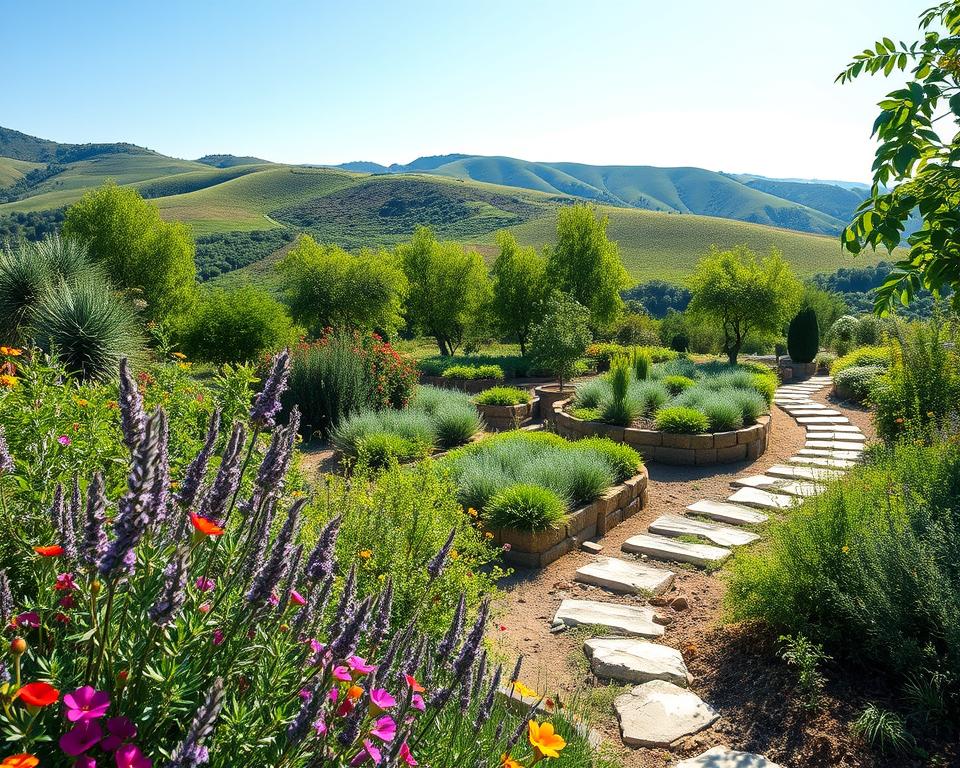
Not all areas of your garden may be suitable for a Mediterranean garden. Identify areas that receive ample sunlight and have good drainage. You can create a simple table to help you assess different areas of your garden:
| Area | Sunlight | Drainage | Suitability |
|---|---|---|---|
| Front garden | Full sun | Good | High |
| Back garden | Partial shade | Poor | Low |
| Side garden | Full sun | Good | High |
By assessing your garden’s potential and understanding its unique characteristics, you can create a beautiful and thriving Mediterranean garden.
Planning Your Mediterranean Garden Layout
As you embark on creating your Mediterranean garden, the layout is crucial for both aesthetics and functionality. A well-designed layout will help you create an inviting outdoor space that is perfect for relaxation and entertainment.
Creating Outdoor Rooms and Zones
To create a functional Mediterranean garden, you should consider dividing your outdoor space into different zones or “rooms.” This can be achieved by using a combination of hard landscaping elements, such as patios and walls, and soft landscaping features, like plants and trees.
For example, you might create a dining area, a relaxation zone, or a play area for children. By defining these spaces, you can create a sense of intimacy and functionality in your garden.
Balancing Sun and Shade Areas
A Mediterranean garden typically features a mix of sun-drenched and shaded areas. To achieve this balance, you need to understand the sun patterns in your garden throughout the day.
Mapping Sun Patterns Throughout the Day
Observe your garden at different times to determine which areas receive direct sunlight and which are shaded. This will help you decide where to place plants, seating areas, and other features.
Creating Transitional Spaces
Transitional spaces, such as pergolas or covered walkways, can help connect different areas of your garden while providing shade and visual interest.

“A well-designed garden is not just about the plants; it’s about creating an experience.”
This quote highlights the importance of considering all elements when planning your Mediterranean garden layout.
| Layout Element | Purpose |
|---|---|
| Outdoor Rooms | Create intimacy and functionality |
| Sun and Shade Areas | Balance and visual interest |
| Transitional Spaces | Connect areas and provide shade |
Preparing the Soil for Mediterranean Plants
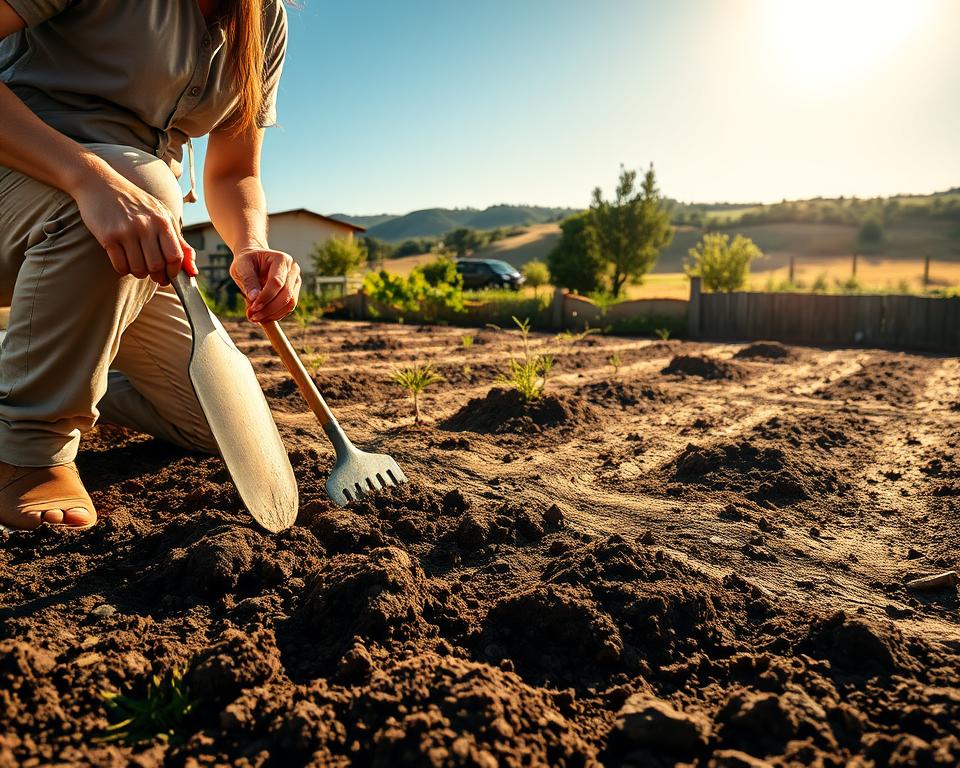
To create a thriving Mediterranean garden, it’s essential to prepare your soil properly. Mediterranean plants are adapted to specific soil conditions, and understanding these requirements is crucial for their success.
Improving Drainage for Mediterranean Species
Mediterranean plants are highly susceptible to root rot in waterlogged soils. To prevent this, you need to improve drainage in your garden. Adding organic matter like compost or well-rotted manure can help to break up clay soils and improve soil structure. You can also incorporate perlite or sand to enhance drainage. Raised beds are another effective solution for improving drainage and preventing waterlogged soil conditions.
Soil Amendments and pH Considerations
Mediterranean plants generally thrive in slightly alkaline soils with a pH between 7 and 8. If your soil is too acidic, you can add lime to raise the pH. Conversely, if your soil is too alkaline, you can add elemental sulphur or peat moss to lower it. Additionally, incorporating organic matter can help to buffer the soil pH and provide essential nutrients for your plants. Regular soil testing will help you to determine the necessary amendments and ensure your soil remains fertile and balanced.
Selecting Mediterranean Trees and Shrubs
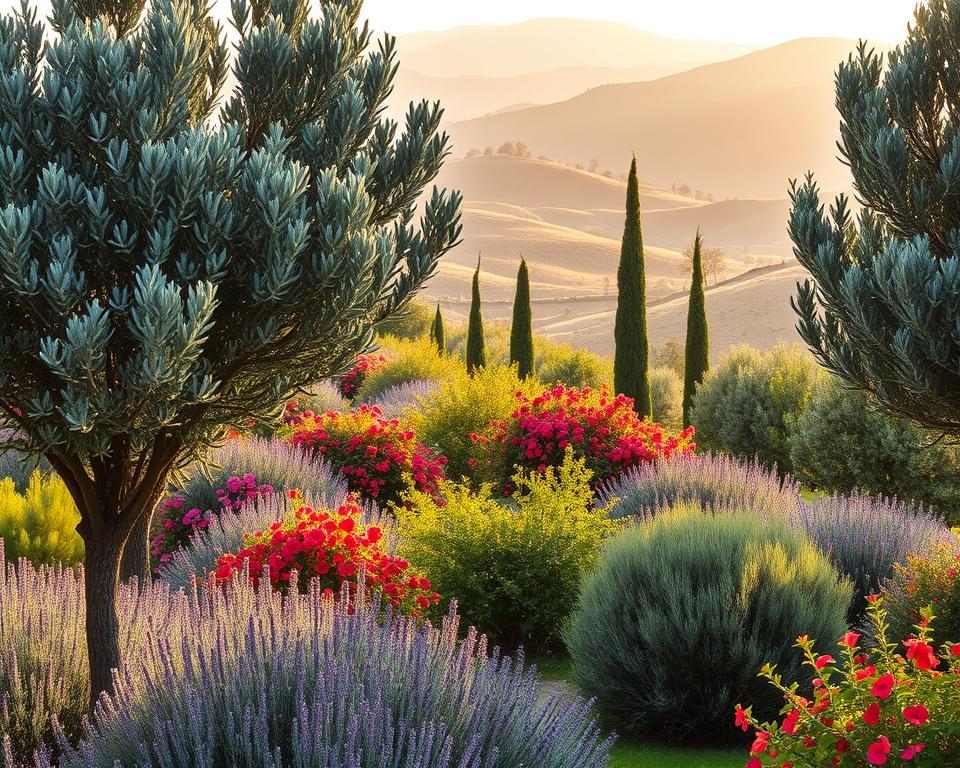
To create a lush Mediterranean garden, selecting the right trees and shrubs is essential. These plants not only provide structure and beauty but also help to create a microclimate that can withstand the region’s characteristic dry summers.
Evergreen Foundation Plants
Evergreen trees and shrubs form the backbone of a Mediterranean garden, providing year-round structure and interest. They help to create a sense of continuity and can serve as a backdrop for other plants.
Olive Trees and Alternatives for UK Gardens
Olive trees (Olea europaea) are quintessential Mediterranean plants, but they may not thrive in the UK’s cooler climate. Alternatives such as Phillyrea latifolia or Osmanthus species can provide a similar evergreen presence.
Cypress and Pine Varieties
Cypress (Cupressus spp.) and pine (Pinus spp.) are popular evergreen conifers that can add height and drama to a Mediterranean garden. Varieties such as Cypressus sempervirens and Pinus halepensis are well-suited to dry conditions.
Drought-Tolerant Tree Species for UK Gardens
While the Mediterranean region is known for its dry summers, the UK’s climate can be quite different. Nonetheless, choosing drought-tolerant tree species can help ensure your garden remains resilient. Some excellent options include:
- Quercus ilex (Holm Oak)
- Cercis siliquastrum (Judas Tree)
- Laurus nobilis (Bay Laurel)
These trees are not only drought-tolerant but also add beauty and character to your garden.
Incorporating Classic Mediterranean Herbs
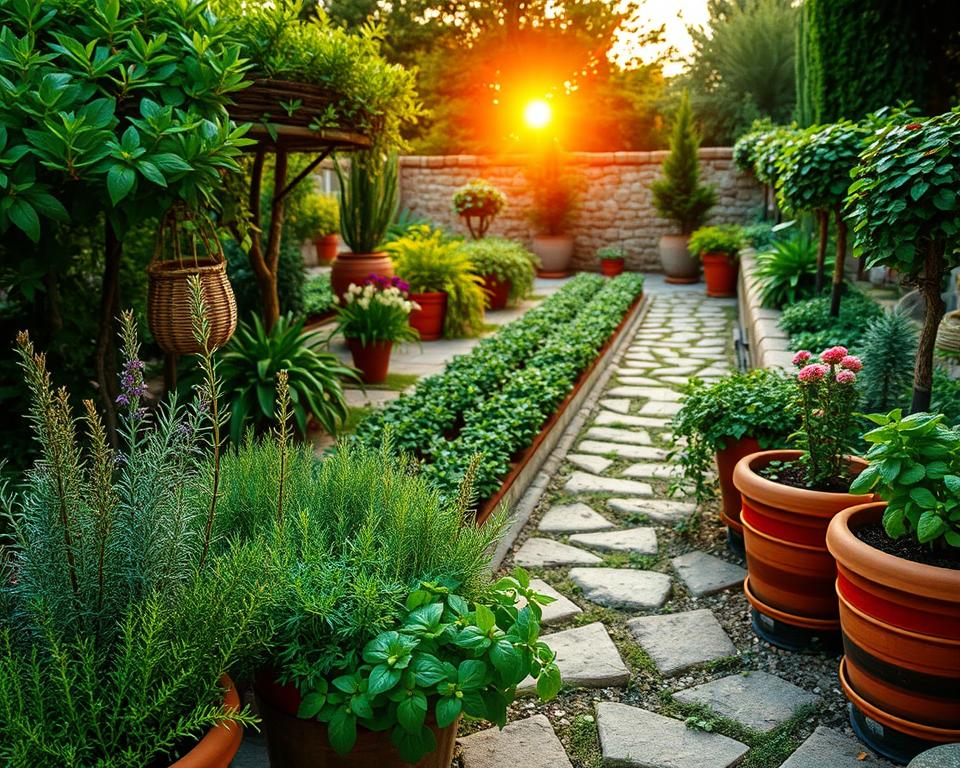
A Mediterranean garden is incomplete without the inclusion of classic herbs that define the region’s culinary identity. These herbs not only add fragrance and beauty to your garden but also provide fresh ingredients for cooking.
Creating a Dedicated Herb Garden
To fully appreciate the benefits of Mediterranean herbs, consider creating a dedicated herb garden. This can be a separate section of your garden or integrated into existing beds. Ensure the area receives plenty of sunlight and has well-draining soil, as most Mediterranean herbs thrive in such conditions.
Best Culinary and Aromatic Herbs to Plant
Mediterranean cuisine is renowned for its use of aromatic herbs. Some of the most popular and versatile herbs include:
Rosemary, Thyme, and Lavender
Rosemary and thyme are staples in Mediterranean cooking, offering piney and earthy flavors respectively. Lavender, while often used in potpourri, can also be used in baking and as a calming herb in teas.
Sage, Oregano, and Basil
Sage adds a savory flavor to dishes, particularly in stuffing and roasted meats. Oregano is a key ingredient in Greek cuisine, often used in tomato sauces and salad dressings. Basil, while commonly associated with Italian cuisine, is also used in Mediterranean cooking, especially in salads and pesto.
By incorporating these herbs into your garden, you can enhance your outdoor space’s beauty and functionality, while also enriching your culinary experiences.
Choosing Drought-Resistant Perennials and Flowers
To achieve a lush yet drought-tolerant Mediterranean garden, you need to select perennials and flowers that can withstand dry spells. Drought-resistant plants are not only sustainable but also reduce the need for frequent watering, making them ideal for water-conscious gardening. The right choice of perennials and flowers can add vibrant colours and textures to your garden throughout the year.
Colourful Mediterranean Perennials for UK Gardens
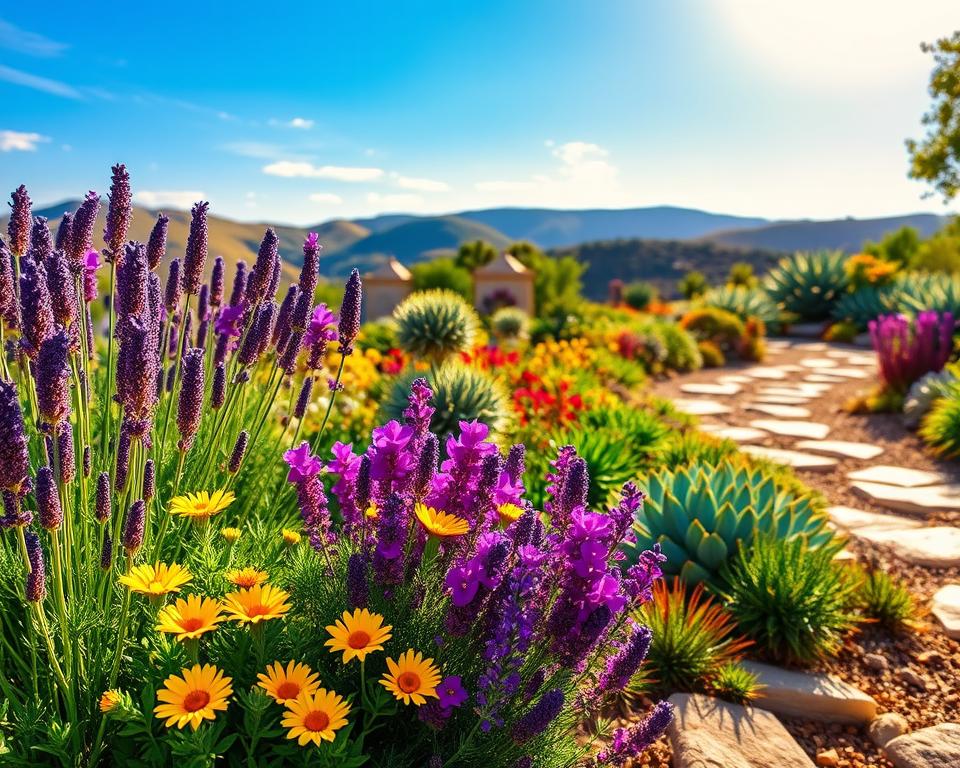
The UK’s temperate climate allows for a wide range of Mediterranean perennials to thrive. Plants like Lavandula (Lavender) and Rosmarinus offic Page inalis (Rosemary) are not only drought-resistant but also provide beautiful blooms and fragrances. Other colourful options include Salvia and Phlomis, which attract pollinators and add depth Page to your garden.
When selecting perennials, consider their hardiness and ability to survive the UK’s occasional harsh winters. Plants like Stachys byzantina (Lamb’s Ear) and Phlox are excellent choices, offering both resistance to drought and cold hardiness.
| Plant | Flowering Period | Drought Tolerance |
|---|---|---|
| Lavender | Summer | High |
| Rosemary | Spring Page omes Summer | High |
| Salvia | Summer | Medium Page igh |
Seasonal Planting Schedule
Understanding when to plant your Mediterranean perennials and flowers is crucial for their survival and success. In the UK, the best time to plant drought-resistant perennials is during the spring or early autumn. These periods Page offer mild temperatures and adequate moisture, helping plants establish a strong root system before the dry summer months.
For a vibrant display, consider planting bulbs like Tulipa (Tulips) in the autumn. They will bloom in the spring, adding a splash of colour to your garden before the heat of summer. In the spring, planting perennials like Phlox and Delphinium can provide a beautiful display throughout the summer.
By following a seasonal planting schedule and choosing the right drought-resistant perennials and flowers, you can enjoy a thriving Mediterranean garden that is both beautiful and sustainable.
How to Create a Mediterranean Garden in the British Climate
Adapting Mediterranean gardening principles to the UK’s temperate maritime climate is key to success. You can create a thriving Mediterranean-style garden in Britain by understanding the local climate challenges and making informed decisions about garden design and plant selection.
Adapting Mediterranean Principles to UK Weather
The UK’s climate is generally cooler and wetter than the Mediterranean region. To adapt, focus on plants that are resilient to the local weather conditions. Choose plants that can tolerate the UK’s cooler summers and colder winters.
Key Plant Selection Tips:
- Opt for hardy, drought-tolerant plants.
- Select plants with good cold tolerance.
- Consider native UK plants that fit the Mediterranean aesthetic.
Winter Protection Strategies
Protecting your Mediterranean garden from harsh UK winters is crucial. Implementing winter protection strategies will help your plants survive the cold weather.
Protecting Tender Plants
For tender plants, use fleece or bubble wrap to insulate them from frost. Bring potted plants under cover or move them to a sheltered location.
Creating Microclimates
Create microclimates in your garden by using walls, fences, or other features to shelter plants from harsh winds and frost. This can help extend the range of plants you can grow.
| Microclimate Feature | Benefit |
|---|---|
| South-facing walls | Warmth absorption and frost protection |
| Shelter belts | Wind protection |
| Greenhouses | Extended growing season and frost protection |
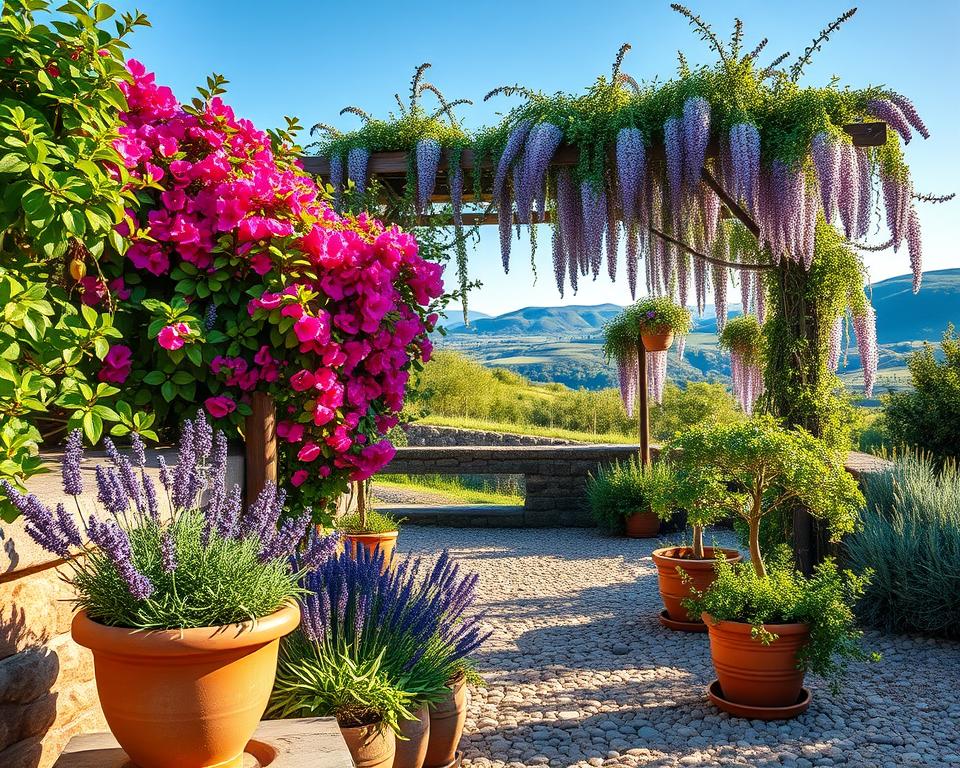
By adapting Mediterranean gardening principles to the UK climate and implementing effective winter protection strategies, you can enjoy a beautiful and thriving Mediterranean-style garden in Britain.
Designing with Hardscaping Elements
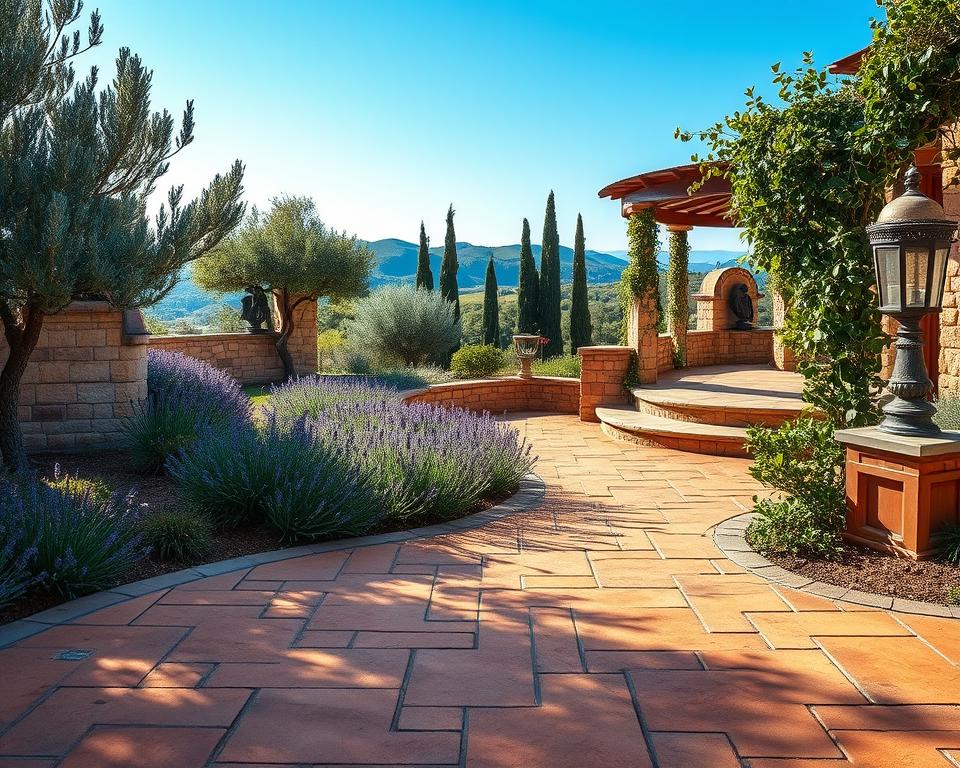
To bring your Mediterranean garden to life, it’s essential to thoughtfully integrate hardscaping features that enhance its natural beauty. Hardscaping elements such as patios, walls, and pathways are not just functional; they also play a crucial role in defining the aesthetic of your garden.
Patios, Walls, and Terraces
Patios, walls, and terraces are fundamental components of a Mediterranean garden. A well-designed patio can serve as an outdoor living area, perfect for relaxation or entertainment. When constructing walls and terraces, consider using natural stone or brick to create a seamless blend with the surrounding landscape.
Terracing is particularly useful in gardens with sloping terrain, as it helps to create flat areas for planting and reduces soil erosion. Incorporating retaining walls can also add visual interest and help to define different areas within the garden.
| Material | Characteristics | Uses in Mediterranean Gardens |
|---|---|---|
| Natural Stone | Durable, timeless, and versatile | Patios, walls, pathways |
| Brick | Classic, warm, and inviting | Patios, pathways, edging |
| Gravel | Low maintenance, permeable | Pathways, mulching |
Paths and Stepping Stones
Paths and stepping stones are not only practical but also contribute to the overall charm of your Mediterranean garden. Meandering paths can guide visitors through different areas of the garden, while stepping stones can help navigate through planted areas without damaging the plants.
When designing paths, consider using materials that complement the garden’s aesthetic, such as natural stone, brick, or gravel. The choice of material can significantly impact the garden’s overall look and feel.
Adding Water Features to Your Mediterranean Garden
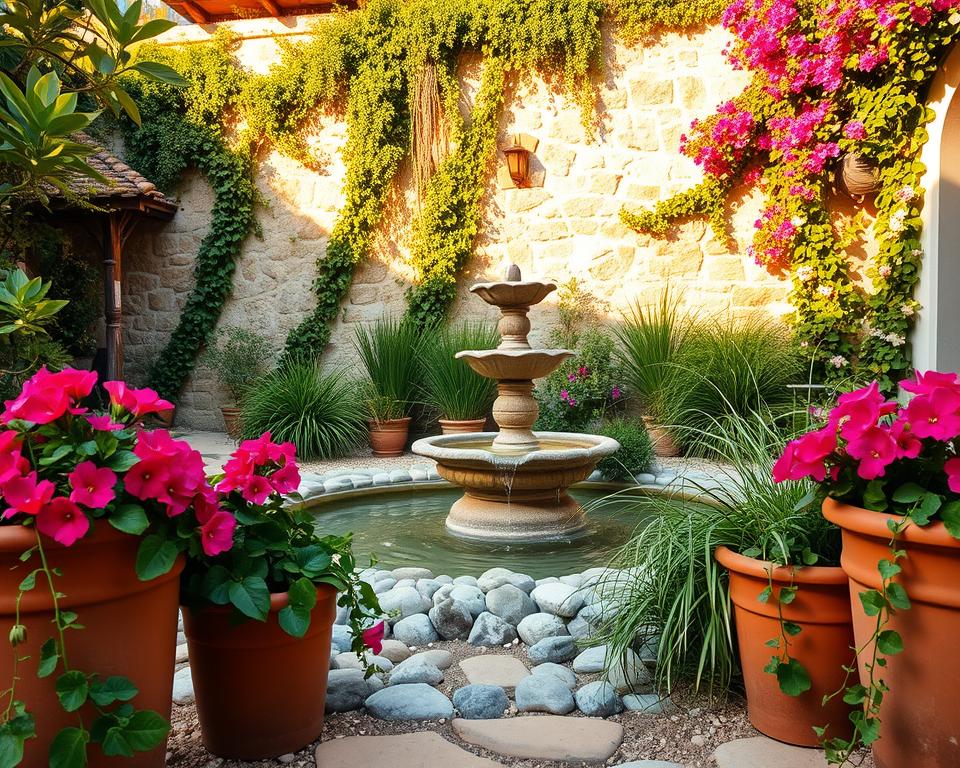
To create an authentic Mediterranean garden experience, consider adding water features that bring a sense of calm and relaxation. Water features are a quintessential element of Mediterranean garden design, contributing to the overall ambiance and visual appeal.
Simple Fountains and Water Basins
Page
Simple fountains and water basins are popular choices for Mediterranean Page gardens. They not only add visual interest but also create a soothing sound of running water, enhancing the sensory Page experience. When selecting a fountain or water basin, consider the scale and style that will complement your garden’s design.
Water-Efficient Irrigation Systems
Incorporating water-efficient irrigation systems is crucial for maintaining a sustainable Mediterranean garden. These systems ensure that plants receive the right amount of water without wasting this precious resource. Modern irrigation systems can be programmed to optimize water usage, making them an essential component of a Mediterranean garden.
By incorporating water features and efficient irrigation systems, you can create a beautiful and sustainable Mediterranean garden that thrives in harmony with the environment Page Page.
Creating Mediterranean Garden Containers and Pots
The use of containers in Mediterranean gardening is a versatile and effective way to enhance your garden’s aesthetic appeal. Containers allow you to control the soil quality, drainage, and exposure to sunlight, making it easier to create an ideal environment for your plants. Moreover, they offer the flexibility to move plants around, adapting to changing weather conditions or rearranging your garden layout.
Selecting Appropriate Containers
When choosing containers for your Mediterranean garden, it’s essential to consider both functionality and aesthetics. Terracotta pots are a classic choice, offering a traditional Mediterranean look while providing good drainage. However, they can be prone to cracking in freezing temperatures, so it’s crucial to select frost-resistant options if you live in an area with cold winters. Other materials like ceramic, stone, and wood can also be used, each offering unique benefits and styles.

Container Planting Combinations
Creating attractive planting combinations in your containers is key to achieving a Mediterranean look. Consider pairing drought-tolerant plants like lavender and rosemary with flowering plants such as geraniums. This not only adds visual interest but also reflects the diverse flora found in Mediterranean regions. For a more structured look, combine plants with similar watering needs and growth habits.
| Plant Type | Watering Needs | Growth Habit |
|---|---|---|
| Lavender | Low | Bushy |
| Rosemary | Low | Upright |
| Geraniums | Moderate | Trailing |
By carefully selecting your containers and planting combinations, you can create a beautiful and thriving Mediterranean garden that brings joy and serenity to your outdoor space.
Incorporating Mediterranean Colour Schemes
A Mediterranean garden is not just about the plants; it’s also about creating a vibrant and inviting atmosphere through the use of characteristic colour schemes. The right colours can transport you to the sun-kissed Mediterranean coast, even if you’re gardening in the UK.
Working with Blues, Whites, and Terracottas
The classic Mediterranean colour palette is characterized by a harmonious blend of blues, whites, and terracottas. These colours are inspired by the region’s sea, sky, and architecture. To create a cohesive look, consider using:
- Soft blues and whites for a calming effect
- Terracotta pots and tiles to add warmth and depth
- Weathered stone and stucco finishes to create a rustic, aged appearance
Using Colourful Tiles and Decorative Elements
Colourful tiles and decorative elements are a hallmark of Mediterranean gardens. You can incorporate these elements to add visual interest and personality to your garden. Consider using:
- Hand-painted tiles or mosaics to create a unique focal point
- Decorative urns and planters in bold, vibrant colours
- Wrought ironwork or other metal decorative elements to add a touch of elegance

By incorporating these characteristic colours and decorative elements, you can create a Mediterranean garden that is both beautiful and authentic.
Establishing Outdoor Living Spaces
A well-designed outdoor living area can significantly enhance your Mediterranean garden’s ambiance and functionality. As you create your dream garden, it’s essential to consider how you will use the outdoor space for dining, relaxation, and entertainment.
Creating Dining and Relaxation Areas
To create inviting outdoor living spaces, start by designing distinct areas for dining and relaxation. You can achieve this by using outdoor furniture that complements Page your garden’s style. For dining areas, choose a sturdy table and comfortable chairs that can withstand the elements. Consider adding a pergola or a canopy to provide some Page Web sun protection and create a sense Vin Page era.
For relaxation areas, you can incorporate comfortable seating Page as loungers or sofas with plush cushions. Adding outdoor lighting can also enhance the ambiance of your outdoor living spaces, making them usable even in the evening.
Shade Structures and Pergolas
Shade structures are a crucial element in Mediterranean gardens, providing respite from the intense sun. Pergolas are particularly popular, as they offer partial shade and create a sense of separation between different areas of the garden. You can train climbing plants like wisteria or grapevines to grow over the pergola Page Web a natural canopy.
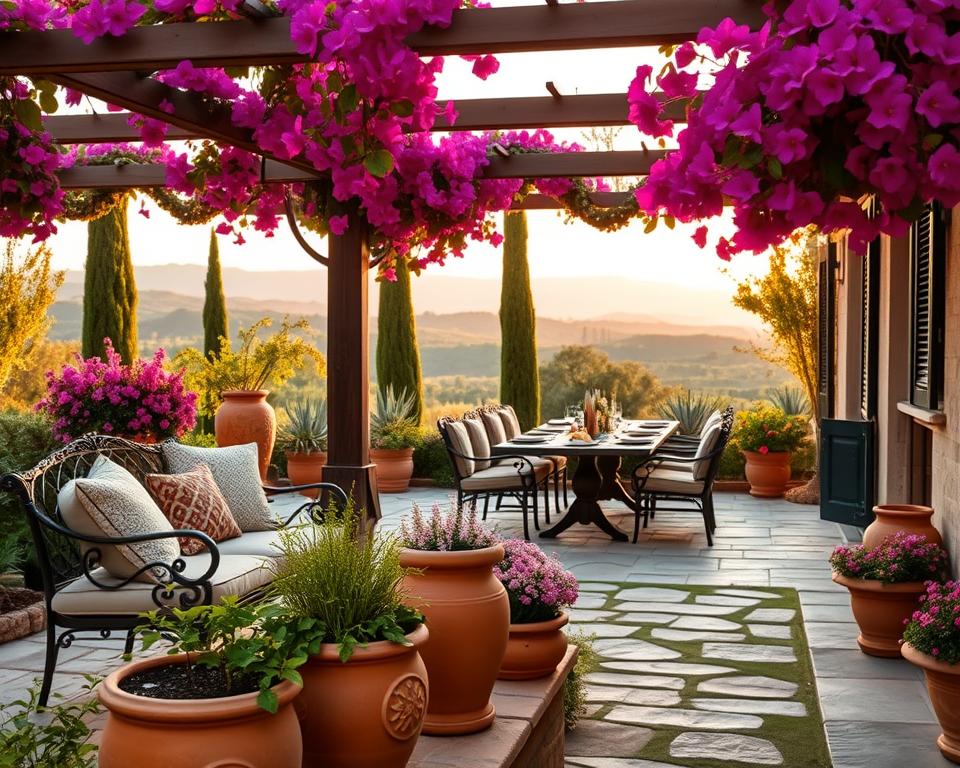
Other shade structures you can consider include gazebos, canopies, or even a simple umbrella for smaller areas. By incorporating these elements, you can create a comfortable and inviting outdoor living space that you’ll enjoy throughout the year.
“The garden is a love song, a duet between a human being and Mother Nature.”
Seasonal Maintenance of Your Mediterranean Garden
Seasonal maintenance is crucial for a lush and vibrant Mediterranean garden. As the seasons change, different tasks need to be performed to keep your garden healthy and thriving.
Spring and Summer Care
During spring and summer, your Mediterranean garden requires regular care to flourish. Key tasks include:
- Watering plants regularly, especially during hot spells
- Pruning shrubs and trees to maintain shape and promote healthy growth
- Feeding plants with a balanced fertilizer to support their growth
- Weeding regularly to prevent competition for water and nutrients
Effective watering is critical during the dry summer months. Consider installing a drip irrigation system to conserve water and reduce evaporation.
Autumn and Winter Preparations
As autumn and winter approach, prepare your Mediterranean garden for the cooler months. Essential tasks include:
- Clearing leaves and debris from paths and planting areas
- Protecting tender plants from frost using covers or bringing them under cover
- Pruning deciduous trees and shrubs during their dormant season
- Planning for spring by ordering new plants or seeds
Protecting your plants from frost is vital. Use breathable covers or fleece to shield them from cold damage.
Sustainable Practices in Mediterranean Gardening
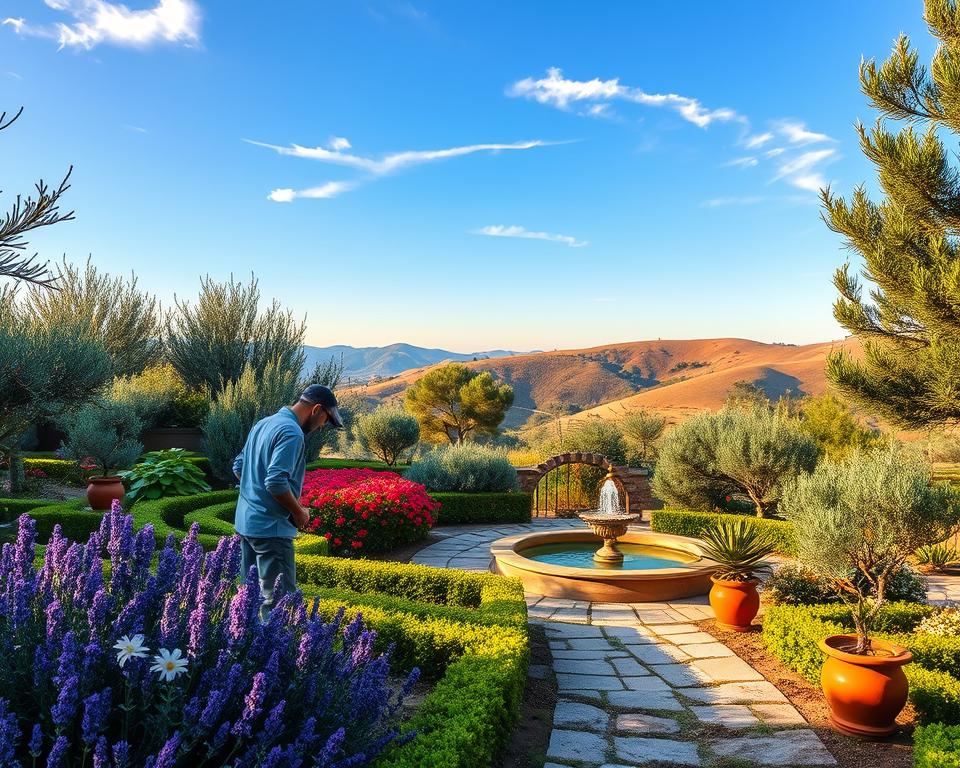
To cultivate a lush Mediterranean garden, adopting sustainable gardening methods is key. This involves implementing practices that not only conserve resources but also enhance the overall health of your garden.
Water Conservation Techniques
Water conservation is crucial in Mediterranean gardening due to the dry climate. You can implement several techniques to reduce water usage:
- Use drought-tolerant plants that require less watering.
- Implement mulching to retain soil moisture.
- Install rainwater harvesting systems to collect and store rainwater for irrigation.
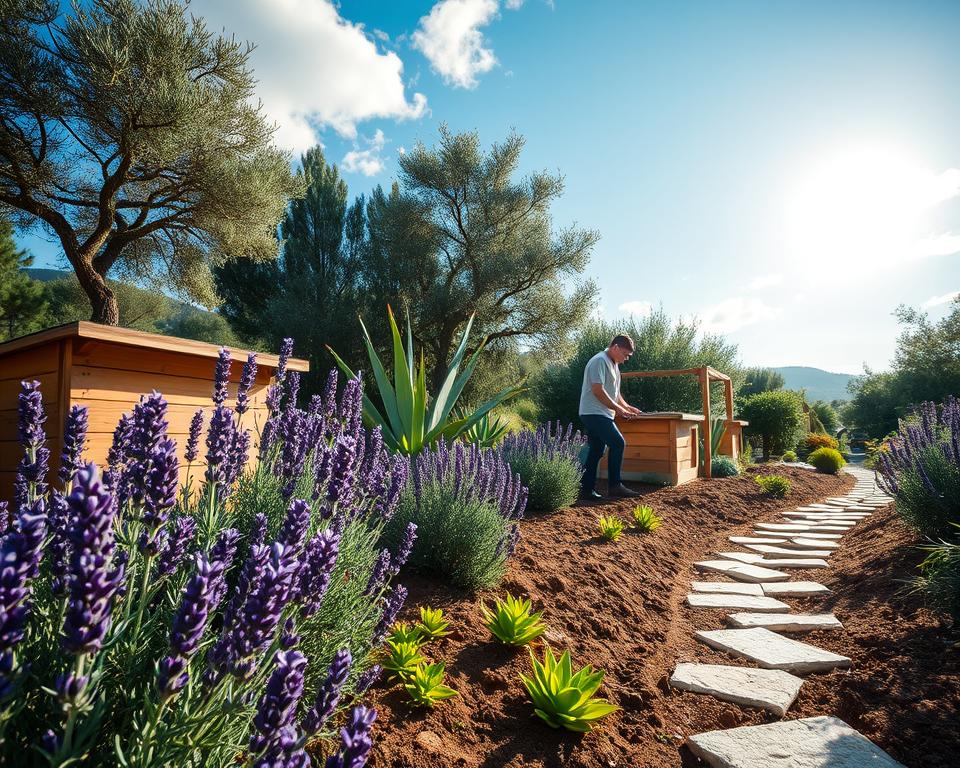
Natural Pest Control Methods
Natural pest control methods are essential for maintaining a balanced ecosystem in your Mediterranean garden. Some effective methods include:
- Encouraging beneficial insects, such as ladybugs and lacewings, which prey on pests.
- Using organic pest control products, such as neem oil and insecticidal soap.
- Implementing companion planting, where certain plants are grown together to deter pests.
By adopting these sustainable practices, you can create a thriving Mediterranean garden that is both beautiful and environmentally friendly.
Cultivating Your Mediterranean Oasis
As you embark on creating your Mediterranean garden, you’ll discover the perfect blend of beauty, functionality, and sustainability. By incorporating drought-tolerant plants, efficient irrigation systems, and natural materials, you’ll be crafting a haven that’s both visually stunning and environmentally friendly.
A well-designed Mediterranean garden not only enhances your outdoor living space but also supports sustainable gardening practices. By adopting water conservation techniques and using locally sourced materials, you’ll be reducing your environmental footprint while enjoying a lush, vibrant garden.
With careful planning and attention to detail, your Mediterranean garden will become a serene retreat, perfect for relaxation and entertainment. As you nurture your garden, you’ll appreciate the rewards of a thoughtful garden design that combines aesthetics with sustainable gardening principles.
FAQ
What are the key characteristics of a Mediterranean garden?
Mediterranean gardens are known for their use of drought-tolerant plants, terracotta pots, and natural stone features, creating a warm and inviting outdoor space.
How do I assess my garden’s potential for a Mediterranean makeover?
To assess your garden’s potential, consider factors such as sunlight, soil type, and existing vegetation, as well as the overall layout and hardscaping elements.
What plants are suitable for a Mediterranean garden in the UK?
Plants such as olive trees, rosemary, and lavender are well-suited to Mediterranean gardens in the UK, as they are drought-tolerant and can thrive in the local climate.
How do I prepare the soil for Mediterranean plants?
To prepare the soil, improve drainage by adding organic matter, and adjust the pH levels if necessary, as Mediterranean plants prefer well-draining soil with a slightly alkaline pH.
What hardscaping elements are typical in Mediterranean gardens?
Patios, walls, and terraces are common hardscaping elements in Mediterranean gardens, often made from natural stone or terracotta.
How can I incorporate water features into my Mediterranean garden?
Simple fountains and water basins are popular water features in Mediterranean gardens, and can be used to create a soothing and peaceful atmosphere.
What are some tips for maintaining a Mediterranean garden?
Regular maintenance tasks include pruning plants, checking for pests, and adjusting irrigation systems, as well as preparing the garden for seasonal changes.
How can I make my Mediterranean garden more sustainable?
To make your Mediterranean garden more sustainable, consider using water conservation techniques, such as drip irrigation, and natural pest control methods, such as introducing beneficial insects.
Can I create a Mediterranean garden in a shaded area?
While Mediterranean gardens are often associated with sunny conditions, you can still create a Mediterranean-style garden in a shaded area by selecting shade-tolerant plants and adjusting the design accordingly.
How do I protect my Mediterranean plants from harsh winters?
To protect your Mediterranean plants from harsh winters, consider using winter protection strategies, such as mulching, covering plants, or bringing potted plants under cover.