Create a Natural Garden: Your Guide to Sustainable Landscaping

Transforming your outdoor space into an eco-friendly haven not only enhances its beauty but also contributes to a healthier environment. By adopting sustainable landscaping practices, you can create a natural garden that thrives in harmony with nature.
As you embark on this journey, you’ll discover the numerous benefits of working with nature, from reducing your environmental footprint to creating a tranquil oasis for relaxation and entertainment. A natural garden is not just aesthetically pleasing; it’s also a haven for local wildlife and a testament to your commitment to the environment.
Inhaltsverzeichnis
Key Takeaways
- Implementing sustainable landscaping practices reduces environmental impact.
- A natural garden promotes biodiversity and supports local wildlife.
- Eco-friendly gardening methods conserve resources and minimise waste.
- Sustainable gardening practices enhance the beauty and functionality of your outdoor space.
- A well-designed natural garden increases property value and appeal.
The Philosophy Behind Natural Gardens
A natural garden is more than just a beautiful outdoor space; it’s a reflection of a deeper philosophy that prioritizes the environment. This approach to gardening is centred around creating a harmonious relationship between your outdoor space and nature.
What Makes a Garden “Natural”?
A garden is considered “natural” when it’s designed and maintained in a way that works with, rather than against, the natural environment. This involves using native plants, minimizing waste, and reducing the need for chemical pesticides and fertilizers. By adopting these practices, you create a haven for local wildlife and contribute to a healthier ecosystem.
The Environmental Benefits of Sustainable Landscaping
Sustainable landscaping offers numerous environmental benefits, including:
- Conservation of water through efficient irrigation systems
- Reduction in carbon emissions by minimizing the use of machinery and chemical products
- Protection of biodiversity by creating habitats for native species
By embracing sustainable landscaping, you’re not only enhancing your garden but also contributing to a more sustainable future.
Economic Advantages of Natural Gardens
Natural gardens also offer economic advantages, such as reduced maintenance costs over time. By using native plants and minimizing the need for fertilizers and pesticides, you save money. Additionally, a well-designed natural garden can increase your property’s value, making it more attractive to potential buyers if you decide to sell.
Assessing Your Outdoor Space
Understanding your outdoor space is crucial for creating a sustainable and thriving natural garden. This involves evaluating various aspects of your garden to determine its unique characteristics and potential.
Evaluating Soil Conditions
You should start by assessing your soil type and quality. This can be done by testing the pH level and nutrient content. Soil testing kits are readily available at most gardening stores.
Understanding Your Climate and Microclimate
Your local climate and microclimate play a significant role in determining which plants will thrive. Consider factors like sunlight, rainfall, and wind patterns. Microclimates within your garden may vary, offering opportunities for diverse planting.
Identifying Existing Natural Features
Take stock of any existing natural features, such as trees, slopes, or water bodies. These features can be incorporated into your garden design, enhancing biodiversity and reducing the need for extensive landscaping.

Planning Your Natural Garden Design
Creating a natural garden involves understanding and working with the natural features of your landscape. This approach not only enhances the beauty of your outdoor space but also contributes to a more sustainable environment.
Working with Nature, Not Against It
When designing your natural garden, it’s crucial to observe and work with the existing natural elements. This includes understanding your soil type, the slope of your land, and the local wildlife. By doing so, you create a garden that is in harmony with nature, reducing the need for extensive maintenance and external inputs.
Creating Functional Zones
Dividing your garden into functional zones can enhance its usability and ecological value. Consider creating areas for:
- Relaxation and recreation
- Vegetable and herb cultivation
- Wildlife habitats
This zoning not only adds variety to your garden but also supports a range of activities and biodiversity.
Balancing Aesthetics and Ecology
A natural garden should be both beautiful and ecologically sound. To achieve this balance, consider incorporating native plants, which are naturally adapted to your local climate and soil conditions. 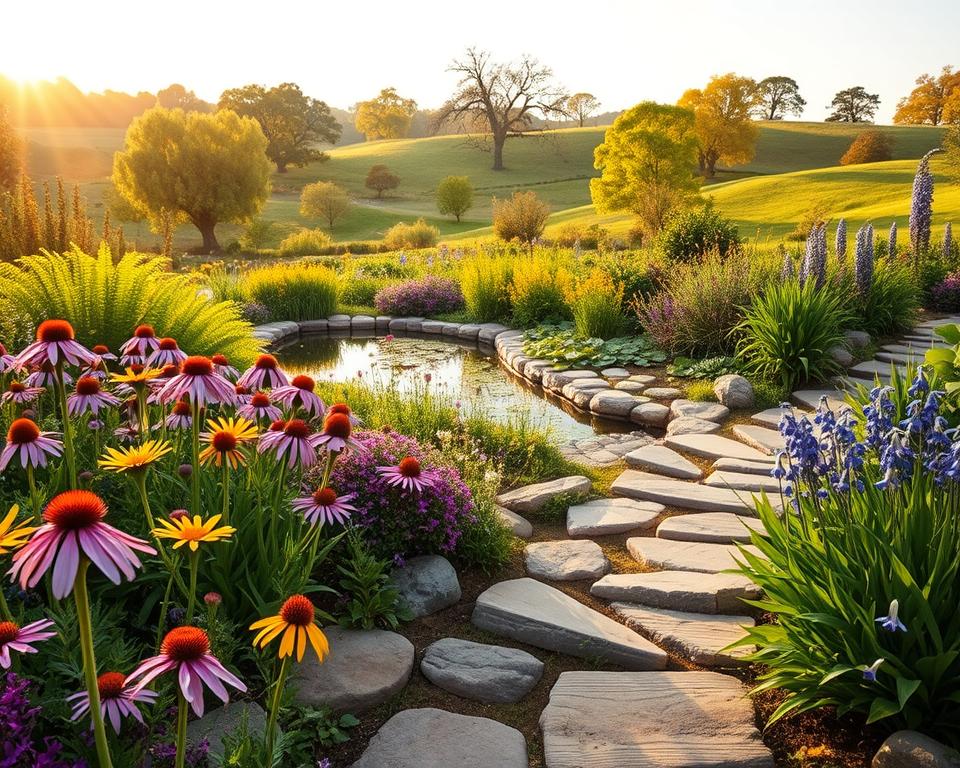
By combining aesthetic considerations with ecological principles, you can create a garden that is not only visually appealing but also sustainable and beneficial to the local ecosystem.
Key considerations include using natural materials for hardscaping and minimizing water usage through efficient irrigation systems.
Soil Health: The Foundation of Your Natural Garden
The health of your soil directly impacts the success of your natural garden, influencing everything from plant vigour to ecosystem balance. A well-maintained soil ecosystem is teeming with life, from bacteria and fungi to earthworms, all playing a crucial role in nutrient cycling and soil structure.
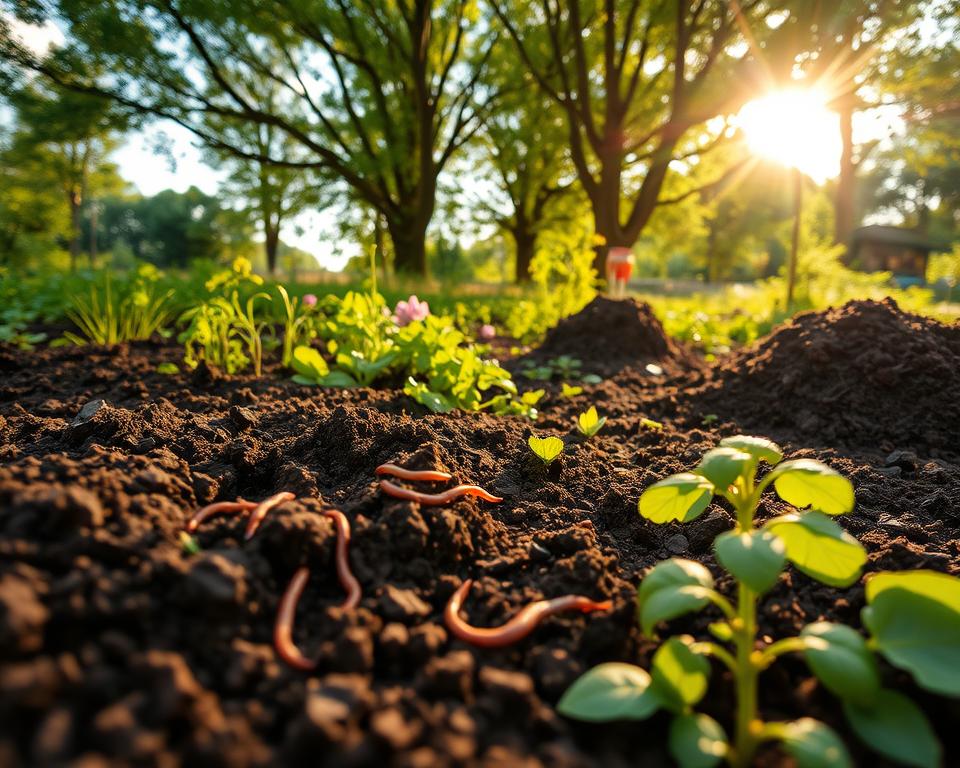
Testing and Improving Soil Quality
To understand your soil’s condition, start by testing its pH and nutrient levels. You can purchase a DIY soil testing kit or send a sample to a laboratory for a more detailed analysis. Based on the results, you can then take steps to improve your soil quality, such as adding organic matter like compost or manure to enhance its fertility and structure.
Improving soil quality not only benefits your plants but also contributes to a healthier environment by increasing the soil’s carbon sequestration potential and supporting biodiversity.
Composting Essentials for British Gardens
Composting is a vital practice for any natural garden, turning waste into a valuable resource. For British gardens, it’s essential to compost materials that are locally available and suitable for the climate. Green waste, such as vegetable peels and grass clippings, mixed with brown waste like dried leaves and straw, creates a balanced compost pile. Regular turning and maintaining the right moisture level are crucial for efficient decomposition.
No-Dig Gardening Methods
No-dig gardening is an approach that minimizes soil disturbance, preserving its structure and the organisms living within it. This method involves layering organic matter on top of the soil, allowing it to break down over time. It’s an effective way to improve soil health without the need for tilling, which can damage soil ecosystems. By adopting no-dig gardening, you can create a more sustainable and low-maintenance natural garden.
Selecting Native Plants for Your Region
Native plants are the backbone of a natural garden, providing beauty and ecological balance. By choosing plants that are indigenous to your region, you create a garden that is not only visually appealing but also supports local biodiversity and requires less maintenance.
Benefits of Indigenous Plant Species
Indigenous plant species have evolved over thousands of years to thrive in local conditions. They are naturally adapted to the soil, climate, and pests of your area, making them an ideal choice for a low-maintenance garden. Some key benefits include:
- Resilience: Native plants are more resistant to local pests and diseases, reducing the need for pesticides and fertilizers.
- Biodiversity Support: They provide food and habitat for native wildlife, such as bees, butterflies, and birds.
- Water Efficiency: Native plants are adapted to local rainfall patterns, requiring less watering.
Best Native Plants for UK Gardens
The UK has a diverse range of native plants suitable for different garden conditions. Some popular choices include:
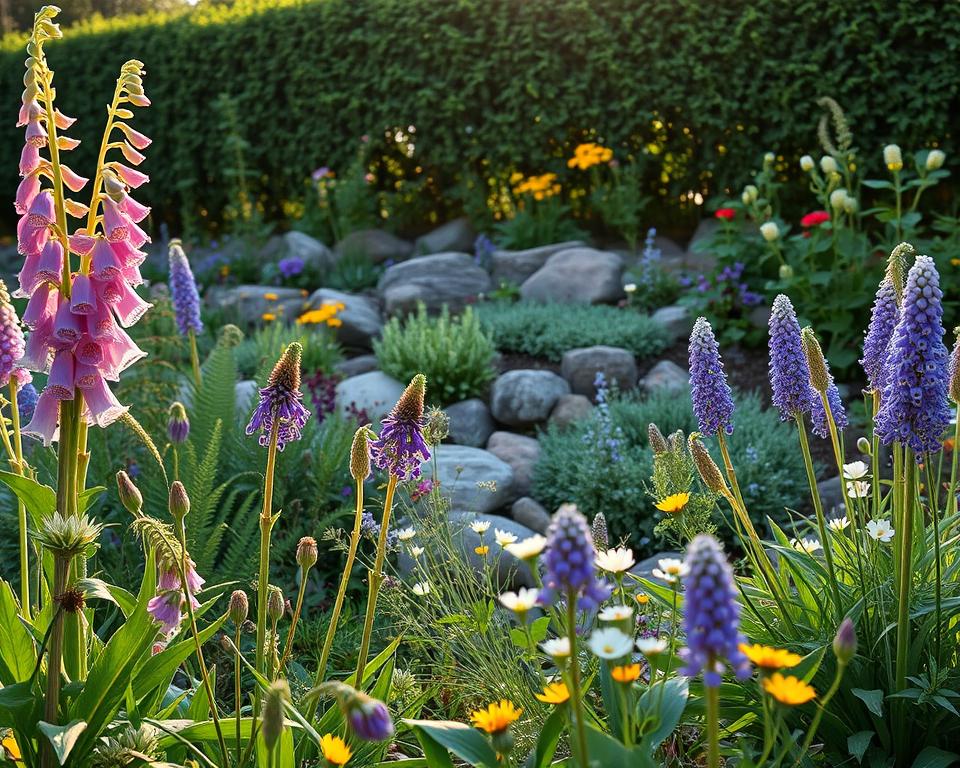
- Foxglove (Digitalis purpurea): A tall, stately flower that attracts pollinators.
- Bluebell (Hyacinthoides non-scripta): A beautiful spring-flowering bulb that thrives in woodland gardens.
- Heather (Erica cinerea): Ideal for acidic soils, heather provides a vibrant display of color in late summer.
Creating Plant Communities
To maximize the benefits of native plants, it’s essential to create diverse plant communities. This involves selecting a variety of plants that work together to create a balanced ecosystem. Consider the following:
- Layering: Incorporate plants of different heights and growth habits to create a layered effect.
- Diversity: Choose a mix of plants that flower at different times to provide year-round interest and support for wildlife.
- Companion Planting: Some plants benefit from being grown alongside others; for example, planting marigolds with tomatoes can deter pests.
By carefully selecting native plants and creating diverse plant communities, you can enjoy a vibrant, sustainable garden that supports local biodiversity.
How to Create a Natural Garden That Supports Wildlife
Creating a wildlife-friendly garden is a rewarding way to support local biodiversity. By incorporating a variety of plants and features that attract and support different species, you can turn your outdoor space into a thriving ecosystem.
Plants That Attract Pollinators
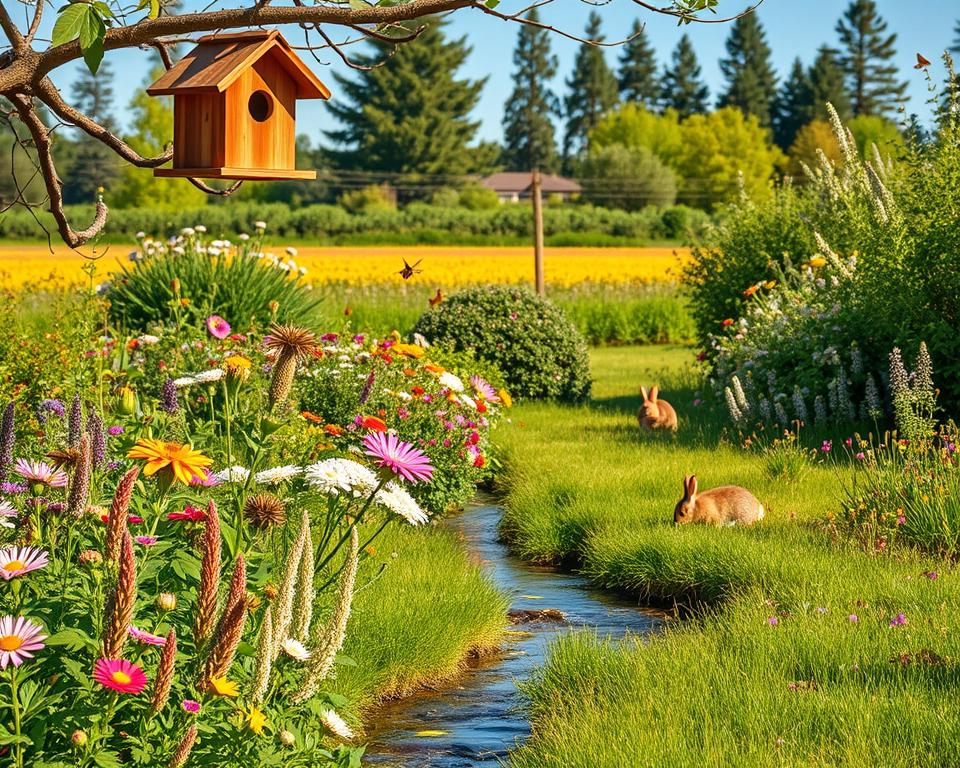
One of the most effective ways to support wildlife in your garden is by planting a variety of flowers that attract pollinators. Native wildflowers such as lavender, coneflower, and black-eyed Susan are excellent choices because they provide nectar and pollen for bees, butterflies, and other pollinators. Consider planting a mix of annuals and perennials to ensure a constant source of food throughout the growing season.
Creating Habitats for Birds and Beneficial Insects
In addition to pollinator-friendly plants, you can create habitats for birds and beneficial insects by incorporating specific features into your garden. For birds, consider installing a birdbath or a nesting box. For beneficial insects like ladybugs and lacewings, provide shelter by leaving some areas of your garden untidy or by creating a log pile.
Building Wildlife Corridors
Wildlife corridors are essential for connecting isolated habitats and allowing species to move freely through the landscape. In your garden, you can create a wildlife corridor by planting a hedge or a row of trees that connects to nearby natural areas. This not only supports local biodiversity but also enhances the overall ecosystem.
By implementing these strategies, you can create a natural garden that not only supports wildlife but also provides a beautiful and dynamic outdoor space for you to enjoy.
Water Conservation Techniques
As you design your natural garden, incorporating water conservation techniques is essential for sustainability. Conserving water not only reduces your environmental footprint but also helps in creating a resilient garden that can withstand periods of drought.
Rainwater Harvesting Systems
One of the most effective ways to conserve water is by harvesting rainwater. Installing a rainwater harvesting system allows you to collect and store rainwater for later use, reducing your reliance on mains water. This can be as simple as placing a barrel under a downspout or as complex as installing a large underground tank.
Benefits of Rainwater Harvesting:
- Reduces stormwater runoff
- Provides a free source of water for irrigation
- Lessens the demand on mains water supply
Efficient Irrigation Methods
Efficient irrigation is crucial for minimizing water waste. Techniques such as drip irrigation deliver water directly to the roots of plants, reducing evaporation and runoff. Soaker hoses are another effective method, providing a slow and steady supply of water to the soil.
Tips for Efficient Irrigation:
- Water plants in the early morning or late evening to minimize evaporation
- Use mulch to retain soil moisture
- Regularly inspect your irrigation system for leaks
Drought-Resistant Planting Strategies
Selecting plants that are resistant to drought is a proactive approach to water conservation. These plants typically have deep roots or specialized leaves that enable them to survive with minimal watering. Incorporating drought-resistant plants into your garden not only saves water but also reduces maintenance.
| Plant Type | Water Requirement | Maintenance Level |
|---|---|---|
| Drought-Resistant Plants | Low | Low |
| Native Plants | Medium | Medium |
| Water-Loving Plants | High | High |
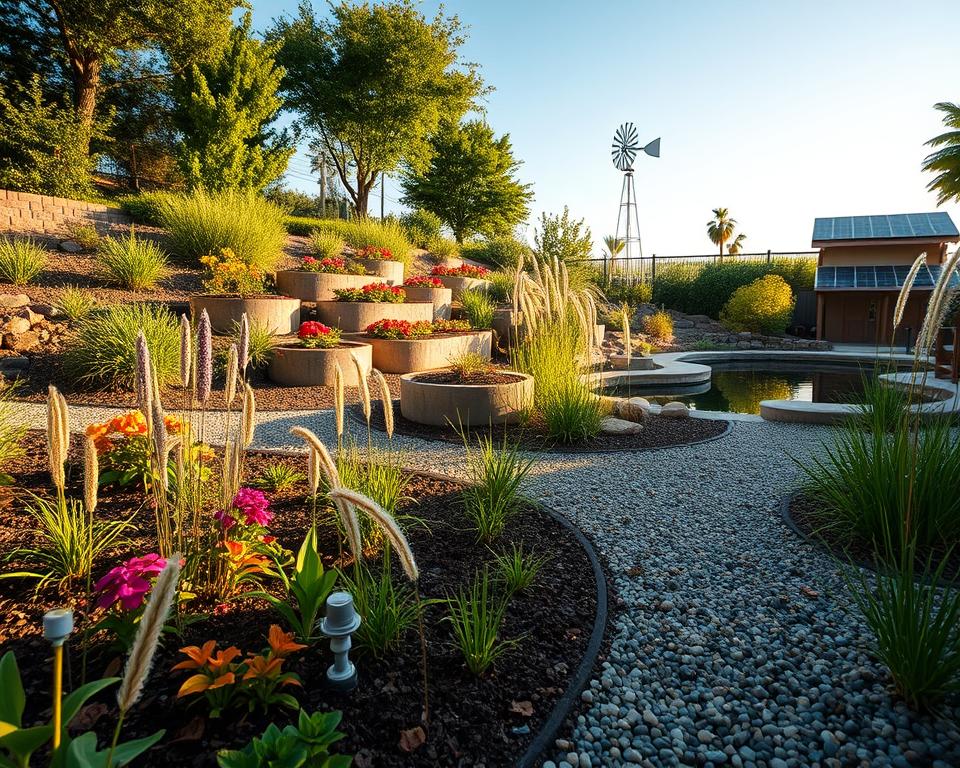
By implementing these water conservation techniques, you can significantly reduce your garden’s water usage while maintaining its beauty and biodiversity. Whether you’re harvesting rainwater, using efficient irrigation methods, or planting drought-resistant species, every step counts towards a more sustainable future.
Natural Lawn Alternatives
If you’re looking to reduce your garden’s environmental footprint, consider natural lawn alternatives. Traditional lawns can be resource-intensive, requiring regular mowing, watering, and fertilizing. By transitioning to more sustainable options, you can create a beautiful and eco-friendly outdoor space.
Meadow Gardens and Wildflower Patches
Meadow gardens and wildflower patches are vibrant alternatives to traditional lawns. They require less maintenance and support local biodiversity. Wildflowers attract pollinators and add color to your garden throughout the growing season.

Low-Maintenance Groundcovers
Low-maintenance groundcovers are another option for those looking to reduce lawn care. Plants like creeping thyme or vinca minor spread easily and require minimal upkeep. They can thrive in poor soil conditions, making them ideal for challenging areas.
Transitioning from Traditional Lawns
Transitioning from a traditional lawn to a natural alternative requires some planning. Start by assessing your soil and choosing plants that are suitable for your climate.
“The best way to get started is to quit talking and begin doing.” – Walt Disney
Gradually replace your lawn with your chosen alternative, and enjoy the benefits of a more sustainable garden.
Sustainable Hardscaping Materials and Methods
The use of sustainable hardscaping materials and methods is vital for reducing the environmental footprint of your garden. Hardscaping elements such as paths, patios, and retaining walls can significantly impact the ecological balance of your outdoor space. By choosing sustainable options, you can create a beautiful and functional garden that supports local biodiversity.

Permeable Paving Options
One effective way to make your hardscaping more sustainable is by using permeable paving. Unlike traditional impermeable surfaces, permeable paving allows rainwater to percolate through, reducing runoff and alleviating pressure on drainage systems. Materials like porous asphalt, permeable concrete pavers, and gravel are excellent choices. These options not only help manage stormwater but also reduce the risk of flooding and erosion.
Reclaimed and Local Materials
Using reclaimed and local materials for hardscaping is another sustainable approach. Reclaimed wood, bricks, and stones can add character to your garden while reducing the demand for new materials. Locally sourced materials, on the other hand, minimize transportation emissions. For instance, a quote from the
“Sustainable Building Sourcebook” highlights that “using local materials can reduce the carbon footprint associated with transportation by up to 90%.”
Always look for materials that have been certified by environmental standards to ensure their sustainability.
Reducing Environmental Impact in Construction
When constructing hardscaping features, it’s crucial to adopt methods that reduce environmental impact. This includes minimizing excavation, using manual labor where possible, and selecting materials with low embodied energy. Additionally, consider the long-term maintenance requirements of your hardscaping elements to avoid unnecessary repairs or replacements.
By incorporating these sustainable hardscaping materials and methods into your garden design, you can create an eco-friendly outdoor space that is both functional and aesthetically pleasing.
Natural Pest and Disease Management
A healthy garden ecosystem is resilient to pests and diseases, but achieving this balance requires a thoughtful approach to garden management. You can create a thriving natural garden by implementing effective natural pest control methods that work in harmony with your garden’s ecosystem.
Companion Planting Strategies
Companion planting is a simple yet effective method of natural pest control. By choosing the right plants to grow together, you can deter pests and enhance the overall health of your garden. For example, planting marigolds with tomatoes can help deter nematodes, while basil repels aphids and improves the flavor of nearby vegetables.
| Companion Plant | Pest Control Benefit |
|---|---|
| Marigold | Repels nematodes and attracts beneficial insects |
| Basil | Repels aphids and improves flavor of nearby vegetables |
| Nasturtium | Repels aphids, whiteflies, and other pests |
Encouraging Beneficial Predators
Beneficial predators are a crucial part of a balanced garden ecosystem. By creating a welcoming environment for these helpful creatures, you can reduce the need for pesticides and maintain a healthy balance in your garden. Plants like lavender and rosemary attract beneficial insects, while a pond or water feature can attract birds and other predators that feed on pests.

Organic Solutions for Common Garden Problems
Despite your best efforts, pests and diseases can still occur. When they do, it’s essential to have a range of organic solutions at your disposal. For example, neem oil is effective against a wide range of pests, while copper-based fungicides can help control fungal diseases. Always choose products that are certified for organic gardening to ensure they align with your natural gardening principles.
By adopting these natural pest and disease management strategies, you can protect your garden while maintaining its ecological integrity. This not only benefits your garden but also contributes to a healthier environment.
Creating Water Features in Your Natural Garden
A well-designed water feature can transform your natural garden into a haven for both plants and animals. Water features not only add visual appeal but also play a crucial role in supporting local biodiversity.
Wildlife Ponds and Bog Gardens
Creating a wildlife pond or bog garden can be a fantastic way to attract a variety of species to your garden. These water features provide essential habitats for amphibians, insects, and birds. When designing a wildlife pond, consider using native plants and avoiding steep edges to ensure safety for wildlife.
Rain Gardens for Managing Runoff
Rain gardens are another effective way to manage water in your natural garden. By capturing rainwater runoff, these gardens help reduce the burden on drainage systems and prevent erosion. Planting native vegetation in rain gardens can also enhance their ability to filter pollutants from the water.
Sustainable Water Feature Maintenance
Maintaining your water features sustainably is crucial for their longevity and ecological benefit. This includes using natural methods to control algae and pests, and ensuring that the water remains clean and clear. Regular checks on the water feature’s structure and ecosystem will help in identifying any issues early on.
Key Tips for Sustainable Water Feature Maintenance:
- Use natural filtration methods
- Avoid using chemical pesticides
- Monitor water quality regularly
- Encourage biodiversity by planting native vegetation
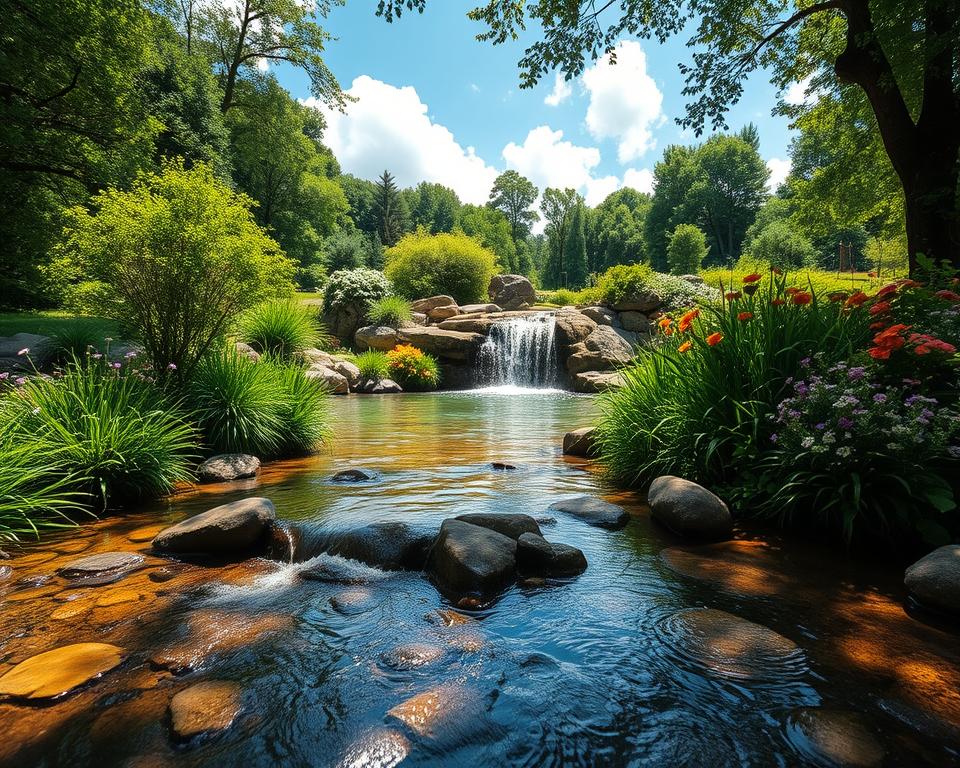
By incorporating these elements, you can create a thriving natural garden that not only supports local wildlife but also provides a serene and beautiful outdoor space for you to enjoy.
Vertical Gardening and Space Optimisation
Vertical gardening is an innovative way to make the most of small spaces, transforming walls into lush, vibrant gardens. This approach not only enhances the aesthetic appeal of your outdoor or indoor space but also contributes to a healthier environment by increasing green areas.
One of the key elements of vertical gardening is the use of living walls and green screens. These structures are designed to support a variety of plants, from flowering species to edible herbs, and can be tailored to fit different spaces and design preferences.
Living Walls and Green Screens
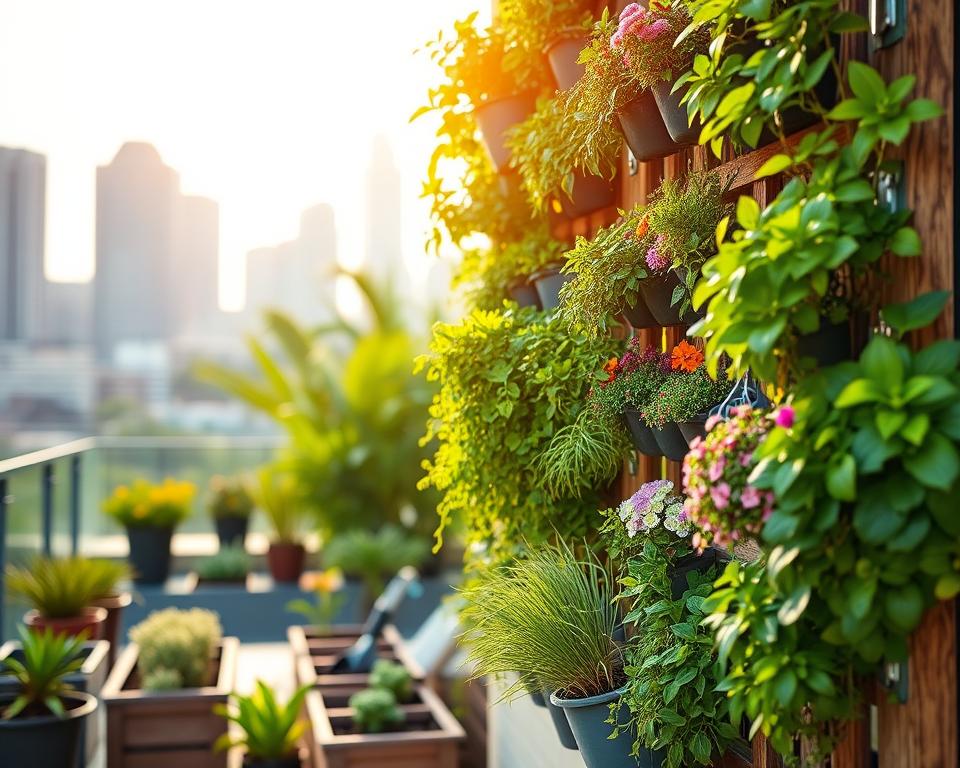
Living walls, also known as green walls, are vertical structures that are partially or completely covered with vegetation. They are typically integrated into a wall or stand alone, and can be used indoors or outdoors. Green screens, on the other hand, are often used to create a natural screen or divider, providing privacy and reducing noise pollution.
Climbing Plants for Structure and Wildlife
Climbing plants are another essential component of vertical gardening. They can be trained to grow up trellises, arbors, or other supports, adding structure and beauty to your garden. Moreover, these plants provide habitat and food for various wildlife, including birds, bees, and butterflies.
“Climbing plants can transform a dull wall into a vibrant tapestry of foliage and flowers, enhancing biodiversity in urban environments.”
Maximising Biodiversity in Small Spaces
To maximise biodiversity in small spaces, it’s crucial to select a diverse range of plants that attract different types of wildlife. This includes incorporating native plants, which are more likely to attract local pollinators and other beneficial organisms.
| Plant Type | Benefits | Examples |
|---|---|---|
| Climbing Plants | Provide structure, habitat for wildlife | Clematis, Ivy, Honeysuckle |
| Living Walls | Increase green space, improve air quality | Various succulents, herbs, ferns |
| Green Screens | Offer privacy, reduce noise | Bamboo, flowering climbers |
By incorporating these elements, you can create a thriving vertical garden that not only beautifies your space but also supports local biodiversity.
Seasonal Maintenance for Natural Gardens
Seasonal maintenance is crucial for the longevity and biodiversity of your natural garden. As a natural gardener, understanding the tasks required for each season will help you create a thriving ecosystem.
Spring and Summer Tasks
During spring, focus on clearing away debris that has accumulated over winter. This is also the ideal time to divide and replant perennials that have become overcrowded. In summer, maintain your garden by watering wisely and controlling weeds through mulching or manual removal.
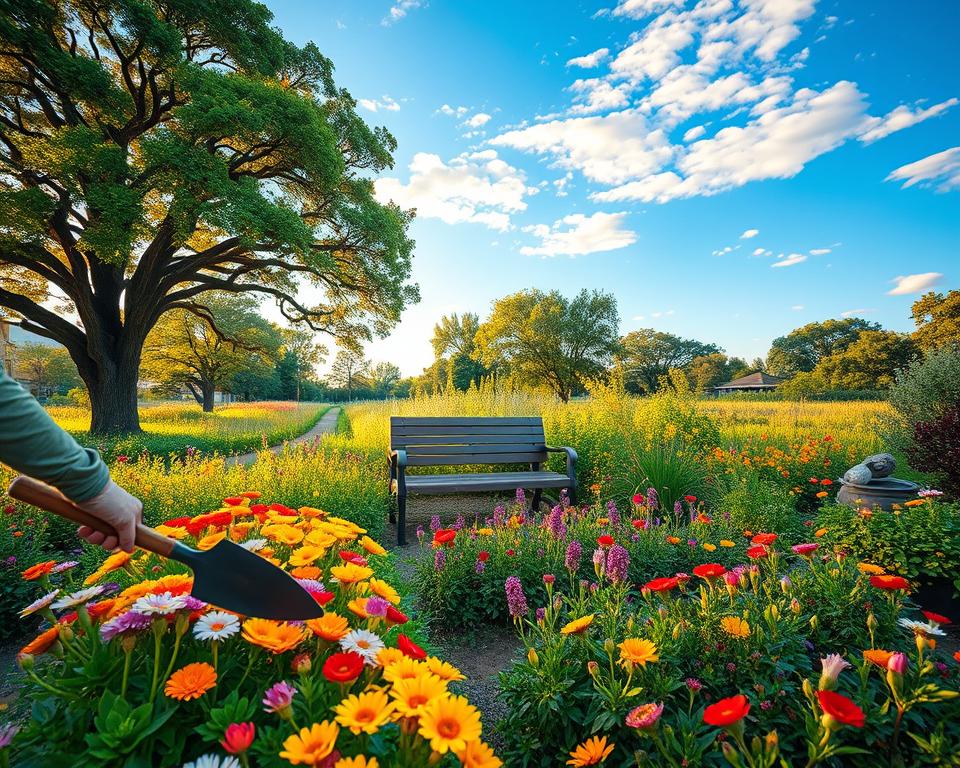
Summer is also a good time to observe the health of your plants and identify any issues early on. Regularly check for pests and diseases, and take action if necessary using organic methods.
Autumn and Winter Care
In autumn, prepare your garden for the colder months by clearing up spent plants and adding organic matter to the soil. This enriches the soil and improves its structure. Winter is a good time for planning and reflection; assess your garden’s performance over the past year and make notes for improvements.
Consider protecting tender plants from frost and ensuring that your garden’s paths are clear of debris and leaves.
Sustainable Pruning and Cutting Back
Pruning is an essential task in maintaining the health and shape of your plants. When pruning, use sharp, clean tools to prevent spreading diseases. Cut back perennials to the ground after they have finished flowering or in late winter to encourage new growth.
- Prune trees and shrubs during their dormant season to minimize stress.
- Remove dead or damaged branches to prevent disease and encourage healthy growth.
- Use pruning cuts that are just above a bud or lateral branch to direct the plant’s growth.
By following these seasonal tasks and adopting sustainable pruning practices, you’ll be able to maintain a vibrant and resilient natural garden throughout the year.
Edible Elements in Your Sustainable Landscape
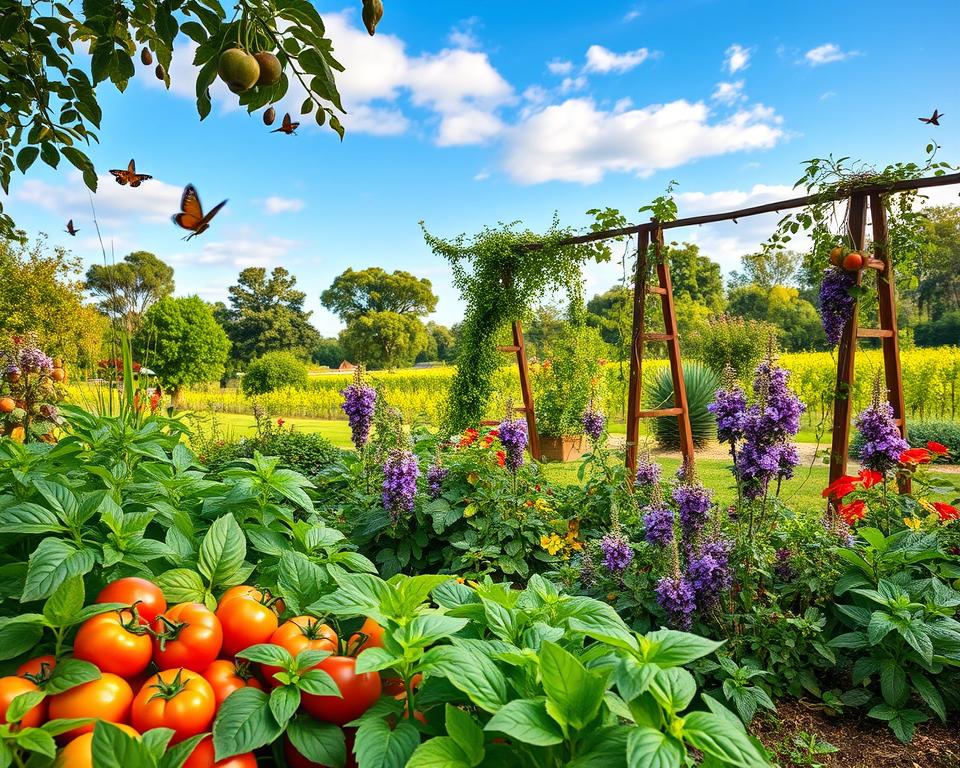
You can transform your natural garden into a thriving edible landscape with the right approach. By incorporating edible elements, you not only enhance the aesthetic appeal of your garden but also its productivity.
Forest Gardening Principles
Forest gardening is a sustainable approach to landscaping that involves creating a diverse and layered ecosystem. This method mimics the structure of a natural forest, with a mix of trees, shrubs, and herbaceous plants. By adopting forest gardening principles, you can create a resilient and productive edible landscape.
Key principles include selecting a variety of plants that work well together, creating a layered effect, and minimizing maintenance through mulching and efficient water use.
Integrating Fruits and Vegetables Naturally
Integrating fruits and vegetables into your garden can be done in a way that is both natural and aesthetically pleasing. Consider companion planting, where different plants are grown together to improve growth and reduce pests.
For example, planting marigolds with tomatoes can help deter nematodes. Similarly, incorporating herbs like basil with vegetables can enhance flavor and reduce pests.
Herbs and Edible Flowers
Herbs and edible flowers add not only flavor and fragrance to your garden but also attract pollinators and other beneficial insects. Incorporating a variety of herbs like mint, rosemary, and thyme, along with edible flowers such as nasturtiums and violas, can enhance the biodiversity of your garden.
“The garden is a love song, a duet between a human being and Mother Nature.” – Jeff Cox
By integrating these elements, you create a garden that is not only sustainable but also a haven for wildlife and a source of fresh produce for you.
Transforming Challenging Spaces
Transforming challenging garden spaces into thriving ecosystems is a rewarding endeavor for any gardener. Whether you’re dealing with shady areas, poor soil conditions, or sloped gardens, there are effective strategies to overcome these challenges and create a beautiful, sustainable landscape.
Solutions for Shady Areas
Shady areas can be just as vibrant as sunny spots with the right plant selection. Consider using shade-tolerant plants like ferns, hostas, and heucheras. These plants not only thrive in low light but also add texture and color to your garden. For added interest, incorporate woodland flowers such as bluebells or snowdrops, which naturalize easily and create a beautiful carpet under trees.

Dealing with Poor Soil Conditions
Poor soil conditions can be improved through careful management. Start by testing your soil to understand its composition and pH level. Based on the results, you can amend the soil with organic matter like compost or well-rotted manure to enhance its fertility and structure. For soils that are heavily compacted or poorly draining, consider using raised beds or mound gardening techniques.
Sloped Gardens and Erosion Control
Sloped gardens can be challenging due to the risk of erosion. To mitigate this, use groundcovers like creeping thyme or sedum, which help stabilize the soil. Terracing is another effective method to manage slopes, creating flat areas for planting and reducing soil erosion. Additionally, incorporating erosion control mats or geotextiles can provide immediate stabilization while plants establish.
Conclusion: Embracing the Journey to a Natural Garden
As you embark on your natural garden journey, you’ll discover the numerous rewards of sustainable gardening practices. By working with nature, not against it, you’ll create a haven that not only enhances your outdoor space but also supports local wildlife and reduces your environmental footprint.
Throughout this guide, we’ve explored the essential elements of creating a natural garden, from assessing your outdoor space to selecting native plants and implementing water conservation techniques. By adopting these sustainable gardening practices, you’ll be contributing to a healthier environment and enjoying the many benefits of a thriving ecosystem.
Your natural garden journey is a long-term commitment, but one that yields significant rewards. As you nurture your garden, you’ll witness the beauty and biodiversity of your outdoor space flourish, providing a serene retreat for years to come. This sustainable gardening conclusion marks the beginning of your exciting journey towards a more harmonious relationship with nature.
FAQ
What is a natural garden?
A natural garden is an outdoor space that is designed to work in harmony with the local environment, using native plants, sustainable practices, and minimal maintenance.
How do I assess my outdoor space for a natural garden?
To assess your outdoor space, evaluate your soil conditions, understand your local climate and microclimate, and identify existing natural features that can be incorporated into your garden design.
What are the benefits of using native plants in my garden?
Native plants are beneficial because they are adapted to the local climate and soil conditions, require less maintenance, and support local biodiversity.
How can I conserve water in my natural garden?
You can conserve water by installing rainwater harvesting systems, using efficient irrigation methods, and selecting drought-resistant plants.
What are some alternatives to traditional lawns?
Alternatives to traditional lawns include meadow gardens, wildflower patches, and low-maintenance groundcovers, which can be more sustainable and require less maintenance.
How can I manage pests and diseases in my natural garden?
You can manage pests and diseases by using companion planting strategies, encouraging beneficial predators, and employing organic solutions for common garden problems.
What are the benefits of composting in my garden?
Composting improves soil quality, reduces waste, and provides essential nutrients for plants, making it a valuable practice for natural gardening.
How can I create a wildlife-friendly garden?
To create a wildlife-friendly garden, incorporate plants that attract pollinators, create habitats for birds and beneficial insects, and build wildlife corridors to support local biodiversity.
What are the advantages of using permeable paving?
Permeable paving allows rainwater to percolate through the surface, reducing runoff and filtering out pollutants, making it a more sustainable option for hardscaping.
How can I maintain my natural garden sustainably?
To maintain your natural garden sustainably, adopt seasonal maintenance practices, use sustainable pruning and cutting back techniques, and minimise waste.