Creating a rock garden – tips

Imagine transforming your outdoor space into a stunning, low-maintenance landscape that captivates throughout the year. A well-designed rock garden offers exactly that—bringing natural beauty and structure to your home.
These special gardens provide excellent drainage and create perfect conditions for unique plants. You can grow beautiful alpines, succulents, and dwarf shrubs that thrive in rocky environments.
Assess your garden’s sunlight, soil type, and existing features. Even a small area or tricky slope can become an eye-catching feature with careful planning and the right materials.
This rewarding project adds depth and dimension to flat spaces. It replaces struggling lawns and supports local wildlife too.
Inhaltsverzeichnis
Key Takeaways
- Rock gardens create natural-looking, low-maintenance landscapes with year-round appeal.
- They provide excellent drainage and support specialised plants like alpines and succulents.
- Successful designs consider sunlight, soil conditions, and existing garden features.
- Even challenging areas like slopes can be transformed into beautiful features.
- Proper planning and material selection ensure long-term success and visual impact.
- These gardens support biodiversity and can replace high-maintenance lawn areas.
- Expert guidance helps avoid common pitfalls and achieves stunning results.
Understanding the Fundamentals of Rock Garden Design
Embarking on your rockery journey begins with mastering essential principles. These foundations transform ordinary spaces into extraordinary natural showcases.
What Makes a Successful Rock Garden
True success lies in recreating mountain conditions. Katharine Woods advises selecting open sites with excellent drainage.
Your design should feature varying stone sizes for visual appeal. Proper light exposure ensures alpine plants thrive beautifully.
- Mimic natural mountainous environments with careful placement
- Ensure superb drainage through strategic gravel layers
- Choose locations away from overhanging trees or structures
- Create planting pockets between rocks for optimal growth
Benefits of Adding a Rockery to Your Garden
Rock gardens offer remarkable advantages beyond their beauty. They provide year-round structure with minimal upkeep required.
These features solve problem areas like poor slopes effectively. Janet Loughrey notes they add wonderful depth to flat spaces.
Rock gardens bring dimension to landscapes while supporting local wildlife habitats
You’ll enjoy reduced lawn maintenance and increased biodiversity. They serve as perfect substitutes for struggling grassy areas.
Assessing Your Garden’s Potential for Rock Gardening
Begin by evaluating sunlight patterns throughout the day. Note how shadows move across your potential site.
Test soil drainage by digging a small hole and filling it with water. Observe how quickly it drains away naturally.
Consider existing features that could complement your design. Walls or steps might integrate beautifully with your rockery.
Research local gardens for inspiration and practical ideas. The Alpine Garden Society offers excellent resources for planning.
Remember that even challenging conditions can be overcome. Clay soil benefits from added grit, while shaded areas suit certain plants perfectly.
Choosing the Perfect Location for Your Rock Garden
Finding the ideal spot transforms your vision into reality. This crucial decision shapes everything that follows in your landscaping project.
Your chosen area becomes the foundation for years of natural beauty. Consider these elements carefully before breaking ground.
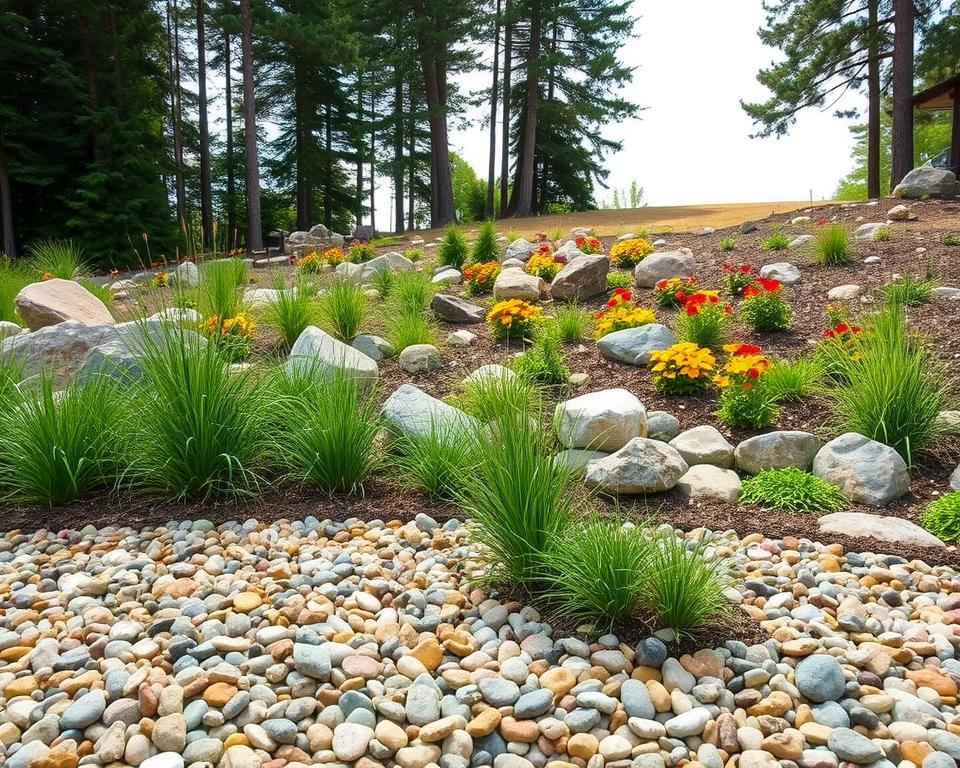
Evaluating Sunlight and Exposure Requirements
Most alpine specimens crave abundant sunshine throughout the day. Position your feature where it receives at least six hours of direct light.
Open spaces away from buildings and trees work best. They provide excellent air circulation and prevent excessive moisture buildup.
Observe how shadows move across your potential site during different times. Morning sun proves particularly beneficial for many mountain plants.
Considering Natural Background and Surroundings
Blend your new feature seamlessly with existing elements. Local stone varieties often harmonise beautifully with nearby structures.
Katharine Woods demonstrated this principle perfectly. She selected greyish limestone to complement existing steps in her own garden.
Even man-made features can integrate thoughtfully with careful design. Use strategic placements to enhance rather than compete with surroundings.
“The right location makes maintenance easier and enhances visual impact for decades”
Assessing Drainage and Soil Conditions
Test your ground thoroughly before committing to a spot. Dig a small hole and fill it with water to observe drainage speed.
Clay-based earth requires amendments like sharp grit and sand. These additions significantly improve permeability for healthier roots.
Sloping areas offer natural drainage advantages while adding visual interest. They make ideal foundations for rockeries when properly prepared.
Remove all perennial weeds and tree roots completely before starting. This prevents future problems and ensures stable construction.
- Choose sun-drenched locations away from shade-casting structures
- Match stone colours and textures to existing landscape features
- Test soil drainage and amend with grit for improved conditions
- Utilise natural slopes for better water management and visual appeal
- Ensure complete removal of weeds and competing root systems
Your perfect spot awaits discovery somewhere in your outdoor space. With thoughtful evaluation, you’ll create a stunning feature that thrives for years.
Essential Preparation: Setting the Foundation
Your rockery’s longevity begins with meticulous groundwork. Proper preparation transforms challenging spaces into thriving alpine environments that endure for decades.
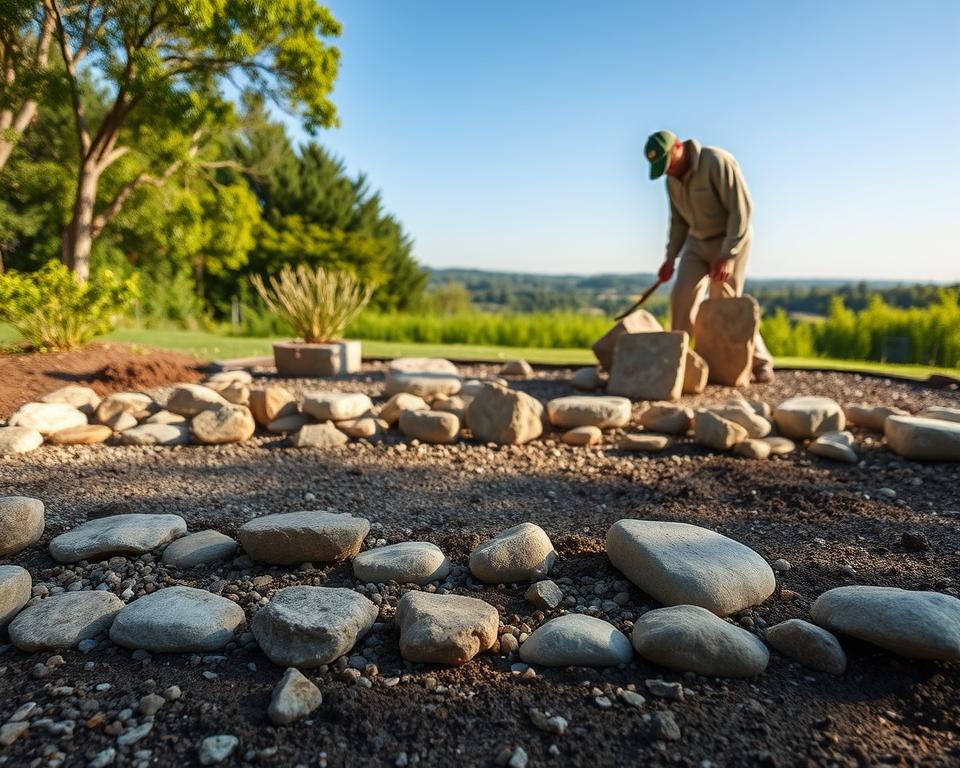
Clearing the Area of Weeds and Debris
Begin by completely removing all vegetation and organic matter. Persistent weeds like ground elder require thorough elimination to prevent future problems.
Katharine Woods dedicated an entire year to removing invasive roots from her site. This commitment ensures your structure remains undisturbed by regrowth.
- Remove all existing plants, stumps, and perennial weed systems
- Dig out tree roots that could compromise stability later
- Clear stones and debris that might hinder proper construction
- Work after rainfall when softer ground makes digging easier
Creating Proper Drainage Systems
Excellent drainage forms the heart of successful alpine gardening. Without it, even the most beautiful arrangements will eventually fail.
Start with a generous layer of rubble or broken bricks at the base. This creates air pockets and channels excess moisture away from plant roots.
“Good drainage isn’t just desirable—it’s absolutely essential for rock garden survival”
Incorporate sharp grit and coarse sand throughout the soil profile. These materials prevent waterlogging while providing ideal growing conditions.
Soil Preparation and Amendment Techniques
Transform heavy clay into perfect alpine soil with strategic amendments. Katharine Woods used 20 bags of grit and 15 bags of sand for her project.
Dig these materials deeply into your existing earth. The mixture should comprise approximately one-third original soil, one-third grit, and one-third sand.
For planting pockets, create a special compost blend. Combine equal parts topsoil, horticultural grit, and leaf mould or coir for optimal nutrition.
| Soil Type | Amendment Required | Quantity per m² |
|---|---|---|
| Clay | Sharp grit & coarse sand | 10-15kg each |
| Sandy | Leaf mould & topsoil | 5-8kg each |
| Loam | Horticultural grit | 5-10kg |
Landscaping fabric proves invaluable for weed suppression and soil stability. Place it over your rubble base before adding amended earth.
This foundation work might seem labour-intensive initially. However, it guarantees your feature remains beautiful with minimal maintenance for years.
Selecting and Sourcing Your Rocks
The stones you choose become the backbone of your landscape feature. Their selection transforms your vision into a harmonious natural display that complements your outdoor space.

Choosing Locally Sourced Stones
Local materials create authentic connections to your surroundings. Katharine Woods demonstrated this perfectly by selecting greyish limestone that toned beautifully with existing steps.
Visit stone merchants to compare various options. Purbeck limestone offers excellent texture, while local quarry stones provide regional character.
Locally sourced materials often prove more affordable. They blend seamlessly with your garden’s natural aesthetic too.
Determining the Right Size and Quantity
Balance is crucial when planning your stone requirements. Katharine purchased ten large stones plus a bag of smaller ones for her project.
Vary sizes to create visual interest throughout your design. Large keystones establish structure while smaller pieces fill gaps effectively.
Consider your available space when selecting dimensions. Oversized boulders overwhelm small areas, while tiny stones get lost in expansive landscapes.
“The right rock selection creates natural rhythm and enhances planting opportunities”
Matching Rock Types to Your Garden’s Aesthetic
Your stone choices should reflect your desired style. Rough, irregular rocks suit naturalistic designs, while smooth pebbles complement formal Japanese-inspired gardens.
Consider colour carefully when making selections. Lighter hues prevent dark, heavy feelings in your landscape.
Varying tones add contrast and visual appeal. They create depth and dimension within your composition.
| Rock Type | Best For | Visual Effect | Cost Estimate |
|---|---|---|---|
| Limestone | Naturalistic designs | Weathers beautifully over time | £80-£120/tonne |
| Sandstone | Formal arrangements | Warm, uniform appearance | £70-£100/tonne |
| Granite | Modern landscapes | Bold, dramatic statement | £90-£140/tonne |
| Slate | Contemporary features | Clean lines and texture | £75-£110/tonne |
Explore various sourcing options to suit your budget. Garden centres offer convenience, while quarries provide bulk materials at better prices.
Online listings like Gumtree sometimes feature affordable options. Always view stones in person before purchasing when possible.
Plan for delivery and placement logistics. Some suppliers offer forklift services for larger stones.
Enlist help to position stones until your arrangement looks perfect. The right placement makes all the difference to your final result.
Combine different materials for textural interest. Mix large rocks with gravel or pebbles to create unity throughout your design.
Your careful selection ensures years of enjoyment. The perfect stones transform your outdoor area into a stunning natural retreat.
Creating a Rock Garden – Tips for Strategic Placement
Mastering stone arrangement transforms ordinary spaces into breathtaking natural landscapes. Your careful placement decisions create the foundation for years of beauty and stability.
Every positioning choice affects both visual appeal and structural integrity. Thoughtful arrangements mimic nature’s randomness while providing perfect growing conditions.
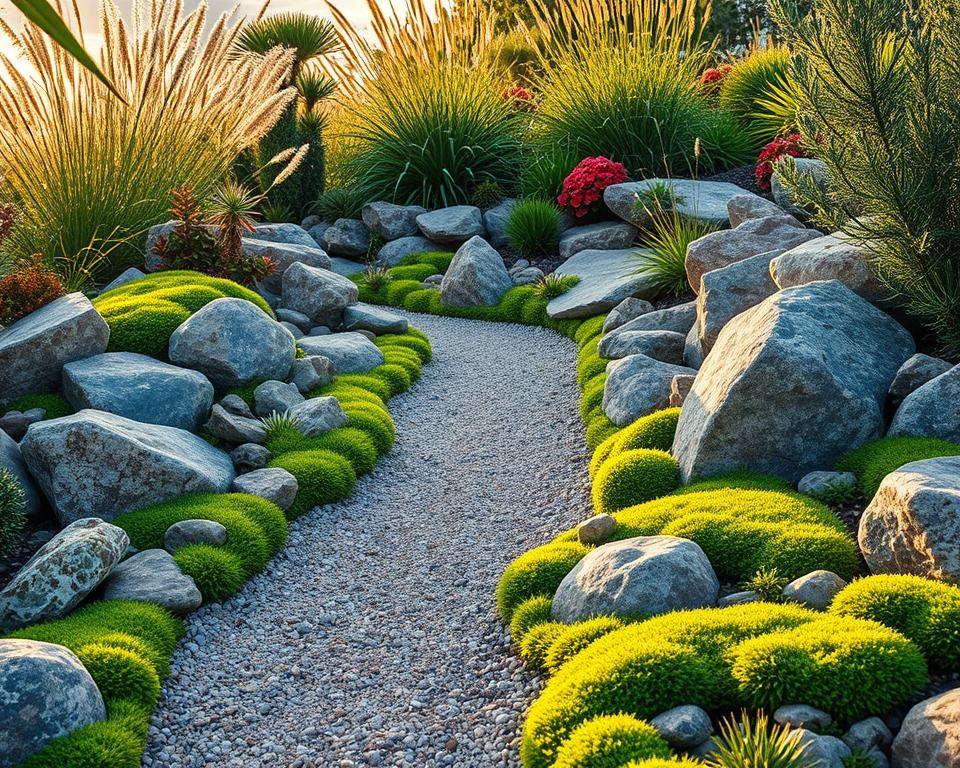
Positioning Keystone Rocks for Structural Integrity
Begin with your largest stones to establish the framework. Katharine Woods placed substantial boulders at her slope’s base for maximum stability.
Partially bury each major stone to achieve natural appearance and prevent movement. This technique ensures your feature withstands weather and time.
Ramming soil into gaps creates solid foundations that last for decades. Your efforts now guarantee long-term security and visual harmony.
Creating Natural-looking Rock Formations
Avoid orderly patterns that appear artificial and contrived. Instead, face stones in varied directions just as nature would arrange them.
Use smaller pieces to connect larger elements visually. This approach creates flowing compositions that delight the eye from every angle.
“Natural arrangements emerge when you observe how stones lie in wild landscapes”
Step back frequently to assess balance and proportion from different viewpoints. Consider perspectives from your house and garden paths for complete coherence.
Building Planting Pockets and Crevices
Leave intentional gaps between stones for alpine specimens and trailing varieties. These spaces become perfect homes for specialised plants.
Construct deep crevices using techniques like sandwiching paving slabs between rocks. Such features provide exceptional drainage and root protection.
Allow sufficient room for growth between each placement. Your plants need space to develop their full character over time.
| Placement Technique | Purpose | Recommended For |
|---|---|---|
| Partial burial | Stability & natural appearance | All large stones |
| Crevice construction | Specialised planting opportunities | Alpine collections |
| Strategic spacing | Plant growth & air circulation | Dwarf shrubs |
| Overlapping placements | Integrating with existing features | Walls and steps |
Integrate stones with existing structures through thoughtful overlapping. This method blends man-made and natural elements seamlessly.
Create microclimates by positioning rocks to provide shelter or exposure. Different plants will thrive in these varied conditions.
Sometimes removing a few stones improves overall balance dramatically. Katharine discovered this principle during her own project development.
Your strategic placements ensure both beauty and functionality. They create the perfect stage for your plants to perform their year-round display.
Selecting and Planting Suitable Flora
The perfect plants transform your stone arrangements into living masterpieces. Your choices determine whether your feature thrives or merely survives through the seasons.
Thoughtful selection creates year-round beauty with minimal effort. You’ll enjoy watching specialised specimens flourish in their ideal conditions.
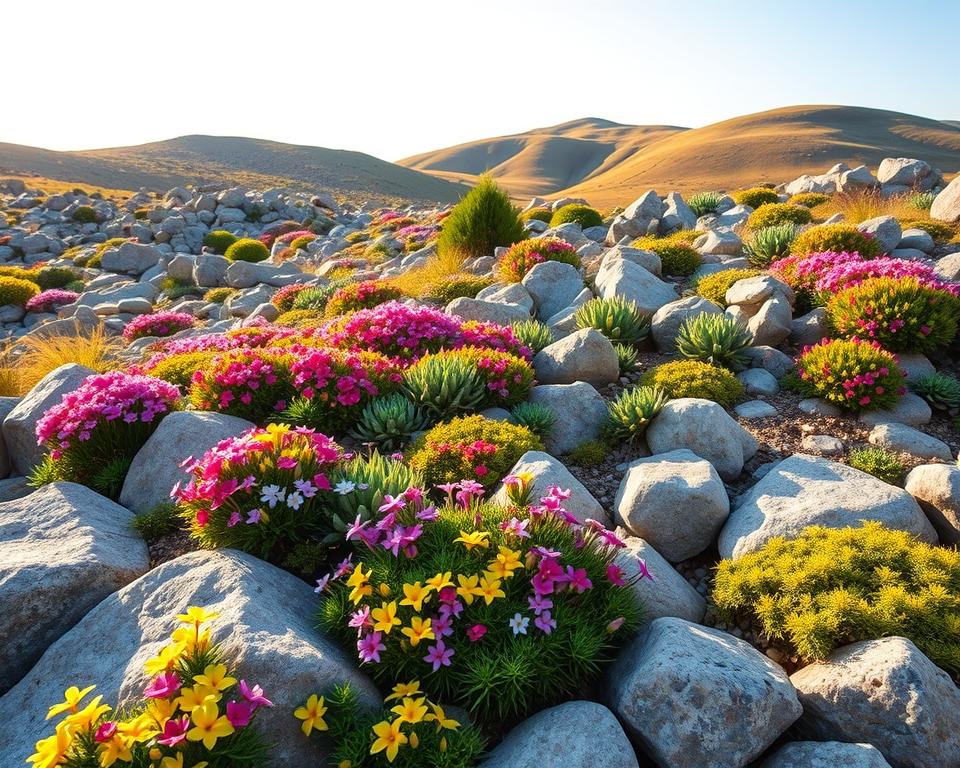
Choosing Alpine Plants and Dwarf Conifers
Alpine varieties excel in well-drained, sunny positions. Sedums and sempervivums handle drought beautifully once established.
Dwarf conifers provide permanent structure and winter interest. Their compact forms suit even small spaces perfectly.
Consider your local climate when making selections. Some mountain plants prefer cooler northern exposures.
- Select sun-loving alpines for south-facing slopes and open areas
- Choose dwarf conifers for year-round structure and texture
- Prioritise species adapted to your specific regional conditions
- Include ornamental grasses for movement and delicate beauty
Incorporating Ground Covers and Trailing Species
Trailing plants soften hard edges beautifully. Creeping thyme releases fragrance when brushed against.
Ajuga spreads gradually to create living carpets. Its colourful foliage complements stone tones wonderfully.
These species help prevent soil erosion on slopes. They also suppress weeds between your precious specimens.
“Ground covers weave everything together into a cohesive tapestry of texture and colour”
Planting Techniques for Rock Garden Success
Gently tease out roots before placing in planting pockets. This encourages outward growth into surrounding soil.
Firm plants into compost-filled gaps securely. Ensure no air pockets remain around delicate root systems.
Water thoroughly after planting to settle everything. Continue regular watering until plants establish properly.
Add gravel mulch to improve drainage and appearance. This finishing touch suppresses weeds effectively too.
| Plant Type | Ideal Conditions | Seasonal Interest | Maintenance Level |
|---|---|---|---|
| Alpine plants | Full sun, excellent drainage | Spring flowers, summer foliage | Low |
| Dwarf conifers | Sun to partial shade | Year-round structure | Very low |
| Trailing species | Variable depending on type | Seasonal flowers, evergreen foliage | Low |
| Bulbs | Well-drained pockets | Spring colour bursts | Minimal |
Source plants from specialist alpine nurseries for best results. Many offer mail-order services for rare varieties.
Consider colour harmony between foliage and stones. Subtle combinations often work better than dramatic contrasts.
Include bulbs for seasonal surprises. Species tulips naturalise beautifully in rocky crevices over time.
Your plant selections bring life and movement to the stone framework. They transform structural beauty into a living, breathing landscape.
Ongoing Maintenance and Care
Your stunning rockery deserves thoughtful upkeep to maintain its beauty through the seasons. With proper attention, this landscape feature becomes increasingly established and easier to manage over time.

Establishing effective routines ensures your plants thrive while keeping weeds at bay. You’ll find these tasks become simpler as your feature matures and plants fill available space.
Watering Strategies for Rock Garden Plants
Rocks absorb heat and increase evaporation during warm periods. Water deeply but infrequently to encourage strong root development.
Early morning watering reduces moisture loss from evaporation. Focus on the plant’s base rather than spraying foliage.
New plantings need more frequent attention until established. Mature specimens often thrive with natural rainfall alone.
Weed Control and Prevention Methods
Gravel mulch serves as your first defence against unwanted growth. It suppresses weeds while maintaining excellent drainage.
Regular hand-weeding prevents invasive species taking hold. Remove them before they set seed to reduce future problems.
As plants mature, they naturally suppress weeds by covering bare ground. This reduces your maintenance efforts significantly.
“A well-mulched rockery needs minimal weeding once plants establish properly”
Seasonal Care and Pruning Requirements
Autumn brings important preparation for colder months. Cut back dead growth and remove spent flowers.
Protect tender species during frosts with horticultural fleece. Most alpine varieties handle cold well when drainage remains good.
Spring reveals new growth and occasional winter damage. Prune carefully to maintain natural shapes.
| Season | Key Tasks | Plant Focus |
|---|---|---|
| Spring | Prune winter damage, divide overcrowded plants | Alpines, dwarf shrubs |
| Summer | Water during dry spells, deadhead flowers | Flowering specimens |
| Autumn | Cut back growth, replenish mulch | All plants |
| Winter | Protect tender species, check drainage | Less hardy varieties |
Fertilise sparingly as most rockery plants prefer poor conditions. Alpines and succulents need very little additional feeding.
Monitor for pests and diseases during routine checks. Address issues promptly with organic treatments where possible.
Ensure drainage remains effective by occasionally checking soil conditions. Add fresh grit if compaction occurs over time.
Replenish gravel mulches annually to maintain their appearance and function. This keeps your feature looking fresh and well-maintained.
Your efforts will diminish as plants establish and fill the space. A mature rockery becomes wonderfully low-maintenance while providing year-round interest.
Conclusion
Every carefully placed stone and selected plant tells a story of personal transformation. Your completed rockery stands as a testament to thoughtful planning and creative vision.
This low-maintenance feature now provides year-round interest while supporting local wildlife. As Reginald Farrer noted, each design reflects both site conditions and personal taste.
Your patience throughout this rewarding project ensures lasting beauty with minimal upkeep. The harmonious blend of rocks and alpine plants creates a unique outdoor sanctuary.
Share your success to inspire others in their gardening journeys. Your transformed space now offers endless enjoyment and serves as a personal retreat that complements your home perfectly.
FAQ
What is the most important thing to consider when planning a rockery?
Your site’s drainage is paramount. These landscapes thrive in well-drained conditions, so ensuring water flows away freely prevents root rot and mimics the plants’ natural alpine habitats.
Can I build one if my garden is flat?
Absolutely. You can create a mound or berm to introduce the necessary slope and elevation, which adds visual interest and dramatically improves drainage for your chosen plants.
Where is the best place to source materials?
Always try to source stones locally. They will blend seamlessly with your regional landscape, are often more affordable, and have a lower environmental impact than imported materials.
How do I stop weeds from taking over?
Proper preparation is your best defence. Clear the area thoroughly before you start and consider using a landscape fabric beneath a gravel mulch layer to suppress unwanted growth.
What types of plants are best suited for this project?
Focus on alpines, dwarf conifers, and tough, trailing ground covers. These species are naturally adapted to thrive in the sharp drainage and exposed conditions a rockery provides.
Do I need to water my rock garden often?
A> Once established, these gardens are surprisingly low-maintenance. The plants are chosen for their drought tolerance, requiring far less water than a traditional flower border, especially after their first year.
How can I make the arrangement look natural?
Study how rocks lie in nature. Bury at least a third of each stone’s depth, angle them slightly backwards, and group them in odd numbers to avoid a manufactured, stacked appearance.