Creating a Wildflower Meadow & Herb Meadow – Guide, Best Sowing Time + Flower List
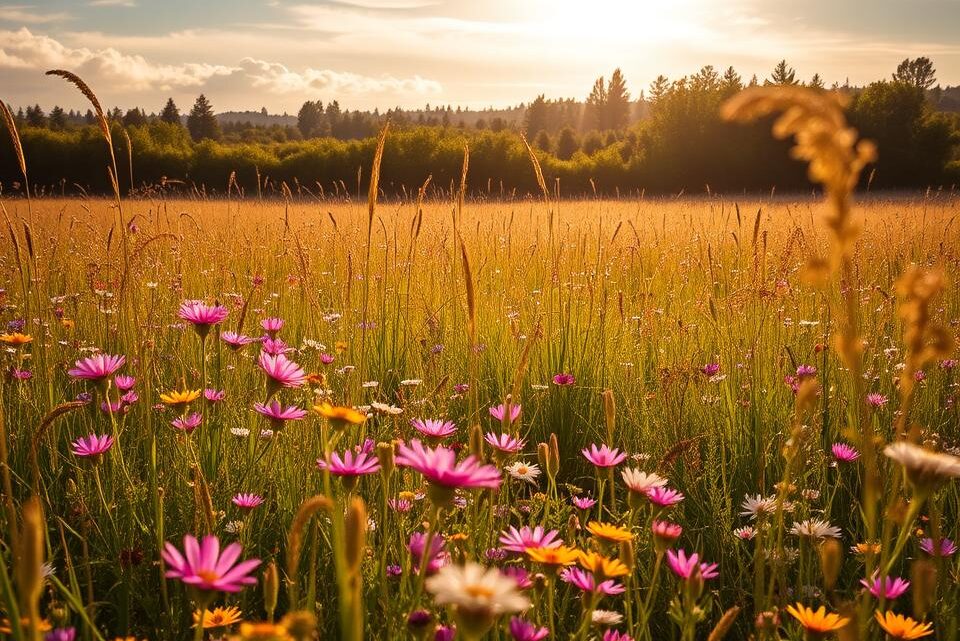
Transforming your outdoor space into a vibrant wildflower meadow can be a rewarding experience, supporting local biodiversity and providing a haven for pollinators.
In the UK, traditional wildflower meadows have declined significantly since the 1930s, making your efforts to create a meadow at home crucial for reversing this trend.
By understanding the basics of soil requirements and the benefits of wildflowers, you can create a thriving meadow that not only enhances your landscape but also reduces maintenance needs compared to traditional lawns.
Inhaltsverzeichnis
Key Takeaways
- Understand how a wildflower meadow can support local biodiversity.
- Learn about the decline of traditional wildflower meadows in the UK.
- Discover the benefits of wildflowers for pollinators and the environment.
- Get an overview of soil requirements for a thriving meadow.
- Preview the steps involved in creating your own meadow.
Understanding Wildflower Meadows
Understanding the concept of a wildflower meadow is essential for appreciating its ecological significance. A wildflower meadow is more than just a collection of flowers; it’s a complex ecosystem that has been managed for centuries.
What is a Wildflower Meadow?
A traditional wildflower meadow is an area of perennial grasses and wildflowers, typically cut for hay in late summer and then grazed by animals until early spring. This management regime creates an even sward where wildflowers aren’t outgrown by competitive grasses, and woody perennials don’t take over. The balance between grasses and flowering plants is crucial for maintaining a sustainable ecosystem.
The Ecological Importance of Wildflower Meadows
Wildflower meadows are incredibly diverse, offering a rich mix of flowers for pollinators, grasses for butterflies and moths to lay their eggs on, and shelter for various wildlife, including grasshoppers, crickets, beetles, hedgehogs, and amphibians. The greater density of insects in a wildflower meadow provides food for birds and bats, making it a vital component of the ecosystem.
| Ecosystem Component | Role in Wildflower Meadow |
|---|---|
| Perennial Grasses | Provide structure and balance to the ecosystem |
| Wildflowers | Offer nectar and pollen for pollinators |
| Insects | Serve as food for birds, bats, and other wildlife |
As
“Wildflower meadows are a testament to the beauty and complexity of nature, providing a haven for wildlife and a haven for the human spirit.”
By understanding and appreciating the ecological importance ofwildflower meadows, we can better manage and conserve these valuable ecosystems.
Types of Wildflower Meadows
Understanding the differences between annual and perennial wildflower meadows is crucial for making an informed decision when planning your garden.
Wildflower meadows can be broadly categorized into two main types: annual and perennial meadows. The choice between these types depends on your garden’s specific conditions and your personal preferences.
Annual Wildflower Meadows
Annual wildflower meadows feature plants that complete their lifecycle within a single year. These meadows are typically a mix of colourful cornfield species such as cornflowers, field poppies, corn marigolds, and corncockles. They grow quickly from seed and flower within a few months. After flowering, they scatter their seeds and die, providing a vibrant but temporary display.
- Quick to establish and flower
- Feature colourful annual species
- Provide a temporary display
Perennial Wildflower Meadows
Perennial wildflower meadows, on the other hand, take longer to establish but return year after year. They can contain a wide range of species, including ox-eye daisies, red campion, knapweed, and field scabious. Although they take at least two years to flower well from seed, they continue to thrive for years to come.
- Take longer to establish
- Return year after year
- Support a wider range of wildlife
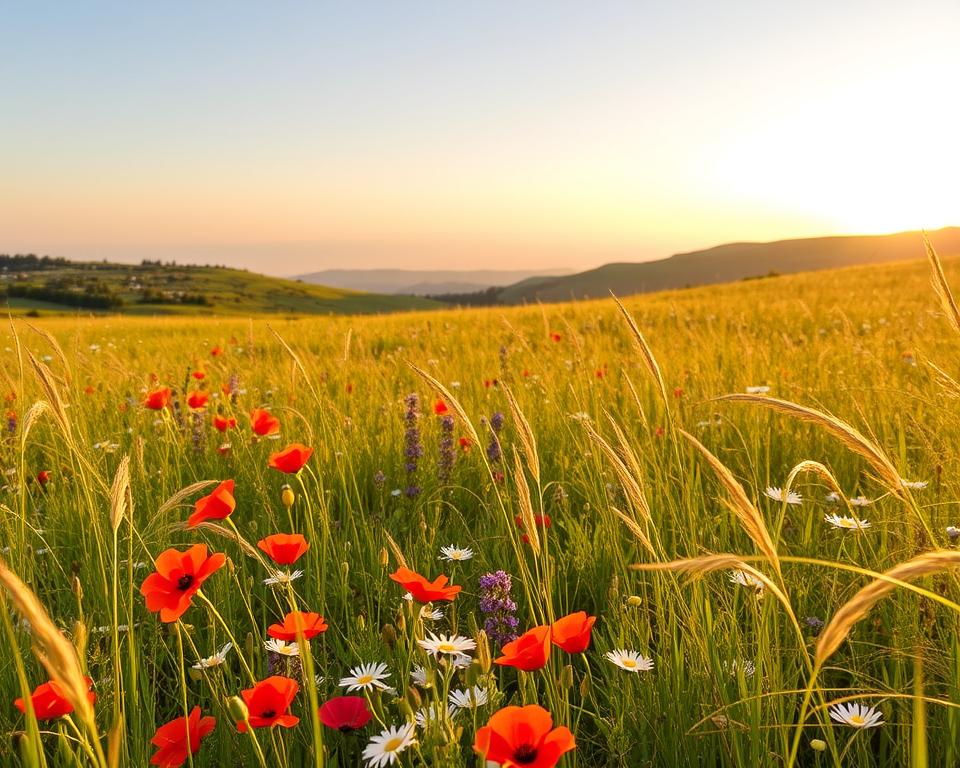
Planning Your Wildflower Meadow
Planning is a crucial step in establishing a thriving wildflower meadow. Proper planning ensures that your meadow will flourish and provide a beautiful display of flowers for years to come.
Choosing the Right Location
When selecting a location for your wildflower meadow, consider the amount of sunlight it receives. Most meadow plants require full sun to partial shade. Ensure the area has well-draining soil, as this is crucial for the health of your wildflowers. Think about the size of the meadow and how it will fit into your existing garden landscape.
Assessing Your Soil Type
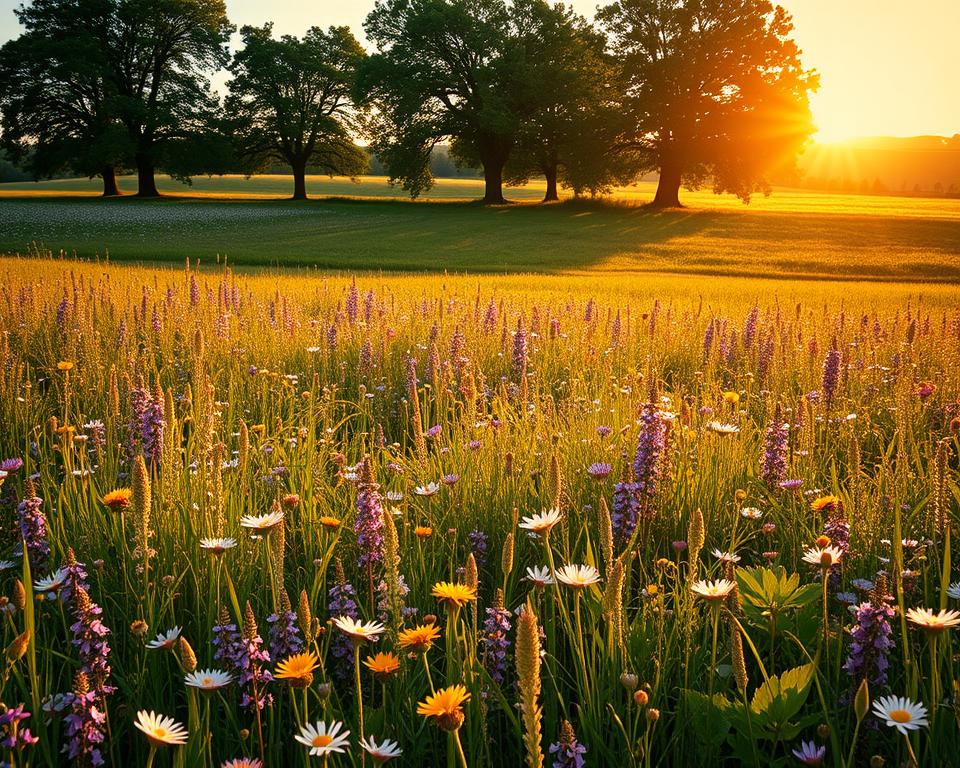
Assessing your soil type is vital to creating a successful wildflower meadow. Wildflowers generally prefer less fertile soil than conventional garden plants. You can evaluate your soil type by testing its pH level and fertility. This information will help you choose the right seed mix for your meadow.
| Soil Type | Characteristics | Suitable Wildflowers |
|---|---|---|
| Well-drained | Good drainage, moderate fertility | Cowslip, Oxeye Daisy |
| Clay | Poor drainage, high fertility | Knapweed, Red Clover |
| Sandy | Good drainage, low fertility | Buttercup, Cornflower |
By carefully planning your wildflower meadow, including choosing the right location and assessing your soil type, you can create a beautiful and sustainable garden feature that will attract a variety of wildlife and provide enjoyment for years to come.
Best Time to Sow Wildflower Seeds
The ideal time to sow wildflower seeds varies depending on several factors, including soil type and climate. Generally, the best times to sow are in early to mid-spring (March/April) or early autumn (September).
Spring Sowing (March-April)
For gardeners with heavy clay soils that remain cold and wet during winter, spring sowing is recommended. This allows the seeds to germinate when the soil has warmed up. Spring sowing can be particularly beneficial in regions with harsh winters.
Autumn Sowing (September)
Autumn sowing is often preferred due to fewer risks from weeds and better germination rates for certain species. The winter cold periods help break dormancy in some seeds, leading to a more vibrant meadow. On lighter soils, autumn-sown seeds generally germinate and establish quickly.
| Sowing Time | Soil Type | Advantages |
|---|---|---|
| Spring (March-April) | Heavy Clay | Avoids cold and wet winter conditions |
| Autumn (September) | Lighter Soils | Reduced weed competition, better germination rates |
It’s essential to check the seed packet for specific instructions, as the optimal sowing time may vary depending on the wildflower mix. Climate variations across different UK regions can also impact the best sowing time. For instance, in colder regions, it’s best to wait until spring to sow, while in milder areas, autumn sowing can be more beneficial.

Preparing the Ground for Your Wildflower Meadow
To establish a thriving wildflower meadow, it’s crucial to start with thorough ground preparation. This involves creating a weed-free environment that is conducive to the growth of your wildflowers.
Clearing Existing Vegetation
The first step in preparing the ground is to clear the area of any existing vegetation. This can be achieved through manual removal, using herbicides if necessary, or techniques like sheet mulching to eliminate persistent weeds. It’s essential to ensure the area is completely clear before proceeding.
Reducing Soil Fertility
Most native wildflowers thrive in soil with low fertility, where they face less competition from vigorous grasses. To achieve this, you can either remove the top layer of soil to reveal the less fertile sub-soil or plant “green manure” crops like mustard or oil-seed rape to deplete the nutrients. The chosen method should be implemented several months before sowing to allow for thorough weed clearance.
- Remove the top layer of soil to reduce fertility.
- Use “green manure” crops to deplete soil nutrients.
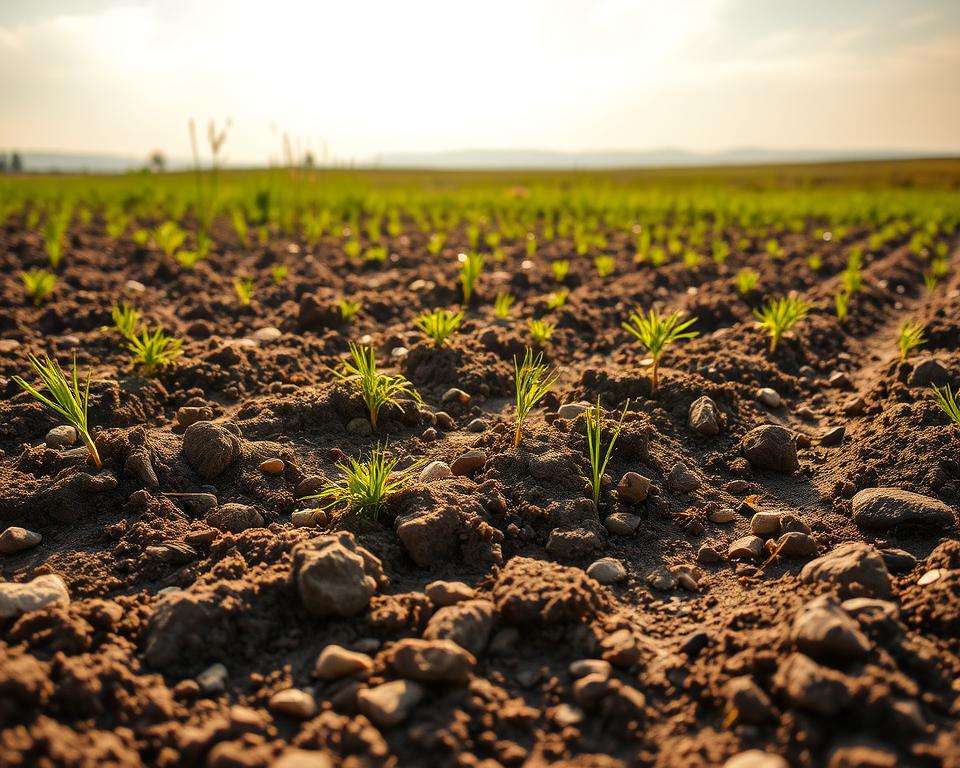
After clearing and reducing soil fertility, create a fine tilth by forking, raking, and firming the ground appropriately. This will provide a suitable environment for your wildflower seeds to germinate and grow.
Creating a Wildflower Meadow from Seed
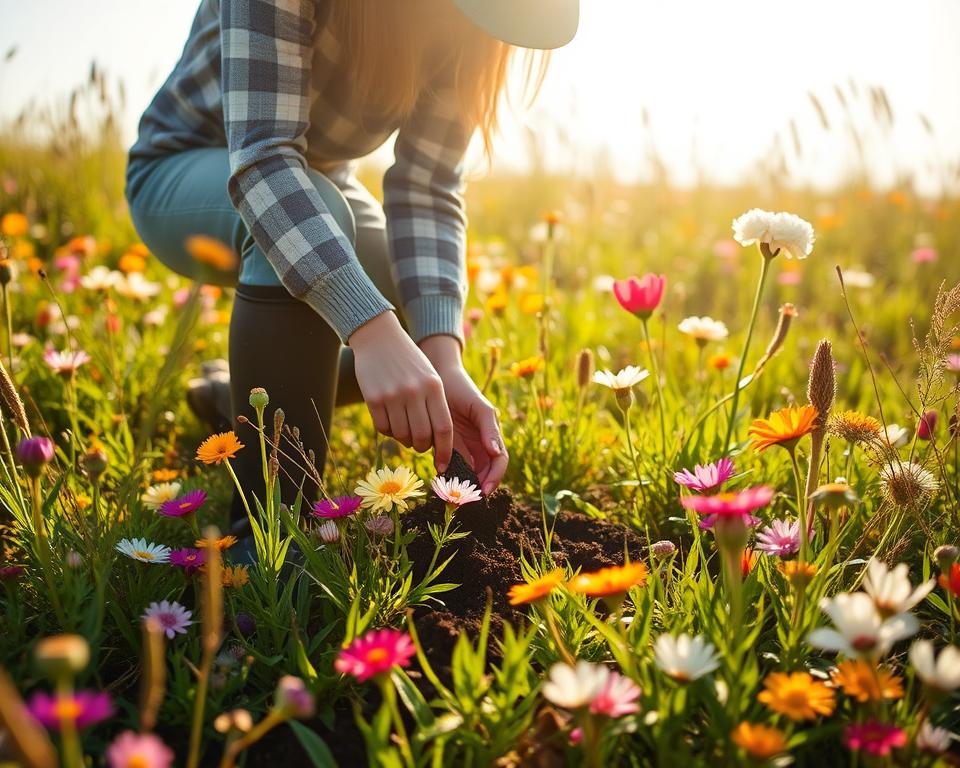
Creating a vibrant wildflower meadow from seed is a multi-step process that begins with selecting the right seed mix. To achieve a thriving meadow, it’s crucial to choose a wildflower seed mix that suits your local conditions and soil type.
Choosing the Right Seed Mix
When selecting a seed mix, consider factors such as your soil type, site conditions, and the desired aesthetic outcome. Opt for wildflower seeds of British origin from reputable suppliers to ensure authenticity and suitability for local wildlife. This choice will not only enhance the beauty of your meadow but also support the local ecosystem.
Sowing Techniques
Sow your wildflower seeds at a rate of 5 grams per square metre. To ensure even distribution, mix the seeds with a carrier like dry sand. A seed spreader can also be useful for covering larger areas. It’s generally advised not to rake the seeds into the soil, as many species require light to germinate. After sowing, the nurse grasses will typically appear within 7-10 days, while the wildflowers may take several weeks or even months to emerge.
Understanding the role of nurse grasses in your seed mix is vital. These grasses help establish the meadow ecosystem by providing support and structure for the wildflowers. By choosing the right wildflower seed mix and following proper sowing techniques, you can create a beautiful and thriving wildflower meadow.
Using Wildflower Plug Plants
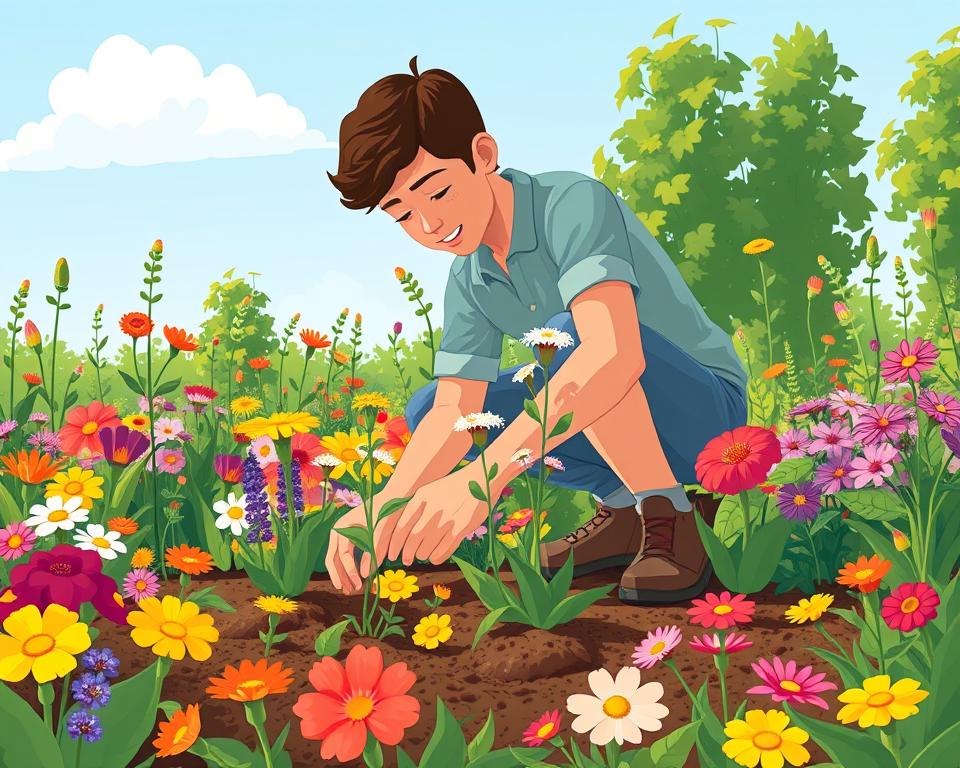
Using wildflower plug plants can significantly enhance the establishment and diversity of your meadow. This method allows you to introduce healthy, robust plants into your existing grassland or newly created meadow, ensuring a higher success rate compared to sowing seeds alone.
Benefits of Using Plug Plants
The advantages of using wildflower plug plants are numerous. They offer higher establishment rates, more predictable results, and the ability to create specific planting patterns. By using plug plants, you can introduce a variety of species that might be challenging to establish from seed, such as field scabious, greater knapweed, and ox-eye daisy.
Additionally, plug plants can be used to create focal points within a larger seeded area, adding visual interest and diversity to your meadow.
How to Plant Wildflower Plugs
To get the most out of your wildflower plug plants, it’s essential to plant them correctly. Typically, you should plant one plug of each species per square metre, with a maximum of five species per square metre. The best times for planting are autumn or spring, and it’s crucial to water them properly during establishment.
You can also make your own wildflower plug plants by sowing seeds in trays and then planting them out when they’re strong and healthy. This approach not only offers cost savings but also allows you to control the species and quality of the plants.
Laying Wildflower Turf
If you’re looking for a quick and straightforward way to create a wildflower meadow, consider using wildflower turf. This method involves laying pre-grown wildflower-rich turf onto prepared ground, offering an instant solution for those seeking immediate results.
Advantages of Wildflower Turf
Wildflower turf has several significant advantages. It provides an immediate visual impact, allowing you to enjoy your meadow from the outset. Additionally, it minimises weed competition, as the turf acts as a barrier preventing weeds from germinating. The installation process is also simplified compared to seeding, making it a convenient option.
Installation Process
To install wildflower turf, start by preparing the ground thoroughly. This involves clearing existing vegetation and reducing soil fertility to create an optimal environment for your wildflowers. Once the ground is prepared, lay the turf, ensuring it is firmly secured. Proper ground preparation is crucial, despite the convenience offered by the turf. This method is particularly suitable for small areas, steep slopes, or sites with persistent weed problems.
Converting an Existing Lawn into a Wildflower Meadow
Creating a wildflower meadow from your existing lawn is an achievable goal that requires some planning and patience, but the result is well worth the effort. You can transform your lawn into a vibrant wildflower meadow by adopting one of two main approaches: the “let the grass grow” method or the gradual conversion method.
Let the Grass Grow Method
The “let the grass grow” method involves simply stopping mowing and allowing existing wildflowers in the lawn to emerge and flower. This approach can reveal surprising diversity, as some wildflowers may have been present in the lawn for years without being noticed. To implement this method, you should first stop applying fertilizers and other lawn treatments. Then, cease mowing for several months to allow the grass to grow taller and wildflowers to bloom.
Gradual Conversion Method
The gradual conversion method involves reducing soil fertility over time by removing clippings, stopping fertilizer application, and introducing yellow rattle (Rhinanthus minor) to weaken grass growth. This method is more controlled and can lead to a more diverse meadow community. You can also introduce wildflowers into your existing lawn through plug planting, creating small bare patches, or oversowing in autumn after scarification.
It’s essential to understand that converting a lawn to a wildflower meadow is typically a multi-year process. Patience is key as the balance gradually shifts from grass dominance to a more diverse meadow community. Older, less intensively managed lawns are generally more suitable for conversion than modern ryegrass lawns.
Some key considerations for converting your lawn include:
- Stopping the use of fertilizers and other lawn treatments to reduce soil fertility.
- Allowing the grass to grow taller to give wildflowers space to emerge.
- Introducing wildflowers through plug planting or oversowing.
- Being patient, as the conversion process can take several years.
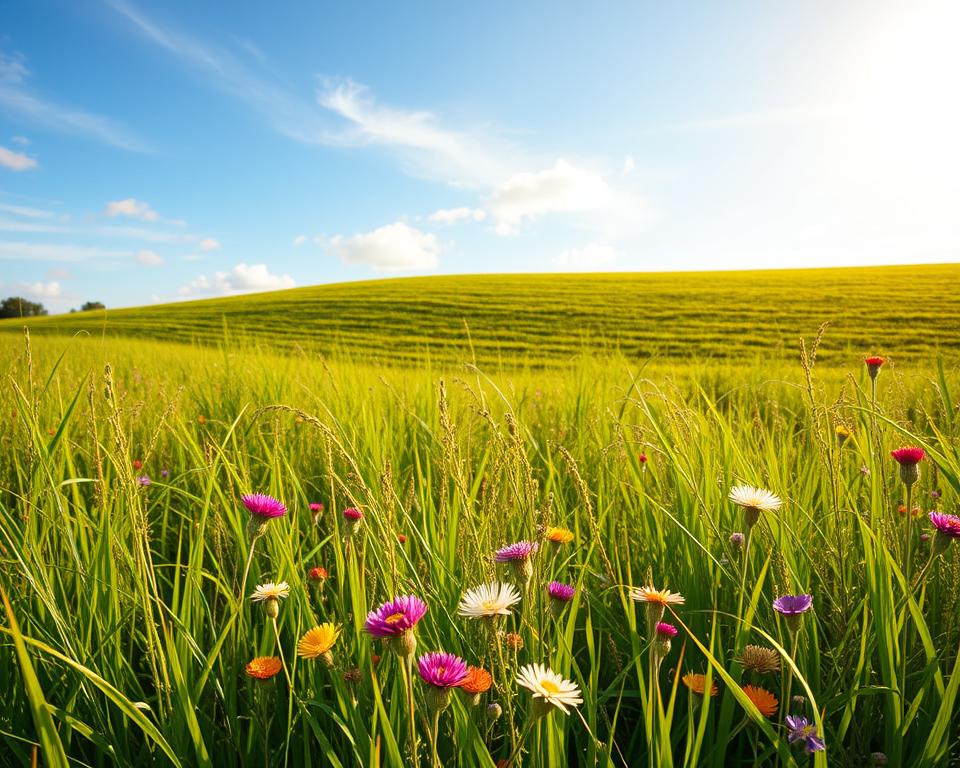
By adopting either the “let the grass grow” method or the gradual conversion approach, you can successfully transform your lawn into a beautiful wildflower meadow. This not only enhances the aesthetic appeal of your garden but also provides a valuable habitat for various species, contributing to local biodiversity.
Maintaining Your Wildflower Meadow
Maintaining a wildflower meadow requires careful attention during its first year and beyond. Proper care ensures the meadow remains healthy and vibrant, supporting local biodiversity.
Caring for Your Meadow in the First Year
In the first year, your wildflower meadow needs regular maintenance, including weeding and watering during droughts. It’s crucial to monitor the meadow’s progress and address any issues promptly. Weeding is essential to prevent invasive species from taking over, while watering ensures that the young plants establish a strong root system.
Long-term Maintenance and Cutting Regimes
For long-term success, maintaining your wildflower meadow involves a regular cutting regime, typically in late summer. The traditional haymaking schedule, cutting from late July to September, allows wildflowers to set seed before cutting. It’s advisable to cut on a dry day and check for wildlife before cutting. Consider a phased cutting approach or creating a ‘buffer zone’ to protect insects and small mammals.
| Cutting Method | Meadow Size | Tools Required |
|---|---|---|
| Manual Cutting | Small | Shears, Scythe |
| Mechanized Cutting | Large | Ride-on Mower, Strimmer |
After cutting, leave the cuttings for a few days to allow seeds to drop, then clear them to compost. This practice reduces soil fertility and maintains wildflower diversity. Regular maintenance also involves monitoring for dominant grass species or unwanted invasive plants and addressing these issues promptly.
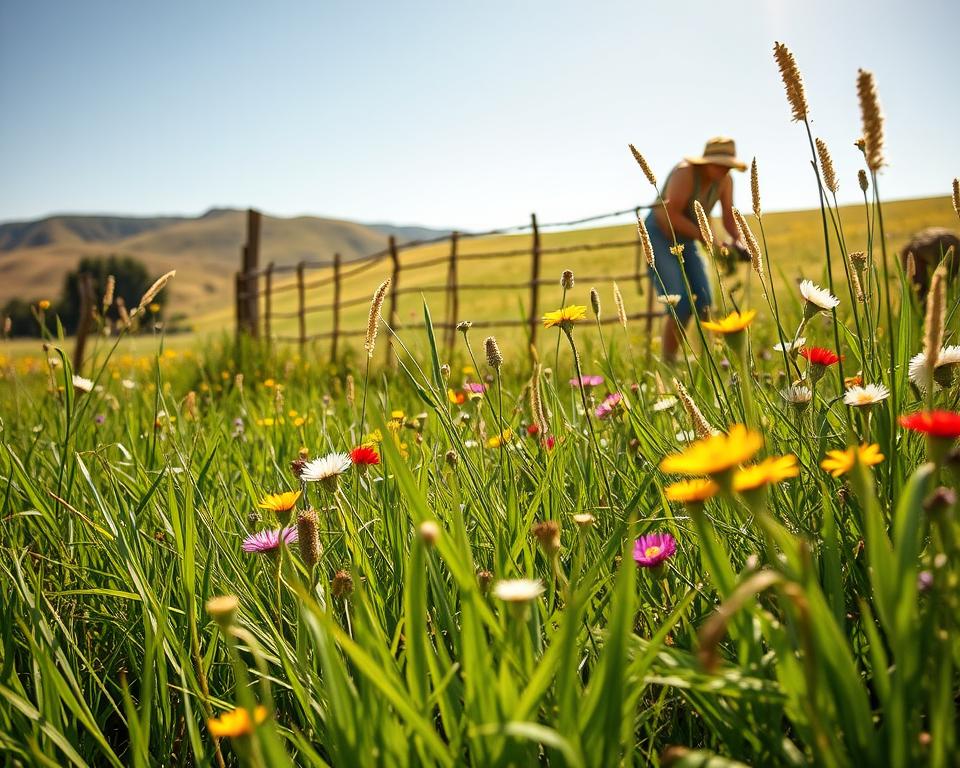
Recommended Wildflowers for Different Conditions
When it comes to creating a wildflower meadow, selecting the right wildflowers for your specific conditions is crucial. The success of your meadow depends on choosing wildflowers that are suited to your soil type and sunlight conditions.
For Sunny, Well-Drained Sites
If your garden receives full sun and has well-drained soil, consider planting wildflowers like bird’s-foot trefoil, common knapweed, field scabious, and wild marjoram. These species thrive in sunny conditions and can tolerate dry soils.
| Wildflower | Characteristics | Wildlife Benefits |
|---|---|---|
| Bird’s-foot Trefoil | Yellow flowers, nitrogen-fixing | Attracts bees and butterflies |
| Common Knapweed | Pink or purple flowers, tall stature | Provides nectar for bees and butterflies |
| Field Scabious | Pale blue or lilac flowers, tall stature | Attracts bees and butterflies |
| Wild Marjoram | Pink or purple flowers, fragrant | Attracts bees and butterflies |
For Partially Shaded or Damp Areas
If your garden is partially shaded or has damp soils, consider planting wildflowers like red campion, meadowsweet, ragged robin, and foxgloves. These species thrive in shadier conditions and can tolerate moist soils.

| Wildflower | Characteristics | Wildlife Benefits |
|---|---|---|
| Red Campion | Pink or red flowers, tall stature | Attracts bees and butterflies |
| Meadowsweet | White or pale pink flowers, fragrant | Provides nectar for bees and butterflies |
| Ragged Robin | Pink flowers, delicate appearance | Attracts bees and butterflies |
| Foxgloves | Tall spikes of white or purple flowers | Provides nectar for bees |
Conclusion
With the right approach, you can establish a beautiful and ecologically valuable wildflower meadow. To achieve this, it’s crucial to select the right wildflower seed mix for your specific soil type and garden conditions. This ensures successful establishment and supports local biodiversity. Creating a wildflower meadow requires patience, with benefits often becoming apparent in the second or third year. Make sure to follow recommended maintenance regimes to ensure your meadow thrives. Start with a small area to gain experience, and consider expanding in future seasons. By doing so, you’ll be supporting declining pollinator populations and enhancing local biodiversity with your wildflower seeds.
FAQ
What is the best time to sow wildflower seeds?
The best time to sow wildflower seeds is either in spring (March-April) or autumn (September), when the soil is not too cold and there is adequate moisture.
How do I choose the right seed mix for my wildflower meadow?
To choose the right seed mix, consider factors such as your soil type, the amount of sunlight your area receives, and the type of wildflowers you want to grow. Ensure the mix is suitable for your region and climate.
What type of soil is best for a wildflower meadow?
Wildflowers generally thrive in well-drained soil that is not too fertile. Some species prefer dry or sandy soils, while others tolerate clay or damp conditions.
How often should I mow my wildflower meadow?
In the first year, it’s essential to mow regularly to prevent weeds from outcompeting your wildflowers. After establishment, annual or bi-annual mowing is usually sufficient, depending on the meadow’s condition and the type of wildflowers.
Can I convert an existing lawn into a wildflower meadow?
Yes, you can convert an existing lawn into a wildflower meadow using methods such as the ‘let the grass grow’ method or gradual conversion. Both approaches require careful planning and maintenance.
How do I maintain my wildflower meadow in the long term?
Long-term maintenance involves periodic mowing, controlling weeds, and possibly reseeding to maintain the meadow’s health and appearance. The specific maintenance needs will depend on the meadow’s conditions and the types of wildflowers present.
Are wildflower meadows beneficial for wildlife?
Yes, wildflower meadows are highly beneficial for wildlife, providing food, shelter, and habitat for various insects, birds, and other animals. They support biodiversity and can be a valuable resource for local ecosystems.
Can I grow wildflowers in shaded or damp areas?
While many wildflowers prefer full sun and dry conditions, there are species that tolerate or even prefer partial shade or damp soils. Choose a seed mix or plug plants that are suitable for your specific conditions.