Creating & Designing a Country Garden / Cottage Garden – Your Step-by-Step Guide
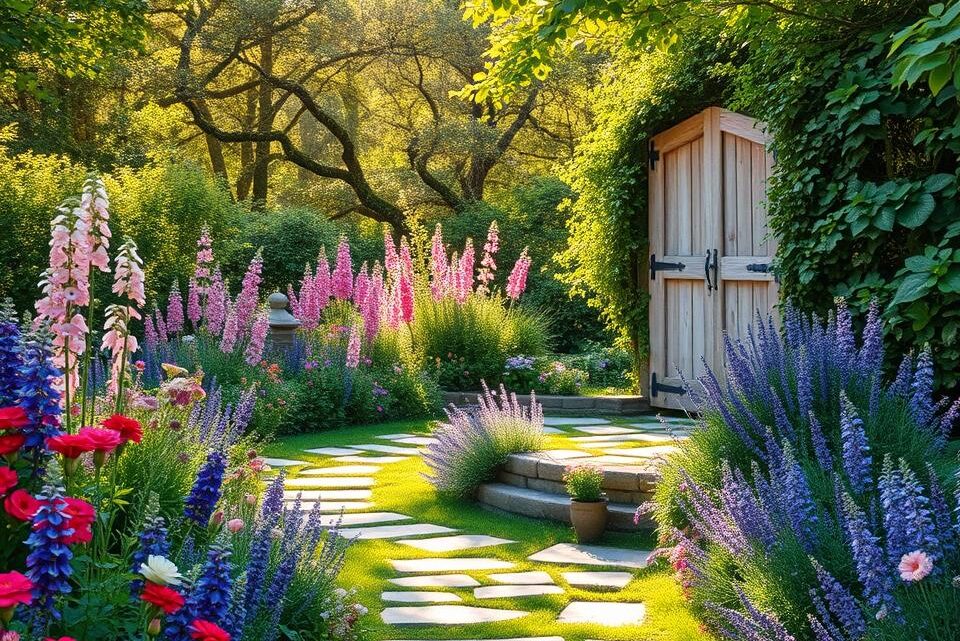
You’re about to embark on a journey to create a charming cottage garden that combines the beauty of nature with the functionality of a practical outdoor space.
A cottage garden is a timeless and enchanting style that has remained popular in the UK since its Elizabethan beginnings. It allows you to make the best use of your garden space, whether small or large, and grow decorative plants alongside edibles.
By following this comprehensive guide, you’ll learn how to design and maintain a beautiful country garden that suits your modern lifestyle while retaining its traditional charm.
Inhaltsverzeichnis
Key Takeaways
- Understand the timeless appeal of cottage and country gardens
- Learn how to integrate decorative plants alongside edibles
- Discover how to adapt cottage gardens to suit modern lifestyles
- Preview the step-by-step approach to designing your garden
- Gain insight into the key differences between country gardens and other styles
Understanding the Essence of Country and Cottage Gardens
Embracing the essence of country and cottage gardens means understanding their unique blend of form and function. These gardens are designed to be immersive experiences, rich in colour, scent, and texture, where every element serves a purpose.
“the garden is a love song, a duet between a human being and Mother Nature”
by Jeff Cox beautifully encapsulates, the art of creating such a garden involves a deep connection with nature and a thoughtful approach to design.
The History and Evolution of Cottage Gardens
The history of cottage gardens dates back centuries, originating from the humble plots surrounding rural cottages. These gardens were initially practical, providing families with food, herbs, and medicinal plants. Over time, they evolved to incorporate ornamental plants, blending utility with beauty.
The evolution of cottage gardens reflects changing societal values and gardening practices. Today, they are celebrated for their informal, abundant planting style and the way they seamlessly integrate edible and ornamental plants.
Key Characteristics That Define Country Garden Style
Country garden style is characterized by its relaxed, naturalistic approach to design and maintenance. A key feature is the use of curving paths and meandering borders, which create a sense of discovery and exploration.
The style is also defined by its emphasis on planting a diverse range of flora, including traditional flowering plants, herbs, and vegetables, all growing together in harmony. This approach not only adds visual interest but also creates a sensory experience, with a variety of textures, colours, and scents.
Planning Your Country Garden Layout
A well-designed country garden starts with a thoughtful layout plan. You need to consider several factors to create a harmonious and inviting outdoor space.
Assessing Your Space and Conditions
Begin by assessing your garden’s space and conditions. Take note of the sunlight, soil type, and existing features like trees or slopes. Understanding these elements will help you make informed decisions about your garden’s design.
Designing with Curves and Informal Pathways
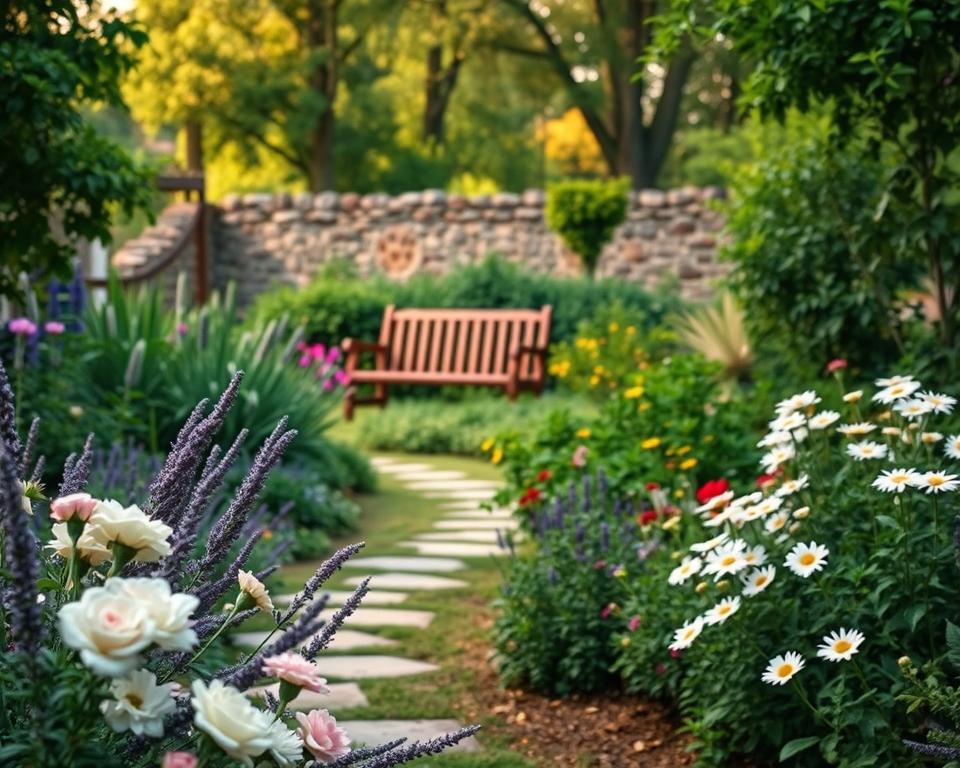
Country gardens often feature curves and informal pathways that meander through the space, creating a sense of discovery. Use natural materials like stone or gravel for pathways, and consider curving borders to add visual interest.
Creating Garden Zones and Focal Points
Divide your garden into distinct zones, such as a seating area, a vegetable garden, or a flower bed. Create focal points within each zone to draw the eye and guide movement through your garden. Use structural elements like arbours, arches, and seating areas to define different areas.
| Garden Zone | Focal Point | Structural Elements |
|---|---|---|
| Seating Area | Ornamental Tree | Arbour or Pergola |
| Vegetable Garden | Herb Bed | Pathways and Raised Beds |
| Flower Bed | Statement Shrub | Curving Borders |
By thoughtfully planning your country garden layout, you can create a beautiful and functional outdoor space that reflects your personal style.
Essential Structural Elements for Authentic Charm
When designing a country garden, incorporating essential structural elements is crucial for achieving authentic charm. These elements not only provide a sense of history and character but also help to create a visually appealing and functional outdoor space.
Traditional Boundaries: Fences, Walls and Hedges
Traditional boundaries such as fences, walls, and hedges play a significant role in defining the character of a country garden. You can use natural materials like wood and stone to create fences and walls that blend seamlessly into the surroundings. Hedges, on the other hand, provide a soft, organic boundary that can be shaped and maintained to suit your cottage garden design.
| Boundary Type | Materials | Characteristics |
|---|---|---|
| Fences | Wood, Metal | Versatile, Can be painted or stained |
| Walls | Stone, Brick | Durable, Provides clear boundary |
| Hedges | Box, Yew, Privet | Soft, Organic, Can be shaped |
Pathways, Arches and Garden Ornaments
Pathways, arches, and garden ornaments are not only functional but also add to the aesthetic appeal of your cottage garden. Using traditional materials like weathered stone, brick, and gravel for pathways creates an authentic look. Arches and arbours can be used to create focal points, frame views, and support climbing plants like roses and clematis.

To create a sense of journey and discovery, consider the thoughtful placement of these structural elements. Allowing plants to spill over path edges adds to the characteristic informality of a country garden while maintaining functionality. By incorporating these elements, you can enhance the year-round appeal of your garden, providing interest even in winter.
Creating & Designing a Country Garden / Cottage Garden – Your Step-by-Step Guide
The journey to creating a stunning country garden involves several crucial stages, from initial planning to final planting. By following these steps, you can achieve a beautiful and inviting outdoor space.
Step 1: Mapping Out Your Vision
Start by sketching out your garden design, considering the space and conditions available. Think “smallest to tallest” when planning your plant arrangement to ensure visibility and aesthetic appeal.
Step 2: Preparing the Ground
Prepare your soil by assessing its quality and making necessary amendments. This step is crucial for the health and growth of your plants.
Step 3: Establishing Structural Elements
Install fences, pathways, and other structural elements that define your garden’s character and provide a framework for your planting scheme.
Step 4: Implementing Your Planting Scheme
Plant a mix of perennials, annuals, and shrubs, arranging them according to height and growth habits. Consider incorporating herbs and flowers to add variety and colour.
| Step | Description | Key Considerations |
|---|---|---|
| 1 | Mapping Out Your Vision | Space, conditions, plant arrangement |
| 2 | Preparing the Ground | Soil quality, amendments |
| 3 | Establishing Structural Elements | Fences, pathways, garden ornaments |
| 4 | Implementing Your Planting Scheme | Plant selection, arrangement, height |

Selecting the Perfect Plants for Your Country Garden
When it comes to creating a charming country garden, the right plants are essential. The selection of plants can make or break the aesthetic and functionality of your garden.
Foundation Trees and Shrubs for Structure
Foundation trees and shrubs provide the backbone of your country garden, offering structure and year-round interest. Consider planting traditional fruit trees like English apple, plum, and pear trees, which not only provide beautiful blossoms but also a bountiful harvest. Native shrubs like hawthorn and blackthorn can be used to create hedgerows, adding to the garden’s charm.

Classic Cottage Garden Flowers and Perennials
Cottage garden flowers and perennials are a staple of the country garden style. Incorporate a mix of traditional cottage garden flowers like roses, peonies, and delphiniums, alongside perennials such as lavender, catmint, and sedum. These plants will attract pollinators and add vibrant colours to your garden throughout the growing season.
Incorporating Edibles: Herbs, Vegetables and Fruit
Incorporating edible plants into your country garden not only adds functionality but also enhances its charm. Consider planting a variety of herbs like rosemary, thyme, and sage, which can be used in cooking and add fragrance to the garden. For vegetables and fruit, opt for smaller, more manageable varieties like tomatoes, strawberries, and raspberries, which can be grown in beds or rustic wooden planters.
By incorporating a mix of foundation trees and shrubs, classic cottage garden flowers, and edible plants, you can create a beautiful and productive country garden that is both charming and functional.
Creating Year-Round Interest in Your Garden
A country garden’s beauty is not limited to a single season; it should be a dynamic space that evolves and delights throughout the year. To achieve this, you need to consider the changing seasons and how they impact your garden’s appearance.
Spring and Summer Highlights
During spring and summer, your country garden comes alive with vibrant colours and lush foliage. Incorporate a mix of flowering plants, such as peony and delphinium, to create a stunning display. Consider adding fragrant herbs like lavender and rosemary to enhance the sensory experience.
Autumn Colour and Texture
As summer fades, autumn brings its own unique charm with changing foliage and rich textures. Incorporate plants with attractive autumn colours, like maple trees and sedum, to add depth to your garden. Ornamental grasses and seedheads can also provide interesting textures and forms.
Winter Structure and Interest
Winter can be a challenging time for gardens, but with the right planning, your country garden can remain visually appealing. Incorporate structural elements like topiary and pergolas to provide winter interest. Plants with interesting bark, like cornelian cherry, or persistent berries, such as holly, can also add colour and texture to your winter garden.
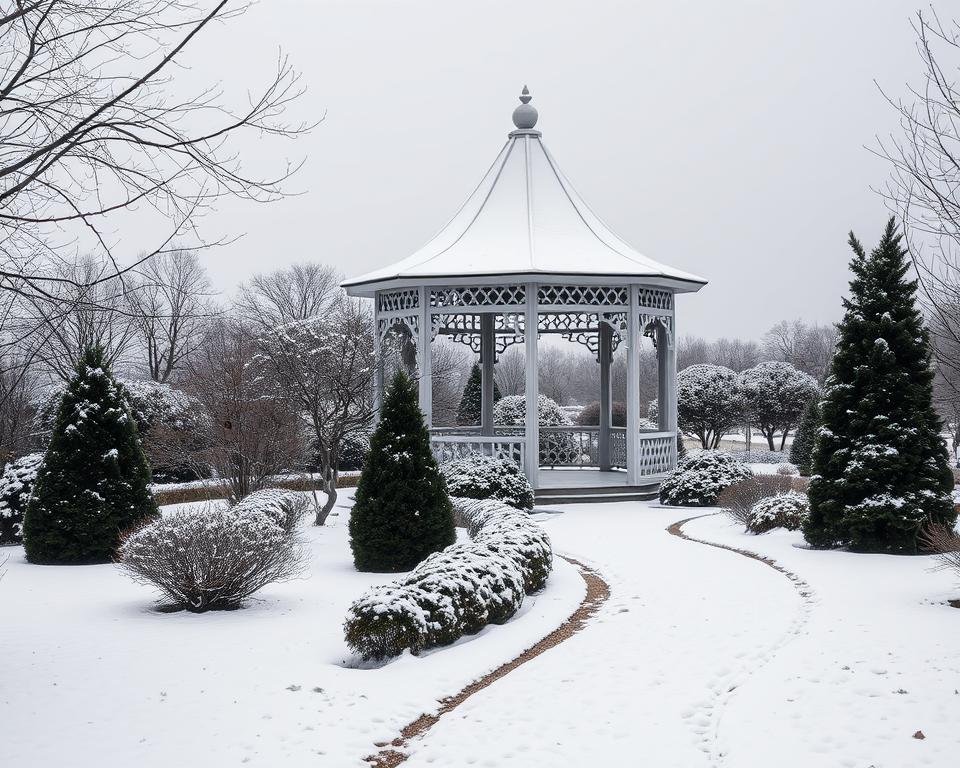
By considering the unique characteristics of each season and incorporating a mix of plants and structural elements, you can create a country garden that remains beautiful and engaging throughout the year.
Designing for All the Senses
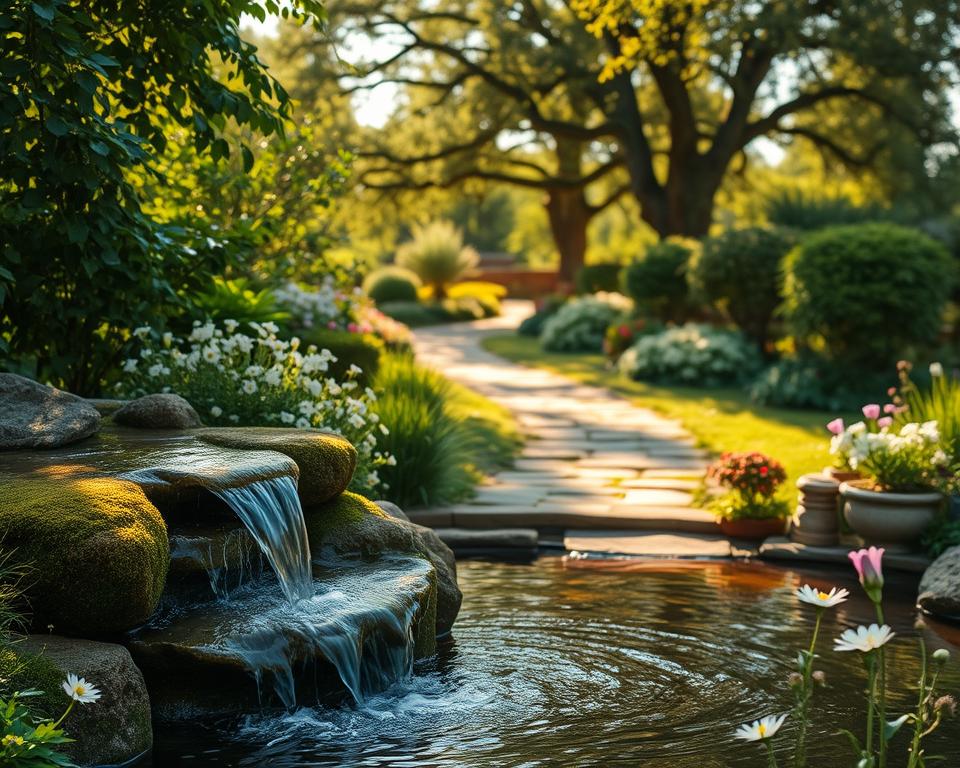
As you design your country garden, consider how to engage all the senses to create a truly immersive experience. A well-designed garden should delight your senses, from the sight of blooming flowers to the sound of gently flowing water.
Fragrant Plants for Sensory Appeal
Incorporating fragrant plants into your cottage garden can significantly enhance its sensory appeal. Choose plants like lavender, roses, and herbs, which release their fragrance during different times of the day, ensuring a continuous sensory experience.
Adding Sound and Movement with Water Features
Water features are a quintessential element of English country gardens, adding sound, movement, and reflective qualities. Consider installing a small pond or fountain, or even a simple birdbath, to create a soothing atmosphere. For inspiration, you can explore 30+ garden pond ideas.
| Water Feature Type | Benefits |
|---|---|
| Pond | Attracts wildlife, creates a sense of calm |
| Fountain | Adds sound and movement, masks unwanted noise |
| Birdbath | Provides a water source for birds, adds visual interest |
Low-Maintenance Approaches to Country Garden Design
Creating a low-maintenance country garden is all about making informed design choices. By selecting the right plants, implementing time-saving design strategies, and adopting sustainable gardening practices, you can enjoy a beautiful garden without the excessive upkeep.
Smart Plant Selection for Reduced Upkeep
Choosing the right plants is crucial for a low-maintenance garden. Opt for native plants and perennials that are well-suited to your local climate and soil conditions. These plants will require less watering, pruning, and fertilizing. Consider using groundcovers like Vinca minor or Ajuga reptans to suppress weeds and reduce the need for mulch.
| Plant Type | Maintenance Needs | Benefits |
|---|---|---|
| Native Plants | Low watering and pruning needs | Attract local wildlife, resistant to pests and diseases |
| Perennials | Less frequent replanting | Provide year-round interest, improve soil health |
| Groundcovers | Suppress weeds, reduce mulching needs | Attractive foliage, reduce soil erosion |
Time-Saving Design Strategies
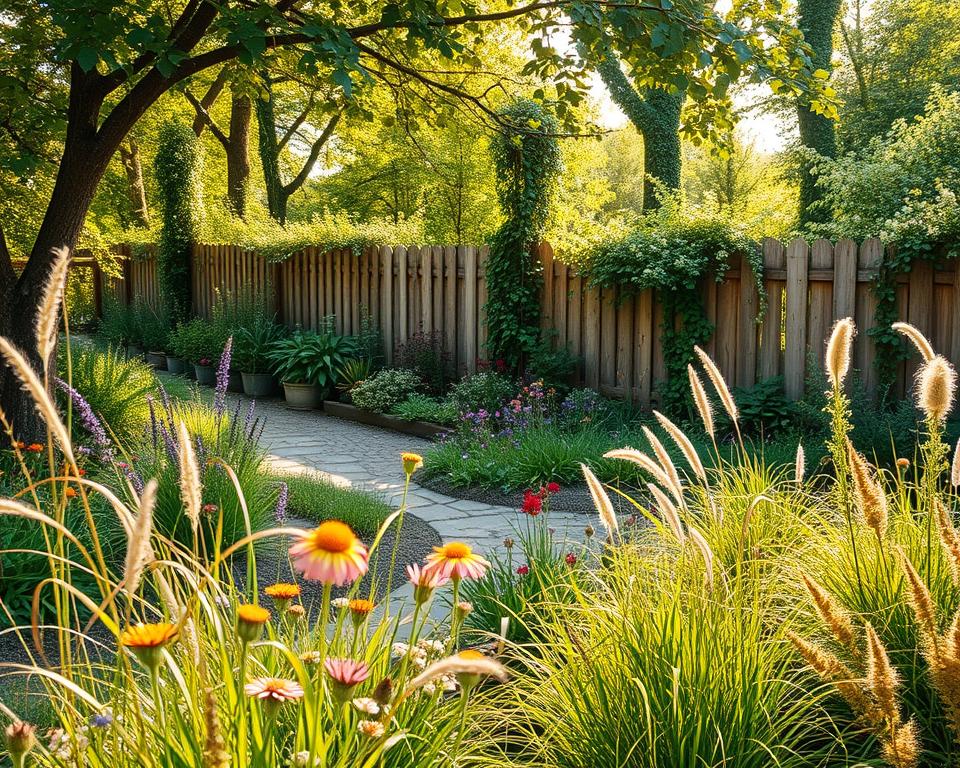
Effective garden design can significantly reduce maintenance. Use curved paths and informal layouts to create a natural, effortless look that requires less upkeep. Incorporate mulching to retain moisture and suppress weeds. Consider using a drip irrigation system to deliver water directly to the roots of plants, reducing evaporation and runoff.
Sustainable Gardening Practices
Adopting sustainable gardening practices not only reduces maintenance but also creates a healthier garden ecosystem. Implement composting to enrich the soil naturally and reduce waste. Encourage beneficial insects and birds to control pests naturally, minimizing the need for pesticides. By conserving water through efficient irrigation and mulching, you can create a thriving garden that benefits both you and the environment.
By incorporating these strategies into your country garden design, you can enjoy a beautiful, low-maintenance outdoor space that brings joy and tranquility to your life.
Encouraging Wildlife in Your Country Garden
Your country garden can become a haven for local wildlife with a few simple changes. By incorporating elements that attract beneficial creatures, you can create a thriving ecosystem that is both beautiful and environmentally friendly.
Plants That Attract Pollinators
Choosing the right plants is crucial for attracting pollinators like bees and butterflies. Incorporate a mix of flowers that bloom at different times to provide a constant source of nectar. Cottage garden favourites such as lavender, foxgloves, and hollyhocks are excellent choices.
| Plant | Blooming Period | Attracts |
|---|---|---|
| Lavender | Summer | Bees, Butterflies |
| Foxgloves | Spring | Bees |
| Hollyhocks | Summer | Bees, Hummingbirds |
Creating Habitats for Beneficial Creatures
Creating diverse habitats within your garden is key to supporting a wide range of wildlife. Consider adding features like log piles, stone cairns, and insect hotels to provide shelter and breeding sites. Leaving some areas of your garden slightly untidy can also help, as this provides shelter for overwintering insects.
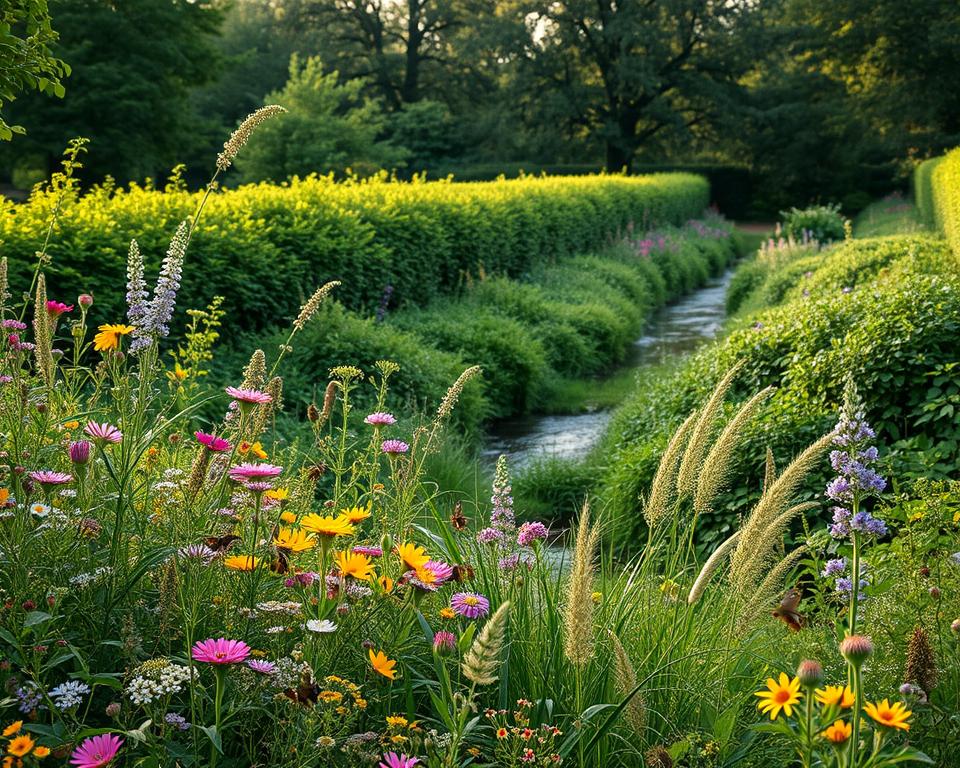
Providing water sources, such as bird baths or wildlife ponds with marginal planting, is also essential. By balancing the needs of wildlife with the ornamental aspects of your country garden, you can create a harmonious and sustainable ecosystem.
Conclusion: Embracing the Evolving Beauty of Your Country Garden
As you complete your country garden, you’ll discover that its beauty lies in its evolution over time. Cottage gardens are never truly “finished” but continue to develop and change, offering new joys and challenges with each passing season. By embracing this natural cycle, you’ll find that your garden becomes more established and characterful. Your country garden is a reflection of your connection to nature and the gardening tradition. It’s a space that will evolve with you over the years, providing not just beauty but also physical and mental wellbeing benefits. As you tend to your garden, you’ll appreciate the journey, not just the destination. By documenting and celebrating its evolution, you’ll cherish the memories and experiences that make your garden truly special.
FAQ
What is the ideal size for a cottage garden?
The ideal size for a cottage garden varies, but typically, they are smaller, ranging from a few square metres to a quarter of an acre. The key is to make the most of the space you have, using layers and textures to create visual interest.
How do I choose the right plants for my country garden?
To choose the right plants, consider your climate, soil type, and the amount of sunlight your garden receives. Opt for a mix of perennials, shrubs, and flowers that are well-suited to your local conditions and provide year-round interest.
What are the essential structural elements for a cottage garden?
Essential structural elements include traditional boundaries like fences, walls, and hedges, as well as pathways, arches, and garden ornaments. These features add charm and character to your garden.
How can I make my cottage garden more wildlife-friendly?
To make your cottage garden more wildlife-friendly, incorporate plants that attract pollinators, such as lavender and herbs. Create habitats for beneficial creatures by including features like log piles or birdhouses.
What are some low-maintenance approaches to country garden design?
Low-maintenance approaches include smart plant selection, using groundcovers, and incorporating mulch to reduce weed growth. Time-saving design strategies, such as using drought-tolerant plants, can also minimise upkeep.
How can I create a sense of rhythm and repetition in my garden?
To create a sense of rhythm and repetition, use plants with similar textures or colours in a repeating pattern. This can be achieved through the use of drifts of perennials or by lining pathways with identical plants.
What are some traditional cottage garden colour palettes?
Traditional cottage garden colour palettes often feature soft, pastel shades, such as pale pinks, blues, and yellows. These colours create a warm, inviting atmosphere and can be complemented by the addition of white or cream-coloured blooms.
How can I incorporate edibles into my country garden?
Incorporate edibles, such as herbs, vegetables, and fruit, into your garden by using them as ornamental plants or by creating a dedicated vegetable bed. This adds functionality and beauty to your garden.