Creative Wooden Pallet Garden Ideas for Your Outdoor Space Guide

Transforming a compact outdoor area into a thriving green sanctuary is a common ambition. Pallet gardens have surged in popularity as a brilliant solution for this very challenge. They offer a remarkably versatile and space-efficient way to cultivate plants, from fresh herbs to vibrant blooms.
These structures serve as ready-made frames, ideal for vertical planting schemes. This approach maximises growing potential in even the smallest plots, making it perfect for urban settings. Their inherent mobility also allows gardeners to reposition their creations to follow the sun.
This guide explores the immense potential of this sustainable gardening method. It demonstrates how repurposing materials can lead to beautiful, functional, and eco-conscious ideas for your space. Readers will discover a range of projects, from simple planters to more complex features.
The following sections provide a comprehensive walkthrough. They cover essential topics like material selection, safe construction techniques, and suitable plant choices. The aim is to equip everyone, from beginners to seasoned enthusiasts, with the knowledge to build a stunning and productive garden.
Inhaltsverzeichnis
Key Takeaways
- Pallet gardens are an excellent solution for maximising growing space in compact areas.
- They offer great versatility, supporting everything from vegetables to decorative flowers.
- This approach is particularly well-suited to urban environments with limited ground space.
- Repurposing pallets is an environmentally friendly gardening practice.
- The guide provides a structured path from planning to maintaining a successful project.
Benefits of a Wooden Pallet Garden
The appeal of constructing a garden from reclaimed pallets lies in its dual benefits for the environment and spatial efficiency. This approach turns a common waste product into a valuable resource for cultivation.
Eco-friendly and Recycled Materials
Millions of timber pallets are used once for logistics before being discarded. Repurposing them prevents this useful wood from filling landfills.
This practice supports a circular economy. Enthusiasts transform waste into productive growing spaces. It is a genuinely sustainable choice for your garden.
https://www.youtube.com/watch?v=XXRlQI3eIrg
Space Maximisation for Urban Gardens
Vertical designs are a key advantage for city dwellers. A single pallet can host numerous plants in a footprint of just a few square feet.
This vertical use of space is ideal for balconies and patios. It allows for abundant cultivation in areas with no ground soil.
The modular nature of these structures offers great flexibility. Gardens can be easily rearranged to suit changing sunlight or new planting ideas.
Creative Wooden Pallet Garden Ideas for Your Outdoor Space
Repurposed logistics materials present innovative solutions for maximising cultivation capacity in constrained environments. These versatile structures form the foundation for numerous pallet garden ideas that blend functionality with aesthetic appeal.

Vertical applications rank among the top choices for space-efficient garden ideas. The natural gaps in these timber frames create perfect pockets for herbs, strawberries, and shallow-rooted flowers. This approach transforms blank walls into living tapestries.
Horizontal configurations offer equally impressive results. Stacked units become raised beds with ideal soil depths of 6-12 inches. They provide excellent drainage and warmer growing conditions for vegetables and annuals.
Functional structures extend beyond planting areas. Three-bin compost systems and potting benches with integrated storage demonstrate practical design thinking. Cold frames with transparent lids further extend the growing season.
Decorative applications include stunning succulent walls with stained finishes and archway trellises for climbing plants. Furniture pieces like benches and swing beds showcase the structural potential of reclaimed timber. Each project balances visual interest with tangible benefits for outdoor spaces.
These diy projects range from simple beginner-friendly builds to complex constructions. They demonstrate how basic materials can be transformed through creative thinking and careful planning.
Pallet Garden Design Inspirations and Versatile Layouts
The aesthetic potential of a repurposed pallet structure extends far beyond its basic function as a planter. A thoughtful design can transform it into a central feature of any outdoor area.
This approach allows for complete personalisation. The final look can range from rustic to thoroughly contemporary.

Design Concepts for Urban Settings
City living often means working with limited square footage. Vertical pallet gardens are a perfect solution for a small balcony or patio.
They utilise wall space efficiently. A single pallet can host a surprising number of plants without cluttering the floor.
These structures can also serve as attractive privacy screens. This adds functionality while enhancing the look of a compact urban space.
Incorporating Colour and Texture
A fresh coat of paint is one of the simplest ways to customise a pallet planter. It protects the wood and creates a cohesive design that matches your patio furniture.
For a more interactive element, consider using chalkboard paint on a slat. This allows for easy labelling of herbs and vegetables.
Plant selection is key for textural interest. Combining trailing plants with upright varieties creates a dynamic, layered effect.
| Finish Type | Best For | Visual Effect | Durability |
|---|---|---|---|
| Natural Stain | Rustic, farmhouse styles | Enhances wood grain | Good weather resistance |
| Opaque Paint | Modern, colourful schemes | Bold, uniform colour | Excellent protection |
| Clear Varnish | Preserving raw wood look | Adds a subtle sheen | High weatherproofing |
DIY Pallet Garden Projects and Essential Tools
Successful construction begins with gathering the proper implements and understanding the assembly process. This approach ensures both safety and efficiency when working with reclaimed materials.
Essential Tools and Materials
Basic tools for any diy project include a hammer for nail removal and a saw for cutting. Safety equipment like gloves and goggles are equally important.
Sandpaper addresses rough surfaces that could cause splinters. This preparation work creates a smooth finish for painting or staining later.
Fastening supplies should include weather-resistant screws and metal brackets. These things provide structural reinforcement for lasting durability.

Step-by-Step Project Guidance
Construction typically starts on the ground for stability. This way of working allows for easier soil packing and plant arrangement.
Vertical designs require careful planning. Builders should allow sufficient time for soil to settle before standing the structure upright.
Raised bed projects often involve stacking pallets to create deeper planting box configurations. Each additional layer needs proper reinforcement.
Finishing touches like weatherproofing sealant extend the lifespan of your diy creation. Proper application protects against moisture and UV damage.
Innovative Vertical, Raised and Recycled Garden Designs
Advanced layouts make the most of every available inch. They turn challenging spaces into productive zones. This approach is key for modern horticulture.

Vertical Garden Structures
A vertical garden is a brilliant solution for tight spots. It uses a wall or fence to grow plants upwards. This method is perfect for patios and courtyards.
Building a sturdy pallet planter for a vertical garden needs care. When filled with soil, it becomes very heavy. It must be fixed securely to a solid wall.
Use strong brackets and screws driven into wall studs. For a simpler setup, lean the structure against a wall with its base on the ground. This uses gravity for stability.
Raised Bed Techniques from Salvaged Wood
Raised bed construction offers many benefits. It warms soil faster and improves drainage. Plants are lifted away from pests in the ground.
Disassemble a pallet to get usable boards. Rebuild these boards into a frame. A depth of 6-12 inches is ideal for a raised bed.
Line the bed with landscape fabric. This stops soil from washing away. It also suppresses weeds from the ground below.
For taller bed designs, stack frames and use stakes for support. This prevents the wood from bowing outwards under pressure.
These methods show how recycled wood can create powerful growing spaces. They transform simple materials into functional raised bed solutions.
Integrating Plants and Sustainable Practices in Your Garden
The final stage of creating a vibrant pallet garden involves the careful selection of plants and the adoption of sustainable maintenance routines. This ensures the project is not only beautiful but also productive and ecologically sound over the long term.
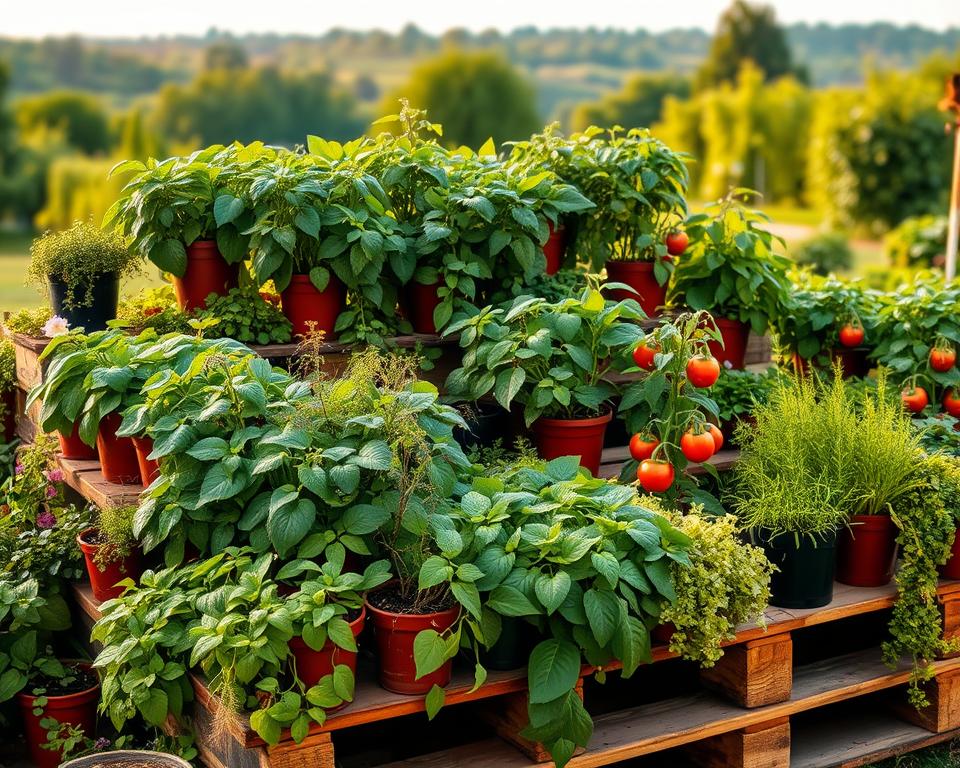
Selecting Suitable Plant Varieties
Choosing the right plants is crucial for success. Species with shallow root systems are ideal for the confined space of a pallet planter. This makes herbs like thyme, basil, and mint perfect candidates for a compact herb garden.
Leafy greens such as lettuce and spinach also thrive. For colour, consider trailing annuals like nasturtiums. Succulents are another excellent choice due to their low water needs.
Using a rich, organic potting soil provides the necessary nutrients. It is best to pack plants tightly and water them thoroughly while the structure is lying flat. Allow about two weeks for the roots to establish before standing it upright.
Maintaining Organic and Sustainable Practices
Ongoing care focuses on organic methods. These gardens dry out faster than ground-level beds, so regular watering is essential. Monitoring soil moisture daily is a good habit.
Feeding plants with natural fertilisers supports healthy growth without harming the environment. Companion planting can help deter pests naturally. Composting garden waste completes a sustainable cycle, returning nutrients to the soil.
Conclusion
Ultimately, embarking on a pallet garden project opens a world of possibilities for enhancing any outdoor area. Its core strength lies in its remarkable versatility, allowing for the creation of everything from a simple planter box to functional furniture like a bench or an efficient compost system.
This approach to gardening is highly accessible, offering a rewarding way for enthusiasts of all levels to cultivate their space. It represents a genuinely sustainable practice, giving a second life to materials and reducing waste.
The time invested in building and maintaining these structures yields significant long-term benefits. It is a practical and affordable route to a personalised and productive green sanctuary.
FAQ
How can I tell if a pallet is safe to use for growing plants?
Look for the IPPC stamp on the timber. Pallets marked “HT” (Heat Treated) are safe. Avoid any stamped “MB” (Methyl Bromide) as this chemical treatment is harmful. Inspect the structure for splinters, rot, or insect infestations before use.
What are the main benefits of creating a vertical garden with pallets?
Vertical designs are excellent for maximising limited space, such as on a patio or balcony. They can transform a bare wall into a vibrant feature, improve air quality, and make plant care more accessible by reducing bending.
Which plants are best suited for a pallet planter?
A> Herbs, leafy greens, strawberries, and shallow-rooted flowers like pansies thrive in these containers. Succulents are also a popular choice for their low water needs. It is crucial to match the plant’s needs with the sunlight exposure of the planter’s location.
Do I need to line a pallet before filling it with soil?
Yes, lining the back, bottom, and sides with landscape fabric is highly recommended. This step helps contain the soil, prevents it from washing out, and protects the timber from excessive moisture, thereby extending its lifespan.
Can I use a pallet garden for growing vegetables?
Absolutely. Many vegetables, especially those with shallow root systems like lettuce, radishes, and herbs, grow very well in pallet planters. Ensure the structure is stable and use a high-quality potting mix to support healthy growth.
What is the best way to ensure good drainage in a pallet planter?
Good drainage is vital. If the pallet has large gaps, consider attaching a backing board with drainage holes. Always use a well-draining potting compost and avoid blocking any natural drainage routes to prevent waterlogging.
How can I make my pallet garden more visually appealing?
Consider painting or staining the wood with non-toxic, outdoor-safe products. Incorporating colourful pots, adding decorative elements like fairy lights, or planting a mix of textures and flower colours can significantly enhance its visual impact.
Are there any safety precautions to consider when building with pallets?
Always wear safety gloves and goggles when handling pallets, as they can have sharp edges and splinters. Sanding the wood thoroughly before use creates a smoother, safer surface for handling.