How to Build a Wooden Garden Table (DIY Guide)

Creating your own wooden outdoor furniture is an exciting and rewarding DIY garden table project that transforms your garden space. Whether you’re a keen woodworker or a passionate gardening enthusiast, building a custom garden furniture piece allows you to craft something truly unique and functional.
This comprehensive guide will walk you through every step of constructing a beautiful wooden garden table that matches your precise outdoor requirements. From selecting the right timber to mastering essential woodworking techniques, you’ll gain the confidence to tackle this intermediate-level project with precision and creativity.
Building your own wooden outdoor furniture offers significant advantages over purchasing pre-made options. You’ll save money, create a personalised piece that perfectly fits your garden’s aesthetic, and develop valuable woodworking skills along the way.
Inhaltsverzeichnis
Key Takeaways
- Master essential woodworking techniques for garden furniture DIY
- Learn cost-effective strategies for creating custom outdoor furniture
- Develop skills in timber selection and construction methods
- Create a durable and personalised wooden garden table
- Understand the importance of proper wood treatment and finishing
Planning Your Wooden Garden Table Project
Crafting a wooden garden table requires thoughtful preparation. Your garden table plans will determine the success of your DIY project, influencing everything from material selection to final design. Careful planning helps you create a functional and beautiful outdoor furniture piece that meets your specific needs.
Choosing the Right Wood Species for Outdoor Use
Wood selection for garden furniture is critical for ensuring durability and longevity. Different timber types offer unique characteristics suitable for outdoor environments.
- Hardwoods like oak and teak provide exceptional weather resistance
- Cedar offers natural rot protection and lightweight properties
- Pressure-treated pine presents an affordable alternative
Determining Table Dimensions and Design Style
Your garden table’s size depends on available space and intended use. Consider these key factors when planning your dimensions:
| Space Type | Recommended Table Size | Seating Capacity |
|---|---|---|
| Small Patio | 120 x 80 cm | 4 people |
| Medium Garden | 180 x 100 cm | 6-8 people |
| Large Outdoor Area | 240 x 120 cm | 8-10 people |
Estimating Your Garden Table Budget
Understanding your garden table budget helps prevent unexpected expenses. Budget considerations include:
- Wood materials
- Hardware and fixings
- Tools and equipment
- Finishing treatments
Expect to spend between £100-£500 depending on wood quality and table complexity. Smart planning ensures a cost-effective and satisfying DIY project.
Essential Tools and Materials You’ll Need
Embarking on a woodworking project to build an outdoor table requires careful preparation and the right equipment. Selecting appropriate woodworking tools is crucial for creating a durable and professional-looking garden table that will withstand the elements.
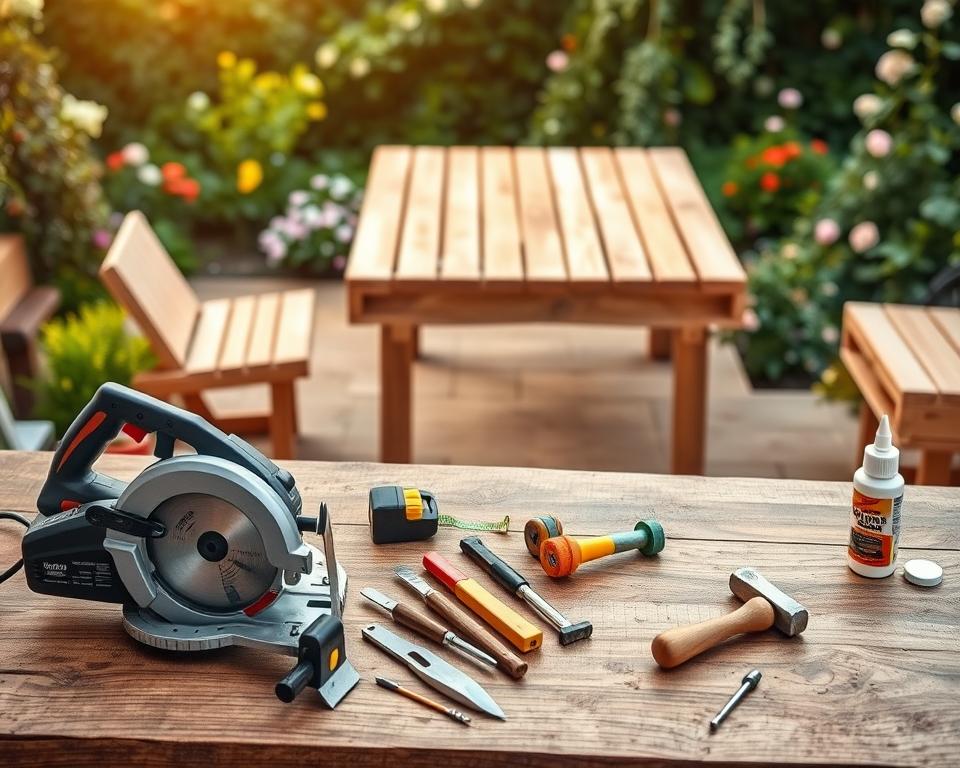
Your woodworking project will demand a specific set of tools and materials to ensure success. Let’s break down the essential items you’ll need:
Cutting Tools
- Circular saw or mitre saw
- Hand saw
- Wood chisels
- Utility knife
Measuring and Marking Equipment
- Tape measure
- Combination square
- Marking gauge
- Carpenter’s pencil
When building an outdoor table, precision is key. Accurate measurements can make the difference between a wobbly piece and a sturdy garden feature.
Essential Materials Checklist
| Material | Recommended Type | Quantity |
|---|---|---|
| Timber | Pressure-treated cedar or oak | 10-12 linear metres |
| Screws | Exterior-grade stainless steel | 500g pack |
| Wood Adhesive | Waterproof exterior wood glue | 1 large bottle |
| Finishing Oil | Exterior wood preservative | 1 litre |
“The right tools transform a challenging woodworking project into an enjoyable crafting experience.” – Master Carpenter
Remember that investing in quality woodworking tools will pay dividends in your outdoor table’s longevity and appearance. Consider renting specialised equipment if you’re working on a one-off project to manage costs effectively.
Preparing Your Workspace and Safety Considerations
Successful DIY outdoor furniture projects like a timber garden table require careful workspace preparation and safety planning. Your work environment plays a crucial role in ensuring a smooth and secure construction process.
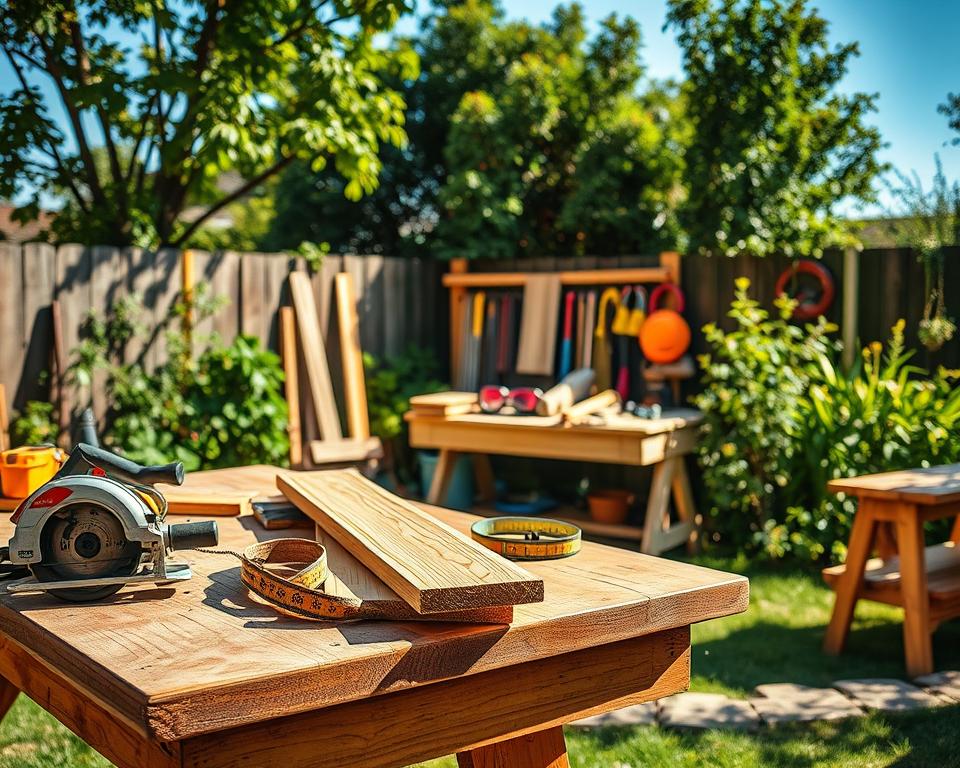
Creating an effective workspace involves strategic organisation and thoughtful safety precautions. Before starting your timber garden table project, consider these essential workspace preparation guidelines:
- Select a well-ventilated area with ample natural or artificial lighting
- Ensure a stable, flat surface for cutting and assembling timber components
- Arrange tools within easy reach to minimise unnecessary movement
- Clear workspace of potential tripping hazards
Personal Protective Equipment for Safe Construction
Protecting yourself during outdoor table construction is paramount. Invest in high-quality safety gear to prevent potential injuries:
- Safety glasses to shield eyes from wood chips and dust
- Robust work gloves for handling rough timber
- Hearing protection when using power tools
- Dust mask for sanding and finishing processes
- Steel-toed boots to protect feet from falling materials
By prioritising workspace preparation and personal safety, you’ll create an optimal environment for crafting a professional-quality timber garden table that will enhance your outdoor living space.
Cutting and Preparing the Timber Components
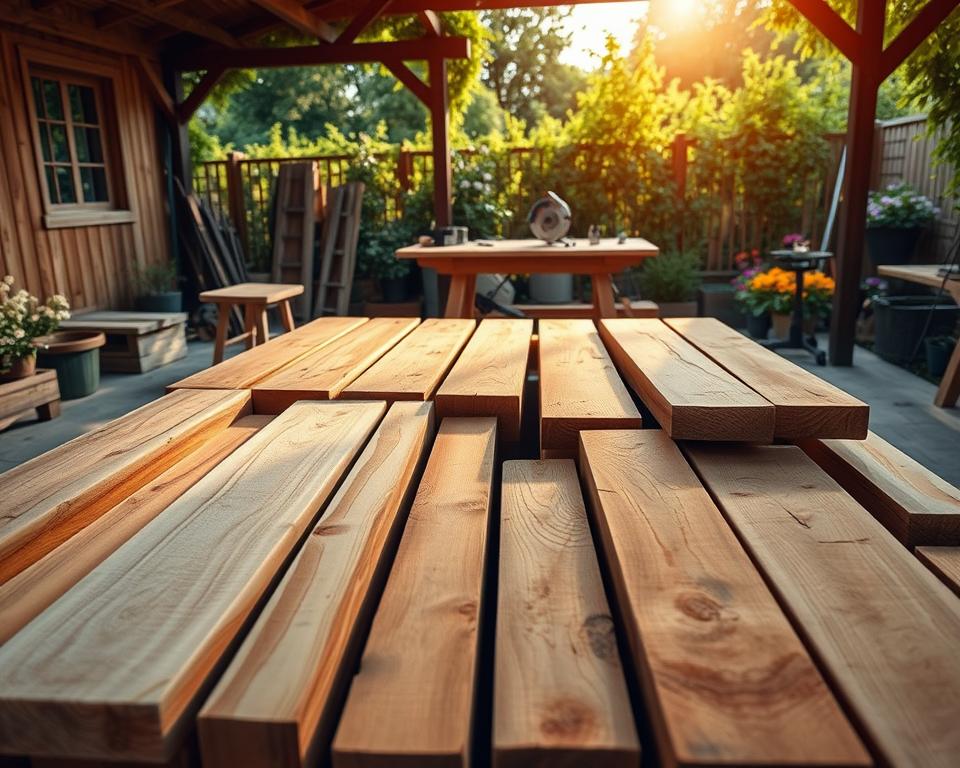
Precise timber preparation is crucial when building an outdoor table. Understanding outdoor table dimensions and avoiding common table building mistakes will help you create a sturdy and attractive garden furniture piece.
Begin by carefully selecting your timber and inspecting each piece for potential defects. Look for straight boards without significant knots or warping that could compromise your tabletop construction. Quality timber selection is the foundation of a successful project.
- Measure each component multiple times before cutting
- Use a sharp, clean saw blade for precise cuts
- Account for wood movement in outdoor environments
- Create consistent lengths for symmetrical design
When cutting timber components, follow the carpenter’s golden rule: measure twice, cut once. This approach minimises waste and prevents costly table building mistakes. Pay special attention to:
- Table leg uniformity
- Frame component precision
- Tabletop board alignment
Remember that outdoor tables require extra consideration for environmental factors. Ensure your cuts accommodate potential wood expansion and create slight gaps to prevent warping. Achieving perfect outdoor table dimensions demands patience and meticulous preparation.
How to Build a Wooden Garden Table (DIY Guide)
Creating a stunning garden table requires careful planning and precise execution. Your DIY journey will transform raw timber into a functional outdoor centrepiece that reflects your craftsmanship and design skills.
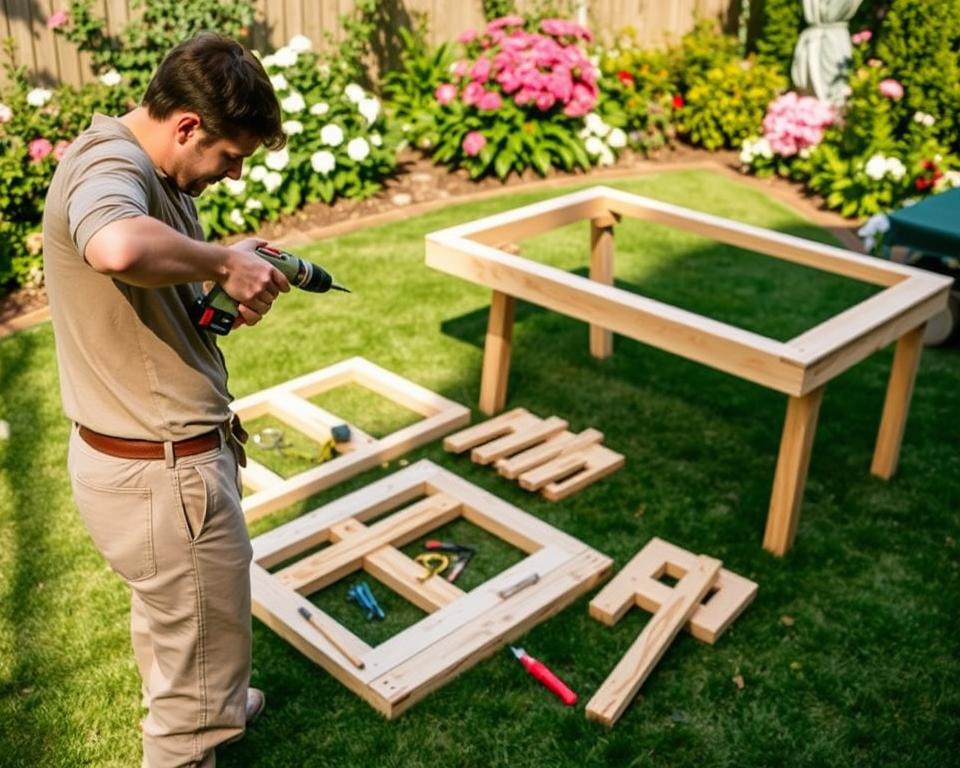
A successful garden table design begins with understanding the fundamental construction techniques. Your project will involve three critical stages: frame construction, surface assembly, and secure leg attachment.
Constructing the Table Frame
The frame serves as your garden table’s structural backbone. Focus on creating a robust perimeter using precise joinery techniques:
- Measure and cut apron boards with precision
- Check corner squareness using diagonal measurements
- Reinforce corners with metal brackets or wooden blocking
Assembling the Tabletop Surface
Your garden table surface requires strategic board placement. Consider these key considerations for garden table design:
- Select boards with consistent grain patterns
- Use spacers for uniform gaps
- Allow for seasonal wood movement
Attaching the Legs Securely
Garden table legs are crucial for stability and durability. Explore multiple attachment methods:
- Mortise and tenon joints for traditional approach
- Pocket hole joinery for modern techniques
- Bolt-through connections for maximum strength
Ensure all garden table legs make complete ground contact and use appropriate fasteners to withstand outdoor conditions.
Joining Techniques for Maximum Stability
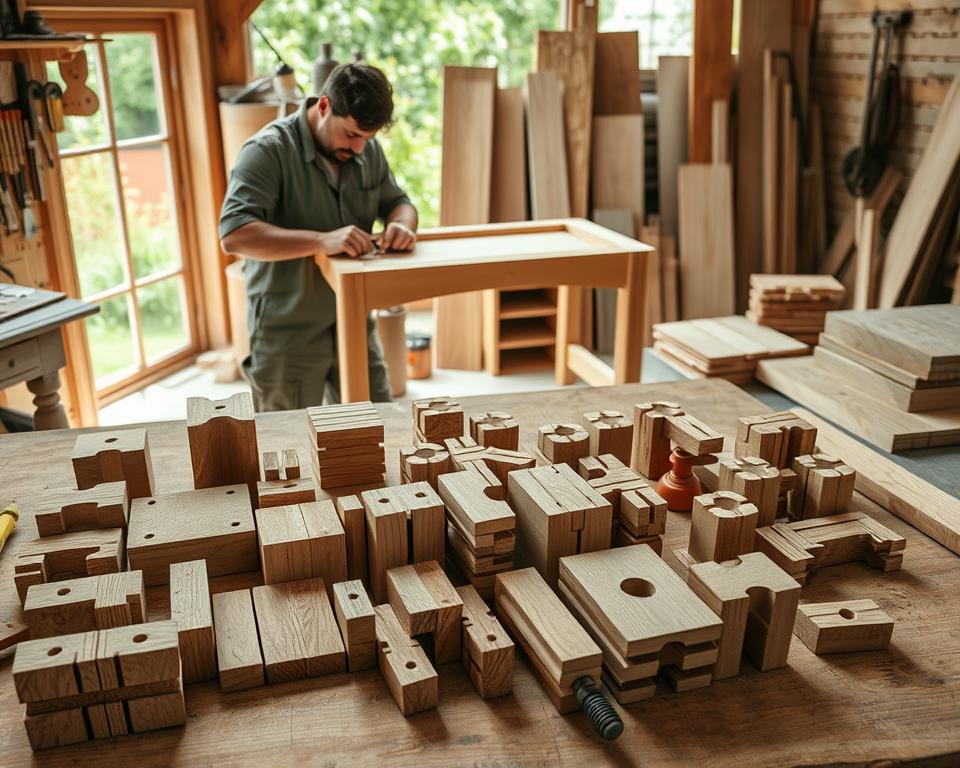
Creating a robust wooden garden table requires mastering essential table joinery techniques that ensure long-lasting durability. Your choice of joining method will directly impact the stability and strength of your outdoor furniture finish.
Professional woodworkers recommend several key joining approaches for crafting a resilient garden table:
- Mortise and Tenon Joints: Provides exceptional strength for leg-to-apron connections
- Pocket Hole Joinery: Offers quick, reliable connections for DIY enthusiasts
- Dowel Joints: Creates precise alignment between wooden components
When working with weather-resistant wood, selecting the appropriate joining technique becomes crucial. Exterior-grade wood adhesives combined with mechanical fasteners can significantly enhance joint integrity.
Consider these critical factors when implementing your joinery strategy:
- Ensure tight, gap-free connections
- Use proper clamping techniques during adhesive curing
- Account for natural wood movement and seasonal expansion
For added structural support, integrate corner brackets or diagonal bracing. These reinforcements will help maintain your table’s stability throughout changing weather conditions.
Pro tip: Always allow sufficient curing time before applying stress to newly joined wood components.
By mastering these table joinery techniques, you’ll create an outdoor furniture piece that withstands years of use and environmental challenges.
Sanding and Finishing Your Garden Table
Transforming your handcrafted wooden garden table into a beautiful and durable piece requires careful attention to wood finishing techniques. The right approach will protect your investment and showcase the natural beauty of the timber.
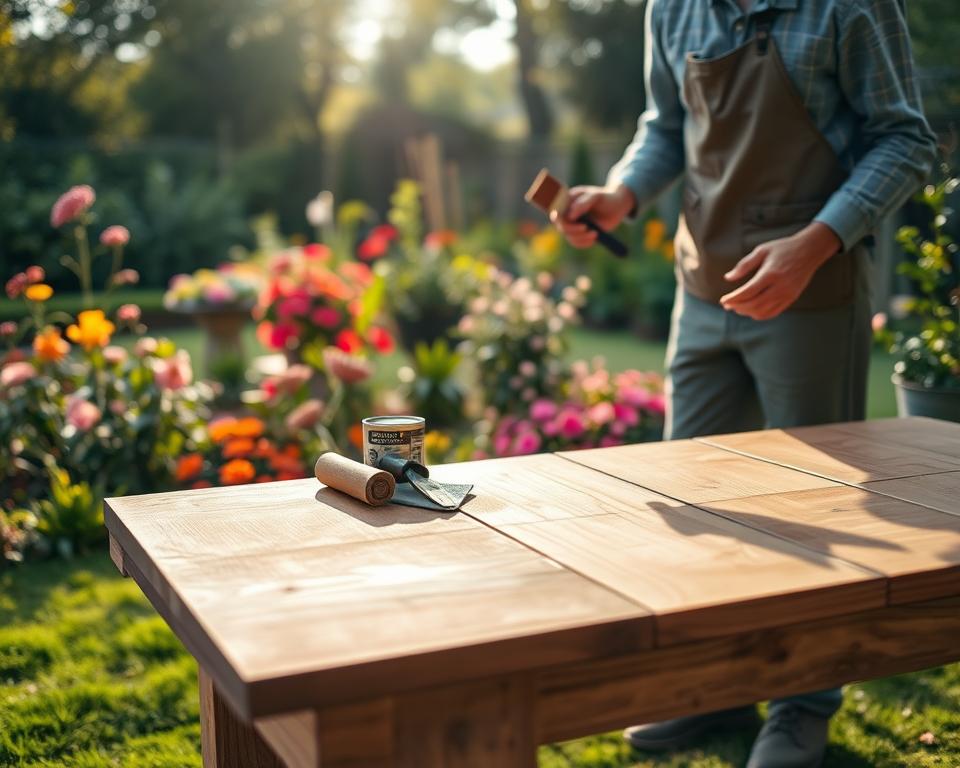
Achieving a smooth surface is crucial for both aesthetic appeal and outdoor wood treatment. Begin your finishing process with a strategic sanding approach:
- Start with coarse-grit sandpaper (80-100) to remove initial imperfections
- Progress to medium-grit sandpaper (120-150) for surface refinement
- Finish with fine-grit sandpaper (180-220) for a silky-smooth texture
Selecting Weather-Resistant Treatments
Garden table maintenance depends on choosing the right protective finish. Your options include:
- Penetrating Oils: Teak and Danish oils enhance wood grain while providing moisture resistance
- Exterior Wood Stains: Add colour while maintaining wood’s natural texture
- Clear Sealants: Provide UV protection and long-lasting durability
When applying your chosen treatment, remember these key tips:
– Apply multiple thin coats rather than one thick layer
– Allow adequate drying time between applications
– Seal end-grain areas to prevent moisture penetration
Your careful finishing will ensure your garden table remains beautiful and protected against the elements for years to come.
Weatherproofing and Maintenance Tips
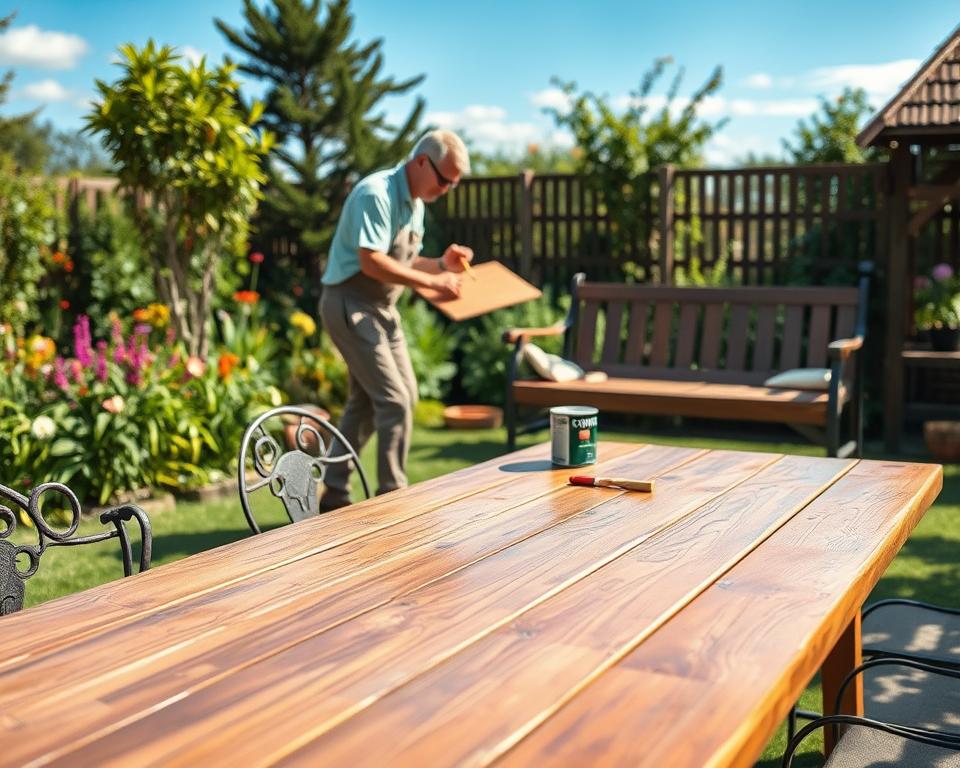
Protecting your handcrafted wooden garden table requires strategic garden furniture weatherproofing techniques. Weather-resistant wood demands regular care to maintain its beauty and structural integrity through changing seasons.
Your garden table maintenance routine should include several crucial steps:
- Clean the surface thoroughly before applying protective treatments
- Inspect for signs of moisture damage or wear
- Apply water-repellent preservatives annually
- Sand and refinish exposed surfaces every two to three years
Seasonal maintenance plays a critical role in preserving your wooden furniture. Here’s a recommended care schedule:
| Season | Maintenance Action |
|---|---|
| Spring | Deep clean and remove winter debris |
| Summer | Apply protective sealant and inspect for damage |
| Autumn | Prepare for winter with thorough waterproofing |
| Winter | Use breathable covers or store in sheltered area |
When addressing weather-related challenges, focus on preventative care. Use marine-grade varnishes or specialised wood oils that penetrate deeply into timber fibres. These treatments create a robust barrier against moisture, UV rays, and temperature fluctuations.
Invest time in regular maintenance to extend your garden table’s lifespan. Small, consistent care efforts prevent costly repairs and preserve the natural beauty of your wooden furniture.
Common Mistakes to Avoid During Construction
Creating a DIY garden table requires careful planning and execution. Outdoor furniture construction demands precision and attention to detail. Understanding potential table building mistakes can save you time, resources, and frustration.
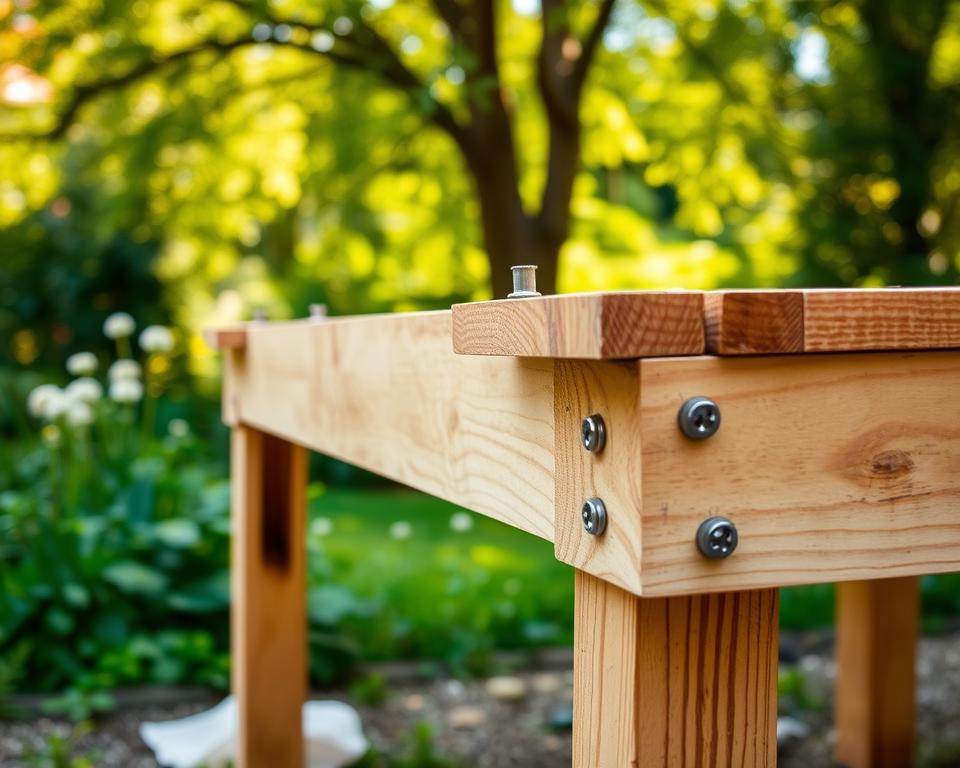
When embarking on your garden table project, several critical errors can compromise the quality and durability of your outdoor furniture:
- Incorrect wood selection for outdoor conditions
- Neglecting proper timber preparation
- Failing to account for wood movement
- Inadequate surface protection
Preventing Wood Warping and Splitting
Wood warping represents a significant challenge in outdoor furniture construction. To minimise this risk, follow these key strategies:
- Acclimatise timber before construction
- Seal all wood surfaces evenly
- Use appropriate fixing techniques
- Protect wood from extreme moisture variations
Ensuring Proper Drainage and Ventilation
Successful DIY garden table projects require thoughtful design considerations for moisture management. Design gaps between tabletop boards to allow water runoff. Avoid creating areas where water can accumulate, which might lead to wood deterioration.
Key drainage strategies include:
• Creating slight table surface inclines
• Using raised leg designs
• Implementing ventilation spaces
• Selecting rot-resistant timber species
By understanding these potential pitfalls, you’ll create a robust, long-lasting garden table that withstands outdoor challenges.
Conclusion
Building your wooden outdoor furniture has been an incredible journey of skill and creativity. Your DIY garden table represents more than just a functional piece—it’s a personal achievement that transforms your garden space with handcrafted elegance. The techniques you’ve learned will empower you to create stunning outdoor furniture with confidence.
Throughout this project, you’ve developed woodworking skills that extend far beyond this single table. The precision in cutting, joining, and finishing your wooden outdoor table demonstrates your growing expertise. Each step has been a learning opportunity, preparing you for future DIY furniture projects that can enhance your living spaces.
Maintenance is key to preserving your new garden table. Regular care will protect your investment and ensure your handcrafted piece remains beautiful for years. By applying weather-resistant treatments and performing routine checks, you’ll keep your build outdoor table looking pristine and ready for countless summer gatherings.
Your newly constructed wooden garden table is more than furniture—it’s a testament to your dedication, creativity, and craftsmanship. Share your achievement with friends and family, and let your success inspire others to explore the rewarding world of DIY woodworking.
FAQ
What woodworking experience do I need to build a garden table?
This DIY project is suitable for intermediate skill levels, but beginners with patience and attention to detail can successfully complete it. Basic woodworking knowledge, understanding of power tools, and willingness to learn are more important than extensive prior experience. The guide provides comprehensive step-by-step instructions to support you throughout the process.
How long will it take to complete the wooden garden table?
The total project typically requires 8-12 hours of work, spread across multiple days. This timeframe accounts for planning, timber preparation, cutting, assembly, sanding, and finishing. Your actual time may vary depending on your skill level, workspace efficiency, and the complexity of the design you choose.
What tools will I definitely need for this project?
Essential tools include a circular saw or mitre saw, cordless drill, measuring tape, combination square, orbital sander, safety glasses, work gloves, and clamps. Having these tools prepared before starting will ensure a smoother woodworking experience and more professional results.
Which wood species are best for outdoor garden tables?
Recommended outdoor wood species include teak, cedar, oak, and pressure-treated pine. These timbers offer excellent durability, weather resistance, and natural protection against decay. Your choice will depend on budget, local climate, and desired aesthetic appearance.
How much will materials for the garden table cost?
Material costs typically range between £100-£250, depending on the wood species selected, table size, and quality of finishing products. Softwoods like pine are more budget-friendly, while hardwoods such as oak or teak will increase your overall project expense.
Do I need special skills to finish and protect the table?
No special skills are required, but careful preparation and application are crucial. You’ll need to sand the surface progressively, apply weather-resistant treatments evenly, and follow manufacturer instructions for exterior wood oils, stains, or sealants. The guide provides detailed finishing techniques for professional results.
How often will I need to maintain my wooden garden table?
Annual maintenance is recommended. This involves cleaning the table, inspecting for damage, and reapplying protective finishes every 12-18 months. Proper initial treatment and regular care will significantly extend your table’s lifespan and maintain its appearance.
Can I customise the table design?
Absolutely! The guide provides fundamental techniques that can be adapted to various design preferences. You can modify dimensions, adjust leg styles, choose different wood grains, or incorporate decorative elements to personalise your garden table and match your outdoor space.
What safety precautions should I take during construction?
Always wear safety glasses, ear protection, and work gloves. Ensure your workspace is well-lit and ventilated, keep tools in good condition, maintain a clean work area, and follow proper tool handling techniques. Take your time and prioritise safety throughout the project.
How do I prevent my wooden table from warping?
Prevent warping by selecting properly dried timber, allowing wood to acclimatise to your environment before construction, sealing all surfaces evenly, avoiding direct ground contact, and providing adequate drainage and ventilation. The guide offers comprehensive strategies to minimise wood movement and maintain structural integrity.