do you pay council tax on log cabins?

Adding a log cabin can change how you use your home. It may be a studio, a guest space, or a let. But the tax side is not always clear. This guide explains when council tax applies and when it does not. It sets out the key tests used across England, Wales, and Scotland.
You will learn how garden room council tax can arise, what triggers a separate band, and when business rates may apply. We outline log cabin council tax rules, how the Valuation Office Agency (VOA) looks at use and services, and what to do before you build. The aim is to help you plan with confidence and avoid surprises.
We also touch on council tax annexe reliefs, second home premiums, and furnished holiday let crossovers. Expect plain answers, examples, and links to the core ideas behind a VOA valuation log cabin, council tax bands cabins, and business rates vs council tax cabins. If you are a homeowner, landlord, or small operator, this is for you.
Inhaltsverzeichnis
Key Takeaways
- Council tax on log cabins UK depends on use, permanence, and whether the unit is self-contained.
- Garden room council tax is more likely if the cabin has its own kitchen, bathroom, and independent access.
- The VOA valuation log cabin process can create a separate band where a distinct dwelling exists.
- Log cabin council tax rules differ from business rates vs council tax cabins when the unit is used for lets or trade.
- Annexes tied to the main home may qualify for council tax annexe reductions in some cases.
- Council tax bands cabins reflect value at a set date and can be challenged with evidence.
- Plan early: document services, planning status, and intended use to avoid unexpected charges.
Understanding council tax rules for log cabins in the UK
Log cabins can sit within the curtilage of a home or act as stand‑alone living space. How they are treated for domestic rating turns on use, build, and permanence. This shapes council tax liability and whether a cabin is valued within the main house or on its own band.
How council tax is assessed for domestic properties
In England and Wales, the Valuation Office Agency handles domestic property assessment and sets a band using a 1 April 1991 tone of values (2003 in Wales). In Scotland, the Scottish Assessors carry out the same task. The banding methodology considers size, layout, and character at the relevant date.
Liability usually falls on the resident. Owners may be liable where a property is empty or classed as a house in multiple occupation. A cabin used as living accommodation may sit within the home’s band or be assessed separately under domestic rating if it functions as a self‑contained unit.
Differences between permanent and temporary structures
Permanence matters. Fixed foundations, hard connections to water, drainage, and power, and year‑round residential use suggest permanence. These cues often point to a separate entry and band, increasing council tax liability.
By contrast, truly movable or short‑term structures used for storage, hobbies, or incidental space lean towards being ancillary. In practice, assessing officers weigh permanent vs temporary buildings along with scale, thermal performance, and day‑to‑day use.
The role of the Valuation Office Agency (VOA)
The VOA decides whether a cabin is domestic, non‑domestic, or mixed use, applying VOA council tax guidance and case evidence. Where a cabin is judged domestic, the VOA issues a band using its banding methodology; where it is non‑domestic, business rates may apply.
Officers consider construction type, services, independence of access, and intended occupation. Planning consent and Building Regulations are not decisive, yet they are persuasive indicators of permanence and use that inform the domestic property assessment under domestic rating.
When a log cabin counts as a separate dwelling
A log cabin may be treated as a home in its own right when it meets clear separate dwelling criteria and can function without day-to-day reliance on the main house. The Valuation Office Agency applies a self-contained unit test and considers whether the space is capable of independent occupation throughout the year.
Self-contained accommodation criteria
Assessors look for a dedicated sleeping area, a bathroom or WC, and a kitchen or kitchenette used by the cabin’s occupants alone. Heating that works independently and safe cooking facilities strengthen the case under the self-contained unit test.
Where these elements exist behind a lockable door, the likelihood of separate banding VOA rises. If one or more essentials are missing, the space is commonly treated as part of the main dwelling.
Independent access, services, and facilities
An external entrance that does not pass through the main house is a strong indicator. Independent access utilities such as a distinct electricity consumer unit, its own water feed, and a separate waste water connection are persuasive, especially when meters or isolation points are identifiable.
Documentation matters. Floor plans, photos of service runs, and installer invoices help confirm capability for stand-alone living, which can affect garden annexe valuation and any future granny annexe council tax position.
Annexe vs standalone garden building
A cabin built as an annexe can still receive a separate banding VOA decision if it is fully self-contained, even when it shares a wall with the house. In England, family use may lead to specific reductions under granny annexe council tax rules.
By contrast, a garden room used as an office or studio, with no cooking or bathing, normally fails the separate dwelling criteria. A detached lodge with its own door and services often meets the threshold for garden annexe valuation, unless it lacks the essentials outlined above.
| Feature | Office/Studio in Garden | Self-Contained Annexe | Standalone Cabin Dwelling |
|---|---|---|---|
| Sleeping Area | No dedicated sleeping space | Dedicated bedroom or convertible area | Dedicated bedroom with privacy |
| Kitchen Facilities | None; relies on main house | Kitchenette with cooking and sink | Full kitchen or well-equipped kitchenette |
| Bathroom/WC | Uses main house bathroom | Private shower room/WC | Private bathroom with hot water |
| Entrance | Internal or shared access | Lockable, independent door | Own external entrance, no shared route |
| Utilities | Shared circuits and services | Own consumer unit; water and waste lines | Independent access utilities and metering |
| Likely Tax Position | Treated as part of main dwelling | Potential separate banding VOA; possible annexe reductions | High chance of separate banding; check granny annexe council tax rules |
| Valuation Focus | Limited impact on overall band | Self-contained unit test and layout evidence | Garden annexe valuation with market comparables |
do you pay council tax on log cabins?
Start with how the cabin is used. If it is a self-contained space with its own door, bathroom, and kitchen, the Valuation Office Agency will usually set a separate band. In that case, the answer to do you pay council tax on log cabins is yes, and a distinct bill follows, subject to any discounts or exemptions that apply.
Where a structure is only a hobby room, studio, or office without full facilities, it is normally treated as part of the main dwelling. In these cases, council tax liability cabins sits with the existing home, and no extra band is created.
Use matters too. If you let a cabin to guests often enough to meet non-domestic criteria, it may move to business rates rather than council tax. By contrast, a dependent relative living in an annexe can trigger specific reliefs, which is where log cabin annexe tax rules become relevant.
Location policies differ across the UK. Local authorities in England, Scotland, and Wales may apply premiums to second homes and some long-term empty properties. That is why many owners check garden cabin council tax UK guidance before fitting kitchens, showers, or separate meters.
Permanent features, like fixed foundations and dedicated utilities, can signal a dwelling. If you create a new self-contained unit, notify the VOA so they can assess it correctly. Keeping records of access, services, and intended use helps resolve council tax liability cabins questions quickly.
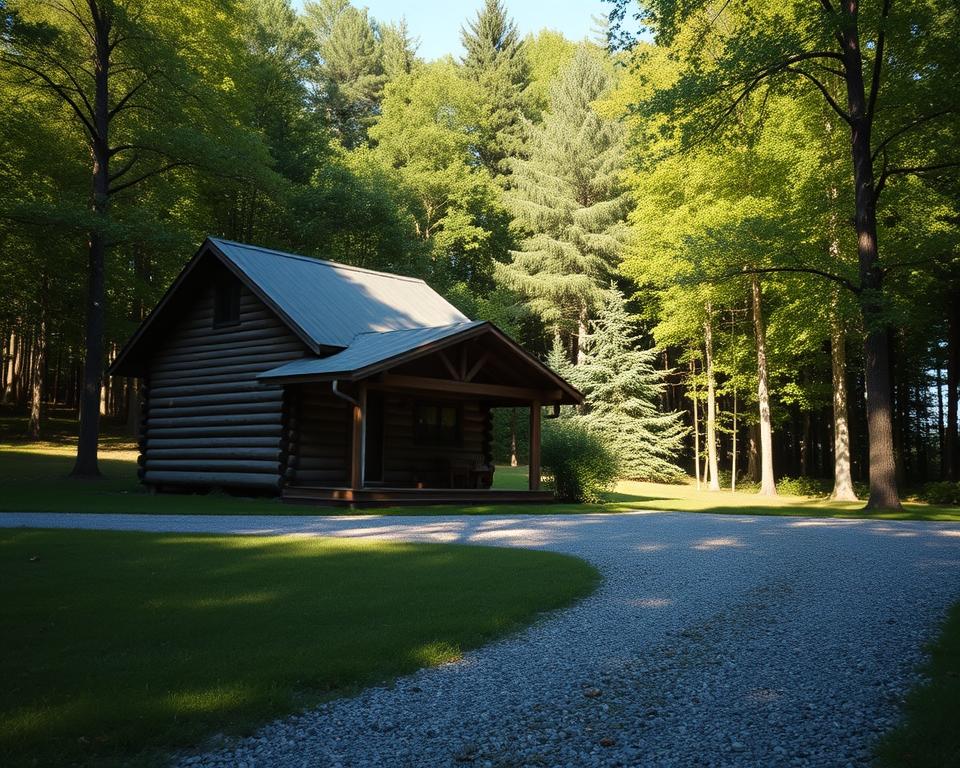
For annexes used by family, councils may apply a reduction if the criteria are met. If the cabin functions as part of your main home, it is usually covered within the existing band. If it stands alone, the log cabin annexe tax position is assessed on its own merits.
Planning permission, building regulations, and tax implications
Rules for garden structures affect how a cabin is viewed for tax. If a building looks permanent and fit for year-round use, it may be treated as a dwelling. Keep clear records and think about how the space will be used before you build.

Planning consent thresholds for garden rooms and lodges
Many owners rely on permitted development garden buildings behind the main façade, within height and coverage limits. This can avoid a full application, but only where the use is incidental, such as a studio or store.
Use that feels like a home can change matters. A planning permission log cabin used for sleeping, cooking, or as a main address often needs formal consent, especially in conservation areas, National Parks, Areas of Outstanding Natural Beauty, or for listed buildings.
Local evidence carries weight. Plans, site photos, and any planning evidence VOA may request can show whether residential use outbuildings remain ancillary or cross into separate dwelling territory.
Building Regulations triggers and insulation standards
Rules apply when a Building Regulations garden room is large, near a boundary, or includes fixed plumbing and drainage. Sleeping use nearly always triggers compliance on structure, fire escape, ventilation, electrics under Part P, and sanitation.
Thermal rules matter for habitable rooms. Approved Document L sets targets for insulation U-values, guiding wall, roof, floor, and glazing performance. Strong fabric and proper services signal year-round occupation rather than light storage.
Keep certificates and drawings. Completion notices, electrical sign-offs, and data on insulation U-values help show that safety and performance standards have been met.
How compliance can influence council tax banding
Planning status does not set tax on its own, yet it shapes how the Valuation Office Agency reads a site. Where permissions, robust build, and services indicate permanence, a cabin may be banded if it forms a self-contained unit.
Conversely, a basic shed with no heating, plumbing, or insulation is usually seen as ancillary. In any enquiry, planning evidence VOA may ask for—such as approvals and completion certificates—can be decisive.
Document the intended function of residential use outbuildings from the start. Clear records make it easier to show whether a unit is an annexe to the main house or a separate dwelling.
| Factor | Typical Threshold or Indicator | Planning/Regulatory Impact | Possible Tax Reading |
|---|---|---|---|
| Location and size | Behind principal elevation; up to 2.5 m near boundary; not over 50% of curtilage | May fall under permitted development garden buildings | Ancillary use more likely; limited impact on banding |
| Primary living facilities | Sleeping, cooking, bathroom, and independent access | Often requires planning permission log cabin status | May support separate dwelling banding |
| Services and drainage | Fixed plumbing, sewer connection, consumer unit | Triggers Building Regulations garden room compliance | Signals permanence and self-containment |
| Thermal performance | Insulation U-values meeting Approved Document L | Confirms suitability for year-round occupation | Strengthens case for residential use outbuildings |
| Documentation | Permissions, sign-offs, completion certificates | Provides planning evidence VOA may rely on | Clear audit trail during valuation enquiries |
Primary residence, second home, holiday let, or annexe: what changes
A log cabin’s tax profile turns on how you use it day to day. Councils look at occupation patterns, services, and whether it stands alone as a dwelling. Keep clear records so the status aligns with reality and avoids surprise bills.

Using a log cabin as your main home
If the cabin is self-contained and this is where you live most of the time, it is usually banded for main residence council tax. You become liable for the bill once the Valuation Office Agency confirms a band. If you live alone, you may claim a 25% single person discount.
Utilities, postal address, and evidence of habitual residence help show that it is your primary home. Mixed use can complicate things, so keep a simple, consistent pattern of occupation.
Second homes and local premiums
Where a cabin is not your main home, many councils charge extra. A second home premium UK policy can increase the annual bill. This is more common under council tax premiums Wales Scotland, and some English billing authorities are adopting similar measures.
Expect checks on occupancy and furnishings. If the cabin sits empty between visits, budget for a higher charge than a standard dwelling.
Furnished holiday lets and business rates crossover
Letting the cabin to paying guests can shift it into non-domestic rating. If it meets FHL thresholds for availability and actual letting, it may be assessed under holiday let business rates rather than council tax.
Once rateable, the dwelling normally leaves the council tax list and may qualify for Small Business Rate Relief, subject to the rateable value and any other properties you occupy. Keep a letting calendar, booking receipts, and marketing records to evidence the FHL thresholds.
Family annexes and council tax reductions
Where the cabin functions as a family annexe in England, you could access a 50% annexe discount England if a relative lives there. Some annexes for dependent relatives can be exempt, depending on care needs and how the space is used.
If an annexe is unoccupied and cannot be let separately due to a planning condition, councils may allow local reductions. Written proof of the restriction and occupancy status will support any claim.
| Use pattern | Likely tax route | Key tests | Potential reliefs | Notes by nation |
|---|---|---|---|---|
| Main residence | Council tax (domestic) | Self-contained; habitual residence | Single person discount (25%) | Applies UK-wide where it is your primary home |
| Second home | Council tax with premium risk | Not your main residence; furnished | Local discounts vary | Higher council tax premiums Wales Scotland; rising second home premium UK in parts of England |
| Furnished holiday let | Non-domestic rates | Meets FHL thresholds for availability and letting | Small Business Rate Relief (subject to value) | Holiday let business rates rules differ across England, Wales, and Scotland |
| Family annexe | Council tax (domestic, separate band) | Used by a relative; ancillary to main house | 50% annexe discount England; possible exemptions for dependants | Local policy affects any further reductions |
Council tax bands, valuations, and annex reductions
The way a cabin or annexe is banded rests on clear evidence. The council tax banding methodology looks at value at the set valuation date, with size, layout, and build quality all in scope. Location within the plot and services also matter, and the result can be a separate band where the unit is self‑contained.

How the VOA sets a band for a cabin or annexe
The Valuation Office Agency relies on VOA comparables drawn from similar small dwellings, annexes, and park homes. Evidence must fit the valuation date used in England, Scotland, or Wales. Assessors weigh construction type, floor area, internal layout, and access within the curtilage.
Where a unit is self‑contained, it may receive its own band alongside the host home. This flows from the council tax banding methodology and is triggered when there is independent access, services, and facilities.
Single-person discount and annexe exemptions
If only one liable adult lives in a banded cabin, a 25% single person discount may apply via the billing authority. In England, the annexe discount 50% can reduce the bill where it is used by family.
Certain cases may qualify for a dependent relative exemption, such as an annexe lived in by an older or disabled family member. Councils apply these reductions, while the VOA maintains the band.
Challenging or appealing a valuation decision
Owners can check and challenge VOA bandings by supplying plans, measurements, photos, and sales data. Strong VOA comparables and notes on material change, such as conversion to or from self‑contained status, help build the case.
Where disagreement remains, a formal council tax appeal may follow within set time limits. Keep records of works and specification, as these support both discount claims and any future revaluation.
Business rates vs council tax for log cabins used commercially
Where a log cabin operates as a holiday lodge, therapy room, beauty studio, or office, it can fall into non-domestic rating cabins rather than domestic council tax. The Valuation Office Agency may enter it on the Valuation Office non-domestic list, and the bill is then based on the rateable value rather than a council tax band.
Use, availability, and market evidence drive the split. If holiday stays meet the holiday let rating criteria, business rates may apply; if they do not, council tax can still be due. A mixed use assessment is common when a family also uses the space.
When a cabin is rateable as non-domestic property
A cabin run for profit with independent access, booking arrangements, and guest facilities is likely to be listed as non-domestic. Short‑stay units advertised on Airbnb or Booking.com often meet the holiday let rating criteria, especially where availability and letting thresholds are met across the year.
If the VOA confirms entry on the Valuation Office non-domestic list, the occupier pays business rates by reference to the estimated open‑market rent. Domestic use that is only incidental may not stop a non-domestic rating; however, predominant use still matters under a mixed use assessment.
Small Business Rate Relief and mixed use
Many small business rate relief cabins qualify for a reduced bill where the rateable value sits beneath national thresholds and the occupier has limited other properties. Relief depends on the overall portfolio and any tapered rules set by government.
Where a cabin hosts guests part‑time and family at other times, councils may apportion liability through a mixed use assessment. Planning conditions that restrict occupation can also support non-domestic rating cabins status when commercial use is primary.
Evidence councils may request
Authorities and the VOA often seek clear evidence for rates before deciding how to list the property. Typical items include booking calendars, guest communication records, and advertising screenshots.
- Listings on Airbnb or Booking.com and pricing histories
- Accounts, invoices, and bank statements showing trading income
- Floor plans, photographs of facilities, and fire safety documentation
- Utility bills, including separate metering data, and waste contracts
- Planning permissions, lawful use decisions, and insurance schedules
Strong documentation helps the Valuation Office non-domestic list decision and supports any small business rate relief cabins claim. It also clarifies whether holiday let rating criteria are met or if council tax remains due.
Practical steps before installing or converting a log cabin
Set a clear plan before you order materials or book trades. Check how your site, use, and services could affect consent, valuation, and running costs. Keep records from day one to support decisions and avoid delays.
Speak to your Local Planning Authority early
Ask for LPA pre-application advice to confirm whether the proposal is permitted development or needs full permission. This is vital where there are planning constraints garden buildings, such as conservation areas, listed curtilage, or National Parks.
Discuss intended use, size, ridge height, and siting near boundaries. Clarify holiday let plans and year-round occupation, and note any conditions that could limit stays or letting.
Documenting utilities, access, and intended use
Prepare robust utilities documentation. Include a site plan, elevations, floor plans showing cooking and bathroom areas, and the route for water, electricity, drainage, and separate access if relevant.
Record insulation levels, glazing specs, ventilation, and any Building Regulations checks if the space will be habitable. Set out waste water solutions, such as a mains connection, septic tank, or treatment plant compliance.
Notifying the VOA or council where appropriate
If the cabin forms a self-contained unit, notify VOA new dwelling in England and Wales, or contact the local Assessor in Scotland. This allows valuation for council tax or, where used commercially, a business rates estimate.
For holiday lets or workspace, speak with the council revenues team about evidence they may require, fire safety duties, insurance, and any reliefs that could apply.
Budgeting for potential council tax or rates
Create a simple model for council tax budgeting and non-domestic costs. Consider a range for banding outcomes, second home premiums, and scenarios with or without Small Business Rate Relief.
Add installation and upgrade costs for services, plus fees for applications, inspections, and surveys. Build in time for determinations and valuations, and avoid occupation until approvals are in place.
| Action | Why it matters | Key documents | Possible costs | Who to contact |
|---|---|---|---|---|
| LPA pre-application advice | Tests permitted development and highlights planning constraints garden buildings | Site plan, dimensions, use summary, photos | Pre-app fee; design revisions | Local Planning Authority |
| Utilities documentation | Proves safe servicing and supports Building Regulations checks | Utility routes, load calculations, drainage layout, SAP/insulation notes | Connection charges; treatment plant or septic costs | Utility providers; Building Control |
| Notify VOA new dwelling | Enables council tax banding or business rates assessment | Floor plans, photos, completion date, access details | Band-based council tax or a business rates estimate | Valuation Office Agency or Scottish Assessor |
| Council tax budgeting | Prepares for annual charges and potential premiums | Local band ranges, occupancy plan, discount eligibility | Annual tax; surcharges for second homes in some areas | Billing authority revenues team |
| Commercial use check | Confirms rating status and any reliefs for holiday lets | Letting evidence, booking records, safety certificates | Non-domestic rates; possible relief offsets | Council business rates unit |
Conclusion
Whether you pay council tax on a log cabin turns on how the building is put together and how it is used day to day. Incidental garden rooms without sleeping or cooking space usually sit within your home’s existing band. A self-contained unit with its own entrance, kitchen, and bathroom is likely to be treated as a separate dwelling. This council tax on log cabins conclusion reflects the core tests used across the UK.
Planning consent and Building Regulations do not set the tax by themselves, but they signal permanence and residential capability. Those factors can influence how the Valuation Office Agency views a property. A clear VOA assessment summary will look at construction, services, and independence, not just paperwork. For owners, sound planning and council tax advice helps avoid costly surprises.
If the cabin is let as holiday accommodation or used for a studio, salon, or office, it may fall under business rates instead of council tax. Some operators can claim Small Business Rate Relief, while annexes used by family members may qualify for discounts. This log cabin council tax guidance UK also means documenting utilities, access, layout, and intended use before you build or convert.
To wrap up, seek early guidance from your Local Planning Authority, speak with your council’s revenues team, and refer to VOA or the Scottish Assessors for formal positions. Notify them if a new dwelling is created and budget for the likely charge. Follow this council tax on log cabins conclusion as a checklist: capture evidence, verify status, and keep records. With clear steps and practical planning and council tax advice, you can secure the right band or rating and make a confident, informed investment.
FAQ
Do you pay council tax on log cabins in the UK?
You pay council tax if your log cabin is classed as domestic property. If it is self-contained with its own access, kitchen, bathroom, and sleeping space, the Valuation Office Agency (VOA) or the Scottish Assessors will usually band it separately. A garden room used only as an office or studio without cooking or bathroom facilities is normally covered by your main home’s council tax.
Who decides whether a log cabin is a separate dwelling?
In England and Wales, the VOA assesses whether a cabin is domestic and allocates a council tax band. In Scotland, this is done by the local Assessor. They consider construction, size, layout, services, permanence, and use, and may request plans, photos, and utility details.
What makes a cabin “self-contained” for council tax purposes?
Key indicators are an independent, lockable entrance and exclusive use of essential facilities. These include a kitchen or kitchenette, bathroom or WC, and a dedicated sleeping area. Independent services, such as a separate electricity consumer unit, water supply, and waste water connection, strengthen the case.
How do permanent vs temporary structures affect liability?
Fixed, serviced cabins designed for residential use are more likely to be treated as dwellings. Truly temporary or movable buildings used for incidental purposes are less likely to be banded separately. Evidence such as foundations, insulation, and year-round suitability matters.
Does planning permission determine council tax status?
No. Planning consent and Building Regulations do not decide tax status, but they are persuasive evidence. Approval for residential use, fixed plumbing, drainage, and compliance with insulation standards can indicate permanence and influence banding.
When would business rates apply instead of council tax?
If the cabin is used commercially—such as a holiday let, therapy room, salon, or office—it may be assessed for non-domestic rates. Holiday accommodation can move to business rates if it meets availability and letting thresholds. Where it does not, it usually remains under council tax.
Can I get Small Business Rate Relief on a cabin?
Possibly. If the cabin is on the non-domestic rating list with a low rateable value and you meet national criteria, you may qualify for Small Business Rate Relief. The relief depends on thresholds and whether you occupy other rateable properties.
How are council tax bands set for log cabins and annexes?
The VOA estimates the property’s open market value as at the valuation date (1 April 1991 in England and Scotland, 1 April 2003 in Wales) using comparable evidence. Factors include size, layout, build quality, services, and location within the curtilage.
What discounts or exemptions might apply?
A single person living alone can usually claim a 25% discount. In England, family annexes occupied by relatives can receive a 50% reduction, and some annexes for dependent relatives may be exempt. Local councils also set policies on empty properties and exemptions.
How are second homes treated in Wales, Scotland, and England?
Many councils in Wales and Scotland apply council tax premiums to second homes. English councils are increasingly adopting premiums, subject to legislation and local policy. Check local rules, as charges can be significantly higher than standard bills.
What are the rules for furnished holiday lets?
If your cabin is available to let and actually let for the required number of days per year, it may be moved from council tax to business rates. Thresholds differ between England, Wales, and Scotland, with Wales applying stricter criteria. Keep booking calendars and advertising records as evidence.
Is an annexe attached to the house treated differently to a standalone garden cabin?
Both can be banded separately if self-contained. However, family annexe reductions in England may apply to attached or detached annexes. A simple garden office without sleeping and cooking facilities remains part of the main dwelling.
Do Building Regulations apply to log cabins?
Yes, where the building is used for sleeping, has fixed plumbing and drainage, or exceeds size thresholds. Standards cover structure, fire safety, ventilation, electrical safety (Part P), and thermal performance (Approved Document L). Compliance can indicate suitability for year-round occupation.
What evidence might the VOA or council request?
Expect to provide floor plans, photos of the layout and facilities, details of utilities and separate metering, planning permissions, completion certificates, and, for commercial use, booking calendars, listings on Airbnb or Booking.com, invoices, and accounts.
How do I challenge a council tax banding for my cabin?
In England and Wales, use the VOA’s Check and Challenge process with evidence such as measurements, specifications, and comparable sales. In Scotland, contact the local Assessor. Time limits and valid grounds apply, and billing authorities handle discounts and liability.
Should I notify anyone when creating a self-contained unit?
Yes. Notify the VOA in England and Wales, or the local Assessor in Scotland, if you create a new dwelling. Also inform your council’s revenues team if you intend commercial use so they can advise on business rates and reliefs.
What practical steps should I take before installing a cabin?
Speak to your Local Planning Authority for early advice, especially in conservation areas, National Parks, Areas of Outstanding Natural Beauty, or for listed buildings. Document utilities, access, intended use, and insulation specs. Budget for council tax or business rates and associated utilities and waste water solutions.
Are premiums or surcharges applied to long-term empty cabins?
Many councils apply higher charges to long-term empty properties, with policies varying by location. Wales and Scotland often set significant premiums. Check your local council’s rules and any exemptions that may apply.
Does using a cabin as a home office affect council tax?
A home office used incidentally to the main dwelling and without sleeping or cooking facilities is typically covered by your existing council tax band. If the office serves as a distinct commercial space or has material alterations for business use, non-domestic rates may be considered.
What counts as independent services for separate banding?
Separate consumer units, dedicated water feeds, independent drainage (to mains, septic tank, or treatment plant), and individual heating systems suggest independence. Combined with exclusive facilities and access, these support separate banding as a dwelling.