
Effective Organisation Ideas for a Clutter-Free Potting Shed

A well-organised potting shed transforms gardening from a chore into a pleasure. It provides a dedicated area where tools and supplies are easy to find and properly stored. Many gardeners, however, face the opposite reality.
Their sheds become dumping grounds for miscellaneous items. This makes it nearly impossible to locate essential equipment when needed. The space becomes uninviting and inefficient.
The secret to a successful setup lies in two core principles: accessibility and visibility. Nothing should be buried or placed out of reach, forgotten and unused. This guide offers practical solutions for sheds of all sizes.
It covers strategic storage, using vertical space, and systematic methods. These steps enhance productivity and make gardening tasks more efficient. The advice applies whether starting anew or reorganising an existing space.
From initial planning to long-term maintenance, this comprehensive resource delivers actionable steps. The goal is to create a workspace that supports your passion for the garden.
Inhaltsverzeichnis
Key Takeaways
- A tidy potting shed turns frustrating chores into enjoyable gardening sessions.
- The core principles for success are ensuring everything is accessible and visible.
- Strategic use of vertical space is crucial for maximising storage in a small area.
- Practical solutions can be applied to sheds of any size, from compact to large.
- Implementing a systematic approach provides immediate improvements and lasting results.
- Proper planning of the layout is the first step towards a functional workspace.
- Regular maintenance is key to keeping the space organised over the long term.
Planning Your Clutter-Free Potting Shed
Before implementing storage solutions, gardeners should dedicate time to understanding their specific requirements and workflow patterns. This initial planning stage prevents costly mistakes and ensures the final design truly supports their gardening activities.
Assessing Your Storage Needs
A thorough inventory forms the foundation of effective planning. Gardeners should empty their shed completely on a dry day, sorting through all items. This process reveals what tools, pots, and supplies they actually own.
Being realistic about which items will be used regularly helps prioritise storage locations. Frequently used gardening equipment deserves prime placement, while seasonal items can occupy less accessible spaces.
Visualising the Layout for Maximum Accessibility
Considering workflow patterns is essential for a functional design. Items used together during specific tasks, like seed sowing, should be stored near each other. This strategic placement saves time and effort.
The planning phase should account for seasonal variations in storage needs. A flexible system accommodates different requirements throughout the gardening year. Measuring the available space prevents purchasing ill-fitting storage solutions.
Designing an Efficient Potting Bench and Shelving System
Creating a productive potting area requires careful consideration of both workspace and storage solutions. The right combination transforms a basic garden shed into a highly functional environment.
Maximising Vertical Space
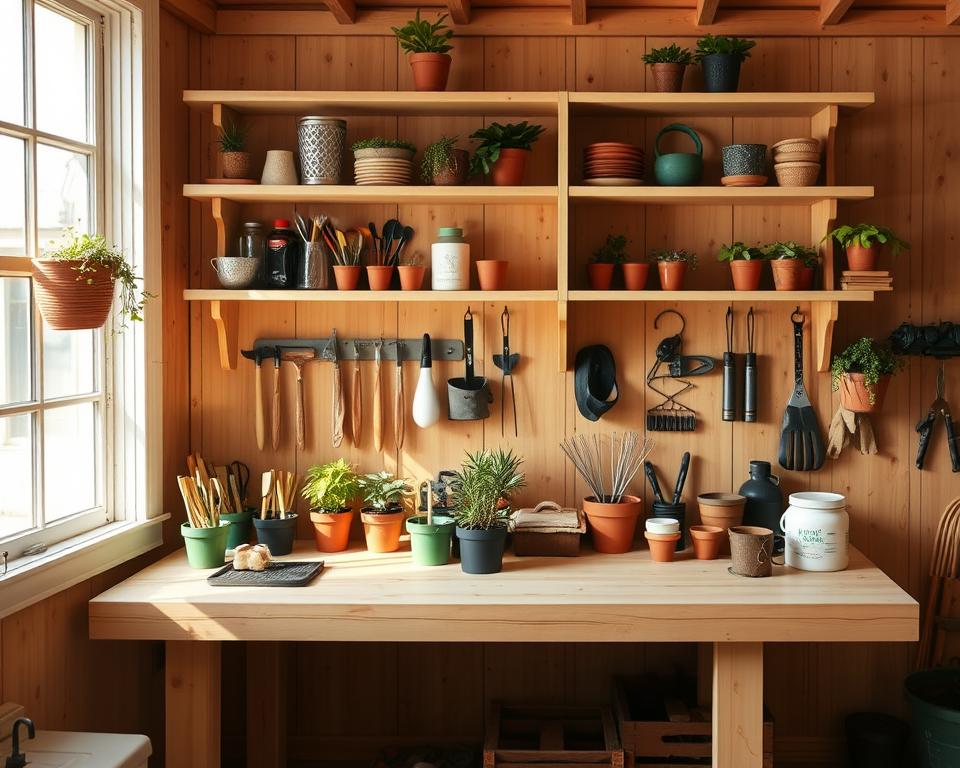
Installing open shelving above the potting bench utilises often-wasted vertical space. This approach dramatically increases storage capacity without consuming floor area.
“Think vertical,” advises Curvin Huber from Missouri-based shed company The Backyard and Beyond. “The more you can use the vertical space, the more you will be able to fit in. I recommend installing a shelving unit to utilise this space.”
Organise items by frequency of use. Regularly accessed gardening supplies belong on middle shelves for easy reach. Less frequently used items can occupy higher positions.
Custom Potting Bench Concepts
Commercial potting benches can be expensive, but DIY alternatives offer affordable solutions. Using reclaimed materials like scaffolding planks and breeze blocks creates functional workspaces.
One gardener, William, built simple shelving by placing boards on concrete blocks. This flexible system allows easy reconfiguration as storage needs change throughout the gardening season.
Safety remains crucial when designing shelving. Heavy items like soil bags should occupy lower shelves or floor space to prevent accidents.
Effective Organisation Ideas for a Clutter-Free Potting Shed
Unused wall surfaces present a significant opportunity for improving storage capacity. By focusing on vertical space, gardeners can keep their floor clear and their tools within easy reach.
Utilising Wall Space with Pegboards
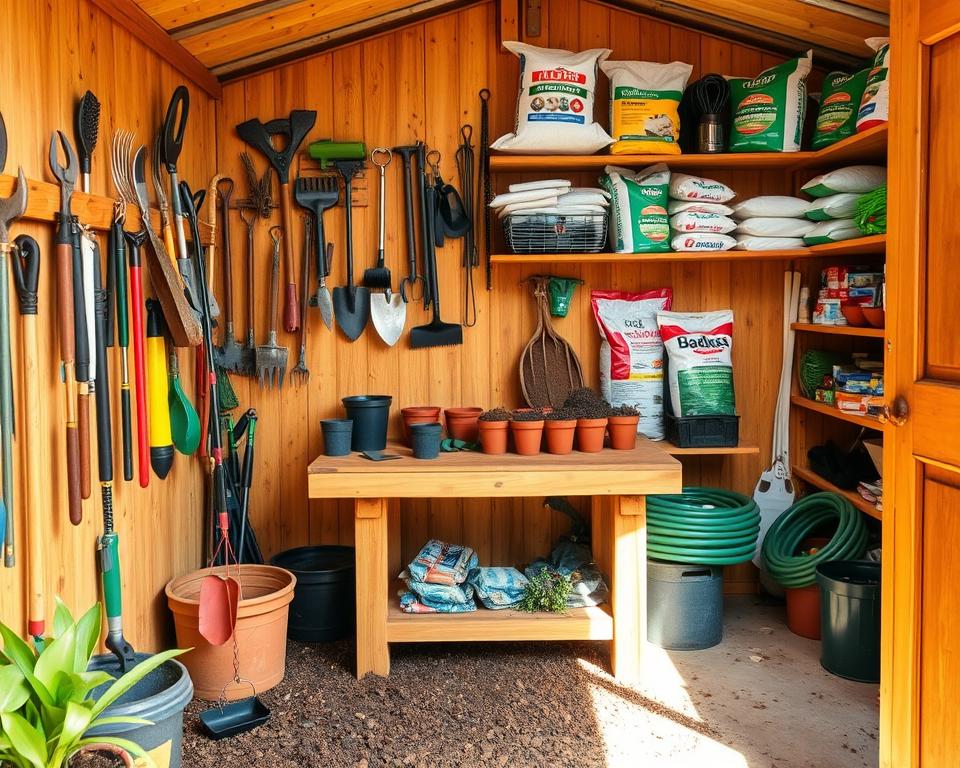
Pegboards are a fantastic choice for keeping garden accessories in order. Their main advantage is flexibility. The layout can be easily changed as needs evolve, without drilling new holes.
One can combine a pegboard with a rail fitted with hooks and a row of shelving. This creates a comprehensive system where everything has a designated spot. It makes putting items away incredibly straightforward.
Incorporating Shelves and Hooks Strategically
Strategic placement is key. Hooks are perfect for hanging frequently used tools, ensuring they are always accessible. As expert Curvin Huber advises, “Hang your tools on the wall. You can buy wall organisers designed to do this; however, you can create your own with simple hooks and nails.”
When internal space is full, consider the exterior walls for weather-resistant items. Wall-mounted wire baskets are another excellent solution. They allow gardeners to group similar items together, from pots to cleaning equipment, while keeping everything visible.
| Storage Method | Best For | Key Benefit |
|---|---|---|
| Pegboards | Hand tools, small accessories | Fully customisable layout |
| Hooks | Larger tools, hanging items | Quick and easy access |
| Wall Baskets | Grouping like-items | Keeps supplies visible |
Creative Storage Solutions for Garden Tools and Equipment
Moving beyond basic shelving unlocks the full potential of a garden storage area. The focus shifts to robust systems that handle heavy-duty items safely and efficiently.
This approach ensures that every piece of equipment, from delicate hand tools to bulky power tools, has a secure and logical home.

Installing Deep, Sturdy Shelves
For heavier items, deep and sturdy shelves are non-negotiable. They provide the necessary support for bags of compost, large pots, and other substantial equipment.
Safety is paramount. Ryan Farley from LawnStarter shares a hard-learned lesson: “After a few near-disasters of my own with pots falling from high shelves, I recommend keeping all pots on the floor or on lower shelves.”
Multiple shelving levels are excellent for maximising space. However, always place the heaviest objects on the lowest shelves. This prevents tipping and makes them easier to lift.
Using Wall-Mounted Hooks and Baskets
Wall-mounted hooks are a superb space-saving solution. They keep items like power cables, paintbrushes, and frequently used gardening tools off the floor and within easy reach.
For heavy equipment such as spades or drills, galvanised hooks offer the required strength and durability. Grouping similar tools together on the wall creates an intuitive system.
Wire baskets mounted on the wall are another versatile option. They are perfect for holding smaller items, keeping them organised and visible. This combination of shelving and hooks creates a comprehensive storage solution.
Sensible Labelling and Categorising of Garden Supplies
The final piece of the organisational puzzle involves implementing a clear labelling and categorisation system. This practice transforms a collection of storage solutions into a coherent and intuitive workspace.

Sensible labels form the foundation of any successful organisation method. They make it significantly more likely that items will be returned to their correct spots.
Creating labels is simple. One can use masking tape and a black marker pen. For a more polished look, a dedicated label maker works well.
Grouping Like-Items Together
The first step is to group similar items into logical categories. This way, related gardening supplies are stored together.
For example, keep all hand tools in one zone. Group potting mix, pots, and trowels in another. This streamlines tasks.
I recommend establishing a system for where everything goes and then sticking with that as much as possible. This will help keep things organised, especially if you have a very small shed.
Place these categories into labelled containers. Clear bins allow for quick visual identification. Opaque containers rely entirely on accurate labels.
| Container Type | Best For | Key Consideration |
|---|---|---|
| Clear Plastic Bins | Frequently used items | Contents are visible at a glance |
| Opaque Bins | Infrequently used or messy supplies | Requires precise labelling |
| Small Open Trays | Hand tools and seed packets | Promotes easy access and airflow |
One useful tip is to label shelves and even tools themselves. This creates a complete system where every object’s home is obvious. Regular maintenance of the labels ensures the storage area remains functional over time.
Clever Use of Bins, Containers, and Drying Racks
Stackable solutions offer a practical approach to maximising limited space. They transform messy piles into organised systems that protect valuable gardening supplies.

Choosing Stackable Containers
Opened bags of soil and fertiliser can create clutter. Expert Curvin Huber advises, “Use bins for storing soil, mulch, fertiliser or other types of loose materials. Once you open a bag, dump it into the bin.”
Stackable containers with lids are excellent for sheds with limited floor space. Their vertical design maximises storage capacity while keeping work surfaces clear. Choose containers that appeal visually as they enhance the overall appearance.
Repurposing Drying Racks for Drip Trays
Creative thinking reveals multiple uses for household items. Kitchen organisers work well in the garden workspace. Mug trees can store smaller pots neatly.
Drying racks provide ideal organisation for terracotta drip trays. This repurposing gives every item a designated home. It makes end-of-day tidying much simpler.
| Container Type | Best For | Key Benefit |
|---|---|---|
| Large Bins with Lids | Soil, mulch, fertiliser | Contains mess from opened bags |
| Stackable Containers | Small tools and supplies | Saves floor space |
| Repurposed Items | Pots and drip trays | Cost-effective solution |
These approaches ensure materials stay protected while keeping the floor clear. They create an organised environment where everything has its place.
Innovative Hanging and Pegboard Solutions
Beyond traditional shelving, the walls and doors of a shed offer immense potential for creative tool organisation. These hanging solutions keep equipment accessible and surfaces clear.
Repurposing Shoe Organisers
A clear shoe organiser attached to the back of the door or a wall creates a superb vertical storage system. Its many pockets are ideal for small gardening items like scissors, twine, and plant labels.
Choosing a transparent model allows for instant visual identification of contents. For opaque organisers, adding labels ensures nothing gets lost. This simple hanging method keeps clutter at bay.
Crafting a Custom Peg Rail for Tools
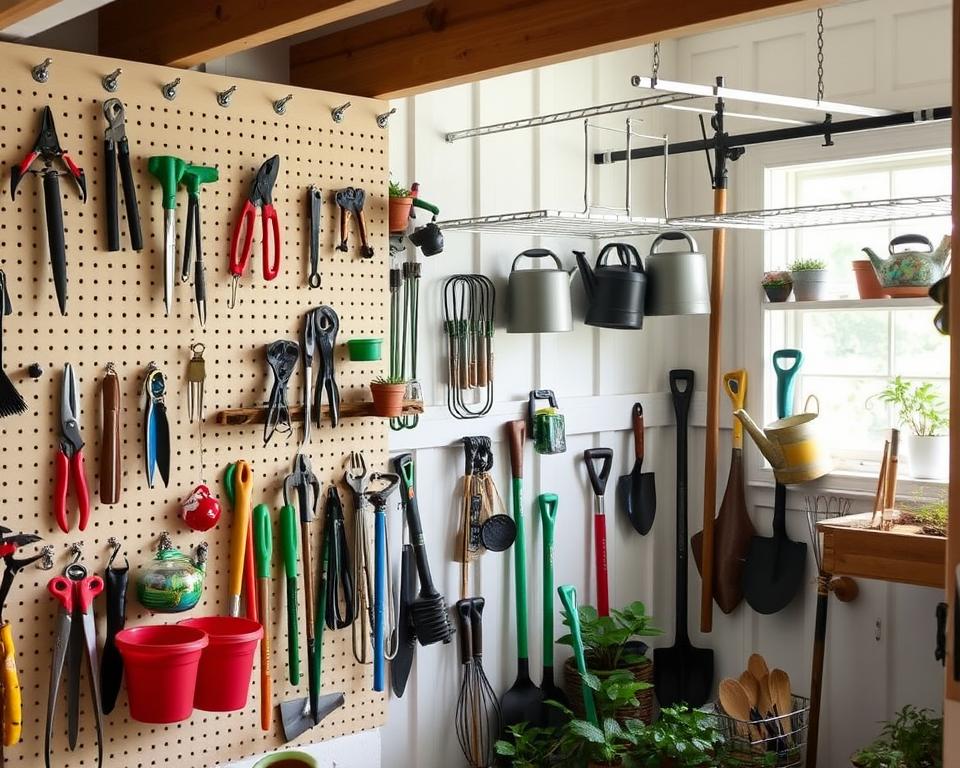
For a more robust system, a custom peg rail is highly effective. One gardener repurposed an old iron grid from a pond safety cover. The key is to mount it slightly away from the wall.
Short lengths of copper pipe can act as perfect spacers. This creates a gap for attaching S-hooks, which can then hold a variety of tools and equipment.
This DIY approach keeps frequently used gardening tools within easy reach. It encourages tidiness by making it simple to put items back after use.
| Hanging Method | Best For | Key Advantage |
|---|---|---|
| Shoe Organiser | Small, frequently used accessories | Multiple compartments, easy to install |
| Custom Peg Rail | Larger hand tools and equipment | Highly durable and fully customisable |
| S-Hooks | Items of varying sizes and weights | Flexible placement and strong support |
Integrating Upcycled and Recycled Storage Options
An eco-conscious approach to organising a garden workspace involves looking at old items with new eyes. This method is not only kind to the planet but also adds unique character and saves money.
Before sending furniture to the dump, consider its potential. Old wardrobes, bookcases, and shelving units can be given a new lease of life. They offer instant storage solutions.
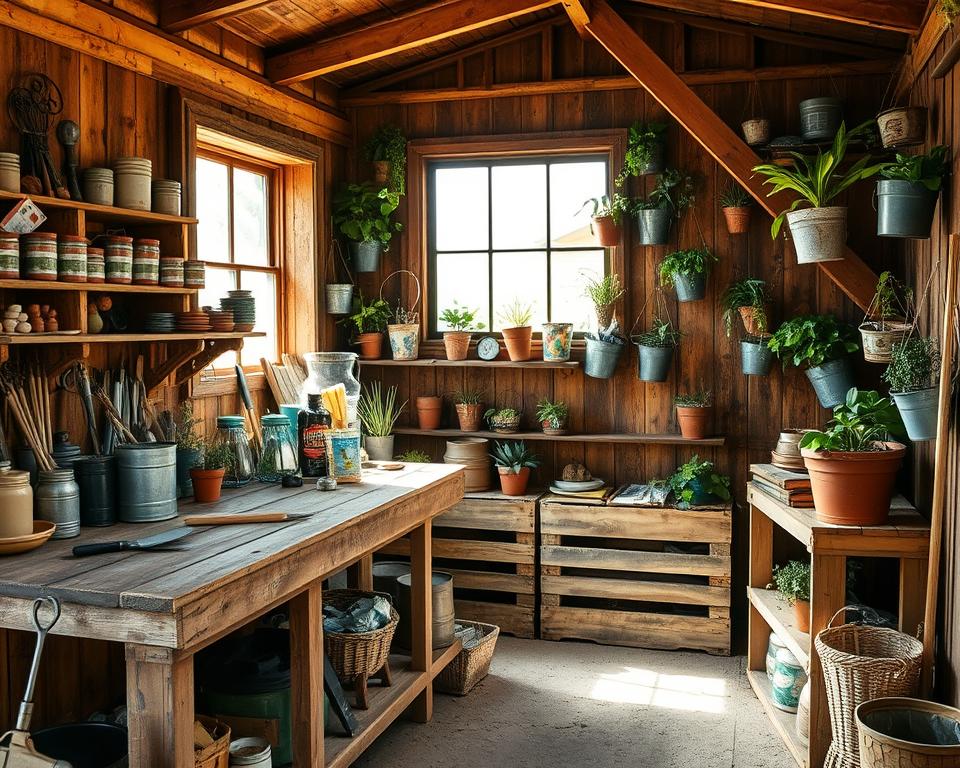
Removing doors from cabinets is a smart move. It ensures contents remain visible, preventing items from being forgotten. The principle is simple: if you can’t see it, you might not use it.
Transforming Old Shelving and Furniture
Wooden pallets are incredibly versatile. They can be mounted on walls to create rustic tool holders. Alternatively, they can be disassembled to provide materials for custom shelving projects.
Concrete breeze blocks and reclaimed scaffolding boards can combine to form sturdy, adjustable shelves. This system requires no complex carpentry. It’s a robust solution for a busy garden shed.
Old chests of drawers are equally useful. They provide organised compartments for smaller items. This keeps the workspace tidy and functional.
Eco-Friendly DIY Storage Hacks
The goal is to minimise new purchases. Many projects can be accomplished with materials found around the home. This approach reduces waste and cost.
William wanted to reuse and adapt as much as possible. In the end, the only new materials that he bought were the insulation, the artificial turf, some very short lengths of copper piping and some new S hooks.
Old wire basket drawers are perfect for storing seeds and small tools. They keep supplies visible and accessible. This creative vision turns potential waste into valuable storage ideas.
| Upcycled Item | Potential Use | Key Advantage |
|---|---|---|
| Wooden Pallet | Wall-mounted tool holder | Cost-effective and rustic |
| Old Bookcase | Open shelving unit | Instant storage, no assembly |
| Wire Basket Drawers | Small item organiser | Excellent visibility |
| Scaffolding Boards | Custom shelving | Extremely sturdy and durable |
Enhancing Aesthetics with Insulation and Artificial Turf
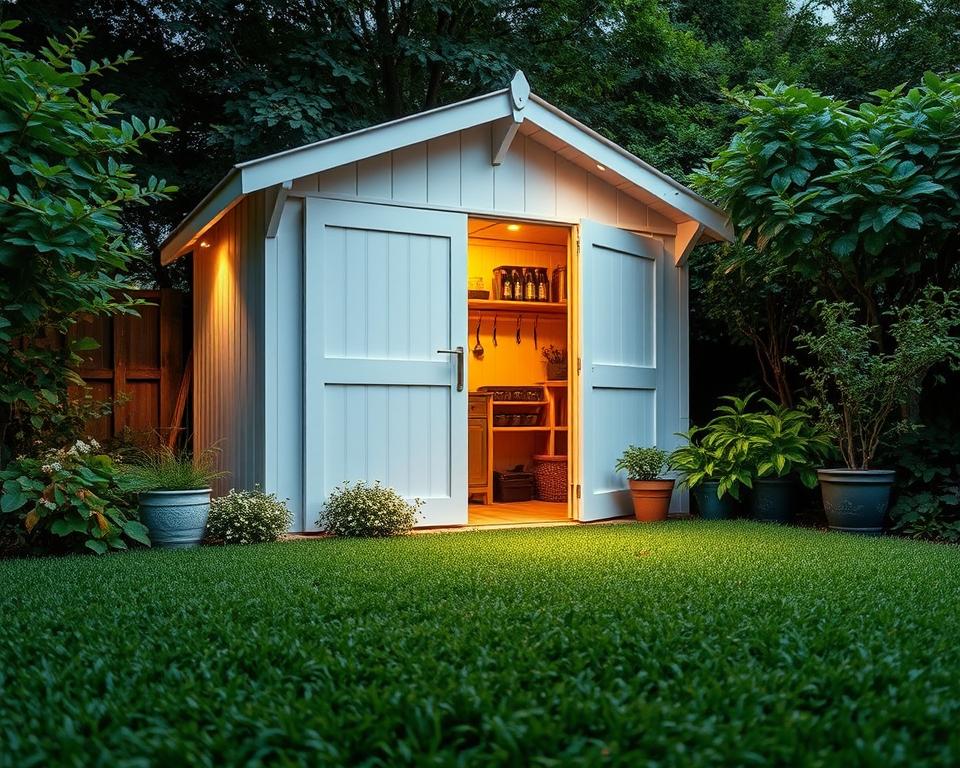
Combining practical insulation with decorative elements can elevate any garden storage space. This approach transforms a basic shed into an inviting workspace that protects supplies while inspiring creativity.
Brightening the Space with Light Colours
Light colours dramatically improve the working environment. Painting the ceiling white reflects natural light throughout the area. This simple change makes the entire space feel larger and more pleasant.
Better illumination helps gardeners locate tools and materials quickly. The bright ceiling creates an airy atmosphere that enhances visibility. This design choice proves particularly valuable in smaller sheds with limited windows.
Insulation Techniques for Temperature Control
Proper insulation protects temperature-sensitive items like seeds. Foil bubble wrap insulation offers an effective solution. Gardeners can attach this material directly to shed frames using a staple gun.
For additional protection, consider insulating individual drawers. This provides extra safeguarding for seeds during extreme weather. While complete insulation may not be possible, even partial coverage makes a significant difference.
Artificial turf on walls serves as both decoration and insulation. Its installation requires multiple fixing methods due to the material’s weight. The result is a comfortable workspace that gardeners enjoy using throughout the year.
Maintenance Strategies for a Sustainable Potting Shed
The true test of any organisational system comes with time and regular use. Without consistent maintenance, even the best-designed storage solutions can gradually deteriorate into clutter. Establishing sustainable routines ensures your workspace remains functional year after year.

Seasonal Clearout Tips
End-of-season decluttering provides the perfect opportunity to reassess your storage needs. Gardeners should empty their shed completely and evaluate what equipment they actually use. This process helps identify items that can be donated or discarded.
Jenny Davis, Head of Marketing at Forest Garden, offers practical advice: “My golden rule when it comes to deciding what products to store in the shed is to ask whether it can be replaced. Tools, gardening equipment and outdoor toys – items already designed to stand up to the elements – are perfect for sheds.”
Regular Organising Routines for Long-Term Efficiency
Brief weekly tidying sessions prevent small messes from becoming major projects. Treating the potting shed like any other room in the house maintains its organisation. This disciplined approach saves considerable time in the long run.
Structural maintenance proves equally important. Regular checks for roof leaks and proper sealing protect your belongings from water damage. Ensuring windows and floors remain watertight prevents mould growth and condensation issues.
This maintenance work represents the practical side of gardening. However, the reward is a peaceful outdoor retreat that enhances rather than hinders your horticultural activities.
Conclusion
The ultimate goal of these storage strategies is to create a functional and inspiring environment for gardening tasks. A tidy garden shed is not just about neatness; it is about building a space that actively supports your passion.
This guide has shown that solutions do not require great expense or power. Simple ideas, from using vertical space to upcycling old furniture, can have a profound impact. The potting bench becomes the heart of the area, and smart shelving keeps tools and pots within easy access.
The top priority is creating a system that works for one‘s specific needs. Good advice is to give every item a designated place. This solution ensures gardening tools are always to hand.
With consistent maintenance, any shed can remain a clutter-free home for your garden essentials. These storage ideas empower every gardener to enjoy a more productive and enjoyable potting experience.
FAQ
What are the first steps to organising a potting shed?
Start by assessing storage needs and visualising the layout. Remove everything, sort items into categories, and plan zones for different tasks.
How can vertical space be maximised in a small shed?
Utilise wall-mounted solutions like pegboards, shelving units, and hooks. This keeps tools accessible and frees up valuable floor space.
What is the best way to store small items like seeds and twine?
Group like-items together in clear, labelled containers or baskets. This system makes it easy to find what you need quickly.
Can old furniture be repurposed for shed storage?
Absolutely. Old bookshelves or cabinets can be transformed into sturdy storage. This approach is both cost-effective and environmentally friendly.
How often should a potting shed be decluttered?
A seasonal clearout is recommended. Regular maintenance prevents clutter from building up and keeps the space functional.
What are some clever storage solutions for gardening tools?
Install deep, sturdy shelves for heavy pots and use wall-mounted hooks for hanging tools. Baskets and bins are great for organising smaller equipment.
How can I make my potting shed more visually appealing?
Use light colours to brighten the space and consider adding insulation for comfort. Even simple touches like a tidy workbench enhance the shed’s aesthetics.
Are there any tips for maintaining an organised shed?
Establish a routine for putting tools away after use. Regular checks ensure everything remains in its designated place, sustaining order.

