Fun Games and Activities for Your Kids’ Outdoor Playhouse Ideas

A garden playhouse represents a remarkable opportunity for parents to craft an entire universe for their children. This dedicated space allows imagination and creativity to flourish throughout the seasons, providing a personal retreat where young minds can explore freely.
This comprehensive guide explores exciting ways to maximise the outdoor playhouse experience. From timeless classics to innovative pursuits, children can enjoy engagement that lasts for hours. These suggestions offer valuable alternatives to screen-based entertainment.
Parents will discover how a simple garden structure transforms into a hub for learning and social development. The activities promote physical movement, cognitive growth, and creative expression in a safe environment. Each idea suits various age groups and interests.
From imaginative role-playing to active movement pursuits, these concepts encourage children to step outside. They can explore the endless possibilities their special space offers. The playhouse becomes an extraordinary area that children cherish throughout their childhood.
Inhaltsverzeichnis
Key Takeaways
- Outdoor playhouses provide a dedicated space for children’s imagination and creativity to develop
- These structures offer valuable alternatives to screen time and indoor entertainment
- Activities can be tailored to suit different age groups and developmental stages
- Playhouse pursuits promote physical development, cognitive growth, and social skills
- A simple garden structure can be transformed into an extraordinary learning environment
- Children develop a lasting connection with their personal outdoor space
- Various activities ensure ongoing engagement throughout different seasons
Introduction to Outdoor Playhouse Fun
A dedicated play space in the garden serves as a catalyst for childhood development and creative expression. These structures become gateways to imaginative worlds where young minds explore and create.
Modern research demonstrates significant benefits for physical health and mental wellbeing. Outdoor engagement promotes social development and cognitive growth. This makes garden structures valuable investments in childhood.
Children enjoy hours of independent engagement in their personal space. They develop ownership while remaining within the family garden’s safety. This independence fosters confidence and decision-making skills.
During warmer months, these spaces become central hubs for activity. They draw youngsters away from screens into active, imaginative pursuits. The versatility allows adaptation to changing interests over time.
Parents appreciate how these areas facilitate both solitary and social interaction. Children can enjoy quiet moments or invite friends for collaborative adventures. Establishing routines encourages regular outdoor time and nature appreciation.
Setting the Scene: Transforming Your Outdoor Space
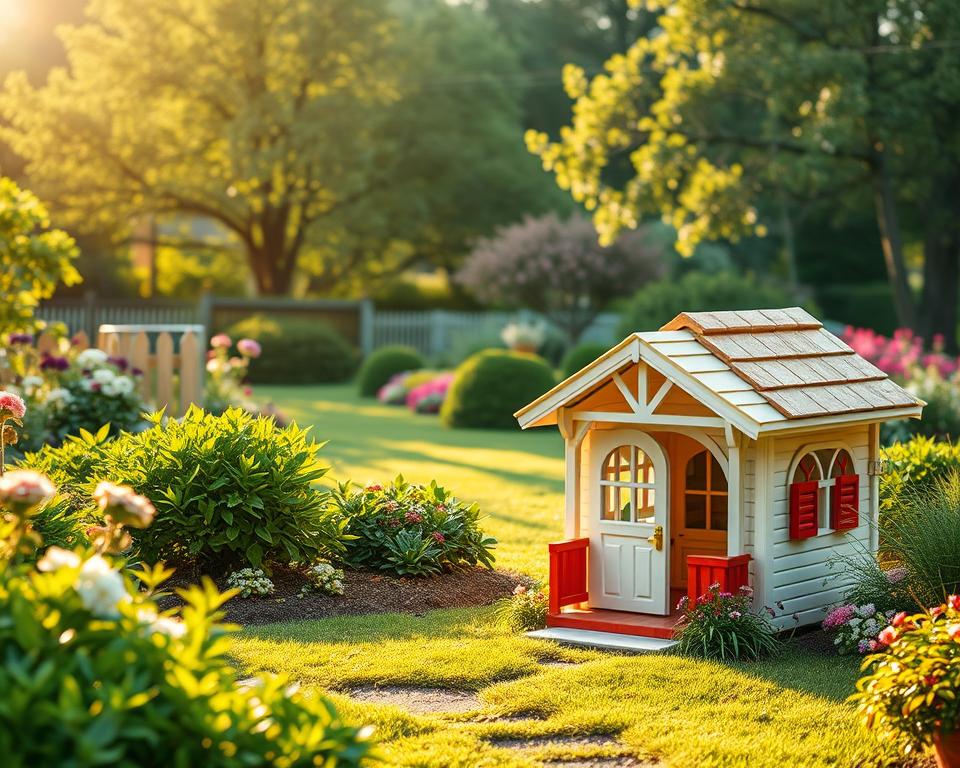
The strategic placement of a play structure can significantly impact how children interact with their outdoor surroundings. Proper positioning ensures visibility for supervision while granting young ones a sense of independence.
Benefits of an Outdoor Playhouse
These garden structures provide developmental advantages that extend beyond simple entertainment. Children gain improved physical coordination and problem-solving abilities through imaginative scenarios. Regular engagement supports both gross and fine motor skill development.
Youngsters demonstrate enhanced creativity when navigating self-created rules within their personal space. The exposure to natural light and fresh air contributes to overall wellbeing. This type of environment encourages independent decision-making and social interaction.
Creating a Safe and Inviting Area
Safety considerations form the foundation of any successful play area. Parents should inspect for potential hazards and ensure stable ground surfaces. Regular maintenance checks help maintain the structure’s integrity over time.
Comfortable seating and weather-appropriate features make the space welcoming across seasons. Personalised decorations reflecting a child’s interests encourage frequent use. Thoughtful planning allows the area to serve multiple purposes throughout the day.
The entire family benefits from having a designated play zone that reduces indoor clutter. This approach creates a balanced environment where children feel secure yet autonomous. Proper setup transforms a simple garden feature into a hub for growth and discovery.
Fun Games and Activities for Your Kids’ Outdoor Playhouse
The sheltered environment provides the perfect setting for various entertaining challenges and creative explorations. Youngsters can enjoy countless pursuits that keep them engaged for hours.
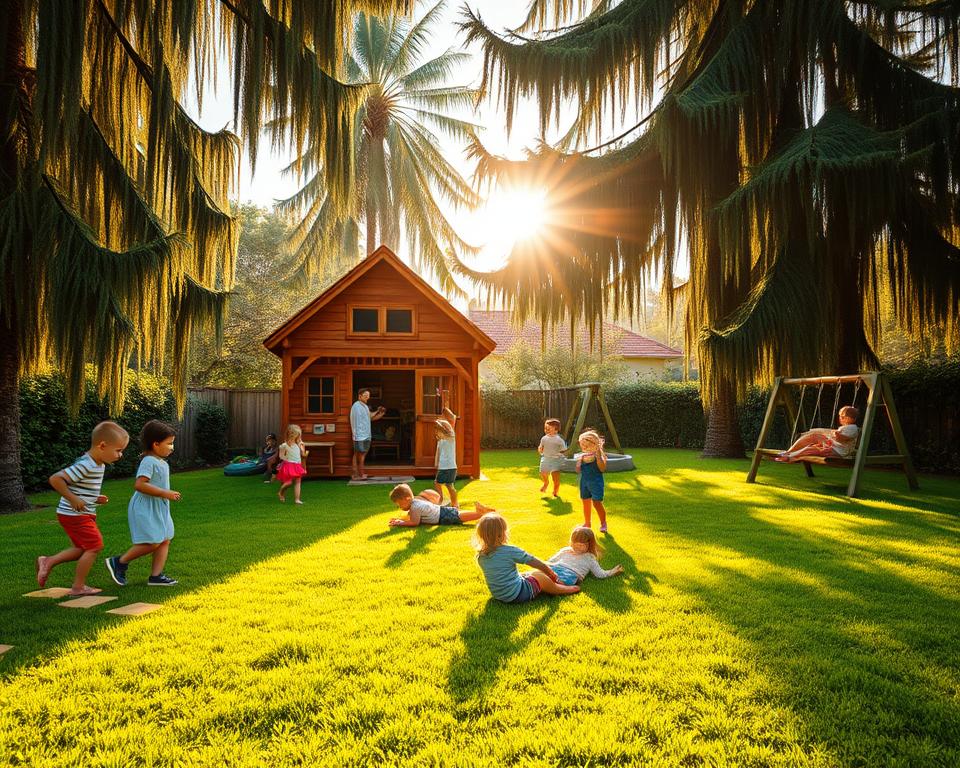
Active pursuits within the structure promote physical fitness while developing coordination. These movements occur in a non-competitive atmosphere that builds confidence. Spatial awareness improves naturally through these physical engagements.
Creative endeavours transform the space into an artistic studio or theatrical stage. Children explore different roles and scenarios that reflect their personal interests. This variety ensures the area remains an exciting destination.
Weather-appropriate options maintain functionality throughout the year. Indoor-focused pursuits suit rainy days while outdoor-integrated ones work for pleasant weather. This adaptability supports consistent usage across seasons.
Group endeavours facilitate social development through cooperation and communication. Solo pursuits allow for independent decision-making and self-sufficiency. The space accommodates children of varying ages simultaneously.
Rotating between different types of engagement prevents boredom effectively. Each child finds something appealing regardless of their energy levels. The structure becomes a cherished hub for growth and discovery.
Creative DIY Decorations and Customisations
Involving young minds in the decoration process creates a sense of ownership and pride in their special space. This approach transforms a standard structure into a personalised retreat that reflects each child’s unique personality. The experience becomes educational, encouraging decision-making skills.
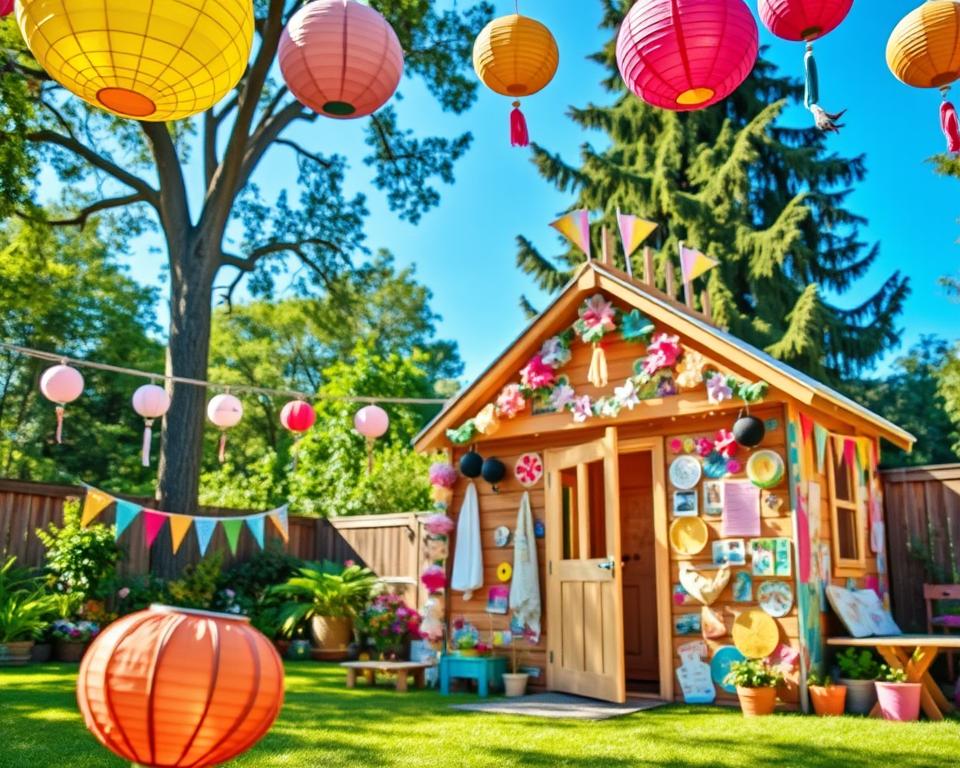
Parents gain valuable insights into their child’s inner world through these collaborative projects. The bonding experience strengthens family connections while fostering creativity and confidence.
Personalised Signage and Decors
Customised signage represents one of the most engaging decoration ideas. Children can create name plates, welcome messages, or operational signs for their playhouse. This activity allows them to claim ownership of their area.
Simple materials like wood, paint, and brushes enable endless customisation possibilities. Themed decorations can transform the space into various settings, keeping the environment fresh. Seasonal updates provide ongoing creative projects throughout the year.
| Decoration Approach | Materials Needed | Skill Level | Benefits |
|---|---|---|---|
| Personalised Signage | Wood, paint, brushes | Beginner | Builds ownership and identity |
| Themed Decorations | Fabric, adhesive decorations | Intermediate | Enhances imaginative play |
| Seasonal Updates | Seasonal craft materials | Beginner | Maintains engagement |
Involving Kids in the Design Process
Empowering children with design decisions teaches them that their opinions matter. This involvement creates a space that truly reflects their interests and vision. The process becomes as valuable as the final result.
Parents should provide guidance while allowing creative freedom. This balance ensures safety while encouraging artistic expression. Additional features like shelves or hooks can increase functionality while maintaining charm.
Engaging Indoor Scavenger Hunts and Treasure Trails
Indoor treasure trails offer educational entertainment regardless of weather conditions outside. These activities transform the playhouse into an adventure zone where children develop problem-solving skills.
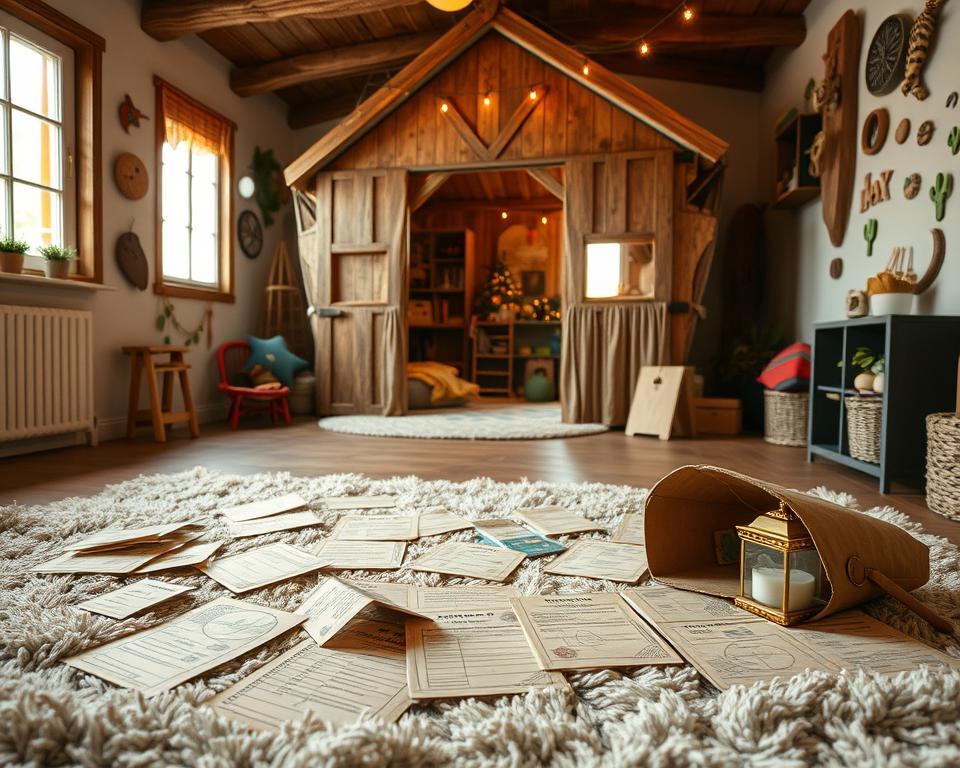
Scavenger hunts prove particularly valuable on rainy days. They ensure the structure remains a engaging destination throughout the year. Two-storey designs provide ideal settings for complex challenges.
Designing a Playful Clue Map
Creating clue maps encourages literacy development as children interpret instructions. Parents can adjust difficulty levels based on ages. Picture clues work for younger participants while written riddles suit older ones.
Team-based treasure hunts promote cooperation and communication. Children work together to decode clues and search locations. This collaborative approach strengthens social skills during the game.
The celebration following successful discovery adds memorable closure. This reinforcement encourages children to request repeat performances. Themed adventures aligned with interests enhance engagement further.
Regular rotation of hiding spots prevents predictability. Each treasure hunt feels fresh and maintains enthusiasm over time. This classic family activity provides lasting enjoyment for all involved.
Interactive Role-Playing and Mini Theatre Adventures
Role-playing adventures transform a simple garden structure into a vibrant stage for young minds. This type of play allows a child to experiment with different identities and social situations. It is a powerful tool for development.

Children immerse themselves in various scenarios, from running a kitchen to managing a home. This process helps them understand the wider world. Their imagination knows no bounds in this personal space.
Imaginative Themes and Scenario Setups
The versatility of a playhouse is remarkable. One day it can be a superhero’s base, the next a medical centre. This flexibility supports a child‘s growing creativity.
Medical role-play, for instance, can be therapeutic. It helps children process visits to the doctor by letting them take control. Builder scenarios introduce concepts of planning and tool use.
Costume Ideas and DIY Props
Elaborate costumes are not necessary. A simple bedsheet becomes a magnificent cape. Cardboard boxes can be transformed into almost any toy or prop.
Creating these items together adds to the fun. A small table can serve as a shop counter or a medical desk. These DIY projects are as valuable as the play itself.
| Role-Play Scenario | DIY Prop Ideas | Developmental Focus |
|---|---|---|
| Restaurant | Homemade menu, play money | Numeracy, social interaction |
| Medical Centre | DIY stethoscope, patient charts | Empathy, processing experiences |
| Construction Site | Cardboard tools, blueprint drawings | Problem-solving, motor skills |
Classic Outdoor Games Revitalised in the Playhouse
The timeless appeal of chasing games finds fresh expression within a personalised garden retreat. These pursuits gain strategic depth when the structure becomes a central hub for traditional entertainment.

Hide and seek variations become particularly engaging with the addition of a dedicated space. Younger participants appreciate the secure hiding locations it provides. The boundaries naturally defined by the structure make supervision easier.
Hidden Gems: Hide and Seek Variations
Ghost in the Graveyard offers a thrilling twist on the classic format. One volunteer becomes the ghost while others wait at the designated home base. When the ghost hides, the chase begins across the garden area.
Any player spotting the ghost yells “Ghost in the Graveyard” and races for safety. Tagged participants join the ghost’s team, creating an exciting dynamic shift. The playhouse serves as the crucial safe zone throughout this energetic pursuit.
These traditional pursuits require minimal equipment, relying on imagination and social interaction. Multi-level designs add vertical complexity to the experience. Regular rotation of different variations maintains enthusiasm throughout the summer months.
Active Movement Games to Spark Energy and Creativity
Movement-based pursuits within the garden structure channel youthful energy into constructive physical development. These activities transform the space into a dynamic arena where coordination and cardiovascular health improve naturally.
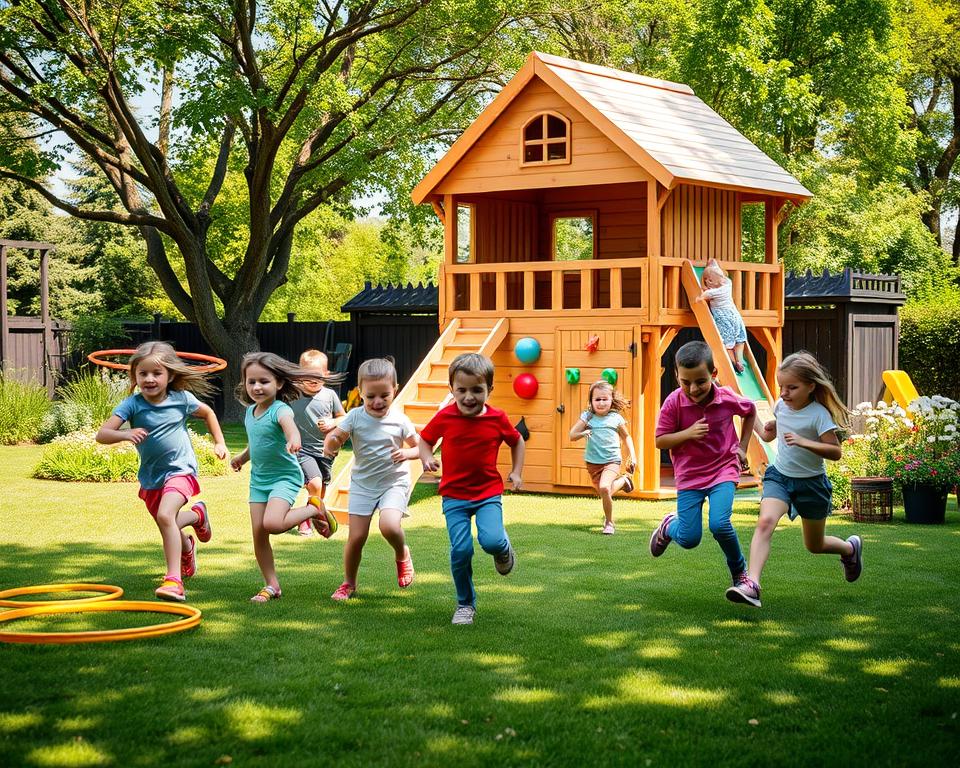
Dance contests represent an excellent activity for getting kids moving to curated playlists. The competitive element motivates participants to give their best effort while developing rhythm and musicality.
Dance Contests and Red Light, Green Light Variations
This type of game helps children improve concentration and follow directions more effectively. It serves as a valuable way for families to enjoy physical expression together.
Red Light, Green Light adapts well to limited spaces with simple modifications. When playing indoors, limit participation to two or three kids to prevent overcrowding. The leader calls commands while participants respond with appropriate movements.
Creative variations like Yellow Light for slow motion or tiptoeing add challenge. If a child moves during ‘Red Light’, they return to start. The first to finish round one can become the next leader.
These movement games teach impulse control while encouraging physical creativity. They provide natural energy outlets that help regulate mood and attention throughout the day.
Fun Group Games for Family Bonding
The playhouse serves as a natural centrepiece for group entertainment that brings relatives together. These gatherings create opportunities for multi-generational participation and lasting memories.
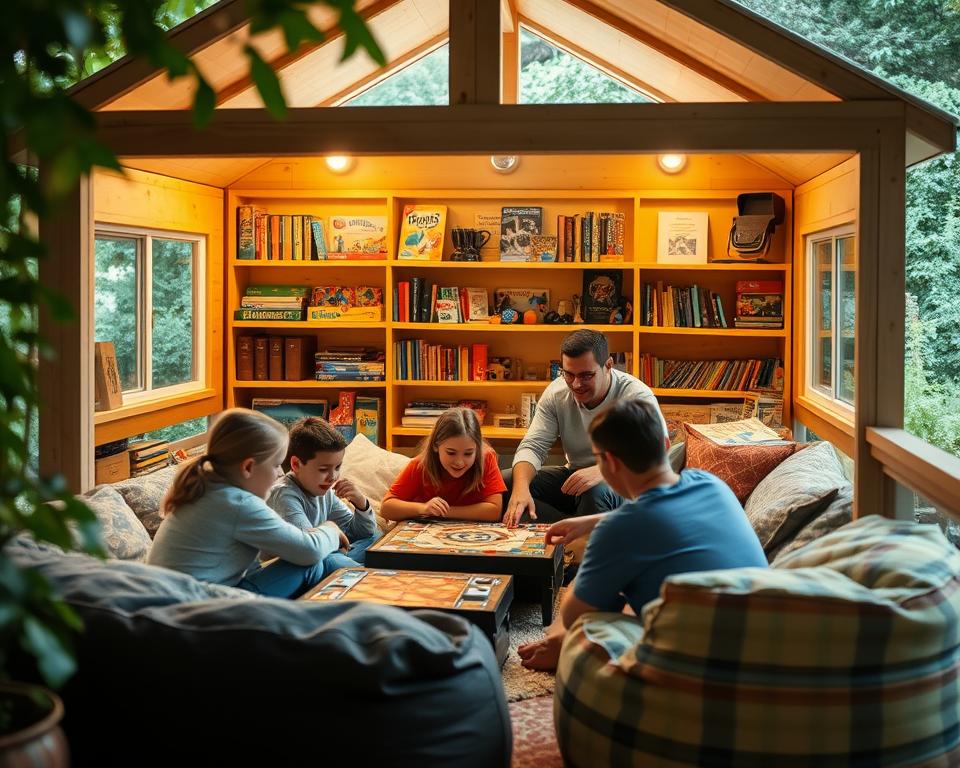
Team-Based Challenges and Cooperative Play
Classic group games adapt beautifully to the garden setting. Musical chairs requires minimal equipment—just chairs and music. Participants walk around a circle of chairs when music plays, then scramble for a seat when it stops. One chair gets removed after each round until only one person remains.
Duck, Duck, Goose offers simple excitement for younger children. Players sit in a circle while one person walks around tapping heads. When someone gets tapped as the “goose,” they chase the tapper around the circle. This game teaches anticipation and turn-taking.
Tug of War develops physical coordination and teamwork. Teams pull opposite ends of a rope, trying to drag a centre marker past a line. This activity requires synchronised effort and communication. It works well with mixed-age groups when teams are balanced.
These pursuits promote cooperation over competition. Children learn to handle both winning and losing gracefully. Regular family game time establishes cherished traditions that strengthen bonds across generations.
Creative Crafts and Workshop Ideas for Little Ones
Transforming a garden structure into a creative hub offers significant developmental benefits for a child. This space becomes a dedicated studio for exploration and skill-building.
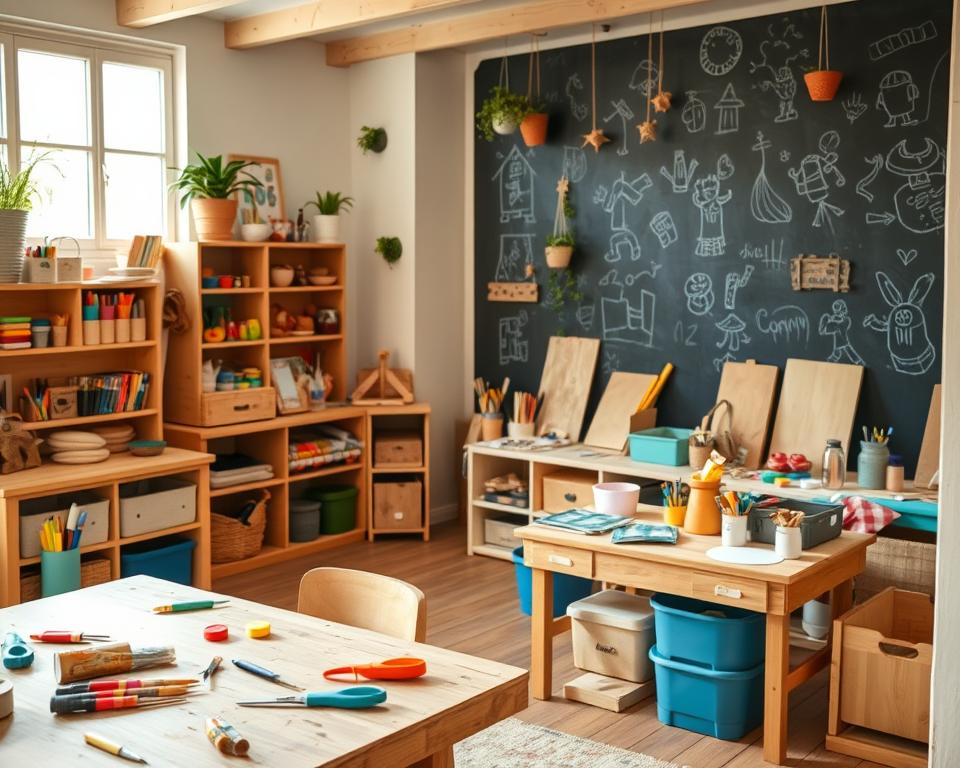
Stocking the playhouse with diverse materials like paints, clay, and craft paper encourages experimentation. Little ones develop fine motor skills and express ideas freely.
Art, Craft, and Mini Business Setups
Hosting an art exhibition inside the playhouse teaches presentation skills. It allows a child to experience pride in their work when family attends.
For practical skills, the space can become a tool workshop. Under supervision, children learn about instruments and safety. This sparks interest in making and engineering.
Mini business setups are extremely educational. A toy shop or café on a small table introduces financial concepts. These activities teach pricing, customer service, and basic economics through play.
| Workshop Type | Key Materials | Primary Skill Developed |
|---|---|---|
| Art Studio | Paints, Paper, Clay | Creative Expression & Fine Motor Skills |
| Tool Workshop | Child-Safe Tools, Wood | Spatial Reasoning & Safety Awareness |
| Mini Business | Play Money, Inventory Toys | Financial Literacy & Social Interaction |
This versatile activity accommodates different ages, making it perfect for siblings. It strengthens bonds through shared creativity and learning.
The Playhouse as a Hub for Learning and Imagination
Educational researchers consistently highlight the profound impact that personalised play spaces have on a child‘s developmental trajectory across multiple domains. A playhouse serves as far more than a simple toy structure, representing a complete learning environment.
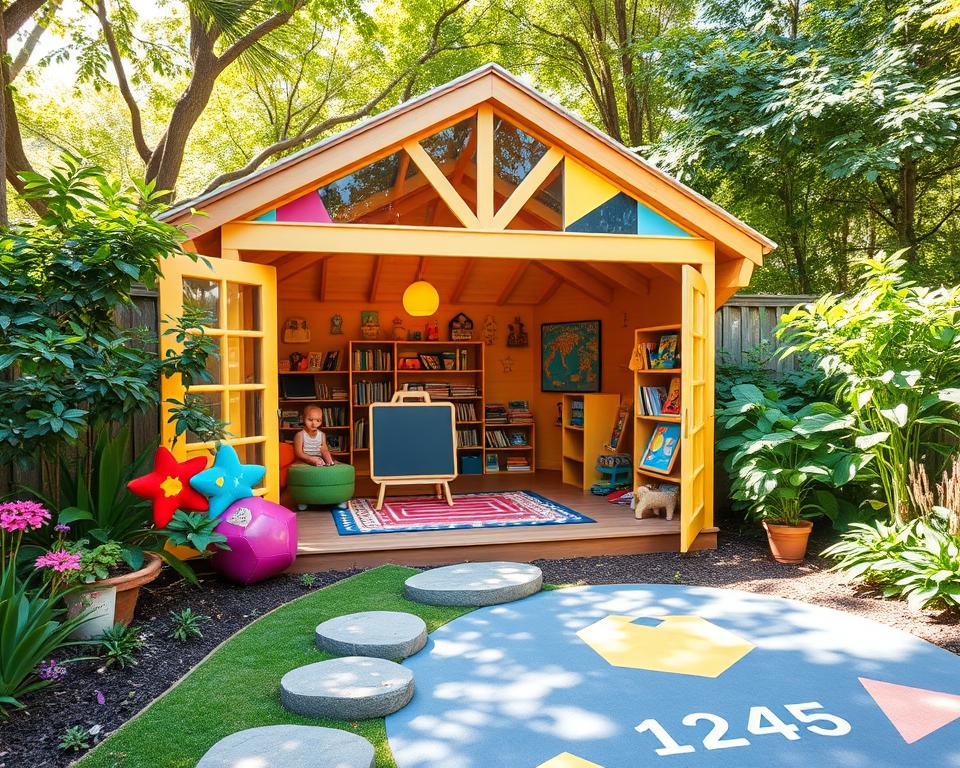
Transforming this space into a reading nook encourages literacy development through cosy, distraction-free settings. Proper lighting and comfortable seating create inviting retreats where little ones voluntarily spend time with books.
Book club activities add social dimensions to reading, teaching children to articulate thoughts and appreciate diverse interpretations. This way of engaging with literature builds comprehension skills naturally.
Gardening projects around the playhouse provide hands-on science education as young minds observe plant life cycles. Responsibility training occurs through plant care routines, where a child learns their actions directly impact living things.
The tangible results of gardening—flowers blooming from tiny seeds—build self-esteem through genuine achievement. These things create concrete evidence of capability that empty praise cannot match.
Imagination development reaches peak potential in these settings where children create entire worlds and complex narratives. Independent play time teaches self-regulation and constructive boredom management.
Various playhouses offer transitional spaces between parental supervision and full independence. This allows practice autonomy while remaining in safe, monitored environments that support cognitive, social, and emotional growth.
Conclusion
The journey through these creative possibilities reveals the true value of a garden structure designed for youthful exploration. A well-utilised playhouse offers endless hours of engagement that extend well beyond the summer months. It becomes a cherished space where imagination flourishes.
Parents will discover that these ideas require minimal financial investment but yield significant developmental returns. The playhouse adapts as children grow, serving different purposes through various stages. This versatility makes it a fun and practical addition to any family garden.
Younger kids particularly benefit from having their own dedicated space for discovery. The structure encourages physical activity, social interaction, and creative thinking. These experiences create lasting memories that children carry into adulthood.
Ultimately, the playhouse represents an investment in childhood development itself. It provides the physical and imaginative space needed for growth. The end result is a richer, more engaged childhood experience.
FAQ
What are the key benefits of an outdoor playhouse for children?
An outdoor playhouse offers numerous benefits, including encouraging physical activity, sparking creativity, and providing a dedicated space for imaginative play. It helps children develop social skills through interaction and fosters a deeper connection with nature.
How can I ensure the playhouse area is safe for my children?
Safety can be prioritised by securing the playhouse structure firmly to the ground, checking for sharp edges, and using non-toxic paints. Ensure the space is free from hazards and that an adult supervises younger children during playtime.
Can a playhouse be used during colder months?
Absolutely. With proper weatherproofing, such as adding insulation or a waterproof cover, a playhouse can be enjoyed year-round. Many families add cosy elements like blankets and battery-powered lights for winter use.
What are some simple ways to personalise our playhouse?
A> Personalisation can be achieved through painted name signs, homemade bunting, or a customised ‘mailbox’. Involving the children in decorating allows them to express their creativity and feel a greater sense of ownership.
Are there educational activities suitable for a playhouse?
Yes, many educational activities work well in this setting. A mini market stall can teach maths skills, a nature observation station encourages scientific enquiry, and a small library corner promotes literacy in a fun, engaging environment.
What types of games are best suited for a small playhouse space?
A> Games that encourage imagination, such as role-playing shops, cafes, or adventures, are ideal. Card games, puzzles, and activities that can be enjoyed at a small table are also excellent choices for the interior space.
How can I encourage my child to spend more time playing outside in their playhouse?
Regularly introducing new, exciting props or themed activities can maintain interest. Scheduling play dates and joining in with the games yourself can also make the playhouse a more appealing and social space for your child.