
Garden Room vs Home Extension: A Comprehensive Comparison Guide

Many UK homeowners dream of more living space. The question is how to achieve it. Building a traditional extension or choosing a standalone garden structure are two popular paths. This decision carries significant weight for a property’s value and a family’s lifestyle.
Both options create valuable extra square footage. Yet, they differ greatly in approach, cost, and construction time. An extension physically expands the main house’s footprint. A garden room is a bespoke, insulated building placed within the outdoor area.
This guide offers an objective analysis to help homeowners make an informed choice. It examines critical factors like planning permissions, design flexibility, and long-term investment. The goal is to find the best solution for specific needs, budgets, and aspirations.
Inhaltsverzeichnis
Key Takeaways
- Both choices add valuable living space to a property but follow different construction methods.
- Extensions alter the existing house structure, while garden rooms are separate, standalone buildings.
- The decision impacts budget, project timeline, and potential planning requirements.
- Each option offers distinct advantages regarding privacy, integration, and design possibilities.
- This comparison considers financial investment, regulatory hurdles, and practical implications.
- The best choice depends on individual lifestyle needs and long-term property goals.
Exploring Home Space Solutions
Property enhancement through additional space solutions represents a significant trend in contemporary UK living. As lifestyles evolve, the demand for dedicated functional areas within residential settings continues to grow.
Defining Garden Rooms and Home Extensions
A garden room is a standalone, fully insulated building constructed within the outdoor area. Unlike traditional sheds, these structures offer year-round comfort and serve as genuine extensions of domestic living space.
Home extensions involve physically expanding the existing property’s footprint. This includes single-storey additions, loft conversions, and conservatory installations that integrate directly with the main house.
https://www.youtube.com/watch?v=SS1x9ZaouQs
Understanding the Need for Extra Space
Modern life demands have transformed how families utilise their properties. The rise of remote working, fitness priorities, and creative pursuits creates requirements that original house layouts often cannot accommodate.
Many property owners seek additional space rather than relocating due to financial considerations and emotional attachments to their neighbourhoods. Both garden rooms and extensions address these genuine needs through fundamentally different approaches.
Garden Room vs Home Extension: A Comprehensive Comparison
When considering property enhancements, the structural approach fundamentally shapes the outcome. This section delves into the core distinctions that define these two popular choices for creating extra space.
Key Differences in Structure and Function
The primary difference lies in physical connection. An extension is a permanent addition that expands the existing house structure. It becomes a seamless part of the main dwelling.
In contrast, a garden room is a standalone building situated within the outdoor area. It operates as a self-contained unit, separate from the main house.
This distinction influences function. Extensions typically create integrated living areas like larger kitchens or family rooms. A standalone garden building, however, offers incredible versatility. It can serve as a dedicated home office, gym, or creative studio.

Versatility, Privacy and Integration
The separation offered by a garden room provides significant advantages. It creates a distinct retreat, ideal for activities requiring focus or quiet.
The physical detachment fosters mental separation, which is invaluable for maintaining a healthy work-life balance when working from a home office.
This setup offers enhanced privacy. Insulation helps muffle sound, making it perfect for music practice or entertainment without disturbing others in the main house.
Extensions excel in integration. They provide additional square footage that feels like a natural part of the original property. This is ideal for expanding family living areas where connectivity is preferred.
| Feature | Garden Room | Home Extension |
|---|---|---|
| Structural Connection | Detached building | Integrated with house |
| Primary Function | Versatile, multi-use space | Seamless living area expansion |
| Privacy Level | High | Integrated |
| Best Suited For | Work, hobbies, quiet retreats | Family dining, kitchen expansion |
Ultimately, the choice hinges on the desired balance between integration and separation for your household’s needs.
Cost Considerations and Budget Planning
The financial implications of creating additional space require careful analysis and forward planning. Understanding the complete picture helps homeowners make informed decisions that align with their financial capabilities.

Initial Investment and Running Costs
A standalone garden building typically costs between £15,000 and £35,000. This represents a significant saving compared to traditional extensions, which often range from £30,000 to £80,000.
The average price for a garden room sits around £20,000. Extensions can cost triple this amount, reaching £50,000 to £70,000 for similar usable space.
Comparing Price Points and Hidden Expenses
Extensions frequently involve hidden costs that dramatically increase the final price. These include architect fees, planning applications, and building regulations approval.
Site-specific requirements like excavation or drainage add further expenses. Garden rooms offer better value with high-grade insulation and minimal maintenance needs.
Ongoing running costs also differ. Extensions may increase heating bills, while modern garden buildings maintain energy efficiency. Both options add property value, but the return on investment varies considerably.
Planning Permission and Regulatory Requirements
Regulatory approval processes present significant differences between these two space-creating options. Understanding these rules is vital for a smooth project.
For many homeowners, the bureaucratic path is a major deciding factor. It influences project timelines, costs, and overall feasibility.

Permitted Development Rights and Exceptions
Most standalone garden structures benefit from Permitted Development rights. This often allows installation without full planning permission.
Buildings up to 30 square metres typically do not need formal approval. This exemption saves considerable time and reduces paperwork.
There are important exceptions. If the structure is intended for full-time living or is very large, planning permission is usually required. Location also matters, with different rules for conservation areas.
Home extensions almost always require full planning permission. This process involves detailed architect plans and neighbour consultations. It can add months to a project timeline.
Building regulations approval is mandatory for extensions. For a garden building, the process is generally simpler. Homeowners can also apply for a Certificate of Lawfulness as a less formal route to confirm compliance.
Design Options and Customisation Potential
Customisation possibilities transform functional spaces into personalised retreats. The design process for additional structures offers remarkable flexibility to match individual preferences.
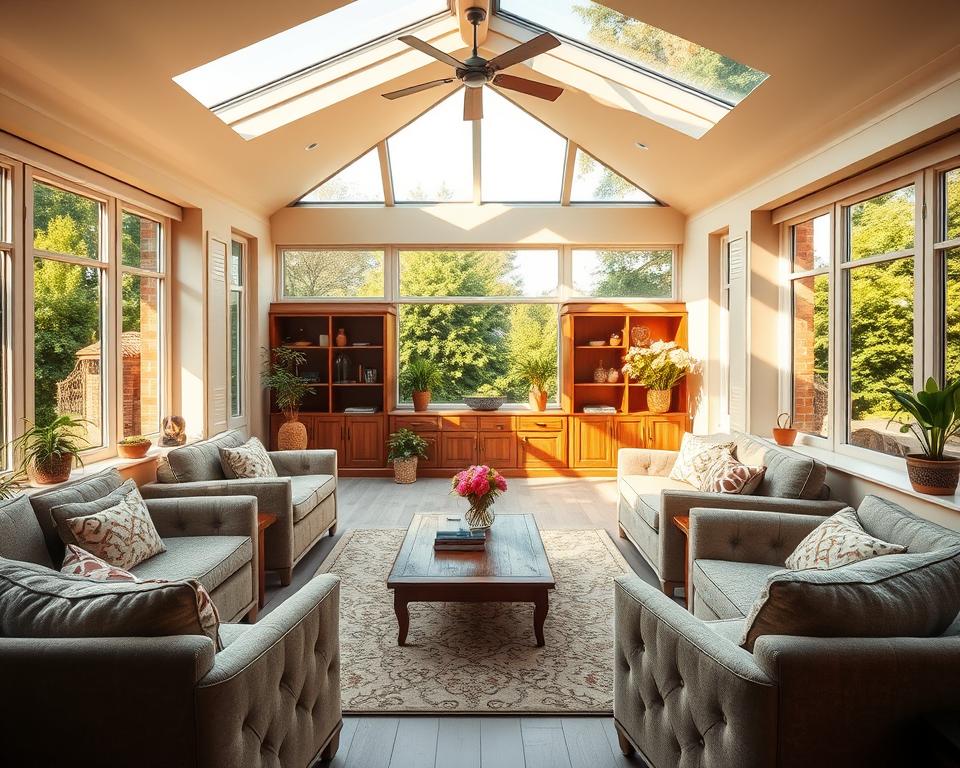
These standalone buildings provide exceptional bespoke potential. Every aspect can be tailored to specific needs rather than following standard templates.
Material Choices and Finishes
High-quality garden rooms utilise premium materials from industry leaders. Suppliers like Pilkington, Rehau, and Rock-Wool provide components used in luxury property developments.
The range of cladding options includes:
- Natural timber for traditional appeal
- Modern composite materials for contemporary looks
- Metal finishes for industrial styling
Superior insulation ensures year-round comfort. Glazing specifications can maximise natural light while maintaining energy efficiency. Interior finishes combine aesthetics with practical durability.
These structures blend architectural beauty with functional design. They create stunning additions that complement existing property features. The result is a space that truly reflects personal style.
Lifestyle Benefits and Personalisation
Modern lifestyles increasingly demand environments that support both focused work and relaxed family time. The choice between integrated and separate spaces significantly impacts daily living quality.
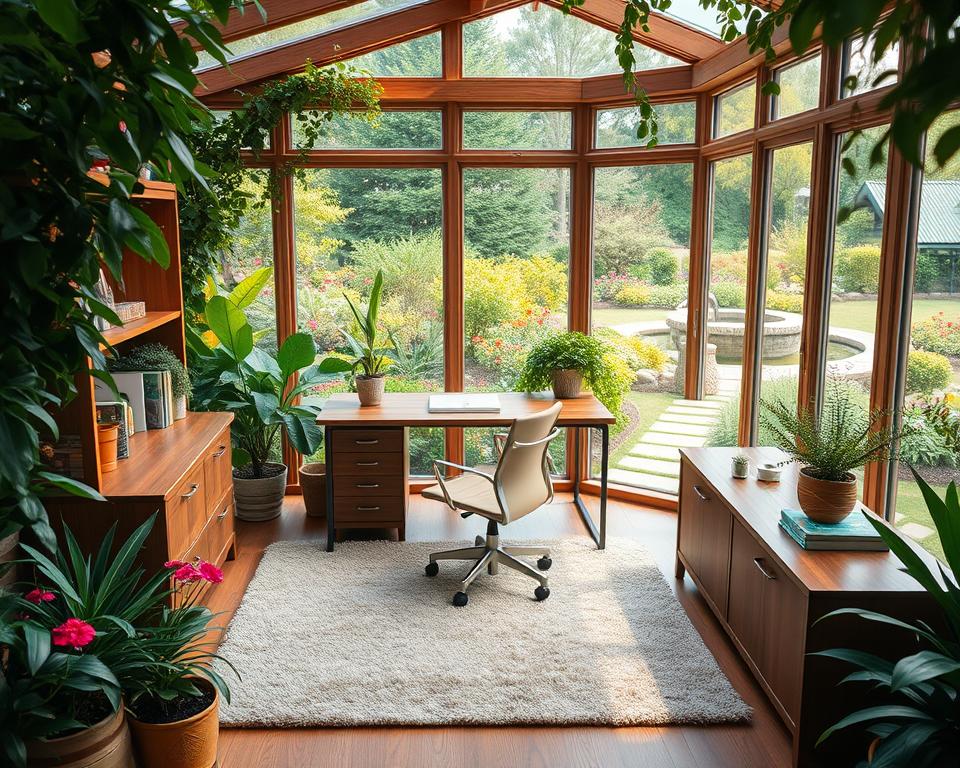
Enhanced Privacy and Noise Control
A standalone garden office creates an ideal retreat for professional activities. The physical separation from the main house establishes clear work-life boundaries.
High-quality insulation ensures sound remains contained within the structure. This allows for uninterrupted video calls and concentrated work sessions. Family members can continue their daily routines without disturbance.
The mental health benefits are substantial. Closing the garden office door at day’s end provides psychological closure. This separation is difficult to achieve with internal workspace options.
| Lifestyle Benefit | Garden Room Advantage | Extension Consideration |
|---|---|---|
| Work Concentration | High – minimal domestic distractions | Medium – integrated with household noise |
| Noise Management | Excellent – contained sound environment | Variable – depends on room placement |
| Privacy Level | Superior – complete visual and auditory separation | Integrated – connected to main living areas |
These structures adapt beautifully to changing needs over time. They can transition from home offices to hobby studios or guest accommodation. This flexibility supports evolving lifestyle requirements throughout different life stages.
Time, Disruption and Installation Process
Project duration and household disruption levels vary dramatically between these two approaches. The construction phase significantly impacts daily life and should influence the final decision.
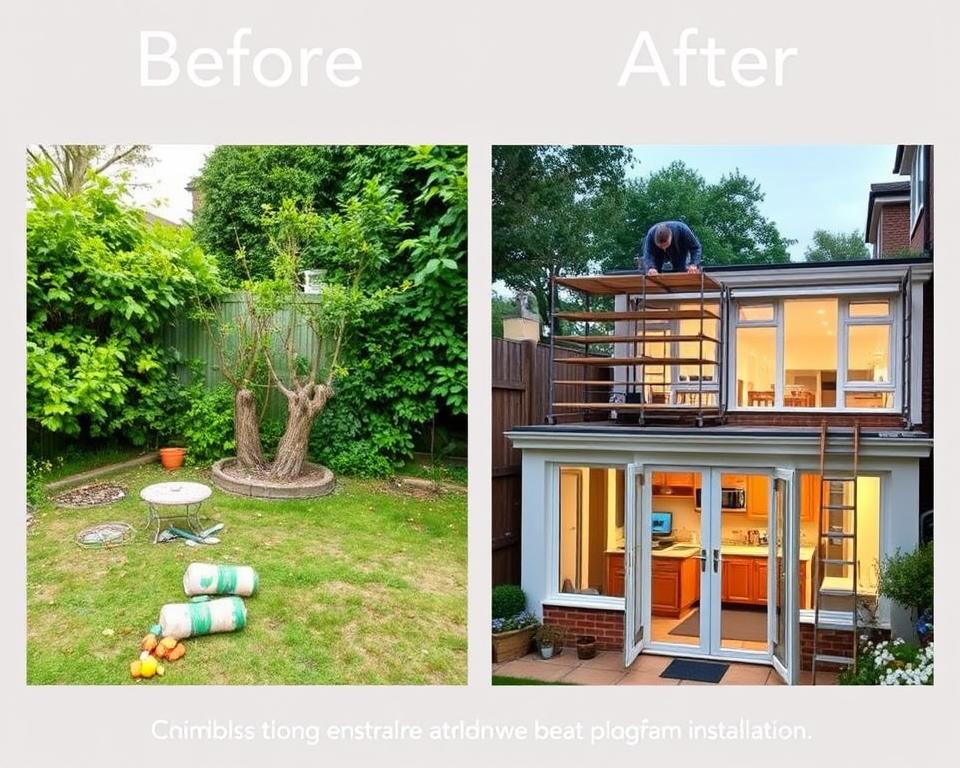
Quick Build Timeframes and Minimal Disruption
Standalone garden structures typically complete in just 2 to 4 weeks. Much of the work occurs off-site in controlled factory settings. This method reduces on-site construction to a mere 2-5 days.
Families experience minimal interference with their routines. There are fewer tradespeople on the property and less mess. The process avoids the need to vacate parts of the dwelling.
Ease of Installation and Flexibility During Construction
Traditional extensions require two to six months of construction work. This involves noisy tools, dusty conditions, and constant worker presence. Loft conversions are particularly disruptive, requiring ceiling adjustments and creating upheaval.
Extensions often necessitate structural changes like wall removal and flooring work. Homeowners may need to relocate during certain phases. The prolonged timeline means months of disruption to normal life.
Conclusion
The decision between integrated and detached space solutions shapes both immediate lifestyle and long-term property value. This comparison reveals that standalone structures typically offer superior value propositions for most requirements.
A garden room delivers comparable extra space at approximately half the cost of traditional construction. It avoids planning complications and minimizes household disruption. This makes it an ideal solution for home offices, studios, or private retreats.
Traditional extensions remain preferable when seamless integration with existing living areas takes priority. Kitchen expansions or family dining spaces often benefit from this connected approach.
Both options enhance property value, but garden rooms provide exceptional return on investment. Their flexibility adapts to evolving lifestyle needs over decades.
Homeowners should assess their available outdoor area, define usage intentions, and consult specialists. This ensures the chosen solution perfectly matches their home and lifestyle requirements.
FAQ
Do garden rooms require planning permission?
Often, they do not. Many garden buildings fall under ‘Permitted Development’ rights, meaning they can be built without a full planning application. This typically depends on the structure’s size, height, and its position relative to the property boundary. It is always advisable to check with the local planning authority first.
How does the cost of a garden room compare to a traditional extension?
A garden room is generally a more cost-effective solution. The price per square metre is often lower due to simpler foundations and construction methods. A home extension involves higher costs for materials, labour, and potentially more complex building regulations compliance.
Which option adds more value to my property?
A> Both can increase property value, but a well-integrated home extension typically adds more. Extensions like a new kitchen or living area become a permanent part of the house. A high-specification garden office or studio also boosts appeal, particularly for those seeking a dedicated workspace.
How disruptive is the installation process for each option?
A garden room installation causes minimal disruption. Construction happens away from the main house, often completed in a matter of weeks. A home extension is far more invasive, involving significant noise, dust, and potential changes to your family’s daily life for several months.
Can a garden room be used year-round?
Absolutely. Modern garden rooms are built with high-quality insulation, double glazing, and efficient heating systems. This makes them comfortable for use as an office, gym, or living space throughout all seasons, similar to the main property.
Are there limitations on what I can use a garden room for?
Usage is generally flexible, but there are some restrictions. While perfect for an office, gym, or hobby space, using it as separate living accommodation (e.g., a bedroom or granny flat) usually requires full planning permission and must meet specific building regulations.

