Garden Rooms Building Guide: Expert Advice and Tips
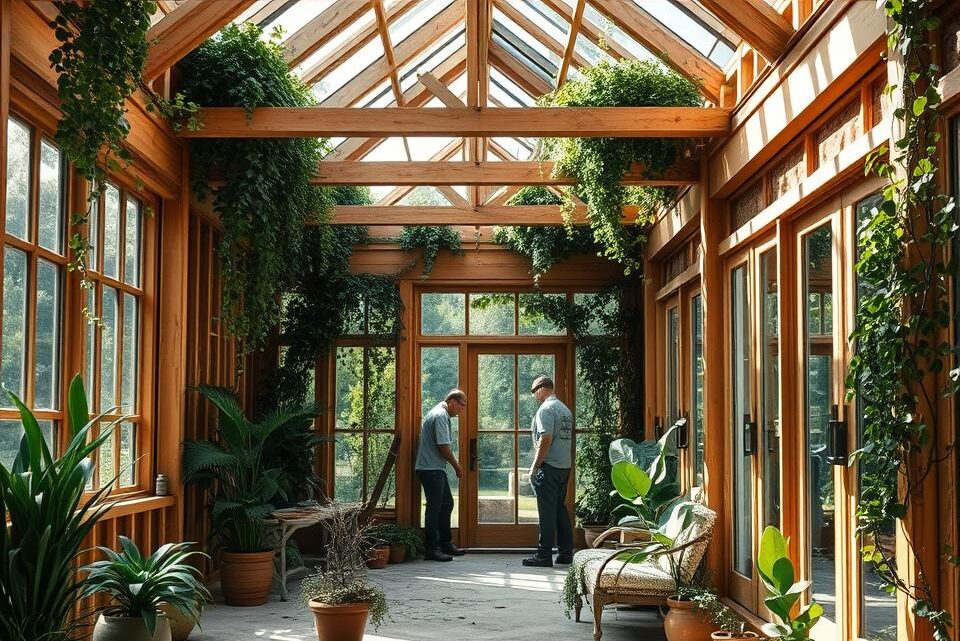
Many homeowners across the UK are discovering the benefits of adding versatile structures to their outdoor areas. These additions have become particularly popular as more people work remotely. They offer a dedicated space that separates professional and personal life.
These flexible outdoor structures serve numerous purposes beyond home offices. They can function as art studios, fitness areas, social spaces, or creative workshops. The possibilities are limited only by one’s imagination and requirements.
There are several approaches to creating these spaces. Some opt for pre-fabricated solutions, while others prefer constructing from detailed plans. Converting existing outbuildings is another viable option for many property owners.
Proper planning ensures these structures become valuable, weather-resistant extensions of the home. They can be enjoyed year-round by all family members. This comprehensive resource draws on professional expertise to help avoid common mistakes.
Inhaltsverzeichnis
Key Takeaways
- Outdoor structures provide valuable additional space for various activities
- Remote working trends have increased demand for separate home workspaces
- Multiple construction methods are available to suit different needs
- Proper planning and execution are essential for long-lasting results
- These spaces can serve as offices, studios, gyms, or social areas
- Professional guidance helps avoid common construction pitfalls
- Well-built structures offer year-round functionality and enjoyment
Overview of Garden Room Construction
Creating dedicated areas away from the main residence offers numerous advantages for modern living requirements. These stand-alone structures provide valuable additional space that can transform how homeowners use their property.
Understanding the Purpose and Benefits
These outdoor buildings serve specific functions while remaining separate from the house. Homeowners can dedicate them to work, exercise, hobbies, or social activities.
The benefits extend beyond simple space creation. Well-designed structures can increase property value and improve energy efficiency. They also help maintain better work-life balance by creating distinct zones.
Exploring Design and Material Options
Multiple construction approaches are available to suit different needs and budgets. Homeowners can choose from prefabricated units, kit-based solutions, or custom designs.
Material selection significantly impacts durability and appearance. Options include timber, brick, stone, and composite materials. Each offers different maintenance requirements and aesthetic appeal.
| Construction Method | Flexibility | Installation Speed | Cost Range | Skill Level Required |
|---|---|---|---|---|
| Prefabricated | Limited | Fastest | Medium | Basic |
| Kit-based | Moderate | Medium | Low-Medium | Intermediate |
| Custom-built | Maximum | Slowest | High | Advanced |
Design considerations should align with the intended use and available garden area. Features like glazing, doors, and roof design all contribute to the final result.
Preparing Your Garden Plot
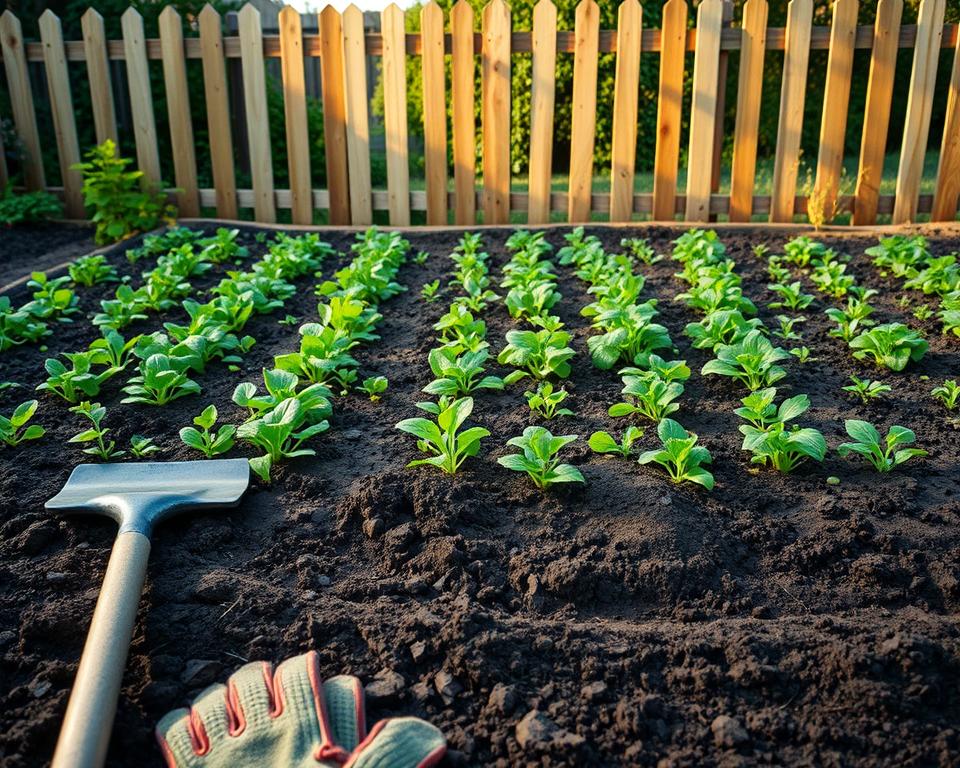
Before any construction begins, meticulous attention to the foundation area is paramount. This initial planning step ensures the structure will stand the test of time. The shape of the outdoor space often follows existing features like fences and trees.
Clearing, Levelling and Foundation Options
The plot requires thorough clearing of vegetation and debris. Levelling the ground is essential for a stable base. The base must be 100% level and slightly larger than the finished space.
Foundation options include concrete slabs, plinths, or piles. Using a concrete slab is popular and allows easy damp-proofing. Wire mesh underneath prevents vermin access.
Using Sand, Foam Insulation and Plywood
An eco-friendly method uses old decking to frame the area. Fill with sand and tamp it down firmly. This step creates a solid foundation without digging.
Next, lay 4-inch building foam insulation on the sand. Cover this with 5mm plywood for protection. This approach has low environmental impact.
Careful planning and proper materials selection make the build garden project successful from the start.
Garden Rooms Building Guide: Step-by-Step Process
Homeowners should begin by understanding the step-by-step nature of the construction process. This systematic approach ensures efficiency and quality from start to finish.
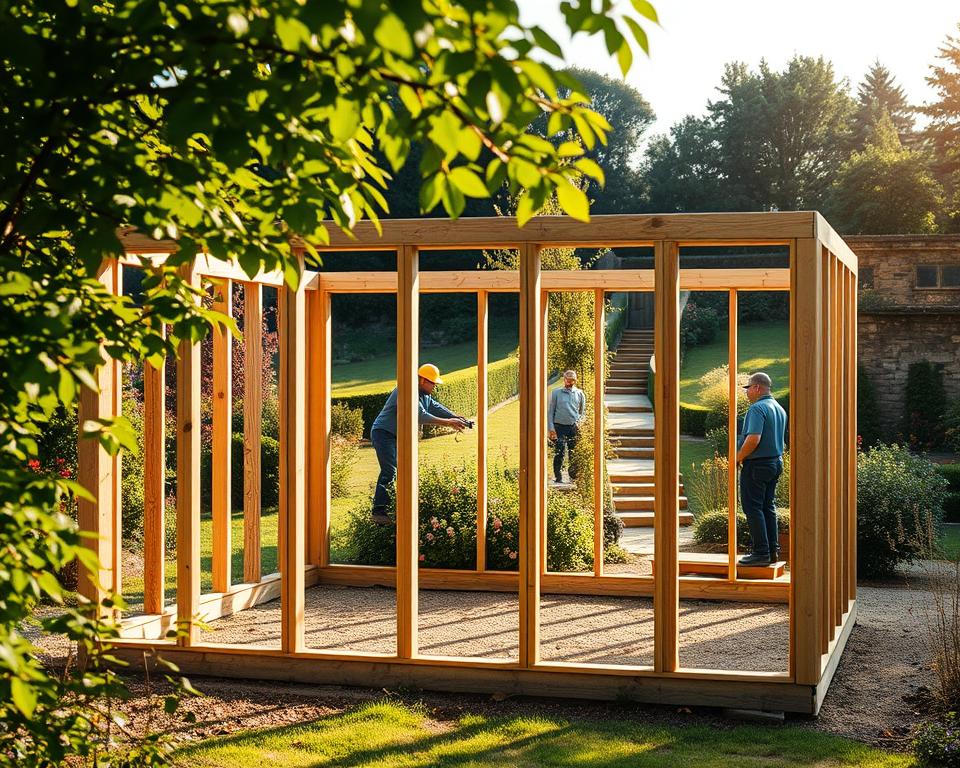
The first critical step involves verifying planning permission requirements. This varies based on factors like height, boundary proximity, and property status. Checking this early prevents costly delays.
Following a logical sequence is essential for any successful build. The process typically progresses from foundation work to frame assembly, then roof installation. Each phase builds upon the last.
Digital plans and detailed guide materials provide invaluable support throughout the construction. They offer precise measurements, material lists, and assembly instructions.
Breaking the project into manageable stages helps maintain momentum. Completing one phase before moving to the next ensures quality control. This methodical process reduces errors and frustration.
As one experienced builder noted, “Time invested in proper preparation and accurate framing pays significant dividends in later stages.” This attention to detail makes subsequent work like cladding and finishing much smoother.
Constructing the Frame and Roof
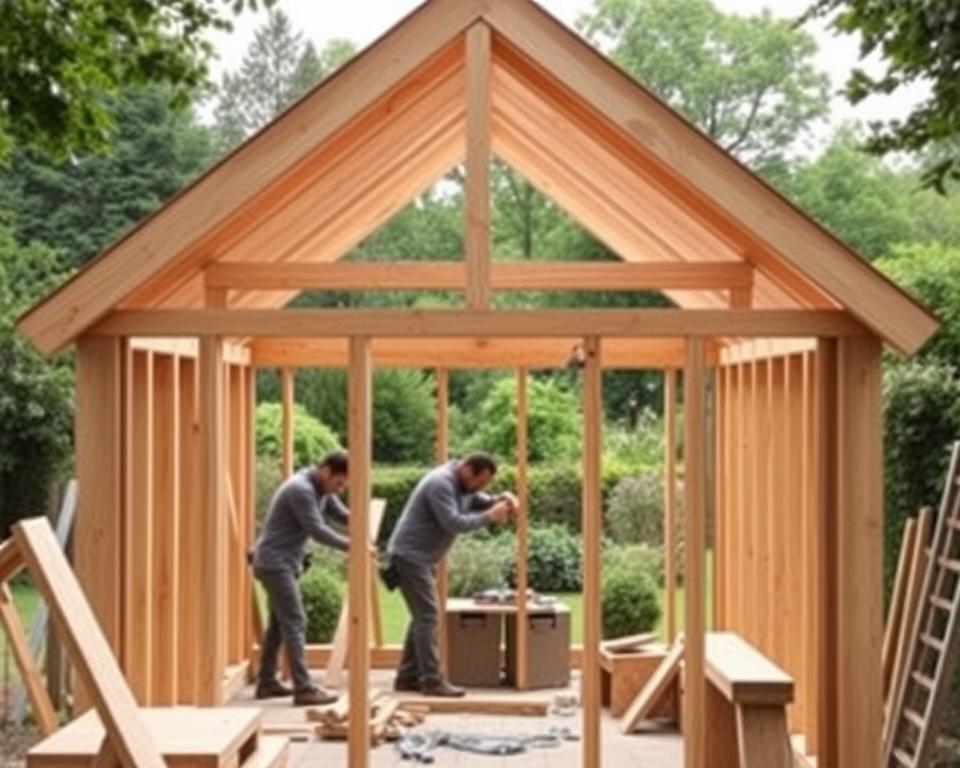
The assembly of the structural framework marks a pivotal moment in the creation process. This phase transforms the prepared foundation into a three-dimensional space. Careful attention to detail here ensures long-term stability.
Building the Wall Frames and Roof Beams
Wall frames are best constructed flat on the ground using 3×2-inch timber and wood screws. This method allows for precise measurement and square assembly. Once completed, the frames are lifted vertically and fastened securely at the corners.
A thicker beam above the doorway provides essential support. Typically made from 6×2-inch timber, this component bears the roof load. Proper installation prevents sagging over time.
Achieving the Correct Roof Slope for Drainage
Roof beams require careful positioning to ensure proper water drainage. Using 6×2-inch timber, they should create a slight backward slope. This slope allows surface water to run off efficiently.
The minimum recommended gradient is 25mm per metre. This prevents water pooling that could lead to leaks. Builders can position beams on top of or behind the doorway beam using joist hangers.
| Framing Component | Timber Size | Key Function | Installation Tip |
|---|---|---|---|
| Wall Frame | 3×2-inch | Structural support | Build flat, lift vertical |
| Doorway Beam | 6×2-inch | Load bearing | Install before roof beams |
| Roof Beams | 6×2-inch | Drainage slope | 25mm per metre gradient |
Time invested in getting the frame true and level pays significant dividends. A perfectly aligned structure makes subsequent construction stages much simpler. Temporary bracing should remain until the exterior is complete.
Fitting Doors and Windows to Your Garden Room
Properly fitted openings transform a basic structure into a comfortable, weatherproof retreat. This phase requires precision work to ensure smooth operation and thermal efficiency.
Installation Techniques for Secondhand and Custom Doors
Oak-framed double-glazed units can be sourced secondhand through online marketplaces. Buyers should verify dimensions and check if essential components like frames and tracks are included.
Installation presents significant challenges when components are incomplete. As one experienced installer noted, “Working with partial door sets often requires custom fabrication that tests even skilled builders.”
| Installation Method | Skill Level | Time Required | Cost Efficiency |
|---|---|---|---|
| Complete door set | Beginner | 2-3 hours | Medium |
| Secondhand with frame | Intermediate | 4-6 hours | High |
| Custom fabrication | Expert | 8+ hours | Low |
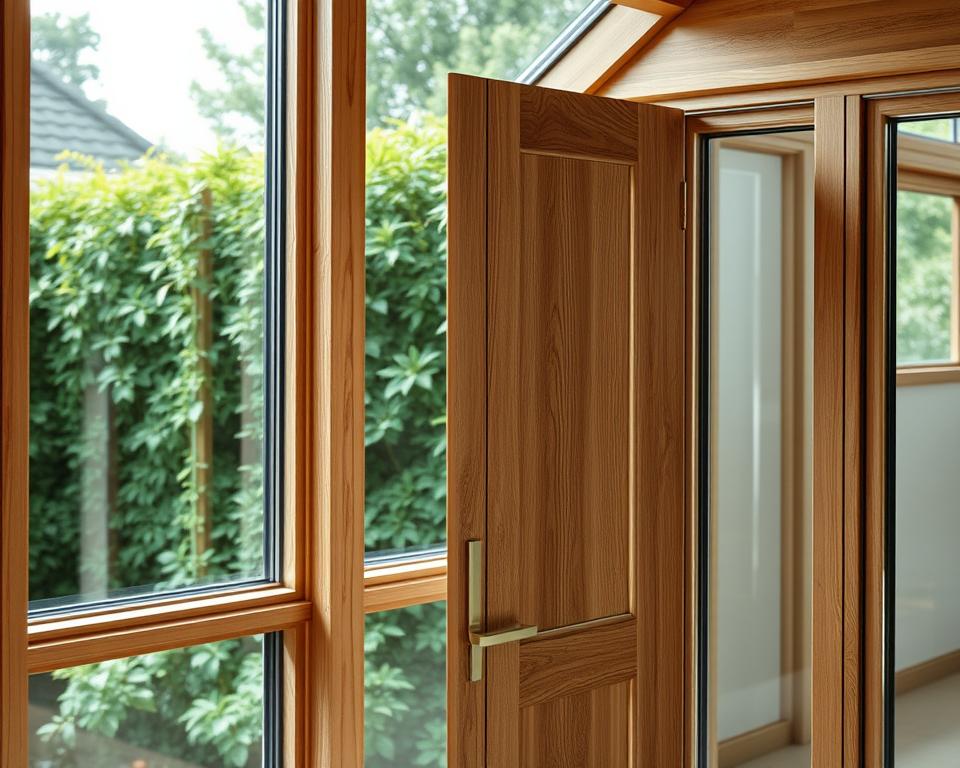
Bifold systems demand particular attention. Most commercial systems are top-hung, but outdoor applications typically need bottom-running tracks. The frame must be perfectly square for smooth operation.
“Purchasing complete door sets with frames included significantly simplifies the process and ensures component compatibility,” advises a professional builder.
Windows require angled sills for water drainage and proper sealing. Ventilation considerations are crucial for spaces used as workspaces. Protecting frames with breathable membrane cloth prevents moisture issues.
Cladding and External Finishes
The external cladding represents the final protective layer and aesthetic statement for any outdoor structure. Selecting appropriate materials significantly influences both appearance and long-term durability against the elements.
Choosing Between Western Red Cedar and Steel Cladding
Western Red Cedar offers premium natural beauty for front-facing walls. Installers fix it using hidden stainless steel screws in the tongue-and-groove joints.
The cladding must extend from the roofline down past the foundation insulation without contacting soil. This prevents moisture damage and rot.
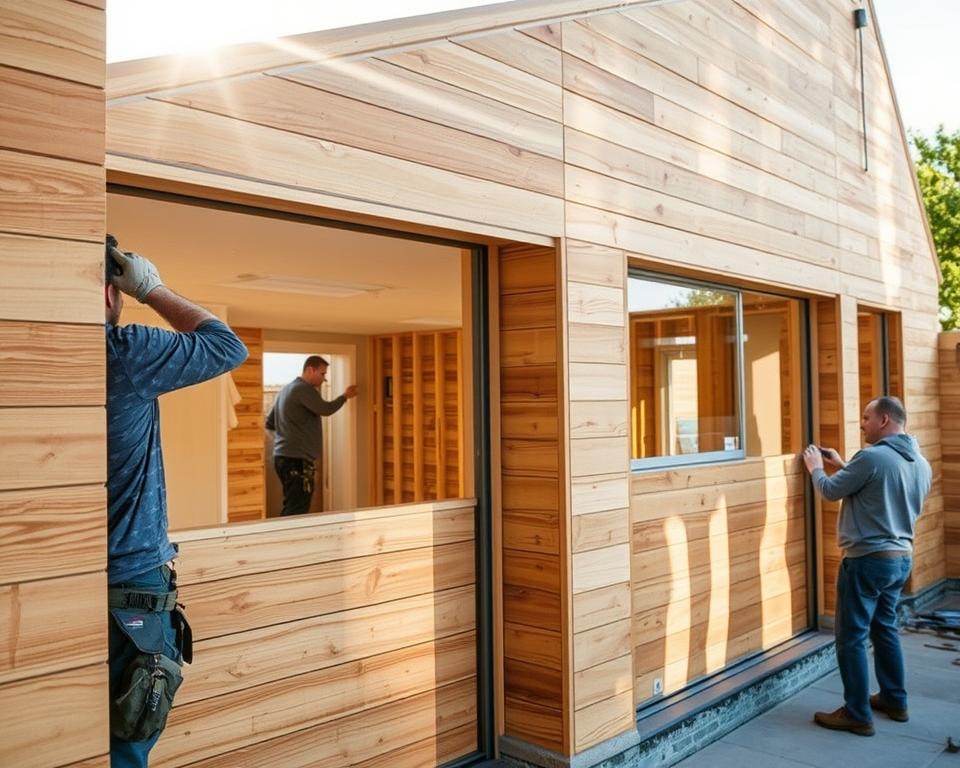
For less visible walls facing fences, box profile steel sheeting provides a cost-effective alternative. The 0.5mm polyester-coated sheets attach with self-drilling Wood Tec screws.
Protecting Joints and Enhancing Weather Resistance
Joints between different cladding materials require careful sealing. Steel capping pieces overlap the steel sheets and tuck beneath cedar boards.
This creates weather-proof transitions that effectively shed water. Protective coatings further enhance resistance.
As one expert notes, “Applying Osmo UV Protection Oil to cedar wood prevents water ingress and UV damage, significantly extending its lifespan.”
For brick buildings, PermaSEAL Facade Cream reduces heat loss by up to 28% while protecting against weather damage.
Installing the Roof and Waterproofing Solutions
Weatherproof roofing solutions form the essential barrier that protects the interior space from external elements throughout the seasons. This phase demands careful execution to ensure long-term durability.
The selection of appropriate materials significantly impacts the structure’s resistance to British weather patterns. Homeowners must consider both performance and installation complexity when choosing their preferred system.
Applying Rubber Sheeting and Roof Kits
Rubber flat roof kits have emerged as the leading choice for many garden room projects. These comprehensive packages typically include a single rubber membrane, specialist adhesive, trim pieces, and fixings.
The installation process begins by gluing the rubber sheet to the plywood roof deck. Workers must eliminate air bubbles and wrinkles to create a smooth, waterproof surface.

Edge capping is then nailed into place to create weatherproof perimeters. Corner details require particular attention, with most kits providing 90-degree pieces.
Additional pieces may need cutting and gluing for non-standard angles. Proper corner treatment prevents potential water damage at vulnerable joints.
Guttering installation along the lower edge manages rainwater runoff effectively. This directs water away from the building’s foundations into soakaways or drainage systems.
The minimum slope of 25mm per metre ensures efficient drainage rather than pooling. Standing water can cause premature membrane deterioration and leaks.
| Roofing System | Installation Complexity | Waterproofing Performance | Cost Range | Maintenance Needs |
|---|---|---|---|---|
| Rubber Sheeting | Moderate | Excellent | Medium | Low |
| Traditional Felt | Basic | Good | Low | Medium |
| Green Roof System | Advanced | Excellent | High | Medium |
Alternative waterproofing options include green roof systems with environmental benefits. These require proper drainage layers beneath the growing medium.
Each product offers different advantages for garden room construction. The chosen solution should match the specific requirements of the space.
Interior Fit Out and Energy Efficiency
The transformation into a comfortable, usable area begins once the structure is weatherproof. This phase focuses on creating a pleasant internal environment that performs efficiently throughout the seasons.
Insulation, Ventration and Lighting Considerations
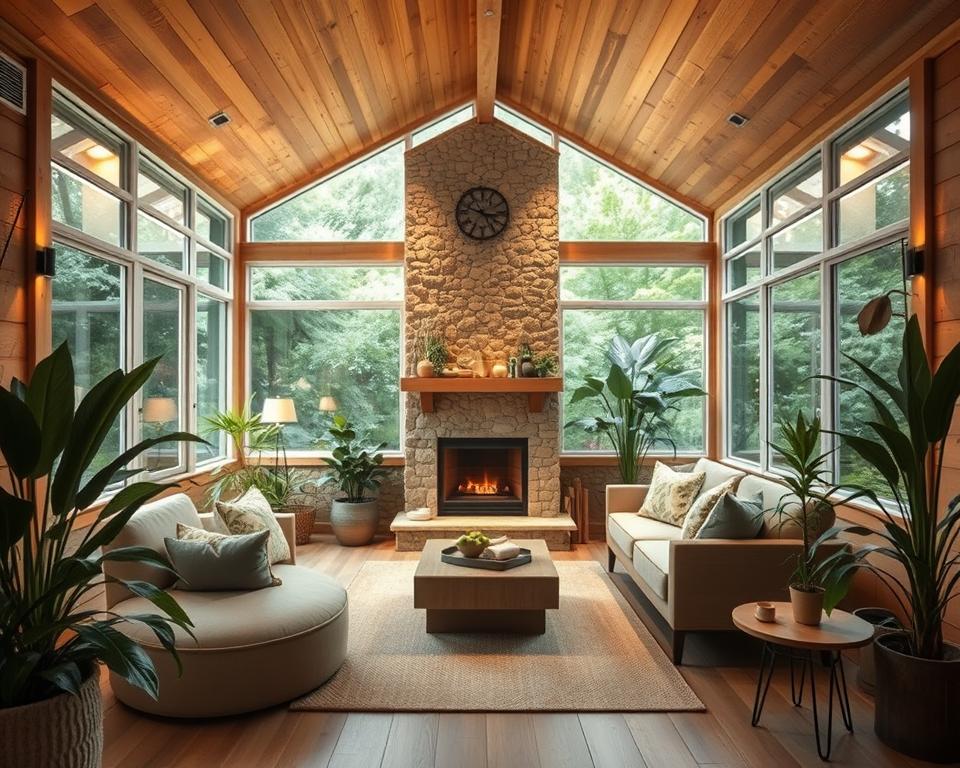
Effective insulation is the cornerstone of year-round comfort. Fibreglass loft insulation should be fitted into all wall and ceiling voids. This step is crucial for thermal efficiency.
A vapour control layer (VCL) is often needed. It prevents condensation within cavities. All joints must be sealed with single-sided foil tape for maximum effectiveness.
Good ventilation is equally important. A product like a Perma-Vent passive vent allows moist air to escape. This prevents mould growth without creating draughts.
For light, low-profile downlights are ideal for low ceiling heights. A qualified electrician must install a new fuse box and all power circuits safely.
Flooring and Cladding for a Modern Finish
Installation typically starts with flooring. Laminate flooring laid over the insulated base provides a durable and attractive surface.
Internal cladding options include rough-sawn timber. It can be fastened diagonally for a unique look and added structural bracing.
This approach ensures the space is not only comfortable but also visually appealing. Proper ventilation and light enhance the usability of the space.
| Feature | Material/System | Primary Benefit |
|---|---|---|
| Wall/Ceiling Insulation | Fibreglass Loft | Thermal Efficiency |
| Moisture Control | Vapour Control Layer | Prevents Condensation |
| Air Quality | Passive Vent | Mould Prevention |
“Integrating these elements correctly from the start ensures the interior remains a comfortable sanctuary, regardless of the weather outside,” notes an energy efficiency assessor.
Alternative Garden Room Conversions and Designs
Rather than starting with an empty plot, many property owners discover value in repurposing what they already possess. Converting existing outbuildings offers a cost-effective approach to creating additional space. This method utilises pre-existing structures that often require less work than new construction.
Converting Sheds, Garages and Outbuildings
Garage conversions provide substantial room for various uses. They can become home offices, gyms, or entertainment rooms. The existing shell simplifies the build garden room process significantly.
Shed transformations suit smaller applications like compact offices or hobby spaces. However, their lightweight construction presents challenges. Proper insulation and weatherproofing become essential work.
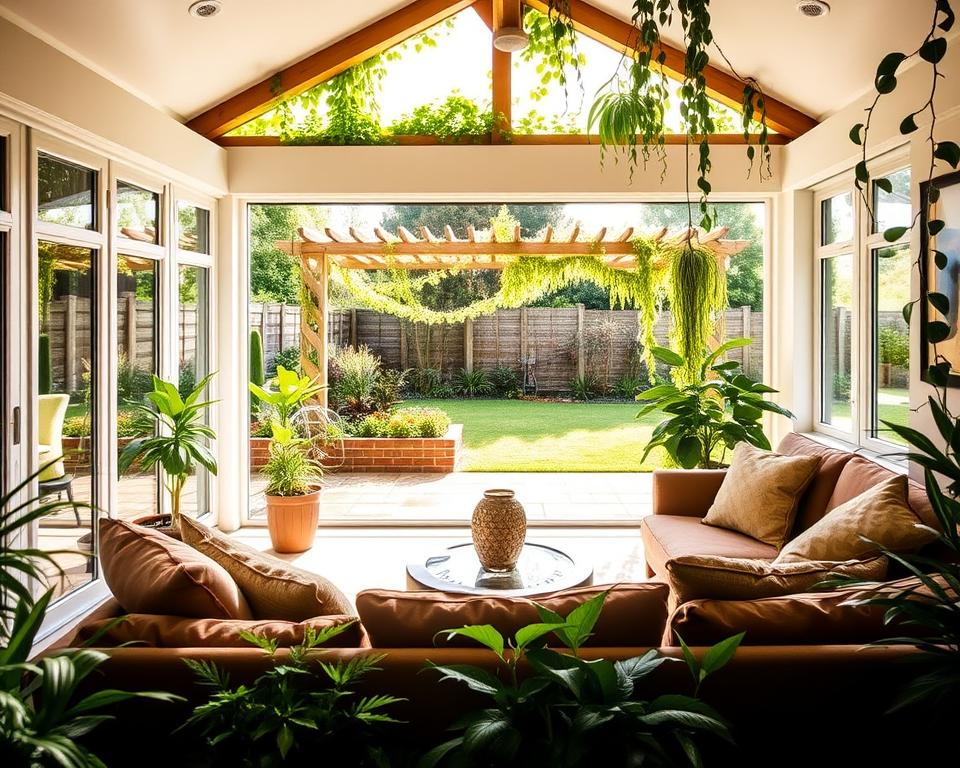
Before beginning any conversion, thoroughly assess the current building‘s condition. Check for damp issues and foundation stability. Different structures require specific waterproofing options.
Electrical installation demands professional involvement for safety. The building garden room project should include proper ventilation systems. This prevents condensation in the converted space.
Upgrading existing buildings to habitable standards involves multiple steps. Improve insulation throughout walls and roofs. Consider heating solutions for year-round comfort in your garden retreat.
Conclusion
A well-executed project to build garden room additions offers remarkable versatility. Homeowners can create dedicated spaces that serve evolving needs over time. These structures become valuable assets, enhancing both lifestyle and property appeal.
This guide has outlined the key steps, from initial planning to final finishes. Following this advice equips individuals to approach their project with confidence. The result is a comfortable, year-round space that families enjoy.
The look and feel of a finished room provide a great sense of achievement. With careful attention to detail, any competent DIY enthusiast can succeed. The investment of time and effort yields significant returns for many years to come.
FAQ
Do I need planning permission to build a garden room?
In many cases, a garden building can be constructed under permitted development rights, meaning planning permission is not required. However, this depends on specific criteria, such as the structure’s height, its position on the plot, and its intended use. It is always advisable to consult with your local planning authority before starting any project.
What is the best foundation for a year-round garden room?
A solid, level base is crucial for longevity. Concrete slabs or a reinforced concrete foundation are excellent choices for a permanent, insulated structure. These bases provide stability, prevent dampness, and are essential for supporting the weight of the construction, ensuring it remains secure in all weather.
How can I ensure my garden room is well insulated?
A> Effective insulation involves using high-quality materials in the walls, floor, and ceiling. Rigid foam insulation boards are a popular product for their excellent thermal performance. Combining this with a robust vapour barrier and adequate ventilation will create a comfortable space that is energy-efficient throughout the year.
Can I install utilities like electricity and water in my garden room?
Yes, it is possible to install electrical wiring and plumbing. Electrical work must be carried out by a qualified professional to comply with Building Regulations. For water supply and drainage, careful planning is needed to route pipes from the main house, which can add complexity and cost to the project.
What are the advantages of using timber frame construction?
Timber frame construction is a popular method due to its versatility, strength, and natural insulating properties. It allows for a relatively quick build and offers design flexibility. Using pressure-treated timber also provides excellent resistance to rot and insect damage, ensuring the structure’s durability.
How do I protect the exterior of my garden room from the elements?
Choosing the right cladding is key. Materials like Western Red Cedar offer natural weather resistance and an attractive finish. Alternatively, steel cladding provides a modern look with minimal maintenance. Proper sealing of all joints and the application of a protective finish will further shield the building from water damage.