Your Comprehensive Garden Sheds Buying Guide in the UK
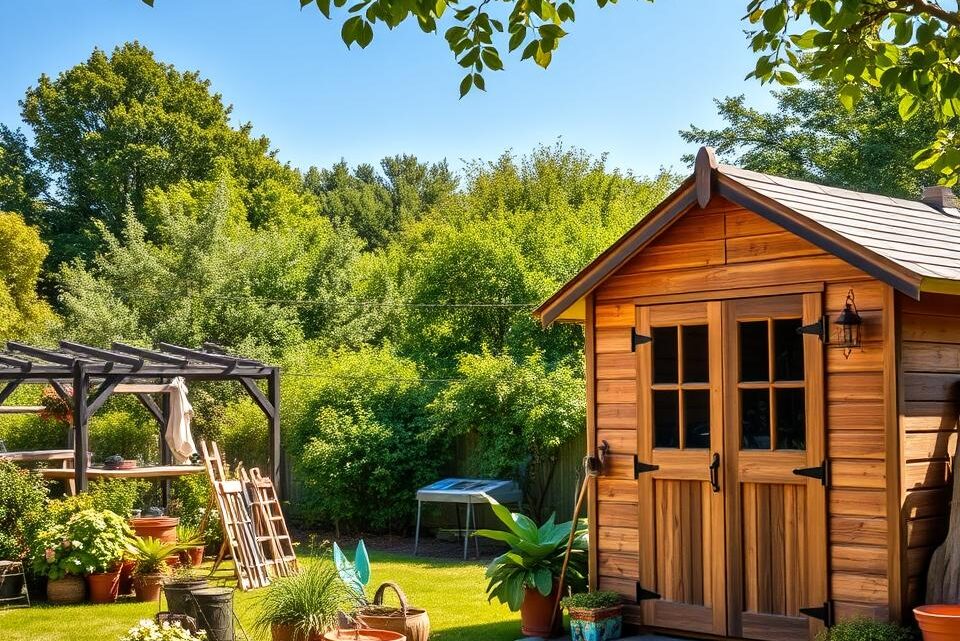
Investing in an outdoor storage building is a significant decision for homeowners. A well-chosen structure offers invaluable space for tools, equipment, and furniture. It can also become a fantastic workshop for DIY projects.
Selecting the right building requires careful thought. Not all manufacturers measure their products the same way. Dimensions might refer to internal or external sizes, sometimes including roof overhangs.
Expert advice, built on decades of experience, suggests a simple rule for these purchases. You truly get what you pay for. A homeowner’s budget will directly influence the final quality, size, and features of the building.
This detailed manual is designed to navigate every critical step. It helps ensure the selection provides decades of reliable service and meets specific needs.
Inhaltsverzeichnis
Key Takeaways
- A garden building is a significant long-term investment for a property.
- These structures serve multiple purposes beyond simple storage.
- Careful evaluation of size, style, and materials is essential.
- Understanding dimensions and specifications prevents costly mistakes.
- Budget is a primary factor determining quality and longevity.
- Expert guidance helps balance cost with long-term value.
Understanding Your Garden Shed Needs
Before selecting a structure, homeowners must carefully evaluate their specific requirements. This initial step ensures the chosen building will serve its purpose effectively for many years.
https://www.youtube.com/watch?v=qA3OdThfzVE
Assessing Your Garden Space
Accurate measurement of the available area is crucial. It is important to measure not just the footprint for the structure itself. Allowance must be made for door clearance, access paths, and maintenance space.
A minimum gap of 60cm around the entire building is recommended for upkeep. This ensures easy access for painting or repairs. Consider the terrain and ground conditions of the chosen spot.
Defining Your Shed’s Primary Use
The intended function dictates the necessary features. Will it be for simple storage or a multi-purpose room? Clearly defining this primary use is essential.
For basic storage of tools and equipment, a simple design may suffice. Those planning a workshop or hobby room will require more space and specific features.
Future-proofing your purchase is wise. Consider how your needs might evolve with a growing family or new hobbies.
| Intended Use | Key Considerations | Recommended Features |
|---|---|---|
| Basic Storage | Shelving, easy access | Single door, basic ventilation |
| Workshop | Ample room, durability | Double doors, robust flooring, security |
| Hobby Room | Comfort, light, insulation | Windows, insulation, potential for electrics |
Exploring Different Shed Styles and Designs
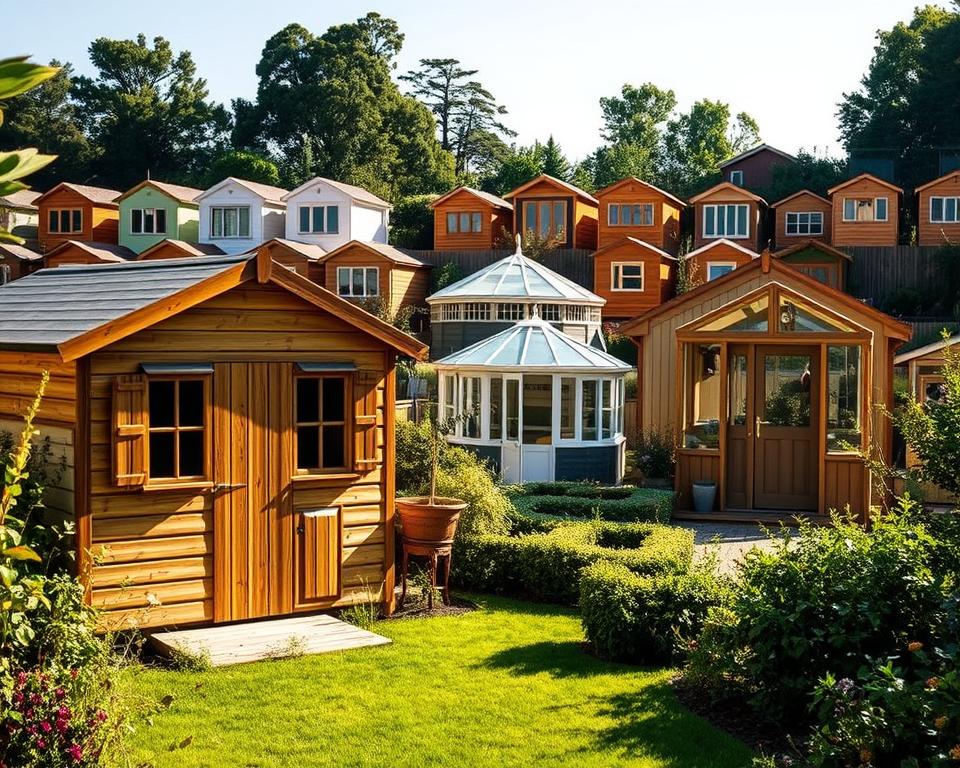
Selecting the right design profile for a storage building involves balancing practical needs with aesthetic preferences. The roof configuration and overall shape significantly impact both functionality and visual appeal.
Apex, Pent and Barn Shed Options
The apex design features two slopes meeting at a central ridge. This traditional choice provides excellent headroom throughout the interior space.
Pent roofs offer a single slope, creating a modern profile. They work well against boundaries and provide generous entry height.
Barn styles deliver substantial vertical storage capacity. Their classic shape suits traditional properties perfectly.
Contemporary vs Traditional Aesthetics
Traditional designs blend seamlessly with established outdoor spaces. They feature classic timber finishes and familiar proportions.
Contemporary options showcase cleaner lines and modern materials. These choices complement newer architectural styles effectively.
| Style | Best For | Key Features |
|---|---|---|
| Apex | General storage & workshops | Central ridge, symmetrical design, maximum headroom |
| Pent | Boundary placement & modern gardens | Single slope, space-efficient, easy access |
| Barn | Tall item storage & traditional settings | High interior, classic appearance, generous capacity |
Key Shed Materials and Their Benefits
Three primary materials dominate the market for outdoor storage buildings, each offering distinct characteristics. The selection between timber, metal, and plastic significantly impacts durability, maintenance, and overall appearance.
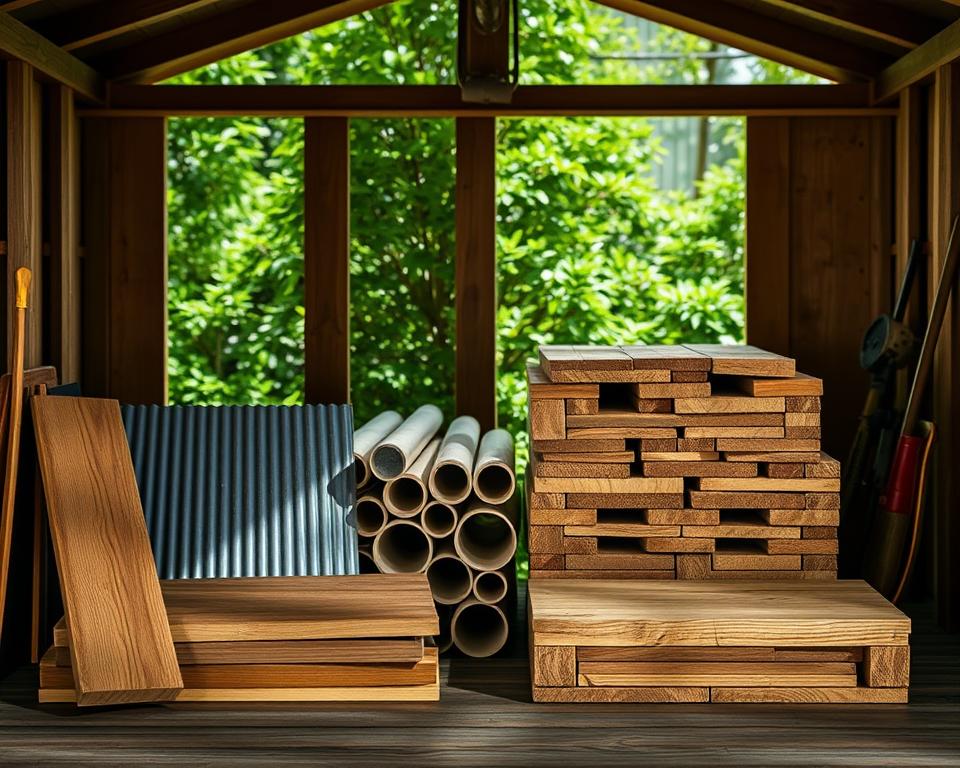
Homeowners should carefully consider their priorities before making a final decision. Each material presents unique advantages and limitations that affect long-term satisfaction.
Timber, Metal and Plastic Insights
Timber remains the most popular choice for its natural beauty and versatility. High-quality wood from slow-grown Scandinavian sources offers superior durability with tight grain patterns.
Properly kiln-dried timber resists warping and maintains structural integrity. This premium material requires annual treatment but provides excellent customisation options through painting or staining.
Metal sheds offer low-maintenance benefits and enhanced security features. Galvanised steel constructions resist rust and rot without needing regular treatments.
However, thinner gauge metal can feel less substantial than timber alternatives. Budget metal options often exclude flooring, requiring additional investment.
Plastic structures provide virtually maintenance-free operation with quick assembly. Resin and vinyl materials won’t rot or need preservative treatments.
These lightweight options cannot match timber’s natural aesthetic appeal. Plastic tends to fade under sunlight and offers limited customisation potential.
Each material represents a different balance between aesthetics, maintenance, and longevity. The ideal choice depends on individual requirements and budget considerations.
Choosing the Ideal Size: What Size Shed Need?
Identifying the ideal measurements for a garden storage unit involves assessing both the allocated area and planned usage patterns. Getting the proportions right ensures the structure serves its purpose effectively.

Manufacturers often use different measurement standards. An 8×6 unit could refer to internal or external dimensions, sometimes excluding roof overhangs. Always verify exact specifications in technical documentation.
Measuring Your Space Accurately
Begin by measuring your available outdoor area precisely. Mark the footprint with chalk or string to visualise the actual space required. Allow adequate clearance for doors and maintenance access.
Consider creating an inventory of items needing storage, including their dimensions. This helps determine the internal space required. Think about future needs and potential additional uses.
| Size Category | Dimensions | Best Suited For |
|---|---|---|
| Small | Up to 1.8m x 2.4m | Basic tool storage, bicycles, lawnmowers |
| Medium | 2.4m x 3.0m to 3.0m x 4.2m | Hobbies, larger equipment, dual-purpose use |
| Large | 3.6m x 4.8m and above | Workshops, home offices, extensive storage |
Remember that wall thickness reduces interior space. External dimensions may be 10-15cm larger than internal measurements. This affects furniture placement and capacity planning.
Garden Sheds Buying Guide: Essential Planning Permission Tips
Understanding planning requirements ensures your outdoor building project proceeds without legal complications. Most standard structures qualify as permitted development, meaning formal approval isn’t needed.
Understanding Permitted Development
The majority of outdoor buildings fall under permitted development rights. This allows installation without applying for planning permission. There are specific size and placement rules to keep mind.
Structures exceeding 2.5 metres in ridge height positioned within 2 metres of a boundary typically require approval. Most standard designs comfortably stay within these limits.
Local Council Regulations
Always verify specific regulations with your local authority before purchasing. Different councils may have additional restrictions or requirements.
Special considerations apply in conservation areas or for listed properties. Online planning permission calculators provide helpful preliminary guidance.
Proper placement prevents issues like water runoff affecting neighbouring properties. Maintaining appropriate boundary distances ensures compliance while maximising usable space.
Selecting the Perfect Roof Style for Your Shed
The roof profile selected for an outdoor structure significantly influences both its practicality and long-term resilience. This choice extends far beyond simple aesthetics.
It directly affects internal headroom, structural strength, and suitability for specific locations. Homeowners should weigh these factors carefully.
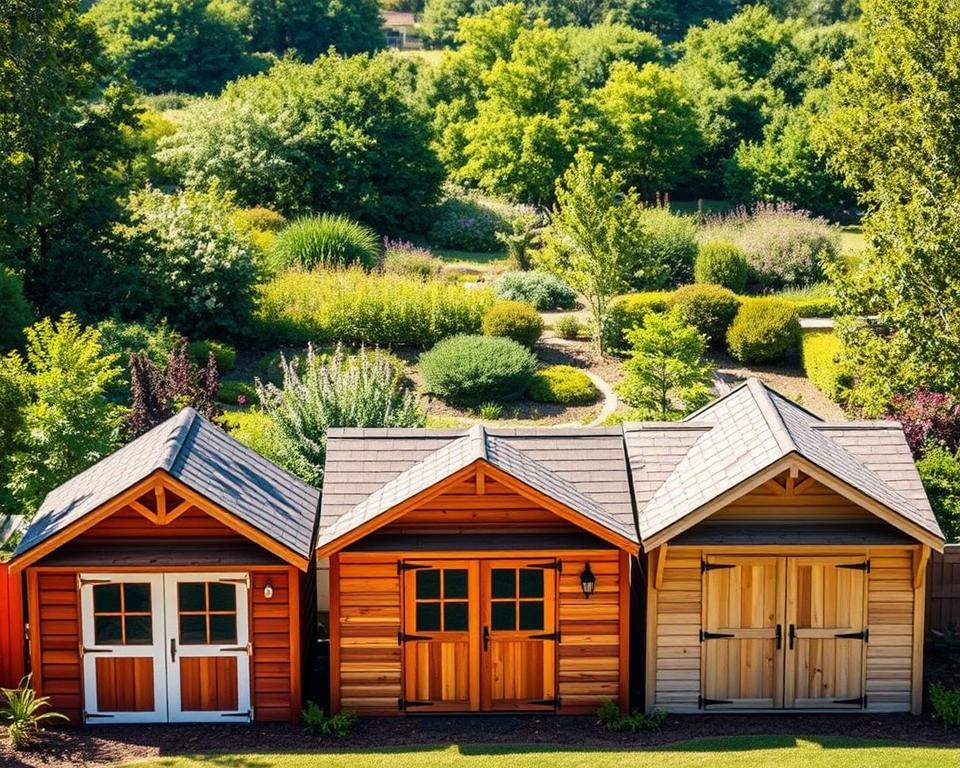
Comparing Apex, Pent, Hip and Gambrel Designs
An apex roof features two slopes meeting at a central ridge. This traditional design offers excellent headroom in the centre of the building.
A pent roof has a single slope, often angled down from the door. This creates a modern look and provides generous entry height.
Hip roofs slope upwards from all four sides. This configuration delivers superior stability against high winds and heavy weather.
The gambrel, or barn-style, roof has two slopes on each side. Its steep pitch is ideal for shedding snow and offers vast vertical storage space.
| Roof Style | Best For | Key Advantage |
|---|---|---|
| Apex | General use & workshops | Maximum central headroom |
| Pent | Boundary placement | Excellent door clearance |
| Hip | Exposed locations | Exceptional wind resistance |
| Gambrel | Snowy areas & tall items | Superior vertical capacity |
Impact on Internal Space and Durability
Construction quality is paramount for longevity. A roof made from timber tongue and groove boarding is far stronger than options using OSB or chipboard panels.
These superior materials withstand decades of British rain and wind. They ensure your investment remains secure and functional.
Consider both the internal clearance needed for your activities and the entrance height for comfortable access. The right roof design perfectly balances these requirements.
Window and Door Options to Enhance Functionality
Thoughtful selection of windows and doors transforms a simple storage unit into a versatile outdoor room. These features determine light, ventilation, and ease of use.

They directly influence how one interacts with the space, affecting comfort and practicality.
Single vs Double Door Benefits
A single door is often sufficient for basic storage needs. It provides a simple, secure entry point.
However, a double door offers superior access for larger items. It is ideal for bulky equipment like lawnmowers or bicycles. This configuration also improves ventilation when both leaves are open.
Consider the internal bracing of the door. Z-bracing styles add significant rigidity and durability. Hinge placement is another key option, affecting the access route.
Maximising Natural Light and Ventilation
Windows are crucial for bringing natural light into the structure. Positioning them to face brighter parts of the garden enhances the internal space.
For safety and longevity, specially toughened glass is essential. It is far more durable than standard horticultural glass. Some manufacturers use styrene glazing, which can become brittle and misty.
Opening windows allow for excellent ventilation. Placing them on opposite walls creates a refreshing through-breeze. This makes the area more comfortable for hobbies or work.
For those prioritising privacy or security, narrow security windows or a windowless design are viable options. They help keep contents discreet while still allowing some light.
Shed Base Considerations for Longevity
The foundation upon which an outdoor structure sits is arguably its most critical component. A properly constructed base is not an optional extra but a fundamental requirement for ensuring the structure remains sound for decades.
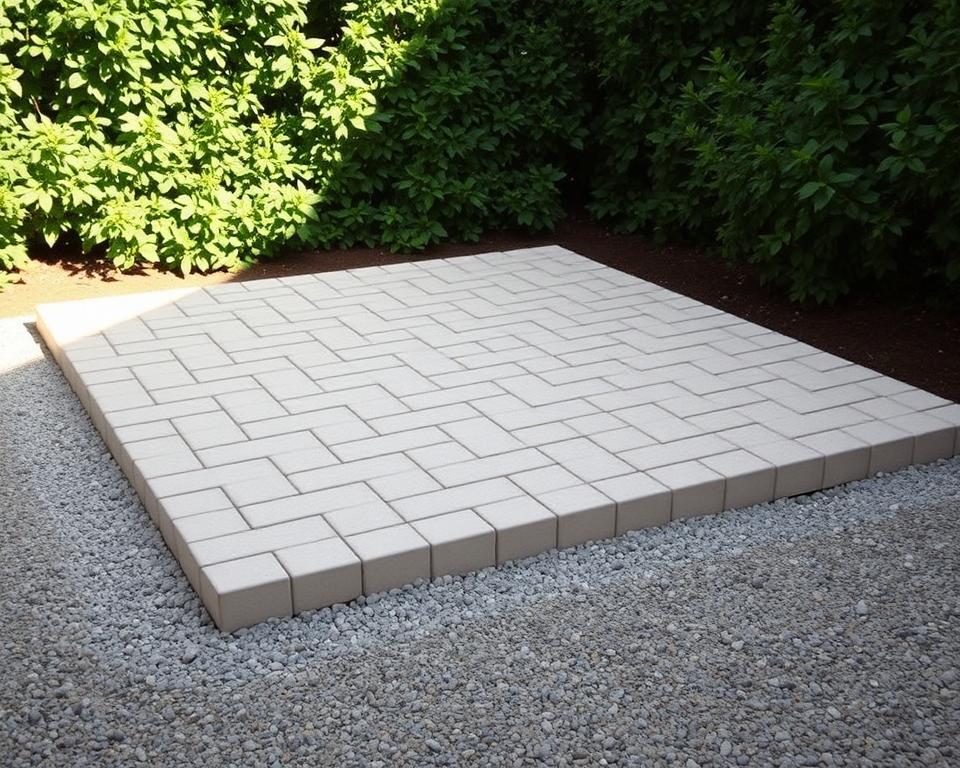
Without a firm and level base, even the highest quality building will suffer. Erecting on uneven or soft ground causes the timber to settle and warp over time. This leads to doors and windows jamming and places undue stress on the entire framework.
Damp and rot quickly follow, drastically reducing the lifespan of a shed that should otherwise last over 30 years. Investing time in the base is an investment in long-term protection.
Choosing the Right Flooring and Base Materials
Several materials are suitable for creating a robust foundation. Popular choices include concrete, paving slabs, timber bearers, and modern eco-friendly recycled plastic lattices.
A correctly assembled base will significantly prolong the life of your garden building.
It is vital to check if a floor is included, as this is not always standard. High-quality sheds feature fully boarded tongue and groove flooring. Avoid materials like OSB or chipboard, which deteriorate quickly when damp.
If constructing a timber base, ensure the bearers run perpendicular to the floor joists of the shed. This provides maximum stability. The base should be slightly larger than the shed’s dimensions, but on a slope, an overly large base can cause water to pool.
| Base Material | Best Suited For | Key Advantage |
|---|---|---|
| Concrete | Permanent, heavy structures | Extremely durable and stable |
| Paving Slabs | Good drainage, easier installation | Flexible and can be adjusted |
| Timber Bearers | DIY projects, level sites | Cost-effective and straightforward |
| Plastic Lattice | Eco-conscious, quick setup | Excellent drainage, rot-proof |
Utilising Additional Features for Customisation
The true potential of an outdoor storage solution emerges when custom features are integrated to suit individual needs. These enhancements transform basic structures into versatile spaces that serve multiple purposes effectively.

Security, Insulation and Electrical Packs
Security measures are essential for protecting valuable equipment. Heavy-duty locks and reinforced hinges provide robust protection. Window bars and security screws offer additional security layers.
Insulation creates a comfortable room environment year-round. It maintains stable temperatures for sensitive storage items. This feature is vital for home offices or hobby spaces.
Electrical installation packs bring power to the building. They support lighting, security systems, and appliances. This option expands functionality for various uses.
| Feature Type | Primary Benefit | Recommended For |
|---|---|---|
| Security Upgrades | Equipment protection | High-value storage areas |
| Insulation Systems | Temperature control | Workspaces & sensitive items |
| Electrical Packs | Power accessibility | Multi-functional rooms |
Built-in storage compartments maximise organisation. They provide dedicated spaces for different equipment. These features enhance the overall storage capacity.
Strategic investment in these options increases long-term value. They adapt the space to evolving lifestyle requirements. The right features create a truly personalised solution.
Budgeting and Value: Balancing Cost and Quality
Establishing a realistic budget is the cornerstone of selecting an outdoor structure that delivers lasting value. The fundamental principle remains clear: you genuinely get what you pay for in this market.

Comparing Value Sheds with Premium Options
Value-range structures typically start around £300-£500, suitable for basic storage needs. These budget-friendly choices often feature overlap cladding and simpler construction methods.
Premium options, priced between £650-£1,200, justify their cost through superior materials. They incorporate pressure-treated timber, thick shiplap cladding, and tongue-and-groove roofing.
High-calibre log cabin designs represent the ultimate investment for year-round usage. Their heavy-duty construction supports workshop or hobby room functionality.
Long-Term Investment and Return
Quality construction translates to reduced maintenance over time. Premium buildings often come with extended warranties, some offering 20-year protection.
This long-term perspective makes the initial investment worthwhile. Homeowners avoid frequent repairs and potential replacement costs.
A well-chosen structure can enhance property value while serving practical needs for many years. Strategic budget allocation ensures optimal return on investment.
Maintenance Tips for a Long-Lasting Garden Shed
Proper maintenance is the cornerstone of ensuring an outdoor storage structure stands strong for decades. A consistent care routine protects your investment from the elements and preserves its appearance.
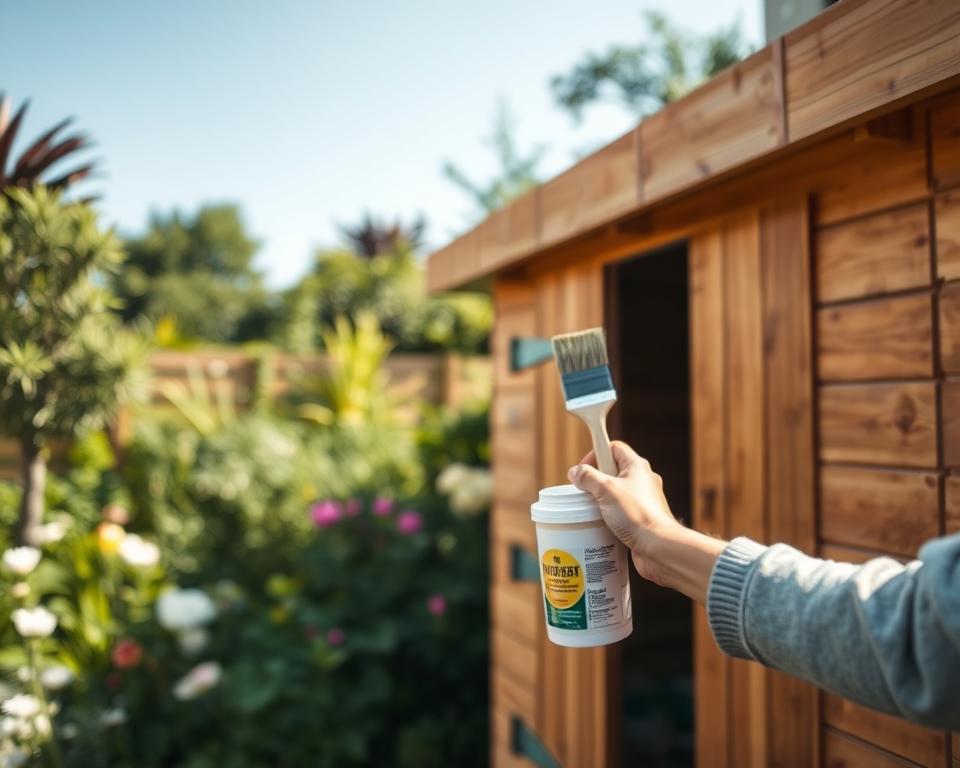
Most wooden buildings arrive with a temporary preservative. This protects the timber during storage and transport. It is strongly recommended to apply a full treatment before or shortly after assembly.
Preservative Treatments and Annual Checks
There are two primary types of wood treatment. Dip-treated timber is submerged in a preservative bath. It requires reapplication soon after installation and then on an annual basis.
Pressure-treated, or tanalised, timber undergoes a process where preservative is forced deep into the wood. This offers longer-lasting protection and reduces the frequency of maintenance needed.
A critical pre-assembly step is treating the underside of the floor. Once the shed is built, this area becomes inaccessible. This simple task can add many years to its lifespan.
Natural characteristics like knots or minor splits are normal. They do not affect the building’s strength. Regular checks help identify small issues before they become major problems.
| Maintenance Task | Frequency | Key Benefit |
|---|---|---|
| Full Preservative Treatment | Annually (Dip-Treated) | Prevents rot, decay, and insect damage |
| Visual Inspection | Bi-Annually | Early detection of wear or damage |
| Tighten Fixings & Hinges | Annually | Ensures structural integrity and security |
| Clear Gutters & Debris | Seasonally | Prevents water damage and damp |
Shed Placement and Garden Integration
Strategic placement within the outdoor area transforms a simple storage unit into a seamlessly integrated feature. The chosen location profoundly impacts its practicality, security, and visual harmony with the landscape.
Homeowners should consider this decision with the same care as selecting materials or size.
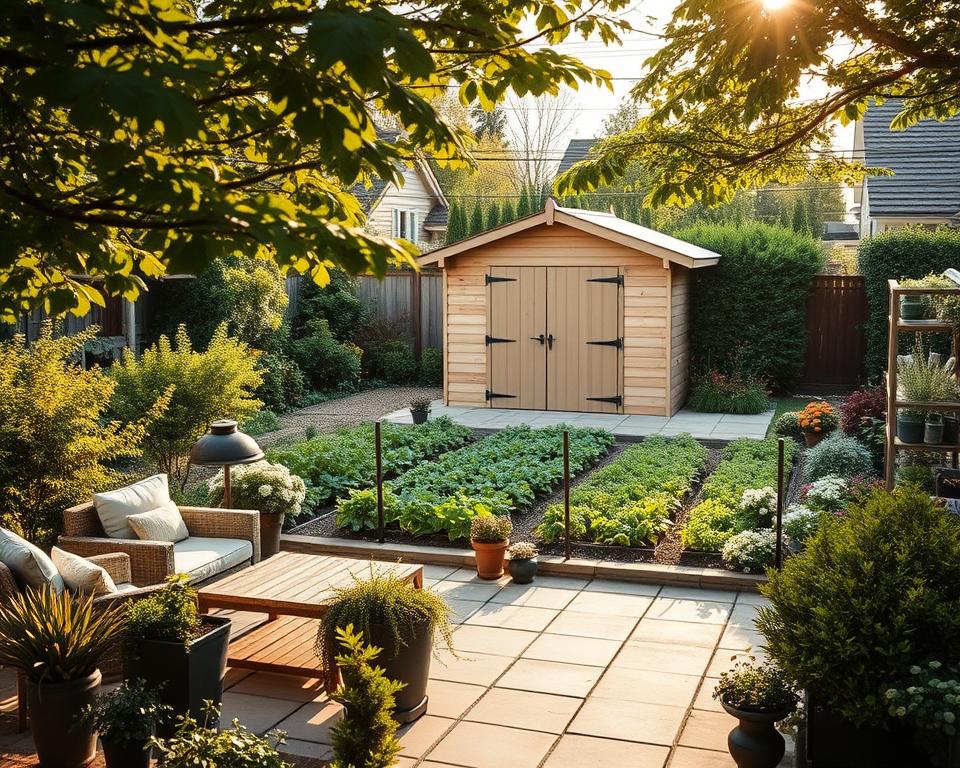
Optimising Location and Garden Layout
Accessibility is paramount. A clear, level path from the house simplifies moving tools and equipment. It is wise to keep mind the need for manoeuvring bulky items.
Allow at least 60cm of clearance around the entire perimeter. This space is essential for annual maintenance tasks like painting or repairs. Ensure doors and windows can open fully without obstruction.
Consider the sun’s path. Placing a window to capture natural light creates a brighter, more usable interior space. Avoid positioning under trees where falling debris can cause damage.
When near a boundary, account for the roof overhang. This prevents water runoff from affecting neighbouring properties. It also ensures compliance with planning guidelines.
| Location Factor | Primary Consideration | Practical Benefit |
|---|---|---|
| Access Route | Convenience for moving items | Easy transport of heavy equipment |
| Clearance Space | 60cm minimum perimeter gap | Simplifies maintenance and repairs |
| Sun Exposure | Maximising natural light | Enhanced usability for workshops |
| Boundary Proximity | Roof overhang and drainage | Prevents disputes and water issues |
Before finalising the position, mark the footprint with chalk or string. This visualisation confirms the chosen location works within the garden layout. It ensures the garden building enhances, rather than disrupts, the outdoor space.
Conclusion
The journey through this comprehensive manual leads to one crucial realisation about outdoor storage solutions. A well-considered choice balances immediate practical needs with future requirements. This ensures the investment serves evolving purposes for decades.
While budget constraints influence decisions, prioritising quality construction delivers superior long-term value. Cheaper options often require frequent repairs or premature replacement. Quality materials and proper installation protect your investment.
Remember that an outdoor building represents more than simple storage. It can enhance property value, extend living space, and support various activities. Proper planning permission verification and adequate base preparation are essential.
Apply this guide’s advice when evaluating specific options. Consult reputable manufacturers about specifications and customisation possibilities. Regular maintenance ensures your shed continues meeting your needs for years.
FAQ
What size shed do I need for garden tools and a lawnmower?
For basic tool and lawnmower storage, a compact structure of approximately 6×4 feet often suffices. It provides ample room for essential equipment while conserving garden space.
Do I need planning permission for a garden building?
Typically, planning permission is not required if the building adheres to permitted development rights. This generally means it is single-storey, under 2.5 metres in height, and does not occupy more than 50% of the land around the original house.
What is the most durable material for a shed?
Metal sheds offer excellent durability and security, while pressure-treated timber provides a robust, natural option. Plastic sheds are virtually maintenance-free and resist rot, making them a long-lasting choice.
How do I prepare a base for my shed?
A solid, level base is crucial. Options include concrete slabs, a paved area, or a purpose-made plastic base. This foundation prevents the structure from sinking and protects it from ground moisture.
What is the difference between an apex and a pent roof?
An apex roof has two sloping sides meeting at a central ridge, offering good headroom. A pent roof has a single slope, which can be ideal for sheds placed against a wall or where lower height is preferred.
Should I consider windows for my shed?
A> Yes, windows are beneficial for a workshop or studio, as they maximise natural light. For pure storage, smaller windows or reinforced options may be preferable for security.
How can I make my shed more secure?
Fit a sturdy padlock, consider a lockable door handle, and ensure windows are secure. For high-value items, specialist security packs are available to enhance protection.
What maintenance does a timber shed require?
A timber building benefits from an annual check and a fresh coat of preservative or paint every few years. This routine protects the wood from moisture and extends its lifespan significantly.
Where is the best place to position a shed in the garden?
Consider a level spot with good drainage, preferably in a location that receives some sunlight. Also think about access paths and how the structure integrates with the overall garden layout.
Are there sheds that can be used as a workshop?
Absolutely. Larger sheds with sturdy construction, good lighting options, and potential for insulation are ideal for use as a workshop, hobby room, or home office.