
Greenhouse Styling Ideas to Make it a Garden Feature
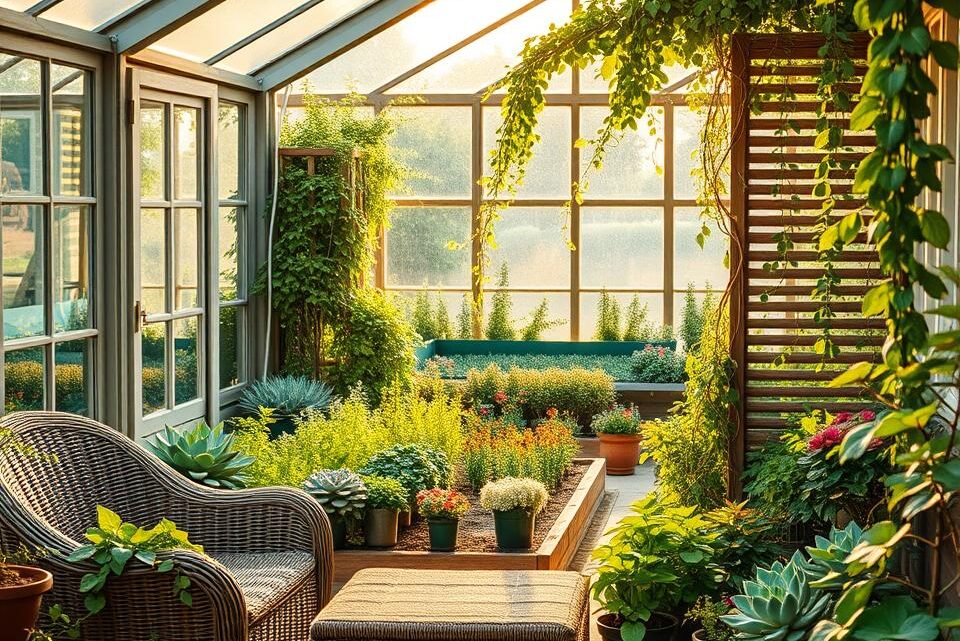
A glasshouse can transform from a simple plant shelter into a stunning garden centrepiece. With thoughtful design, these structures become more than just functional spaces. They evolve into visual highlights that enhance the entire outdoor landscape.
Design approaches range from simple touches to elaborate transformations. Both can create magical results. The goal is to turn the structure into a true garden asset.
Successful styling doesn’t require expensive interventions. It involves balancing aesthetic appeal with practical function. The best designs work harmoniously with their surroundings.
Modern trends show these spaces becoming lifestyle areas. They reflect personal style while maintaining their horticultural purpose. Effective planning considers exterior appearance and interior organisation.
This guide explores comprehensive approaches to enhance any glass structure. From paint colours to plant displays, discover how to create a standout feature. These principles apply to various sizes and styles.
Inhaltsverzeichnis
Key Takeaways
- A well-designed glasshouse serves as both a practical growing space and an attractive garden feature
- Thoughtful styling can transform any structure into a visual centrepiece
- Successful design balances aesthetic appeal with functional requirements
- Modern approaches treat these spaces as lifestyle areas reflecting personal style
- Effective planning considers exterior appearance, interior layout, and garden integration
- Styling principles apply across different structure types and sizes
- The transformation enhances the entire garden landscape and adds character
Transforming the Greenhouse Exterior
Exterior modifications represent the first step in elevating a functional glasshouse into an architectural feature. The external treatment sets the tone for how the structure integrates with its surroundings.
Choosing the Right Paint and Colour Scheme
Colour selection dramatically influences the overall look and feel of the greenhouse. For wooden structures, greens and creams work well, but choosing shades beyond the garden’s existing palette helps the structure stand out appropriately.
Current trends favour timeless, nature-inspired palettes. Ivory leads as the most popular shade for 2025, offering classic elegance. Black provides a modern edge, while greens like Farrow & Ball’s Green Smoke remain consistently popular.
Practical considerations matter too. Lighter paints reflect sunlight, benefiting greenhouses not in full sun. Darker finishes absorb light, working better for larger or brighter spaces.
Complementary Materials and Finishes
Mirroring materials already present in the garden creates visual cohesion. Corten steel edging, timber cladding, or specific border treatments help integrate the glass house naturally.
Ground covers like mulch borders, slate chippings, or bark can run from garden beds right to the base. This creates seamless transitions, making the greenhouse feel like an intentional part of the overall design.
The combination of thoughtful colour selection and complementary materials ensures the exterior enhances both the style of the structure and the beauty of surrounding gardens.
Creative Horticultural Displays
Strategic interior displays elevate horticultural spaces beyond mere plant storage. The arrangement of vegetation itself becomes a decorative element that enhances visual appeal.
Thoughtful organisation transforms functional areas into stunning showcases that draw admiration. This approach moves beyond basic utility to create captivating living exhibitions.

Showcasing Plants with Shelving and Hooks
Slim, open shelves maximise vertical space for pot collections and smaller plants. Multi-tiered designs work excellently for vertical growing arrangements.
Galvanised steel shelving units offer durability with industrial-chic aesthetics. Multiple units can create visually interesting layers of plant life at different heights.
Wall and ceiling hooks provide additional display opportunities. They hold hanging plants in baskets or pots, freeing floor space for larger specimens.
| Shelving Type | Best For | Space Efficiency | Aesthetic Impact |
|---|---|---|---|
| Open metal shelves | Seedlings and small pots | High visibility | Modern, airy feel |
| Wooden tiered shelves | Herb collections | Vertical organisation | Rustic charm |
| Wall-mounted shelves | Display specimens | Space saving | Floating effect |
Incorporating Vertical Gardening Techniques
Vertical gardening strategies make compact greenhouse interiors highly productive. upward growing allows diverse plant collections without extensive floor requirements.
Trailing vines add particular allure when suspended from hooks. Their cascading foliage softens structural elements with natural movement.
Creative hanging options include terrariums fashioned from lanterns for succulents. Geometric planters add modern flair while complementing different aesthetic themes.
Utilising Natural Materials for Interior Storage
Natural material storage options create a harmonious environment where functionality meets aesthetic appeal in horticultural spaces. These solutions transform practical organisation into decorative features that complement the growing atmosphere.
Reclaimed wooden crates offer excellent organisation for seed packets and small tools. Wicker baskets serve dual purposes as both planters and accessory holders. Vintage tins add character while containing essential gardening items.
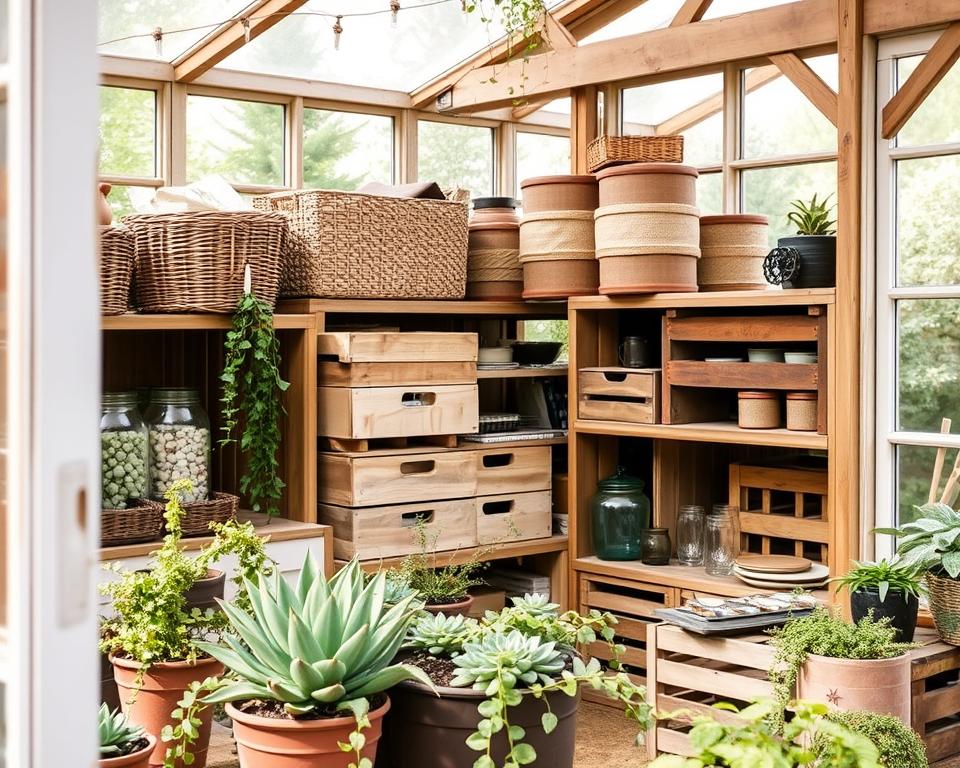
Rustic Crates, Baskets and Wicker Design
Transparent storage like glass jars keeps plant tags and twine visible yet tidy. These containers contribute to the visual appeal rather than creating clutter. They demonstrate how practical items can enhance the overall style.
Natural materials withstand humid greenhouse conditions better than synthetic alternatives. Wood, wicker and metal develop attractive patinas over time. Their durability makes them ideal for this environment.
| Material Type | Best Uses | Durability | Aesthetic Value |
|---|---|---|---|
| Reclaimed wood crates | Seed organisation | High | Rustic charm |
| Wicker baskets | Tool storage | Medium | Natural texture |
| Glass jars | Small items | Fragile | Visual clarity |
| Metal tins | Supplies | Very high | Vintage appeal |
Repurposed furniture finds new life as greenhouse storage. Bar carts, metal shelves and shower caddies handle moisture well. These pieces provide additional space without compromising efficiency.
Thoughtful placement keeps tools within reach while maintaining visual cohesion. The integration of natural storage creates a space where form and function work together seamlessly.
Innovative Greenhouse Shelving and Lighting Solutions
Well-designed shelving arrangements combined with strategic lighting solutions create glasshouse interiors that are both highly productive and aesthetically pleasing. These elements work together to maximise the potential of the available area while enhancing the overall experience.
Multi-Tiered Shelving Options
Premium materials like Western Red cedar offer durable shelving options that elevate the interior appearance. Multi-tiered systems make excellent use of vertical space, accommodating plants at different growth stages.
Tailor-made shelving units replace basic systems with more curated looks. Open shelves provide excellent visibility while allowing air circulation. This approach transforms the functional space into an organised display area.
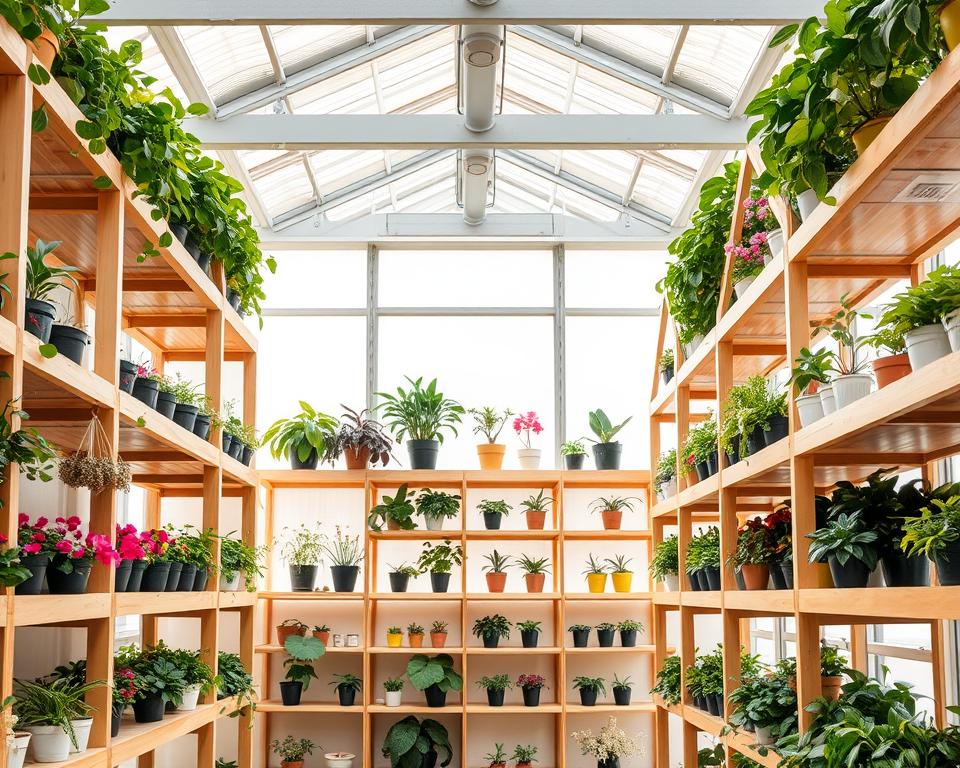
Soft and Atmospheric Lighting Ideas
Battery-powered fairy lights create a warm glow when strung along roof frames or shelves. Solar versions extend the lighting outdoors, transforming the structure into a gentle light source at night.
Layered lighting techniques combine different illumination sources for depth. Floor lanterns, tabletop lights, and overhead pendants create vintage vibes. Even functional grow lights can contribute to the ambiance while serving plant needs.
Candlelight provides flickering warmth and personal expression opportunities. The right place for various holder styles adds character to the greenhouse environment after dark.
Designing a Seamless Garden Connection
When a glasshouse becomes an organic extension of the garden, it transcends mere functionality. The structure should appear as though it grew naturally from the landscape rather than being placed upon it.

Thoughtful integration creates visual harmony between built and natural elements. This approach ensures the glasshouse feels like an intentional part of the outdoor space.
Integrating Flower Beds and Raised Planters
Framing the structure with borders and containers softens hard architectural lines. Raised planters filled with complementary plants create transitional zones. These elements help blend the glasshouse into the surrounding garden.
Repeating materials from existing features establishes visual continuity. Corten steel edging or timber cladding used elsewhere can be mirrored near the structure. This repetition makes the greenhouse feel purposefully placed.
| Plant Type | Best Placement | Seasonal Interest | Maintenance Level |
|---|---|---|---|
| Climbing vines | Base of structure | Year-round structure | Low |
| Herb collections | Raised planters | Spring to autumn | Medium |
| Ornamental grasses | Perimeter borders | All seasons | Low |
| Edible flowers | Container displays | Seasonal blooms | Medium |
Ground covers like slate chippings or bark create seamless transitions. These materials can run from garden beds directly to the foundation. The result is a cohesive design that unifies the entire area.
Climbing plants add vertical interest while softening structural elements. Vines trained on modern frames create natural screening. This living framework enhances the greenhouse‘s appearance throughout the seasons.
Pathway Ideas to Enhance the Greenhouse Feature
Connective pathways establish intentional relationships between garden structures and their surroundings. They transform a standalone glasshouse into an integrated destination within the outdoor space. The right path design ensures both practical access and visual harmony.
Stepping Stones, Brick Patterns and Timber Sleepers
Stepping stones set in gravel or lawn create natural, spaced-out routes. They provide clean access without dominating the garden area. This approach maintains an informal, organic look.
Brick or reclaimed pavers offer more structured options. Patterns like herringbone or stretcher bond add visual interest. These materials create durable surfaces with traditional appeal.
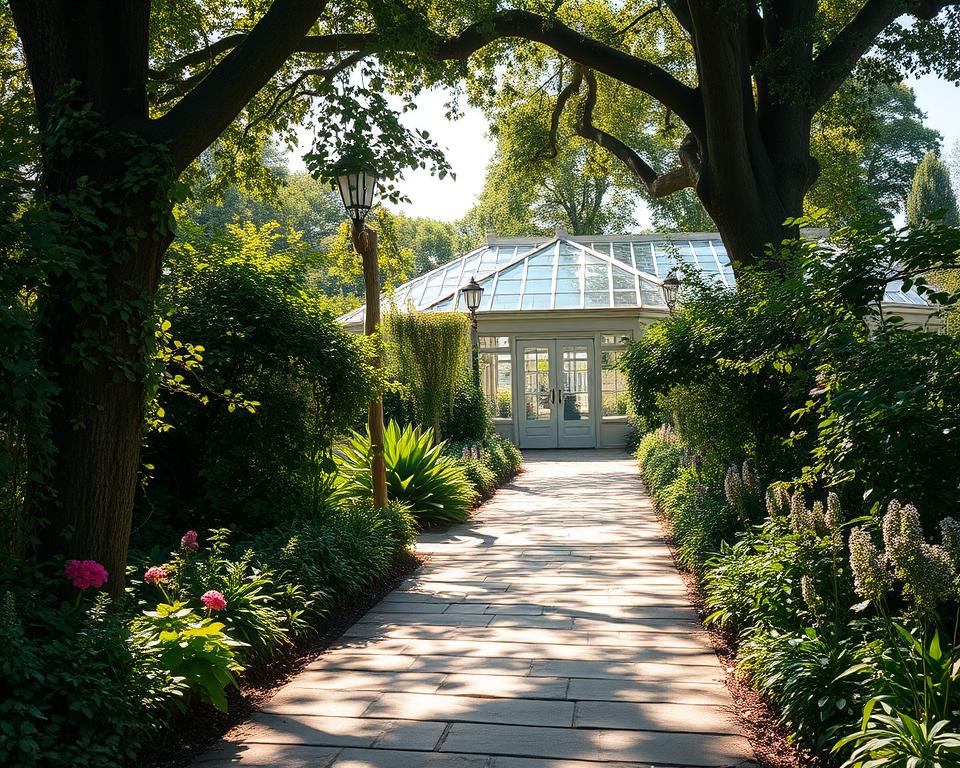
Timber sleepers laid flat or slightly raised provide rustic charm. They complement wooden structures beautifully. Compacted gravel offers a simple, low-maintenance alternative.
| Material Type | Best For | Maintenance Level | Aesthetic Appeal |
|---|---|---|---|
| Stepping Stones | Informal gardens | Low | Natural, rustic |
| Brick Patterns | Traditional spaces | Medium | Structured, elegant |
| Timber Sleepers | Wooden structures | Medium | Rustic, warm |
| Compacted Gravel | All budgets | Low | Clean, versatile |
Creating Movement with Curved or Winding Paths
Curved pathways add a sense of movement and discovery. They work particularly well in larger gardens where the greenhouse sits deeper into the space. Gentle curves draw the eye toward the structure.
Edging with metal, brick or timber creates definition. It prevents materials from spilling into planting beds. This finishing touch elevates the overall design.
Accessibility remains crucial for practical use. Paths must accommodate wheelbarrows and garden equipment. Stable, all-weather surfaces ensure safe passage year-round.
Trending Colours and Finishes for Modern Greenhouses
Selecting the right hues and materials for a glasshouse exterior significantly influences its character. The choice can either help the structure blend into the landscape or allow it to stand out as a distinct feature.
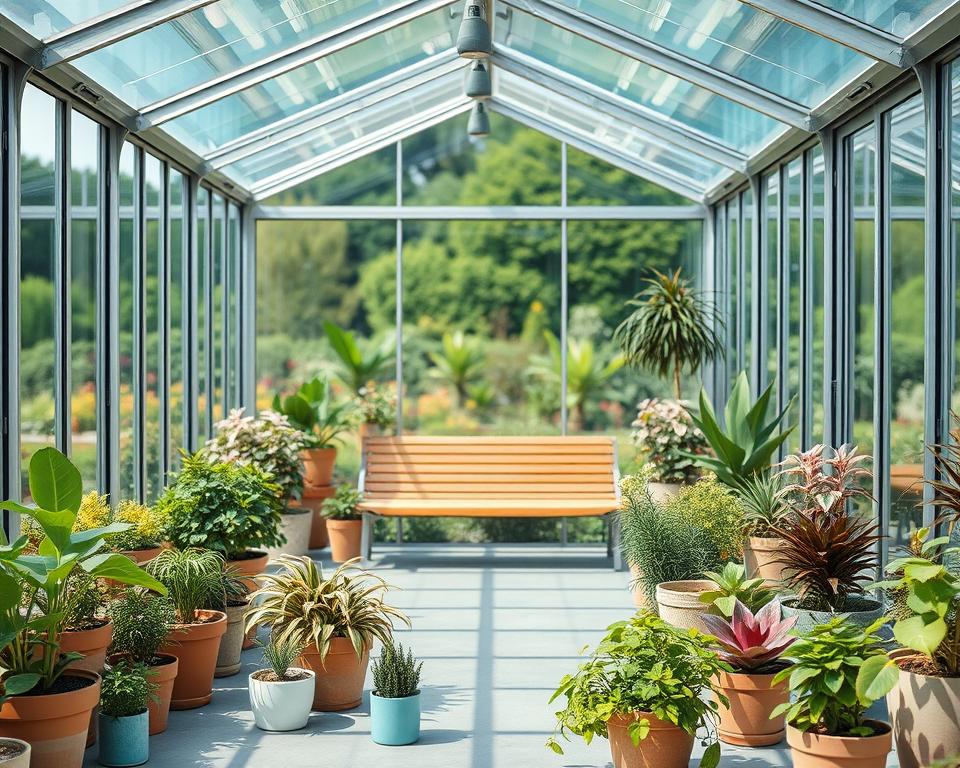
Current trends in 2025 favour timeless, nature-inspired palettes. Ivory remains the most sought-after shade, providing a classic and elegant look. This light tone reflects sunlight, creating bright interiors that beautifully showcase plants.
For those seeking a more dramatic point, black finishes offer a striking modern edge. This bold choice creates a strong architectural statement that contrasts vividly with garden greenery.
Timeless Neutrals Versus Bold Accents
Neutral colours like ivory ensure the structure feels integrated and spacious. They are a safe, sophisticated option that works well in most gardens. These shades tend to age gracefully and require less maintenance over time.
In contrast, bold accents command attention. Darker colours can make a glass building appear more prominent. They are perfect for creating a focal point within the outdoor space.
Nature-inspired greens, such as Farrow & Ball’s Green Smoke, remain consistently popular. They bridge traditional and modern aesthetics, harmonising naturally with the surroundings.
Co-ordinating exterior colours with interior elements, like slatted shelves, creates a cohesive design. This attention to detail elevates the entire appearance, resulting in a polished, professional finish.
Optimising Small Greenhouse Spaces
Compact horticultural structures are increasingly popular for gardeners seeking to maximise their available area. These smaller versions offer a controlled environment for nurturing plants, even when square footage is limited.
Thoughtful design ensures these compact spaces are both highly productive and visually appealing.
Maximising Sunlight with Clear Walls
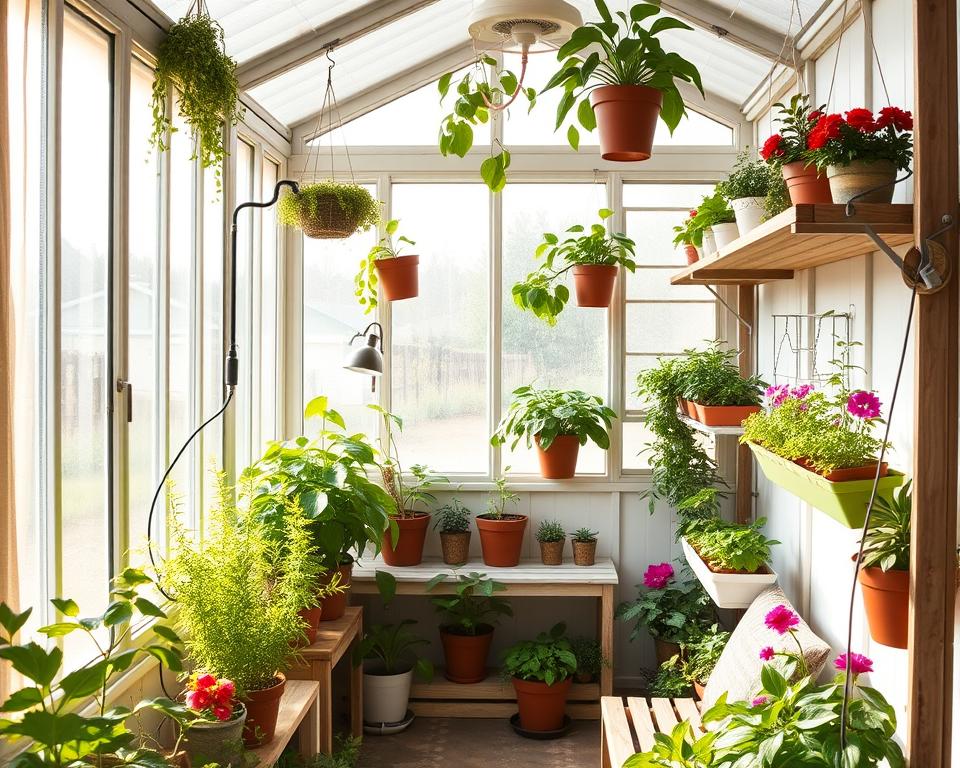
Clear wall panels are essential for these compact structures. They allow maximum light penetration, ensuring plants and seedlings receive adequate sunlight.
This design feature is crucial for successful growth in a confined space. It helps create an ideal microclimate.
Hexagonal designs provide an attractive alternative to traditional shapes. They offer functional growing space while adding visual interest.
Patio versions have seen a significant rise in demand. They provide an accessible way to extend growing seasons.
| Feature | Benefit | Best For |
|---|---|---|
| Clear Glass Walls | Maximises light exposure | Seed starting and sun-loving plants |
| Vertical Shelving | Increases growing capacity | Compact plant varieties |
| Hexagonal Shape | Enhanced stability and style | Small gardens and patios |
| Wall-Mounted Storage | Frees up floor space | Tools and small pots |
“Even the smallest structure can become a thriving hub for plant life when designed with intention.”
These compact greenhouses offer distinct advantages. They are easier to heat and maintain than larger models.
Every element must serve a purpose, combining beauty with functionality. This approach creates an efficient yet attractive environment.
With careful planning, a small greenhouse becomes a productive and peaceful retreat. It proves that limited area need not limit horticultural ambitions.
Greenhouse Styling Ideas to Make it a Garden Feature
Modern horticultural spaces now frequently incorporate lifestyle elements, transforming them into versatile retreats. These multi-purpose solutions allow gardeners to tend plants then relax amongst them. Partition walls create distinct zones for different activities.
DIY Enhancements and Creative Accessories
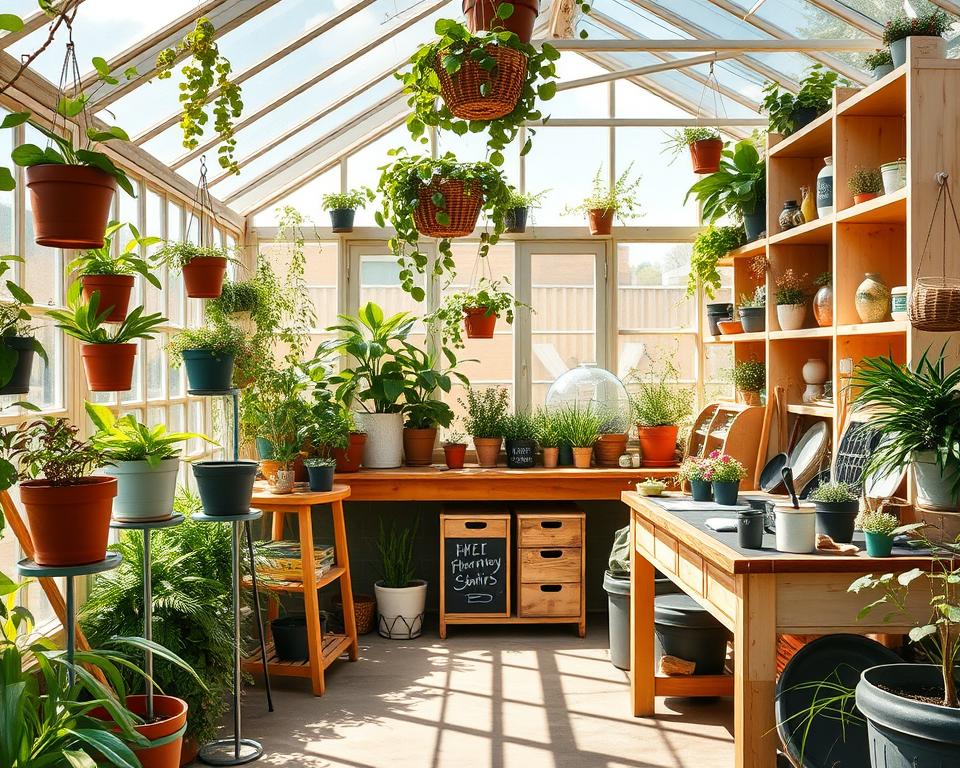
Building a diy greenhouse from salvaged windows offers budget-friendly options. Simple diy projects like spray-painted planter pots add personality. Creative accessories including rain chains and wind chimes provide sensory interest.
Wall décor maximises vertical space effectively. Mirrors reflect light while wreaths add seasonal charm. Attractive garden tools become decorative elements when displayed openly.
Integrating Multi-Purpose Lifestyle Spaces
These structures evolve into comfortable rooms for hosting and relaxing. Compact furniture like stools with outdoor cushions create lounging spots. Dirt-friendly rugs layer over floors, cooling the area on hot days.
In summer, shade cloth prevents plant burn while adding design interest. During winter, the space remains usable for both growing and personal enjoyment. Growing diverse plants including colourful flowers and herbs enhances appeal.
This way of thinking transforms the traditional place into a personalised retreat. It becomes a sanctuary where people can use the environment for multiple purposes.
Conclusion
The journey of transforming a functional growing space into a personal sanctuary culminates in a place that nurtures both flora and the gardener. These structures evolve into much more than a greenhouse for plants; they become a peaceful home extension.
Thoughtful ideas for exterior colours, interior storage, and atmospheric lighting create a harmonious area. This approach ensures the space is a joy to use for gardening tasks and quiet reflection.
Even simple DIY enhancements can make a significant impact. The goal is a retreat that offers balance throughout the year. In summer, it’s a bright haven for herbs and flowers. During winter, it provides a warm connection to nature.
Well-integrated greenhouses significantly enhance gardens. They create a beautiful focal point and a quiet garden feature. This transformation brings lasting satisfaction and a deeper appreciation for the outdoor place.
FAQ
How can the exterior of a garden structure be enhanced?
The exterior can be significantly improved by selecting a complementary paint colour and materials. Using finishes that blend with the garden’s overall design creates a cohesive and attractive look.
What are some effective ways to display plants inside?
Utilising shelving and hooks allows for creative horticultural displays. Incorporating vertical gardening techniques is an excellent method for showcasing a variety of plants in a limited area.
Which storage solutions work well for a natural aesthetic?
Rustic crates, baskets, and wicker designs offer charming and practical storage. These natural materials add texture and warmth while keeping gardening supplies organised.
How can shelving and lighting improve the atmosphere?
Multi-tiered shelving options maximise space for seedlings and tools. Soft, atmospheric lighting ideas can transform the area into an inviting retreat after sunset.
What is the best way to connect the structure to the garden?
Integrating surrounding flower beds and raised planters creates a seamless transition. This design approach makes the feature feel like a natural part of the outdoor space.
Are there recommended materials for pathways?
Stepping stones, brick patterns, and timber sleepers are popular choices. Curved or winding paths can introduce movement and visual interest leading to the entrance.
What colour schemes are currently popular?
Many opt for timeless neutrals for a classic look, while others choose bold accents to make a statement. The choice often depends on the desired impact and existing garden style.
How can a compact space be optimised?
Maximising sunlight is crucial. Using structures with clear walls ensures plants receive adequate light. Clever shelving and vertical arrangements also help utilise every available inch.
Can the space serve more than one purpose?
Absolutely. With thoughtful design, it can become a multi-purpose lifestyle area. It might serve as a peaceful reading nook or a place for potting plants, blending gardening with leisure.

