How Do You Turn a Shed Into a Potting Shed?
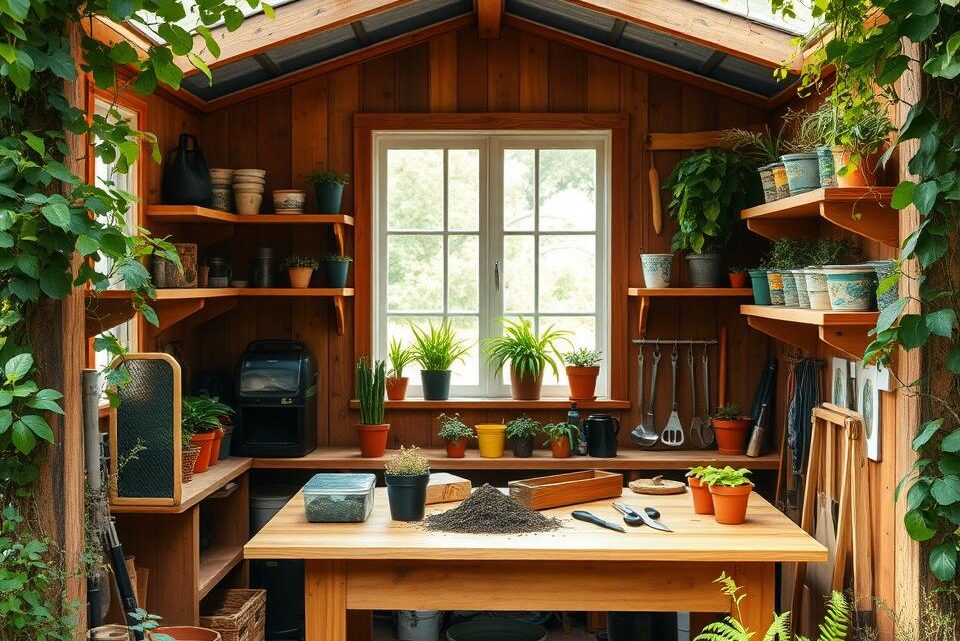
Many garden enthusiasts discover that their standard storage shed holds untapped potential. Transforming this space into a dedicated potting area creates an organised hub for horticultural activities. This conversion provides a specialised workspace for nurturing plants and managing gardening tasks efficiently.
A well-designed potting shed serves as the central command post for gardening operations. It offers shelter for delicate seedlings and a clean area for transplanting and repotting plants. The space keeps essential tools, compost, and pots within easy reach, streamlining the gardening process.
This comprehensive guide outlines the systematic approach to converting an existing structure. The transformation involves careful planning and practical modifications to create an optimal working environment. Both novice and experienced gardeners can benefit from having this dedicated horticultural workspace.
Popular dimensions for these specialised spaces include 8×8 and 10×8 configurations. Experts often recommend selecting a slightly larger size than initially considered. The additional space accommodates plants, work surfaces, and storage as gardening activities expand.
Inhaltsverzeichnis
Key Takeaways
- Converting a standard garden shed creates a dedicated space for potting and plant care
- A potting shed serves as an organised workspace for seed starting and transplanting
- The transformation requires careful planning and systematic execution
- Both new and experienced gardeners benefit from this specialised workspace
- Choosing a slightly larger shed size accommodates future gardening needs
- Proper organisation improves efficiency and enjoyment of gardening activities
- The conversion process follows logical steps outlined in this guide
Assessing the Existing Shed
A systematic inspection forms the foundation for transforming any outbuilding into an efficient gardening hub. This critical evaluation ensures the structure meets practical requirements before investment begins.
Evaluating the Shed’s Condition and Location
Begin with a thorough examination of the structure’s integrity. Look for signs of water damage, rust on metal components, or wood rot in timber frames. These issues require immediate attention before proceeding.
The location of the garden shed significantly impacts its functionality. Consider sunlight exposure throughout the day and proximity to water sources. An ideal spot receives adequate light while remaining conveniently accessible.
Structural soundness is paramount for long-term use. Check the foundation, walls, and roofing for stability. Necessary repairs at this stage prevent complications during the conversion process.
Determining Space for Gardening Needs
Assess whether the current size accommodates planned activities. Measure the interior dimensions carefully. Consider work surfaces, storage areas, and movement space.
Different gardening tasks have varying spatial requirements. Seed starting needs dedicated bench space, while transplanting requires room for pots and soil mixing. Tool organisation demands thoughtful planning.
Use this table to evaluate spatial adequacy for common gardening functions:
| Gardening Function | Minimum Space Required | Recommended Additional | Priority Level |
|---|---|---|---|
| Work Surface | 1.2m x 0.6m | 0.3m extra depth | High |
| Tool Storage | 0.5m² | Vertical organisation | High |
| Potting Materials | 0.8m² | Shelving unit | Medium |
| Plant Staging | 1.0m² | Multi-level racks | Medium |
This assessment phase establishes realistic expectations about what the space can accommodate. Proper planning now saves time and resources during the actual conversion.
Designing Your Ideal Potting Shed Layout
Effective organisation begins with a thoughtful design for the gardening area. A logical layout transforms the available space into a highly functional potting shed. It ensures every tool and supply has its designated place, streamlining gardening activities.
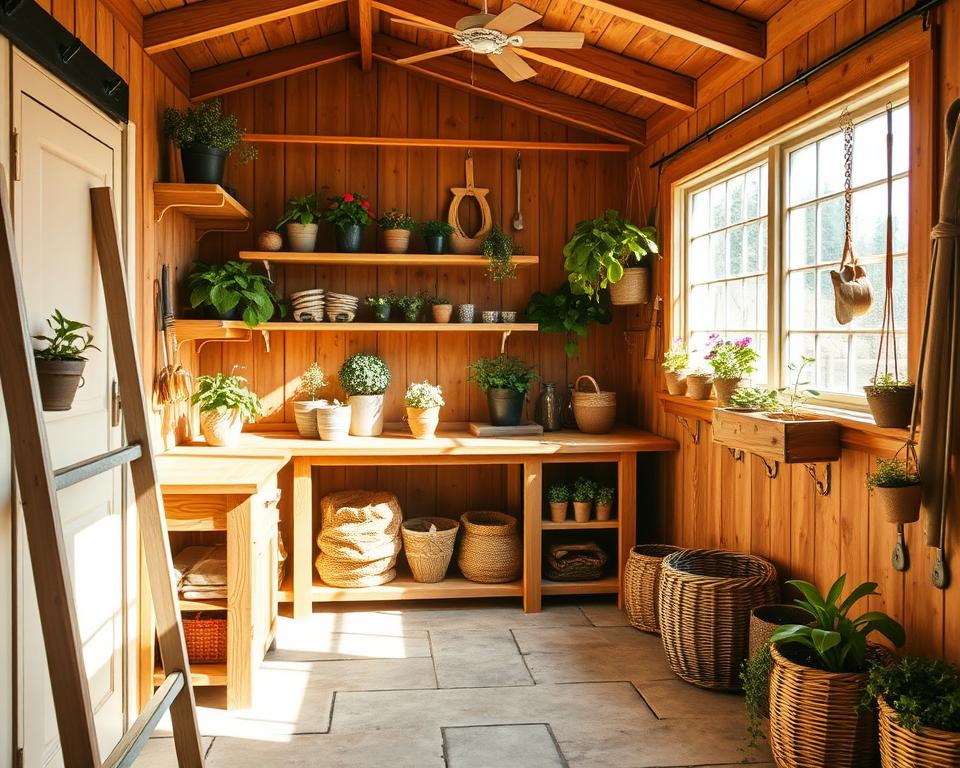
This planning stage determines the efficiency and enjoyment of the horticultural workspace. Gardeners should consider their specific routines to create a personalised flow.
Planning the Workbench and Storage Areas
The workbench serves as the central hub of the potting shed. Its size and placement are critical for comfortable work. A sturdy surface provides ample room for tasks like seed starting and transplanting.
Adequate storage solutions prevent clutter and save time. Utilise vertical space with shelves and wall-mounted racks for pots and tools. This approach keeps essential items within easy reach.
The table below outlines effective storage options:
| Storage Solution | Best For | Space Efficiency |
|---|---|---|
| Wall-mounted shelving | Pots, seed trays, supplies | High |
| Pegboard with hooks | Small tools, gloves, scissors | Very High |
| Under-bench cabinets | Soil, fertilisers, bulky items | Medium |
Designating specific zones for different functions, such as a dedicated potting area, enhances workflow. This organisation makes the space more efficient.
Maximising Natural Light and Ventilation
Ample natural light is vital for a pleasant working environment. Positioning the workbench near existing windows optimises illumination for detailed tasks. Additional windows or a skylight can dramatically brighten the interior.
Proper ventilation is equally important for plant health and gardener comfort. It regulates temperature and humidity levels. Installing vents or a small fan ensures a constant supply of fresh air.
This careful consideration of light and airflow creates a healthy and inviting potting shed. It is a fundamental aspect of the overall design.
Decluttering, Cleaning, and Organising Tools
A thorough clean-out establishes the essential foundation for converting the space into a functional gardening area. This preparatory phase ensures a proper starting point for all subsequent modifications.
Removing Unnecessary Items and Debris
Begin by completely emptying the structure of all contents. This includes outdated gardening equipment, expired materials, and accumulated debris. Discard broken tools and unusable supplies to create valuable space.
A systematic approach to decluttering saves significant time during the conversion process. Gardeners should categorise items into keep, donate, or discard piles. This methodical process prevents overlooking important decisions about what stays.
| Category | Action Required | Priority Level |
|---|---|---|
| Broken tools | Dispose or repair | High |
| Expired fertilisers | Safe disposal | High |
| Unused equipment | Donate or recycle | Medium |
| Accumulated debris | Complete removal | High |

Once emptied, commence a comprehensive cleaning regimen. Sweep away dirt and cobwebs from all surfaces. Scrub floors, walls, and ceilings to remove accumulated grime.
Cleaning windows and doors dramatically improves visibility and creates a fresh appearance. This step transforms the atmosphere of the space, making it more inviting for gardening activities.
“A clean workspace reflects a clear mind and sets the stage for productive gardening sessions.”
Consider applying a fresh coat of paint to interior surfaces. This simple upgrade can dramatically enhance the brightness and appeal of the gardening environment.
This decluttering and cleaning phase creates a blank canvas that facilitates all subsequent conversion steps. It also helps identify structural issues that might require attention before proceeding further.
Enhancing Natural Light and Ventilation
Proper illumination and air circulation transform a basic structure into a thriving horticultural workspace. These environmental controls benefit both the gardener’s comfort and plant vitality. Strategic planning ensures optimal conditions throughout the year.
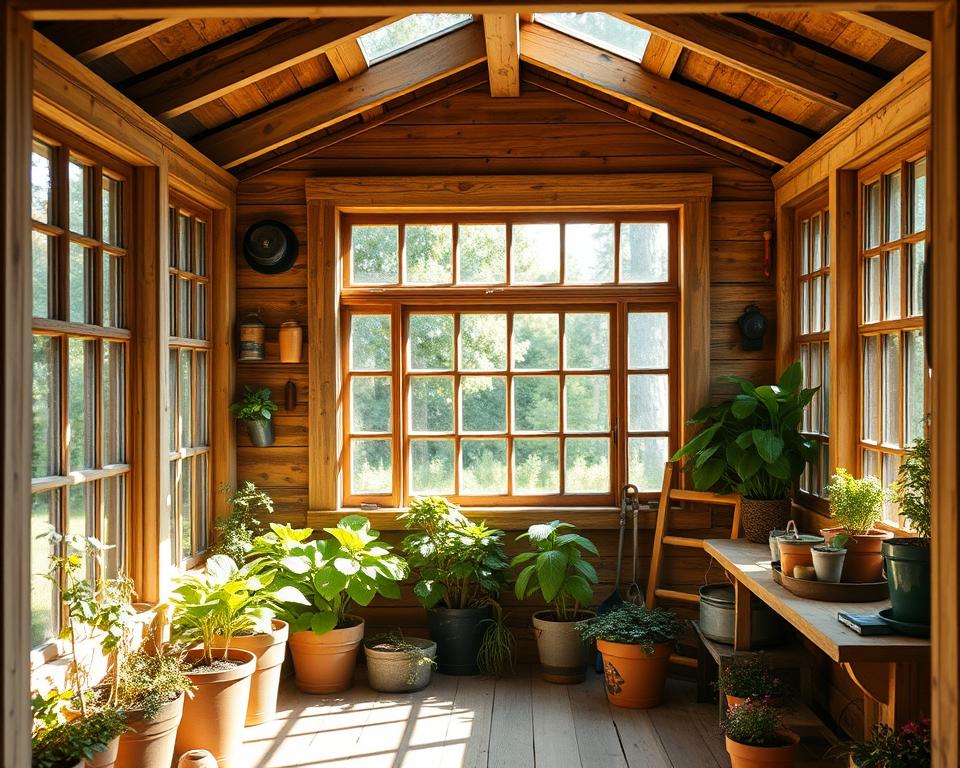
Installing Windows and Skylights
Natural lighting creates a vibrant atmosphere for gardening activities. Assessing existing window placement determines whether additional openings are necessary. More windows typically improve the working environment.
Skylights offer direct overhead illumination through the roof structure. They reduce dependence on artificial lighting during daytime hours. Installation options include:
- Customisation during initial shed purchase
- Retrofit DIY projects for existing structures
- Professional installation for complex roof modifications
Window positioning follows the sun’s daily path for maximum light exposure. Alternatively, facing openings away from direct sun creates softer lighting conditions. The choice depends on specific gardening needs.
Optimising Airflow for a Healthy Environment
Adequate ventilation prevents excess humidity and promotes plant health. Stagnant air encourages mould growth and pest infestations. Consistent airflow maintains ideal growing conditions.
Effective ventilation solutions include operable windows, roof vents, or small extraction fans. These systems facilitate air circulation throughout the space. Proper airflow creates a comfortable environment for extended gardening sessions.
The combination of natural light and ventilation establishes ideal conditions for plant development. This environmental balance supports seedling growth and prevents disease. A well-designed space becomes both functional and enjoyable.
How Do You Turn a Shed Into a Potting Shed? Key Features
The core features that define a truly functional potting shed centre around practical workspaces and essential utilities. These elements work together to create an efficient environment for horticultural activities.

Creating a Sturdy Workbench and Efficient Storage Options
A robust workbench serves as the central hub for all potting activities. The ideal potting bench provides ample surface area for transplanting seedlings and handling plants. Sturdy construction ensures stability during demanding gardening tasks.
Integrated storage solutions maximise workspace efficiency. Shelves beneath the bench offer convenient access to pots and soil mixes. Wall-mounted systems keep tools organised and within easy reach.
Vertical storage options effectively utilise limited space. Pegboards provide excellent hanging spots for smaller implements. This approach maintains a clutter-free environment while keeping essentials accessible.
Implementing a Reliable Water Supply and Drainage System
Access to water transforms the shed into a complete working station. Connecting to an outdoor faucet provides consistent supply for plant care. Rainwater collection systems offer an eco-friendly alternative.
Installing a sink facilitates clean-up and hand washing after messy tasks. Proper drainage prevents water accumulation that could damage the structure. This system maintains a healthy environment for both plants and gardener.
These key features combine to create a workspace that streamlines gardening activities. The right setup makes potting tasks more enjoyable and productive throughout the seasons.
Upgrading with Insulation and Climate Control
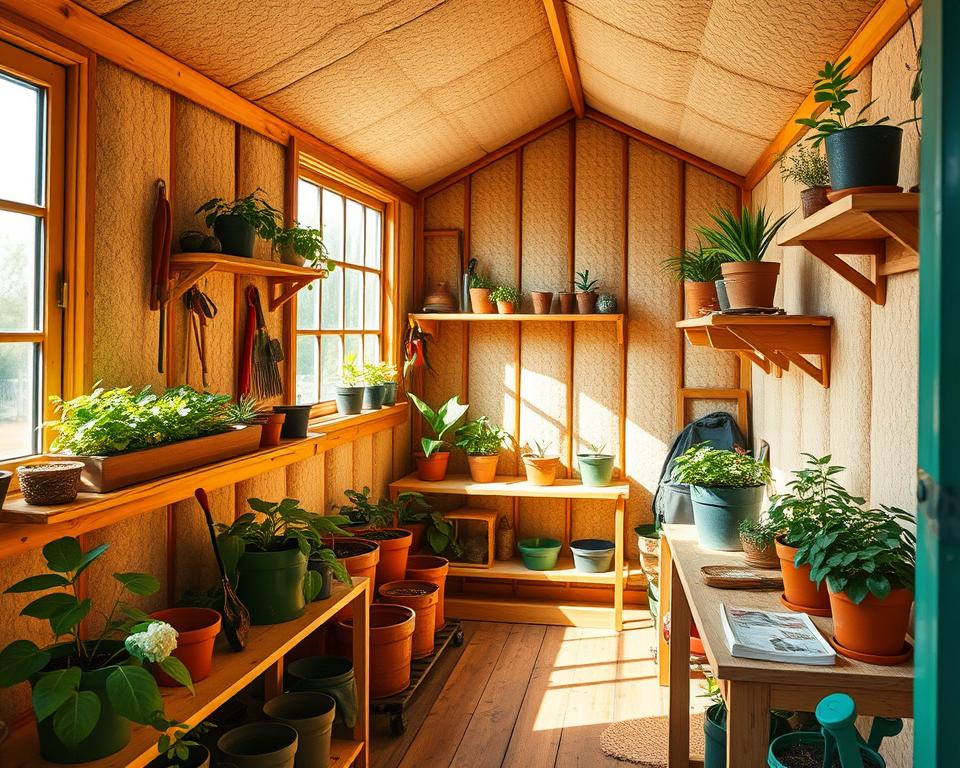
Climate control considerations separate ordinary storage areas from professional potting environments. Proper insulation creates stable conditions for plant development throughout seasonal changes. This upgrade protects delicate seedlings and valuable potting materials.
Sealing Gaps and Improving Energy Efficiency
Air leaks compromise temperature regulation in any garden structure. Careful sealing around windows, doors, and wall joints prevents heat transfer. Weatherstripping and foam sealants create an airtight space.
This process maintains consistent humidity levels for plant health. Proper sealing also deters pests from entering the gardening area. Energy efficiency improves significantly with comprehensive gap treatment.
Choosing Suitable Insulation Materials
Fibreglass batts offer affordable thermal protection for shed walls and roof structures. Their flexibility accommodates various space configurations. DIY installation makes this material accessible for most gardeners.
Spray foam provides superior insulation and automatic gap sealing. This option creates a continuous thermal barrier throughout the structure. Both materials protect plants from extreme temperature fluctuations.
Climate control extends to ventilation systems and heating options. Strategic fan placement prevents excess humidity around potting soil. Portable heaters maintain comfortable working conditions during colder months.
Installing Electrical, Lighting, and Decorative Enhancements
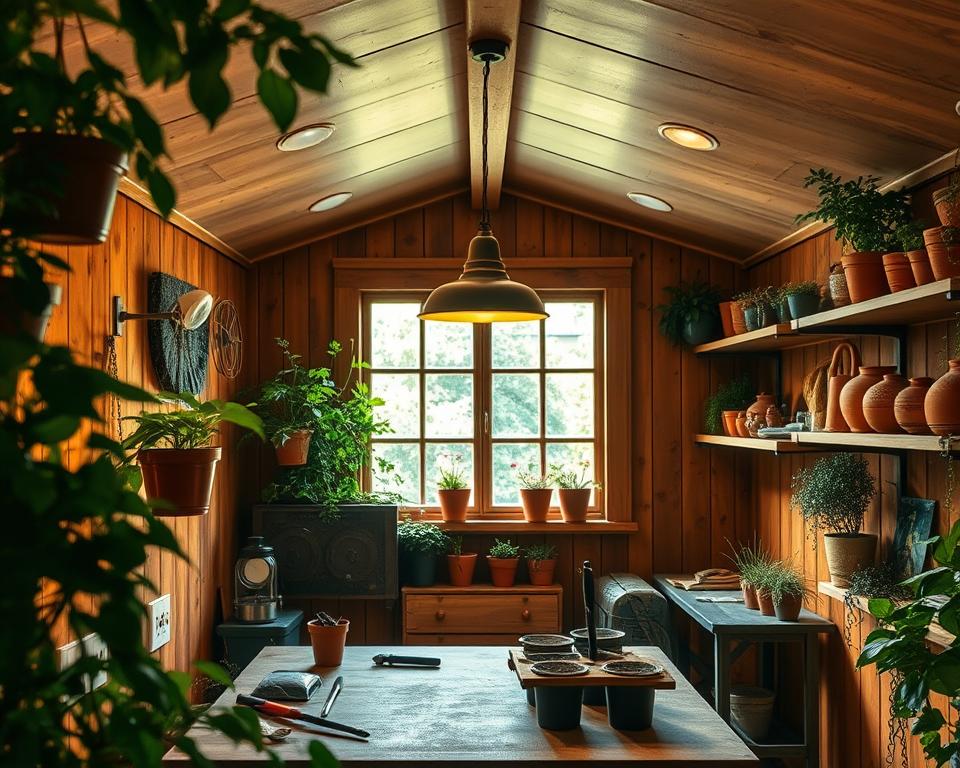
Strategic lighting transforms the gardening environment, supporting plant health and productivity. Adequate illumination is crucial for successful seed starting and maintaining seedlings throughout their development. This enhancement elevates the entire gardening experience.
Incorporating Grow Lights, Outlets, and Ventilation
Artificial lighting systems supplement natural light effectively. Different types serve specific purposes in the gardening space. Choosing the right option depends on the plants being cultivated.
Professional electricians should handle all electrical installations for safety. Sufficient outlets power lighting systems and gardening tools. Proper wiring ensures reliable operation of all electrical items.
| Lighting Type | Best For | Space Coverage | Heat Emission |
|---|---|---|---|
| Fluorescent | Seedlings, young plants | Small areas | Low |
| HID | Large spaces | 7+ square feet | High |
| LED | Compact areas | Limited space | Minimal |
| Incandescent | Leafy greens | Small scale | Moderate |
Personalising the Space with Decor and Finishing Touches
String lights add romantic ambience to the gardening area. They create an inviting atmosphere for evening work sessions. This decorative touch brings warmth and personality.
Choosing a theme or colour palette reflects personal style. Garden-themed artwork and motivational quotes enhance the space. Potted plants and hanging greenery bring life to every corner.
Multi-purpose furniture combines storage with aesthetic appeal. A comfortable chair provides a place for relaxation during breaks. These finishing touches make the area truly special.
Conclusion
A well-planned potting shed conversion elevates gardening activities from scattered tasks to streamlined operations. Following the systematic steps outlined in this guide ensures gardeners create an efficient workspace for nurturing seedlings and managing horticultural projects.
The transformation process requires careful assessment of existing sheds before implementing essential features. Proper shed potting arrangements include workbenches, storage solutions, and climate control. These elements make gardening more organised and enjoyable throughout the seasons.
Regular maintenance keeps the potting sheds functional long-term. Gardeners should make sure to clean surfaces and organise tools seasonally. Personal touches transform the practical area into an inviting retreat for all gardening tasks.
This comprehensive approach to shed potting creates a dedicated space that enhances every step of the horticultural journey. The final result represents a rewarding achievement for any plant enthusiast.
FAQ
What is the first step in converting a shed into a potting shed?
The initial step involves a thorough assessment of the shed’s current condition and its location. It is crucial to check for structural integrity, dampness, and pest issues. This evaluation ensures the space is safe and suitable for gardening tasks.
How important is natural light for a potting shed?
Natural light is vital for a potting shed. It helps gardeners care for seedlings and inspect plants accurately. Installing windows or skylights can significantly improve the working environment, reducing the need for artificial lighting during daylight hours.
What storage solutions work best in a potting shed?
Effective storage is key to an organised potting shed. Open shelving for pots, hooks for tools, and labelled containers for seeds and fertilisers keep items accessible. A dedicated space for each tool streamlines gardening activities.
Why is ventilation important in a potting shed?
Proper ventilation prevents moisture buildup, which can lead to mould and mildew. It also ensures a fresh air supply for plants and the gardener. Vents or louvred windows can help maintain a healthy atmosphere.
Should a potting shed have a water supply?
While not essential, a water supply is highly beneficial. It allows for convenient watering and cleaning. A simple garden tap or a plumbed-in sink with drainage makes gardening chores much easier.
What type of workbench is suitable for a potting shed?
A sturdy, flat workbench is ideal. It should be durable enough for potting soil and heavy pots. A waterproof surface is advantageous for easy cleaning after messy gardening work.
Is insulation necessary for a potting shed?
Insulation is beneficial for gardeners who use the shed year-round. It helps protect plants and tools from extreme temperatures. Sealing gaps and adding insulation can make the space more comfortable in both winter and summer.
Can electrical items be added to a potting shed?
Yes, electrical fittings like lights and sockets are very useful. They enable the use of grow lights for seedlings or power tools. All electrical work must be carried out by a qualified professional to ensure safety.