Log Cabin Insulation: How Insulated Are Log Cabins?

Many property owners considering a timber structure wonder about thermal performance. This comprehensive guide explores the critical aspects of thermal efficiency in these garden buildings. Understanding the insulation capabilities is essential for year-round usage.
Modern approaches to thermal management have evolved significantly. They now incorporate multiple layers and advanced materials. This creates effective thermal envelopes beyond relying solely on thick timber walls.
The article examines all aspects of thermal management for timber structures. It covers measuring efficiency and selecting appropriate materials. Readers will gain practical knowledge about different approaches and their effects.
Inhaltsverzeichnis
Key Takeaways
- Modern timber structures utilise advanced thermal management techniques beyond traditional methods
- Proper thermal control is essential for comfortable year-round usage of garden buildings
- Different insulation approaches significantly impact energy consumption and comfort levels
- The guide covers both new purchases and retrofit projects for existing structures
- Comprehensive thermal optimisation involves walls, roofs, and floors simultaneously
- Material selection plays a crucial role in overall thermal performance
- Avoiding common installation mistakes ensures optimal efficiency and longevity
Introduction to Log Cabin Insulation
Beyond simply keeping a space warm, effective cabin insulation unlocks a host of significant advantages. It transforms a basic garden building into a versatile, comfortable room suitable for any season.
A key benefit is the substantial reduction in external noise. This creates a peaceful environment perfect for a home office or creative studio. Concentration and productivity are greatly enhanced.
Understanding the Benefits
Security is another important factor. Better insulation often involves thicker walls and tighter seals on doors and windows. This makes the cabin more resistant to break-in attempts.
The energy savings are also compelling. A well-insulated structure requires less power for heating and cooling. This leads to lower bills over time, especially with frequent use.
| Benefit | Impact | Ideal For |
|---|---|---|
| Noise Reduction | Creates a quiet, focused environment | Home offices, studios |
| Enhanced Security | Thicker walls deter vandalism | All-year storage, workspaces |
| Energy Efficiency | Lowers heating and cooling costs | Frequently used spaces |
| Property Value | Adds functionality and character | Rental potential, resale |
Year-round Comfort Strategies
Achieving consistent comfort involves creating a stable thermal envelope. This means the interior temperature remains pleasant regardless of the weather outside.
This strategic approach allows for log cabin enjoyment during winter chills and summer heat. The investment in quality log cabin insulation pays off through expanded functionality and lower running costs.
How Insulated Are Log Cabins?
Heat loss follows predictable paths in any structure. Identifying these routes is the first step to improving a building’s thermal envelope. This understanding is key to gauging true insulation performance.
Measuring Insulation Efficiency
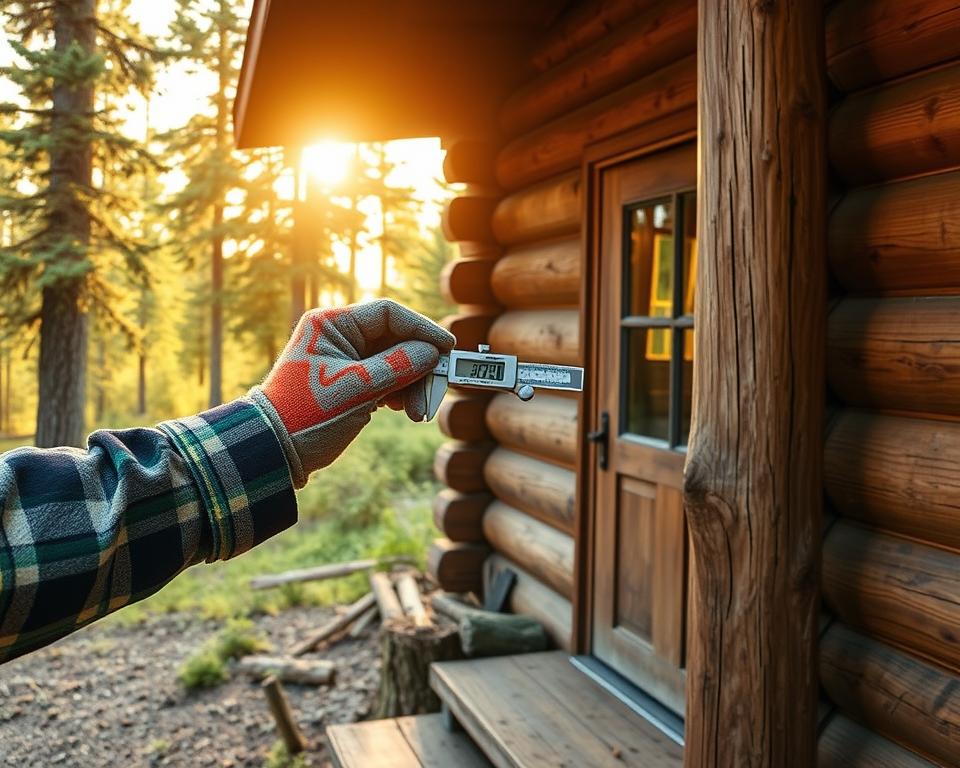
The efficiency of a timber building’s thermal protection varies dramatically. It depends on log thickness, construction quality, and the use of additional insulation measures.
Standard structures with 44mm solid logs provide baseline resistance. This natural benefit comes from the timber mass itself. For comfortable year-round use in the UK, this often proves insufficient.
Performance is measured using R-values and thermal conductivity. These metrics quantify a material‘s ability to resist heat flow. A properly insulated cabin achieves far better retention than one relying on walls alone.
Impact on Energy Bills and Comfort
The financial and lifestyle impacts are significant. Structures lacking fundamental insulation quickly become costly. They rack up hefty energy bills and can experience early mould growth.
Comfort levels depend on both temperature and moisture control. A good thermal envelope regulates both factors. This prevents condensation problems that lead to damp.
Savings provide tangible evidence of effectiveness. Floor insulation alone can reduce heating costs by an impressive 20 per cent. Comprehensive treatment of roofs, walls, and floors delivers even greater efficiency.
| Feature | Standard Cabin | Insulated Cabin |
|---|---|---|
| Primary Heat Loss | Up to 70% through roof | Significantly reduced overall loss |
| Winter Usability | Often limited without extra heating | Comfortable for year-round use |
| Energy Cost Impact | Higher running costs | Substantial savings on bills |
| Moisture Control | Risk of condensation and mould | Regulated humidity levels |
Understanding these metrics helps owners prioritise investments. They can target improvements that deliver the greatest gains in comfort and cost savings for their cabins.
Insulating Log Cabin Walls
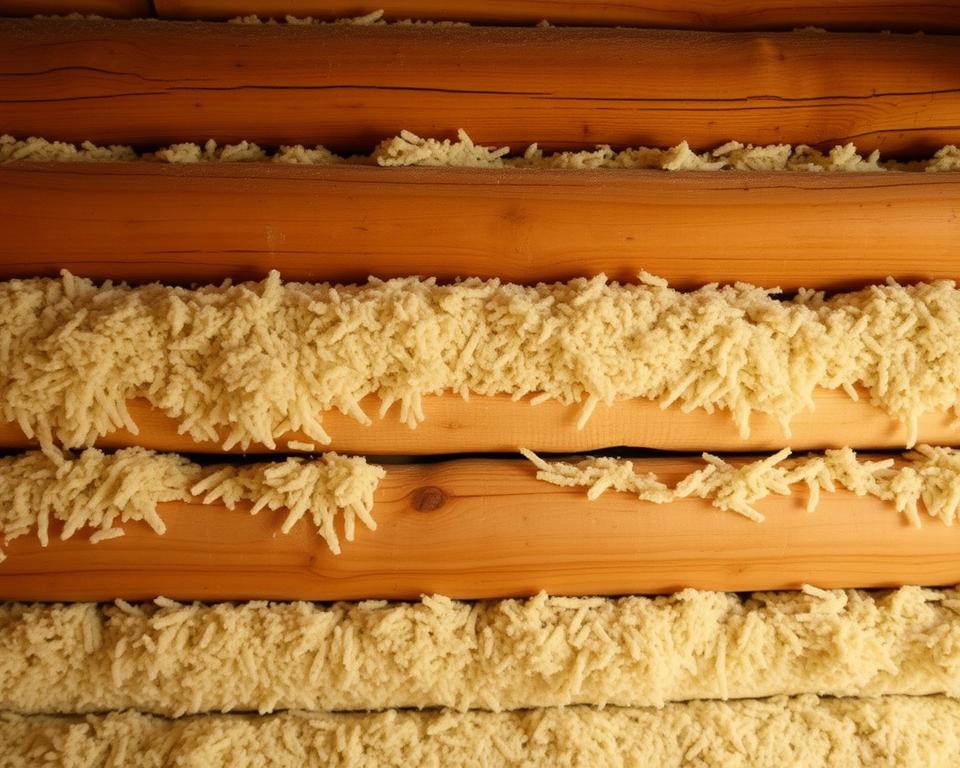
When planning a garden building, the selection of wall thickness is a primary consideration for long-term comfort. Thicker logs, such as 44mm, provide a solid foundation for energy efficiency. This natural mass offers substantial resistance to heat transfer.
Interlocking construction creates tight-fitting walls with minimal gaps. This precision is crucial for preventing draughts and moisture penetration. A well-assembled cabin is inherently more resilient.
Log Thickness and Natural Insulation
For a structure intended for year-round use, 44mm logs are often recommended as a minimum. Thinner walls may suffice for summer-only use but lack the necessary thermal mass. The timber itself acts as the first layer of insulation.
This approach is most effective when combined with careful attention to sealing around windows and doors. These areas are common weak points in the building’s envelope.
Utilising Insulation Boards and Vapour Barriers
For enhanced performance, internal upgrades are highly effective. Timber battens are fixed to the interior cabin wall to create a cavity. Rigid insulation boards are then precisely cut to fit between them.
Any remaining small spaces should be sealed to maintain thermal continuity. A vapour barrier is then installed over the boards. This critical layer prevents condensation from forming within the wall structure, protecting the timber and the insulation‘s effectiveness.
This method significantly boosts the log cabin‘s comfort without altering its external appearance. It is a practical solution for improving an existing cabin.
Insulating a Log Cabin Roof
Addressing roof thermal management is crucial for any timber building project. Warm air naturally rises, making the uppermost area a primary escape route for heat. Proper roof insulation can prevent up to 70% of thermal loss in these structures.
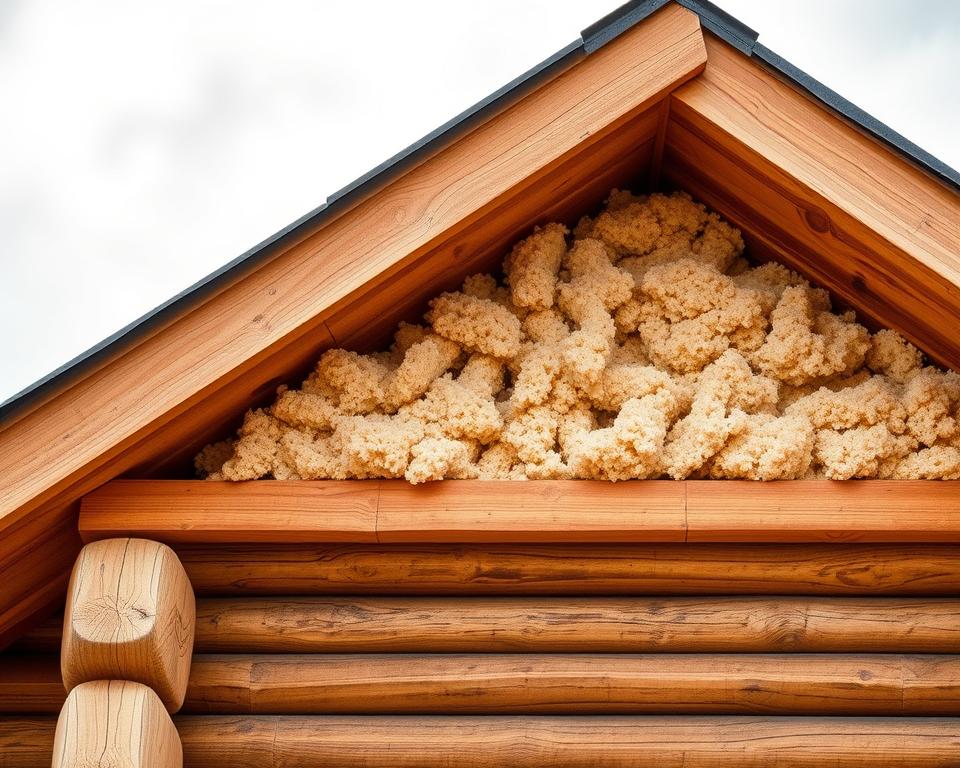
The choice between external and internal methods depends on several factors. External approaches preserve interior space and maintain aesthetic appeal. Internal methods are often more practical for existing buildings.
External versus Internal Insulation Approaches
External insulation involves adding materials above the structural roof deck. This method protects the entire roof assembly from temperature extremes. It maintains the beautiful exposed timber ceilings many owners appreciate.
Internal approaches work within the existing roof structure. Materials fit between rafters or battens fixed to the interior surface. This method consumes some headroom but allows for easier access during installation.
| Feature | External Insulation | Internal Insulation |
|---|---|---|
| Space Impact | Preserves interior volume | Reduces ceiling height |
| Aesthetics | Maintains timber appearance | Requires ceiling covering |
| Installation | More complex, weather-dependent | Simpler, can be done in stages |
| Weather Protection | Enhances roof durability | No additional weatherproofing |
For pitched roofs, insulation fits snugly between rafters. Timber battens create a secure framework for rigid boards. Proper installation includes leaving small ventilation gaps.
“Ventilation gaps are not optional extras. They are essential for preventing moisture accumulation and protecting the roof structure from long-term damage.”
Flat roof configurations offer flexibility. Materials can be laid on top of ceiling boards when accessible. Otherwise, they are fixed to the underside. Shingle systems provide an additional protective layer.
Quality roof lining and vapour barriers complete the system. These elements work together to create a comprehensive solution. The result is enhanced comfort and significant energy savings.
Effective Log Cabin Floor Insulation Practices
A well-insulated floor is a cornerstone of a comfortable and energy-efficient garden building. It addresses the significant heat loss that occurs through the largest surface in contact with the cold ground. Proper techniques can lead to substantial savings on energy bills.

For new constructions, the process begins with a damp-proof membrane. Foil-backed insulation boards are then inserted beneath the floorboards and between the joists. This creates a robust barrier against moisture and cold air penetration.
Preventing Damp and Cold Spots
Managing moisture is the most critical aspect. In older structures, the first step involves filling any gaps with a high-quality sealant. Breathable membranes are then installed to stop rising damp while allowing vapour to escape.
A common mistake is laying carpet directly onto an uninsulated surface. This traps moisture between the materials, leading to mould growth on both layers. Instead, use rugs on properly insulated surfaces or consider insulated floor tiles.
For tongue-and-groove floors, careful removal of floorboards reveals the joist cavities. Partially driven screws can act as battens to support rigid insulation boards, keeping them suspended. It is vital to cut the material to fit snugly, avoiding cold spots.
Foil tape seals any remaining gaps and holds the insulation securely in place. Once the floorboards are replaced, the cabin floor offers much-improved thermal performance. This method effectively utilises the existing structure.
Concrete floors present a simpler scenario. A vapour barrier is laid directly on the concrete, followed by rigid insulation boards. New flooring can then be installed on top of this effective insulating layer.
Selecting the Right Insulation Materials
The selection of insulation components requires careful consideration of space constraints, intended use, and installation complexity. Different materials offer varying levels of thermal performance and practical benefits. Property owners should keep these factors in mind when planning their project.
Material Comparison: PIR, Mineral Wool and Foil-Backed Options
PIR insulation boards provide exceptional thermal efficiency in limited spaces. These rigid boards are easy to cut and fit precisely. They represent a premium choice among available options.
Mineral wool products offer flexibility for irregular spaces. They excel at soundproofing, making them ideal for a home office or studio. This material requires more installation care but delivers excellent results.

Foil-backed rolls work well as supplementary layers. They are lightweight and suitable for mild climate applications. For best performance, combine them with other insulation materials.
Environmental and Cost Considerations
Budget constraints often influence material selection. PIR boards cost between £5-£15 per square metre. Mineral wool falls within a similar price range.
Sustainable options like cork boards appeal to eco-conscious owners. Though priced higher at £17-£22 per square metre, they offer environmental benefits. Multifoil insulation provides a budget-friendly alternative at £3-£4 per square metre.
Thickness guidelines recommend 50mm for seasonal use. Year-round occupation demands 75mm to 100mm depths. These specifications ensure comfortable temperatures in any cabin setting.
Avoiding Common Insulation Mistakes in Log Cabins
Even the highest quality materials can be rendered ineffective by simple installation errors. Property owners should keep this in mind when planning their cabin insulation projects. Careful attention to detail prevents costly problems down the line.
Ensuring a Solid Foundation and Structural Integrity
The foundation represents the most critical element for any timber building project. An inadequate base compromises structural stability and undermines insulation effectiveness. Proper preparation requires level, solid surfaces built slightly larger than the cabin footprint.
Flat ground selection is essential for avoiding complex levelling work. Bases should extend approximately 30-40mm beyond exterior dimensions. This provides adequate support for the entire structure.
Sealing Gaps for Enhanced Efficiency
Gap sealing often receives insufficient attention despite its critical importance. Even small cracks around windows, doors, and wall joints allow significant heat loss. These gaps permit moisture penetration that negates insulation investments.
Proper log fitting during assembly achieves tight joints that resist wind penetration. All holes must be sealed to keep the space warm and dry. This prevents unwanted air infiltration throughout the building’s lifespan.
Regular maintenance, including annual wood preservative treatments, protects against timber degradation. This preserves both structural strength and thermal performance over time. Quality control during installation prevents performance shortfalls.
Enhancing Energy Efficiency and Overall Comfort
The integration of windows and doors plays a pivotal role in determining the overall energy efficiency of garden buildings. These openings account for approximately 15 per cent of heat loss, making their proper specification essential.

Integrating Windows, Doors and Additional Draught-proofing
For structures with 44mm walls or thicker, double-glazing represents the standard choice. This approach provides thermal performance that matches wall insulation quality. It prevents cold spots around window perimeters effectively.
Existing garden buildings with thinner or Perspex windows benefit from retrofit solutions. Adding secondary glazing layers creates affordable DIY double-glazing. This technique reduces heat transfer significantly.
Door insulation requires attention to both panel thickness and perimeter sealing. Properly hung doors that close tightly are fundamental. Draught excluders and curtains provide additional comfort improvements.
These measures transform seasonal structures into comfortable year-round spaces. They support extended occupation as home offices or living rooms. The result is reduced carbon footprint and lower utility costs.
Comprehensive cabin insulation strategies consider how all elements work together. Weak points in any area undermine overall performance. Proper vapour control ensures comfortable environments regardless of outdoor conditions.
Conclusion
Investing in log cabin insulation transforms a basic garden building into a comfortable, year-round space. This upgrade enhances energy efficiency and expands the cabin‘s functionality significantly.
While DIY is an option for simple tasks, professional installation offers speed and security. It ensures the insulation performs correctly without risking structural issues.
Always check the manufacturer’s warranty before starting any work. Alterations might void the guarantee. Taking the time to plan properly ensures a successful project.
A well-insulated structure becomes a valuable extension of the home. It provides a comfortable environment for various activities, whatever the season.
FAQ
How well do log cabins retain heat naturally?
The thermal performance of a log cabin largely depends on the thickness of its timber walls. Solid wood possesses natural insulating qualities, storing heat and slowly releasing it. However, without additional materials like insulation boards, a standard cabin may lose heat more quickly than a modern, highly insulated home, particularly through gaps and single-glazed windows.
Can you add insulation to an existing log cabin?
A> Yes, it is possible to retrofit insulation to improve a cabin’s energy efficiency. Common methods include fixing insulation boards to the interior walls, adding a vapour barrier, and insulating the roof space and floor. It is crucial to manage moisture carefully during this process to prevent damp issues within the wall structure.
What is the best insulation for a log cabin roof?
A> The optimal choice often involves rigid PIR (polyisocyanurate) insulation boards. These materials offer a high level of thermal resistance with a relatively thin profile. They can be fitted between the roof joists or on top of them, creating a continuous thermal layer that significantly reduces heat loss.
Is floor insulation necessary for a log cabin?
A> Insulating the floor is highly recommended for year-round comfort. A cold floor can make a room feel chilly and contribute to higher energy bills. Proper floor insulation, using materials like PIR boards fitted between the floor joists, prevents cold spots and damp, creating a warmer living environment.
How important is a vapour barrier in cabin insulation?
A> A vapour barrier is a critical component. It prevents warm, moist air from inside the room from penetrating the wall structure and condensing within the insulation layer. This condensation can lead to mould and rot in the timber. Installing a vapour barrier on the warm side of the insulation is essential for protecting the building’s integrity.
What are common mistakes to avoid when insulating a log cabin?
A> Key errors include failing to seal gaps around windows and doors, which creates draughts. Another major mistake is neglecting adequate ventilation or a vapour barrier, leading to moisture buildup. Using the wrong type of material or compressing insulation can also reduce its effectiveness and cause long-term problems.