How Much Sunlight Does a Garden Greenhouse Need?

Understanding light requirements is essential for successful greenhouse cultivation. The amount of illumination your structure receives directly impacts plant health and productivity. Most species benefit from substantial daily exposure to thrive in this controlled environment.
There is no universal standard for all vegetation. While many crops flourish with six or more hours of direct sun, specific needs vary considerably. Light-loving varieties like tomatoes demand significantly more exposure than shade-tolerant options such as lettuce.
Direct sunlight refers to natural illumination reaching plants without filtration. This differs from light passing through clouds, foliage, or greenhouse coverings. Recognising this distinction helps gardeners optimise their growing conditions effectively.
This guide offers practical advice for balancing illumination and shade throughout the seasons. It covers optimal placement strategies and temperature management techniques. Both novice and experienced growers will find actionable insights to refine their practices.
Inhaltsverzeichnis
Key Takeaways
- Most plants require a minimum of six hours of direct sunlight daily
- Light requirements vary significantly between different plant species
- Direct sunlight differs from filtered light passing through coverings
- Sun-loving crops need substantially more exposure than shade-tolerant varieties
- Greenhouse placement significantly affects light availability throughout the year
- Balancing light and shade is crucial for optimal plant growth
- Seasonal variations require adjustments to light management strategies
Understanding Sunlight Requirements in a Greenhouse
The vitality of every plant within a protected structure hinges on the effective management of its light environment. Sunlight acts as the primary engine for growth, fuelling essential biological processes.
This section explores the fundamental roles that light plays, from powering photosynthesis to regulating temperature.
Role of Sunlight in Photosynthesis
At the heart of plant development is photosynthesis. This process allows plants to convert carbon dioxide and water into glucose and oxygen, using energy captured from light. The pigment chlorophyll is crucial, as it absorbs light energy to power this reaction.
Increased light exposure typically boosts photosynthetic activity, leading to more vigorous plant growth. However, each species has a saturation point beyond which additional light offers no further benefit.
Effects on Temperature and Plant Growth
Sunlight also governs the thermal conditions inside a structure. It creates the greenhouse effect, where heat from the sun’s rays becomes trapped. This is advantageous during cooler months, extending the growing season.
Conversely, excessive light can cause overheating. Sensitive plants may experience stress, increased water loss, and potential damage. Therefore, balancing light and heat is a cornerstone of effective cultivation.
How Much Sunlight Does a Garden Greenhouse Need?
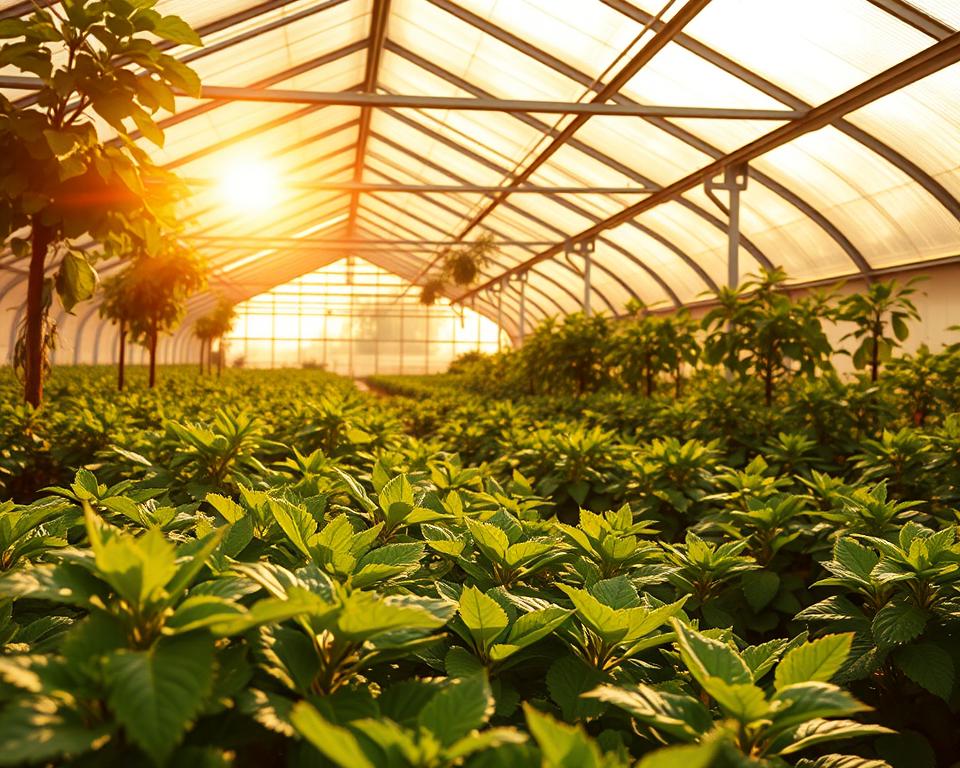
Mastering light exposure is crucial for optimising plant development in a controlled environment. Most vegetation requires approximately six hours of direct, unfiltered illumination daily to thrive effectively.
Direct Versus Diffused Sunlight
Direct illumination refers to natural rays reaching vegetation without obstruction from clouds or coverings. This differs significantly from diffused light, which scatters evenly throughout the space.
Diffused illumination reduces the risk of leaf scorch on sensitive species. It provides more uniform coverage, benefiting plants that might otherwise receive uneven exposure.
Different species have distinct requirements. Light-loving varieties like tomatoes need six to eight hours daily. Shade-tolerant options such as spinach perform well with just two to four hours.
| Plant Type | Daily Direct Light | DLI Range (mol/m²/day) |
|---|---|---|
| High-light crops (tomatoes, peppers) | 6-8 hours | 15-25 |
| Medium-light plants | 4-6 hours | 10-15 |
| Shade-tolerant varieties | 2-4 hours | 5-10 |
The Daily Light Integral (DLI) measures total photosynthetically active radiation over 24 hours. This scientific approach helps growers understand precise light needs.
More light benefits vegetation only up to a saturation point. Beyond this threshold, additional exposure provides no advantage and may cause stress.
Dark periods are equally important for proper development. Certain physiological processes occur exclusively during night hours, making balanced light cycles essential.
Balancing Sunlight and Shade for Optimal Plant Growth
Achieving the correct equilibrium between light and shadow is fundamental for cultivating a thriving greenhouse. This balance supports diverse crops and maintains a stable internal environment.

Benefits of Direct Sunlight
Full sun exposure is vital for many plants. It maximises photosynthesis, leading to vigorous growth and higher yields for crops like tomatoes.
This light provides passive solar heat, extending growing seasons. It also helps control humidity, reducing risks of fungal diseases.
Advantages of Shade for Sensitive Plants
Shade protection is crucial for many species. It prevents heat stress and shields delicate leaves from scorching.
Shade-tolerant plants flourish in these conditions. The cooler environment also helps soil retain moisture for longer periods of time.
Gardeners can create microclimates using shade cloths. This allows sun-loving and shade-preferring crops to grow together successfully.
| Condition | Primary Benefit | Ideal For |
|---|---|---|
| Full Sun | Enhanced Photosynthesis & Yield | Tomatoes, Peppers, Cucumbers |
| Partial Shade | Heat & UV Protection | Lettuce, Spinach, Ferns |
| Full Shade | Moisture Retention & Cool Roots | Hostas, Certain Herbs |
Factors Affecting Light Transmission and Greenhouse Conditions
The effectiveness of a greenhouse is largely determined by the properties of its glazing materials. These panels act as a filter, controlling the amount of natural illumination that reaches the plants inside.

Transparency refers to a material’s ability to allow light to pass through with minimal absorption or reflection. This characteristic directly shapes the internal light environment.
Quality of Greenhouse Coverings and Transparency
High-quality panels are essential for optimal plant growth. Materials like glass and polycarbonate can transmit over 90% of incoming light.
A light transmission percentage of 83% means 83% of exterior exposure penetrates the covering. The remaining 17% is lost. Higher transmittance creates better growing conditions.
| Covering Material | Typical Light Transmission | Key Characteristics |
|---|---|---|
| Horticultural Glass | >90% | Excellent clarity, durable, but heavy |
| Polycarbonate Panels | >90% | Lightweight, impact-resistant, provides diffusion |
| Polyethylene Film | 80-85% | Cost-effective, but degrades faster |
Glazing quality also affects heat retention. Better transmission often correlates with efficient temperature management. This creates a stable environment for various crops.
Over time, transmission can degrade. Dirt, algae, and scratches reduce clarity. Regular cleaning preserves panel performance. Timely replacement of damaged panels is crucial.
Twin-wall polycarbonate offers an added benefit. It diffuses light, scattering it evenly. This reduces harsh shadows and benefits many plant species.
Tips for Positioning and Ventilating Your Greenhouse
The physical location and air circulation design directly influence a greenhouse’s performance throughout the seasons. Careful planning during installation prevents common issues and maximises growing potential.

Site Assessment for Optimal Sunlight
Before installation, conduct a thorough site evaluation. Consider topography, as south-facing slopes receive maximum solar radiation in the Northern Hemisphere. Avoid low-lying areas where water accumulates after rain.
Nearby structures and mature trees create shifting shade patterns. These can limit sunlight availability during critical growing periods. Seasonal sun angle variations affect exposure, with winter sun following a lower arc.
| Site Factor | Consideration | Optimal Choice |
|---|---|---|
| Topography | Sun exposure patterns | South-facing slope |
| Drainage | Water accumulation risk | Well-drained, elevated area |
| Nearby Structures | Shadow patterns | Minimal obstructions |
| Seasonal Adaptation | Sun angle changes | Year-round access |
Ensuring Proper Ventilation and Cooling
Effective ventilation maintains healthy growing conditions. Open roof and side vents early in the day before heat builds up. This creates cross-ventilation that prevents excessive temperature rise.
Automated vent openers provide practical solutions for busy gardeners. These devices operate through thermal expansion without electricity. Portable structures offer flexibility for seasonal repositioning to optimise conditions.
Proper airflow reduces disease risk and ensures plants receive fresh air. Strategic ventilation placement creates optimal balance throughout different seasons.
Using Supplemental Lighting and Shading Techniques
Seasonal variations often require supplementary approaches to maintain optimal growing conditions. When natural illumination proves insufficient, growers can employ artificial lighting systems. This step ensures consistent growth throughout challenging periods.
Enhancing Light Exposure with Artificial Lighting
LED and high-pressure sodium lamps offer effective supplemental lighting. These systems provide targeted illumination for specific plant requirements. They are particularly useful during winter months with shorter daylight hours.

Shading techniques balance excessive light exposure. Retractable shade cloths allow adjustable coverage based on daily conditions. Light-filtering coatings on panels can also moderate intensity.
Strategic plant placement creates natural shading effects. Shade-tolerant crops thrive beneath taller, sun-loving varieties. This symbiotic relationship maximises space utilisation.
For optimal results, adjust shading between 30-60% coverage. Sun-loving varieties like tomatoes perform well with approximately 30% shading. More delicate plants benefit from closer to 50% coverage.
Remember to remove shading treatments as autumn approaches. The lower sun angle naturally reduces light intensity. This gardening practice ensures plants receive adequate illumination during cooler months.
Seasonal Considerations: Adapting Sun Exposure Throughout the Year
Effective greenhouse cultivation demands a flexible approach that adapts to the changing seasons. The strategies required for winter and summer are dramatically different, focusing on maximising light or managing excessive heat.

During the colder months, the sun is lower and days are shorter. Gardeners must capture every available hour of light. Removing shade cloths by September and keeping glazing clean are essential steps.
Solar heat gain becomes the most efficient heating source. This passive method reduces the need for powered systems, supporting plant health during limited daylight.
Adjusting for Winter and Summer Variations
Summer introduces the opposite challenge. Longer days and a higher sun angle can lead to excessive heat. This stress causes plants to overheat and dry out rapidly.
Ventilation is critical. Opening roof and side vents early in the day creates vital airflow. Shading 30-60% of the light prevents sunburn and maintains a stable environment.
Watering schedules must also shift. Irrigation is best done early morning or late evening to avoid peak evaporation. Drip systems ensure consistent hydration.
Watch for signs of stress like wilting or yellowing leaves. These indicate it is time to adjust shading or ventilation to protect your crops.
| Season | Primary Goal | Key Actions |
|---|---|---|
| Winter | Maximise Light & Heat | Remove shading, clean glazing, utilise solar gain |
| Summer | Prevent Excessive Heat | Early ventilation, apply shade cloth, adjust watering |
Conclusion
In summary, a gardener’s ability to manage illumination dictates the health and yield of their crops. While a general rule exists, the optimal amount of direct sunlight exposure varies greatly between species.
Successful cultivation hinges on balancing this essential resource. It requires mitigating risks like excessive heat while promoting vigorous growth.
This balance is achieved through strategic placement, quality glazing, ventilation, and seasonal shading adjustments. Observing individual plant responses is crucial for fine-tuning these strategies.
Modern greenhouse gardening offers numerous tools to optimise conditions. With careful attention, gardeners can create thriving environments for their plants all year round.
FAQ
What is the minimum amount of direct sunlight a greenhouse requires daily?
Most plants thrive with at least six hours of direct sun exposure each day. This duration supports essential processes like photosynthesis. However, the specific needs can vary based on the crops being cultivated and the local climate.
Can a greenhouse get too much sun?
Yes, excessive heat and light can cause significant stress. This may lead to scorched leaves, increased water demands, and a higher risk of plant diseases. Managing this with shading and proper ventilation is crucial during peak summer months.
How does the greenhouse covering affect light levels inside?
The material’s quality and transparency play a vital role. Glass panels typically offer excellent light transmission, while polycarbonate sheets can diffuse light, reducing harsh shadows. Over time, dirt or degradation can lower light penetration, requiring regular cleaning.
What are the best practices for positioning a greenhouse?
An ideal location receives full sun for most of the day, especially morning light. It should be situated away from shading structures like trees or buildings. A north-south orientation often provides the most balanced light exposure for plant growth.
When should supplemental lighting be used in a greenhouse?
Artificial lighting is beneficial during winter when daylight hours are short. It is also useful for starting seeds early or for cultivating light-sensitive crops that need a longer photoperiod to flourish.
How can gardeners protect plants from intense summer sun?
Applying shade cloth is an effective method to filter intense sunlight. Ensuring adequate ventilation through roof vents or louvres also helps to manage temperature and humidity, preventing heat stress.