How to Clean a Wooden Shed: Step-by-Step Guide
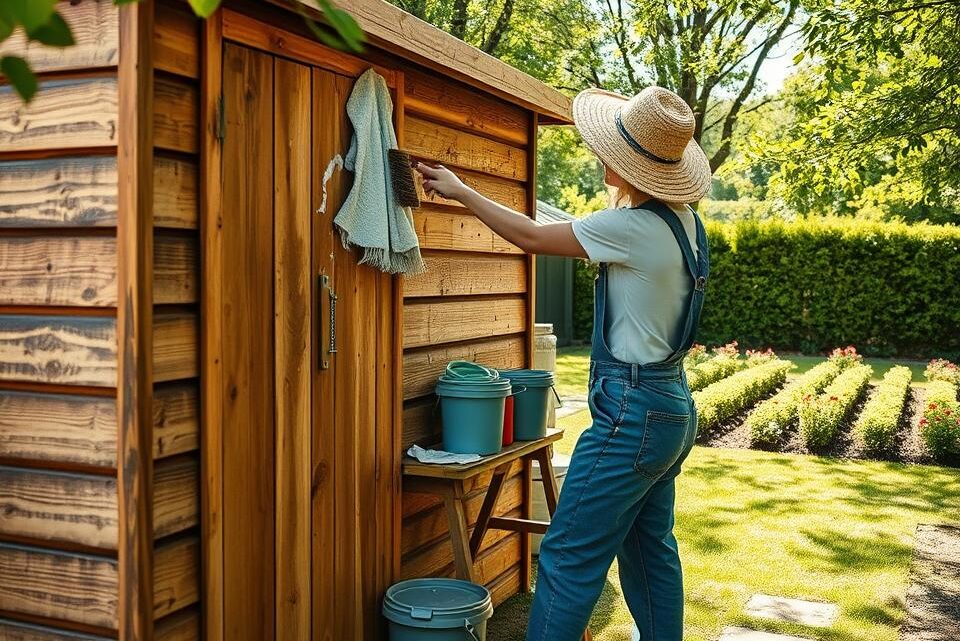
A garden shed constructed from wood offers fantastic storage and charm. Over time, however, exposure to the elements takes its toll. Dirt, grime, algae, and mould accumulate on the surface. This build-up is more than just unsightly; it can compromise the wood’s integrity.
When protective finishes cannot adhere properly due to surface grime, their effectiveness is significantly reduced. This leaves the structure vulnerable to moisture and decay. Proper maintenance is therefore not merely about aesthetics; it is a crucial form of protection.
Investing time in regular upkeep ensures your shed remains strong and visually appealing for many years. Neglecting this task can lead to more severe issues, including structural damage from rot or even animal infestations. A consistent care routine prevents the need for costly repairs or a complete replacement.
This comprehensive guide delivers a professional, step-by-step approach. It is designed to help you achieve excellent results, regardless of your shed’s size or age. You will learn the correct techniques, materials, and safety precautions for a thorough refresh.
Inhaltsverzeichnis
Key Takeaways
- Regular maintenance prevents the build-up of dirt, algae, and mould, preserving the shed’s appearance and structure.
- Proper cleaning ensures that protective wood finishes adhere correctly, offering maximum defence against the elements.
- Consistent upkeep is a cost-effective strategy, helping to avoid expensive repairs or full replacement in the future.
- A systematic approach, from preparation to final treatment, guarantees professional-quality and long-lasting results.
- Understanding the correct methods and safety measures is essential for effective and safe cleaning.
Preparing Your Wooden Shed for Cleaning
The preparatory phase establishes the foundation for a professional-quality shed restoration project. This crucial step ensures the entire process proceeds smoothly and delivers lasting results. Proper groundwork prevents unnecessary complications and protects the structure’s integrity.
Gathering Tools and Materials
Having the right equipment makes the task more efficient and effective. Essential tools include a stiff-bristled brush for removing loose debris and a biocidal cleaner for treating mould. A pump-action pressure sprayer ensures even application across large surface areas.
Safety equipment is equally important. Protective gloves and goggles shield against splashes and particles. Additional materials like 220-grit sandpaper help with smoothing rough patches after cleaning.
Assessing the Shed’s Condition
Before beginning work, a thorough inspection identifies potential issues. Look carefully for signs of damage such as cracks, holes, or decaying wood. Early detection allows for timely repair before problems worsen.
Check metal fittings, windows, and the base for any concerns. This comprehensive assessment determines the most appropriate cleaning approach. It also helps estimate the time required for completion.
Identifying repair needs at this stage saves significant effort later. Minor issues addressed promptly prevent major structural damage. This proactive way of working extends the life of garden sheds considerably.
How to Clean a Wooden Shed: Essential Techniques
Mechanical debris removal forms the cornerstone of proper exterior wood care. This initial stage prepares the surface for subsequent treatments by eliminating loose contaminants. The process requires systematic attention to detail.
Brushing Away Dry Debris
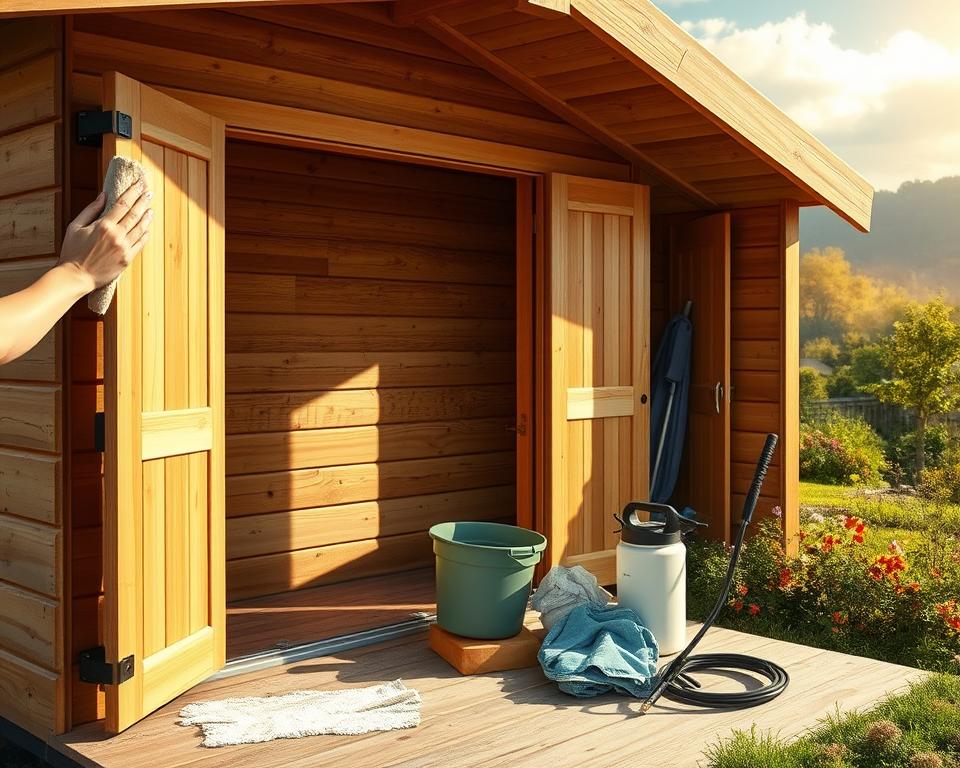
The first step involves removing dry material from the wood surface. Use a stiff-bristled brush to sweep away leaves, dust, and loose particles. This action prevents scratching during deeper cleaning.
Apply firm pressure to dislodge stubborn mud and algae. Focus on areas where organic growth causes discolouration. The goal is to expose the bare wood beneath.
Working in the Direction of the Wood Grain
Always move the brush parallel to the wood grain. This technique preserves the structural integrity of the material. It prevents splintering and fibre damage.
Systematic brushing ensures complete coverage of the exterior surface. Pay special attention to corners and joints where debris accumulates.
| Technique | Purpose | Recommended Tool | Key Consideration |
|---|---|---|---|
| Dry Brushing | Remove loose debris | Stiff-bristled brush | Work before wet cleaning |
| Grain-Aligned Brushing | Protect wood fibres | Soft-bristled broom | Follow natural wood pattern |
| Firm Scrubbing | Lift stubborn grime | Scrubbing brush | Apply moderate pressure |
These fundamental methods establish a solid foundation for further treatment. They apply to all wooden sheds regardless of age or condition.
Choosing the Right Cleaning Materials and Biocidal Treatments
Selecting appropriate materials is paramount for eliminating biological threats to timber structures. While scrubbing removes visible dirt, it often misses invisible spores. A dedicated biocidal treatment is essential for a thorough, long-lasting result.

Benefits and Application of Biocidal Cleaners
Biocidal cleaners penetrate the wood surface to kill embedded mould and algae. This action prevents future growth, especially during periods of high humidity. The correct application technique is crucial for effectiveness.
Use a pump-action sprayer for even coverage. Spray slowly along the wood grain, using about one litre per five square metres. A colour change to brown or black on the surface confirms the treatment is working.
Safety and Environmental Precautions
Protecting the surrounding garden area is a critical step. These powerful solutions can harm plants and lawn. Simple measures prevent unintended damage.
Shield nearby plants with plastic sheeting before starting. Use a fine spray setting to minimise splashback. Always direct run-off away from vegetation during the final rinse. This careful approach safeguards your entire garden.
| Treatment Type | Primary Use | Key Advantage | Consideration |
|---|---|---|---|
| Biocidal Cleaner | Kill mould & algae spores | Prevents regrowth | Requires plant protection |
| Oxygen-Based Cleaner | Lighten stained timber | Environmentally friendly | Less effective on deep growth |
Effective Rinsing and Drying Methods
The final rinsing stage is critical for ensuring the wood surface is properly prepared for protective treatments. This step removes residual biocidal cleaner and any loosened contaminants. Careful execution prevents damage to the timber and surrounding garden areas.

Using a Garden Hose Carefully
A standard garden hose provides the ideal balance of water pressure and control for most tasks. It effectively washes away treatment residues without the risks associated with more powerful equipment. Gentle, even spraying is the safest way to proceed.
For stubborn, embedded lichen, a firm abrasive brush can be used during rinsing to lift persistent deposits. This manual approach, combined with water, tackles extreme biological growth effectively.
Pressure washers, while powerful, pose a significant threat to timber structures. The high pressure can force water deep into the wood, causing it to swell and potentially split. This can lead to long-term structural damage.
| Rinsing Method | Recommended Pressure | Primary Risk | Best For |
|---|---|---|---|
| Garden Hose | Low, adjustable flow | Minimal; easy to control | General cleaning & rinsing |
| Pressure Washer | Lowest setting only | Wood fibre damage & splintering | Extreme cases only |
If a pressure washer must be used, select the lowest setting and direct the spray along the wood grain. This technique minimises harm. Be mindful of splashing contaminated water onto nearby plants.
Allowing the structure to dry completely is non-negotiable. Moisture trapped beneath a new finish will cause it to fail. A drying time of 24 to 48 hours, depending on the weather, is typically required before any further treatment.
Denibbing for a Smooth Surface
Proper surface preparation through denibbing ensures optimal adhesion for protective coatings. After cleaning treatments are washed away and the timber dries, a textured residue often appears. This raised wood grain results from moisture absorption during the cleaning process.
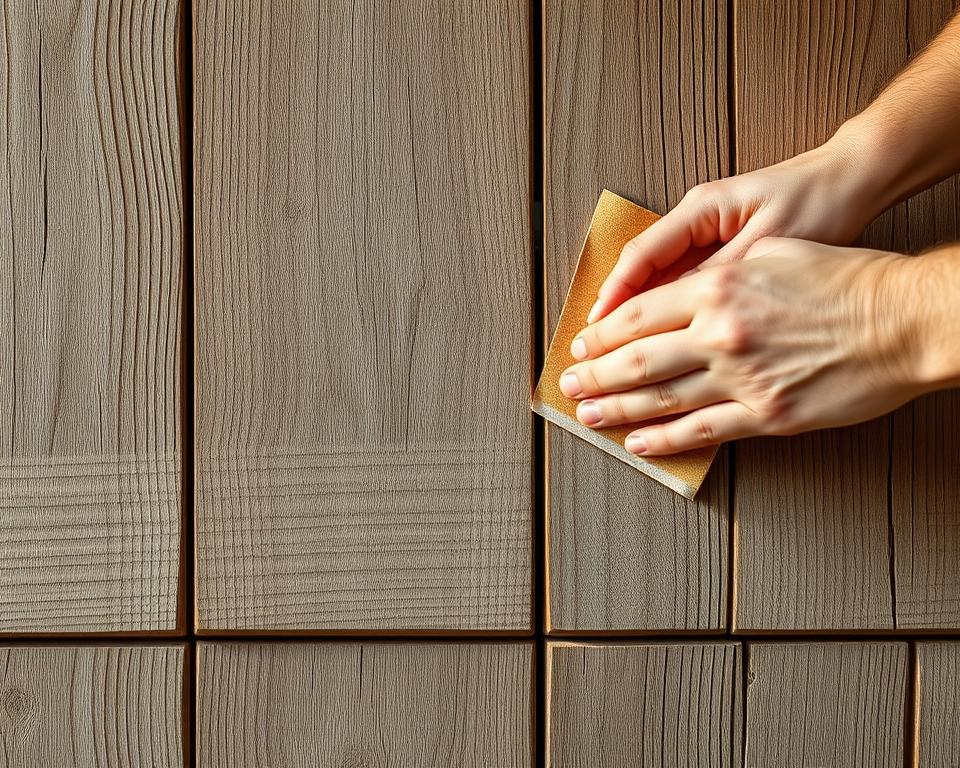
Untreated wood is naturally absorbent. Water-based cleaners cause the outer wood fibres to swell slightly. Once fully dry, this creates a rough texture that requires careful attention.
Techniques for Denibbing with Sandpaper or Pads
Using 220-grit sandpaper or foam-backed denibbing pads provides ideal abrasiveness. These tools remove raised grain without damaging the underlying wood structure. The technique demands a gentle approach.
Always work in the direction of the wood grain using one-way motions. Apply light pressure—barely touching the surface. One or two passes are usually sufficient to achieve the desired smoothness.
Safety equipment is essential during this step. Wear a mask and protective goggles to prevent inhalation of fine wood particles. If the pad becomes clogged, shake it away from your work area to dislodge sawdust.
Enserving Complete Dryness Before Treatment
Attempting to denib damp wood can cause tearing and damage. The structure must be completely dry before beginning this finishing step. This patience delivers professional-quality results.
A smooth surface dramatically improves adhesion for subsequent preservation products. Though potentially time-consuming, proper denibbing makes the effort worthwhile. The final finish should feel smooth with minimal imperfections.
Additional Tips for Overall Shed Maintenance
Effective upkeep extends well beyond surface cleaning to encompass organisational strategies and preventative measures. These practices significantly extend the functional lifespan of the structure.
Interior and Organisational Cleaning
Regular attention to the interior space prevents dirt accumulation. Always clean garden tools before storage to minimise debris on the floor.
Scrub interior walls with dish soap and water using a rag. This removes built-up grime effectively. For stubborn messes, apply more pressure during scrubbing.

Sweep floors regularly with a dustpan and brush. This prevents mildew build-up that can lead to mould over years. Proper organisation using magnetic strips and hooks maximises both wall and floor space.
Preventative Measures and Regular Inspections
Conduct routine inspections to identify issues early. Check for roof felt tears and decaying floorboards that need immediate repair.
Keep the shed base clear from soil and plants. This prevents moisture accumulation that causes rot. Trim nearby vegetation to maintain good air circulation.
Apply a fresh coat of paint every year or two. This cosmetic enhancement also provides additional protection. These maintenance tips help preserve the structure for many years.
Conclusion
A well-executed maintenance routine transforms garden storage from a neglected space into a protected asset. This comprehensive guide provides the framework for achieving professional cleaning results that safeguard the structure’s longevity.
Regular maintenance prevents deterioration and preserves both the look and integrity of the timber. The systematic approach outlined ensures complete protection against environmental threats.
Following these methods extends the functional life of any garden shed, making it a reliable storage place for years. Consistent care delivery maintains the wood‘s quality and appearance throughout its service life.
FAQ
How often should a wooden shed be cleaned?
A thorough clean is recommended at least once a year. This regular maintenance helps prevent the build-up of dirt, mould, and mildew, preserving the wood’s integrity and appearance.
What is the safest way to clean a wooden shed without causing damage?
The safest method involves using a soft-bristled brush to remove loose debris, followed by gentle washing with a sponge or soft cloth and a specialist wood cleaner. Avoid high-pressure washers, as they can damage the wood grain.
Why is it important to work in the direction of the wood grain?
Working in the direction of the grain helps to avoid scratching the surface. It ensures that dirt and grime are lifted away effectively without embedding further into the wood fibres.
What are biocidal treatments and when should they be used?
Biocidal treatments are products designed to kill and prevent the growth of algae, mould, and fungi. They are particularly useful for sheds in damp, shaded areas and should be applied after cleaning and before any protective finish.
Can I use a pressure washer on my garden shed?
It is generally not advised. High-pressure water can force moisture deep into the wood, leading to swelling and long-term damage. A garden hose on a gentle spray setting is a much safer alternative for rinsing.
What is ‘denibbing’ and is it necessary?
Denibbing is the process of lightly sanding the wood surface to remove raised fibres after cleaning. This step is crucial for achieving a smooth finish before applying stains, paints, or protective coatings.
How can I protect my shed from future weather damage?
Applying a high-quality wood stain, paint, or preservative after cleaning provides a protective barrier against moisture and UV rays. Regular inspections for minor repairs also significantly extend the shed’s lifespan.
Should the interior of the shed be cleaned as well?
Yes, cleaning the interior is essential. Remove all items, sweep out debris, and check for signs of pests or damp. A clean, dry interior protects stored tools and belongings from damage.