How to Damp Proof a Shed

Garden sheds provide valuable storage space for tools, equipment, and personal items. However, these structures face constant threats from moisture and dampness. Without proper protection, wooden sheds can rot and metal items may rust.
Protecting a garden building from moisture damage requires an ongoing process. It involves multiple approaches working together. Proper waterproofing, ventilation, and insulation all play vital roles.
In the UK’s wet climate, proactive maintenance is essential. Taking preventative steps saves significant time and expense compared to fixing damage later. A well-maintained structure will last for many years.
Inhaltsverzeichnis
Key Takeaways
- Preventing moisture damage extends the life of your garden building
- Damp-proofing is an ongoing process requiring regular attention
- Proper ventilation helps reduce condensation and moisture buildup
- UK weather conditions make protection particularly important
- Early intervention prevents costly repairs and replacement
- A dry shed keeps tools and equipment in optimal condition
Understanding Shed Damp Issues
Different damp problems require distinct solutions, making accurate identification essential. Garden building owners must recognise the specific moisture threat they face.
Proper diagnosis prevents wasted effort and resources. Each type demands tailored treatment approaches for effective resolution.
Recognising the Different Types of Damp
Rising damp occurs when ground moisture travels upward into the structure. This typically affects the lower sections of garden buildings.
Penetrating damp enters through weaknesses during wet weather. Common entry points include roofs, walls, and openings.
Condensation damp forms when warm, moist air meets cooler surfaces. Water droplets appear when temperatures reach the dew point.
Signs and Symptoms in Sheds
Rising damp shows as moisture patches or damage at the base. The structure may feel damp to touch in lower areas.
Penetrating damp reveals itself through water stains after rainfall. Look for leaks around windows, doors, and roof joints.
Condensation appears as water droplets on walls and stored items. This moisture often forms during temperature changes.
Early detection of these symptoms prevents significant damage. Identifying the source correctly guides effective treatment decisions.
How to Damp Proof a Shed: Essential Methods
Establishing effective moisture control begins with foundational barriers that block ground-level water penetration. These essential techniques form the first line of defence against structural damage. Proper implementation ensures long-term protection for garden buildings.
Building a Moisture Barrier with Damp-Proof Membranes
A heavy-duty polythene sheet or professional-grade damp-proof membrane creates an effective barrier beneath the base. This membrane blocks rising moisture from the ground. Gravel added on top provides additional protection.

For existing structures, retrofitting a membrane involves carefully lifting floorboards. The thick plastic sheet is secured with adhesive tape to prevent shifting. A layer of soil beneath the foundation offers extra protection against moisture.
Sealing Gaps and Protecting Against Rain
Gaps around windows and doors require immediate attention. Silicone sealant or caulk effectively blocks rain penetration. Proper application prevents draughts and water ingress.
Using a caulking gun ensures accurate sealant application along seams. Apply the sealant to gaps around doors, windows, and along walls. A dampened finger or caulking tool pushes the material thoroughly into joints.
| Method | Materials Needed | Application Steps | Protection Level |
|---|---|---|---|
| Membrane Installation | Polythene sheet, gravel, tape | Lay membrane, add gravel, secure | High |
| Gap Sealing | Silicone sealant, caulking gun | Clean area, apply sealant, smooth | Medium-High |
| Retrofitting | Membrane, lifting tools | Lift floorboards, install membrane | Medium |
These foundational steps create comprehensive protection against water damage. They must be completed before other measures can achieve maximum effectiveness. Regular inspection maintains the integrity of these moisture barriers.
Protecting Shed Structure and Materials
A comprehensive strategy for moisture protection must address the garden building’s core components: the base, floor, roof, and walls. Each element requires specific techniques to create a unified defence system.
Securing the Shed Base and Floor
A concrete base incorporating a damp-proof membrane offers optimal protection against rising damp. The surrounding ground should be clear of vegetation and sloped away to prevent water pooling.
Raising the shed floor on treated timber battens creates an essential air gap. This improves ventilation underneath, keeping the floor dry. Alternatively, metal or plastic base shed options provide a durable, rot-resistant barrier.

Waterproofing the Shed Roof and Walls
The shed roof is the first line of defence against rain. Regular inspections are crucial. Small tears in felt roofing can be patched, but larger issues may require replacement with superior material like EPDM rubber.
For the walls, an annual coat of wood preserver is essential. Using outdoor paint with built-in preservative adds another layer of weather resistance. Installing guttering directs water away, preventing leaks and protecting the structure.
Optimising Insulation and Ventilation
Achieving optimal environmental control within garden structures requires careful attention to both air circulation and temperature stability. These elements work together to create a dry, protected space.
Implementing Effective Ventilation Techniques
Proper air movement prevents moisture accumulation. For smaller structures, static vents on opposite walls facilitate natural airflow. Larger buildings over 12x8ft benefit from solar or mains-powered ventilation systems.
All vents should feature mesh backing to deter insects. Regular door and window opening replaces stagnant, moist air with fresh circulation. Dehumidifiers offer additional moisture removal capacity.
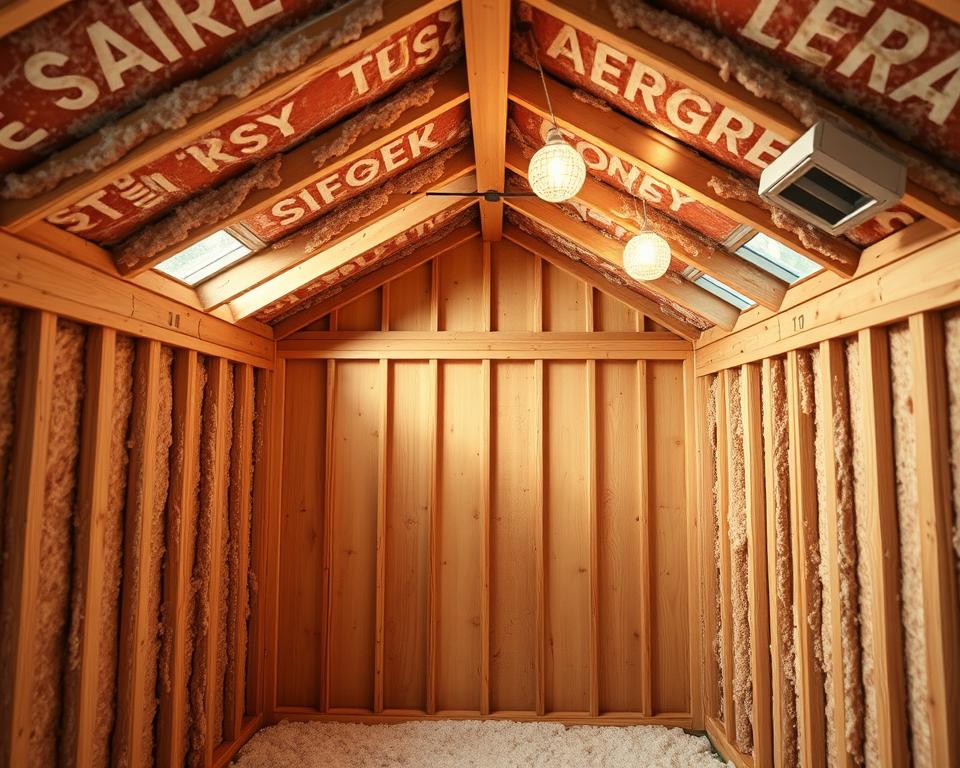
Benefits of Insulation for Preventing Condensation
Insulation raises internal surface temperatures, reducing condensation risk. Without proper thermal barrier protection, cool surfaces attract moisture during temperature drops.
Basic wall lining uses silver-backed bubble wrap. Superior options include closed-cell foam boards like Kingspan or Celotex. These materials feature reflective foil surfaces that improve energy efficiency.
Floor insulation employs rigid PIR boards between joists. Sealing gaps with expanding foam completes the thermal envelope. This comprehensive approach maintains stable conditions throughout the entire area.
Routine Maintenance for a Dry and Secure Shed
A systematic maintenance schedule ensures continued defence against environmental threats. This ongoing process preserves the protective measures already implemented.
Seasonal Inspection and Upkeep
Regular checks throughout the year prevent minor issues from becoming major problems. Each season brings specific maintenance requirements.
In spring, inspect for winter weather damage. Look for cracked paint or warped wood surfaces. Reapply protective treatments as needed.
Summer roof inspections identify gaps before wetter weather arrives. Autumn gutter clearing prevents blockages during heavy rainfall. Winter monitoring watches for internal condensation and leaks.

Repainting every three to five years maintains weather resistance. Promptly repair cracks to prevent water entry. Replace rotten wood immediately to avoid pest infestations.
Clever Storage Solutions for Tools and Equipment
Even well-protected structures require smart storage practices. Proper organisation prevents moisture damage to valuable items.
Use sealed containers, cupboards, or drawers for equipment storage. Silica gel sachets absorb lingering moisture around metal tools. Clean and store items after each use to prevent rust.
Keep the surrounding area clear of garden debris. Sweep leaves away from the building’s base. Maintain effective ground drainage to prevent water pooling.
Regular maintenance extends the life of both the structure and its contents. Consistent care ensures long-term protection.
Conclusion
Maintaining a dry, well-protected garden building is the ultimate goal of effective moisture management. Correctly identifying the type of damp is the essential first step towards implementing the right protection strategies.
A successful approach combines several methods. This includes installing a membrane at the base, ensuring the roof and walls are properly sealed, and providing adequate ventilation.
Using quality materials like treated timber and rustproof metal fixings creates a durable barrier against water and rain. This comprehensive defence protects the entire structure, from the floor to the roof.
It is crucial to remember that this is an ongoing process. Regular checks and maintenance are vital for long-term success. By following these steps, owners can ensure their sheds remain free from moisture damage for years to come.
FAQ
What is the most effective first step in damp proofing a shed?
The most critical first step is ensuring a proper shed base. A solid, raised base prevents ground moisture from seeping into the shed floor. Using a damp-proof membrane or course between the base and the shed structure creates an essential barrier against rising damp.
How can one prevent condensation inside a garden shed?
Condensation occurs when warm, moist air meets cold surfaces. To combat this, improve ventilation by installing vents and consider adding insulation. Insulation helps regulate the internal temperature, reducing the chance of condensation forming on walls and stored items.
Can painting a shed help with damp proofing?
Yes, applying a specialist waterproofing paint or sealant to the shed’s exterior timber or metal walls adds a protective layer. This treatment repels rain and moisture, preventing water from penetrating the material and causing damage over time.
Why is roof maintenance important for a damp-free shed?
The roof is highly exposed to weather. Regular checks for leaks, damaged felt, or loose joints are vital. A well-maintained roof ensures that rain is effectively shed away, preventing water from entering and compromising the building’s interior and stored equipment.
How often should one perform maintenance checks on their shed?
A thorough inspection should be conducted at least seasonally. This process involves checking seals, looking for water damage, and ensuring ventilation points are clear. Prompt maintenance addresses minor issues before they escalate into significant damp problems.