Preparing Your Shed For Strong Winds
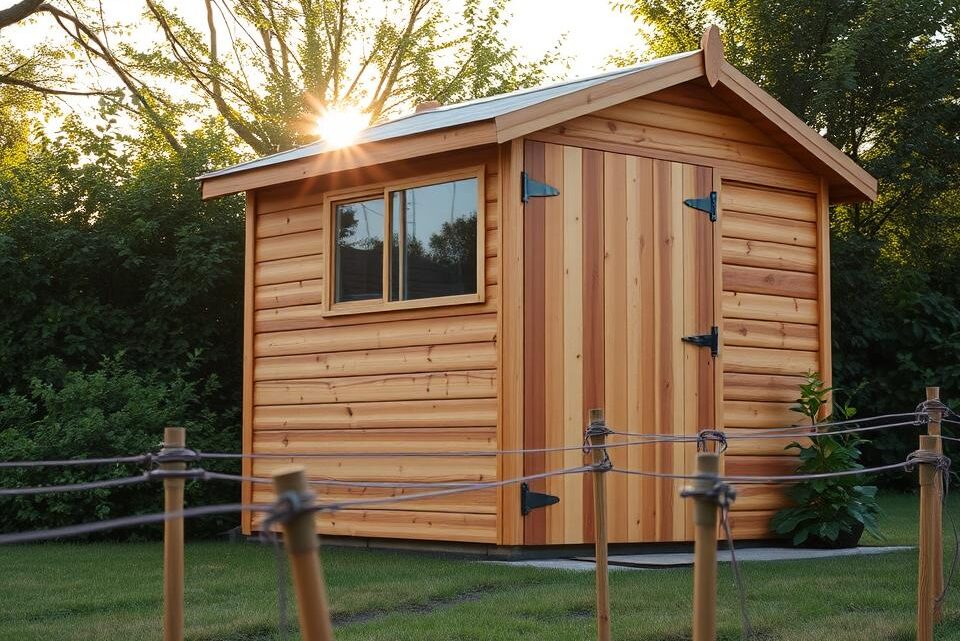
Garden buildings, like sheds, face significant challenges during periods of severe weather. Intense windstorms can rattle structures that are not securely anchored. This harsh weather increases the risk of moisture getting inside and paint peeling away.
These issues can lead to rot, decay, and further surface damage over time. In extreme cases, powerful gusts can lift or tear off parts of the roof. This exposes the interior to rain and causes significant structural compromise.
Proper preparation is not merely optional; it is essential for preserving the building’s integrity. It also protects the valuable items stored within. With the right preventative measures, owners can significantly reduce the risk of wind-related damage.
This guide provides comprehensive, actionable steps for safeguarding these garden assets. It covers everything from structural reinforcement to ongoing maintenance. The goal is to extend the lifespan of these valuable outdoor buildings.
Inhaltsverzeichnis
Key Takeaways
- Garden sheds are highly vulnerable to damage from severe windstorms.
- Neglecting proper preparation can lead to costly structural repairs.
- Moisture penetration and paint peeling are common consequences.
- Securing a shed preserves its integrity and the items inside.
- Proactive measures can significantly extend a building’s lifespan.
- This guide offers practical steps for effective weather protection.
Understanding the Impact of High Winds on Sheds
Wind damage to outdoor buildings begins with forces that many shed owners fail to anticipate properly. The combination of powerful gusts and driving rain creates a perfect storm for structural compromise.
Risks of Structural Damage and Moisture
High winds exert tremendous pressure on garden buildings. This force can lift roofing materials and create gaps where moisture enters.
Once water penetrates, it leads to internal dampness and rot. Wooden components deteriorate rapidly when exposed to sustained wet conditions. The risk of complete structural failure increases significantly.
Weather Conditions and Their Effects
The UK’s colour-coded warning system helps owners gauge potential damage. Yellow warnings (30-40 mph) may cause minor rattling, while amber alerts (40-70 mph) pose serious threats.
Red warnings exceeding 70 mph represent genuine danger. At these speeds, even well-built sheds can be torn from their foundations. Understanding these conditions is crucial for proper preparation.
Many seemingly sturdy structures become vulnerable during severe weather events. Proper anchoring and maintenance are essential defences against wind rain combinations that cause damage shed owners should prevent.
Assessing Your Shed’s Structural Integrity
Before implementing any protective measures, owners must conduct a comprehensive structural assessment. This evaluation helps identify vulnerabilities that could compromise the building during severe weather. Regular maintenance checks save both time and money by catching issues early.
A systematic approach ensures no critical areas are overlooked. Owners should document their findings to create an effective action plan.
Inspecting Anchors and Foundations
The foundation forms the critical support system for any garden building. Owners should examine the base for signs of movement or settling. Lightweight metal structures typically require anchoring for stability.
Check anchor points for wear or corrosion. Make sure all connections remain tight and secure. Any gaps between the shed and its foundation indicate potential problems.
Identifying Areas Needing Reinforcement
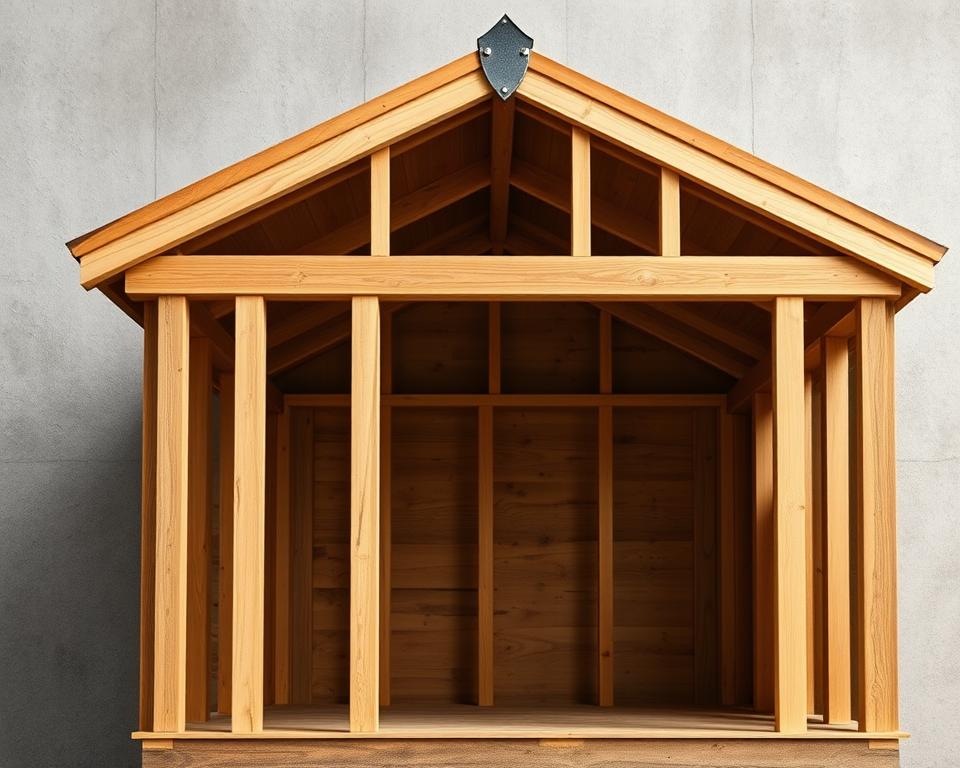
Walls require careful examination for stability issues. Look for warping, cracking, or loose cladding boards that could fail under pressure. The screwdriver test helps detect hidden rot in wooden frames.
Focus particularly on openings around windows and doors. These areas often show the first signs of weather damage. Identifying weak spots allows for targeted reinforcement before storms arrive.
| Inspection Area | What to Look For | Action Required |
|---|---|---|
| Foundation | Uneven settling, gaps | Re-level or secure base |
| Anchors | Loose fittings, corrosion | Tighten or replace anchors |
| Walls | Cracking, warping, loose boards | Reinforce or replace sections |
| Openings | Rot, gaps around frames | Seal or repair openings |
Effective Measures: Preparing Your Shed For Strong Winds
The resilience of outdoor buildings against severe weather conditions hinges on their initial construction standards and ongoing maintenance. A systematic approach to evaluation ensures appropriate protective measures are implemented.

Evaluating Current Shed Stability
Honest assessment begins with examining the structure’s age and previous weather exposure. Owners should consider the original construction quality and material condition. This evaluation determines whether minor adjustments or substantial reinforcement is needed.
Different garden buildings require tailored strategies based on their type and location. The surrounding environment and exposure to prevailing winds significantly impact stability requirements. A well-built shed with proper framing offers better wind resistance from the outset.
Investing in quality materials reduces the effort required for wind protection. Owners should make sure their evaluation considers the entire context, not just the structure itself. This comprehensive approach sets realistic expectations for what preparation can achieve.
Anchoring and Stabilising the Shed Base
Proper base stabilisation forms the cornerstone of effective wind protection for outdoor structures. A solid foundation prevents the entire garden building from shifting or lifting during severe weather events.

Securing with Diagonal Bracing
Diagonal bracing dramatically increases a structure’s resistance to lateral forces. This technique creates triangular support systems within the wall frames.
Owners should install braces from corner to corner across wall sections. This prevents the rectangular shape from distorting into a parallelogram under wind pressure. The bracing distributes loads effectively throughout the entire building.
Levelling the Foundation to Prevent Shifting
A level foundation is essential for maintaining structural alignment. Uneven settling can create weak points where wind forces concentrate.
It’s crucial not to let water pool around the base area. Proper drainage prevents ground softening that undermines stability. Using raised supports like cinder blocks keeps the building elevated above potential moisture.
Owners should make sure their foundation remains perfectly level through regular checks. This simple maintenance step significantly enhances the garden building’s wind resistance capabilities.
Treating and Maintaining Wooden Surfaces
Proper timber maintenance serves as a critical defence against moisture penetration and weathering damage. Untreated wood becomes vulnerable to humidity and standing water, leading to rapid deterioration.

Choosing the Right Wood Preservatives
Oil-based preservatives offer superior long-lasting protection against rot. They require less frequent reapplication than water-based alternatives. Fungicidal options prove essential for damp locations prone to fungal growth.
Selecting quality treatments depends on the timber type, age, and local weather conditions. These products also help prevent paint from peeling during harsh conditions.
Application of Sealants and Polyurethane Treatments
After preservatives dry completely, apply polyurethane sealers in thin, even coats. This technique avoids trapping moisture beneath the surface. Follow manufacturer instructions for drying times between applications.
This layered approach provides deep penetration and surface barriers. Regular maintenance ensures optimal wood protection for many years. Proper treatment maintains structural strength against wind forces.
Sealing Gaps and Weatherproofing Openings
The battle against wind damage is often won or lost at the points where different materials meet. Even minor gaps can allow air pressure to build inside, potentially lifting roofs or stressing walls. A thorough inspection identifies all potential entry points before sealing begins.
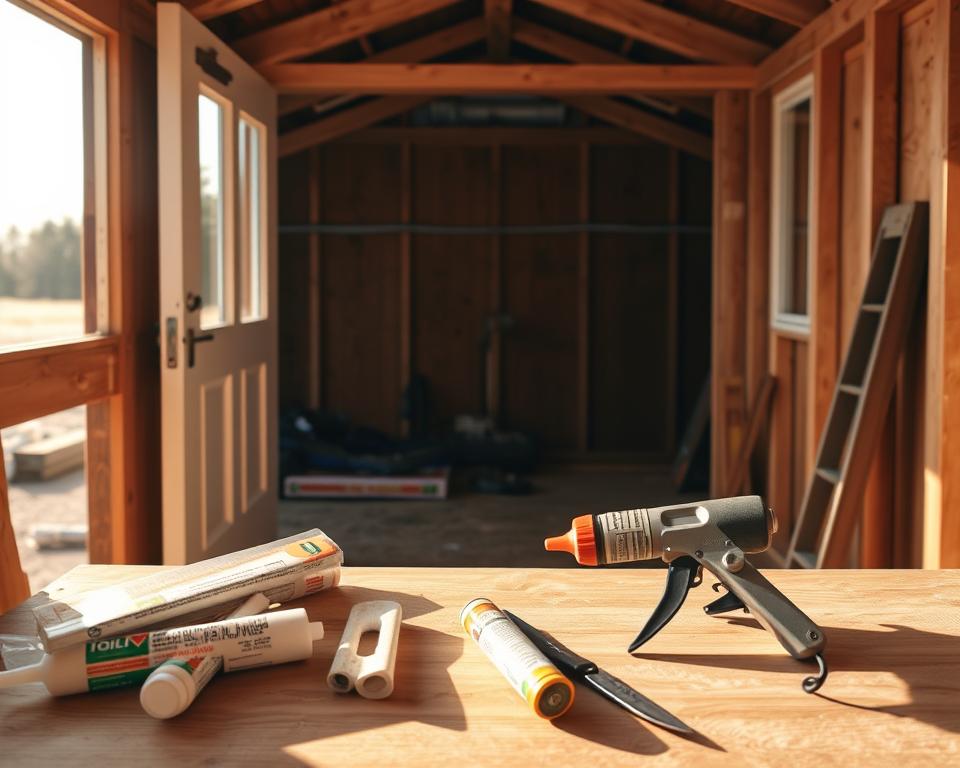
Owners should walk around both the interior and exterior, paying close attention to doors and windows. They need to make sure every opening becomes completely watertight against wind rain conditions.
Installing Weatherstripping Around Doors and Windows
Weatherstripping creates flexible seals around moving components like doors windows. Self-adhesive foam strips work well for minor gaps, while durable rubber or vinyl suits larger openings.
Focus particularly on bottom edges where drafts commonly find their way inside. Proper measurement ensures complete coverage without interfering with operation.
Using Caulk and Expanding Foam for Long-Lasting Seals
For stationary gaps in walls or around frames, builder’s caulk provides a smooth, professional finish. Expanding foam is ideal for larger voids around vents or between the shed and foundation.
Both methods prevent rain penetration while stopping wind from entering underneath the structure. This comprehensive approach protects the shed‘s interior from harmful weather conditions.
Reinforcing the Shed Roof for Wind Protection
When storms approach, the integrity of the roofing system becomes paramount for preserving the entire building. The roof faces the brunt of wind forces and driving rain, making proper reinforcement essential.
This section covers critical steps to prevent damage and ensure long-term protection.
Inspecting Roofing Nails and Felt
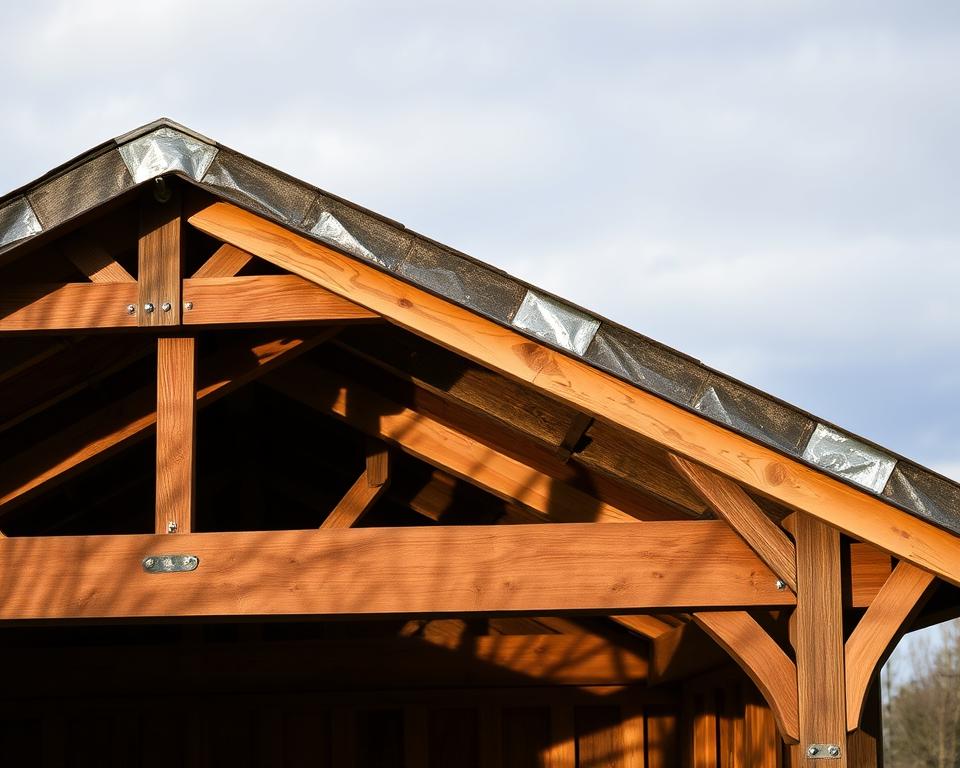
Regular inspection identifies loose fasteners that could compromise the roof structure. Owners should check for nails lifting in the felt material and replace any damaged components.
Tightening loose screws and applying roofing sealant creates a watertight barrier. This prevents moisture from finding its way inside the shed.
Installing Additional Roofing Underlayments and Shingles
Adding underlayment beneath roof felt provides extra defence against water infiltration. Synthetic options offer lightweight toughness, while rubberised asphalt versions with strong adhesive backing deliver reliable performance.
Installing quality shingles on top adds another layer of protection. This approach significantly enhances the shed‘s resistance to wind damage.
Owners should make sure they don’t let water pool on the surface. Proper installation of shingles ensures effective drainage and long-lasting protection for the garden building.
Safeguarding Outdoor Items and Garden Areas
Protecting a garden shed from wind damage extends beyond the structure itself to include the surrounding area. Unsecured items can become dangerous projectiles during severe weather events. Proper preparation of the entire garden space is essential for comprehensive protection.

Securing Loose Garden Furniture and Bins
Common garden items like furniture and wheelie bins pose significant risks during high winds. Lightweight chairs and tables can easily become airborne at surprisingly low wind speeds. Trampolines and parasols require particular attention as they’re especially vulnerable.
Owners should store these items in outdoor buildings or dedicated storage containers before storms arrive. Bin storage containers offer dual benefits – they prevent tipping while keeping gardens looking tidy. This approach prevents items from becoming damaged or causing damage to property.
Arranging the Surrounding Area to Minimise Debris
Strategic placement of garden buildings significantly reduces wind damage risks. Positioning structures away from trees prevents potential damage from falling branches. Maintaining at least a one-metre perimeter around buildings allows proper airflow and maintenance room.
This clearance space helps manage moisture and prevents debris accumulation. It also reduces fire risks and ensures structures can dry properly after rain. Thoughtful garden layout creates a safer environment during severe weather conditions.
Considering the entire garden area when planning wind protection delivers the best results. This holistic approach ensures all potential hazards are addressed before winds intensify.
Ongoing Maintenance and Seasonal Inspections
Regular inspections are the most effective strategy for catching minor issues before they escalate into major repairs. A consistent maintenance schedule ensures garden buildings remain resilient against the UK’s variable weather.
This proactive approach saves significant time and money over the years. It also drastically reduces the risk of catastrophic damage.

Regular Post-Storm Check-Ups
After high winds, a quick but thorough inspection is crucial. Owners should look for displaced roofing felt, new gaps around doors, and any shifting of the base.
Identifying these problems early allows for prompt repairs. This prevents moisture from seeping in and causing hidden rot.
Addressing Signs of Wear, Moisture, and Rot
Seasonal changes in humidity affect timber, making it expand and contract. Look for early warning signs like discolouration, soft spots in the wood, or a musty smell inside the shed.
Addressing these signs promptly preserves the structural integrity of the shed. A simple maintenance schedule can keep garden sheds in excellent condition for many years.
| Season | Key Maintenance Task | Goal |
|---|---|---|
| Autumn | Check seals and roof felt | Prepare for winter storms |
| Spring | Inspect for winter damage & re-treat timber | Address moisture issues |
| After any severe weather | Conduct a full external check | Identify new damage quickly |
Conclusion
A well-protected shed serves as a durable sanctuary for stored items, offering peace of mind during stormy conditions. The comprehensive approach outlined ensures garden buildings withstand Britain’s variable climate.
Implementing these measures extends the lifespan of garden sheds significantly. Proper protection prevents costly repairs and preserves valuable contents. The proactive strategy proves more effective than reactive fixes.
When selecting new garden buildings, consider tongue and groove construction. This interlocking design creates exceptionally sturdy structures. The tight tongue and groove fit minimises gaps where wind and moisture penetrate.
Regular maintenance transforms ordinary sheds into resilient assets. Owners who follow these guidelines equip their garden buildings for whatever weather comes their way. This investment in protection pays dividends for years to come.
FAQ
How can I tell if my shed is at risk from strong winds?
Signs of risk include a wobbly structure, loose roof felt, gaps around doors and windows, and a base that is not securely anchored. Regular inspections help identify these issues before severe weather arrives.
What is the most important step for preparing a shed for high winds?
Securing the base is critical. A shed must be firmly anchored to the ground to prevent it from lifting or shifting. This provides the foundation for all other protective measures against structural damage.
How does weatherproofing help protect a shed from wind and rain?
Weatherproofing seals gaps and applies protective coatings to timber. This prevents moisture from seeping in, which can weaken the wood over time. It also helps the building withstand the force of wind-driven rain during storms.
Can I reinforce the roof of my shed myself?
Yes, many roof reinforcement tasks are suitable for DIY. Checking the condition of roofing felt and ensuring shingles or other materials are securely nailed down are effective ways to improve wind resistance.
How often should I perform maintenance checks on my shed?
It is advisable to inspect the building at least twice a year, typically at the change of seasons. Additional checks should be carried out after any period of severe weather to catch and address damage early.
What should I do with items stored in the shed before a storm?
A> Secure or move loose items inside the room to prevent them from being tossed around. Outdoors, anchor or store garden furniture and bins safely to stop them becoming hazardous debris in high winds.