how to decorate a summerhouse on a budget?

Dreaming of a smart retreat at the end of the garden without blowing your savings? This guide shows you how to achieve a cheap summerhouse makeover with style and substance. You’ll find budget summerhouse ideas tailored to British weather, with materials and methods that stand up to damp, UV and shifting temperatures.
We’ll cover affordable garden room decor step by step: defining your look, colour moves and paint hacks, low-cost garden building styling through upcycling and second-hand finds, and space-savvy furniture that works hard. Expect thrifty outdoor room design tips on textiles, lighting that meets UK safety standards, and simple landscaping flourishes that lift the whole plot.
To keep costs down, we tap reliable retailers such as B&Q, Wickes, Screwfix, IKEA, Habitat and Dunelm, plus Facebook Marketplace, Gumtree, Freecycle and charity shops like British Heart Foundation Home Stores. Where safety counts, we’ll flag IP ratings for lights, moisture-resistant coatings and BS EN 71-3 for finishes on surfaces little hands might touch. These UK summerhouse decorating tips focus on durability, easy upkeep and a clean, cohesive result you can achieve over a weekend.
Inhaltsverzeichnis
Key Takeaways
- Start with a clear look to guide every buy and avoid waste, keeping low-cost garden building styling consistent.
- Use paint and colour tricks to refresh timber fast, choosing moisture-resistant products suited to UK weather.
- Source second-hand first: check Facebook Marketplace, Gumtree and British Heart Foundation Home Stores.
- Pick multi-functional pieces to save space and money, supporting a cheap summerhouse makeover.
- Layer safe, efficient lighting with correct IP ratings for outdoor use.
- Add textiles and plants for warmth and texture to elevate affordable garden room decor.
- Follow UK summerhouse decorating tips that balance thrift with longevity and low maintenance.
Budget-friendly summerhouse style principles
Start with a clear brief to avoid impulse buys and keep a budget interior scheme on track. Decide how you want the space to feel and function, then let every choice serve that aim. This will support a cohesive summerhouse style while keeping spend tight and waste low.
Defining a cohesive aesthetic on a shoestring
Pick a simple concept and stick to it. Coastal works with light woods, stripes and rope; modern rustic leans on pine, jute and black accents; mid-century-lite pairs teak tones with mustard and teal. Use free moodboards in Canva or Pinterest to lock the look before you shop.
Commit to materials that repeat. One timber tone, one metal finish and one woven texture will read as minimalist decor on a budget, yet still feel warm. This restraint builds a cohesive summerhouse style without pricey décor layers.
Choosing a colour palette that stretches your budget
Limit the scheme to three or four hues for a cheap colour scheme UK that still feels refined. Paint walls in one neutral to reduce tins and touch-ups: Dulux “Timeless”, Crown “Soft Grey”, or Leyland Trade “Brilliant White” are reliable choices. Add a single accent on doors or trim for a focal point.
If you love deep tones, aim for a Farrow & Ball “Railings”-inspired shade colour-matched by Valspar at B&Q to save. Keep fabrics within the same family to support the budget interior scheme and make small accessories go further.
Creating zones for lounging, dining and hobbies
Use small space zoning instead of walls. Mark lounging with a compact daybed or futon and a dense rug. For dining, choose a foldaway bistro set that tucks away. For hobbies, try a drop-leaf wall table or neat desk paired with task lighting.
Plan with masking tape on the floor, keeping clear routes of at least 600 mm. Colour blocking—like a half-wall or a painted rectangle behind seating—delivers visual boundaries on minimalist decor on a budget. Light curtains on tension wires can split areas gently while air flows, reducing clutter and damp risk.
how to decorate a summerhouse on a budget?
A clear plan saves time and money. Use an affordable styling sequence to keep work tidy and costs low. This step-by-step summerhouse makeover starts with the shell, then layers comfort and character. The result suits British weather and daily use.
Begin with an audit and deep clean. Check for leaks, rot and mould, then repair before any paint goes on. Fill small gaps with wood filler, seal joints, and confirm trickle vents or window stays work to keep air moving.
Insulate where it counts. Bubble foil or recycled PIR offcuts help on the roof or north-facing walls. Seal edges with aluminium tape for a neat fit. These UK garden room renovation tips boost comfort without heavy spend.
Prime and paint next. Choose moisture-resistant primers for timber such as Zinsser Bulls Eye 1-2-3, or Zinsser B-I-N on knots. Follow with cost‑effective topcoats in a balanced palette that supports a beginner’s budget decor guide.
Upgrade the floor for durability. Paint timber planks with hardwearing porch or floor paint, or roll out a jute rug from IKEA or Dunelm to soften the space. Either route is quick, tidy and wallet-friendly.
Source furniture with purpose. Pick multi‑use pieces first and look second-hand before buying new. Folding tables, compact drawers and stackable seating stretch every metre and pound.
Add textiles for warmth and colour. Choose washable, UV‑resistant fabrics for cushions, throws and curtains. Small changes deliver big comfort in an affordable styling sequence.
Layer lighting for function and mood. Mix solar units, battery lamps and low‑energy mains fittings where safe. This blend supports long evenings without high running costs.
Style the outdoor threshold to keep dirt out. Use planters, a gravel edge and a robust mat. It looks smart and reduces cleaning inside.
Personalise with art that costs little. Print free public‑domain images from The National Gallery or The Met Open Access, then frame with budget options from IKEA, Wilko or The Range.
Set a maintenance rhythm. Ventilate often, use a dehumidifier sachet over winter, and recoat exterior wood preservers as the manufacturer advises. These UK garden room renovation tips protect your work for seasons to come.
Quick checklist to keep you on track:
- Audit, clean, repair, and ventilate
- Selective insulation on cold faces
- Prime timber, then apply value topcoats
- Floor paint or a budget jute rug
- Second-hand, multi-purpose furniture
- Washable textiles for comfort and colour
- Layered solar, battery and safe mains lighting
- Neat threshold with planters, gravel and mat
- Printed art with budget frames
- Simple maintenance plan
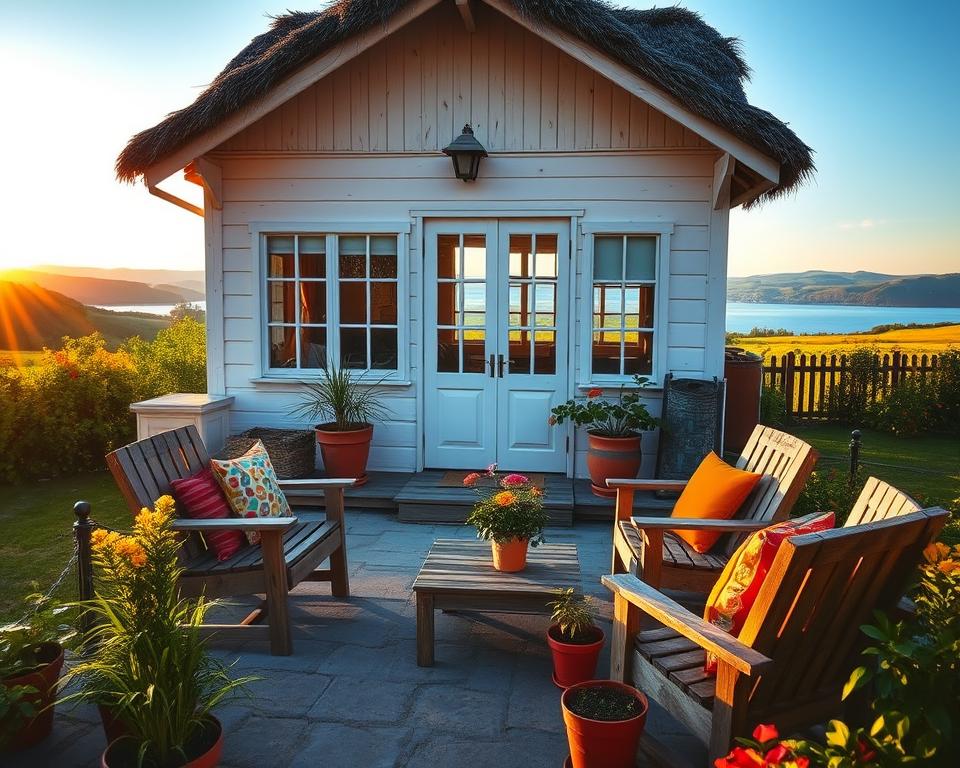
Low-cost colour strategies and paint tips
Stretch your budget with smart colour choices and proven products. Mix subtle tints with bold accents, and match finish to function. Plan for prep, drying times, and recoat cycles to keep your summerhouse looking fresh without overspend.
Best affordable paint finishes for timber and cladding
For fences and sheds, reach for Ronseal One Coat Fence Life, Cuprinol Garden Shades, or Wickes Exterior Shed & Fence when you need cheap exterior wood paint UK that still covers well. These deliver solid colour and are ideal as budget paint for sheds where speed matters.
On higher-spec cladding, a tougher opaque finish like Bedec MSP or Johnstone’s Trade Acrylic Durable Matt gives cleaner lines and longer life. Inside, water-based eggshell or satinwood from Leyland Trade or the Dulux Trade Diamond range offers a wipeable sheen for walls, trims, and built-ins.
Knotty softwood needs sealing first. Use a knot sealer or a shellac-based primer to stop resin bleed that can stain pale tones and spoil the limewash effect or pastel schemes.
Using sample pots, limewash and colour blocking
Make small budgets work harder with simple sample pot hacks. Use tester pots for stencils, picture frames, peg rails, and shelf edges, or to draw a soft arch behind a desk zone. You can define areas without buying extra furniture.
For a gentle limewash effect indoors, dilute matt emulsion with roughly 60–70% water and brush in loose criss-cross strokes. Keep edges feathered so patches blend. Outdoors, only use true mineral limewash on breathable masonry or lime render and follow product guidance.
Try colour blocking: paint the lower third in a darker hue to hide scuffs and steady the space, then leave the upper wall light to keep height. A single deep stripe can link door frames and shelves for a crisp, modern feel.
Protective coatings for durability in British weather
On bare timber, apply a preservative such as Barrettine Premier Wood Preserver before topcoats. In exposed spots, add a clear UV layer—Osmo UV-Protection Oil Extra or Sadolin Extra Durable Clearcoat—to support weatherproof coatings UK and slow fade.
For floors, Ronseal Diamond Hard Floor Paint resists wear indoors, while Blackfriar Anti-Slip Deck Coating helps adjacent decking. Always watch UK humidity and temperature: avoid painting below 10°C or in strong sun, and honour drying intervals to protect any budget paint for sheds or cheap exterior wood paint UK you apply.
Upcycling and second-hand sourcing
Stretch the budget by hunting for Facebook Marketplace bargains UK, Gumtree finds, eBay local pickup gems and freecycle garden furniture. Add in dedicated reuse hubs such as Freegle and charity shop furniture from British Heart Foundation Home Stores, Emmaus and Sue Ryder to keep costs and carbon low.
Favour solid pine, beech and teak. These timbers refinish well and handle knocks in an upcycling summerhouse. Always check joints for wobble, look for woodworm, and confirm pieces sit level on the floor before you buy.
Prep makes the finish. Use 120–180 grit for a light key, then clean with sugar soap. Apply an adhesion primer such as Zinsser 1-2-3 before colour. Durable eggshell or furniture paint works hard in a garden room, and chalk paint alternatives can save money.
For budget colour, try standard matt emulsion sealed with Polyvine Decorators Varnish in dead flat or satin. This pairing, plus simple sanding and varnishing tips, gives a tough, wipeable finish that resists scuffs.
Hardware lifts a piece fast. Swap tired knobs for affordable handles from IKEA, Screwfix or Dowsing & Reynolds clearance. Softly round sharp edges to avoid splinters and make pieces safer for frequent use.
Repurpose with intent. A vintage ladder becomes a blanket rack. Apple crates stack into shelves. A pallet on castors makes a coffee table—choose pallets stamped HT, not MB, for safe indoor-outdoor use.
Refresh seating with outdoor fabric remnants from Dunelm or Fabricland. Staple neatly, then seal cut edges. For counters, source offcuts from kitchen fitters or salvage yards like Enfield Timber or the Community Wood Recycling network.
Source seating, tables and planters as freecycle garden furniture, then refine the look to suit a calm, coastal or cottage scheme. Blend these finds with small new buys to keep the space cohesive and practical.
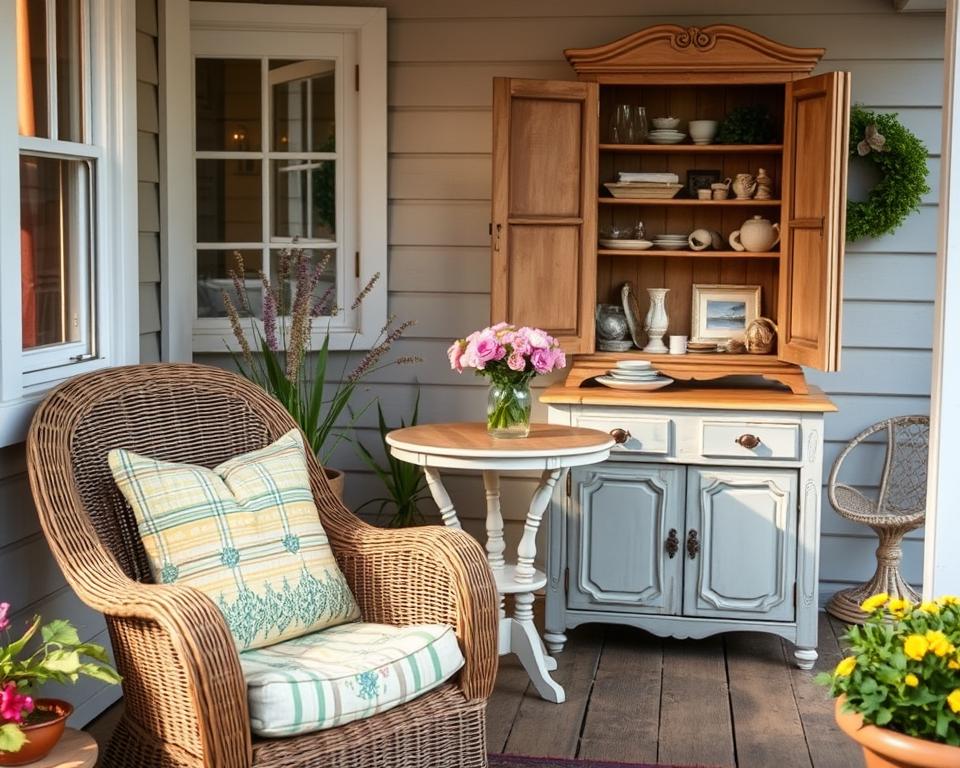
When scanning Facebook Marketplace bargains UK, set alerts for sizes that fit your floor plan, and filter for solid wood. Pair each win with clear sanding and varnishing tips, and lean on chalk paint alternatives to balance style and spend.
Space-saving furniture and layout ideas
Clever planning turns a snug outbuilding into a hardworking retreat. Focus on small summerhouse furniture that folds, stacks, and shifts with your day. A compact garden room layout thrives on light pieces, clear walkways, and smart storage that lifts off the floor.

Foldaway tables, stackable chairs and daybeds
Pick wall-mounted drop-leaf tables like IKEA NORBERG or a gateleg such as IKEA NORDEN. These folding dining sets open for meals, then vanish to free floor space. Stackable chairs from Habitat or IKEA tuck away neatly and handle spills with ease.
A daybed or futon gives lounge comfort by day and a spare bed at night. Keep frames slim and legs raised to aid airflow. This is one of the simplest tiny space hacks for flexible hosting.
Multi-purpose storage benches and ottomans
Look to storage benches UK shoppers rate for lift-up capacity. Stow throws, board games, and hand tools out of sight but within reach. Choose units on legs to reduce floor dampness and make sweeping quick.
Ottomans double as coffee tables and extra seating. Select wipeable fabrics or outdoor-rated textiles to cope with condensation. Blend pieces with modular seating for a tailored fit that adapts as needs change.
Layout tricks for small footprints
Place the largest item against the longest wall to calm the room. Float a small rug to define your main seating zone. Keep a clear diagonal sightline to make the space feel wider.
Use vertical storage: fit shelves above eye level and add Shaker-style peg rails for hats, lanterns, and tools. Maintain 600–750 mm for door swings, and consider sliding hooks for curtains to save precious centimetres in a compact garden room layout. Balance heavier pieces on the shadier side to protect fabrics, and weave in tiny space hacks to keep pathways open.
Textiles and soft furnishings on a budget
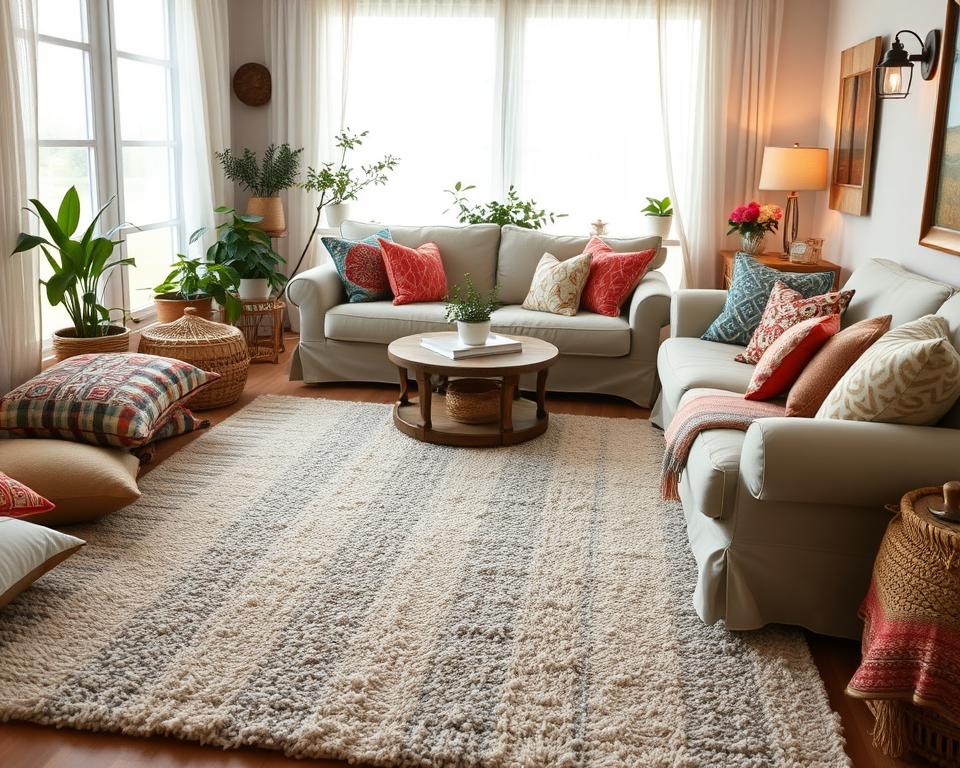
Textiles add warmth fast and for little cost. Start with cheap cushions UK options from IKEA, Dunelm, H&M Home, The Range and George Home. Pick poly‑cotton or recycled polyester covers, and use cushion inners from IKEA or Soho Home clearance. Sew simple envelope covers from remnant outdoor fabrics to resist fading and mildew.
Rugs ground a scheme and soften timber floors. Choose jute or polypropylene flatweaves as affordable rugs that cope with the odd splash. Add anti‑slip underlay to keep the weave steady on smooth boards. Keep patterns to stripes or checks to nod to coastal or country looks without overspending.
For window dressing, aim for comfort and control. Fit thermal curtains summerhouse style to hold warmth in spring and autumn, and consider voile for privacy while keeping daylight. Try Roman blind hacks: a tension rod, cord cleats, and slim dowels slipped into sewn channels make a neat finish on a tight budget.
Layer texture for comfort you can wash. Stock up on washable throws in cotton or fleece; they dry fast and shrug off frequent laundering. Rotate colours to match the palette chosen earlier so the room feels cohesive through the seasons.
Protect soft furnishings from damp. Ventilate daily in cooler months, and place moisture absorbers inside the summerhouse. Outdoor‑rated acrylics and solution‑dyed outdoor fabrics resist mildew, making them smart picks for doors that open to the garden.
| Item | Best Budget Choice | Why It Works | Care Tips | Where to Look |
|---|---|---|---|---|
| Cushions | Poly‑cotton covers + IKEA inner | Low cost, durable, easy to update | Machine wash covers; air the inner | IKEA, Dunelm, H&M Home |
| Rugs | Polypropylene flatweave | Budget‑friendly, copes with damp | Vacuum; spot clean; use anti‑slip | The Range, George Home, Dunelm |
| Curtains | Thermal‑lined panels | Improves shoulder‑season comfort | Regular airing; sponge clean hems | Dunelm, IKEA, H&M Home |
| Blinds | DIY Roman with dowels | Neat look using Roman blind hacks | Hand wash fabric; check cords | Haberdashery remnants, The Range |
| Throws | Cotton or fleece | Cosy layers and washable throws | Machine wash; line dry | George Home, H&M Home, Dunelm |
| Fabrics | Solution‑dyed acrylic | UV stable, mildew resistant | Brush off dirt; mild soap rinse | Fabric outlets, upholstery stores |
Lighting solutions for ambience and safety
Create a warm glow and clear sightlines without blowing the budget. Mix plug-free pieces with robust fittings to suit British weather, and plan a safe cabling summerhouse layout from the start to keep walkways tidy and trip-free.
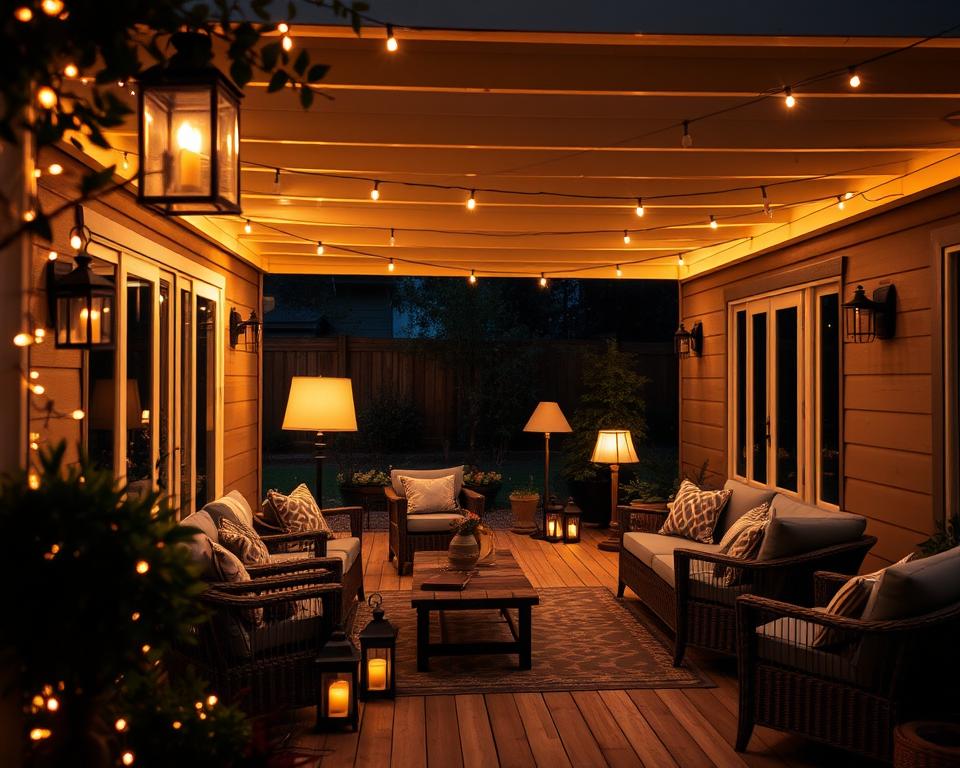
Solar and battery-powered options
Pick trusted brands available in the UK, such as Luceco, Festive Lights and Lights4fun, for reliable solar strings, festoons and stakes. Look for panels that face south and avoid shade, and choose units with replaceable AA or AAA NiMH cells to extend life. Warm-white battery LED lamps at 2700–3000K add cosy tone without wiring or mess.
For gardens, well-placed solar garden lights UK guide paths and borders while keeping running costs low. Where weather exposure is likely, choose IP44 outdoor lighting to resist showers and wind-blown spray.
Layering task, ambient and accent lighting
Layer light to suit every moment. Use a low-watt LED pendant for general glow, then add a focused task lamp for reading or crafts. Finish with subtle accents, such as LED strips under shelves or along skirting, to define depth and texture.
Stick to warm-white bulbs to avoid glare, and consider dimmable lamps with inline dimmers for quick control. This mix delivers low-energy lighting that looks refined yet remains practical during darker evenings.
Fairy lights, lanterns and safe cable management
Indoors, standard fairy lights are fine; outside, select IP44 outdoor lighting or higher for showers. Keep cables off floors with adhesive clips or trunking to support a safe cabling summerhouse plan, and avoid overloading adaptors by using BS 1363 fused plugs.
Lanterns add charm without risk when you opt for LED candles. In damp-prone corners, pick lights with sealed battery compartments and check for corrosion from time to time to preserve performance.
| Use Case | Recommended Type | Key Spec | Why It Fits | Typical Brands |
|---|---|---|---|---|
| Path and border markers | Solar stakes | IP44 outdoor lighting, replaceable NiMH | Zero wiring, charges by day, safe for rain | Festive Lights, Lights4fun |
| Cosy interior glow | Battery LED lamps | 2700–3000K, dimmable option | Warm tone, portable, low-energy lighting | Luceco, Lights4fun |
| General room lighting | LED pendant | Low wattage LED, warm-white | Even ambient layer with minimal running cost | Luceco |
| Reading and crafts | Task lamp | Focused beam, inline dimmer | Accurate light control without glare | Luceco |
| Feature highlights | LED strip | Self-adhesive, warm-white | Accents shelves and nooks with low energy use | Lights4fun |
| Outdoor festoon ambience | Solar or battery festoons | IP44 outdoor lighting, replaceable AA/AAA | Soft, decorative glow with simple install | Festive Lights, Lights4fun |
| Cable safety | Clips, trunking, fused plugs | BS 1363, tidy routing | Promotes safe cabling summerhouse practice | British Standard components |
Affordable outdoor decor and landscaping touches
Set a neat threshold with a sturdy coir doormat and a narrow strip of gravel or bark to catch splashback. A simple run of gravel edging keeps the line crisp and reduces weeds, a mainstay of budget landscaping UK that looks tidy year-round.
Lay a small terrace using reclaimed paving slabs found on Marketplace or at local salvage yards. Bed them on compacted MOT Type 1 or scalpings for a firm finish that drains well. Keep soil and mulch away from timber cladding to prevent rot, and ensure clear drainage all round.
Planters add instant life. Try pallet planters or timber crates lined with landscaping fabric for a thrifty take on upcycled garden decor. If time is tight, pick up cheap planters and spray them with Rust-Oleum Painter’s Touch for a consistent look that withstands British weather.
For container gardening, choose hardy, low-care plants that thrive in the UK. Lavender, hardy geraniums, hebe, carex grasses, and evergreen herbs such as rosemary and thyme bring scent, movement, and colour from spring to autumn.
Add a trellis to soften walls and guide climbers. Star jasmine suits milder spots, while clematis and honeysuckle cope well across much of the country. A weatherproof mirror reflects light and makes a compact plot feel wider without a big spend.
Run IP44 or higher festoon lights under the eaves for safe, warm glow after dusk. Fit a rain chain from the gutter to a water butt to harvest rainwater and add a gentle feature when it pours, a practical touch that complements simple, upcycled garden decor.
Echo interior tones outside for cohesion: a painted exterior in a complementary palette ties the scheme together and flatters planting. Keep paths clear and the base ventilated so timber stays dry and sound.
- Threshold: coir mat plus gravel edging for clean shoes and fewer splashes.
- Terrace: reclaimed slabs on compacted Type 1 for stability on a budget.
- Planting: pallet planters and container gardening with tough, scented species.
- Finishes: cheap planters refreshed with spray paint for a unified look.
- Details: trellis climbers, weatherproof mirror, and rain chain to water butt.
Conclusion
This budget summerhouse makeover summary brings the plan into clear steps. Start with the shell: fix leaks, seal gaps, and add vents for airflow. Tackle damp with a vapour barrier or breathable membranes, then prime timber. Choose a tight brief and a calm colour palette, so every choice pulls its weight.
Use trade-value paints from brands such as Dulux Trade, Johnstone’s Trade, or Ronseal for exterior cladding, and finish with protective coatings that suit British weather. Prioritise second-hand finds and upcycling to stretch value, from solid pine tables to metal stools. Pick foldaway pieces, storage benches, and daybeds to save space, then layer cotton throws, jute rugs, and washable cushions. For lighting, combine solar stake lights, battery lanterns, and LED task lamps, with safe cable management and UK-compliant fittings. These UK garden room styling tips ensure comfort, safety, and style.
Sequence spending for control. Invest first in protection and flooring, then add furniture, textiles, and accessories in phases. Keep an affordable decorating checklist to plan each stage: coatings and floor, key seating, storage, soft layers, lighting, and simple landscaping such as gravel edging or herb planters to frame the building.
Make maintenance part of the routine. Ventilate after use, sweep out grit, and refresh exterior finishes on schedule. Rotate cushions and rugs to share wear, and check seals before winter. Follow this path and you’ll achieve a polished, durable result tailored to UK conditions—practical, good-looking, and within reach. It’s a concise UK garden room styling tips guide and an affordable decorating checklist you can reuse season after season.
FAQ
How do I set a budget-friendly style for a summerhouse without overspending?
Start with a simple brief. Choose one clear concept—coastal, modern rustic or mid-century-lite—and build a small moodboard on Pinterest or Canva. Limit the palette to three or four colours to focus purchases. Use UK neutrals like Dulux Timeless or Crown Soft Grey on walls, then add one accent, such as a Railings-style navy matched via Valspar at B&Q. This keeps cohesion and curbs impulse buys.
Which affordable paints work best for timber and cladding in the UK climate?
For exteriors, look at Cuprinol Garden Shades, Ronseal One Coat Fence Life, or Wickes Exterior Shed & Fence. For tougher opaque coverage, Bedec MSP or Johnstone’s Trade Acrylic Durable Matt perform well. Indoors, water-based eggshell or satinwood from Leyland Trade or Dulux Trade Diamond gives wipeable finishes. Prime knots with a shellac-based primer like Zinsser B-I-N to prevent staining.
How can I zone a small summerhouse for lounging, dining and hobbies?
Use rugs, furniture placement and lighting instead of walls. Anchor lounging with a daybed or futon, add a foldaway bistro set for dining, and fit a compact desk or drop-leaf wall table for hobbies. Try colour blocking—paint a half-wall or a rectangle behind seating—to define areas. Keep at least 600 mm circulation and use tension-wire curtains for soft divisions.
What are the most cost-effective steps to start decorating?
Audit and clean first—fix leaks, treat mould, and improve ventilation. Insulate selectively with bubble foil or recycled PIR offcuts on the roof or north wall, sealing with aluminium tape. Prime with moisture-resistant products like Zinsser Bulls Eye 1-2-3, then topcoat. Refresh floors with hardwearing porch or floor paint, or lay a jute rug from IKEA or Dunelm.
Where can I find budget furniture and decor in Britain?
Search Facebook Marketplace, Gumtree, eBay local pickup, Freecycle and Freegle. Visit British Heart Foundation Home Stores, Emmaus, Sue Ryder and local charity shops. For new, check IKEA, Habitat, Dunelm, B&Q, Wickes, Screwfix and The Range. Prioritise multi-purpose pieces and materials like pine, beech and teak that refinish well.
How do I upcycle furniture so it lasts in a summerhouse?
Lightly sand 120–180 grit, clean with sugar soap, and prime with an adhesion primer such as Zinsser 1-2-3. Topcoat with durable eggshell or furniture paint. For a budget chalk-paint look, use matt emulsion sealed with Polyvine Decorators Varnish. Swap knobs with handles from IKEA, Screwfix or Dowsing & Reynolds clearance. Always check for woodworm and round sharp edges.
What space-saving furniture works well in compact garden rooms?
Choose wall-mounted drop-leaf tables like IKEA NORBERG or a gateleg table such as IKEA NORDEN. Stackable chairs from IKEA or Habitat free up floor space. A daybed doubles as guest sleeping. Storage benches and ottomans add hidden capacity—pick models on legs to aid airflow and reduce damp build-up.
Which textiles are practical for damp-prone, sunny garden rooms?
Use washable, durable fabrics like poly-cotton, recycled polyester, or outdoor-rated acrylics that resist fading and mildew. Shop IKEA, Dunelm, H&M Home, The Range and George Home. Jute or polypropylene flatweave rugs cope with occasional damp—add anti-slip underlay. Thermal-lined curtains boost comfort, and voile keeps privacy with daylight. Ventilate and use moisture absorbers in winter.
How can I create cosy lighting without expensive wiring?
Layer solar and battery-powered lights. Brands like Lights4fun, Festive Lights and Luceco offer reliable solar strings and festoons—aim panels south-facing. Use warm white 2700–3000K LED lamps for ambience. Add LED strips under shelves for accent light. If you install mains power, use a NICEIC or NAPIT registered electrician and ensure RCD protection and correct IP ratings.
Are there safety standards I should follow for paints and electrics?
For lighting and outdoor fittings, check IP ratings appropriate to location and use BS 1363 fused plugs. If wiring, ensure RCD protection and compliant installation. For surfaces children might touch, select finishes that meet BS EN 71-3. Choose moisture-resistant primers and avoid painting below 10°C or in direct strong sun for proper curing.
What budget-friendly ways can improve the exterior and entrance?
Define the threshold with a coir mat and a narrow strip of gravel or bark to control splashback. Lay reclaimed slabs on compacted MOT Type 1. Upcycle crates or pallets into planters and spray budget pots with Rust-Oleum Painter’s Touch. Plant hardy geraniums, lavender, hebe, carex, rosemary and thyme. Add a trellis with climbers, IP44 festoon lights and a rain chain feeding a water butt.
How do I protect wood and finishes against British weather?
Treat bare timber with a preservative such as Barrettine Premier Wood Preserver, then apply your chosen topcoat. In high-exposure zones, use a clear UV-protective finish like Osmo UV-Protection Oil Extra or Sadolin Extra Durable Clearcoat. Plan to recoat every 2–5 years, depending on exposure. For adjacent decking, Blackfriar Anti-Slip Deck Coating adds grip.
Can I decorate the floor cheaply but make it hardwearing?
Yes. Paint timber floors with a durable product like Ronseal Diamond Hard Floor Paint after proper prep and priming. Alternatively, use a polypropylene or jute rug for quick warmth and texture. Keep furniture on felt pads and add a simple doormat outside to reduce grit and wear.
What’s the best way to source low-cost art and frames?
Download public-domain prints from The National Gallery or The Met Open Access. Print at home or via a local print shop, then frame with budget frames from IKEA, The Range or, where available, Wilko. Paint picture frames with leftover sample pots for cohesive colour blocking.
How can I manage condensation and damp on a budget?
Ventilate daily—use trickle vents or prop windows open when weather allows. Seal gaps, add selective insulation, and raise furniture on legs for airflow. Use moisture absorber sachets in winter. Keep clutter minimal and rotate textiles regularly so they dry between uses.
How should I phase spending to keep costs under control?
Invest in the shell first—repairs, preservation, insulation and flooring. Next, paint the interior with trade-value products. Then add multi-functional furniture, followed by textiles and lighting. Finish with outdoor touches and planting. This staged approach spreads costs while delivering visible progress.