Learn How to Insulate a Garden Office for Year-Round Use

A well-insulated garden room transforms from a seasonal retreat into a comfortable, functional space regardless of the weather. In the UK, where temperatures can fluctuate dramatically, proper insulation becomes essential for creating a usable environment throughout the year.
Many homeowners now view these structures as valuable extensions of their living space. They serve as dedicated areas for work, creative pursuits, or simply quiet relaxation. However, without adequate thermal protection, these spaces can become uncomfortably cold in winter and excessively warm in summer.
The process of insulating an outdoor building uses similar materials and techniques to modern house construction. While garden buildings don’t always need to meet full Building Regulations, many professionals follow these standards as best practice. This ensures a high-quality result that stands the test of time.
This comprehensive guide provides practical knowledge for creating an energy-efficient sanctuary. It covers material selection, installation methods, and the critical role of floor insulation. The information empowers both DIY enthusiasts and those working with contractors.
Inhaltsverzeichnis
Key Takeaways
- Proper insulation is fundamental for comfortable year-round use of a garden building
- Quality thermal protection helps maintain consistent temperatures in all seasons
- Modern insulation materials mirror those used in house construction
- A well-insulated space can significantly reduce energy consumption
- Floor insulation is a critical, often overlooked component
- Following Building Regulation guidelines ensures a professional standard
- An insulated garden room adds genuine value to your property
Understanding the Importance of Insulation in Garden Offices
Thermal regulation stands as the cornerstone of any functional outdoor workspace. These structures face unique challenges compared to main buildings. Their construction often involves lighter materials with less inherent thermal mass.
Key Benefits and Energy Efficiency
Proper thermal management delivers multiple advantages. It significantly reduces energy consumption throughout the year. This leads to lower utility bills and environmental impact.
The table below illustrates the seasonal benefits of adequate thermal protection:
| Season | Thermal Challenge | Insulation Benefit | Energy Impact |
|---|---|---|---|
| Winter | Heat loss through walls and floor | Retains internal warmth | Reduces heating needs by up to 30% |
| Summer | Solar heat gain and overheating | Reflects external heat | Minimises cooling requirements |
| Year-round | Temperature fluctuations | Maintains stable conditions | Consistent energy efficiency |
Impact on Comfort and Year-Round Usability
Beyond energy savings, thermal protection enhances occupant comfort. It prevents condensation and mould growth. This creates a healthier environment for extended use.
The acoustic properties of insulation materials provide additional benefits. They reduce external noise intrusion significantly. This transforms the space into a peaceful retreat regardless of external weather conditions.
How to Insulate a Garden Office: Choosing the Right Materials
Material selection plays a pivotal role in determining the year-round performance of outdoor structures. The right choice balances thermal efficiency, cost, and installation requirements.

Types of Insulation Materials
A wide range of insulation materials exists for construction projects. Rigid insulation boards remain the most popular choice due to their excellent performance-to-thickness ratio.
These boards include various types like extruded polystyrene and polyisocyanurate. Eco-friendly options like sheep’s wool and recycled plastic bottle material appeal to environmentally conscious builders.
| Material Type | Common Applications | Performance Level | Installation Complexity |
|---|---|---|---|
| Rigid Boards (PIR/PUR) | Walls, floors, roofs | High efficiency | Moderate |
| Mineral Wool | Wall cavities | Good | Easy |
| Spray Foam | Complex spaces | Superior | Professional required |
| Natural Materials | Eco-projects | Variable | Specialist |
Comparing U-Values and Material Thickness
Insulation performance is measured by U-values, indicating heat transfer rates. Lower values signify better thermal resistance.
“Understanding U-values helps builders select the most efficient material for their specific requirements.”
Different types require varying thicknesses to achieve equivalent performance. For instance, 50mm of rigid foam board might match 150mm of fibreglass.
This comparison demonstrates why thickness alone doesn’t determine effectiveness. The diverse range of available materials allows for tailored solutions based on specific project needs.
Design Considerations for Insulated Garden Offices
Building design choices establish the foundation for thermal efficiency in garden office structures. The architectural approach determines how insulation integrates into the overall construction.

Timber Frames versus Structural Insulated Panels
Traditional timber frame construction creates voids within the wooden framework. These spaces can accommodate various insulation materials. However, timber studs interrupt the insulation layer, potentially creating cold spots.
Structural insulated panels (SIPs) offer a modern alternative. These panels feature insulation as an integral component. This creates a continuous thermal envelope around the entire building.
SIP construction typically avoids the thermal bridging issues found in timber frames. The uninterrupted insulation layer provides more consistent performance. Many suppliers now use house-quality SIPs with rigid insulation cores.
Integrating Insulation in Walls, Roof, and Floor
Comprehensive thermal protection requires attention to all building elements. The walls, roof, and floor must work together as a complete system.
Log cabin style structures present unique challenges. Their interlocking timber design forms both exterior and interior wall finishes. This leaves no cavity for additional insulation materials.
Rigid insulation boards serve as key components in high-performance systems. When evaluating SIP-built options, inquire about the insulation core type. Superior polyurethane or polyisocyanurate cores deliver better thermal performance despite higher costs.
Installing Insulation in Your Garden Room
Proper installation techniques separate successful garden room projects from problematic ones. The process follows a logical sequence that ensures comprehensive thermal protection.

Wall insulation forms the foundation. Materials must fit snugly between studs without gaps. Complete coverage prevents thermal bridging and maintains efficiency.
DIY Installation Tips and Safety Precautions
Homeowners undertaking this project should begin with accurate measurements. Calculating material quantities prevents waste and ensures proper coverage.
Safety remains paramount during installation. Protective gear like gloves and masks is essential. Some materials can irritate skin and respiratory systems.
The roof requires special attention as heat rises. Insulation placed between rafters or above ceilings significantly reduces energy loss. This area often delivers the greatest impact.
Floor installation completes the thermal envelope. Boards beneath flooring create a barrier against ground cold. This ensures comfort throughout all seasons.
The Role of Professional Installation
While many aspects suit DIY approaches, some situations demand professional help. Spray foam applications require specialised equipment and expertise.
Common mistakes can undermine even well-planned projects. These include inadequate sealing around openings and using inappropriate underlays. Proper moisture barriers are equally crucial.
Doors and windows represent frequent weak points. Weather stripping and draught excluders complement wall and roof work. Together they create truly efficient spaces.
The Role of Underlay in Garden Office Floor Insulation
Floor insulation is often the most neglected aspect of creating a comfortable garden room. Heat loss through the floor can be just as significant as through walls or the roof. Both timber bases and concrete slab foundations allow warmth to escape downward without proper thermal protection.
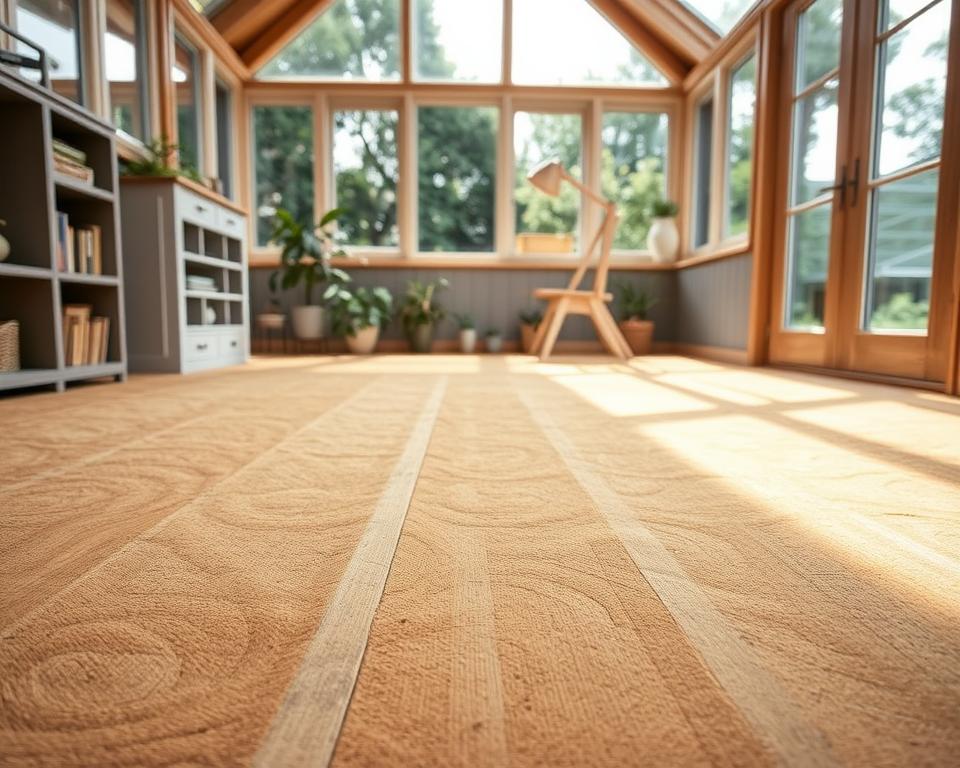
A high-quality underlay serves multiple functions. It provides thermal resistance, with higher tog ratings offering better performance. Underlays with a tog rating of 2.5 or above make a noticeable difference in retaining heat.
Choosing High-Tog Underlay Options
Modern underlays also incorporate built-in damp-proof membranes. This creates a crucial moisture barrier, preventing dampness from rising and damaging the flooring material. It is especially important for timber-based structures.
For carpeted floors, PU foam underlays made from recycled materials offer excellent insulation. Products like Carpenter Deep Step boast tog ratings over 3.0. For laminate or wood flooring, dense foam or rubber underlays with foil backing are ideal.
Step-by-Step Underlay and Rigid Insulation Methods
The process begins by assessing the subfloor. This determines if additional rigid insulation boards are needed. For maximum thermal performance, a layer of boards like Celotex can be fitted between floor joists.
Seal any gaps with foil tape to prevent heat loss. Then, roll out the chosen underlay, ensuring complete coverage with minimal gaps. Tape the seams for a continuous barrier.
Properly installed, this system creates a warm, comfortable surface. It enhances the usability of these spaces throughout the year, reducing energy costs and protecting the flooring.
Conclusion
Successful garden room projects demonstrate that insulation quality directly impacts long-term usability and comfort. While the initial investment in high-quality materials may seem substantial, the energy savings and year-round functionality create genuine value for any home.
Comprehensive coverage across walls, roof, and floor ensures consistent thermal performance. Focusing on U-values rather than thickness alone helps homeowners make informed choices about insulation materials.
Properly executed, these spaces become comfortable extensions of living areas. They serve as functional office environments or peaceful retreats regardless of external conditions. The result is a valuable addition to any property that delivers comfort and efficiency for years to come.
FAQ
What are the primary benefits of insulating a garden office?
Proper insulation offers significant advantages, including enhanced energy efficiency that reduces heating costs. It also ensures consistent comfort, making the space usable throughout the year, even during cold winters or hot summers.
Which insulation materials are best suited for a garden room?
Common choices include rigid insulation boards like PIR (polyisocyanurate) foam and mineral wool. The best material often depends on the project’s specific requirements, such as desired U-values and available space for material thickness.
How does material thickness impact a garden office’s insulation?
Generally, greater thickness improves thermal performance by providing a more robust barrier against heat loss. However, it is crucial to balance thickness with the building’s design to avoid compromising interior space.
What is the difference between timber frame and SIPs construction for insulation?
A traditional timber frame allows for insulation to be fitted between the studs. Structural Insulated Panels (SIPs), conversely, are prefabricated with a foam core, offering high thermal efficiency and a faster construction process.
Can I install the insulation in my garden building myself?
A DIY installation is possible for those with relevant skills, particularly when working with timber frames. However, for complex projects or materials like SIPs, professional installation is recommended to ensure a continuous thermal barrier and weatherproof construction.
What role does underlay play in floor insulation?
A high-tog underlay acts as an additional thermal layer, reducing cold transfer from the ground. It works in conjunction with rigid foam boards to create a comfortable, energy-efficient floor, crucial for year-round use.
Why is preventing moisture and condensation so important?
Moisture can lead to damp, mould, and structural damage, compromising both the building’s integrity and indoor air quality. Effective insulation, coupled with a suitable vapour barrier, is essential for managing condensation.