How to Insulate a Shed Floor: A Step-by-Step Guide
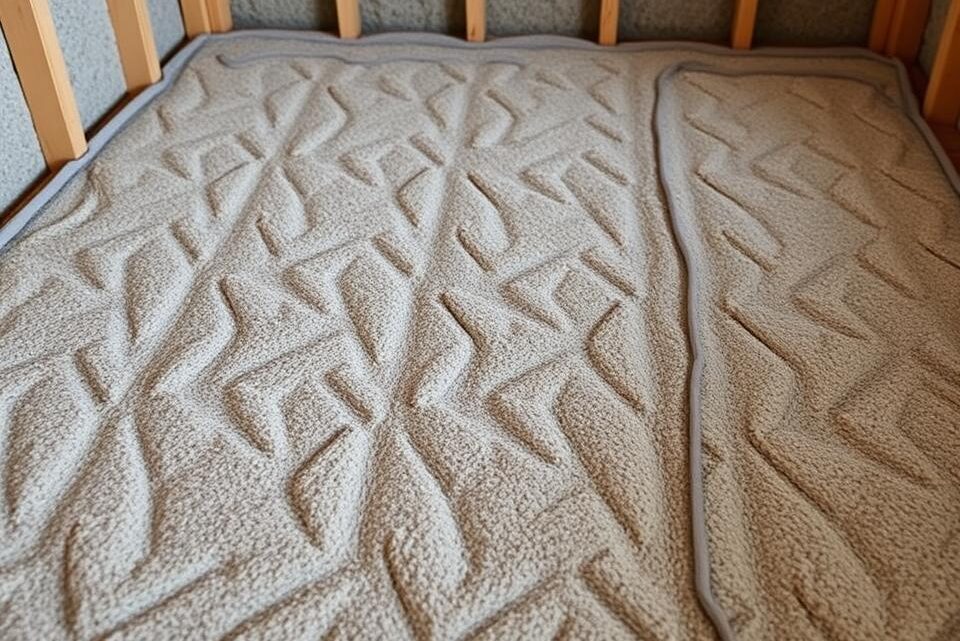
Many garden sheds remain underutilised spaces, becoming unbearably cold in winter and stiflingly hot in summer. This temperature fluctuation limits their potential as a functional workshop, a quiet home office, or secure storage. A primary reason for this discomfort is heat loss directly through the ground.
This guide offers a clear path to transforming an ordinary garden building. It provides expert knowledge on creating a comfortable, year-round environment. The process involves understanding the principles of thermal management, selecting appropriate materials, and executing the installation with precision.
By addressing the shed floor, homeowners tackle a significant source of energy waste. The right approach ensures the space remains warm in colder months and cool during the summer. This upgrade adds considerable value and versatility to any garden structure.
Readers will discover practical techniques suitable for various foundation styles and budgets. The guidance is based on industry best practices, helping to avoid common pitfalls. Achieving a professional, energy-efficient result is the ultimate goal.
Inhaltsverzeichnis
Key Takeaways
- Proper insulation turns a basic shed into a comfortable, usable space throughout the year.
- Heat loss through the ground is a major factor in an uninsulated garden building.
- Selecting the correct materials is crucial for effective thermal performance.
- Thorough preparation of the structure is essential before beginning the installation.
- Following a systematic process helps avoid mistakes and ensures a durable finish.
- This upgrade enhances the shed’s functionality, whether for work, storage, or leisure.
Understanding the Importance of Shed Insulation
Transforming a simple garden shed into a comfortable, year-round space hinges on a single, critical principle: effective insulation. This process is not merely about adding material; it is about creating a controlled environment. Proper thermal management addresses fundamental issues like heat loss and moisture control.
Success depends on careful planning before any work begins. Homeowners should answer key questions about their structure’s condition. This preparatory stage ensures the investment in materials delivers long-term performance and value.
Key Considerations Before You Begin
A thorough inspection is the first step. Check the integrity of windows and doors, as damaged seals allow heat to escape. Examine the roof and floor for any leaks, paying close attention to corners.
Persistent moisture can ruin insulation and lead to mould. Identifying and sealing gaps in the walls with a weatherproof product is also essential. This creates a tight envelope that maximises efficiency.
The shed’s intended use dictates the approach. A space for basic storage has different needs than a home office. Occupied sheds generate humidity and require a breather membrane to manage condensation.
Managing moisture is not an optional extra; it is fundamental to preserving the structure and the effectiveness of the insulation.
Benefits of a Well-Insulated Shed
The advantages of a properly insulated garden building are significant. It maintains a stable temperature, making it usable in all seasons. This comfort turns a basic shed into a versatile workshop or studio.
Energy costs for heating or cooling are reduced, adding to the long-term savings. The upgrade also increases the property’s overall functionality and appeal. A well-executed project avoids common pitfalls and ensures lasting results.
How to Insulate a Shed Floor
Addressing thermal loss through the ground represents a crucial step in enhancing any garden building’s comfort. This approach creates a thermal barrier that prevents significant heat escape during colder months.
Overview of the Insulation Process
The method chosen depends largely on whether the structure already exists or is in planning stages. Each approach offers distinct advantages for different situations.
For existing garden buildings, installers typically add insulation layers above the current flooring. This reduces internal headroom but provides effective thermal protection. Alternatively, access from underneath may be possible if the structure is raised.
| Installation Method | Access Requirements | Headroom Impact | Complexity Level |
|---|---|---|---|
| Existing Shed – Top Layer | Direct floor access | Reduces height | Moderate |
| Existing Shed – Underneath | Raised foundation needed | No reduction | High |
| New Construction | During build phase | No reduction | Low |

Most techniques involve fitting material between floor joists at regular intervals. The insulation is then covered with protective sheeting like plywood. This creates a stable surface while safeguarding the thermal layer.
The entire project typically requires several hours to a full day. Understanding this timeframe helps homeowners allocate sufficient time and prepare for the physical demands involved.
Exploring Insulation Materials and Options
A diverse range of insulation products is available on the market, each designed with specific properties. The choice of material significantly affects thermal performance, moisture control, and installation complexity. Homeowners must weigh these factors carefully.
Insulation Boards, Batts and Foams
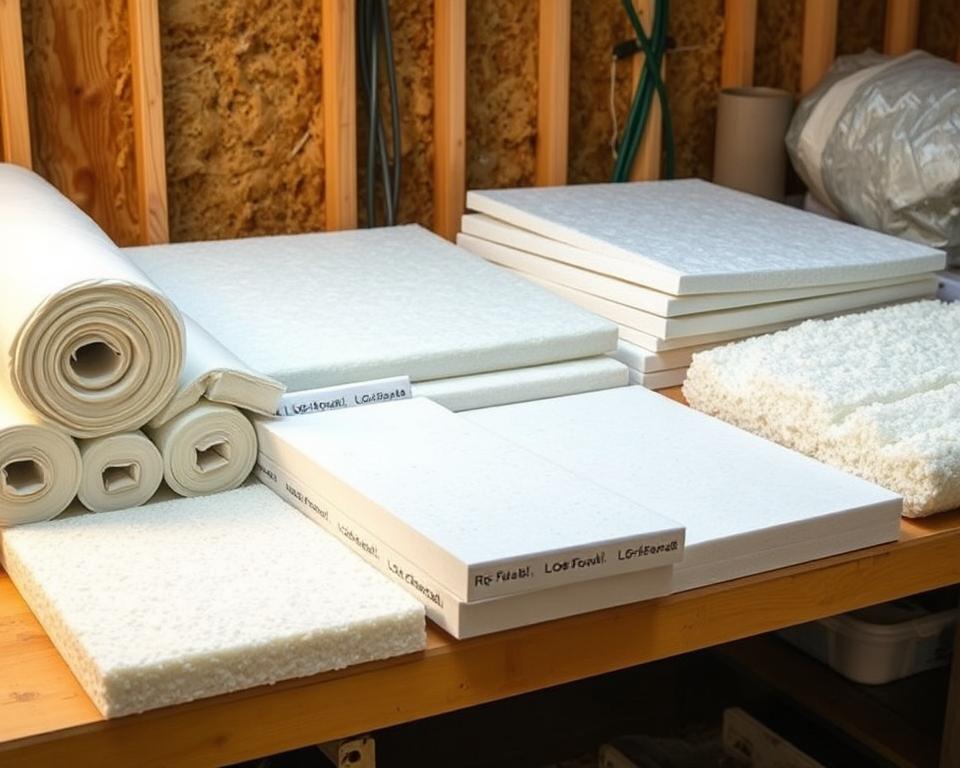
Fibreglass and mineral wool batts are common, budget-friendly options. They come in various R-values but are vulnerable to moisture damage. A vapour barrier is essential.
Rigid foam boards, including PIR, offer excellent moisture resistance. They maintain their shape over time, providing reliable long-term performance. Their cost is typically higher.
Spray foam creates a seamless, gapless layer with superior insulating properties. This option often requires professional installation and can be more disruptive to existing structures.
Eco-Friendly and Natural Insulation Choices
For those seeking sustainable solutions, natural materials present compelling alternatives. Sheep’s wool provides good thermal performance and naturally manages humidity.
Wood fibre boards are another renewable option. They can be cut to size easily and fitted between joists. These materials appeal to environmentally conscious homeowners.
| Material Type | Moisture Resistance | Installation Ease | Relative Cost |
|---|---|---|---|
| Mineral Wool | Low | Easy | Low |
| Rigid PIR Boards | High | Moderate | Medium |
| Spray Foam | High | Difficult | High |
| Sheep’s Wool | Good | Easy | Medium |
Selecting the right material depends on budget, climate, and project specifics. Understanding each option’s strengths and limitations leads to an informed decision.
Preparing Your Shed for Insulation Work
Before embarking on the installation process, a thorough assessment of the shed’s foundation and condition is essential. This preparatory phase determines the project’s complexity and required approach.
Assessing the Shed Structure and Foundation
The first consideration is whether the garden building already exists or is in planning stages. Existing structures often require floorboard removal for access underneath. New construction allows easier integration during the build phase.
Foundation type significantly influences the method. Concrete slab foundations may need the entire shed lifted. Raised wooden foundations provide convenient cavity access. Homeowners should examine joist spacing, typically 16 inches or 40 centimetres on centre.
Essential Tools, Safety Measures and Pre-Installation Tips
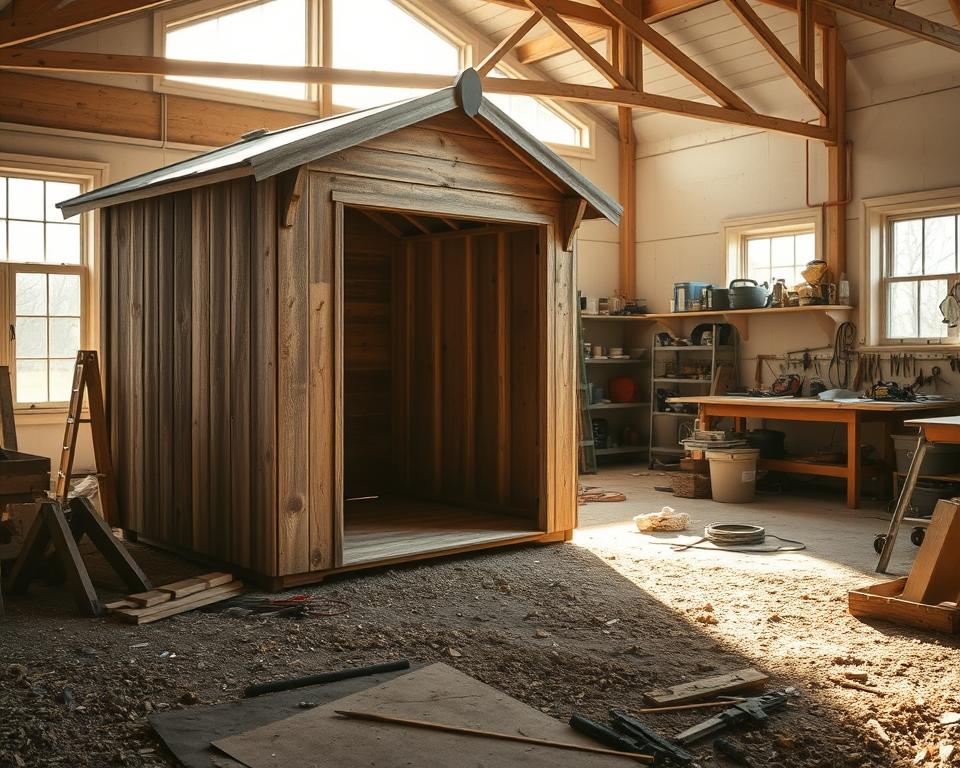
Gathering the right equipment prevents delays. Essential tools include a tape measure, straight-edge, utility knife, and safety glasses. A pry bar helps with floorboard removal if needed.
Safety is paramount when working with insulation materials. Protective gloves and a respirator prevent skin irritation and respiratory issues. This is especially important in confined crawl spaces.
| Foundation Type | Access Method | Preparation Required | Difficulty Level |
|---|---|---|---|
| Concrete Slab | Top-layer or shed lifting | Complete clearance | High |
| Raised Wooden | Underneath access | Floorboard removal | Moderate |
| New Construction | During build phase | Planning integration | Low |
Pre-installation involves clearing the entire area and addressing moisture issues. Sealing gaps in walls ensures optimal performance. Proper planning streamlines the entire DIY project.
Step-by-Step Insulation Process
Executing the physical installation requires a methodical approach to ensure a durable and effective thermal barrier. This phase transforms preparation into a tangible upgrade for the garden building.
Following a logical sequence prevents errors and guarantees optimal performance from the chosen materials. Each action builds upon the previous one to create a complete system.
Installing the Insulation Between Floor Joists
The initial step involves gaining clear access to the cavity between the structural supports. For raised foundations, this may mean working from underneath with adequate lighting.
Installing wooden support blocks between the joists provides critical backing. This prevents the material from sagging over time, maintaining consistent thermal performance.
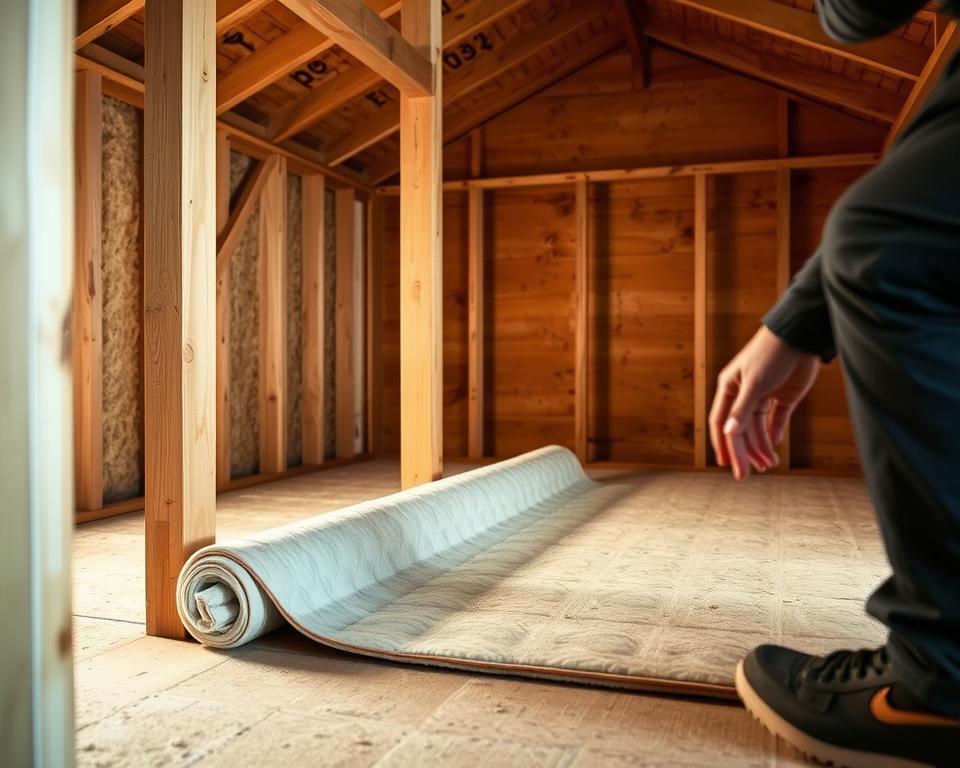
Precise measurement of the cavity’s width and depth is essential. Cutting the boards or batts to fit snugly eliminates gaps that create thermal bridges. A friction-fit is often sufficient for batt materials.
Sealing any remaining cracks with expanding foam is a vital final touch. This action blocks air leakage, significantly enhancing the overall effectiveness of the insulation layer.
Finishing Touches: Covering with Plywood or OSB
Once the cavity is fully insulated, a protective covering is installed. This layer safeguards the material from damage and provides a stable walking surface.
Sheets of plywood or OSB are cut to size and securely fastened to the joists. This completes the thermal envelope and prepares the space for its intended use.
For installations accessed from below, a protective screen wire may be stapled over the exposed insulation. This deters pests while maintaining necessary breathability.
| Shed Foundation Type | Primary Access Method | Key Consideration |
|---|---|---|
| Raised Wooden | From underneath | Install support blocks, use screen wire |
| Concrete Slab | From above (top-layer) | Measure headroom loss, seal perimeter |
| New Construction | During build phase | Integrate vapour barrier, no access issues |
Optimising Energy Efficiency and Moisture Control
Achieving optimal thermal performance in a garden building requires looking beyond just floor insulation. The complete thermal envelope includes walls, roof, windows, and doors. Each component contributes to overall energy efficiency.
Proper moisture management is equally vital. It prevents structural damage and maintains healthy air quality. These elements work together to create a comfortable, durable space.
Enhancing Ventilation and Thermal Mass
Effective ventilation balances heat retention with fresh air circulation. Passive vents or louvres provide continuous airflow. This prevents moisture buildup from daily activities.
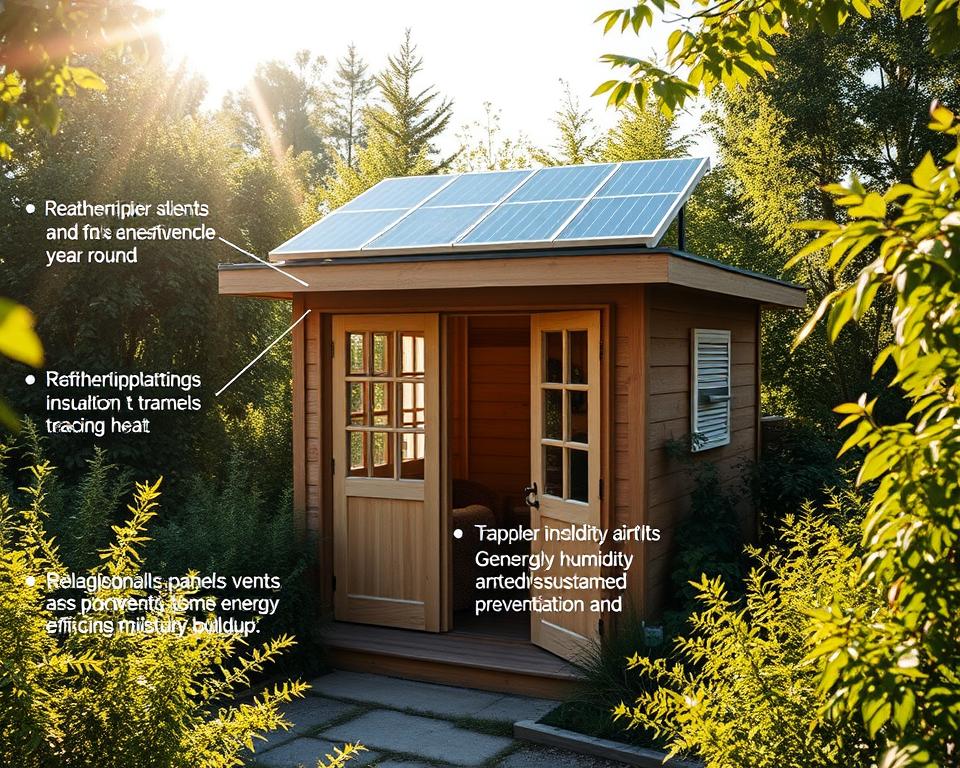
Thermal mass materials like concrete or brick stabilise internal temperature. They absorb excess warmth during the day. Then release it gradually at night.
Strategic placement maximises benefits. Position these materials in sunlit areas. This approach reduces temperature fluctuations significantly.
Upgrading Windows, Doors and Sealing Gaps
Windows and doors are common weak points in the thermal envelope. Energy-efficient glazing and insulated doors minimise heat transfer. Weather stripping eliminates drafts effectively.
Regular inspection identifies potential issues early. Check for gaps around roof joints and service entries. Prompt repairs maintain long-term performance.
Combining these strategies creates synergistic benefits. The result is a truly energy-efficient garden structure suitable for year-round use.
Conclusion
Completing a shed floor insulation project yields substantial rewards that extend well beyond immediate comfort improvements. This enhancement transforms an underutilised garden structure into a versatile space suitable for year-round use.
The systematic approach outlined ensures professional results, even for those new to such projects. Careful planning and methodical execution are essential for long-term thermal performance.
While the work demands physical effort, the benefits justify the investment. Consistent temperatures and reduced energy costs provide ongoing returns. The skills gained also transfer to other home improvement endeavours.
Attention to detail in sealing gaps and managing moisture determines the final outcome. With proper installation, this upgrade delivers decades of reliable performance, continuously enhancing the structure’s value.
FAQ
What is the best insulation for a shed floor?
The best material often depends on the project. Rigid insulation boards like Kingspan or Celotex offer excellent thermal efficiency and moisture resistance. For a more natural solution, sheep’s wool batts are an effective eco-friendly choice. The ideal type must suit the shed’s primary use and local climate.
Can I insulate a shed floor without removing the existing floor?
It is possible but generally less effective. The most thorough method involves accessing the space between the joists from below. If lifting the floorboards is not an option, adding a layer of insulated plasterboard on top is a potential solution, though it will raise the floor level.
How does floor insulation prevent damp and moisture damage?
Proper insulation creates a thermal barrier, reducing condensation that leads to damp. Using moisture-resistant materials like PIR boards and incorporating a vapour barrier are critical steps. Good ventilation underneath the structure is also vital for managing air flow and preventing moisture buildup.
Is it necessary to insulate the walls and roof as well?
For a space used year-round, insulating the entire structure is highly recommended. Heat rises, so a significant amount can be lost through an uninsulated roof. Addressing the walls and roof alongside the floor ensures maximum energy efficiency and a stable internal temperature.
What tools are essential for this DIY project?
Key tools include a tape measure, a utility knife for cutting insulation boards, a saw for plywood, a staple gun for fixing vapour barriers, and safety equipment like gloves and goggles. Having a spirit level to ensure a flat surface for the final floor layer is also important.
How much does it cost to insulate a shed floor?
Costs vary based on the shed’s size and the materials selected. Rigid foam boards typically represent a mid-range option, while natural wool may be more expensive. The project is generally affordable, especially when considering the long-term benefits for storage or use as a garden office.