How to Keep Mice Out of Your Shed: Proven Methods

Garden sheds often become prime targets for unwelcome visitors. These structures provide quiet, sheltered spaces that appeal to various pests seeking refuge. The appeal lies in the undisturbed environment, warmth, and accessible nesting materials.
Rodents like mice can squeeze through remarkably small openings. Even gaps as narrow as a pencil’s width serve as potential entry points. This vulnerability makes sheds particularly susceptible to infestation problems.
A single mouse can quickly escalate into a significant pest issue. These creatures cause damage to stored tools and contaminate supplies. Their presence creates health hazards through droppings and urine contamination.
Proactive pest control measures prove more effective than reactive responses. Understanding shed vulnerabilities forms the foundation for successful prevention. This approach protects both property and health from rodent-related problems.
Comprehensive strategies address identification, sealing methods, and maintenance considerations. Seasonal factors also influence pest control effectiveness in outdoor structures.
Inhaltsverzeichnis
Key Takeaways
- Sheds attract pests due to their sheltered, undisturbed nature
- Mice can enter through surprisingly small gaps and openings
- Even minor infestations can cause significant damage and contamination
- Proactive prevention proves more effective than reactive solutions
- Understanding structural vulnerabilities is crucial for control
- Seasonal changes affect pest behaviour around garden structures
- Consistent maintenance forms the basis of successful protection
Understanding the Pest Problem in Sheds
Recognising the early warning signs of an unwelcome presence is the first step towards protecting a garden shed. Swift identification allows for timely action, preventing a minor issue from escalating.
Several clear indicators suggest rodents have moved in. Look for small, dark droppings near corners and entry points. Chewed materials, such as cardboard boxes or fabric, are another common giveaway.
Common Signs of Mice and Other Rodents
Beyond droppings and gnaw marks, nests made from shredded paper or insulation signal a mouse or rat problem. A persistent, unusual odour, often musty or resembling ammonia, can also indicate their presence.
These pests are not subtle. They leave behind clear signs of their activity, from bite marks on wooden beams to damaged electrical wiring.
Impact of Infestations on Shed and Property
An infestation causes more than just a nuisance. Rodents gnaw on structures and contents, leading to significant damage. Chewed wires pose a serious fire hazard.
Contamination is a major concern. Droppings and urine can soil stored items and create health risks. Other pests like termites or wasps can also cause their own unique damage.
| Pest | Key Sign | Primary Risk |
|---|---|---|
| Mice/Rats | Droppings, gnawing | Structural damage, fire hazard |
| Termites | Hollow-sounding wood | Severe structural compromise |
| Wasps | Nests in eaves | Painful stings, aggression |
Recognising the Entry Points and Vulnerabilities
A thorough inspection of a shed’s structure reveals numerous weak spots that rodents can exploit. These entry points often go unnoticed until signs of infestation appear. Regular examination helps identify these vulnerabilities before they become problems.
Identifying Cracks, Gaps and Openings
Mice possess remarkable flexibility. They can squeeze through openings as narrow as a pencil width. This ability makes even the smallest gaps potential entry points.
Common problem areas include spaces around doors and window frames. Cracks in walls and foundations provide easy access. Roof holes and spaces where pipes enter the structure are also vulnerable.

Assessing Clutter and Unsuitable Storage Areas
Cluttered spaces create ideal nesting conditions. Stacks of cardboard boxes and piles of fabric offer perfect hiding spots. Floor-level items provide both shelter and nesting materials.
External factors also contribute to vulnerability. Overgrown vegetation near the shed gives rodents cover and pathways. Wood piles and tall grass create bridges to potential entry points.
| Entry Point Location | Common Issues | Inspection Priority |
|---|---|---|
| Door Frames | Widening gaps from settling | High |
| Foundation Cracks | Weather-related damage | High |
| Utility Entry Points | Poor sealing around pipes | Medium |
| Roof Holes | Material deterioration | Medium |
Systematic inspection during different times helps identify these areas. Light changes and temperature shifts can reveal hidden gaps and cracks. This proactive approach addresses the root causes of infestation.
How to Keep Mice Out of Your Shed
Effective exclusion techniques focus on eliminating access points through strategic material applications. This approach creates physical barriers that rodents cannot easily bypass.

Sealing Openings with Steel Wool and Caulk
The combination of steel wool and caulk proves highly effective against rodent entry. Rodents dislike chewing through the coarse steel fibres, making this an excellent deterrent.
For small holes and narrow openings, apply caulk directly after stuffing with steel wool. Larger gaps may require expandable foam before the final sealing. These materials create durable barriers that withstand weather changes.
Using Weather Stripping and Mesh for Doors and Vents
Weather stripping applied to doors eliminates gaps that allow tiny intruders. Heavy-duty rubber or vinyl strips provide lasting protection against drafts and pests.
Ventilation openings require mesh screening with gaps no larger than 6mm. This prevents juvenile mice from entering while maintaining proper airflow. Regular inspection ensures these barriers remain intact.
Implementing DIY and Natural Deterrents
Natural repellents offer a chemical-free approach to pest management. These methods are particularly appealing for households with children or pets. They work by creating an environment that rodents find unpleasant.

Many common household items can be repurposed as effective deterrents. The key is consistent application and combining these methods with other prevention strategies.
Employing Peppermint Oil, Vinegar and Other Repellents
Peppermint oil is a powerful natural mouse repellent. Soak cotton balls in the oil and place them near potential entry points. Refresh these every few weeks for continued effectiveness.
Vinegar and baking soda paste can be applied to areas where mouse activity is suspected. Bay leaves in corners and cloves in sock sachets also help. Always use mothballs with caution, keeping them away from children and pet areas.
Creating Homemade Mouse Repellent Solutions
A simple peppermint oil spray can be made by mixing the oil with water. Spray this solution around the shed perimeter and near any gaps. This creates a scent barrier that deters pests.
Other solutions include cayenne pepper sprinkles or used cat litter near vulnerable areas. These sources of strong odours make the space less inviting to rodents.
Eliminating food sources is crucial. Store birdseed, pet food, and garden supplies in airtight containers. Metal or thick plastic containers prevent chewing.
Clean up any spilt food immediately. Even small amounts can attract mice from a distance. Avoid storing food in the shed if possible.
| Natural Repellent | Application Method | Effectiveness Duration |
|---|---|---|
| Peppermint Oil | Cotton balls or spray | 2-3 weeks |
| Bay Leaves | Place in corners | 1 month |
| Vinegar Solution | Spray on surfaces | 1-2 weeks |
| Cloves | Sachets in vulnerable areas | 3-4 weeks |
These DIY methods work best as part of a broader strategy. They provide safe alternatives to harsh chemicals while helping to protect your property.
Shed Maintenance and Organisational Strategies
Proper shed arrangement creates an environment that naturally discourages rodent colonisation. Interior organisation plays a crucial role in pest prevention strategies.

A systematic approach to shed organisation begins with thorough decluttering. Regular removal of unnecessary items eliminates potential nesting sites.
Decluttering for a Tidier, Safer Environment
Clutter provides ideal hiding spots for various pests. Systematic clearing involves disposing of damaged materials and organising remaining belongings.
Regular sweeping removes food crumbs and potential attractants. Prompt rubbish disposal prevents scent trails that lure unwanted visitors.
Elevating Stored Items to Minimise Nesting Spots
Raising stored possessions 15-30cm off the floor creates significant barriers. Shelving units and raised platforms make areas less accessible.
This elevation strategy also protects items from moisture damage. It transforms the space into an uninviting environment for nesting creatures.
| Storage Method | Protection Level | Maintenance Requirements |
|---|---|---|
| Plastic containers with lids | High resistance | Easy cleaning |
| Cardboard boxes | Low protection | Frequent replacement |
| Metal shelving units | Excellent barrier | Minimal upkeep |
| Wooden pallets | Good elevation | Regular inspection |
Different garden shed materials require specific maintenance approaches. Wooden structures need frequent checks for cracks that develop over time.
Consistent shed clean routines create self-reinforcing protection systems. Well-maintained spaces naturally resist colonisation by rodents and other intruders.
Seasonal Pest Prevention and Maintenance Tips
Different times of year present unique challenges for keeping outdoor storage areas pest-free. A seasonal approach ensures continuous protection against various intruders.
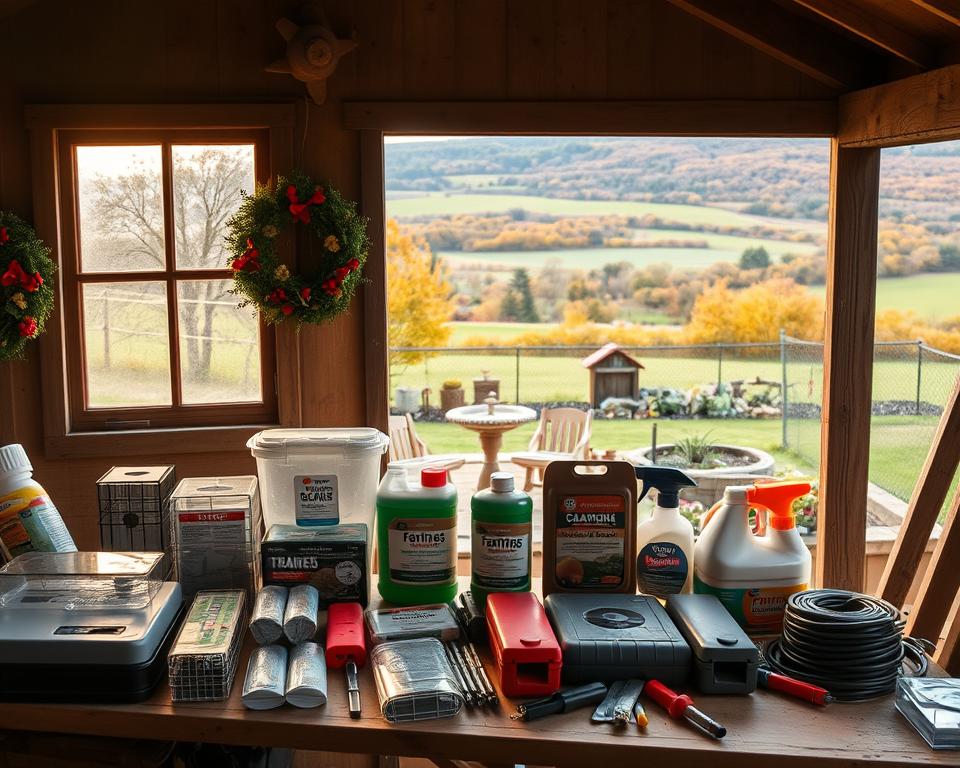
Each season brings specific pest pressures that require tailored responses. Understanding these patterns helps homeowners stay ahead of potential problems.
Spring and Summer: Clearing and Inspection
Warmer weather signals increased activity from various pests. Spring inspections should focus on identifying winter nests built by mice and insects.
Walk around shed structures to check for signs of occupation. Refresh deterrents like peppermint oil during this time. Summer brings heightened wasp activity, requiring roof and eave inspections.
Autumn and Winter: Sealing and Protective Measures
As temperatures drop, rodent activity increases significantly. Rats and mice seek warm shelter before winter arrives.
Autumn is the ideal time for comprehensive sealing of gaps around shed openings. Winter maintenance involves clearing snow from vents and door areas to prevent moisture issues.
This seasonal cycle creates a proactive prevention system. Regular attention to these areas around your shed maintains year-round protection.
Utilising Professional and Advanced Pest Control Measures
When preventative measures fall short, advanced pest control strategies become essential for shed protection. These methods address persistent issues that basic approaches cannot resolve.

When to Contact a Pest Control Specialist
Persistent infestations often require expert intervention. Professional pest control becomes necessary when DIY methods consistently fail to resolve the problem.
Humane live-capture traps offer an effective solution for rodent control. Position these devices along walls and near activity areas. Peanut butter and chocolate serve as excellent bait options.
Daily trap inspection is crucial for animal welfare. Always wear protective gloves when handling traps or captured rodents. Release any caught animals at least one kilometre away in suitable outdoor locations.
| Control Method | Effectiveness | Safety Considerations |
|---|---|---|
| Live-capture traps | High | Humane and safe |
| Poison baits | Medium | Risky for pets and children |
| Glue traps | Low | Causes unnecessary suffering |
Additional Techniques for Persistent Infestations
Avoid poisons and glue traps entirely. These methods pose significant risks to household pets and children. Poisoned rodents often die in inaccessible locations, creating unpleasant odours.
Professional exterminators possess specialised tools and expertise. They can safely handle large-scale rodent issues and complex situations like wasp nests. Their intervention prevents minor problems from escalating into major structural damage.
Seeking expert assistance promptly saves time, money and stress. Professionals implement advanced exclusion methods beyond typical DIY capabilities, ensuring comprehensive protection for sheds and outdoor structures.
Conclusion
A proactive approach is the ultimate defence for any garden shed. Success stems from combining multiple strategies, not relying on a single fix.
Effective protection blends physical barriers at key entry points, removal of food sources, and consistent maintenance. This diligent process prevents the significant damage and health risks associated with an infestation.
Early detection of warning signs, such as droppings or gnaw marks on walls, is crucial. Prompt action stops a minor issue from escalating.
While initial effort is required, the payoff is a secure, pest-free space. By applying these proven methods, homeowners can effectively safeguard their property and enjoy peace of mind.
FAQ
What are the most common signs of a mouse problem in a shed?
The most frequent indicators include small, dark droppings, shredded materials like cardboard or fabric used for nesting, gnaw marks on wood or wiring, and a distinct musky odour. One might also hear scratching noises, particularly at night.
Why is steel wool recommended for blocking mouse entry points?
Steel wool is highly effective because rodents find it difficult to chew through the coarse, sharp fibres. When packed tightly into cracks and holes, it creates a durable, physical barrier that stops mice from gaining access to the shed’s interior.
How can I make my shed less attractive to mice and other pests?
The key is to eliminate food sources and nesting opportunities. Store all birdseed, pet food, and grass seed in robust, sealed metal or thick plastic containers. Regularly declutter the area and keep stored items elevated on shelves or pallets to reduce potential nesting sites.
Are natural deterrents like peppermint oil effective for rodent control?
While some homeowners report success with peppermint oil or vinegar as repellents, their effectiveness is often temporary and can vary. They are best used as part of a broader prevention strategy that includes physical exclusion methods like sealing gaps with appropriate materials.
When should I consider calling a professional pest control service?
It is advisable to contact a specialist if a DIY approach fails to control the infestation, if there are signs of significant damage or a large number of rodents, or if the problem recurs persistently. Professionals can offer more advanced solutions and identify hidden vulnerabilities.