Sleeping in Your Garden Shed: UK Regulations
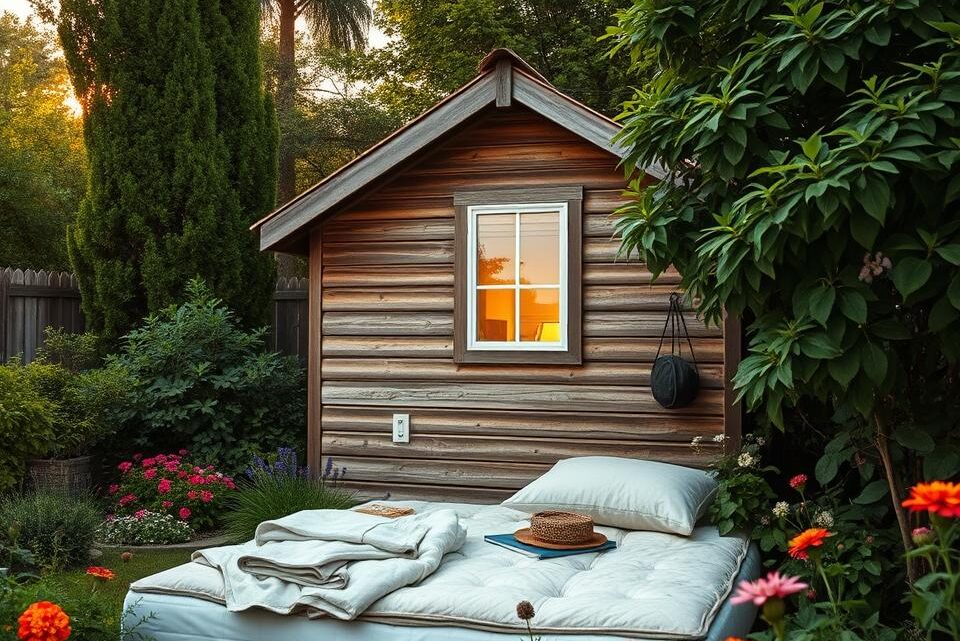
Thinking about a cosy night in the shed? Before you roll out a mattress, it is vital to ask: can you sleep in a shed in your garden under UK shed sleeping rules? This guide explains garden outbuilding sleeping regulations across England, Wales, Scotland, and Northern Ireland, drawing on the UK Government Planning Portal, Approved Documents, and council guidance.
The Planning Portal notes that sheds and garden rooms may be permitted development when they are incidental to the main house. Sleeping accommodation in outbuildings is rarely incidental, so planning permission for sleeping in shed use is often required. If you aim for regular overnight stays, you may also need a lawful use certificate shed to prove status and avoid enforcement.
Safety is not optional. Building regulations for garden rooms can apply where people sleep, covering structure, fire safety, ventilation, drainage, energy, electrics, and accessibility. Councils from London to Cornwall warn that turning a shed into a bedroom may count as a material change of use. That can trigger full approvals, inspections, and even Council Tax if it becomes a separate unit.
This article gives a clear route through UK planning rules sheds and the steps to make any plan lawful and safe. You will learn when permissions apply, what standards protect life and property, and how to avoid costly mistakes.
Inhaltsverzeichnis
Key Takeaways
- Sleeping accommodation in outbuildings is rarely incidental; permissions may be needed under garden outbuilding sleeping regulations.
- Planning permission for sleeping in shed use is often required; a lawful use certificate shed can confirm status.
- Building regulations for garden rooms likely apply where people sleep, including fire safety, ventilation, and electrics.
- UK shed sleeping rules vary by nation; always check local UK planning rules sheds with your council.
- Regular overnight stays can count as a material change of use, inviting enforcement if unauthorised.
- Early advice from your Local Planning Authority reduces risk, delay, and extra cost.
Understanding UK Planning Rules for Garden Buildings
Garden rooms promise extra space, but the label you choose can shape the rules. Under UK planning rules garden buildings are controlled by how they are used, their size, and their position. Before you add a bed or a bathroom, check whether the proposal stays within permitted development outbuildings or needs permission.
Key idea: The same small structure can be lawful for storage yet need consent for sleeping. That shift often hinges on ancillary use versus incidental use, and whether a lawful development certificate is sensible for certainty.
What counts as a shed, outbuilding, or annexe
A shed is a type of outbuilding within domestic curtilage. The outbuilding definition UK treats it as separate from the house and used for non-habitable purposes. Typical examples include storage, a hobby room, or a small studio.
An annexe is different. In the annexe vs shed debate, an annexe supports living with facilities such as a WC, shower, or even a kitchenette. It remains connected to the main home by family ties and shared services, but its habitable nature can trigger permission.
Where sleeping, cooking, or bathing are proposed, councils test whether the use is ancillary use or goes further. If the space functions independently, it risks being classed as a separate dwelling, not incidental use to the house.
Permitted development versus planning permission
In England, Class E permits outbuildings that are incidental to the enjoyment of the dwellinghouse. To qualify as permitted development outbuildings, limits apply to height, coverage, and siting, including reduced height near boundaries and bans forward of the principal elevation.
Designated land, such as conservation areas and National Parks, adds tighter controls. Even when the size fits, habitable features can remove the fallback and require express consent.
When in doubt, a lawful development certificate can confirm status before work starts. For devolved nations, similar tests on incidental use apply, though measurements and thresholds may vary.
How change of use applies to sleeping accommodation
Regular sleeping in a garden room often amounts to material change of use sleeping. That is because beds, bathrooms, and cooking shift activity from incidental use to a form of residential occupation.
Councils assess the pattern of use, duration, and the level of independence from the main house. If the balance looks like an annexe or a separate unit, planning permission is likely required.
Where proposals remain firmly ancillary use, short naps or occasional guests may be considered minor. For ongoing sleeping, seek advice early and consider applying for a lawful development certificate to clarify the position.
| Category | Typical Features | Planning Lens | Likely Route |
|---|---|---|---|
| Shed (Outbuilding) | Storage, tools, hobby space; no sleeping or kitchen | Incidental use to main house | Often falls under permitted development outbuildings |
| Garden Room with Occasional Guest Use | Sofa-bed, power, no cooking; short stays only | Ancillary use if reliance on main house is clear | May be PD; consider a lawful development certificate |
| Annexe | Sleeping area plus WC/shower; sometimes kitchenette | Ancillary but habitable | Often needs planning permission; conditions may apply |
| Separate Dwelling | Self-contained bed, bath, kitchen, independent access | Not incidental; independent residential use | Planning permission required; not PD |
Building Regulations and Safety Standards for Sleeping in Sheds
Turning a shed into a sleeping space changes the legal picture. In England, Building Regulations apply when an outbuilding is used for overnight stays, heated, or fitted with plumbing and fixed services. This is where garden room Building Regs move from nice-to-have to must-do. Treat the project as a small dwelling, not a simple store, and plan for inspection by your local Building Control team.
When Building Regulations are triggered
Using a shed as sleeping accommodation creates a Building Regulations sleeping outbuilding. Approval is normally required if you install a bathroom or kitchen, add fixed heating, or form a means of escape garden annexe with habitable rooms. Even without planning permission, you still need compliance and sign-off via Full Plans or a Building Notice route.
Expect checks on structure, energy, fire, and services. Inspectors will look at load paths, surface spread of flame, drainage layouts, and certification for electrics and heating. If you are in Scotland, Wales, or Northern Ireland, similar duties apply under the local regimes.
Insulation, ventilation, and moisture control
Comfort and health depend on Part L insulation U-values and Part F ventilation. Aim for continuous insulation to avoid cold bridges, with a proper vapour control layer and sealed joints. Floors need a damp-proof membrane and walls should link to a damp-proof course to manage moisture.
Provide background air via trickle vents and calculated extract rates in wet rooms. Cross-flow helps in small volumes. Without this balance, condensation will lead to mould, odours, and decay that can undermine the structure.
Fire safety, escape routes, and alarm requirements
Sleeping risk raises the bar under Part B fire safety outbuildings. You need interlinked smoke alarms and a heat alarm if a kitchenette is present. Where any fixed combustion appliance is used, fit a carbon monoxide alarm alongside the detection system.
A protected route and suitable egress are essential. Install at least one escape window or outward-opening door that gives a clear path to open air. Close boundary lines increase concerns for external fire spread, so upgrade wall and roof fire resistance when the structure sits near a fence or another building.
Electrical, heating, and carbon monoxide considerations
All wiring must meet Part P electrics and BS 7671. Use an NICEIC or NAPIT contractor to design, test, and certify, with an Electrical Installation Certificate on completion. Poor DIY work risks shock, overloads, and fire.
Choose safe, efficient heat sources. Electric panel heaters with thermostats or a compact air-source heat pump suit tight spaces. If you opt for gas, only a Gas Safe registered engineer should install and commission it, and CO alarm shed heaters should be included to monitor fumes. Keep clearances around flues and maintain adequate Part F ventilation.
| Regulation Focus | Key Requirement | What Inspectors Look For | Typical Evidence |
|---|---|---|---|
| Structure (Part A) | Stable walls, roof, and floor | Load paths, fixings, resistance to wind uplift | Timber specs, fixings schedule, drawings |
| Energy (Part L insulation U-values) | Minimum U-values for fabric and glazing | Continuous insulation, thermal bridge control | U-value calculations, product datasheets |
| Ventilation (Part F ventilation) | Background and extract airflow rates | Trickle vents, fans, airflow paths | Vent sizing, fan performance data |
| Fire (Part B fire safety outbuildings) | Detection, separation, means of escape | Interlinked alarms, escape window/door, fire-resistant linings | Alarm certificates, layout plan, product ratings |
| Electrics (Part P electrics) | Safe design, installation, and testing | RCD protection, correct cable sizing, bonding | EIC, Part P notification, test schedules |
| Water and Drainage (Parts G & H) | Hygienic water supply and waste disposal | Trap seals, venting, backflow protection | As-built schematics, appliance manuals |
| Escape Strategy | Clear means of escape garden annexe | Direct access to open air, protected route | Door/window dimensions, site photos |
| Combustion Safety | CO alarm shed heaters and flue safety | Correct siting of alarms and appliances | Commissioning records, CO alarm spec |
can you sleep in a shed in your garden?
Short answer: yes for the odd nap or an emergency night, but routine sleeping is different. The question “can you sleep in a shed in your garden” turns on use. Occasional rest is usually tolerated as incidental. Night-after-night use counts as residential and is likely to breach garden shed accommodation rules.
Put simply, sleeping in garden shed legal depends on frequency, fittings, and intent. Once you add a fixed bed, a heater, or a kitchenette, councils often treat it as a material change to living space.
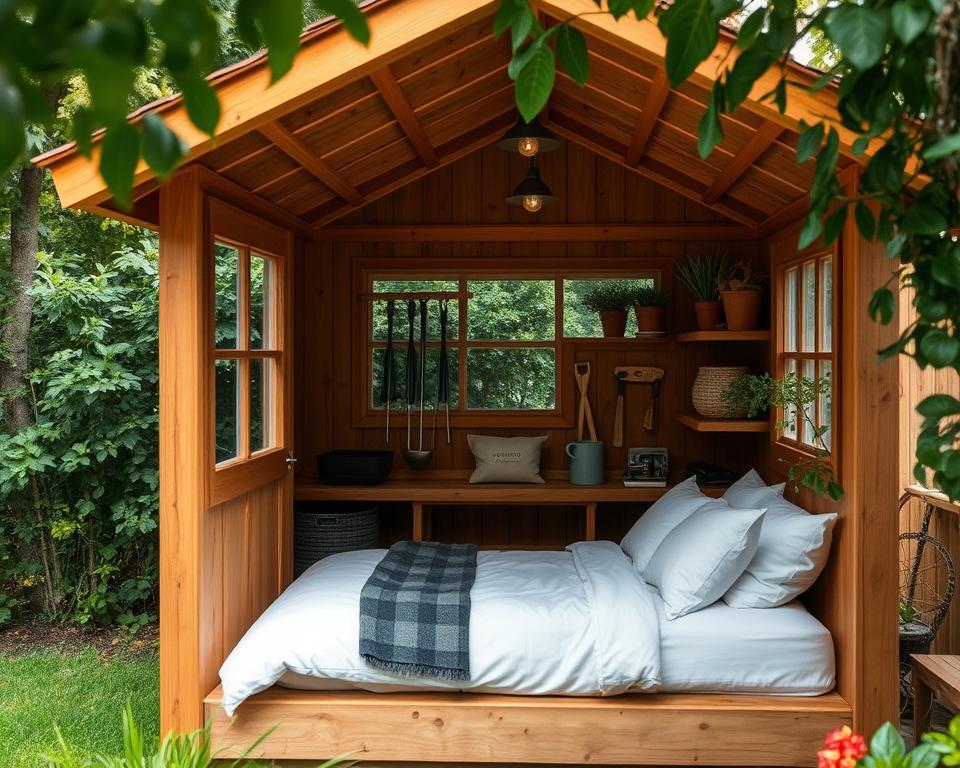
So, is it legal to sleep in a shed UK? Expect scrutiny if it becomes regular or self-contained. Under sleep in outbuilding law, that kind of use can require planning permission for an annexe and will trigger Building Regulations for structure, fire safety, electrics, and insulation.
There is also an enforcement angle. If a shed is used as sleeping accommodation without consent, local authorities can issue notices and may require you to stop using it, apply retrospectively, or remove facilities.
Health and insurance matter too. Uninsulated spaces can cause damp and cold stress, and fuel-burning heaters raise carbon monoxide and fire risks. Insurers may decline claims if you do not disclose the change of use.
| Scenario | Planning Position | Regulatory Triggers | Key Risks | Typical Next Step |
|---|---|---|---|---|
| Occasional nap or emergency overnight | Generally incidental to the house | None if no fixed sleeping setup | Comfort and basic safety only | Keep use rare; avoid installing beds or heaters |
| Regular sleeping with a fixed bed | Likely a material change of use | Planning permission likely; Building Regulations apply | Enforcement action; policy breaches | Seek planning advice; upgrade to meet standards |
| Self-contained annexe (bed, WC, kitchenette) | Residential use beyond incidental | Full Building Regulations; fire, electrics, drainage | Fines, retrospective applications, higher costs | Apply for consent; engage qualified professionals |
| Heater use in an unventilated shed | Not lawful as sleeping space | Safety compliance required | Carbon monoxide, fire, damp | Install safe systems or cease sleeping use |
In practice, can you sleep in a shed in your garden hinges on whether the use stays incidental. If it veers toward living space, the garden shed accommodation rules and sleep in outbuilding law treat it as residential, and permissions and safety standards follow.
Planning Permission Triggers and Local Authority Considerations
Before kitting out a shed for sleepovers or longer stays, check how planning rules apply on your plot. The GPDO Class E limits shape what you can build without a full application, but use still matters. Where sleeping becomes routine, councils may see a planning permission garden annexe rather than a simple outbuilding.
Scale, siting, and function work together. Keep records, drawings, and dates. This helps when seeking a Certificate of Lawfulness outbuilding or speaking with your council about next steps.

Material change of use and intensification
Sleeping as the main purpose is a shift from incidental use to residential. Councils look at how often people stay, whether there are cooking or washing facilities, a separate entrance, and how independent it is from the house. If it operates like an annexe, planning permission garden annexe is usually needed.
Even without new works, material intensification can trigger control. More visitors, extra vehicles, or deliveries can alter the character of use and prompt an application.
Size, height, and placement limits near boundaries
Under the GPDO Class E limits in England, you must respect the boundary height 2.5m rule within 2 metres of a boundary. Away from boundaries, the overall height can reach 4 metres for a dual‑pitched roof or 3 metres for others, with eaves not above 2.5 metres.
Outbuildings cannot project forward of the principal elevation, and combined ground coverage must not exceed 50 per cent of the curtilage, excluding the original house. These geometric controls do not authorise sleeping; they sit alongside use tests and any material intensification.
Green Belt, conservation areas, and listed buildings
Designated land restrictions apply in National Parks, Areas of Outstanding Natural Beauty, conservation areas, the Broads, and World Heritage Sites. Side garden siting may be limited, and design quality carries extra weight.
Within the curtilage of a listed building, works may need planning permission and listed building consent. Sleeping use in an outbuilding will face close heritage scrutiny, with form, materials, and setting under review.
How to engage your Local Planning Authority
Start with pre-application advice LPA to explore options and likely conditions. For certainty on incidental use, apply for a Certificate of Lawfulness outbuilding (Proposed). Where sleeping or annexe use is intended, prepare drawings, a location plan, and a design and access statement; heritage statements may be required on sensitive sites.
Expect occupancy conditions that tie use to the main house, restrict separate sale, or limit who can stay. Parking, drainage, and noise management can also be conditioned if material intensification is a concern.
| Trigger | What the LPA Assesses | Relevant Control | Typical Outcome |
|---|---|---|---|
| Regular overnight stays | Primary purpose, independence from main house | Material change of use | Householder or full application; occupancy conditions possible |
| Proximity to boundary | Height within 2 m of edge | Boundary height 2.5m rule under GPDO Class E limits | Design modification or relocation to remain compliant |
| Roof form and height | Dual‑pitched up to 4 m; other roofs up to 3 m | GPDO Class E limits | Accepted under PD if other tests met; use still controlled |
| Coverage and siting | Forward of principal elevation; over 50% curtilage | GPDO Class E limits | Refusal under PD; application or redesign needed |
| Heritage setting | Impact on listed fabric and setting | Designated land restrictions and listed building consent | Detailed heritage-led design; stricter controls |
| Traffic and activity | Material intensification and amenity effects | Planning judgement on use | Conditions on parking, hours, and occupancy |
| Certainty on status | Lawfulness of proposed incidental works | Certificate of Lawfulness outbuilding | Formal confirmation of PD, excluding non-incidental sleeping |
Temporary, Occasional, and Short-Stay Use
Short breaks in an outbuilding can be handy, but rules differ for land and buildings. The temporary use planning 28-day rule applies to land, not structures, so it does not grant a right to sleep in a shed. Local planning teams assess facts and degree—how often, how long, and whether the space functions on its own.
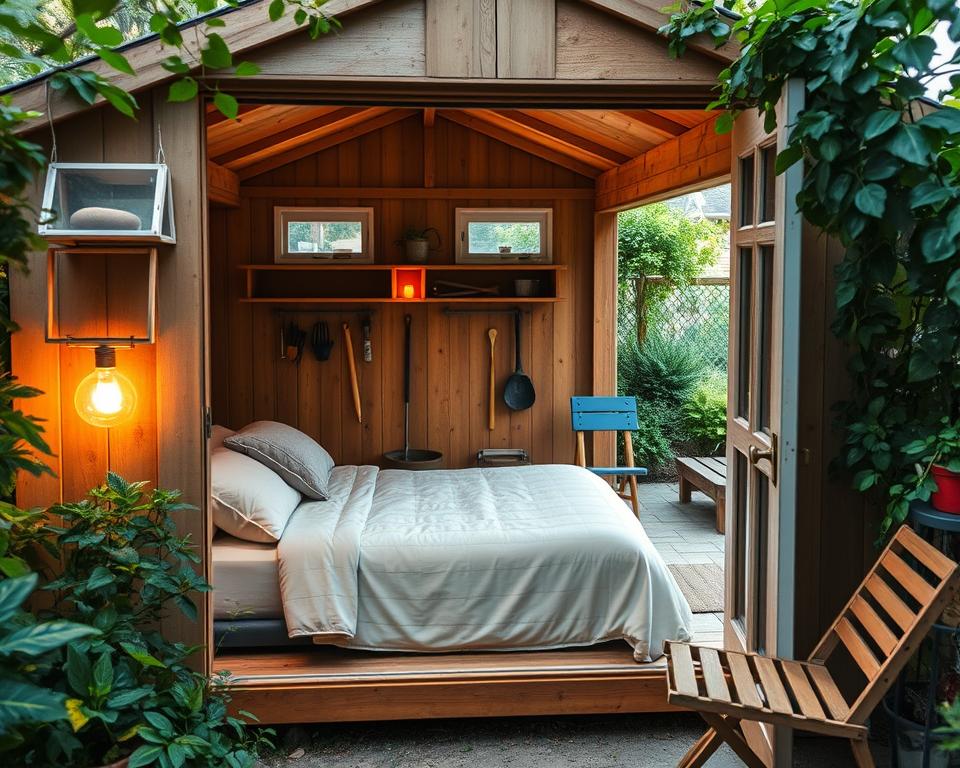
As a practical benchmark, occasional sleeping in shed scenarios—such as one-off nights—may pass without issue when the space stays non-self-contained. Treat a guest overflow garden room as a spare bedroom, not a micro-flat. Add no kitchens, no separate addresses, and no long bookings.
Safety matters even for short-term use outbuildings. Use RCD-protected electrics, avoid daisy-chained extension leads, and fit smoke and carbon monoxide alarms if any appliance is present. Do not use fuel-burning heaters without proper ventilation, and avoid locks that could hinder escape.
Insurance and neighbours count. Tell your insurer if you expect overnight guests, and keep activity low-key to avoid nuisance. Follow incidental use guidance: keep the use tied to the main home, infrequent, and clearly temporary.
Camping on the lawn for a few nights is usually not development, but converting a shed into a sleeping pod is different. Where patterns build up—regular weekends, paid stays, or fitted facilities—expect questions about material change of use.
| Scenario | Planning Lens | Risk Signals | Good Practice |
|---|---|---|---|
| One-off guest night in a basic shed | Facts and degree; no automatic rights | Repeated nights forming a pattern | Keep facilities minimal; tie use to main house |
| Garden camping in a tent | Often not development for short periods | Long stays; letting to paying guests | Limit duration; avoid disturbance |
| Regular weekend stays in outbuilding | May indicate material change of use | Bookings, separate access, fitted kitchen | Reduce frequency; remain ancillary |
| Heated, insulated sleeping pod | Building use scrutiny; not covered by 28-day land rule | Self-contained layout; postal address | Seek advice early; maintain ancillary status |
| Guest overflow garden room for family | Ancillary use if short and infrequent | Independent occupation; locks restricting escape | Fit alarms; safe electrics; clear exit routes |
Legal Distinctions: Outbuilding, Annexe, and Separate Dwelling
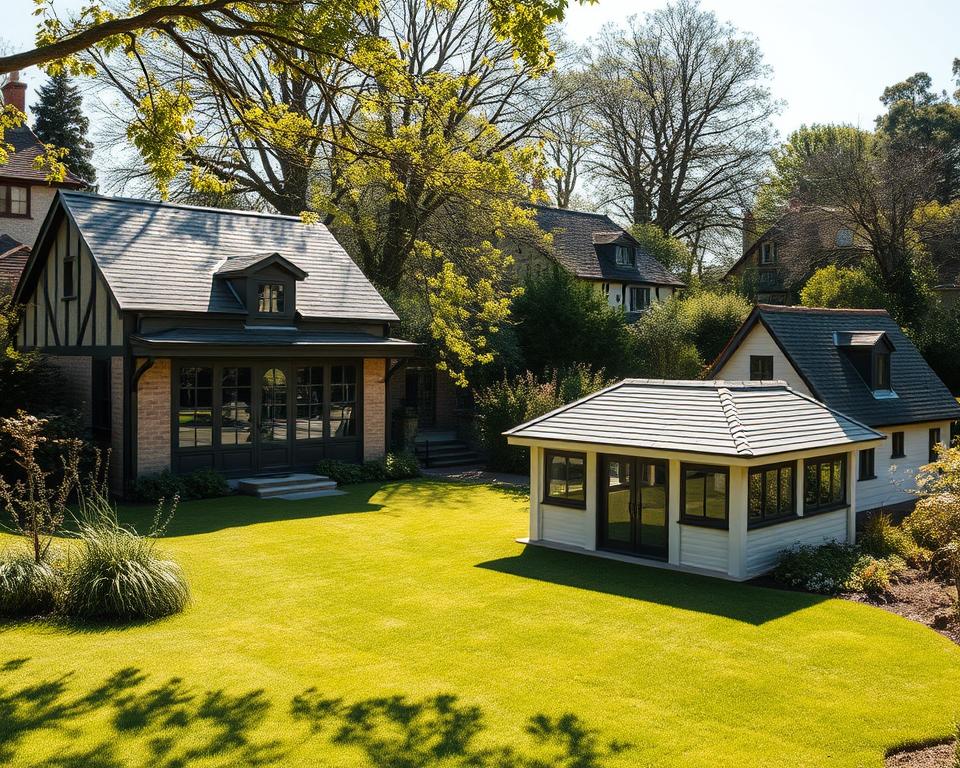
Knowing the line between an outbuilding and a home matters. Councils look at ancillary vs incidental use, the features you install, and how the space functions day to day. Understanding what is an annexe UK, and when a unit becomes a separate dwelling, can help you plan works and avoid costly mistakes.
Ancillary use to the main house
An annexe is normally tied to the host home. It shares services, relies on access through the same plot, and remains functionally linked to the household. This is the core of ancillary vs incidental use: living space that supports the main house is treated very differently from a hobby room or store.
Many permissions add conditions that prevent separate occupation. If you breach them, the authority may issue an enforcement notice outbuilding dwelling, compelling you to stop residential use. Even where tied to the home, an annexe is residential and often needs permission and Building Regulations sign-off.
Self-contained facilities and what makes a dwelling
Install a bathroom, cooking facilities, a sleeping area, and its own front door, and the unit may pass the separate dwelling test. Features like separate utility meters, a letterbox, or a unique address increase the risk that it will be treated as self-contained accommodation rather than an annexe.
Turning a shed into a flat will trigger full planning scrutiny. Policies on space, amenity, and parking can apply, and failure to meet them can lead to refusal. In England, the former four-year rule no longer protects unauthorised homes; use as a dwelling needs ten years to gain immunity.
Council Tax, business rates, and enforcement risks
The Valuation Office Agency can band a self-contained unit for Council Tax. Where a dependent relative uses it, a Council Tax annexe discount or exemption may apply in England and Wales, but only if the unit still relates to the main house. Letting the space for short stays may instead prompt business rates and fresh planning controls.
If you create a separate unit without consent, expect action. An enforcement notice outbuilding dwelling can order removal of kitchens or bathrooms and require use to cease. Retrospective bids are often rejected if policy harm exists, so check early whether your plans meet the separate dwelling test and whether they remain truly ancillary.
Services, Utilities, and Compliance
Bringing services to a sleeping outbuilding demands careful planning and proof of compliance. Keep records, follow British Standards, and apply the right approvals so the space stays safe, lawful, and sustainable.
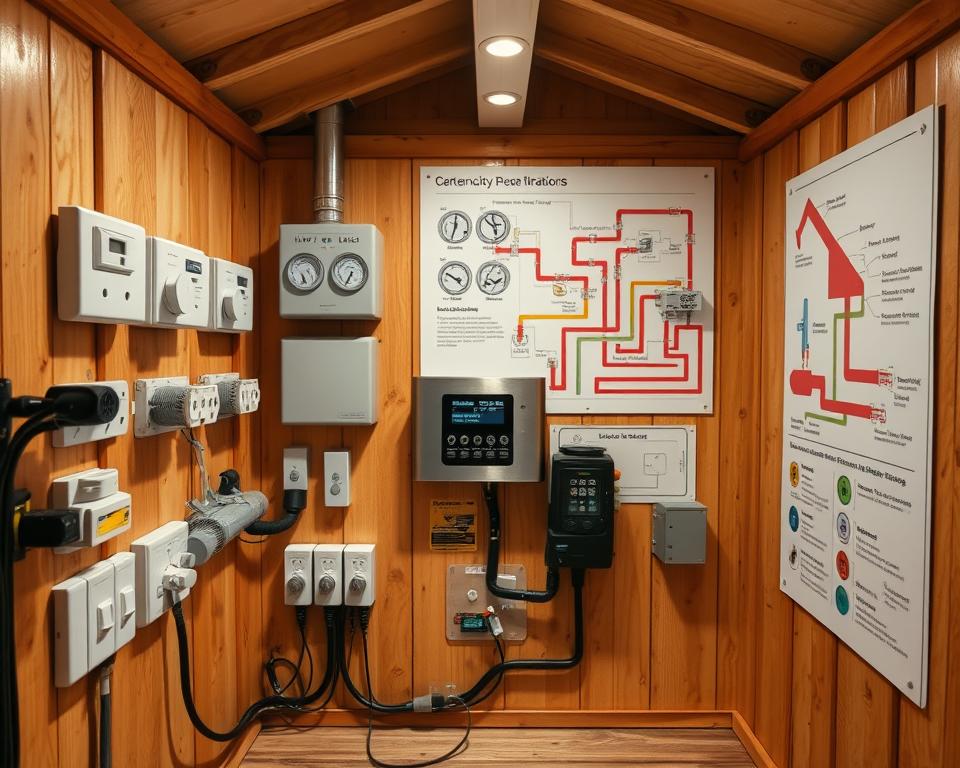
Water, drainage, and waste management law
Any new supply must be wholesome and protected under Part G, especially when connecting water to garden room pipework. Backflow prevention and insulation reduce risk of contamination and freezing.
New foul connections need Building Control sign‑off and may require consent from your sewerage undertaker. Where a mains sewer is not reasonably practicable, the septic tank General Binding Rules and package treatment plant standards apply, alongside foul drainage Building Regs Part H for sizing, ventilation, and discharge. Sinks, showers, or a WC will intensify use and trigger full regulations.
Electrical certification and safe installs
Outbuilding wiring should meet BS 7671 with RCD protection and correct earthing. A dedicated sub‑circuit from the consumer unit is far safer than trailing extensions, and a Part P electrical certificate from a NICEIC or NAPIT contractor gives formal compliance notification to Building Control.
Plan routes for armoured cable, bonding of any metallic services, and appropriate IP‑rated accessories. Good design limits voltage drop and keeps lighting, heating, and small power stable.
Heating options and fuel storage rules
Low‑carbon choices such as electric panels or air‑to‑air heat pumps are simple and efficient. Any gas appliance must be installed and commissioned by a Gas Safe engineer, with correct flues, ventilation, and carbon monoxide alarms. Solid‑fuel stoves must satisfy Part J and local smoke‑control limits.
If using oil, bunded tanks, siting clear of watercourses, and spill protection are required by the oil storage regulations. Keep delivery access, fire separation, and maintenance in mind from the outset.
Accessibility and amenity standards
Where an annexe is proposed, factor in Part M access for step‑free entry, door widths, and sanitary layout. Natural light, privacy, and outlook matter too, and many councils test layouts against amenity space standards to ensure a liveable setting for daily use.
Design for level thresholds, adequate turning circles, and safe approaches in all weather. Good lighting, clear paths, and sensible door swings improve usability for everyone.
| Service Area | Key UK Requirement | Who Signs Off | Practical Tip |
|---|---|---|---|
| Water & Drainage | Part G water quality; foul drainage Building Regs Part H; septic tank General Binding Rules where no mains | Building Control; Sewerage Undertaker (consent to connect) | Map runs before trenches; include vents and rodding points |
| Electrics | BS 7671 wiring; Part P electrical certificate for notifiable work | NICEIC or NAPIT electrician notifies Building Control | Use SWA cable and RCD/RCBO protection sized for load |
| Heating & Fuel | Gas Safe for gas; Part J for solid fuel; oil storage regulations for tanks | Registered installers; Building Control where required | Plan flue routes early; allow safe clearances and CO alarms |
| Access & Amenity | Part M access where relevant; council amenity space standards | Local Planning Authority; Building Control | Provide step‑free thresholds and daylight to key rooms |
Insurance, Mortgages, and Neighbour Considerations
Before anyone stays overnight in an outbuilding, check how your policy treats home insurance outbuilding accommodation. Standard cover often assumes storage only. Tell your insurer if you add heating, electrics, or beds, and whether it will be occupied at night. If a relative or lodger uses it, specialist annexe cover may be needed to keep theft, fire, and liability protection intact.
Lenders set strict mortgage conditions outbuildings. Many prohibit creating a self-contained unit within the curtilage without approval. You may need lender consent garden annexe for kitchens, separate access, or rentals, and the valuation can change. Breaching terms risks default, so speak to your bank or building society before you upgrade or advertise short stays.
Good neighbourly design matters. Position doors and windows to protect neighbour amenity privacy and reduce light spill. Manage refuse and parking to limit noise and disturbance planning concerns, especially if guests arrive late. Planting, fences, and obscure glazing can soften impacts while keeping the space usable.
Where works are near a boundary, the party wall act may apply. If excavating by a shared wall or building close to a neighbour’s structure, issue the right notices and secure written agreements before starting. This helps prevent disputes and keeps the programme on track.
Security should reflect overnight use. Fit PAS 24 doors, use locks that resist attack, and choose lighting that deters intruders without harming neighbour amenity privacy. Align choices with Secured by Design guidance, and update insurers so the home insurance outbuilding accommodation reflects the enhanced risk profile.
Plan for mortgage and rental scenarios in advance. If you intend to host family or let the unit, confirm lender consent garden annexe, and clarify whether consent-to-let or buy-to-let rules apply. Keep records of permissions and warranties so your mortgage conditions outbuildings and cover remain valid.
Conclusion
This can you sleep in a shed in your garden summary is clear: routine sleeping turns a shed into residential use. Under UK shed sleeping laws, that is rarely incidental and usually needs planning permission as an annexe, plus full Building Regulations. A planning and building regs checklist should cover structure, insulation, ventilation, damp control, fire protection, electrics, heating, and safe escape. In sensitive areas such as Green Belt or conservation areas, rules tighten.
Permitted development for outbuildings is narrow and focused on incidental use. Once you add sleeping, it often becomes a material change of use. Occasional, short stays without self-contained facilities should be rare and low impact, but they are not a blanket right. Aim for lawful garden accommodation by assessing size, height, and siting near boundaries, and by protecting neighbour amenity.
Before you proceed, engage your Local Planning Authority for pre-application advice or a Lawful Development Certificate. Speak to Building Control, and use competent installers such as NICEIC or NAPIT electricians and Gas Safe engineers. Inform your insurer and lender so cover and lending terms stay valid. This approach secures garden annexe compliance while keeping safety and policy at the forefront.
Done well—typically as a purpose-built annexe—you can achieve comfortable, lawful garden accommodation that meets UK shed sleeping laws. Treat this as a living space, not a hobby shed, and follow a planning and building regs checklist from concept to sign-off. That is the dependable route from idea to keys.
FAQ
Can I legally sleep in a shed in my UK garden?
Occasional, one-off nights are usually tolerated, but routine or permanent sleeping is not considered incidental to the enjoyment of the dwellinghouse. Regular overnight use is a material change of use and typically needs planning permission for an annexe or separate dwelling, plus Building Regulations compliance.
What do UK planning rules class as a shed, outbuilding, or annexe?
A shed is an outbuilding within the curtilage of a dwellinghouse. Under Class E of the GPDO (England), outbuildings are allowed for incidental purposes such as storage, a gym, or a home office. An annexe provides habitable accommodation, often with sleeping space and services, and usually requires planning permission.
What are the permitted development limits for garden buildings in England?
Under Class E, outbuildings cannot sit forward of the principal elevation, must have eaves no higher than 2.5 m, and an overall height up to 4 m for a dual-pitched roof or 3 m for other roofs. Within 2 m of a boundary, the maximum height is 2.5 m. Coverage must not exceed 50% of the curtilage, excluding the original house.
Does sleeping in a shed count as a change of use?
Yes, if sleeping becomes the primary function, councils treat it as a material change from incidental to residential use. Indicators include frequency of stays, presence of a bathroom or kitchen, separate access, and independence from the main house. This usually triggers planning permission and Building Regulations.
Do the rules differ in Scotland, Wales, and Northern Ireland?
Broadly, yes in detail but not in principle. Each nation has its own GPDO. All distinguish incidental outbuildings from accommodation. Routine sleeping in a shed generally falls outside incidental use, so expect to need planning permission and to meet local Building Regulations equivalents.
When do Building Regulations apply to a garden outbuilding?
Regulations are likely required if the outbuilding is used for sleeping, forms an annexe, is heated, or has plumbing and fixed services. Parts A, B, E, F, G, H, L, M, and P can apply, covering structure, fire safety, sound, ventilation, water, drainage, energy efficiency, accessibility, and electrical safety.
What insulation and ventilation standards should be met?
For a habitable space, Part L sets thermal targets for walls, floors, roofs, and glazing. Part F requires background ventilation and extraction in wet rooms. Good practice includes continuous insulation, vapour control layers, airtightness with managed ventilation, and detailing to prevent condensation and mould.
What fire safety measures are required for sleeping use?
Provide interlinked smoke alarms (Grade D1/D2) and heat alarms in kitchens. Ensure safe means of escape via an escape window or door with a clear route to open air. Where close to boundaries, address external fire spread and fire resistance per Part B. Fit carbon monoxide alarms where combustion appliances are installed.
How should electrics be installed in a sleeping outbuilding?
Electrical work must comply with BS 7671 and Part P. A dedicated circuit with RCD protection and proper earthing is essential. Use a contractor registered with NICEIC or NAPIT and obtain an Electrical Installation Certificate with Building Control notification.
What heating options are acceptable?
Safe choices include electric panel heaters or an air-to-air heat pump. Gas appliances must be installed by a Gas Safe registered engineer with correct ventilation and flues. Solid-fuel stoves need Part J compliance and may be restricted in DEFRA Smoke Control Areas. Always fit appropriate CO alarms.
Do I need planning permission for an annexe in my garden?
Usually yes. Councils assess design, neighbour amenity, parking, and whether the annexe remains ancillary to the main house. Permissions often include conditions restricting independent occupation or separate sale. In designated land or near listed buildings, scrutiny is higher.
What are the rules in conservation areas, AONBs, and the Green Belt?
Designated land has tighter controls. Additional limits apply to size, placement, and sometimes side gardens. In the curtilage of a listed building, you may need both planning permission and listed building consent. Proposals are judged against heritage and landscape policies.
Can I rely on the 28-day rule for short-stay sleeping in a shed?
No. The 28-day rule relates to temporary uses of land, not change of use of buildings. An occasional guest night in a non-self-contained shed may be tolerated, but frequent or regular use can be deemed a material change, leading to enforcement.
What enforcement action can councils take?
Local Planning Authorities can issue Planning Contravention Notices, Enforcement Notices, or stop notices requiring cessation of residential use and removal of facilities. Non-compliance is a criminal offence and may result in fines and legal costs.
How do water, drainage, and waste rules apply?
Any water supply must meet Part G. Foul water should connect to the mains where practicable; otherwise use a compliant treatment plant or septic system under the Environment Agency’s General Binding Rules or Natural Resources Wales guidance. New connections need Building Control approval and, where relevant, sewerage undertaker consent.
Will Council Tax or business rates apply to a garden annexe?
The Valuation Office Agency can band a self-contained annexe for Council Tax. Discounts or exemptions may apply for family occupation in England and Wales. Using an outbuilding for short-term lets, such as Airbnb, can trigger business rates and separate planning considerations.
How might this affect insurance and my mortgage?
Using a shed for sleeping without disclosure can invalidate home insurance. Notify your insurer and consider specialist annexe cover. Lenders may restrict self-contained units or lettings; seek consent to avoid breaching mortgage terms and affecting valuations.
What about neighbour impacts and the Party Wall etc. Act 1996?
Increased comings and goings, noise, and overlooking can prompt objections and influence decisions. Design to protect privacy and amenity. If building close to a neighbour’s structure or excavating near foundations, the Party Wall etc. Act 1996 may require formal notices and agreements.
How can I get certainty before I build?
Use your council’s pre-application service. For incidental use, apply for a Lawful Development Certificate (Proposed). For sleeping or annexe use, prepare a planning application with drawings, a location plan, and a design and access statement. Engage Building Control via Full Plans or Building Notice routes.
Are there accessibility standards for annexes?
If creating an annexe, Part M may apply, calling for step-free access, suitable door widths, and accessible sanitary facilities. Some councils also apply the Nationally Described Space Standard and expect adequate daylight, outlook, and outdoor space.
Could using a shed as a separate dwelling ever become lawful over time?
In England, immunity for unauthorised residential use typically requires ten years of continuous use. The former four-year rule no longer applies to dwellings. Evidence must be robust, and councils can challenge claims lacking continuous, compelling proof.