Learn How to Organise a Shed to Declutter and Create Space Effectively
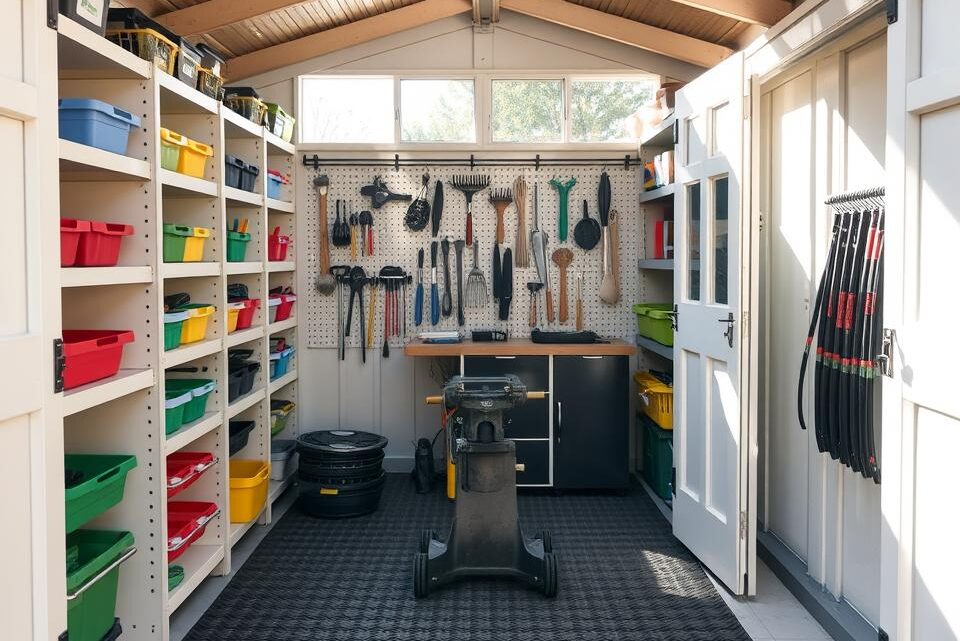
Many homeowners face a common frustration with their garden shed. It often becomes a dumping ground for various items. Finding specific tools or equipment can be a real challenge.
A cluttered shed creates a stressful environment. It makes simple gardening tasks feel like a major chore. Transforming this space is a highly rewarding home project.
Proper organisation turns chaos into a functional area. It enhances the entire gardening and DIY experience. No more climbing over lawnmowers or manoeuvring around bags of compost.
This guide offers professional advice and practical ideas. It provides a systematic approach to decluttering any garden shed. The tips cover everything from initial planning to long-term maintenance.
Readers will discover actionable strategies. They will learn to reclaim valuable storage area. The goal is an efficient, well-organised shed that serves their specific needs.
Inhaltsverzeichnis
Key Takeaways
- A disorganised shed makes finding tools and equipment difficult.
- Transforming a cluttered shed is a rewarding home improvement project.
- Effective organisation creates a functional and less stressful space.
- Systematic planning is crucial for successful shed decluttering.
- Practical storage solutions maximise available space efficiently.
- Long-term maintenance strategies help keep the shed organised.
- The right approach makes every gardening task easier and more enjoyable.
Understanding the Importance of Shed Organisation
Beyond mere storage, a well-ordered garden shed serves as a vital command centre for outdoor projects. Effective organisation is the foundation that transforms this space from a source of frustration into a hub of efficiency.
Benefits for Gardening and DIY Projects
A systematic layout directly enhances gardening activities. Essential tools and supplies become instantly accessible for planting or pruning. This saves valuable time and effort.
For diy enthusiasts, an organised shed streamlines the entire work process. Locating specific materials is quick and simple. This eliminates the distraction of searching through clutter, allowing focus on the project itself.
Reducing Stress and Enhancing Productivity
The psychological benefits are significant. Homeowners experience reduced stress when approaching tasks in a tidy environment. The overwhelming chaos of a disorganised area is replaced with calm control.
Productivity soars as hunting for misplaced items is eliminated. Clear pathways and properly stored equipment also improve safety, minimising the risk of trips and falls. Furthermore, good organisation protects valuable tools from damage, extending their lifespan.
Planning Your Shed Layout for Maximum Space
A successful shed transformation begins with a solid plan. Careful consideration of the available area prevents costly mistakes. It ensures every item finds a logical home.
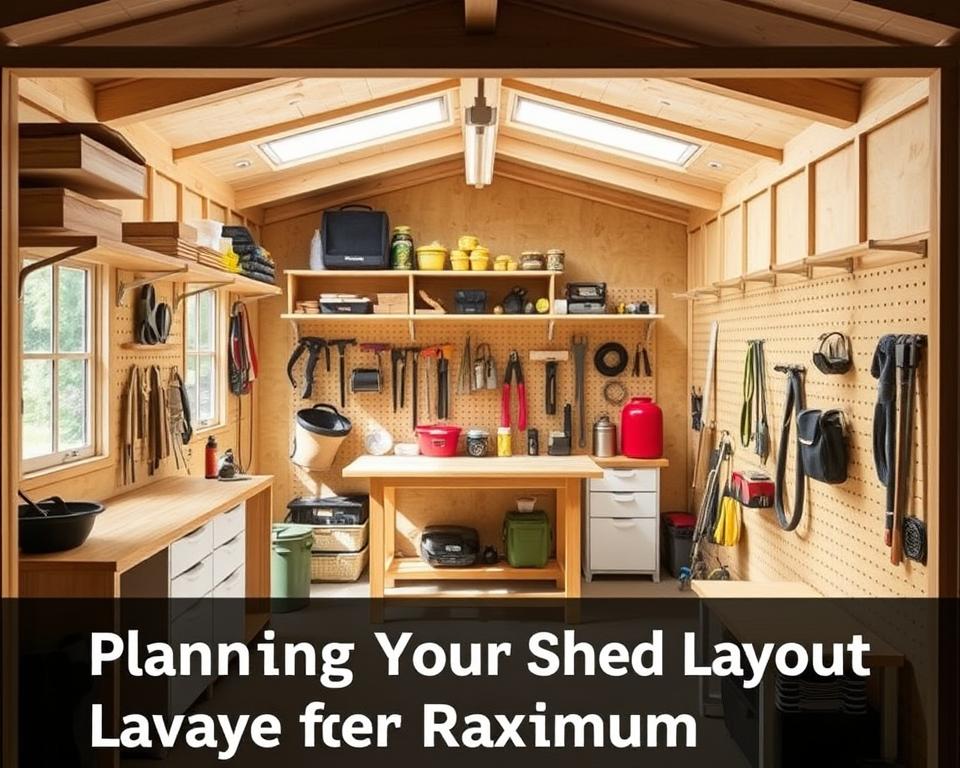
Homeowners should start by gathering a tape measure. They need to record the internal dimensions of each wall. The ceiling height and floor space are equally vital.
Measuring large objects like lawnmowers is the next step. This practice determines which items can fit along the walls. It guarantees adequate clearance for easy removal.
Measuring Your Space Accurately
Accurate measurements are the foundation of an effective storage design. They prevent purchasing solutions that do not fit. This step saves both time and money.
One must measure the lengths and widths of the largest possessions. These figures help map out the potential storage space. Proper planning maximises the utility of the entire shed.
Establishing Clear Walking Paths
A central walking route is essential for safety and access. This path must remain clear at all times. It allows for easy movement throughout the area.
Adequate space should be left in front of shelves and cupboards. This ensures doors can open fully and items are reachable. For strict organisation, tape lines on the ground can mark zones.
This visual guide separates storage areas from standing space. It helps maintain order as belongings are returned. The layout must account for door swings and windows.
How to Organise a Shed to Declutter and Create Space
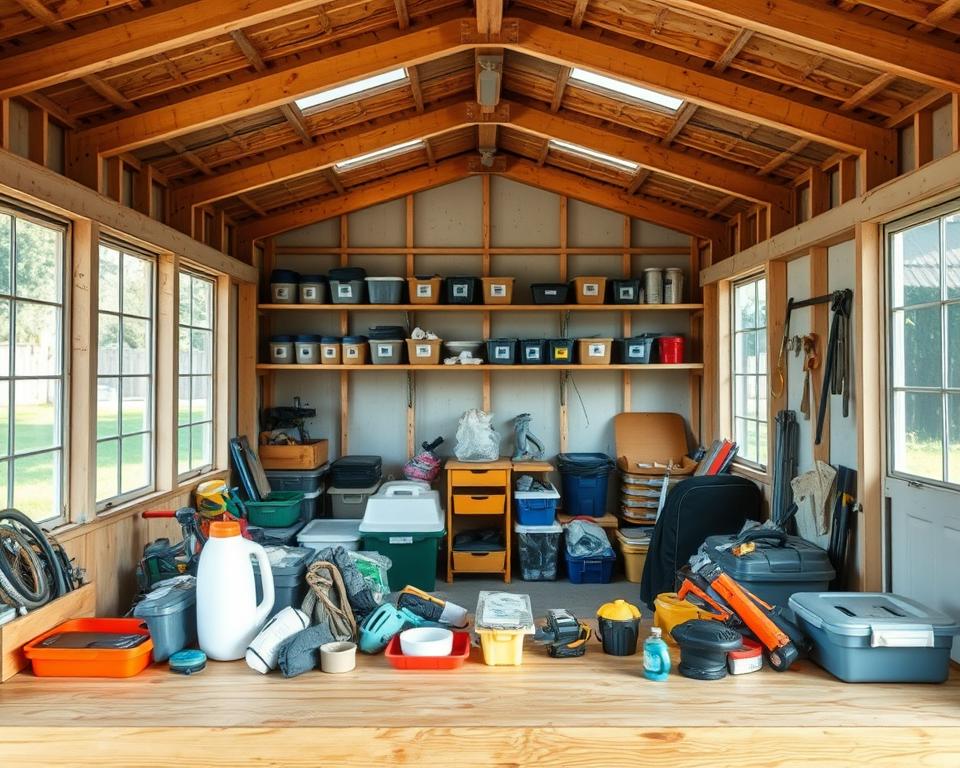
Emptying the shed entirely provides the clean slate needed for effective reorganisation. This initial step reveals what truly occupies the space and allows for proper assessment.
Sorting and Categorising Items
Homeowners should transfer every possession to an outdoor area. This includes tools, paint cans, and bags of materials. Seeing everything spread out often uncovers forgotten items.
The sorting process uses three simple categories: keep, donate, and discard. Items for keeping should be grouped logically by type or purpose. This could mean placing all garden tools together or seasonal decorations in one area.
Setting micro-goals makes the task manageable. Fifteen-minute daily sessions work well for processing smaller stuff. This approach prevents decision fatigue and maintains momentum.
Clearing Out Unwanted Clutter
Being decisive about what to keep is crucial. Many sheds become storage for items that might be useful someday but never are. Damaged or dangerous things should be disposed of immediately.
If the project spans multiple days, protect items from weather. Store them indoors or use tarpaulins. Identify possessions that belong elsewhere, like household items or seasonal decorations.
The final step is removing unwanted clutter promptly. Donate usable items to charity shops or sell them online. This prevents clutter from migrating back into the newly organised space.
Effective Storage Solutions for Tools and Equipment
Proper tool organisation relies on selecting appropriate storage solutions. The right systems keep equipment accessible while protecting it from damage. They transform chaotic areas into functional spaces.
Using Shelves, Bins and Hooks
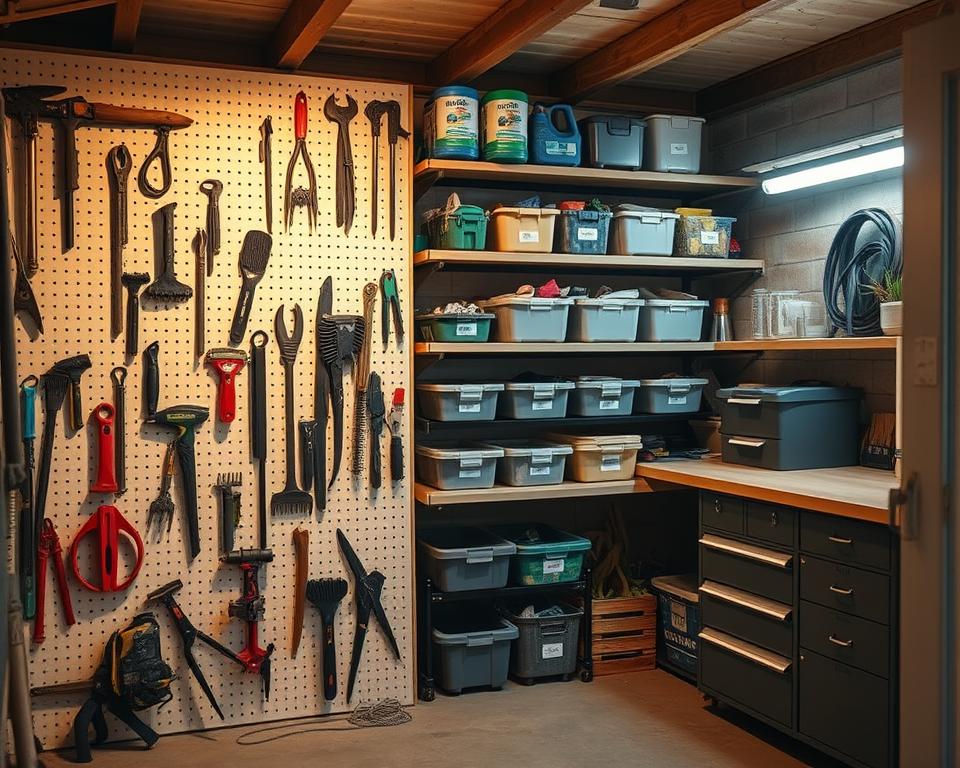
Sturdy shelves provide essential vertical storage for various items. They move possessions off the floor, creating valuable space. Broken units should be replaced promptly.
Wall-mounted hooks are perfect for long-handled gardening tools. They keep rakes and shovels organised and prevent handle damage. Bins and containers group smaller items together effectively.
Implementing Pegboards and Magnetic Tool Holders
Pegboards offer customisable storage for frequently used tools. Adjustable pegs can be rearranged as needs change. This system provides excellent visibility and quick access.
Magnetic holders work wonders for metal small tools. Screwdrivers and wrenches stick directly to strips on the wall. This innovative approach saves space and prevents misplacement.
| Storage Solution | Best For | Space Required | Installation Difficulty |
|---|---|---|---|
| Shelving Units | Heavy items, bins, containers | Floor or wall space | Medium |
| Wall Hooks | Long-handled tools, equipment | Vertical wall space | Easy |
| Pegboards | Frequently used tools | Wall surface area | Medium |
| Magnetic Strips | Metal tools, small items | Minimal wall space | Easy |
Utilising Vertical Space and Wall Storage Ideas
Wall-mounted solutions revolutionise compact storage areas. They transform unused vertical surfaces into functional zones. This approach dramatically increases capacity without expanding the building’s footprint.
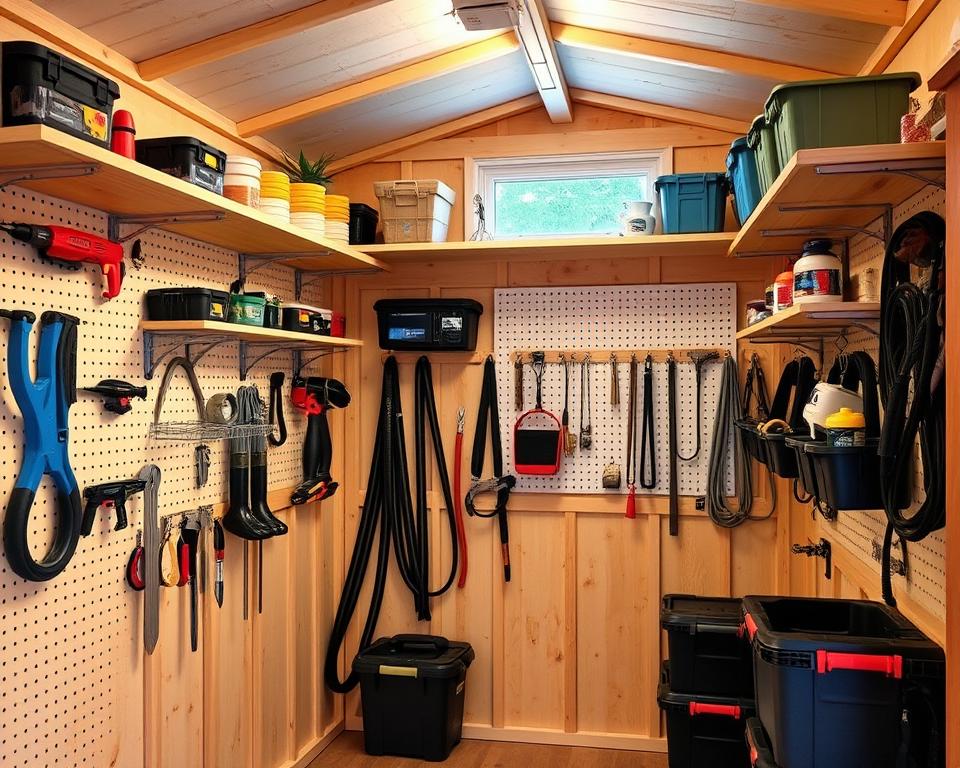
Every square inch counts in smaller structures. Vertical thinking becomes essential for efficient organisation.
Maximising Wall-Mounted Storage
Mounting tools high on walls creates valuable floor space underneath. Hooks and rods securely hold long-handled equipment. Frequently used items should be positioned at convenient heights.
Seasonal possessions can be stored higher up. Wall-mounted brackets work well for bulky items like bicycles. This clever design approach keeps floors clear and accessible.
Innovative Uses for Shed Doors and Outside Walls
Doors present excellent opportunities for additional storage. Lightweight items like hand tools fit perfectly on door-mounted hooks. This keeps essentials within easy reach.
Outside walls accommodate weatherproof cabinets and racks. Ensure door-mounted shelving doesn’t interfere with operation. These ideas make the most of every available surface.
Creative DIY Storage Ideas to Maximise Shed Functionality
Creative repurposing of household items can transform shed organisation without significant expense. These diy approaches offer cost-effective alternatives to purchasing new storage systems. Homeowners can utilise existing materials and furniture to maximise their shed’s functionality.
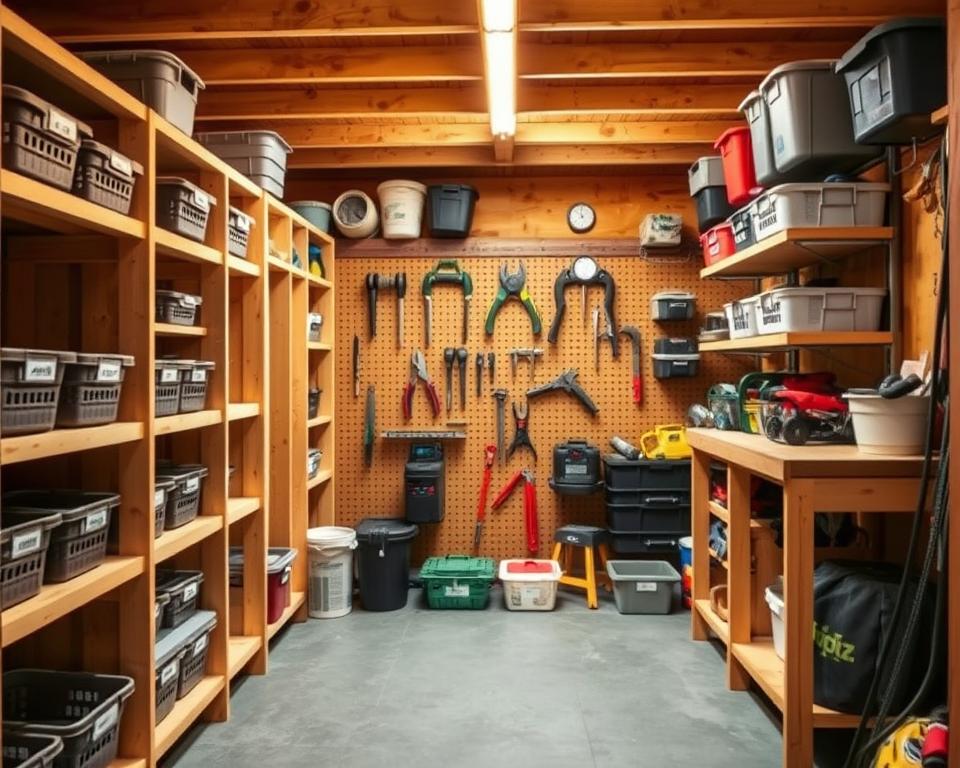
Upcycling furniture from other areas of the house provides excellent storage solutions. Old kitchen shelves and bedroom units find new purpose in garden sheds. Even tired-looking cabinets that have lost indoor appeal often fit perfectly in shed environments.
Repurposing old doors showcases the creative potential of diy ideas. They can become funky cupboard fronts or workspace surfaces. This approach adds character while providing functional storage at minimal cost.
Flexibility is essential when considering what furniture can work in shed spaces. Wardrobes with adjustable shelves transform into versatile units for gardening supplies. Simple projects like adding hooks or wheels enhance existing furniture’s utility.
These creative ideas help maintain excellent organisation while respecting budget constraints. They allow homeowners to keep shed items well-arranged and accessible. Repurposing also reduces waste through thoughtful reuse of existing resources.
Steps for a Systematic Shed Decluttering Process
Tackling a packed shed can feel like an impossible mission for many. The key is to adopt a systematic process that breaks the enormous task into manageable steps. This prevents the paralysis that often stops people from starting.
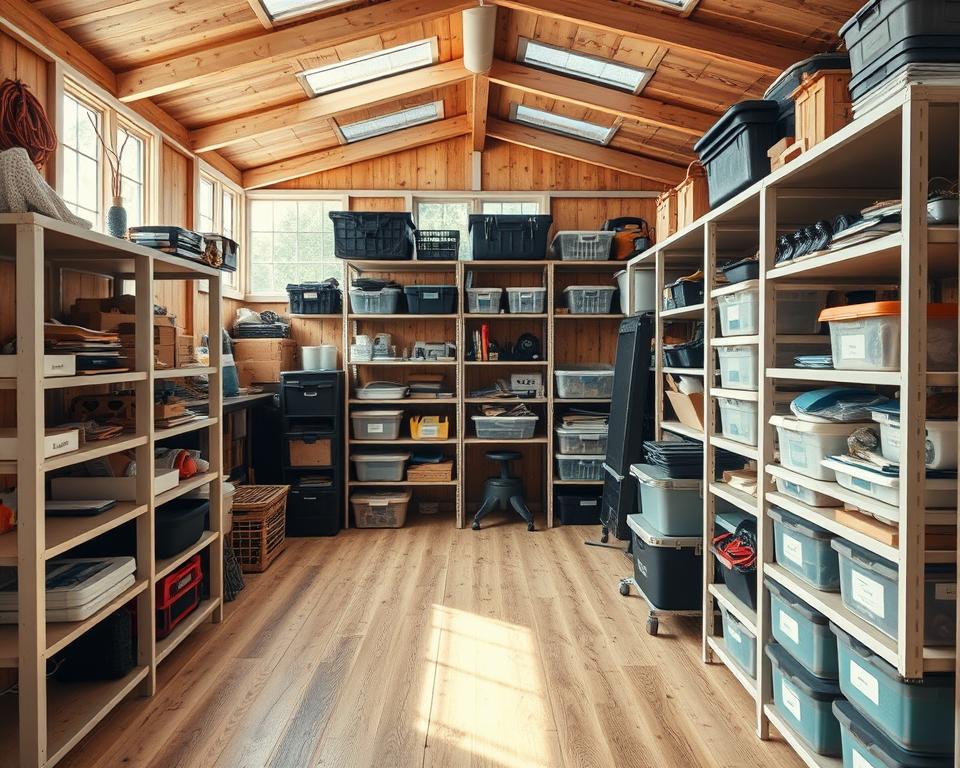
A methodical approach ensures steady progress. It transforms an overwhelming job into a series of small, achievable victories.
Setting Micro-Goals for Daily Sessions
Instead of aiming to clear the entire structure in one go, homeowners should set micro-goals. Focusing on one shelf or a single category of items makes the work feel less daunting.
Fifteen-minute daily sessions are a top recommendation. There is always an excuse to postpone a whole morning’s work, but few reasons to delay a quarter of an hour.
These short bursts are remarkably time-efficient. The entire session is spent actively clearing, unlike longer periods which include breaks and distractions.
One person cleared a garage stacked to the ceiling in just three weeks using this method. Seven or eight fifteen-minute sessions achieve more than a single two-hour Saturday session.
Sorting Items into Keep, Donate and Discard
For every possession, apply a simple three-pile system. This is one of the most effective tips for garden sheds.
- Keep: For items regularly used or genuinely valued.
- Donate: For usable things no longer needed.
- Discard: For broken, dangerous, or useless stuff.
Homeowners must be decisive. Question whether items that “might be useful someday” will realistically ever be used. Starting with easy or enjoyable items first builds momentum.
This way, the organisation of both garden and storage sheds becomes a sustainable process. Celebrating small wins maintains motivation throughout.
Incorporating Multi-Purpose Areas in Your Shed Design
A well-designed garden shed offers far more than basic storage. The most effective layouts incorporate multi-purpose zones that serve several functions simultaneously. This approach maximises the utility of every square foot.
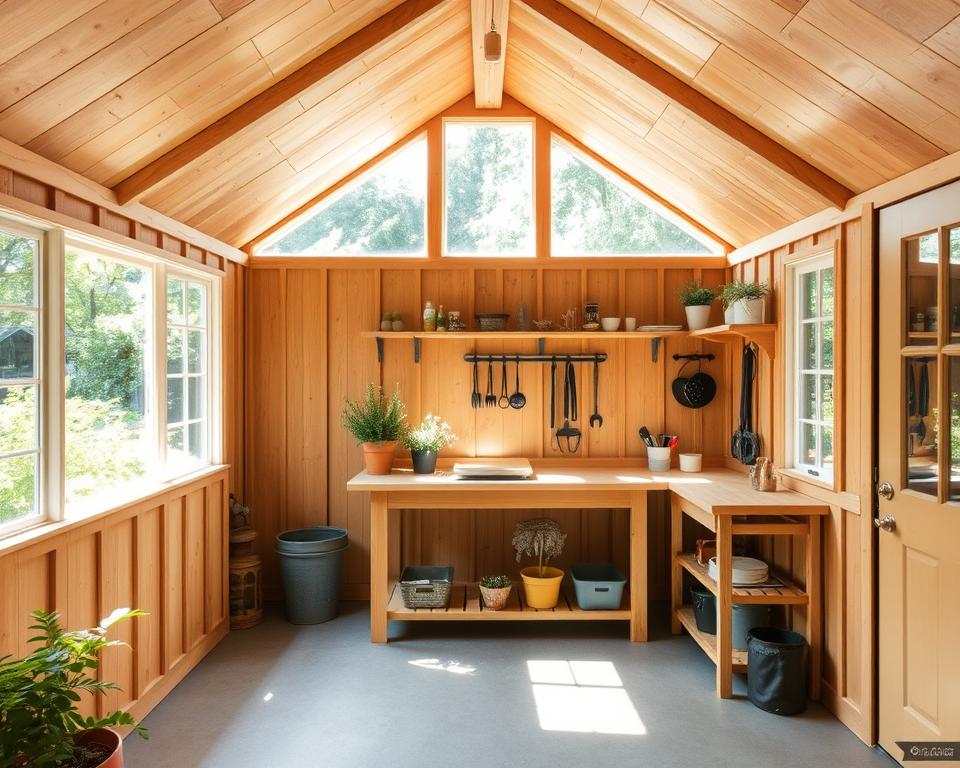
Integrating a potting bench is a prime example. This feature provides a dedicated surface for gardening tasks like transplanting seedlings. It also incorporates built-in storage, making it a central hub.
Integrating a Potting Bench and Worktop
Potting benches with tiered shelving offer multiple storage levels. They keep items like plant pots, seed packets, and gloves organised yet accessible. The work surface remains clear for actual gardening work.
Adding hooks to the sides of the bench is a smart move. It allows for hanging hand tools and watering cans within easy reach. This creates a highly efficient workstation.
Storage units with flat tops serve a dual purpose. They function as both enclosed cabinets and sturdy worktops for various projects. This transforms a simple storage area into a functional workshop.
This multi-purpose design thinking elevates the shed’s role. It becomes an extension of the home, suitable for hobbies or even a garden office. Planning the workflow ensures each zone complements the others perfectly.
Additional Tips for Maintaining an Organised Shed
Consistent maintenance habits ensure that shed organisation remains effective over time. The initial effort pays off when systems continue to work smoothly.
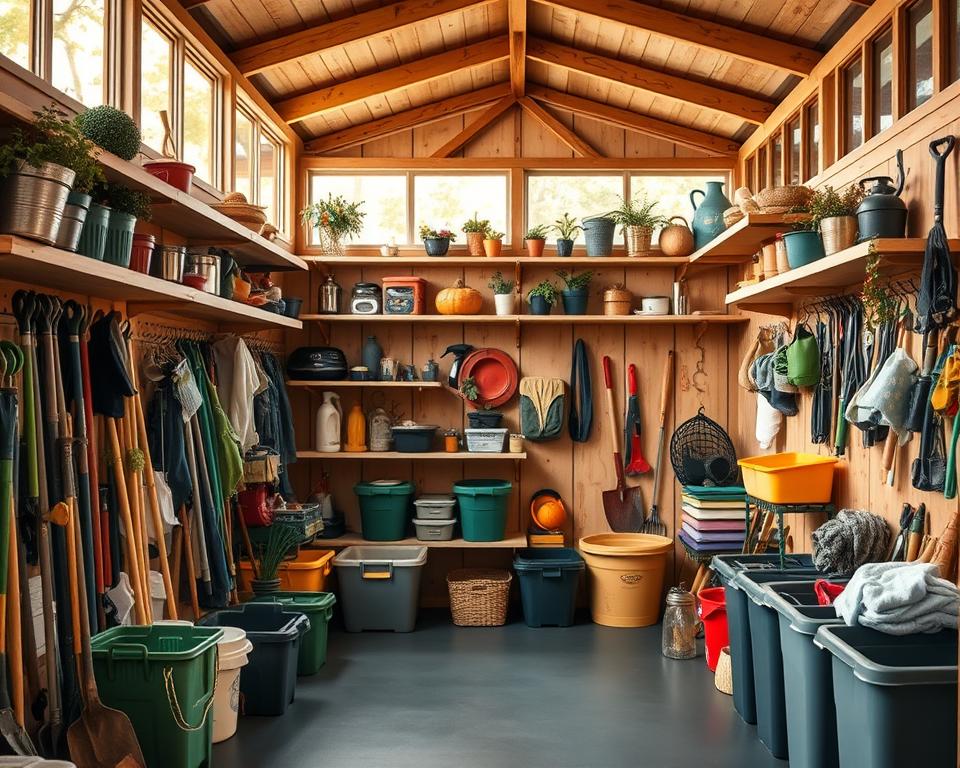
Implementing a “one in, one out” rule prevents accumulation. For every new item brought into the space, remove a similar possession. This simple practice maintains balance.
Schedule brief monthly maintenance sessions. Fifteen minutes allows for returning misplaced items and assessing systems. Seasonal reviews align storage with changing gardening needs.
Different shed materials require specific care. Wooden structures need regular treatment to prevent rot. Metal options offer durability but benefit from rust inspections.
| Material | Maintenance Needs | Advantages | Considerations |
|---|---|---|---|
| Wood | Regular painting/staining | Classic appearance | Higher maintenance |
| Metal | Rust inspection | Durable & secure | Temperature extremes |
| Plastic | Minimal care | Budget-friendly | Limited customisation |
Avoid storing temperature-sensitive items. Paint, electronics, and paper goods suffer from moisture and temperature changes. Keep the entrance clear for safe access.
These practical tips help preserve the functionality of your outdoor storage area. Regular attention prevents the gradual return of disorder.
Conclusion
Achieving an organised shed is a transformative process that yields significant rewards for any household. The journey from clutter to clarity hinges on systematic planning and the consistent application of smart storage solutions. Remember, success comes from regular, short sessions rather than daunting marathon efforts.
This approach reclaims valuable space and reduces daily stress. It protects your garden tools and boosts productivity for all your projects. The initial effort creates a functional and enjoyable area that enhances your entire home experience.
Maintaining this new order requires commitment. Regular quick checks prevent the slide back into chaos. The best organisation systems are also flexible, adapting as your needs change over time.
This final piece of advice is simple: begin today. Start with a small, manageable task. These practical tips empower you to create a shed that works perfectly for you, for years to come.
FAQ
What is the first step to organising a shed?
The initial step involves a thorough sort of all contents. Every item should be removed and categorised into groups such as gardening tools, DIY equipment, and seasonal items. This process helps identify what is essential and what can be discarded.
How can I create more storage space in a small shed?
Utilising vertical space is key. Installing wall-mounted shelves, pegboards, and hooks allows for efficient storage of tools and equipment. This approach keeps the floor clear and makes items easily accessible.
What are some effective storage solutions for small tools?
For small tools, magnetic strips and tool holders are excellent. Clear jars or bins on shelves are also useful for organising nails, screws, and other small items, ensuring they are kept tidy and visible.
How often should I declutter my shed?
A seasonal review is recommended. At the start of each gardening season, assess the shed’s contents. This regular maintenance prevents clutter from building up and keeps the space functional.
Can the shed doors be used for storage?
Absolutely. The interior of shed doors offers valuable storage potential. Hanging organisers or hooks on the door can hold items like gardening gloves, bags, or lightweight tools, maximising the available space.
What should I do with items I no longer need?
Unwanted items in good condition can be donated, sold, or recycled. For broken tools or equipment that cannot be repaired, they should be disposed of responsibly to free up valuable space.
How do I protect my tools from damp in the shed?
Ensuring good ventilation is crucial. Storing tools in sealed containers or metal tool chests can protect them from moisture. For metal tools, a light coating of oil can prevent rust.
Are there any multi-functional shed organisation ideas?
Yes, incorporating a potting bench with built-in shelving or drawers is a great example. This provides a dedicated work surface while also offering concealed storage for compost, pots, and other gardening supplies.