How to Properly Lay Patio Slabs on Concrete
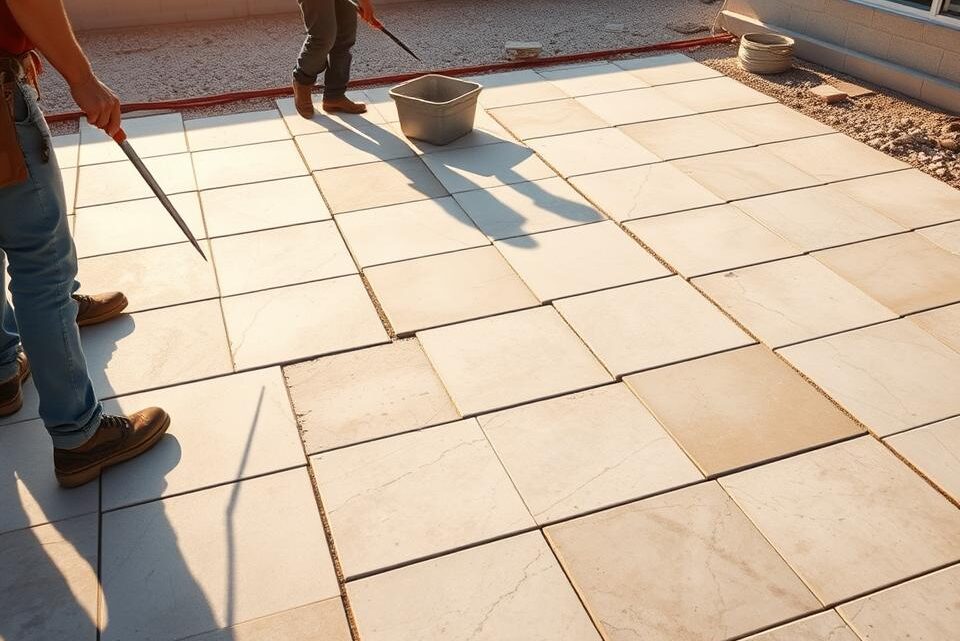
Transforming your garden with a new patio can be a rewarding DIY project. Many assume that laying paving slabs on concrete is a task for the experts. However, with the right tools and knowledge, you can achieve professional-looking results.
Laying slabs on concrete requires careful preparation and attention to detail. Whether you’re working with fresh concrete or an existing base, this guide will walk you through the process, from preparation to completion.
A well-laid patio not only enhances your garden’s aesthetic appeal but also provides a functional space for relaxation and entertainment.
Inhaltsverzeichnis
Key Takeaways
- Prepare your base correctly before laying paving slabs.
- Choose the right slabs for your patio design.
- Ensure proper drainage to prevent water accumulation.
- Use the correct adhesive and grouting techniques.
- Seal your slabs to protect them from the elements.
Understanding the Benefits of Laying Patio Slabs on Concrete
To make an informed decision, it’s essential to explore the benefits of using a concrete base for your patio slabs. Laying patio slabs on concrete is a method that offers several advantages, particularly in terms of durability and stability.
Advantages of a Concrete Base for Paving
A concrete base provides a solid foundation for your patio slabs, ensuring they remain level and secure over time. The structural integrity of a concrete base is superior to other materials, making it ideal for areas with heavy foot traffic or where large, heavy slabs are used.
Concrete vs. MOT Type 1 Sub-base: Which is Better?
When comparing concrete to MOT Type 1 sub-base, several factors come into play. The following table summarises the key differences:
| Characteristics | Concrete Base | MOT Type 1 Sub-base |
|---|---|---|
| Structural Integrity | High | Moderate |
| Drainage | Poor | Good |
| Cost | Higher | Lower |
| Maintenance | Low | Moderate |
Ultimately, the choice between a concrete base and an MOT Type 1 sub-base depends on your specific needs and preferences. By considering the advantages and disadvantages of each, you can make a decision that best suits your project.
Essential Tools and Materials Needed

The key to a durable and visually appealing patio lies in selecting the correct tools and materials for the job. To achieve a professional finish, you’ll need to ensure you have everything required for the task.
Tools Checklist
To lay patio slabs on concrete, you’ll need a variety of tools. These include a spirit level to ensure the surface is even, a trowel for applying mortar, and a rubber mallet for tapping the slabs into place. You’ll also require a string line to guide the laying process and a spade for mixing and applying materials.
Materials Shopping List
You’ll need several key materials to complete your project. These include sharp sand for the mortar bed, ballast and cement for creating the concrete base, and patio slabs themselves. Depending on your project’s specifications, you may also require hardcore or MOT Type 1 for the sub-base layer to ensure proper drainage and stability.
The quality of materials used will significantly impact the durability and appearance of your finished patio, so it’s worth investing in the best you can afford.
Preparing the Area for Your Patio
To achieve a beautifully laid patio, the initial preparation of the site is paramount, setting the foundation for the entire project. This involves several critical steps that ensure your patio is not only aesthetically pleasing but also safe and durable.
Measuring and Marking Out Your Patio Space
Begin by measuring and marking out the area where you plan to lay your patio slabs. Use a tape measure to determine the dimensions and mark the perimeter with stakes and string. This will give you a clear visual guide for the excavation process. It’s essential to double-check your measurements to avoid any costly mistakes.
Ensuring Proper Drainage and Levels
Proper drainage is crucial to prevent water from pooling on your patio, which can damage both the slabs and the underlying concrete base. To achieve this, you need to ensure that the ground is level and that there’s a slight gradient away from any adjacent buildings. Use a spirit level to check that the area is even, making adjustments as necessary. The finished surface level of your patio should be at least 150mm below any damp proof course to prevent moisture issues.
- Ensure a slight gradient (typically 25mm for every 1.5m) away from buildings to facilitate rainwater runoff.
- Regularly check the ground level during preparation to avoid unevenness.
- Consider additional drainage solutions like channel drains for large patios or areas with known drainage problems.
By carefully preparing the area, you set the stage for a successful patio installation that will last for years to come. 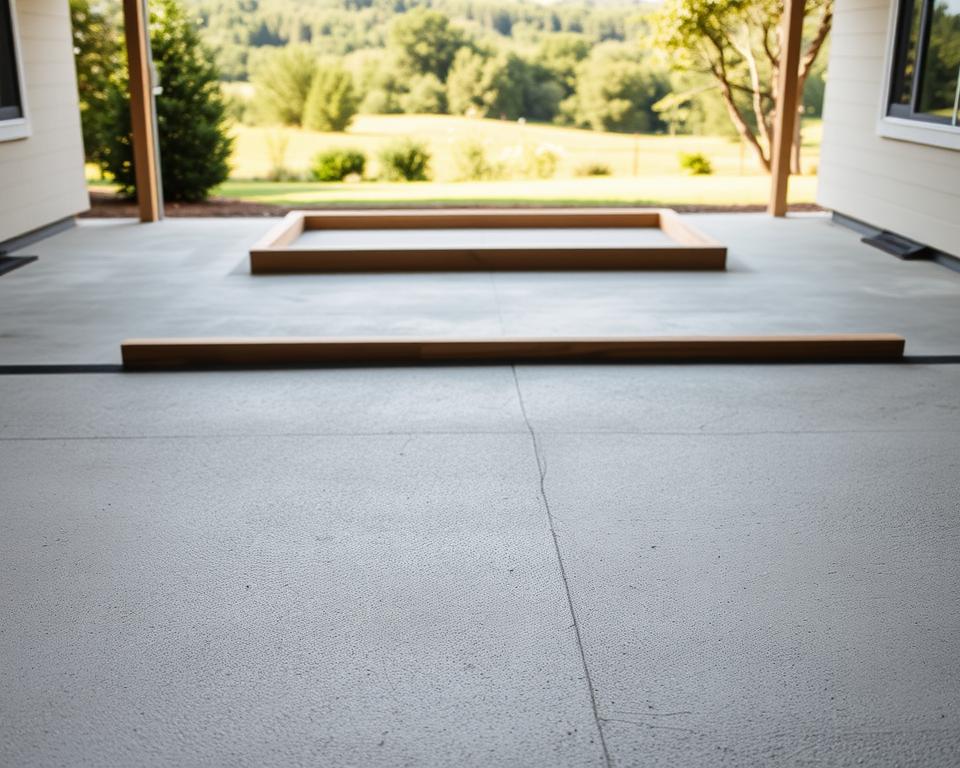
Creating a New Concrete Base
Before you can lay your patio slabs, you need to create a sturdy concrete base that will support the weight and withstand the elements. This involves several key steps to ensure a strong and durable foundation.
Excavating the Area to the Correct Depth
The first step in creating a new concrete base is excavating the area to the correct depth. This requires careful measurement to ensure that the base is level and even. You need to remove any debris, vegetation, or existing concrete to the required depth, which typically includes a sub-base layer.
Adding and Compacting the Sub-base
Once the area is excavated, you need to add a sub-base material, such as MOT Type 1, and compact it thoroughly. This layer provides a stable foundation for your concrete base. Use a plate compactor to ensure the sub-base is firmly compacted and level.
Mixing and Pouring the Concrete
To create the concrete mix, combine one part cement with six parts ballast. The mix should be of a consistency that allows it to be poured thickly. If it’s too dry, it will be crumbly; if it’s too wet, it will be runny. Use a sturdy wheelbarrow to mix and transport the concrete. Pour the mix into the prepared area, adding it in sections to maintain even coverage. Use a straight edge to screed the concrete, moving it in a sawing motion to create a level layer. Add 30mm of your concrete mix to the site and screed it to ensure everything is packed down and levelled off.
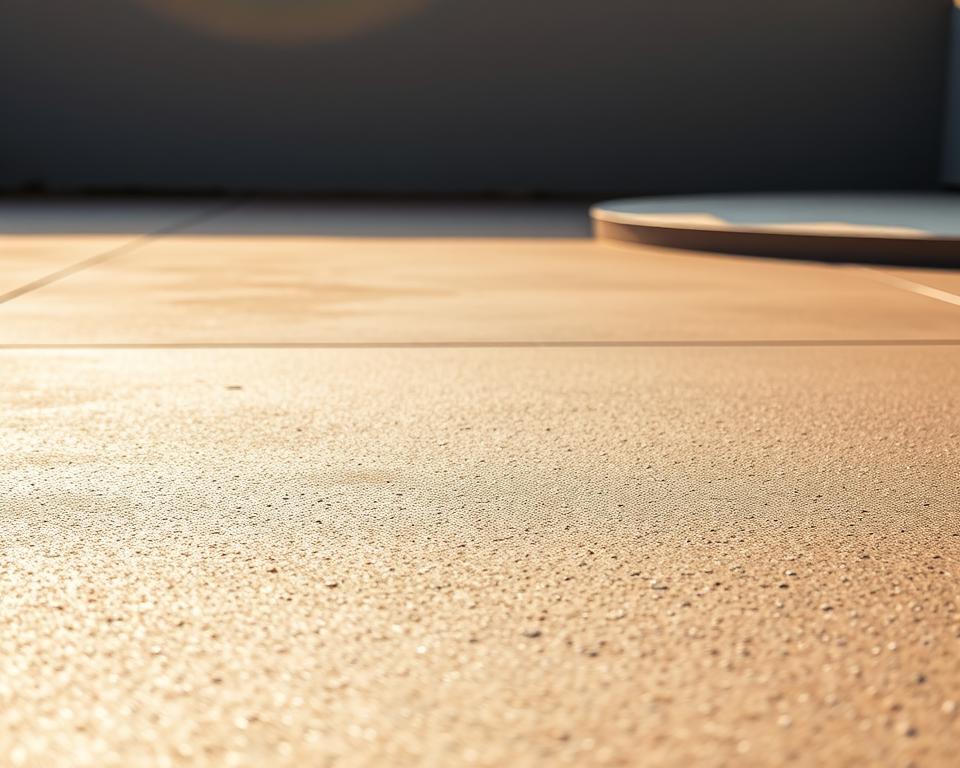
When mixing concrete, add water gradually while stirring continuously to achieve the ideal consistency. Pour the mix in sections, working methodically across your prepared area. Allow the concrete to partially set before using a float to smooth the surface, creating an ideal base for laying your patio slabs.
- The correct concrete mix ratio is crucial for creating a strong, durable base for your patio slabs.
- When mixing concrete, add water gradually while stirring continuously to achieve the ideal consistency.
- Pour the concrete in sections to ensure even coverage and to make screeding more manageable.
How to Properly Lay Patio Slabs on Concrete: Step-by-Step Guide
A well-laid patio starts with correctly placing slabs on a concrete surface. Before you begin, ensure that your concrete base is clean, dry, and free of any debris.
Preparing the Concrete Surface
To prepare the concrete surface, clean it thoroughly to remove any dirt or old mortar. Check the surface for any cracks or uneven areas and make necessary repairs.
Mixing the Perfect Mortar
Mixing the right mortar is crucial for a stable and long-lasting patio. Use a mix of sand and cement, and add water gradually to achieve the right consistency.
Laying the First Slab Correctly
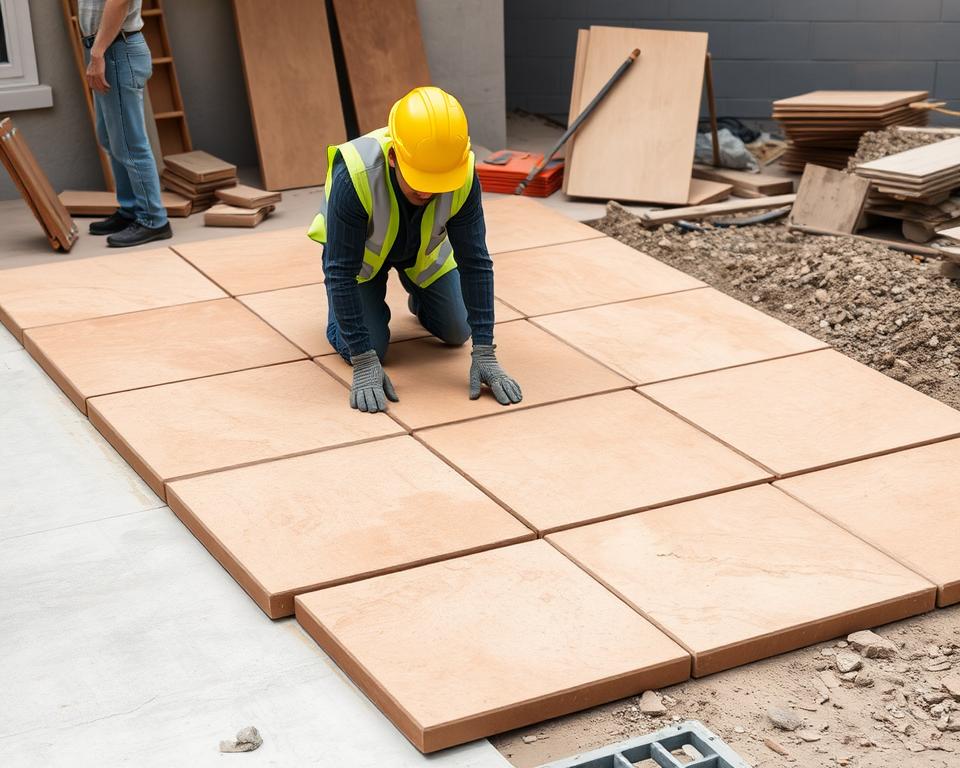
Begin by laying the first slab in the direction of the fall, ensuring it’s aligned with your patio’s design. Use a spirit level to check that the slab is level and adjust as necessary.
Positioning Remaining Slabs with Proper Spacing
As you lay subsequent paving slabs, maintain a consistent gap of 5-10mm between them using spacers. Check the levels of each slab and adjust as needed to create a flat, sloping surface.
| Task | Tips |
|---|---|
| Lay the first row of slabs | Use a spirit level to ensure correct alignment |
| Use spacers between slabs | Maintain a 5-10mm gap for proper jointing |
| Check levels as you go | Adjust slabs gently with a rubber mallet |
Once you’ve finished laying all the paving slabs, allow the mortar to dry for 48 hours before allowing foot traffic or exposing the patio to heavy rain.
Filling the Joints Between Paving Slabs
Filling the gaps between paving slabs is essential for a durable and visually appealing patio. The process involves creating a suitable jointing mix and applying it correctly to ensure the slabs remain in place and the patio looks great.
Creating the Right Jointing Mix
You can create a jointing mix by combining cement and sand. The mix should be dry and brushed into the gaps between the slabs. It’s crucial to use the right ratio of cement to sand to achieve a durable and weather-resistant joint.
Techniques for Clean and Durable Joints
To achieve clean and durable joints, follow these steps:
- Sweep your dry jointing mix across the patio surface, working it into the gaps between slabs with a soft brush.
- Lightly spray the surface with water using a fine mist sprayer to activate the cement.
- Use a pointing trowel or jointing iron to compress and smooth the jointing mixture, creating a slightly concave finish.
- Clean any excess jointing mixture from the surface of the paving slabs immediately using a damp sponge.
- For a professional finish, consider using a proprietary jointing compound, especially for areas with narrow joints or where a particularly durable finish is required.
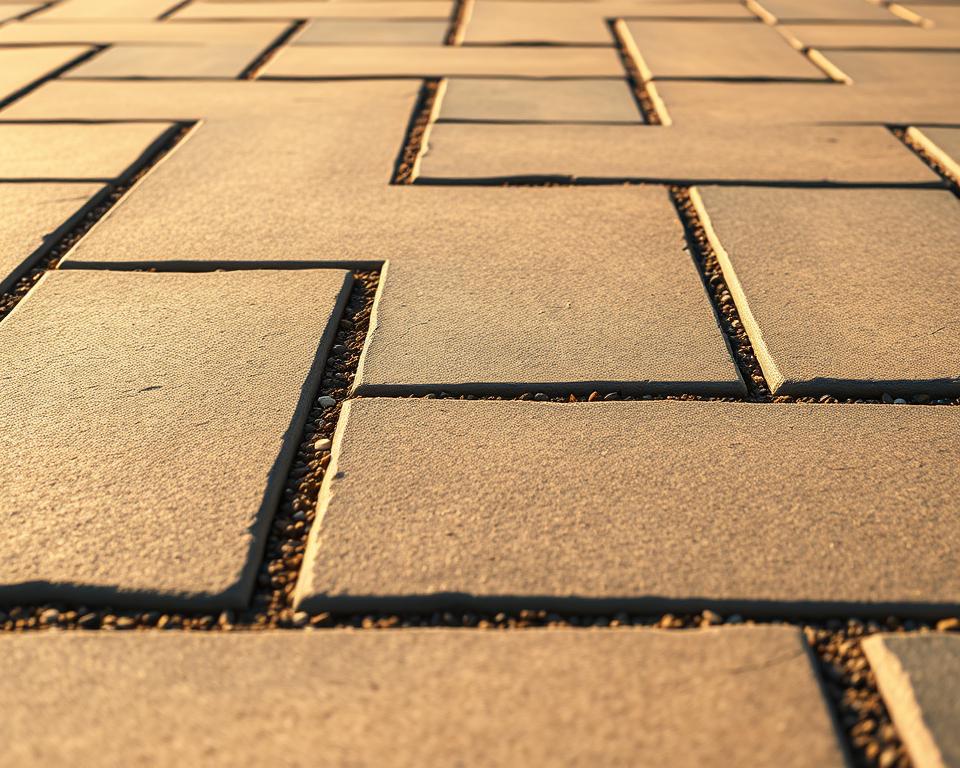
By following these techniques, you can ensure your patio slabs are securely in place and the joints are filled to last, enhancing the overall appearance and durability of your patio.
Laying Paving Slabs on Existing Concrete
When laying paving slabs on existing concrete, it’s crucial to follow a modified approach. This ensures a stable and long-lasting result.
Assessing the Condition of the Existing Concrete
Before you begin, assess the condition of the existing concrete base. Check for cracks, unevenness, and signs of wear. Ensure the surface is clean and free of debris.
Preparing the Surface for New Slabs
To prepare the surface, apply a cement-based priming product to the back of the slabs. Create a mortar mix using four parts sand to one part cement and water. The consistency should be firm but not runny. Put down a 30mm layer of the mix to create an even base.
Modified Technique for Existing Bases
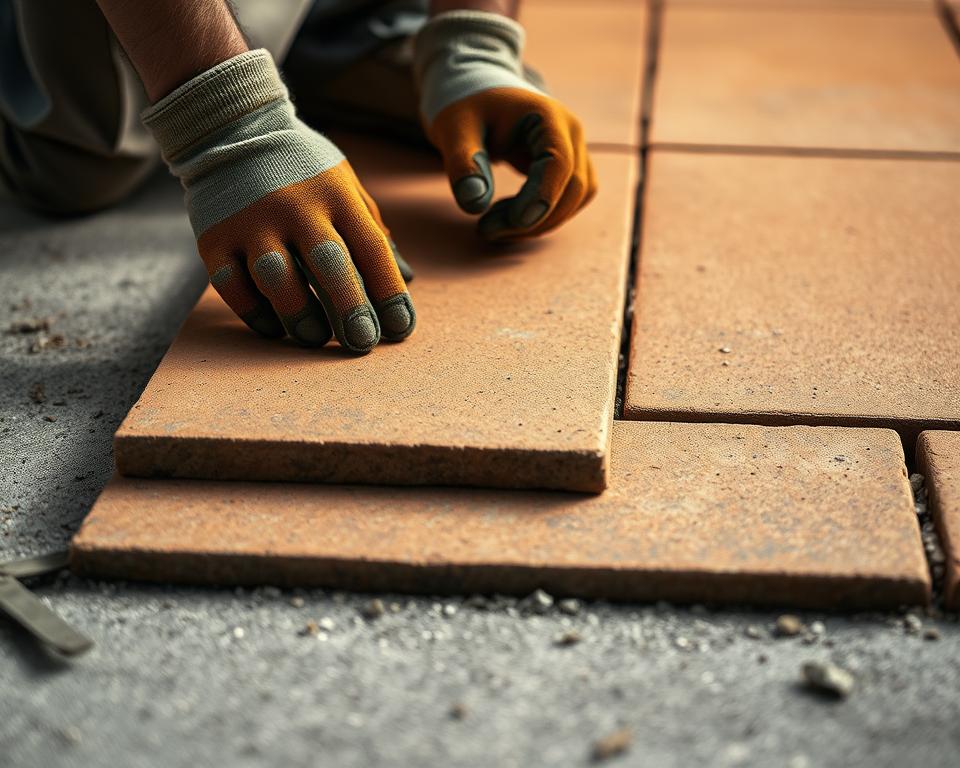
When laying paving slabs on existing concrete, use a slightly wetter mortar mix to compensate for the less porous base. Consider a full wet mortar bed for complete support. Position slabs with 8-10mm gaps and tap them into place with a rubber mallet.
| Technique | New Base | Existing Concrete Base |
|---|---|---|
| Mortar Mix Consistency | Firm | Slightly Wetter |
| Gap Between Slabs | 5-8mm | 8-10mm |
| Bedding Method | Spot Bedding | Full Wet Mortar Bed |
Covering Old Paving Slabs with New Ones
If your patio is still structurally sound but aesthetically unpleasing, overlaying new paving slabs on top of the old ones can be a viable solution. This approach not only saves time and resources but also gives your outdoor space a fresh new look. Before you begin, it’s essential to assess the condition of your existing patio.
Assessing the Condition of Existing Slabs
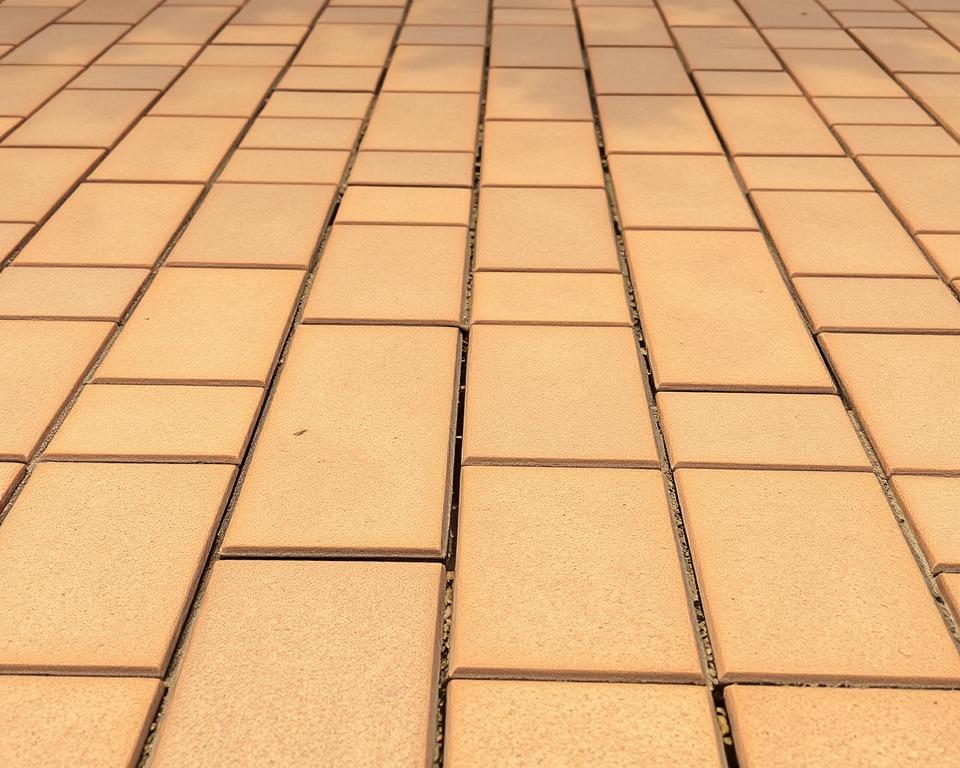
When overlaying existing paving slabs, thoroughly assess their condition first. Ensure they’re stable, relatively level, and have no significant drainage issues. Clean the existing slabs meticulously, removing all moss, weeds, and debris, and treat with a weed killer to prevent future growth through the new paving.
Consider the following key factors:
- Stability of the existing slabs
- Levelness of the patio surface
- Drainage issues that may affect the new layer
Special Considerations for Overlaying
To successfully overlay new paving slabs, consider using a thinner paving slab for the new layer to minimise the height increase. Alternatively, choose a complementary material that works well at a reduced thickness. Apply a layer of bedding material directly onto the clean, existing slabs – either a thin mortar bed or, for certain types of paving, a layer of sharp sand.
| Material | Thickness | Advantages |
|---|---|---|
| Thin Paving Slabs | 20-30 mm | Minimises height increase, aesthetically pleasing |
| Mortar Bed | 10-20 mm | Provides a strong bond, flexible thickness |
| Sharp Sand | 20-30 mm | Easy to lay, good drainage |
Laying Porcelain Paving Slabs: Special Considerations
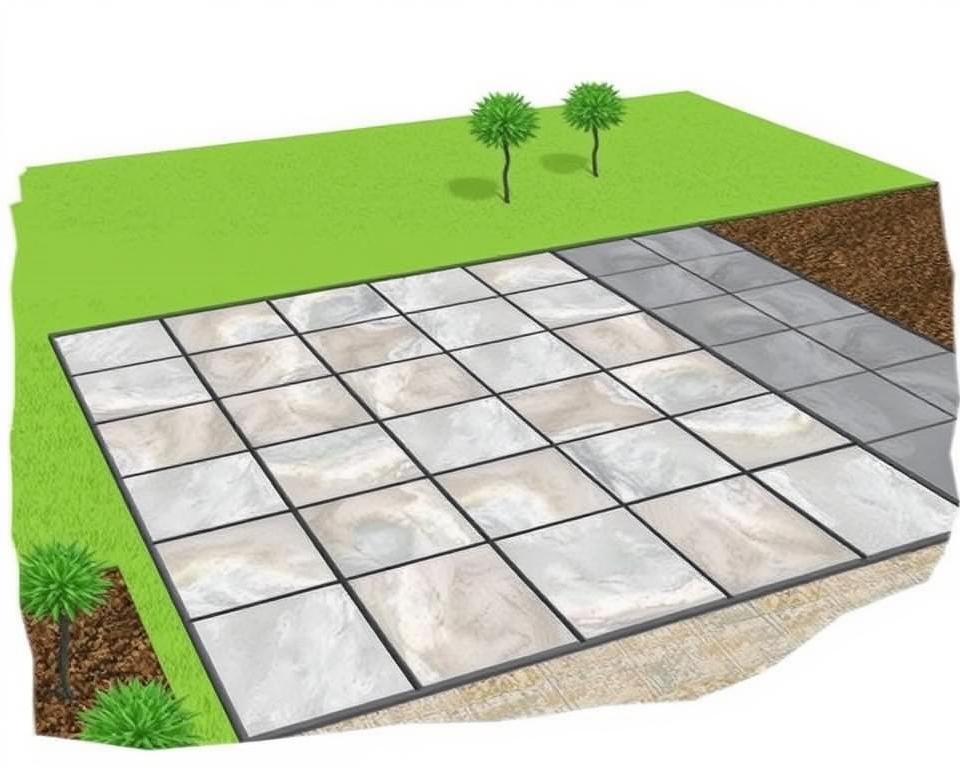
Laying porcelain paving slabs requires a meticulous approach to ensure a durable and aesthetically pleasing result. You need to consider several factors to achieve a professional finish.
Using Outdoor Tile Adhesive vs. Traditional Mortar
When installing porcelain paving slabs, you have the option to use either outdoor tile adhesive or traditional mortar. Outdoor tile adhesive is specifically designed for external use and offers improved flexibility and durability. However, traditional mortar can still be used if you prefer a more conventional method.
The choice between these two options depends on your specific needs and preferences. If you opt for outdoor tile adhesive, make sure to follow the manufacturer’s instructions for application and drying times.
Ensuring Proper Adhesion and Durability
To ensure proper adhesion and durability of your porcelain paving slabs, it’s crucial to prepare the surface correctly. Priming the back of the slabs with a slurry primer can significantly improve adhesion to the bedding material. Additionally, using plastic spacers to maintain consistent joint widths is essential for accommodating minor thermal movement and allowing for proper grouting.
When laying porcelain paving slabs, carefully press them onto the adhesive, ensuring a good bond. Use a spirit level to check that each slab is level and adjust if necessary. Leave the slabs to set for at least 24 hours before walking on them, and avoid heavy loads or traffic for at least 48 hours to allow the adhesive to fully cure.
Some key considerations when laying porcelain paving slabs include:
- Priming the back of porcelain paving slabs with a slurry primer to improve adhesion.
- Maintaining consistent joint widths using plastic spacers, typically 5-10mm.
- Using a wet diamond blade cutter to cut porcelain slabs, as they are hard and prone to chipping.
- Selecting specific jointing compounds compatible with the non-porous nature of porcelain, such as epoxy-based or specialist outdoor porcelain grouts.
- Allowing adequate curing time for both the adhesive and jointing compound before subjecting the area to foot traffic or furniture placement.
Troubleshooting Common Patio Laying Problems
When laying patio slabs, several common issues can arise that require immediate attention to ensure a durable and aesthetically pleasing result. One of the most critical aspects is maintaining the correct level and ensuring proper drainage to prevent water accumulation.
Dealing with Uneven Slabs
Uneven slabs can be a significant issue, often resulting from an improperly prepared base or incorrect laying techniques. To address this, check that the concrete base is level and compacted adequately before laying the slabs. If a slab is uneven, you may need to remove it and adjust the mortar bed or the base to achieve a level surface.
Addressing Drainage Issues
Drainage problems can lead to water pooling on the patio, potentially causing damage over time. Ensure that the patio has a sufficient fall (1:60) to direct water away from buildings. Also, be cautious not to fill the gaps between slabs completely with jointing compound, as this can prevent water from draining through the joints. Consider installing a linear drainage channel if drainage remains an issue, and ensure the finished level is below the adjacent damp proof course.
Conclusion
Properly laying patio slabs on concrete requires patience, but the result is a durable and attractive garden patio. With careful planning, your paving project will enhance your outdoor living space, providing a beautiful area for years to come, after 24-48 hours.
- Laying slabs correctly transforms your garden into a functional space.
- Regular maintenance ensures your patio remains attractive and durable.
By investing time in proper laying techniques, you’ll enjoy a long-lasting paving solution.
FAQ
What is the ideal mortar mix for laying patio slabs?
A suitable mortar mix consists of one part cement to four or five parts sharp sand. The mixture should be damp but not too wet, allowing you to hold its shape when squeezed.
How long should I wait before walking on newly laid patio slabs?
It’s recommended to wait at least 24 hours before walking on newly laid patio slabs, and ideally 48-72 hours for heavier loads. This allows the mortar to set properly.
Do I need to seal my patio slabs after laying them?
While not always necessary, sealing your patio slabs can help protect them from stains and weathering. The need for sealing depends on the type of slab and its porosity.
How do I ensure proper drainage for my patio?
To ensure proper drainage, make sure your patio has a slight slope away from your house or other structures. A fall of 1:80 is generally recommended. Use a spirit level to check the slope during construction.
Can I lay patio slabs directly on soil?
It’s not recommended to lay patio slabs directly on soil, as it can lead to settling and unevenness. A solid base, such as a concrete slab or a compacted sub-base, is necessary for a stable and long-lasting patio.
What is the purpose of spacers when laying patio slabs?
Spacers are used to maintain even gaps between patio slabs, ensuring consistent joint widths. They help in achieving a uniform appearance and facilitate the grouting process.
How do I mix the right consistency of mortar for laying slabs?
The mortar should be mixed to a consistency that is damp but not too wet. It should hold its shape when squeezed but not be so dry that it crumbles. The right consistency is crucial for a strong bond between the slab and the base.
Can I lay new patio slabs over existing ones?
Yes, you can lay new patio slabs over existing ones, provided the existing surface is level, stable, and free from significant damage. It’s essential to prepare the surface correctly before laying the new slabs.