How to Soundproof a Summer House: Tips and Techniques

A summer house is a versatile garden structure. It offers a peaceful retreat from the main home. Many people now use these spaces for more than just summer relaxation. They function as home offices, music studios, and entertainment areas.
This shift in use makes managing noise essential. Effective soundproofing serves two key purposes. It stops external noise from entering the space. It also contains internal sound to avoid disturbing neighbours.
This comprehensive guide explains the entire process. It covers acoustic principles, material selection, and practical techniques. The goal is to achieve professional results, often as a DIY project.
With basic tools and the right knowledge, enhancing your summer house‘s acoustics is achievable. This article provides a complete overview. It addresses floors, walls, ceilings, windows, and doors.
Inhaltsverzeichnis
Key Takeaways
- Summer houses are increasingly used as multipurpose spaces, making sound management crucial.
- The primary goals of soundproofing are to block external noise and contain internal sounds.
- A thorough understanding of acoustic principles is the foundation of any successful project.
- This guide covers all structural elements, from floors and walls to windows and doors.
- Undertaking this project yourself is feasible with the correct materials and methods.
- Professional consultation can be beneficial for complex requirements or optimal results.
Introduction to Soundproofing a Summer House
Modern garden retreats now serve as professional workspaces and recreational zones. This versatile structure offers a dedicated space for various activities away from the main residence.
Many people use these buildings for activities that generate significant sound. Home offices, music practice rooms, and entertainment systems are common uses. Proper acoustic treatment becomes essential for maintaining harmony with neighbours.
These standalone garden buildings face unique acoustic challenges. Their lightweight construction offers little protection against external noise. They also allow internal sounds to escape easily.
Effective acoustic management serves a dual purpose. It creates a peaceful environment inside by blocking unwanted external sound. It also contains internal activities like music rehearsal to prevent disturbance.
| Activity Type | Sound Level | Recommended Treatment |
|---|---|---|
| Quiet Reading | Low | Basic sealing |
| Home Office | Medium | Moderate insulation |
| Music Practice | High | Comprehensive solution |
Realistic expectations are important for DIY projects. Professional-grade results require expertise. However, significant improvements are achievable with proper planning and quality materials.
The intended use determines the appropriate acoustic measures. Different activities demand varying levels of sound control. Careful consideration during planning ensures optimal results.
Understanding Acoustic Principles for a Tranquil Space
Achieving a truly quiet garden room hinges on a solid grasp of core acoustic science. Successful effective soundproofing relies on four main principles working together.
These are mass, absorption, decoupling, and damping. Mass involves adding heavy, dense materials to block vibrations. Absorption uses soft, porous substances to absorb sound energy and reduce echoes.

Decoupling separates structural elements to stop vibrations travelling through them. Damping reduces resonance in materials like metal or wood. High density is often key for adding effective mass.
It is crucial to understand that sound travels both through the air and as vibrations within structures. A comprehensive approach must address walls, floors, the ceiling, windows, and doors. Neglecting any single element creates a weak point that compromises the entire system.
Different noises also require different solutions. Airborne sound, like voices, is tackled with acoustic insulation and sealing. Impact noise, such as footsteps, needs decoupling and damping techniques. The Sound Transmission Class (STC) rating helps compare how well materials block noise.
Planning Your Soundproofing Project
A successful acoustic upgrade begins with meticulous preparation. The scope of the project must be clearly defined from the outset. Requirements for a quiet home office differ vastly from those of a soundproofing setup for music recording.

Assessing the existing structure is a critical first step. Identifying weak points, such as thin walls or single-glazed windows, informs the entire approach. The intended use of the space dictates the necessary level of acoustic treatment.
Accurate measurements are non-negotiable. The internal dimensions determine material quantities. It is vital to calculate how much space will be lost, as layers of insulation and board can reduce room size significantly.
Budget considerations are equally important. A balance exists between diy solutions and professional-grade products. Realistic expectations ensure resources are allocated effectively.
Practical considerations must be integrated into the plan. Covering windows for better acoustics necessitates additional lighting. Electrical needs, ventilation, and heating should be designed into the project, not added later.
Seeking expert advice can prevent costly errors. A brief consultation ensures material selection and techniques are appropriate for the structure. This advice is valuable even for those undertaking the work themselves.
Allocate sufficient time for the project. Rushing the installation can compromise results. A realistic timeframe accounts for careful work and potential challenges.
| Aspect | Consideration | Impact |
|---|---|---|
| Intended Use | Music vs. Office | Determines soundproofing level |
| Structural Integrity | Weight of materials | May require reinforcement |
| Budget | Material quality | Affects final performance |
| Time Investment | DIY labour | Weeks or weekends |
Essential Tools and Materials for Soundproofing
A successful project relies on gathering the right equipment and supplies. The correct materials and tools are fundamental to achieving professional results. This preparation phase is crucial for a smooth diy experience.

High-quality products often lead to better performance and an easy install. Investing in good materials from the start prevents future issues.
Required Tools for a DIY Project
Basic tools are sufficient for most tasks. A measuring tape and pencil ensure accurate cuts. A level and straight edge guarantee straight lines.
Power tools like an electric drill and screwdriver speed up assembly. A caulk gun applies sealants neatly. A utility knife is versatile for trimming materials.
Quality equipment makes the work faster and more precise. Secure fixing of soundproofing materials is vital for effectiveness.
Choosing Suitable Soundproofing Materials
Key categories of soundproofing materials exist. Mass-adding options like plywood or plasterboard block vibrations. Absorptive products such as Rockwool RW5 soak up sound.
Barrier materials like Mass Loaded Vinyl are thin but effective. Specialised sealants and acoustic caulk prevent sound leaks. Each product serves a specific purpose in the overall system.
Professional-grade materials often outperform standard options. The choice depends on the desired results and budget.
How to Soundproof a Summer House
Transforming a garden shed into an acoustically isolated space presents distinct considerations compared to interior rooms. These structures often feature lightweight timber framing and thinner cladding materials. The construction typically includes more gaps and imperfections that require attention.

The most effective approach for a soundproof shed involves treating every surface systematically. Floors, walls, ceiling, windows, and doors must all receive attention. Eliminating weak points ensures soundproofing success.
A superior method is the “room within a room” concept. This system creates a decoupled internal structure inside the original shed framework. It prevents sound vibrations from transmitting through the building.
Typical garden building construction poses specific challenges. Lightweight wood frames, basic windows, and numerous gaps demand comprehensive solutions. Each structural element requires tailored treatment.
The process follows a logical sequence from the ground up. Beginning with floor treatments, work progresses to wall assemblies, then ceiling modifications. Windows, doors, and final penetrations complete the system.
This methodical way of working makes the project manageable for dedicated DIY enthusiasts. Each stage builds upon the previous, creating cumulative acoustic benefits. Proper planning ensures successful implementation.
Structural integrity remains crucial throughout the soundproofing process. Added weight from acoustic materials requires proper support. The building must maintain weatherproofing and security standards.
Soundproofing the Floors
A common mistake is focusing solely on walls for acoustic control. The floor is a critical pathway for both impact and airborne noise. Sound energy travels through the structure and anything connected to it.

This transmission, known as flanking, undermines other efforts. A comprehensive approach must include the floor to be truly effective.
Preparing the Subfloor
Before any installation, the existing floor structure requires a thorough inspection. Look for signs of damage, rot, or weakness in the shed‘s floor. Any issues must be resolved first.
Reinforcing the subfloor is often necessary. Adding a layer of dense board, like plywood, increases mass and density. This creates a solid, stable foundation for subsequent soundproofing materials.
Exploring Acoustic Underlay Options
Various underlays cater to different needs and budgets. Budget-conscious options include repurposed carpet underlay. These can reduce impact noise and vibrations effectively.
For superior performance, professional-grade products are available. A 6mm Acoustic Rubber Underlay is a top choice. It should cover the entire surface area for maximum effect.
Installation involves spreading adhesive evenly and laying strips carefully. Sealing the edges with acoustic sealant prevents gaps. This layer significantly reduces both impact and airborne noise.
Moisture is a key consideration for a garden shed. Materials like carpet can trap dampness, leading to mould. Interlocking rubber gym mats offer a durable, moisture-resistant alternative.
| Underlay Type | Best For | Noise Reduction | Moisture Resistance |
|---|---|---|---|
| Repurposed Carpet Underlay | Budget projects | Medium | Low |
| Thick Fabric | Basic vibration control | Low | Medium |
| 6mm Acoustic Rubber | High performance | High | High |
| Interlocking Gym Mats | Damp environments | Medium-High | High |
Soundproofing the Walls
Wall surfaces represent the largest area for potential sound transmission in a typical timber-framed shed. Their treatment is therefore critical for creating an effective acoustic barrier. Standard construction features a cavity between the internal and external cladding.
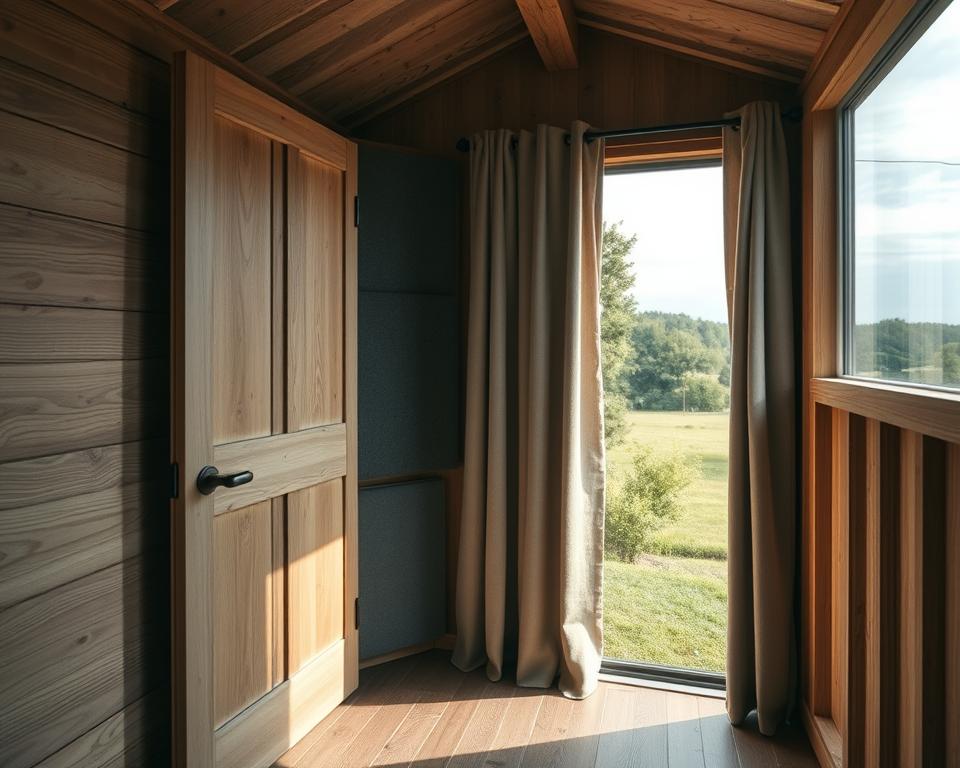
This empty space can amplify noise. Filling it with absorptive insulation is the first essential step. Mid-density open cell mineral wool, like Rockwool RW5, is an ideal choice for this cavity.
Cavity Insulation Techniques
Before installing any insulation, ensure the external shed walls are completely weather-tight. Moisture ingress can ruin acoustic performance. Cut the mineral wool slabs to fit snugly between the timber studs without compression.
A tight fit prevents gaps that allow sound to pass. This layer significantly increases the density and mass of the wall assembly, absorbing sound energy effectively.
Installing Acoustic Membranes and Boards
After insulating the cavity, line the studs with a high-performance membrane like Mass Loaded Vinyl. This thin, dense layer adds substantial mass. Fix it securely to the timber frame, overlapping seams and sealing edges.
A vapour control layer helps manage humidity. The final stage involves fixing dense boards, such as acoustic plasterboard or OSB, over the membrane. For superior performance, install two layers with staggered joints.
Using a damping compound between board layers reduces resonance. Finally, seal every tiny gap and penetration with acoustic sealant to complete the soundproof shed walls.
Soundproofing the Roof and Ceiling
The overhead surfaces in any outdoor structure present unique challenges for effective noise control. These areas represent significant potential for sound leakage, requiring careful planning.

Ceiling treatments follow similar principles to wall insulation but demand special consideration of material weight. The structure must support added mass without compromising integrity.
Using OSB, Plywood and Lightweight Panels
For the roof structure, OSB or plywood offer advantages over traditional plasterboard. These materials are lighter yet provide excellent acoustic mass and structural strength.
“Effective ceiling treatments balance acoustic performance with structural safety, ensuring long-term durability.”
The installation process begins with Rockwool RW5 Acoustic wool cut precisely to fit between rafters. This wool absorbs sound energy while providing thermal benefits.
High-performance membranes like Acoustiblok 3mm Sound Insulation Membrane create an effective barrier when installed taut across timber framing. Proper sealing of seams is crucial.
| Material | Weight | Acoustic Rating | Ease of Installation |
|---|---|---|---|
| OSB Board | Medium | High | Moderate |
| Plywood | Medium | High | Moderate |
| Plasterboard | Heavy | Medium | Difficult |
| Lightweight Panels | Light | Medium | Easy |
Final boards should fit tightly to prevent gaps. Working overhead presents practical challenges, but proper support during installation ensures professional results.
Soundproofing the Windows and Doors
Openings like windows and doors are often the weakest points in a garden building’s acoustic defence. Even with excellent wall and ceiling insulation, these areas can compromise the entire project. They require a dedicated approach to achieve a truly quiet space.

Sound travels easily through thin glass and poorly sealed frames. Proper treatment is essential for controlling noise transmission.
Upgrading Window Glazing and Seals
Windows are responsible for a significant amount of sound transfer. Single-glazed units with thin glass offer little resistance. Upgrading to double or even triple glazing provides a substantial improvement.
Specialist acoustic windows feature laminated glass with PVB interlayers. This design effectively dampens sound vibrations. For a more budget-conscious solution, secondary glazing adds an extra layer.
It creates an insulating air gap that reduces noise. Proper sealing is crucial. Check existing rubber seals for wear and replace them if necessary. Ensure a complete seal around the entire frame to prevent sound leaks.
Heavy soundproofing curtains offer a simple upgrade. They absorb sound and block light, enhancing privacy.
Effective Door Sealing and Acoustic Treatments
Doors, especially lightweight shed doors, are another major weak point. Gaps around the frame allow sound to escape easily. A comprehensive sealing strategy is necessary.
Install high-quality rubber seals around the entire door perimeter. This includes the sides and the top. For the bottom, a drop-down threshold seal can eliminate gaps.
Increasing the depth of the door stop creates a larger contact area. This improves the seal when the door is closed. For hollow-core doors, adding mass with an acoustic membrane can help.
In some cases, replacing the door with a solid-core option is the best long-term solution. Ensure the door fits snugly within its frame without any movement.
| Component | Common Issue | Effective Solution |
|---|---|---|
| Window Glass | Thin, single-pane | Upgrade to double/triple glazing |
| Window Seals | Worn or missing | Install new rubber seals |
| Door Frame | Gaps around edges | Apply comprehensive weatherstripping |
| Door Bottom | Large gap | Fit automatic threshold seal |
Addressing these openings properly ensures the soundproofing efforts on other surfaces are not wasted. It is a critical step for achieving the desired acoustic performance.
Enhancing Insulation with Acoustic Panels
Interior acoustic panels provide sophisticated control over how sound behaves in an enclosed environment. While previous sections addressed structural soundproofing, acoustic treatment focuses on managing sound quality within the room. This distinction is crucial for creating a comfortable acoustic space.

Acoustic panels absorb sound reflections, reducing reverberation and echo. This creates a more balanced acoustic environment. Peel-and-stick acoustic tiles offer an excellent solution for finishing walls after installing Mass Loaded Vinyl.
Various acoustic panel options are available:
- Foam panels for basic absorption
- Fabric-wrapped absorbers for aesthetic appeal
- Decorative acoustic tiles combining function and style
Strategic placement maximises effectiveness. Focus on first reflection points at ear height and corners where bass frequencies accumulate. Mineral wool panels provide excellent performance for this application.
Soft furnishings complement dedicated acoustic treatments. Heavy curtains, rugs, and upholstered furniture naturally absorb sound and reduce echo. This approach is particularly valuable for music studios or entertainment spaces within a garden shed.
Installation requires minimal time and no specialist skills. Each product serves to enhance the acoustic properties of the room. The right material choice depends on aesthetic preferences and performance requirements.
For optimal results, combine acoustic panels with mineral wool insulation in the wall cavities. This layered approach ensures comprehensive acoustic management throughout the shed. The final result transforms the space into a professionally treated environment.
Sealing Gaps and Finishing Touches
The final stage of acoustic improvement focuses on meticulous sealing of all potential gaps. This process serves as both the starting point and concluding step for any effective acoustic system. Even the smallest opening can compromise performance significantly.

Sound behaves much like water, finding its way through the tiniest cracks. A comprehensive approach to sealing gaps is the only solution for optimal results. Proper planning saves time and ensures consistent performance.
Begin with a thorough visual inspection of the entire shed. Check all surfaces from top to bottom, examining every joint and transition point. Pay special attention to areas around windows, doors, and service penetrations.
Applying Professional Acoustic Sealants
Professional-grade acoustic sealants remain flexible after application. This flexibility accommodates natural movement within the shed structure without cracking. Standard decorator’s caulk cannot provide the same acoustic sealing properties.
Acoustic putty pads offer an excellent way to seal electrical boxes and sockets. These pliable materials conform to irregular shapes while maintaining acoustic integrity. They prevent sound leaks from these common weak points effectively.
Application requires careful attention to detail. Seal all critical junctions including wall-to-wall corners and wall-to-ceiling joints. Pay particular attention to transitions between different materials and around service penetrations.
| Sealant Type | Best Application | Flexibility | Acoustic Rating |
|---|---|---|---|
| Acoustic Caulk | Joints & seams | High | Excellent |
| Acoustic Putty Pads | Electrical boxes | Medium | Very Good |
| Flexible Sealant | Moving joints | Very High | Good |
Final inspection is crucial after completing all work. Systematically check every surface and penetration point. This ensures the shed achieves the desired airtight quality for maximum noise reduction.
Remember to make sure all electrical installations are complete before final sealing. Cables should pass through minimal penetrations, which are then thoroughly sealed. This comprehensive approach guarantees long-term acoustic performance.
Budget-Friendly Versus Professional Solutions
Choosing between budget-friendly and professional approaches requires careful consideration of available resources and desired outcomes. Professional contractors deliver optimal results with specialist expertise. However, budget constraints often make diy the only feasible solution for many garden shed owners.

Basic diy approaches using readily available products can achieve noticeable improvements. Repurposed carpet underlay and heavy fabrics offer economical options. These methods provide a practical solution when working with limited funds.
Mid-range approaches combine standard construction materials with selective specialist products. This balanced method delivers significantly better results than basic approaches. Professional-grade soundproofing materials throughout provide maximum effectiveness at premium cost.
Seeking professional advice proves valuable even for diy projects. Expert guidance on material selection prevents costly mistakes. This ensures better results without full professional installation expenses.
Prioritise spending on high-impact areas like door seals and cavity insulation. This strategic approach achieves effective overall results within budget constraints. The final aesthetic may not be perfect, but acoustic performance meets practical needs.
Maintenance and Long-Term Performance of Soundproofing
Long-term acoustic performance in external buildings necessitates regular inspection and upkeep. The shed structure faces unique challenges from weather exposure and seasonal changes.

Moisture represents the primary threat to acoustic materials. Absorptive insulation can develop mould if dampness penetrates the building envelope. Carpet underlays are particularly vulnerable to musty odours.
Annual inspections help preserve soundproofing effectiveness. Check seals around windows and doors for degradation. Examine external cladding for weather damage that might allow moisture penetration.
“Proper maintenance ensures acoustic investments continue performing for years, protecting both the installation and occupant health.”
Warning signs include increased noise transmission and visible gaps in materials. Musty smells suggest moisture problems requiring immediate attention. Staining indicates potential water ingress.
Ventilation balances acoustic sealing with air circulation. This prevents condensation while maintaining quiet conditions for neighbours. Seasonal checks before winter protect against weather damage.
| Component | Inspection Frequency | Expected Lifespan | Maintenance Action |
|---|---|---|---|
| Door & Window Seals | Every 6 months | 5-10 years | Replace if cracked |
| External Cladding | Annually | 15-25 years | Reseal joints |
| Acoustic Sealant | Annually | 10-15 years | Touch up cracks |
| Wall Insulation | Every 2 years | 20+ years | Check for dampness |
This systematic way of maintaining the room ensures long-term acoustic quality. Regular care protects the investment over time.
Conclusion
A well-executed acoustic transformation turns a garden shed into a peaceful, private room. This project demands a complete system that tackles every part of the structure.
Success relies on treating floors, walls, the ceiling, windows, and doors. Careful sealing of gaps is equally vital. This systematic approach ensures external noise stays out and internal sound is contained.
For enthusiasts, this is an achievable goal. Thorough planning and quality materials are key. Seeking expert advice on materials can prevent errors and ensure the best solution.
The reward is a versatile space for music, work, or relaxation. It allows full enjoyment without disturbing neighbours. The effort invested delivers a valuable and peaceful retreat for years.
FAQ
What is the most important principle for effective soundproofing?
The most critical principle is adding mass. Heavy, dense materials like acoustic plasterboard or mass-loaded vinyl block sound waves more effectively than lighter alternatives. Combining mass with absorption materials, such as mineral wool, yields the best results.
Can I soundproof my summer house without professional help?
Yes, many soundproofing projects are suitable for a competent DIY enthusiast. Installing acoustic insulation in wall cavities, adding a layer of plasterboard, or sealing gaps around doors and windows are achievable tasks. For complex structural changes, consulting a professional is advisable.
How do I stop impact noise, like footsteps, from travelling through the floor?
To reduce impact noise, decouple the floor structure. This involves using a resilient acoustic underlay beneath the final floor covering. Products like rubber or cork underlay absorb vibrations, preventing sound from transferring into the timber joists and the room below.
What is the best way to soundproof the windows in a timber summer house?
Upgrading to double-glazed units with a large air gap between the panes is highly effective. If replacement is not an option, secondary glazing or applying acoustic sealant around the existing frame to seal gaps can significantly reduce noise transmission.
Are acoustic panels enough to soundproof a room for music practice?
Acoustic panels primarily absorb sound within a space to reduce echo and reverberation, improving sound quality. They do not significantly block sound from escaping the room. For music practice, a combination of mass-loaded walls, ceiling insulation, and careful sealing is required for proper soundproofing.
How can I ensure my soundproofing efforts are effective against noisy neighbours?
Focus on the weak points. Gaps around doors and windows are common culprits. Use high-density acoustic sealant to fill all cracks. For walls facing the noise source, consider building a decoupled stud wall filled with mineral wool insulation to create an effective sound barrier.