How to Spider-Proof your Shed

A garden shed is a vital storage space for tools and equipment. Without proper care, it can quickly become a haven for spiders and other pests. Many people feel uneasy about entering their outdoor storage areas because of these eight-legged visitors.
Even though the United Kingdom has no dangerous spiders, a quarter of the population admits to a fear of them. This fear can make a simple trip to the garden shed a daunting task. Spider populations grow fast, turning a tidy space into a web-filled zone in a short time.
This guide offers clear steps to protect a shed from infestation. It covers sealing entry points and using natural deterrents. The goal is to create a space that is both functional and free from unwanted guests.
Inhaltsverzeichnis
Key Takeaways
- Garden sheds are prone to spider infestations without regular maintenance.
- Even harmless spiders cause significant anxiety for many individuals.
- Spider populations can multiply rapidly within a short period.
- A multi-layered approach is most effective for long-term control.
- Simple preventative measures can drastically reduce the likelihood of an infestation.
Introduction to Spider-Proofing Your Shed
The presence of eight-legged inhabitants in garden storage areas is a widespread concern across the UK. Many homeowners find their valuable storage spaces compromised by unwanted arachnid residents.
Overview of the Issue
Garden sheds without regular maintenance often fall into disarray, creating ideal conditions for spiders to establish colonies. These pests find shelter in undisturbed corners and crevices. Seasonal patterns intensify the problem, particularly during early autumn.
Male spiders become more active during this time, searching for food and mates in houses and gardens. This increased activity leads to higher sightings in outdoor storage areas. The issue affects all types of sheds, from basic models to premium options.
Why a Pest-Free Shed Matters
Maintaining a pest-free environment protects more than just stored items. It preserves the structural integrity of the building itself. Surveys show that arachnophobia affects one in four UK residents.
This fear can make accessing garden equipment a daunting task. Proper maintenance prevents additional pests from seeking shelter. The information provided here helps homeowners create functional, anxiety-free storage spaces.
Investing time in preventative measures offers long-term benefits. It reduces cleaning frequency and eliminates repeated pesticide use. A well-maintained shed ensures valuable tools remain protected from contamination.
Understanding Spider Infestations in Sheds
The transition from a well-organised storage space to a spider habitat often occurs gradually but noticeably. Early detection requires understanding both behavioural patterns and environmental triggers.
Common Spider Habits and Infestation Signs
These creatures rely on specialised leg hairs to detect their environment. This unique sensory system means repellents must target their pathways directly.
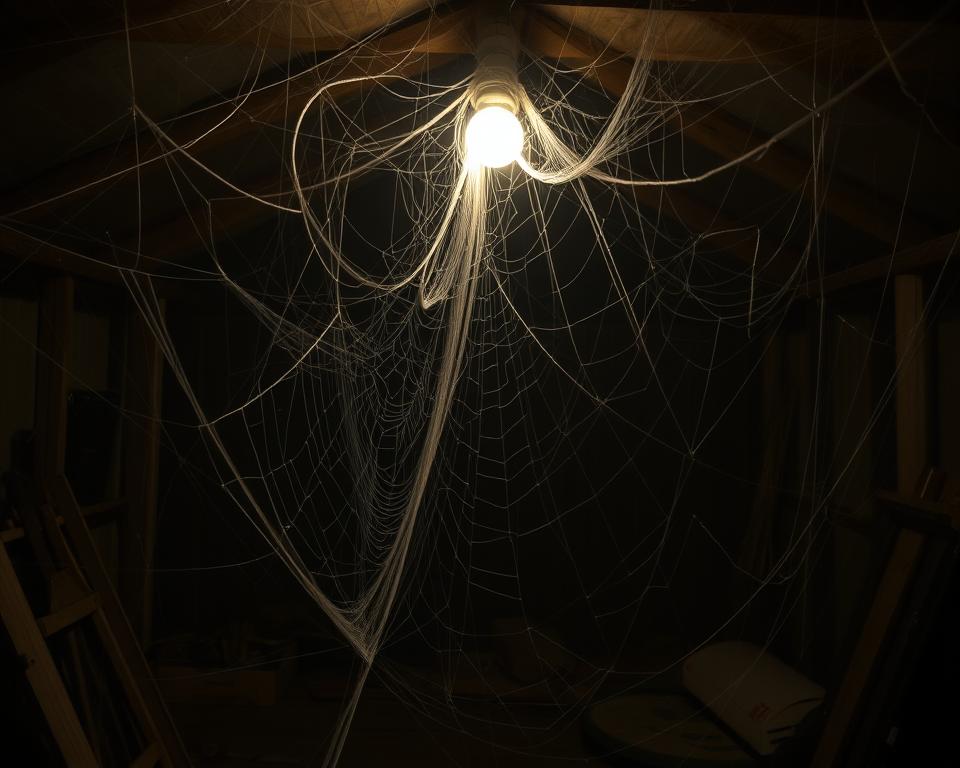
Visible indicators include fresh cobwebs, egg sacs, and shed exoskeletons. Multiple sightings of different sized spiders suggest established breeding.
Environmental Factors in the UK
The diverse insect population provides abundant food sources. This predator-prey relationship naturally extends into outdoor storage areas.
Spiders exploit even minor gaps as entry points. Timber cracks and ventilation openings offer convenient access ways.
| Common UK Shed Species | Habitat Preferences | Activity Period | Web Type |
|---|---|---|---|
| House Spider | Dark corners, undisturbed areas | Year-round, peaks in autumn | Funnel webs |
| Garden Spider | Near vegetation, window frames | Summer to early autumn | Orb webs |
| False Widow | Roof spaces, warm crevices | Primarily nocturnal | Tangle webs |
| Harvestman | Damp areas, floor level | Late summer gatherings | No web building |
How to Spider-Proof your Shed: Planning and Preparation
Before any physical work begins, a comprehensive assessment of the shed‘s vulnerabilities is essential. This initial diagnostic phase determines the scope of work required and helps prioritise tasks for maximum effectiveness.

Assessing Your Shed’s Vulnerabilities
A simple yet effective method involves entering the space on a bright day. After closing the door and allowing eyes to adjust, pinpoints of light reveal hidden gaps. This way of detecting entry points is remarkably accurate for identifying cracks spiders exploit.
An old shed often presents greater challenges. Timber shrinkage and warping from years of weather exposure create numerous potential entry routes. Deteriorated sealants around joints and frames need particular attention.
Homeowners should make sure to examine the entire structure systematically. This includes checking the foundation, wall cladding, and door frames. Special focus should be given to the flooring material, as cheaper OSB boards swell with damp, unlike quality tongue and groove alternatives.
Documenting all findings allows for a logical repair sequence. Addressing major gaps first ensures the shed becomes a less inviting environment. Proper planning with the right materials sets the stage for a successful, long-term solution.
Effective Cleaning Techniques and Maintenance
A systematic approach to shed maintenance significantly reduces opportunities for spider habitation. Regular cleaning routines disrupt web-building activities and eliminate potential nesting sites. This proactive method creates an environment that discourages arachnid settlement.
Removing Cobwebs and Debris
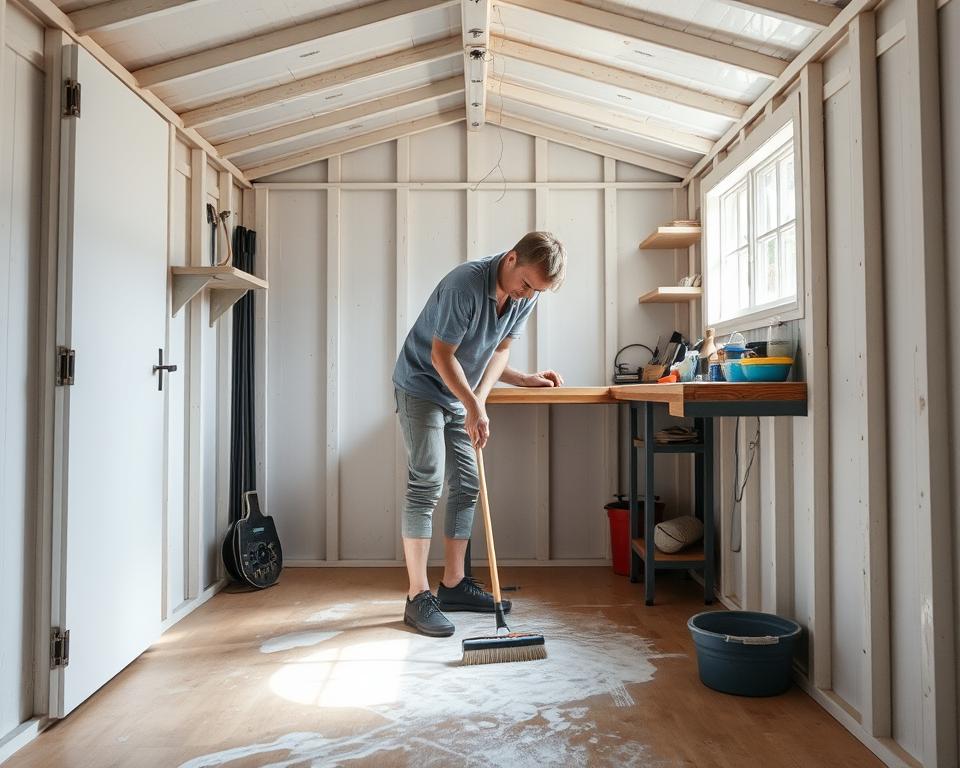
Thorough cleaning begins with comprehensive cobweb removal. Both new and old webs require attention, as older webs may contain egg sacs. Using a vacuum cleaner or broom ensures complete elimination from corners and ceiling joists.
Accumulated leaves and garden waste provide ideal hiding places. Regular disposal of this debris reduces the overall attractiveness of the storage area. Pay particular attention to window frames and areas behind stored items.
Proper Storage and Organisation to Deter Spiders
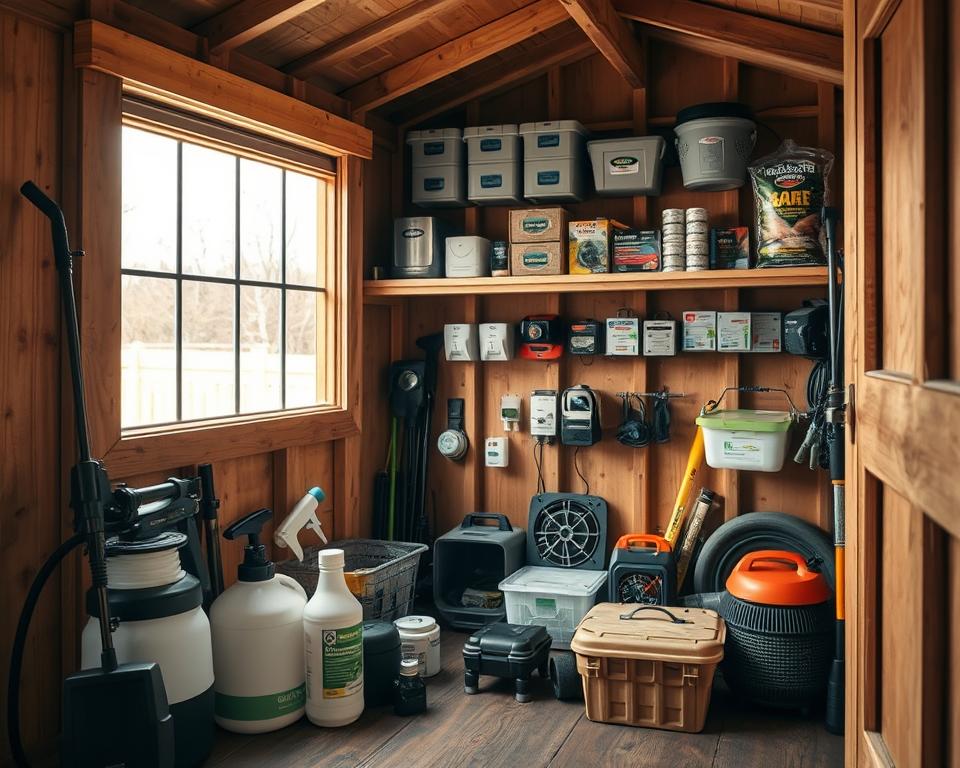
Strategic organisation plays a vital role in spider prevention. Plant seeds and pet food should transfer to sealed plastic containers. These containers prevent odours that attract insects, which in turn attract spiders.
Non-edible items can remain in cardboard boxes when properly sealed and labelled. Elevating storage containers onto shelving units rather than placing them directly on the ground reduces spider access points. This organisation creates fewer undisturbed spaces for web establishment.
Regular wall cleaning with warm water and dish soap solution removes dust and organic matter. Garden tools require inspection and cleaning before storage, especially after lawn mowing. Maintaining a clear perimeter around the shed exterior eliminates bridges that spiders use for access.
Natural Repellents and Home Remedies
Many homeowners prefer natural methods to create a spider-resistant environment in their outdoor storage. These repellents offer an eco-friendly way to manage pests without harsh chemicals. They work by exploiting the spiders’ sensitive detection systems.
Using White Vinegar, Mint, and Citrus Scents
A simple white vinegar solution is a powerful repellent. It provides an accessible way to repel spiders. Spray it around shed windows and corners every few days.
For those who dislike the vinegar smell, mint serves as an excellent alternative. Planting mint near the entrance or using essential oil sprays are effective. The strong scent of citrus is also highly disliked by these pests.
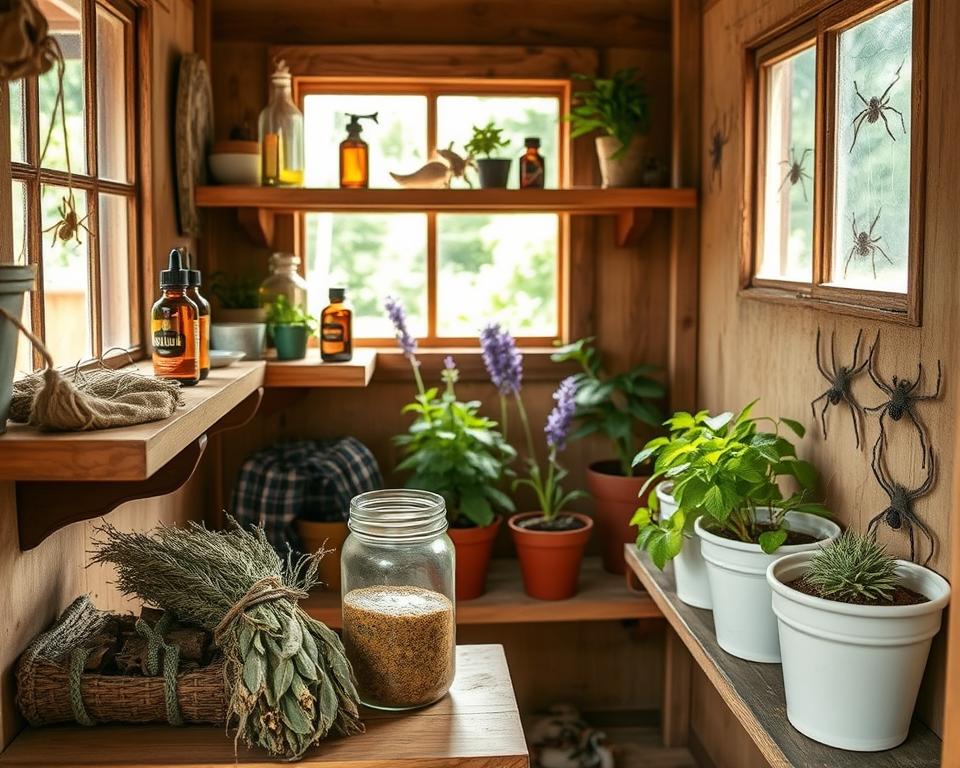
A combination of lavender and lemon creates a potent barrier. Soak cotton balls in the mixture and place them strategically inside. This creates a long-lasting scent that spiders will avoid.
Mixing Essential Oils and Other Eco-Friendly Solutions
Citrus essential oils like lemon and orange can be diluted in water. Use a spray bottle to apply the mixture to interior surfaces. This creates a fresh-smelling yet effective deterrent.
Vegetable oil mixed with vanilla extract produces an intensely unpleasant scent for spiders. Only small amounts are needed in corners and near windows. Borax powder offers a different approach, killing pests on contact.
Application Tips for Long-Lasting Effects
For scent-based repellents, placement is critical. Apply them directly on spider pathways around the shed. Regular reapplication is necessary as scents fade over time.
Commercial solutions like Tiger Sheds’ spider-proof model use treated lining paper. This paper is impregnated with peppermint and citrus compounds. It provides a comprehensive barrier designed to repel spiders effectively.
Structural Upgrades and Physical Barriers
A well-sealed structure denies entry to pests through comprehensive physical exclusion methods. These upgrades provide lasting protection against unwanted inhabitants.
Sealing Gaps, Cracks, and Windows
Silicone or acrylic latex caulk effectively seals gaps and cracks identified during inspection. Apply sealant to all joints and seams systematically. This creates an integrated barrier system.
Windows and doors require special attention. Weatherstripping eliminates gaps around moving components. Keep these openings closed during garden work to maintain protection.
Installing Weatherstripping and Quality Roofing Felt
Heavy-duty polyester-backed roofing felt provides superior overhead protection. No insect can penetrate this thick material. Quality roofing materials prevent water intrusion and improve durability.
Wrapping the base with wire mesh creates a below-ground barrier. This prevents larger pests from burrowing underneath. Regular inspections address natural timber movement.
| Upgrade Type | Materials Required | Protection Level | Maintenance Frequency |
|---|---|---|---|
| Gap Sealing | Silicone caulk | High | Annual inspection |
| Weatherstripping | Adhesive foam strips | Medium-High | Replace every 2-3 years |
| Roofing Felt | Polyester-backed felt | Very High | 5-year inspection |
| Base Protection | Wire mesh | Medium | Annual check |
Quality construction materials like tongue and groove flooring provide inherent resistance to structural deterioration. These upgrades ensure long-term protection against pest entry.
Advanced Pest Control Strategies and Professional Advice
When preventative measures prove insufficient, advanced pest control strategies offer a more robust solution. This approach involves targeted actions and sometimes professional input.
When to Consider Insecticides or Professional Services
Commercial insecticide sprays provide a potent option for severe issues. They must be applied precisely around exterior vents and openings. Always check labels for soil safety.
Insecticide sprays are “incredibly good at killing spiders.”
Glue traps offer a non-chemical method. Place them flat in corners and on shelves. Replace them regularly when full of captured pests.
Removing food sources is critical. Store seeds and pet food in sealed containers. This reduces the insects that spiders prey on.
For those with a fear of spiders, psychological advice can help. Professor Goodacre suggests naming them to reduce anxiety. For dangerous nests like wasps, always call a pest professional.
Companies like Fantastic Services provide comprehensive control solutions. For a permanent fix, consider specialised garden sheds.
| Control Method | Best For | Key Consideration |
|---|---|---|
| Insecticides | Rapid population reduction | Follow manufacturer instructions carefully |
| Glue Traps | Monitoring and capturing | Placement in high-traffic areas |
| Food Source Elimination | Long-term prevention | Sealed container storage |
| Professional Services | Dangerous or large infestations | Expertise and commercial-grade products |
Tiger Sheds offers an innovative policy with its spider-proof model. It features an airtight design and repellent lining. Their 20-year guarantee provides long-term peace of mind.
Investing time in the right strategy ensures effective pest management. Quality sheds and professional advice are valuable resources.
Conclusion
Achieving lasting protection for garden storage requires combining multiple defensive approaches. The most effective way involves sealing entry points, using natural repellents, and maintaining cleanliness. This multi-layered strategy creates an environment that spiders find inhospitable.
Regular inspection proves essential for long-term success. Seasonal changes can create new vulnerabilities around windows, the roof, and ground level. Quality construction materials and proper storage in sealed containers provide superior protection.
The investment of time transforms an anxiety-inducing space into a functional area. Homeowners can confidently access lawn equipment and stored items without encountering unwanted pests. Effective control measures ensure the shed remains a valuable asset rather than a source of concern.
FAQ
What is the most important first step in spider-proofing a garden shed?
The most critical first step is a thorough inspection and cleaning. Assessing the shed’s vulnerabilities, such as gaps around the door or cracks in the walls, allows for targeted repairs. Simultaneously, removing existing cobwebs, debris, and clutter eliminates spiders’ food sources and hiding spots, creating an unwelcoming environment.
Are there any natural ways to keep spiders out of a storage shed?
A> Yes, several natural repellents are effective. Spiders dislike strong scents like peppermint, tea tree, and citrus. Homeowners can create a simple spray by mixing essential oils with water and applying it around entry points. Placing cotton balls soaked in these oils or fresh citrus peels in corners can also help deter the creatures without using harsh chemicals.
How can structural improvements help with pest control in an old shed?
Structural upgrades are a long-term solution for pest control. Sealing gaps around windows, doors, and the roof with caulk or weatherstripping prevents entry. Ensuring the roofing felt is intact and that there are no holes in the walls creates a physical barrier. These measures not only keep spiders out but also protect stored items from damp and other pests.
When should someone consider professional pest control for their shed?
Professional services should be considered if a severe infestation persists despite DIY methods, or if the property owner is dealing with species like the false widow spider. Experts have access to stronger, targeted insecticides and can provide advice on long-term prevention strategies, ensuring the shed remains a pest-free space.
Does keeping a shed organised really help deter spiders and insects?
Absolutely. Proper organisation is a powerful deterrent. Storing items in sealed, plastic containers rather than cardboard boxes removes potential habitats. Keeping the floor space clear and the lawn trimmed around the shed’s exterior reduces shelter for insects, which are a primary food source for spiders. A tidy space offers fewer places for pests to hide.