How to Start a Greenhouse: A Complete Guide for Beginners
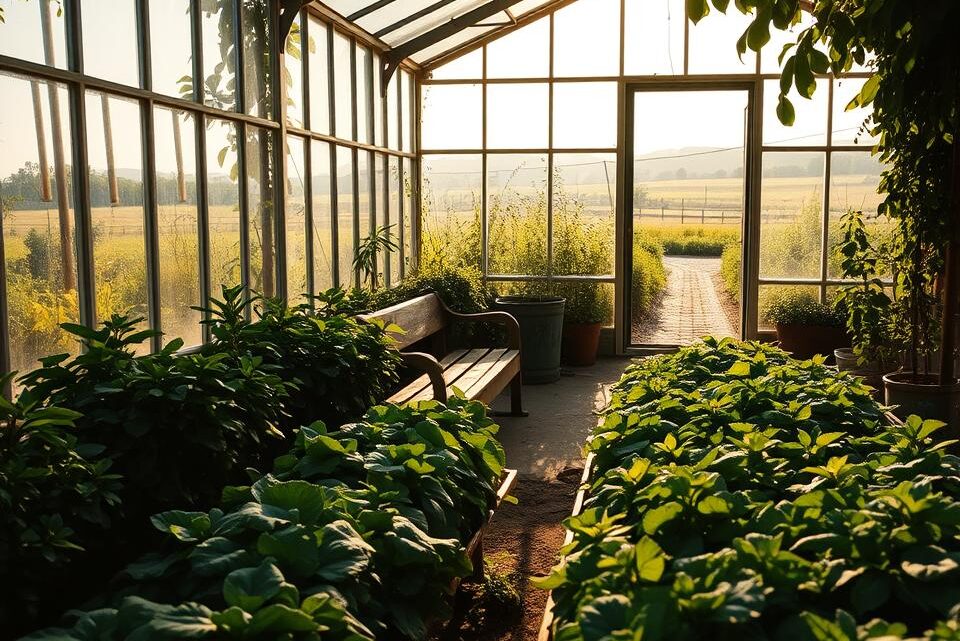
Embarking on the journey of establishing a greenhouse opens up remarkable possibilities for plant cultivation. This protected space allows gardeners to extend the growing season significantly, creating ideal conditions regardless of Britain’s unpredictable weather patterns.
A modern greenhouse typically features glass or plastic panels surrounding a sturdy frame. This design maximises natural sunlight exposure while effectively trapping warmth inside. The result is a consistently warmer interior environment that supports plant growth throughout the year.
This comprehensive guide provides essential information for both experienced horticulturalists and those new to gardening. It covers everything from selecting the right structure to managing temperature and humidity effectively. The process requires careful planning but delivers substantial rewards for dedicated gardeners.
Various greenhouse designs exist to suit different spaces, budgets, and gardening ambitions. From compact lean-to structures to spacious freestanding models, there’s an option for every garden setting. Each type offers unique advantages for cultivating a diverse range of plants.
Inhaltsverzeichnis
Key Takeaways
- Greenhouses create a controlled environment for year-round plant cultivation
- These structures extend the growing season beyond normal weather limitations
- Modern designs maximise natural light while retaining essential warmth
- Various greenhouse types accommodate different spaces and requirements
- Proper planning ensures optimal conditions for plant health and growth
- Both novice and experienced gardeners can benefit from greenhouse gardening
- Effective climate management is crucial for successful plant cultivation
Planning and Choosing the Ideal Greenhouse Location
The strategic placement of a greenhouse is the single most influential factor for its long-term success. A well-chosen spot maximises plant health and simplifies maintenance throughout the seasons.
Before breaking ground, gardeners must evaluate their available garden space with a critical eye. The ideal location balances sunlight, accessibility, and protection from the elements.
Maximising Sunlight and Seasonal Exposure
A prime location receives at least six to eight hours of direct sunlight daily. This is especially vital during winter when natural light is scarce.
Consider how the sun’s path changes across the year. Tall trees or buildings might cast long shadows in autumn and winter, reducing essential light.
For those in the Northern Hemisphere, positioning the structure against a south-facing wall offers optimal year-round sun exposure. This orientation captures the most light while providing some shelter.
Accessibility and Environmental Considerations
Easy access for daily watering and plant care is crucial. Proximity to a water source saves considerable time and effort.
The ground must be level to prevent water from pooling inside, which can damage plants and the foundation. Avoid areas known for strong winds that could stress the frame.
A semi-sheltered spot, perhaps near a fence or house, offers natural protection. This creates a more stable microclimate for your plants.
| Factor | Ideal Condition | Consideration |
|---|---|---|
| Sunlight | Full sun, 6-8 hours daily | Seasonal shadow changes |
| Ground | Level and well-draining | Prevents internal waterlogging |
| Shelter | Protected from prevailing winds | South-facing wall for Northern Hemisphere |
| Access | Close to water and pathways | Eases daily maintenance routines |
Selecting the Perfect Greenhouse Type
Gardeners face multiple options when selecting a greenhouse design that suits their specific requirements. The right choice depends on available space, budget constraints, and gardening ambitions.
Lean-to, Free-standing and Mini Greenhouses
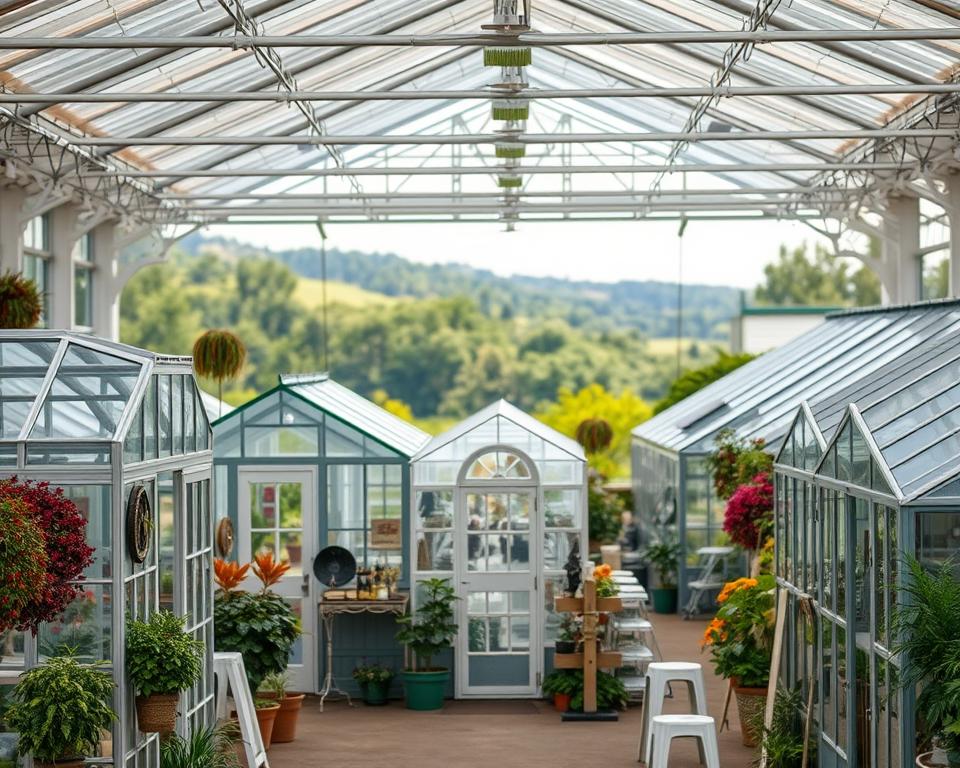
Three primary greenhouse types serve different purposes. Lean-to structures attach to existing buildings, making them ideal for smaller spaces.
Free-standing greenhouses offer maximum flexibility in placement. They work well for gardeners with ample garden space who want to maximise growing area.
Mini greenhouses provide cost-effective solutions for limited spaces. These compact structures suit those growing a small variety of plants.
Matching Your Space and Budget
Honest assessment of available space is crucial before selection. Consider both current needs and potential future expansion.
Budget considerations often influence the final decision. Lean-to and mini options typically cost less than free-standing structures.
The intended use should guide size selection. Many gardeners find they need more space than initially planned for their crops.
Building a Strong Foundation and Structure
A robust foundation serves as the cornerstone of any successful greenhouse installation. This critical component supports the entire structure, ensuring it withstands seasonal weather changes while providing optimal conditions for plants.
Foundation Options: Gravel, Concrete and Wooden Frames
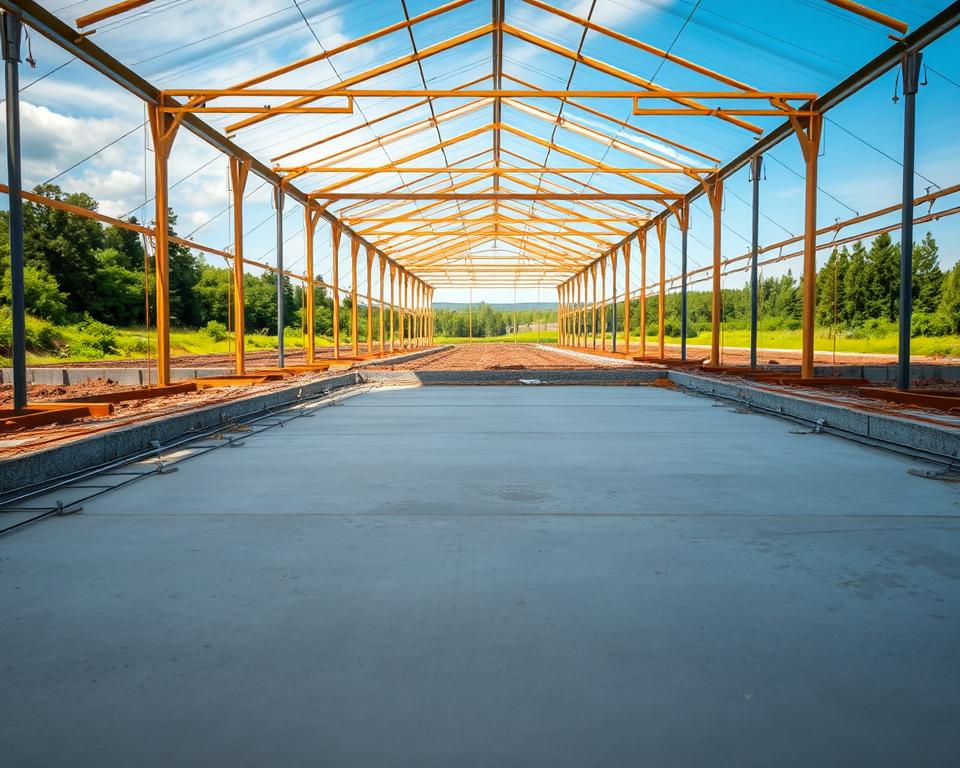
Gardeners have several materials to choose from when constructing their greenhouse base. A gravel foundation offers excellent drainage and is cost-effective for most garden spaces.
Concrete slabs provide permanent durability for larger structures. Wooden frames work well for smaller installations, particularly when using rot-resistant timber like cedar.
Quick-fit base kits represent modern alternatives that simplify installation. These interlocking systems create level surfaces without specialised assembly skills.
Ensuring Stability and Proper Drainage
Proper drainage prevents water accumulation that could damage the structure or harm plants. The foundation should slope slightly away from the greenhouse.
Interior flooring choices also impact drainage efficiency. Pea gravel over landscape fabric creates ideal conditions while suppressing weeds in the soil.
A well-constructed foundation anchors the greenhouse securely, seals against pests, and maintains consistent interior conditions throughout the growing season.
Temperature, Humidity and Ventilation Essentials
Effective climate management forms the bedrock of a productive growing environment. Precise temperature control and balanced humidity levels are vital for plant health throughout the season.

Proper ventilation is crucial for maintaining fresh air and preventing excessive heat buildup. In mild weather, simply opening the door can suffice. For hotter periods or sensitive plants, installing vents in the roof and sides allows hot air to escape efficiently.
Heating, Cooling and Ventilation Systems
Summer heat requires active cooling strategies. Gardeners can employ several effective methods.
- Open roof vents to exploit natural convection.
- Use fans to improve air circulation.
- Hang shade cloth to block intense sunlight.
- Damp down paths; evaporating water cools the air.
During winter, maintaining warmth is the priority. Electric or propane heaters offer reliable heating. For a passive approach, large water drums absorb heat by day and release it at night.
Utilising Misting Systems and Shade Nets
Managing humidity prevents issues like mould or plant stress. Misting systems or humidity trays help maintain ideal moisture levels. In hot climates, shade nets are an affordable way to protect plants from scorching temperatures.
Regular monitoring with digital tools allows for timely adjustments. This proactive approach ensures the greenhouse climate remains optimal all year round.
How to Start a Greenhouse: A Complete Guide for Beginners
A well-organised timeline transforms greenhouse gardening from a seasonal hobby into year-round productivity. Proper planning prevents common mistakes and ensures the structure is ready when needed.
Creating Your Planting Strategy
Begin by understanding seed labels and germination rates. This knowledge helps determine how many seeds to sow for the desired number of plants. Many experienced growers overseed slightly, then select the strongest specimens for transplanting.
Make a detailed list of what to plant and where within your available space. Consider each plant’s light requirements and growth habits. This planning phase helps avoid overcrowding and ensures optimal conditions for all crops.

Invest in proper seed-starting containers like trays or plug trays. Use sterile soil to prevent diseases and pest issues. Young plants need properly diluted fertiliser and appropriate watering according to their specific needs.
| Planning Aspect | Key Consideration | Timeline Factor |
|---|---|---|
| Seed Selection | Germination rates and labels | 6-8 weeks before planting |
| Space Allocation | Plant light requirements | Before seed starting |
| Supplemental Systems | Grow light assessment | During setup phase |
| Seasonal Calendar | Rotation and harvest timing | Year-round planning |
Evaluate whether grow lights are necessary based on natural sunlight availability. Consider your local climate even with greenhouse control systems. Starting with easy-to-grow plants during the first season allows time to learn management techniques.
Create a seasonal calendar coordinating seed starting, transplanting, and harvesting. This approach ensures continuous productivity throughout the year while maintaining organised space utilisation.
Optimising the Greenhouse Interior and Irrigation Systems
Arranging the interior space effectively transforms a basic greenhouse into a highly productive growing environment. The goal is to maximise efficiency while ensuring easy access to all plants.
Thoughtful organisation of shelves, benches, and growing areas is essential. This approach makes the best use of the available space.
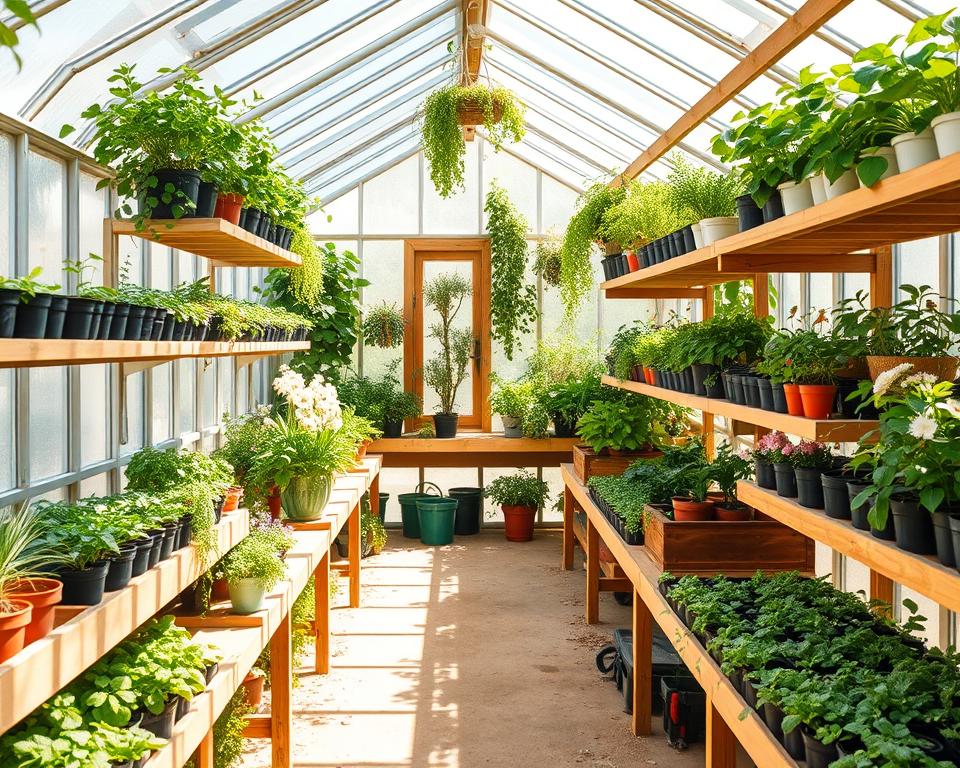
Setting Up Shelves, Benches and Raised Beds
Sturdy, slotted shelves are a practical choice. They allow free drainage of water from containers, which is vital for plant health.
For custom solutions, rot-resistant materials like cedar or redwood are ideal. Metal shelving units offer another durable option.
“A well-organised interior is not just about storage; it’s about creating the perfect environment for life to thrive.”
In larger structures, raised beds provide excellent soil drainage. They make managing crops much simpler. Proper spacing between these features ensures good airflow.
| Surface Type | Best For | Key Advantage |
|---|---|---|
| Slotted Shelves | Container plants | Superior water drainage |
| Wooden benches | Custom fits | Natural rot resistance |
| Raised Beds | Direct soil cultivation | Easier plant management |
| Metal Racks | Heavy-duty use | Adjustable and stackable |
Efficient Watering Strategies
Effective watering is crucial for a successful greenhouse. A drip irrigation system delivers water directly to root zones, minimising waste.
This method is ideal for larger setups with many plants. For smaller garden structures, manual watering with a can may suffice.
It is important to understand that overwatering and underwatering harm plants. Always target the roots, not the leaves, during watering.
Practical Maintenance, Pest Control and Problem Solving
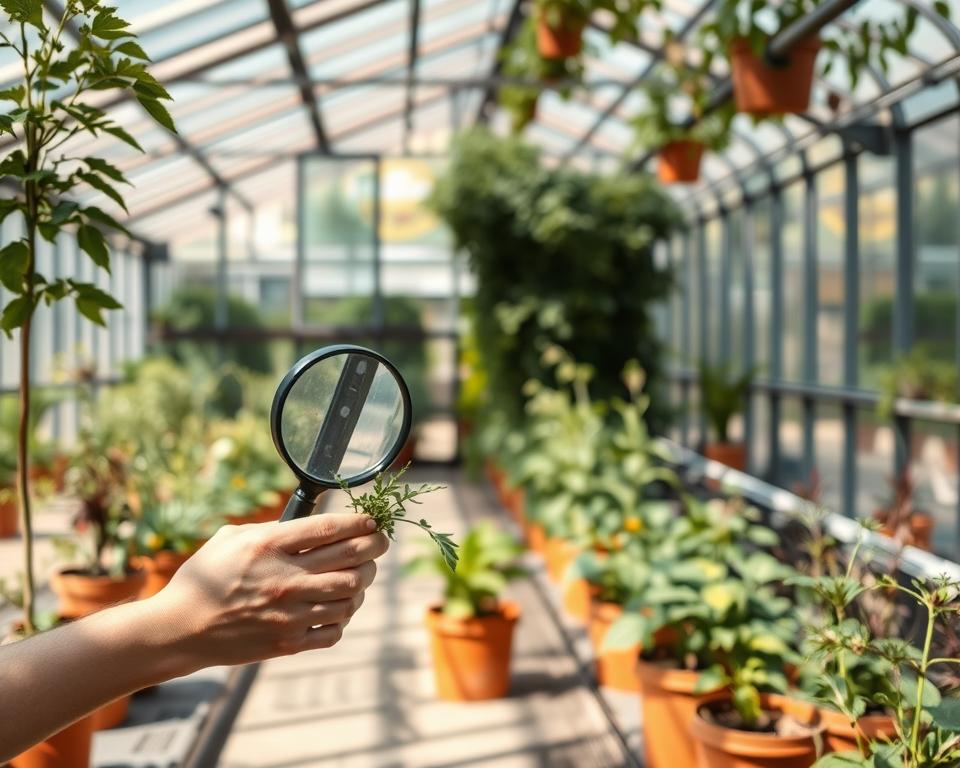
Regular monitoring and timely interventions are essential for preserving the optimal greenhouse environment. This proactive approach prevents minor issues from escalating into major problems that could compromise plant health.
Regular Checks and Seasonal Adjustments
Gardeners should inspect the greenhouse structure periodically for leaks, cracks, or wear. Severe weather events often necessitate immediate checks to ensure structural integrity remains uncompromised.
Ventilation systems require verification throughout the year. Ensure vents open and close properly to maintain adequate airflow. Heating systems need testing before winter arrives to guarantee reliable operation during colder months.
Managing Pests and Common Greenhouse Issues
The warm, humid greenhouse environment attracts various pests. Vigilant monitoring helps identify infestations early before they damage entire crops.
Common invaders include aphids on leaf undersides and slugs in humid conditions. Organic solutions like neem oil or beneficial insects provide effective control without harsh chemicals.
Proper ventilation and humidity management prevent fungal diseases. Avoid overwatering and ensure good air circulation. Maintain healthy soil with regular organic matter additions rather than reusing contaminated potting mix.
Positioning structures away from trees prevents root competition and potential damage from falling branches. These preventive measures create a healthier gardening environment throughout the seasons.
Conclusion
With proper planning and execution, any gardener can successfully manage a productive growing environment. This comprehensive guide has detailed the essential steps for creating a thriving controlled environment.
Greenhouse gardening offers significant advantages for cultivating plants. It protects crops from unpredictable weather, extends the growing season, and enables cultivation throughout the year. Both novice and experienced gardeners can achieve success.
Starting with a manageable size and simpler plants builds confidence effectively. The initial effort yields long-term rewards for any garden. Proper infrastructure combined with attentive care creates ideal conditions.
This environment supports diverse crops when managed correctly. Modern greenhouses make controlled environment gardening accessible to all. The journey begins with careful preparation and continues with ongoing learning.
FAQ
What is the single most important factor when choosing a greenhouse location?
The most critical factor is access to maximum sunlight. A greenhouse should be positioned to receive at least six hours of direct sun daily, ideally facing south to capture light throughout the year. This ensures plants receive sufficient energy for growth, especially during the shorter days of winter.
What type of greenhouse is best for a beginner with limited space?
For beginners with a small garden, a lean-to greenhouse attached to a house wall or a compact mini greenhouse are excellent choices. They are often more affordable, easier to install, and benefit from the existing structure’s shelter and heat, making temperature control simpler.
Is a concrete foundation necessary for a greenhouse?
A> Not always. While a concrete slab offers superior stability, a well-prepared gravel foundation is a popular and effective alternative. It provides excellent drainage, is easier to install, and allows for flexibility if the structure needs to be moved in the future.
How can I prevent my greenhouse from overheating in summer?
Effective ventilation is key. Automatic roof vents and side louvers allow hot air to escape. Additionally, using shade nets or applying shade paint to the glass can significantly reduce internal temperatures and protect plants from scorching.
What is the best way to water plants inside a greenhouse?
An automated irrigation system, such as a drip line or capillary matting, is highly efficient. It delivers water directly to the plant roots, conserves water, and maintains consistent soil moisture levels, which is crucial for healthy growth and disease prevention.
How do I protect my greenhouse plants from pests and diseases?
Prevention is paramount. Regularly inspect plants, maintain good air circulation with proper ventilation, and avoid overwatering. Introducing beneficial insects like ladybirds for aphid control can be an effective, natural method for managing common greenhouse pests.
Can a greenhouse be used year-round in the British climate?
Absolutely. With the addition of a suitable heating system, such as an electric greenhouse heater, a gardener can extend the growing season significantly. This allows for the cultivation of tender crops through winter and an earlier start for summer varieties.