How to Stop a Garden from Flooding: Effective Solutions
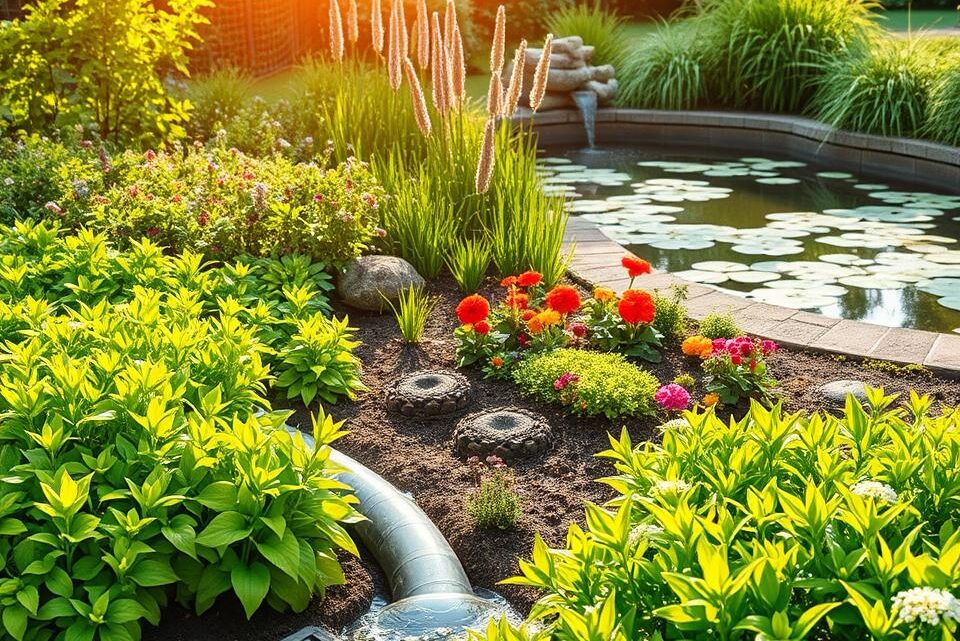
For many homeowners across the United Kingdom, a waterlogged garden presents a significant challenge. Unpredictable weather patterns, featuring intense rainfall, can swiftly transform a beautiful outdoor space into a saturated mess. This garden flooding issue demands practical and lasting solutions.
Persistent water accumulation does more than just create a muddy inconvenience. It can lead to serious damage to the landscape and even threaten the integrity of your property. Understanding the underlying causes of this flooding is the crucial first step toward creating a resilient outdoor environment.
This guide explores a range of strategies to combat excess water. It covers everything from simple, natural remedies to more advanced professional drainage systems. Homeowners will discover actionable steps suitable for various garden types and severities of waterlogging.
Whether dealing with occasional pooling or chronic flooding, the insights provided are tailored to British climates. Implementing these measures helps preserve the health of plants and the value of your outdoor investment. A well-managed garden remains functional and attractive, regardless of the weather.
Inhaltsverzeichnis
Key Takeaways
- Recognise the increasing prevalence of garden flooding due to changing UK weather patterns.
- Understand that water damage can affect both plant life and property structures.
- Identify the root causes of water accumulation in your specific outdoor space.
- Learn about a spectrum of solutions, from immediate interventions to long-term drainage projects.
- Gain knowledge of strategies that are effective within the context of British landscapes.
- Appreciate the importance of protecting your garden as a valuable investment.
Understanding the Causes of Garden Flooding
Multiple factors contribute to water pooling issues that affect many British properties. Recognising these underlying causes is the first step toward effective solutions.
Drainage System Failures and Blockages
Ineffective drainage represents a primary concern. When water cannot flow properly through drains, it accumulates on the surface. Blocked or damaged systems exacerbate this problem.
Silt and debris gradually build up in drainage pipes. This restricts water movement, especially in older installations. Regular maintenance helps prevent such blockages.
Soil Composition and Landscape Topography
Soil type significantly influences water absorption. Clay-rich earth becomes compacted and saturated during heavy rain. This creates impermeable conditions.
Topography also plays a crucial role. Properties in low-lying areas naturally collect more surface water. Understanding local geography helps address flooding risks.
| Factor | Impact on Flooding | Common Signs |
|---|---|---|
| Clay Soil | Poor water absorption | Persistent puddles |
| Blocked Drains | Restricted water flow | Overflow during rain |
| Low-Lying Areas | Natural water collection | Consistent dampness |
Waterlogged soil loses its ability to absorb moisture. This transforms outdoor spaces into swampy environments. Addressing these factors requires targeted approaches.
Examining the Role of Weather and Local Conditions
British weather patterns are shifting dramatically, presenting unique challenges for property owners. Extended dry spells are often broken by intense downpours, creating a cycle that tests the resilience of any outdoor space.

Understanding these local conditions is crucial for effective garden management.
Impacts of Heavy Rainfall and Surface Run-Off
When heavy rain falls, it can quickly saturate the ground. This rainfall then flows over hard surfaces like patios and paths. This surface run-off collects in low-lying areas, increasing the risk of flooding.
Saturated soil cannot absorb more water, leading to rapid accumulation. This situation is common after successive rain events. The weather plays a defining role in this process.
Influence of the Local Water Table
The local water table significantly affects ground saturation levels. In autumn and winter, this table often rises. Properties in certain areas are more vulnerable to flood issues during these seasons.
A high water table means the ground has little capacity for extra rainfall. Heavy rain under these conditions almost guarantees waterlogging. Monitoring local weather forecasts helps anticipate these flooding risks.
Proactive measures become essential when the garden faces such weather-related pressures.
How to Stop a Garden from Flooding with Practical Tips
Effective water management begins with strategic planning of the garden’s fundamental components and layout. The right approach combines proper drainage solutions with thoughtful material selection.

Implementing Effective Garden Drainage
A well-designed drainage system is essential for managing excess moisture. Surface water needs clear pathways to escape rather than pooling in low-lying areas.
Permeable surfaces allow water to absorb naturally into the ground. This approach helps prevent waterlogged conditions that can damage plants and structures.
Choosing the Right Garden Layout and Materials
Strategic placement of garden elements guides water flow toward designated drainage points. Hard surfaces should be complemented with absorbent zones.
Porous materials like gravel and certain paving options provide excellent water management. They allow moisture to trickle through while reducing surface accumulation.
Proper grading of the landscape ensures water moves away from vulnerable areas. This simple measure can significantly reduce flooding risks during heavy rainfall.
Enhancing Drainage and Water Management in Your Garden
A comprehensive drainage strategy integrates both ground-level solutions and above-ground maintenance to effectively manage water flow. This approach addresses water at multiple points in its journey across the property.
Installing Permeable Paving and Drainage Channels
Permeable surfaces allow water to soak into the ground naturally. They reduce surface runoff that can overwhelm traditional drainage systems.
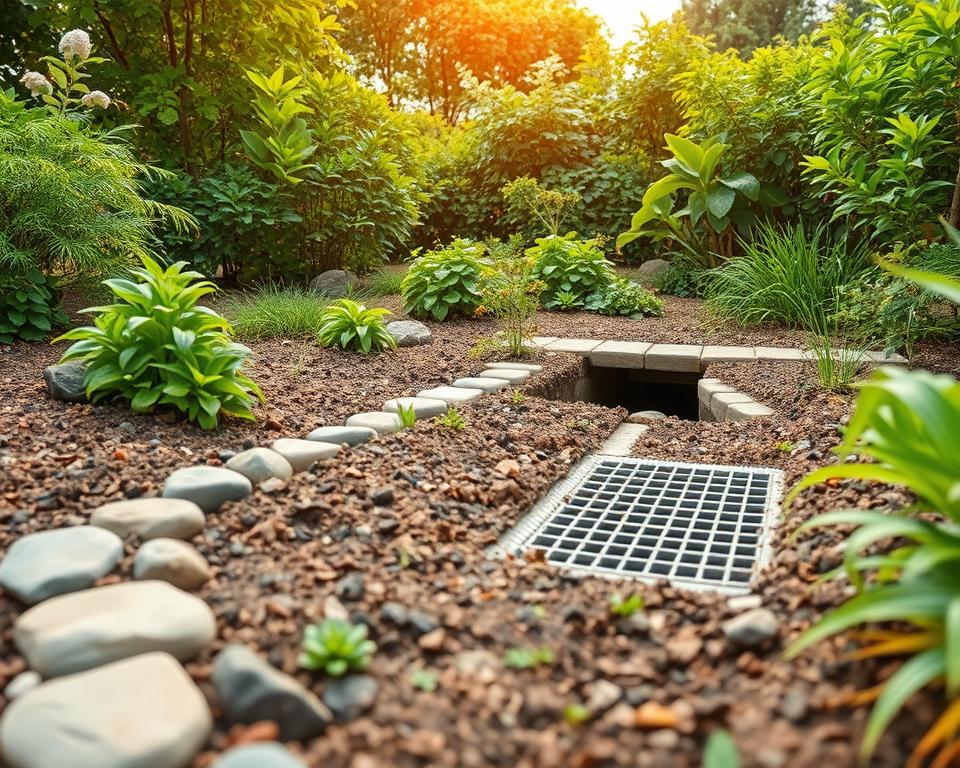
Drainage channels provide controlled pathways for excess water. They guide flow away from vulnerable areas toward proper drainage points.
| Solution Type | Best Application | Maintenance Needs | Effectiveness |
|---|---|---|---|
| Permeable Paving | Paths & Patios | Low | High |
| Drainage Channels | Sloped Areas | Medium | High |
| French Drains | Problem Spots | Medium | Very High |
Maintaining Gutters, Roof, and External Drains
The roof and guttering system forms the first defence against water damage. Regular inspection prevents minor issues from escalating.
Clearing debris from gutters ensures proper water flow. Blocked systems can cause overflow into the garden area.
External drains require monthly checks for optimal performance. During autumn, more frequent attention helps prevent blockages from fallen leaves.
Utilising Natural Solutions and Strategic Planting
Nature offers powerful allies in the battle against waterlogged outdoor spaces. These biological approaches work with the landscape rather than against it.
Benefits of Thirsty Plants and Tree Selection
Strategic planting creates a natural drainage system. Moisture-loving plants absorb significant quantities of water through their extensive roots. Species like willows and flag irises thrive in damp areas.
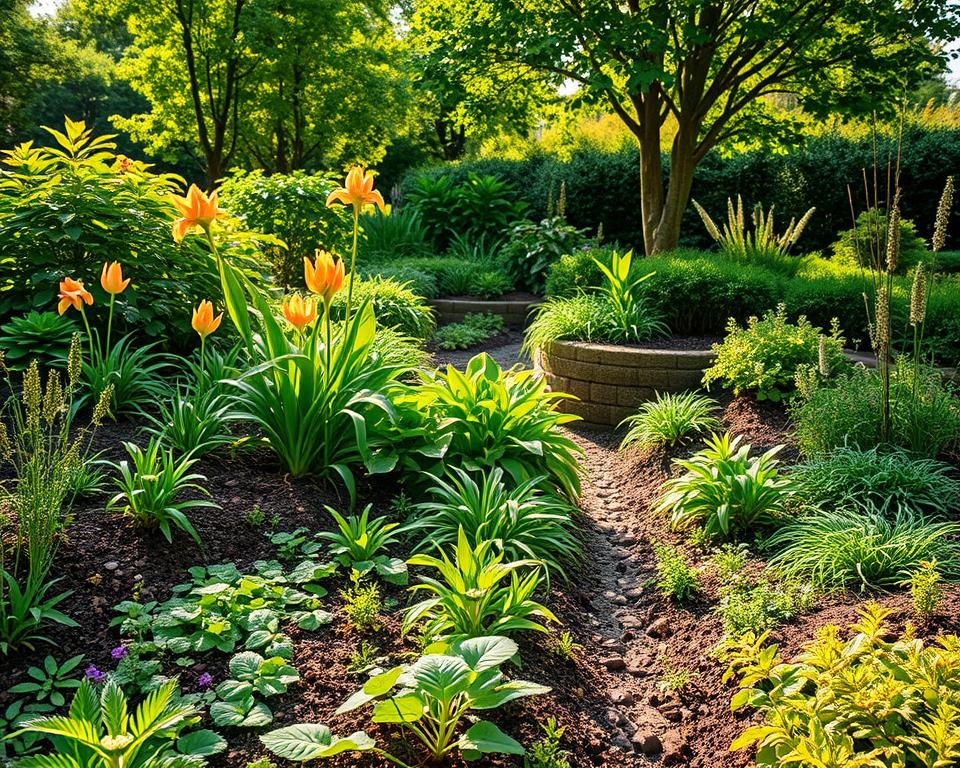
Trees provide deep root systems that break up compacted soil. This improves water absorption throughout the ground. Proper placement ensures these natural solutions protect garden features effectively.
Building Raised Beds and Garden Walling for Better Flow
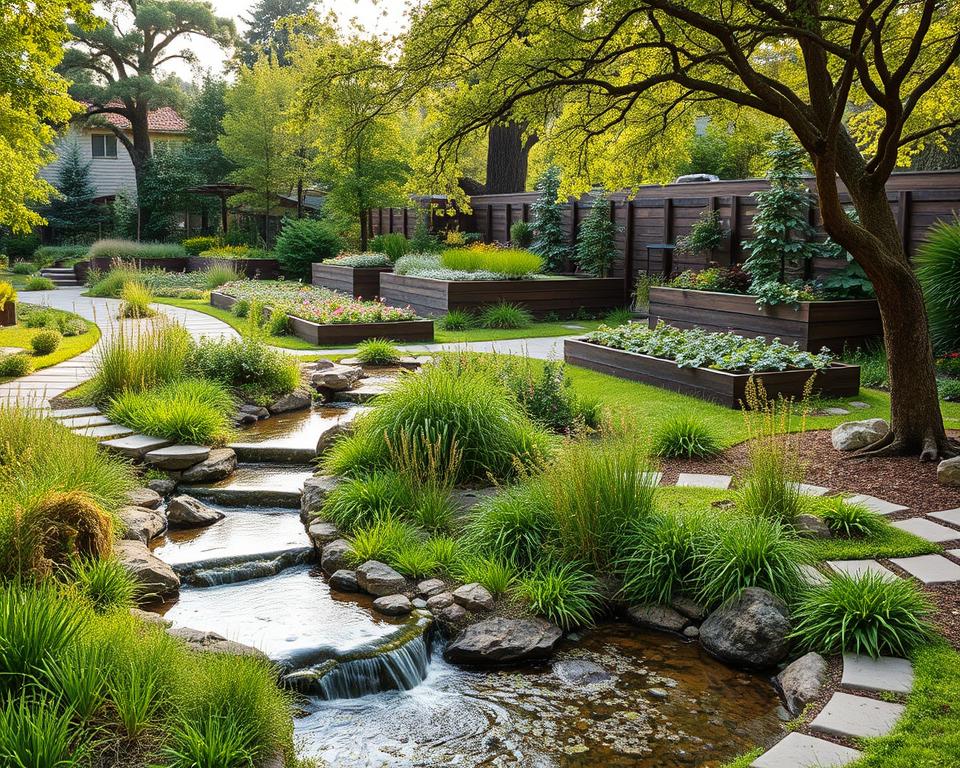
Raised beds elevate plants above potential flood levels. This structure prevents direct contact with standing water. Durable materials like treated wood ensure longevity.
Garden walling manages water flow patterns across the space. It prevents erosion in vulnerable areas. These features help create defined zones within the landscape.
Incorporating Rainwater Harvesting Techniques
Water butts capture rainwater before it saturates the ground. Larger units (100L+) connected to guttering systems are most effective. This approach reduces pressure on drainage systems.
The collected rainwater serves as a valuable resource during drier periods. Water butts complete a sustainable cycle that can protect garden environments from flooding issues.
Long-Term Remedies and Sustainable Garden Practices
Building a flood-resistant garden involves continuous soil management and proactive maintenance routines. These sustainable approaches create lasting protection against water damage.
Improving Soil Quality with Organic Amendments
Enriching soil with organic matter transforms its structure significantly. Compost, well-rotted manure, and leaf mould increase porosity and water absorption.
Adding sand or grit to heavy clay soil improves drainage characteristics. This creates a balanced composition that resists waterlogging.
| Amendment Type | Best For Soil Type | Application Frequency | Drainage Improvement |
|---|---|---|---|
| Compost | All types | Seasonal | High |
| Horticultural Grit | Clay soil | During planting | Very High |
| Well-rotted Manure | Poor soil | Annual | Medium |
| Leaf Mould | Light soil | Autumn | Medium |
Preventative Measures to Safeguard Against Future Flooding
Aerating compacted lawns allows air and water to penetrate deeper. This significantly improves drainage in problem areas.
Installing soakaways provides effective underground water storage. These systems gradually release excess moisture into surrounding ground.
Limiting impermeable surfaces like concrete prevents surface water accumulation. Using established paths protects soil structure during wet conditions.
Conclusion
Ultimately, safeguarding a property from water damage is an ongoing process of adaptation and maintenance. A multi-faceted strategy proves most effective, blending practical drainage solutions with sustainable, natural approaches.
Homeowners who understand their garden‘s specific conditions—its soil, topography, and exposure to water—can select the most appropriate remedies. Implementing these measures creates a resilient outdoor space capable of handling heavy rainfall.
Regular upkeep of systems and thoughtful planting are crucial for long-term success. This proactive effort helps protect garden investments and ensures the area remains functional and beautiful throughout the seasons, mitigating the risks of garden flooding.
FAQ
What are the most common reasons a garden floods?
Gardens often flood due to drainage system blockages, compacted soil that prevents water absorption, or the garden’s position on a slope that collects surface water from surrounding land.
Can the type of plants in my garden help reduce flooding?
Yes, planting species with deep roots and high water uptake, such as certain grasses and shrubs, can significantly improve the ground’s ability to absorb excess rainwater.
How does installing permeable paving help with waterlogging?
Permeable paving allows rainwater to seep through the surface into the ground below, reducing surface water runoff and helping to prevent waterlogged soil in the garden.
What is a simple first step to protect a garden from heavy rainfall?
A straightforward initial measure is to ensure gutters and drains are clear of leaves and debris, allowing rainwater from the roof to flow away freely instead of pooling in the garden.
Are raised beds a good solution for a flood-prone garden?
Raised beds elevate plant roots above saturated ground, providing better drainage and protecting plants from damage during periods of heavy rainfall.
How can a water butt assist in managing garden flooding?
Water butts collect rainwater from downpipes, which reduces the volume of water entering the garden soil and can be used during drier spells, offering a dual benefit.
When should a property owner consider installing a drainage system?
If a garden frequently experiences standing water after rain, causing damage to plants and lawn, it is advisable to consult a specialist about installing a dedicated drainage system.
Can improving soil quality help prevent flooding?
A> Absolutely. Incorporating organic matter like compost improves soil structure, increasing its capacity to absorb water and reducing the likelihood of surface water accumulation.