How to Turn a Shed into a Summer House
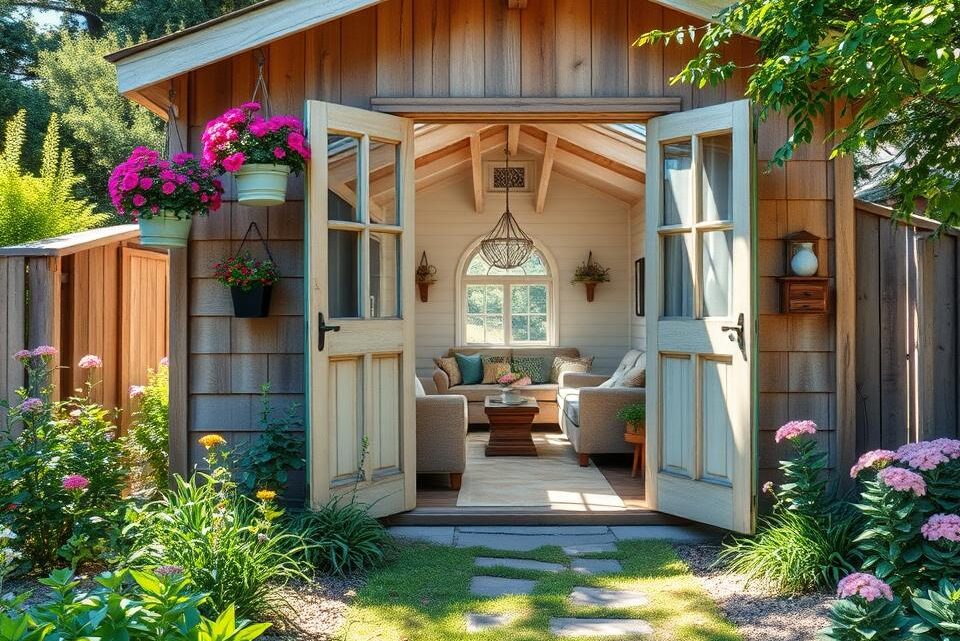
Many homeowners overlook the incredible potential sitting at the bottom of their garden. That simple storage shed can become a beautiful retreat with the right approach. This transformation creates valuable extra living space for any home.
The process requires careful planning and execution. It involves both practical renovations and aesthetic improvements. From weatherproofing to interior design, each step builds towards creating a functional summer house.
This comprehensive guide outlines the complete journey. It covers everything from initial assessment to final personalisation. With proper preparation, anyone can achieve this rewarding project. The investment of time and effort yields a space that enhances outdoor living throughout the warmer months.
Inhaltsverzeichnis
Key Takeaways
- Garden sheds offer versatile potential beyond basic storage
- Careful planning is essential for a successful conversion
- The transformation involves both structural and decorative work
- Proper insulation allows for year-round use
- Electrical installation requires professional consideration
- Personalisation creates a truly inviting space
- The project adds significant value to your property
Assessing and Preparing Your Shed
The journey to creating a garden retreat begins with a thorough assessment of the existing structure. This initial phase establishes the foundation for all subsequent work. Proper preparation ensures the final space will be comfortable and durable.
Clearing Out and Organising Contents
Writer Alexandra suggests an effective approach to this potentially overwhelming job. “I was brought up with ‘eat your vegetables first, then save the best for last.’ But doing easy or fun things first encourages you to start a depressing job,” she advises.
Homeowners should sort their shed contents into three categories. These include items to sell or donate, things to relocate into the home, and rubbish. Even old tools and lawnmowers can find new life when sold for parts.
| Disposal Method | Best For | Platforms | Considerations |
|---|---|---|---|
| Selling | Valuable tools, working equipment | eBay, social media | eBay allows 12 free images per listing |
| Donating | Usable items in good condition | Charity shops, Freecycle | Freecycle is ideal for local giveaways |
| Recycling | Broken or unusable items | Local recycling centres | Check council guidelines for specific materials |
Repairing and Weatherproofing the Structure
Once emptied, a detailed inspection of the wood structure is essential. Check for rot, loose panels, and roof damage. Pay special attention to the roofing felt, as small tears can lead to significant leaks.
Surface preparation requires removing loose paint and dirt from every groove. A pressure washer works well for this hand task. Fill gaps with wood filler and sand surfaces smooth before applying any treatment.
Weatherproofing is crucial for long-term protection. Use a caulk gun to seal gaps where rain and insects might enter. Apply timber treatment for an extra waterproof layer. This bit of effort now prevents bigger problems later.
Planning Your Summer House Design
The success of a garden building conversion hinges on thoughtful preparation. Before any physical work begins, a clear vision for the finished room is essential. This initial planning phase sets the direction for the entire project.

Homeowners must first determine the primary purpose of their new space. Will it function as a peaceful retreat, an entertainment area, or a productive home office? This decision influences every subsequent choice, from layout to lighting.
Creating a detailed floor plan is a practical next step. Measure the interior dimensions of the structure carefully. Graph paper helps sketch furniture placement and traffic flow. This preparatory work prevents overcrowding and ensures a functional layout.
Gathering design ideas from various sources is highly recommended. Inspiration can spark innovative ways to utilise the available space. A well-considered plan acts as a roadmap, guiding the transformation and helping avoid costly mistakes.
This careful approach ensures the final garden room meets its intended purpose beautifully. It transforms a simple shed into a cherished summer sanctuary.
How to Turn a Shed into a Summer House
A well-executed design phase separates amateur conversions from professional-quality results. This stage requires balancing practical considerations with creative vision.
Deciding Between Interior and Exterior Enhancements
Homeowners face important choices about where to focus their efforts. Structural integrity and weatherproofing should precede cosmetic improvements.
The most effective approach addresses exterior protection first. Then move inside for insulation and electrical work. This logical sequence prevents redoing finished work.
Creating a Custom Design Plan
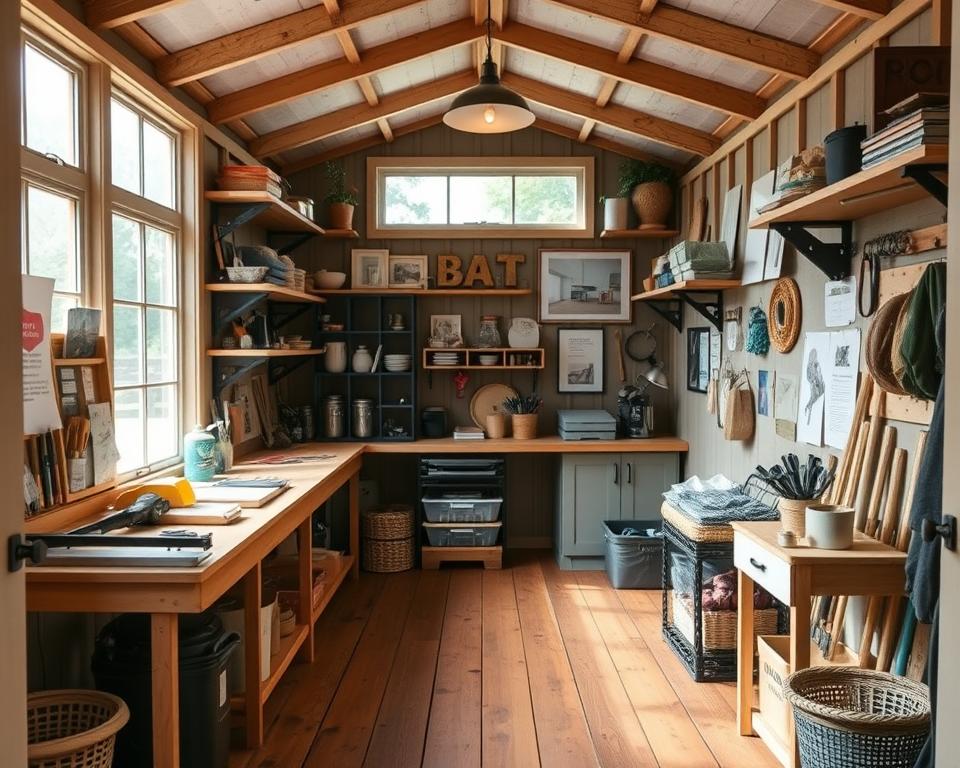
Graphic designer Nicola’s experience demonstrates what’s possible. She transformed a £200 second-hand shed into a creative studio with family help.
Her interior features peaceful colours and up-cycled furniture. This shows how personal ideas create a unique summer house atmosphere.
Documenting your vision helps maintain focus throughout the project. Sketches and samples ensure all decisions support the final goal.
Enhancing Curb Appeal with Exterior Improvements
Exterior enhancements provide the first impression of your newly converted garden retreat. These improvements transform the basic structure into an inviting space that complements the surrounding landscape.
Preparing and Painting the Shed Exterior
Proper surface preparation ensures long-lasting results. Begin by removing loose paint, dirt, and dust from every groove. A pressure washer works efficiently for this task.
Fill any gaps with wood filler and sand surfaces smooth. This creates an ideal base for paint application. Choose a dry day for painting to ensure optimal conditions.
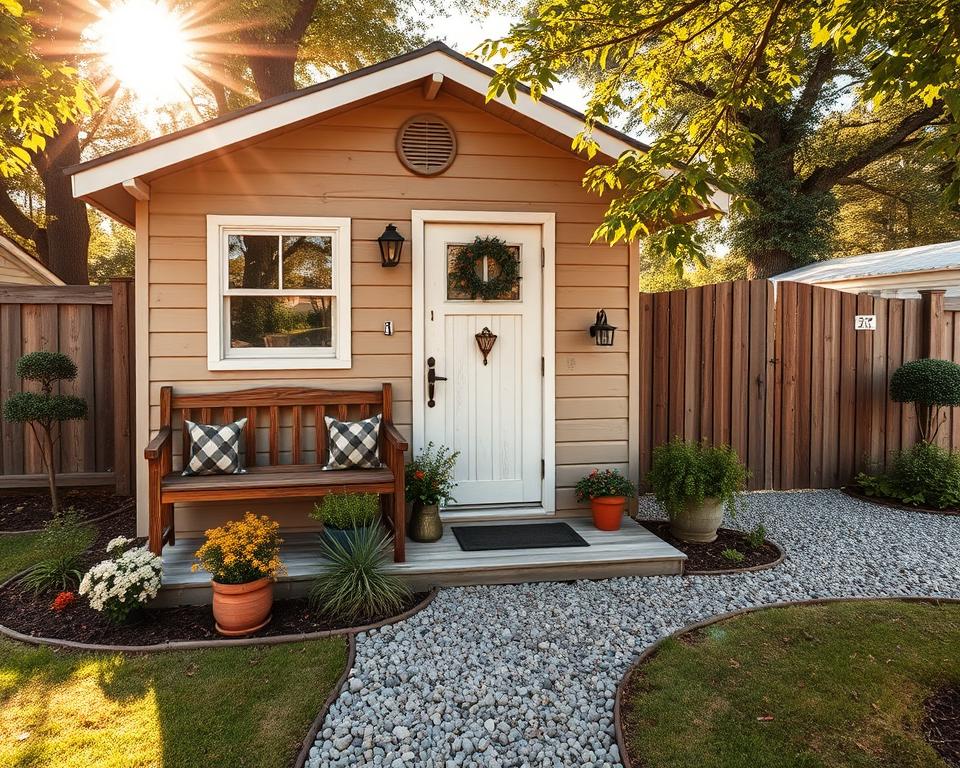
Colour selection defines the shed summer aesthetic. Pastel shades create a shabby chic look, while bolder hues make a statement. Always select paint with built-in wood treatment for protection against rot and moisture.
Incorporating Decorative Elements like Planters
Planters filled with colourful flowers bring life to the structure. Position them beneath windows to soften hard edges. This creates a cottage garden atmosphere.
Creative planters add personality and charm. Vintage wheelbarrows, old boots, or decorative buckets work wonderfully. Ensure proper drainage by making holes in the bottom before filling with soil.
These simple touches complete the transformation. They make the space feel integrated with the garden rather than separate from it.
Insulating and Ventilating for Year-round Comfort
The key to extending a shed’s usability lies in effective thermal regulation and air circulation. Proper climate control transforms a basic structure into a comfortable retreat regardless of external conditions.

Installing Effective Wall and Roof Insulation
Designer Jane from Teawagontales shares her approach: “To keep warm and dry I insulated my shed with plasterboard and polystyrene boards attached to the batons on the inside walls. But you have to let the walls have some room to breathe and not over-insulate as that can cause damp too. I left some walls ‘open’ with gaps at the top so there is some ventilation.”
Her method demonstrates the balance between insulation effectiveness and moisture prevention. For the roof, she stapled silver loft insulation to the ceiling. This prevents significant heat loss where warm air naturally rises.
| Insulation Type | Best Application | Thermal Performance | Installation Complexity |
|---|---|---|---|
| Polystyrene Boards | Wall cavities | High resistance | Moderate |
| Reflective Foil | Roof areas | Excellent summer protection | Easy |
| Blown-in Cellulose | Hard-to-reach spaces | Superior winter warmth | Professional recommended |
Ensuring Proper Ventilation with Windows and Vents
Adequate air circulation complements insulation by preventing stuffiness and managing humidity. Strategic ventilation gaps allow walls to breathe while maintaining comfort.
During summer months, insulation retains cool air and blocks heat entry. In winter, it prevents warmth from escaping. Additional windows or vents ensure fresh airflow throughout all seasons.
Floor treatments like vinyl or carpet squares add extra comfort with just a bit of effort. This comprehensive approach creates a truly usable space year-round.
Installing Windows and Doors for Natural Light
Transforming a garden shed’s atmosphere relies heavily on strategic glazing choices. The right combination of windows and door styles can completely redefine the interior space. This step connects the indoor area with the beautiful outdoor garden views.

Most standard storage sheds feature minimal glazing. Adding larger openings floods the interior with valuable natural light. This creates an inviting environment perfect for daytime activities.
Selecting the Right Fixtures and Layout
Careful planning determines window placement based on the shed‘s orientation. South-facing walls capture the most daylight throughout the day. Consider privacy needs and desired garden vistas when positioning each opening.
French doors or sliding glass models create seamless transitions to the outdoors. They maximise both light entry and accessibility. Proper insect screens allow ventilation without unwanted pests.
| Window Type | Best For | Light Benefits | Installation Level |
|---|---|---|---|
| Fixed Pane | Maximising light, security | Excellent illumination | Moderate |
| Opening Casement | Ventilation, easy cleaning | Good light with airflow | Moderate |
| Roof Lantern | Overhead brightness | Superior ambient light | Professional |
The investment in quality glazing reduces artificial lighting needs. It creates a bright, pleasant retreat that feels connected to nature. This enhancement significantly improves the overall summer experience.
Adding Power and Lighting for Modern Convenience
Electrifying a garden shed is the crucial step that elevates it from basic storage to a fully functional summer house. A reliable power supply unlocks the space’s full potential, enabling comfortable use throughout the year. This upgrade supports everything from task lighting for work to heating for chilly evenings.
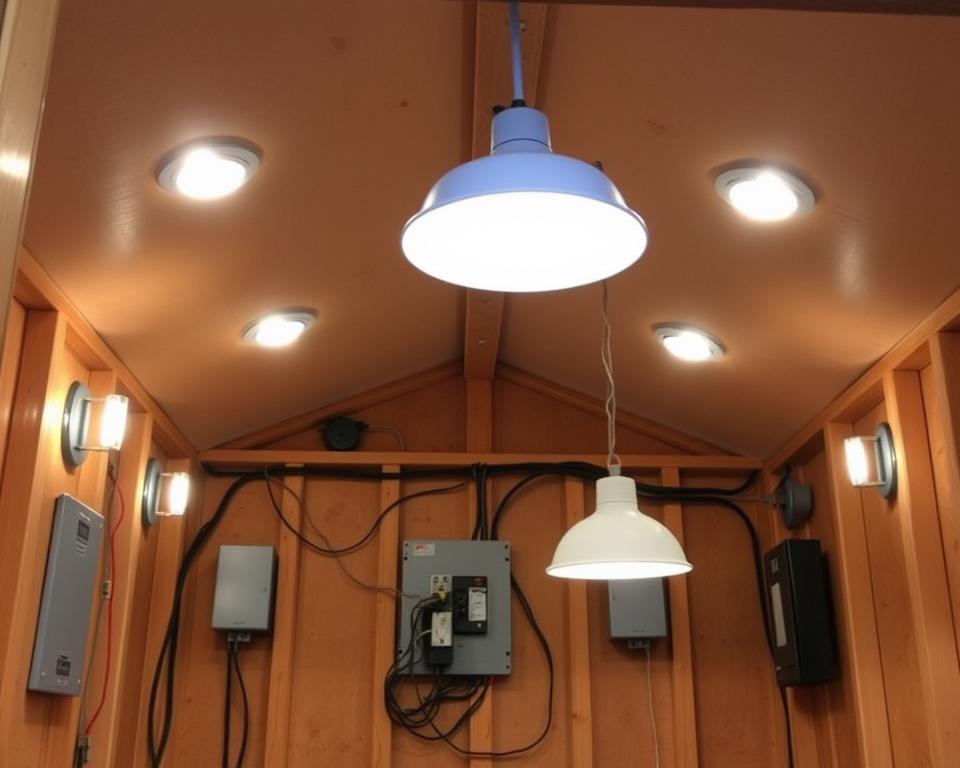
The safest and most effective way to achieve this is by connecting the structure to the mains electricity. While knowledgeable homeowners might tackle this job, hiring a qualified electrician is strongly recommended. This ensures the installation complies with regulations and eliminates the hazards of trailing extension cables from the main home.
Integrating Electrical Solutions Safely
Careful planning determines the number and placement of sockets. A home office requires at least two outlets, while an entertainment space or kitchenette may need more. A useful tip is to choose sockets with integrated USB ports for convenient device charging.
Thoughtful lighting design enhances both utility and atmosphere. Different types serve distinct purposes:
- Task lighting illuminates specific areas for reading or working.
- Ambient lighting creates a relaxing mood for evening use.
- Exterior lighting ensures safe navigation through the garden at night.
This investment in proper electrical systems saves time and effort in the long run. It transforms the shed into a versatile, comfortable retreat that can be enjoyed whatever the weather.
Personalising Your Interior Space
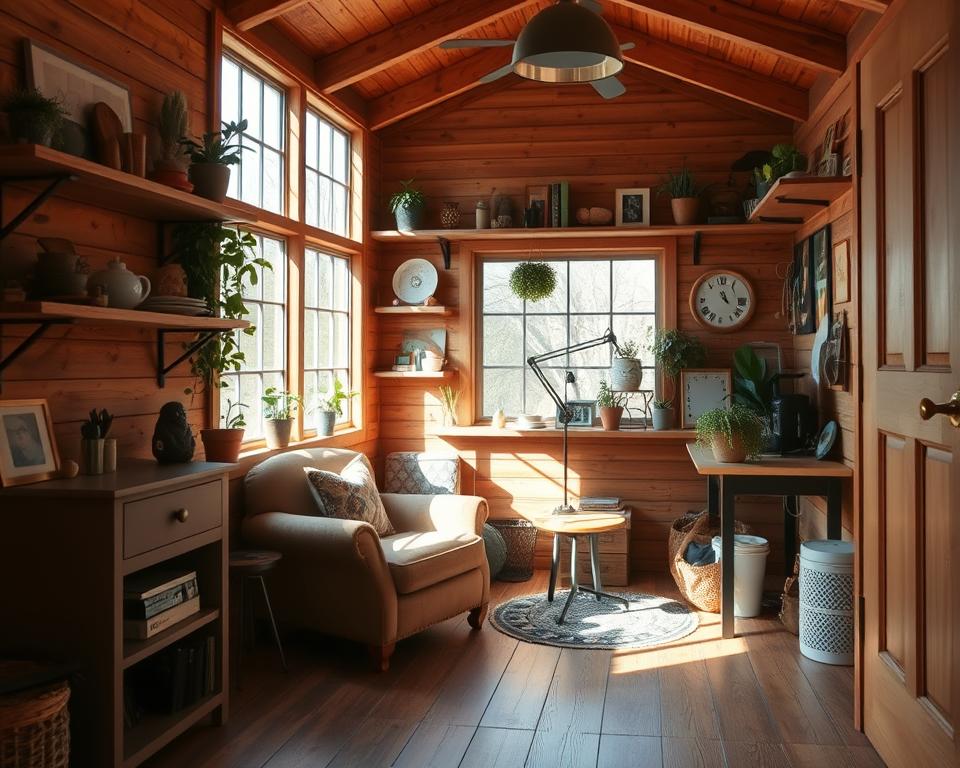
Personalising the interior is where a simple structure becomes a cherished retreat. The goal is creating a relaxing environment free from clutter. Thoughtful choices in furnishings and storage maintain an inviting atmosphere.
Furnishing and Decorating for Comfort and Style
Essential furniture pieces establish the room’s function. A comfortable seat and small table form the foundation. These elements support activities like reading or crafting.
Vintage finds add character to the interior space. An upcycled table becomes a stylish focal point. Blogger Torie Jayne used a metal bistro table decorated with hand-dyed fabric.
Lighter paint colours enhance the sense of space. They reflect natural light beautifully. This creates an airy studio atmosphere perfect for creative work.
Optimising Storage and Functional Areas
Effective storage solutions keep the room organised. Free-standing shelves and multifunctional furniture maximise utility. Stackable containers save space while allowing easy access.
Innovative ideas make small areas highly functional. Jewellery designer Artemis Russell shares: “I found this small folding table and made an ironing pad to tie onto it, and hung it up on the door.” Vertical storage using curtain clips and hooks keeps items accessible.
Everything should have its designated place. This approach maintains the calm haven quality. The result is a personalised summer retreat that balances comfort and practicality.
Creative Outdoor and Garden Enhancements
Creating an inviting outdoor environment around the converted structure completes the transformation from basic shed to comprehensive summer sanctuary. These enhancements extend the living space into the surrounding garden, creating a seamless flow between interior and exterior areas.

Food often tastes better when eaten al fresco, and installing decking provides the perfect way to add extra space for dining or relaxation. This expansion creates valuable additional areas for family gatherings and social entertainment.
Expanding Enjoyment with Decking and Garden Furniture
Wooden or composite decking offers a level, clean surface ideal for positioning outdoor furniture. It effectively expands the usable space while providing an ideal spot for summer activities.
| Decking Material | Durability | Maintenance Needs | Cost Range |
|---|---|---|---|
| Pressure-treated Wood | 15-20 years | Annual treatment | £30-£50/m² |
| Composite | 25+ years | Minimal cleaning | £50-£80/m² |
| Hardwood | 30+ years | Occasional oiling | £70-£100/m² |
Selecting appropriate garden furniture that complements the summer house style creates cohesive outdoor living areas. Options range from classic wooden benches to contemporary rattan loungers.
Strategic placement of planters around the decking area softens hard landscaping. They add colour and help integrate the structure naturally into the existing garden design.
Family-friendly enhancements like outdoor lighting extend usability into evening hours. Creating defined zones for different activities maximises the space’s versatility throughout all seasons.
Troubleshooting and Maintenance Tips
Maintaining a converted garden building ensures it remains a beautiful and functional retreat for years to come. Regular checks prevent minor issues from becoming major problems. A simple, consistent routine preserves the summer house‘s comfort and value.

Regular Checks for Insulation and Structural Integrity
Inspect the shed roof regularly for tears or damage. Water penetration can ruin insulation and interior surfaces. Prompt repairs protect your investment.
Check walls and wood surfaces for gaps where drafts or pests could enter. Use a caulk gun to seal these areas. This maintains weatherproofing and comfort.
Ensure insulation materials remain dry and properly positioned. Dampness reduces thermal performance and encourages mould. Proper ventilation is key to avoiding damp.
Exterior paint protects the wood from moisture and rot. Touch up chips or cracks as they appear. A fresh coat every few years maintains appearance and protection.
Schedule an annual electrical safety check by a qualified professional. They will inspect power connections and wiring. This ensures safe operation for your home.
Keep basic tools and supplies handy for quick fixes. This proactive approach saves time and effort. Your family will enjoy the space for many seasons.
Conclusion
The transformation from basic shed to functional summer house represents one of the most rewarding home improvement projects available. This comprehensive guide has outlined the complete way to achieve this conversion, from initial assessment through to final personalisation.
Homeowners can create a versatile retreat that serves as a quiet office, creative studio, or entertainment space. The investment of time and work delivers lasting returns through increased property value and years of enjoyment.
By following the principles outlined, anyone can confidently undertake this project. The finished space becomes more than an additional room—it offers a personal sanctuary connected to the garden.
With proper planning and maintenance, a converted summer retreat provides decades of service. It enhances outdoor living while adding significant appeal to any home. This approach turns a humble garden structure into something truly special for the entire family to enjoy throughout the summer months and beyond.
FAQ
What is the first step in converting a garden shed into a summer house?
The initial step involves a thorough assessment and preparation of the shed. This includes clearing out all contents, checking the structural integrity, and making essential repairs to the roof and walls to ensure the building is weatherproof and secure.
Why is insulation important for a shed conversion?
Proper insulation is crucial for creating a comfortable space that can be used beyond the summer months. It helps regulate temperature, keeping the interior cool in summer and warm in winter, thereby enhancing year-round usability and comfort.
Can electricity be installed in a shed summer house?
Yes, electricity can be installed, but it must be done by a qualified electrician to ensure safety and compliance with British wiring regulations. This addition provides power for lighting, heating, and electronic devices, significantly increasing the shed’s functionality.
How can one maximise natural light in a summer house?
Installing windows, particularly on south-facing walls, and considering a glazed door are effective ways to flood the space with natural light. Proper placement of these features brightens the interior and creates a more inviting atmosphere.
What are some key considerations for the interior design?
The interior design should focus on the intended use of the space. Choosing appropriate furniture, optimising storage solutions, and selecting a colour scheme that reflects a light, airy feel are important for creating a comfortable and stylish summer house.
How can the exterior be improved for better curb appeal?
Enhancing the exterior can be achieved through a fresh coat of paint, adding decorative elements like planters, and incorporating features such as decking or a small patio. These improvements help the summer house blend beautifully with the garden.
What maintenance is required for a shed summer house?
Regular maintenance checks are essential. This includes inspecting the roof for damage, ensuring seals around windows and doors are intact, and treating the wood to protect against moisture and rot, thereby preserving the structure’s longevity.
Is planning permission needed to convert a shed?
In many cases, planning permission is not required if the shed remains a reasonable size and height for a garden structure. However, it is always advisable to check with the local planning authority, as regulations can vary.