How to Ventilate a Greenhouse?
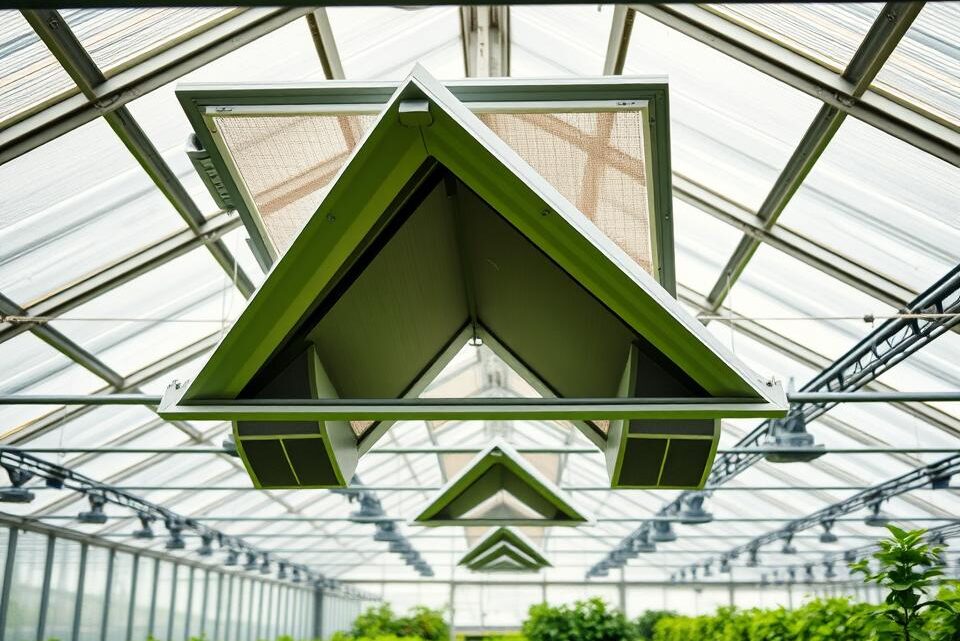
Effective management of a greenhouse environment is fundamental for cultivating healthy plants. Central to this is a well-designed ventilation system. It is not merely an optional feature but a core component for success.
Proper air movement serves several vital roles. It primarily regulates internal temperature, preventing dangerous overheating on sunny days. It also manages humidity levels and ensures a constant supply of fresh air for plant respiration.
Without adequate airflow, a greenhouse can quickly become hostile. Stagnant, humid conditions encourage disease, while excessive heat stresses plants, hindering growth and photosynthesis. Good ventilation is the key to avoiding these issues.
This guide offers a comprehensive look at greenhouse ventilation. It explores both natural and mechanical methods suitable for various structures and budgets. Understanding these principles is the first step towards a thriving garden under glass.
Inhaltsverzeichnis
Key Takeaways
- Proper ventilation is essential for regulating temperature and humidity inside a greenhouse.
- It provides fresh air, which is crucial for plant respiration and overall health.
- Inadequate airflow can lead to overheating, disease, and poor plant growth.
- A successful system balances air movement with temperature control.
- Solutions range from simple natural methods to more complex mechanical systems.
- Understanding ventilation is fundamental to extending the growing season and improving yields.
Understanding the Importance of Greenhouse Ventilation
Maintaining optimal conditions within a protected growing space relies heavily on proper air circulation. This fundamental aspect of greenhouse ventilation creates the stable environment that plants need to thrive throughout their lifecycle.
Temperature Control and Airflow
Effective temperature control prevents heat damage that can occur when readings exceed 27°C (81°F). Proper airflow over leaf surfaces provides essential cooling, supporting the plant’s natural transpiration process.
Plants with adequate root moisture combined with good air movement are significantly less vulnerable to heat stress. This combination ensures healthy plant growth even during warm periods.
Plant Health and Disease Prevention
Consistent fresh air exchange directly supports vital plant processes. Respiration and photosynthesis both depend on this continuous supply of carbon dioxide and oxygen.
Stagnant, humid conditions create ideal breeding grounds for fungal spores. Proper greenhouse ventilation serves as the primary defence against disease spread by maintaining dry leaf surfaces and reducing humidity.
A well-ventilated space ensures optimal gas balance for continuous plant growth. This prevents the buildup of harmful pathogens while supporting essential biological functions year-round.
Implementing Effective Ventilation Techniques
Growers have two main strategies for managing the internal atmosphere of their structures. These are passive, natural systems and active, mechanical solutions. Each offers distinct benefits for controlling the growing environment.
Natural Ventilation Methods
Passive systems harness basic physics. They rely on the principle that warm air rises. Roof vents allow this heated air to escape, creating a vacuum that pulls cooler, fresh air inside through lower side vents.
This creates a continuous, self-regulating air movement. The key advantage is zero energy cost and simplicity. However, its effectiveness depends entirely on outside weather conditions.
Mechanical Ventilation Solutions
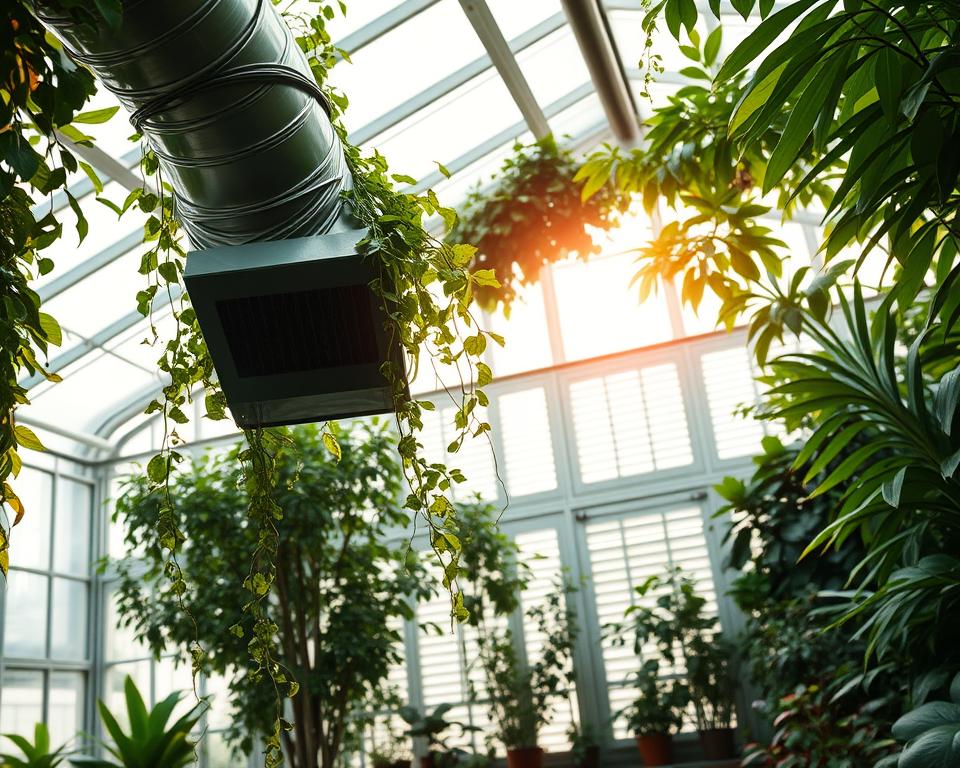
Active systems use powered equipment for precise control. Exhaust fans forcefully remove stale air, prompting a consistent air exchange. Circulation fans then distribute this fresh air evenly, preventing hot spots.
This method provides reliable ventilation regardless of external factors. It is ideal for larger greenhouses or climates requiring strict environmental management. Many successful operations blend both methods for optimal results.
How to Ventilate a Greenhouse? Step-by-Step Instructions
A practical daily routine is essential for maintaining the correct atmosphere within a protected growing space. The process begins with accurate monitoring. Installing a maximum-minimum thermometer in a central location provides crucial data on temperatures reached throughout the day and night.

Each morning, assess the weather forecast. Open roof vents, side vents, and the door progressively as the sun rises. This establishes air circulation before heat builds to dangerous levels.
Be alert for critical warning signs. These include sun-flag (partial wilting), leaf scorch, and desiccation of tender plants. These visual cues signal that temperatures have likely exceeded the 27°C (81°F) threshold, requiring immediate action.
On sunny days, utilise all available openings. Prop open the door, maximise roof vent openings, and ensure side vents are fully extended to create optimal cross-ventilation.
In the evening, gradually close vents as temperatures drop. During warm spells, some openings may need to remain open overnight. For extreme heat waves, a temporary measure involves carefully removing glazing panels to increase air exchange dramatically.
Automatic vent openers are valuable but respond slowly. Their wax-piston mechanism takes time to activate. Therefore, provide supplementary manual ventilation through side vents and the door to bridge this gap.
| Season | Daytime Target (°C / °F) | Night-time Target (°C / °F) |
|---|---|---|
| Summer | 24-29°C / 75-85°F | 16-21°C / 60-70°F |
| Winter | 16-21°C / 60-70°F | Approx. 7°C / 45°F |
Features of a Well-Ventilated Greenhouse
The architectural design of a protected growing space directly influences its internal climate. Specific features are dedicated to ensuring efficient air exchange. Understanding these components is crucial for creating a stable environment.
There are three primary points for air movement in any well-designed structure. These are the door, roof vents, and side vents. Each plays a distinct role in managing the atmosphere within greenhouse boundaries.
Roof Vents and Side Vents Explained
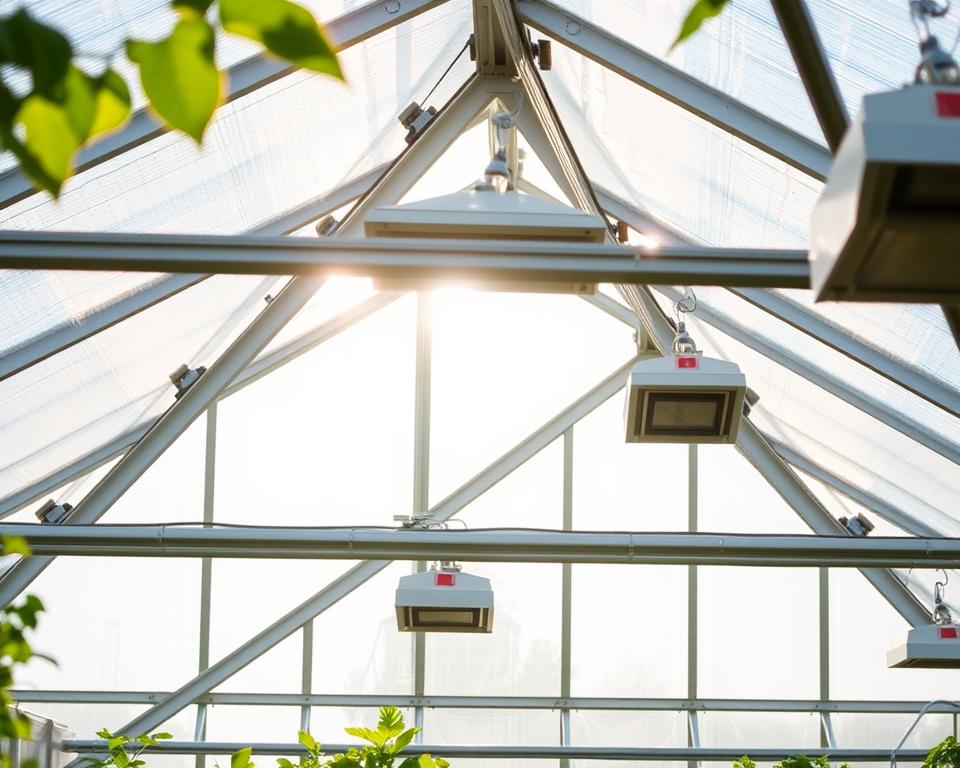
Roof vents are the most effective component for heat expulsion. Positioned at the highest point, they capitalise on natural convection. Warm air rises and escapes, creating a vacuum that pulls cooler air inside.
For larger structures, a critical ratio ensures sufficient capacity. One square metre of ridge vent for every five square metres of floor area (20%) allows a complete air change every two minutes.
Side vents, often louvred, introduce cooler air at plant level. Though less effective independently, they are vital when combined with roof ventilation. This combination creates a continuous vertical circulation pattern.
Calculating the required vent opening is straightforward. The ideal area should be approximately one-fifth of the total floor area. For example, a 6ft x 8ft greenhouse has a 48 sq ft floor.
This space needs about 9-10 sq ft of open vent area. This requirement is typically met by two or three standard 2ft square roof vents.
- Louvre windows feature horizontal glass slats. They offer adjustable airflow, perfect for cooler months when minimal ventilation is needed.
- Smaller structures often have inadequate vent percentages. Their high glass-to-floor ratio makes them prone to overheating.
- The synergy between high and low openings ensures all plants receive fresh air. Cool air enters through the side, warms, and exits via the roof.
Enhancing Ventilation with Shading and Humidity Management
Beyond simple air exchange, two additional strategies significantly improve climate control. During the warmer months, from mid-spring to early autumn, ventilation alone often proves insufficient against intense solar gain. This is where intelligent shading and humidity management become essential partners.

Smart Shading Strategies
The primary goal of shading is to reduce heat buildup while permitting maximum light. It should be the minimum necessary to keep temperatures below 27°C. Excessive shading sacrifices the light energy vital for photosynthesis.
Growers have several effective options:
- External blinds offer premium cooling by blocking sunlight before it penetrates the glazing. They can be raised on dull days but are a costly investment.
- Internal blinds are more easily automated and economical. However, they are less effective as sunlight generates heat upon entering.
- Polyethylene mesh is a budget-friendly, clip-on solution. External fitting provides better performance.
- Shading paints, like SunClear, are applied in spring and washed off in autumn. They are less suitable for some glazing materials.
Managing Humidity Levels
Humidity management is a crucial complementary technique. Maintaining good atmospheric moisture levels during bright, sunny weather helps plants cope with heat stress.
The key practice is ‘damping down’. This involves wetting hard surfaces, like paths, with water at least three times per day. The evaporating water increases humidity and produces a cooling effect.
Together, appropriate shading, effective ventilation, and careful humidity control create optimal summer conditions for robust plant development within the greenhouse.
Optimising Airflow with Fans and Automated Systems
The integration of automated technologies revolutionises greenhouse climate management by providing consistent, hands-free operation. These systems work alongside natural ventilation to maintain ideal growing conditions.

Choosing the Right Fans
When electricity is available, mechanical fans significantly enhance airflow. The University of Massachusetts recommends total fan capacity equal to twice the floor area measured in cubic feet per minute.
Purpose-built greenhouse air blowers feature stainless-steel casings and sealed motors. They distribute incoming fresh air evenly, preventing hot spots and reducing condensation.
Optimal positioning involves suspending fans from roof structures near vent openings. This strategy keeps floor space clear while ensuring comprehensive air circulation.
Benefits of Automatic Openers
Automatic vent openers, like Bayliss autovents, use temperature-sensitive wax technology. As temperature rises, the wax expands to open vents automatically.
Since wax expansion takes time, supplementary manual ventilation through windows may be necessary. This prevents damaging temperature spikes during the response period.
Connecting fans to thermostats creates complete control systems. These setups maintain optimal conditions without constant manual intervention, ensuring plant health during absence.
Conclusion
Mastering the internal atmosphere is the ultimate goal for any grower. Effective greenhouse ventilation stands as the cornerstone of this success. It directly influences plant health and productivity throughout the season.
A robust system cleverly combines natural and mechanical methods. Using doors, roof vents, and side openings harnesses convection. Adding fans and automated controls provides precision control for consistent airflow.
Strategies must adapt to the time of year. Summer demands a focus on preventing heat buildup on sunny days. In winter, the priority shifts to balancing fresh air with essential heat retention.
Supplementary actions like shading and humidity management are vital partners. They work alongside ventilation to create ideal conditions for strong plant growth. Proper planning, based on floor area, ensures the system is adequate from the start.
Regular monitoring with tools like thermometers allows for necessary adjustments. This ongoing attention protects plants from damage and supports their development. While techniques vary, the core principles of air exchange and temperature control remain constant.
By applying these strategies, growers can cultivate a thriving environment. A well-ventilated greenhouse supports vigorous plants and delivers excellent results, whatever the weather.
FAQ
What is the primary purpose of greenhouse ventilation?
The main goal is to manage the internal environment. It replaces stale, warm air with fresh, cooler air from outside. This process is vital for controlling temperature and humidity levels, which directly supports robust plant growth and prevents heat damage.
How much ventilation does a typical greenhouse require?
A common guideline suggests that the total vent area should equal at least one-fifth of the floor area. For instance, a greenhouse with 10 square metres of floor space needs 2 square metres of vents. This ensures sufficient air exchange, especially on sunny days.
Should a greenhouse be ventilated during winter?
Yes, albeit more cautiously. While the aim is to conserve heat, some air movement remains essential. Brief ventilation on milder winter days helps prevent stagnant air and reduces the risk of fungal diseases, which can thrive in cool, damp conditions.
What is the difference between roof vents and side vents?
Roof vents release hot air that naturally rises to the top of the structure. Side vents, often called louvers, allow cooler air to enter near the ground. Used together, they create an effective stack effect, promoting continuous airflow throughout the entire space.
Can I rely solely on natural ventilation?
A> Natural ventilation works well for many gardeners, but its effectiveness depends on the weather. On still, humid days, air movement may be insufficient. In such cases, incorporating fans or an automated system provides more reliable control over the greenhouse environment.
How does shading relate to ventilation?
Shading is a complementary strategy. By reducing the amount of direct sunlight entering the structure, shading helps lower the initial heat load. This makes the ventilation system’s job easier, as it has less excess heat to remove, leading to a more stable temperature.
What are the benefits of automatic vent openers?
Automatic openers offer convenience and consistency. They use a heat-sensitive wax cylinder to open and close vents without electricity. This ensures ventilation occurs at the right time, even when you are not present, protecting plants from overheating.