How to Protect Rattan Furniture

Rattan furniture continues to be a favourite choice for British gardens and patios. Its timeless style and versatility are celebrated in leading home and garden publications. This natural material brings a touch of elegance to any outdoor space.
However, the UK climate presents significant challenges. Experts note that British summers are becoming hotter with more intense UV radiation. Rainfall, though less frequent, often arrives in heavy downpours. This combination of extreme sun and water exposure can damage outdoor pieces.
This comprehensive guide addresses the essential care needed for these popular items. Proper maintenance is not merely about preserving looks. It is crucial for safeguarding the structural integrity and extending the functional life of your investment.
Readers will learn to identify different types of rattan and recognise signs of weather-related wear. The guide also covers daily care routines and effective protective treatments. Informed care ensures your garden furniture withstands the elements throughout the year.
Inhaltsverzeichnis
Key Takeaways
- Rattan’s popularity in UK gardens requires specific maintenance due to the local climate.
- The British weather, with its intense sun and heavy rain, poses a risk to outdoor furniture.
- Protection focuses on preserving both the appearance and structure of the furniture.
- Understanding the material type is the first step towards effective care.
- Implementing a consistent maintenance routine is essential for longevity.
- This guide provides practical steps for year-round protection.
Understanding Rattan Furniture: Material, Style and Maintenance
Before implementing a care regimen, a foundational understanding of the material is crucial. Rattan is a strong, long-stemmed vine woven to create furniture. It is often confused with wicker, which actually describes the weaving technique, not the material itself.
Types of Rattan: Natural vs Synthetic
Two main types dominate the market. Natural rattan boasts a sophisticated appearance and a pleasant, warm feel. It is a sustainable choice but is vulnerable to prolonged sun and dampness, demanding more attentive care.
In contrast, synthetic rattan, or PE rattan, is engineered for resilience. It stands up remarkably well to the UK’s variable weather, making it a low-maintenance option. The trade-off is a less organic aesthetic and a manufacturing process that is less environmentally friendly.
| Feature | Natural Rattan | Synthetic Rattan |
|---|---|---|
| Durability Outdoors | Requires protection from elements | Highly weather-resistant |
| Maintenance Level | High | Low |
| Environmental Impact | More sustainable | Less eco-friendly |
| Aesthetic & Feel | Warm, organic, sophisticated | Consistent, durable, modern |
Aesthetic Appeal in Modern UK Gardens
This furniture has seen a major revival. Its versatility allows it to enhance various settings, from contemporary balconies to traditional terraces.
Different colours and weaves offer design flexibility. Pieces can evoke a fresh, contemporary vibe or a hint of classic colonial charm. This adaptability makes it a go-to choice for modern UK outdoor spaces.
Impact of British Weather on Rattan Garden Furniture
The British climate poses a unique set of threats to the longevity and appearance of rattan garden furniture. The combination of intense summer sun, heavy rainfall, and winter frost creates a demanding environment. Recognising these specific weather conditions is essential for effective maintenance throughout the year.
Effects of UV Rays and Extreme Heat
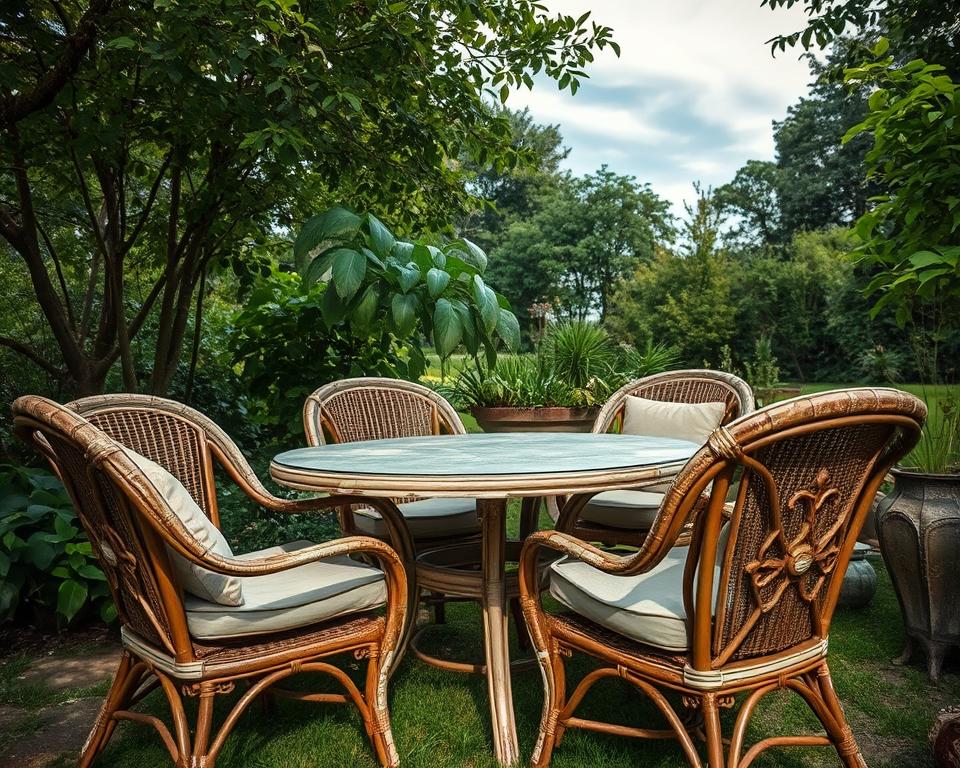
Prolonged exposure to ultraviolet light causes significant damage. UV rays break down the fibres in both natural rattan and synthetic versions at a molecular level. This leads to structural weakening over time, even if it is not immediately visible.
Continuous sun exposure also degrades colour pigments. This results in a gradual lightening and uneven patches, leaving the furniture looking washed out. Furthermore, daily heat cycles cause the material to expand and contract.
This repeated stress can manifest as surface cracks and splits. If left unaddressed, it may lead to eventual failure of the rattan weave.
Dealing with Dampness and Frost
Rain and moisture present another major challenge, especially for natural rattan. Rain soaks into the plant fibres, creating ideal conditions for mould growth and swelling. In the UK’s often humid garden environment, this can eventually lead to rot.
During colder months, frost and freezing temperatures are particularly harmful. They make the fibres extremely brittle and prone to breakage. This is a critical concern for any garden furniture left outside during winter.
Understanding these distinct impacts allows for targeted protection strategies. Different weather events require specific preventative measures to maintain both the integrity and look of your rattan furniture.
How to Protect Rattan Furniture
Implementing consistent maintenance practices ensures long-term durability for rattan items. A combination of daily habits and periodic treatments provides comprehensive defence against weather damage. This approach preserves both appearance and structural integrity.
Best Practices for Daily Care
Regular inspection helps identify issues before they escalate. Look for signs of wear, loose weaves, or discolouration. Address spills and debris promptly to prevent staining.

Strategic positioning reduces exposure to harsh elements. Place items in shaded areas or use protective structures. This simple step significantly extends the lifespan of outdoor furniture.
Recommended Protective Treatments
Different materials require specific approaches. Natural rattan benefits from sanding before treatment to enhance absorption. Synthetic versions need specialised products that protect against UV damage.
| Treatment Type | Natural Rattan | Synthetic Rattan |
|---|---|---|
| Preparation | Light sanding required | Clean surface only |
| Recommended Products | Yacht varnish, tung oil | UV protection sprays |
| Water Resistance | High with tung oil | Built-in protection |
| Application Frequency | Annual treatment | Seasonal application |
Breathable covers offer additional protection when items are not in use. Ensure surfaces are completely dry before covering to prevent moisture buildup. This maintenance routine combines multiple strategies for optimal results.
Step-by-Step Cleaning and Maintenance Guide
A systematic approach to maintenance ensures rattan items remain in prime condition season after season. Regular cleaning preserves colour, shape, and structural integrity while preventing dirt accumulation.

Removing Dirt and Debris Effectively
Begin with gentle debris removal using a soft brush or vacuum on low setting. This process helps remove dirt particles, dust, and cobwebs without damaging the weave.
An old toothbrush proves invaluable for accessing tight crevices between strands. Pay special attention to corners where dirt commonly accumulates. Thorough initial cleaning prepares the surface for deeper treatment.
Using the Right Cleaning Products
For washing, prepare a dilute solution of warm, soapy water using mild detergent. The approach differs significantly between natural rattan and synthetic rattan variants.
Natural rattan requires careful handling—use only the foam from the soapy water on a cloth. Avoid saturating fibres to prevent mould. Synthetic rattan withstands gentle hosing but still benefits from cautious cleaning.
After treatment, ensure thorough drying in a well-ventilated outdoor space. Proper drying prevents moisture-related damage to your garden furniture.
Weatherproofing Techniques for Longevity
Advanced weatherproofing methods provide essential defence against seasonal challenges for outdoor rattan pieces. These techniques form the final layer of protection, ensuring items remain resilient throughout changing conditions.
Proper application of seals and intelligent storage solutions work together. They significantly extend the functional life of garden furnishings exposed to the elements year-round.
Applying Seals and Protective Coatings
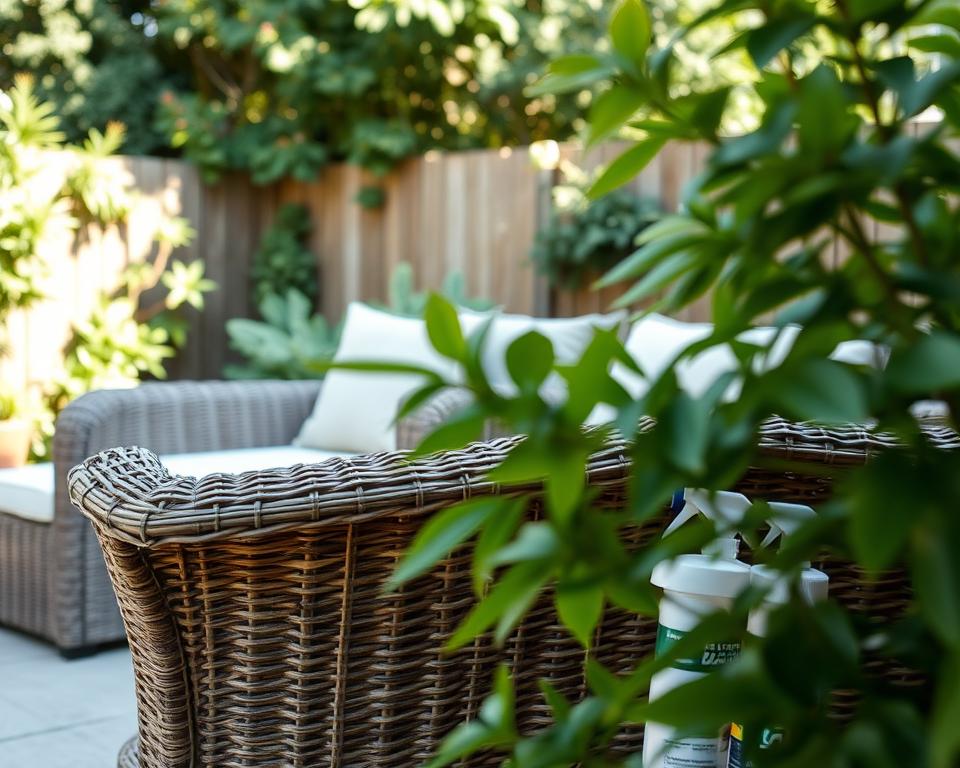
Different rattan types require specific protective approaches. Natural rattan benefits from light sanding before treatment to enhance product absorption.
Yacht varnish or tung oil creates a durable, water-resistant barrier. Synthetic versions need specialised UV-protection sprays that prevent colour fading.
All treatments require proper curing according to manufacturer instructions. This ensures maximum effectiveness throughout the season.
Covering and Storage Solutions
High-quality covers offer immediate protection from rain and sun exposure. They must be breathable and water-resistant to prevent moisture buildup.
Never cover furniture when wet, as this creates ideal conditions for mould. During extreme weather, move sets into garages or covered outdoor areas.
Rotate pieces occasionally to ensure even sun exposure. This simple maintenance step prevents uneven weathering of your garden furniture.
Comparing Rattan to Other Outdoor Materials
The choice of outdoor furnishings involves weighing various material properties against personal preferences and practical needs. This comparison helps homeowners select pieces that align with their lifestyle and garden conditions.

Benefits of Synthetic Rattan and Alternative Options
Synthetic rattan stands out for its resilience in British weather. This material withstands UV exposure and moisture exceptionally well. It offers the aesthetic appeal of natural rattan with enhanced durability.
Wicker furniture represents a versatile category rather than a specific material. Wicker weaving can be applied to rattan, bamboo, or synthetic fibres like vinyl. Outdoor synthetic wicker pieces resist heat and humidity without cracking.
Plastic outdoor furniture provides an affordable, low-maintenance option. It’s waterproof and ideal for families with children. However, it lacks the sophisticated appearance of rattan-based pieces.
Metal outdoor furniture brings durability and stylish design. Cast aluminium versions are rust-free and UV resistant. They require minimal upkeep but can become hot in direct sunlight.
Key Differences in Durability and Upkeep
Maintenance requirements vary significantly across materials. Synthetic rattan needs simple cleaning with mild soapy water. Natural wood options like teak require regular treatments to maintain their appearance.
Long-term durability differs based on material composition. Cast aluminium offers all-season performance without swelling or warping. It represents a premium alternative with excellent longevity.
The best option depends on individual priorities. Those valuing low maintenance might prefer synthetic materials. Others may prioritise natural aesthetics despite higher care needs.
Design Ideas and Enhancing Outdoor Space
Thoughtful design choices can transform any outdoor area into a stylish retreat. The arrangement of pieces significantly impacts both visual appeal and practical functionality. Even compact spaces offer opportunities for creative solutions.
Incorporating Style with Practicality
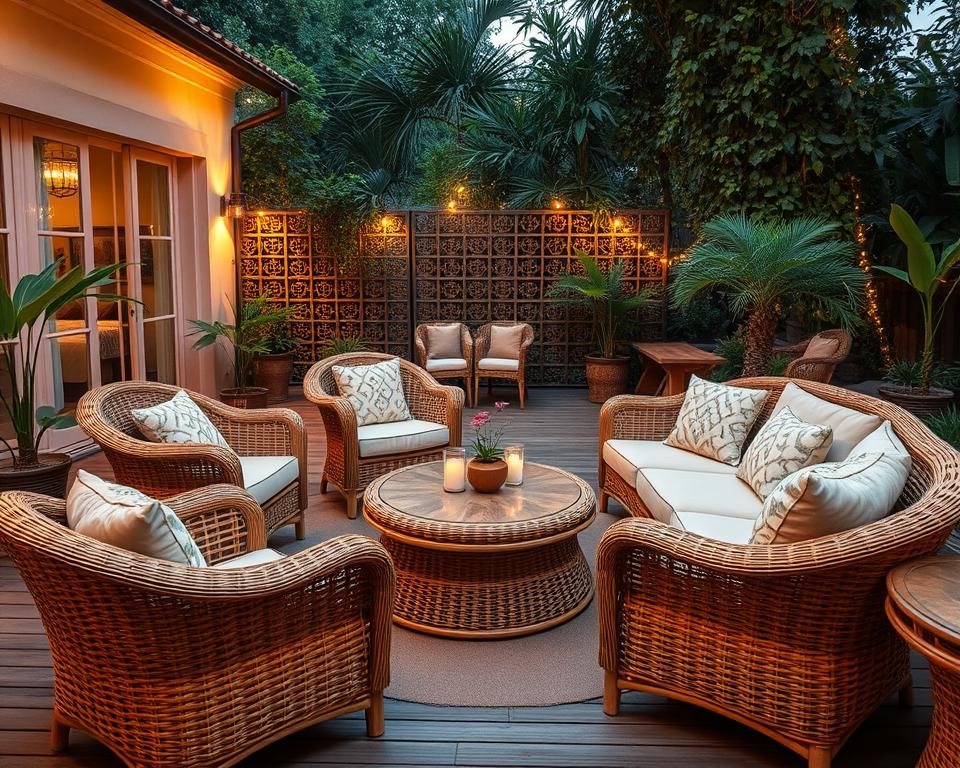
Small patios and balconies benefit from space-efficient solutions. Cube sets work perfectly in confined areas, while bistro sets provide dining options for compact spaces. These scaled-down versions maintain full functionality.
A good rule of thumb allows one metre around tables for comfortable movement. This spacing ensures both aesthetic balance and practical use. Proper planning creates harmonious arrangements.
| Space Size | Recommended Sets | Key Features | Best Use |
|---|---|---|---|
| Small (under 5m²) | Bistro Sets | Foldable, compact | Balconies, tiny patios |
| Medium (5-10m²) | Cube Sets | Modular, space-saving | Courtyards, small gardens |
| Large (10m²+) | Modular Sets | Configurable, expansive | Entertaining, dining areas |
Larger gardens accommodate modular configurations with multiple seating options. Chaise lounges and corner units create distinct zones for various activities. These arrangements support both social gatherings and private relaxation.
Colour selection plays a crucial role in achieving desired aesthetics. Neutral tones create spaciousness, while bold colours make dramatic statements. The right combination enhances the overall garden atmosphere.
Protection considerations should integrate seamlessly with design decisions. Positioning near natural shade sources and selecting covered areas extends furniture lifespan. These practical choices ensure long-term enjoyment.
Conclusion
With the right approach, rattan pieces can remain a stylish and functional centrepiece for any garden for many years. This guide has outlined that consistent maintenance is the key to longevity, whether one chooses the authentic appeal of natural rattan or the resilient practicality of synthetic rattan.
Selecting the appropriate type for your climate and lifestyle is one of the best first steps. Regular cleaning to remove dirt, coupled with strategic protection from harsh weather, provides a reliable way to preserve your investment.
Ultimately, the effort invested pays substantial dividends. It ensures your outdoor furniture continues looking its best, enhancing your outdoor space season after season. Armed with this knowledge, you can confidently enjoy the elegant look of rattan garden furniture year-round.
FAQ
Can rattan garden furniture be left outside all year round?
Synthetic rattan furniture is designed to withstand UK weather conditions and can typically be left outside year-round. However, for optimal longevity, using protective covers or storing it during harsh winter months is recommended. Natural rattan should not be left exposed to the elements.
What is the best way to clean outdoor rattan furniture?
Regular cleaning with a soft brush removes loose dirt. For a deeper clean, use a solution of mild soapy water and a soft cloth, then rinse with clean water. Always allow the furniture to dry completely in a well-ventilated area.
How does synthetic rattan differ from natural rattan?
Synthetic rattan is a man-made material, often from polyethylene, making it highly durable and weather-resistant. Natural rattan is derived from a palm plant and is more susceptible to moisture and UV damage, making it less suitable for permanent outdoor use.
Are protective covers necessary for rattan patio sets?
While high-quality synthetic rattan is resilient, using fitted covers is one of the best ways to shield furniture from prolonged rain, dirt, and UV rays. This simple step significantly extends the life and appearance of the pieces.
Can the colour of synthetic rattan furniture fade over time?
Yes, prolonged exposure to direct sunlight can cause fading in synthetic rattan, though premium sets often include UV inhibitors to slow this process. Placing furniture in a partially shaded area of the garden can help maintain its colour.
What maintenance is required to keep rattan furniture looking good?
Maintenance is minimal. Key practices include regular cleaning, prompt removal of spills, and ensuring the furniture is dry. For natural rattan, occasional treatment with specialist oils may be needed to prevent the wood from drying out.